Reviewed · TOKYO
Deep Dive into the World of Daruma Dolls
A round Daruma doll becomes much more personal when you make it yourself. At Daru-chan No Ouchi, near the entrance to Jindaiji Temple in Chofu, you choose fabric, write your wish on the doll, paint its face, and build a one-of-a-kind souvenir with your own hands. Keiko-san, the instructor, guides the work patiently, even when communication takes a little help from Google Translate.
In This Article
- Key points at a glance
- Why making a Daruma matters
- Finding Daru-chan No Ouchi near Jindaiji Temple
- Choosing fabric is the first big decision
- Writing your wish and painting the face
- Cutting and pasting takes the most time
- Tea, games, and daruma senbei while the glue dries
- What the finished Daruma represents
- Time, price, and group size
- Who should book this Chofu workshop
- Should you book it?
- FAQ
- Where does the Daruma doll workshop take place?
- How long does the workshop last?
- What is the listed price?
- What do I make during the class?
- Is an instructor included?
- Are craft supplies provided?
- Are refreshments provided?
- How many people can join?
- Can children take part?
- Where does the activity end?
- When will I receive confirmation?
- Can I cancel or change the booking?
I like the small group limit of four, which gives the class a friendly, unhurried feel. I also like that the workshop connects the craft to Japanese custom instead of treating the doll as a simple painting project. You get tea, daruma senbei, games, and a little cultural context while the glue dries.
The main consideration is the location. Chofu is about an hour from central Tokyo by train and bus, so this is not a quick stop from Shibuya or Asakusa. The listed price is $0.00, but you should check the final amount and availability carefully before booking, since the activity is non-refundable once confirmed.
Key points at a glance
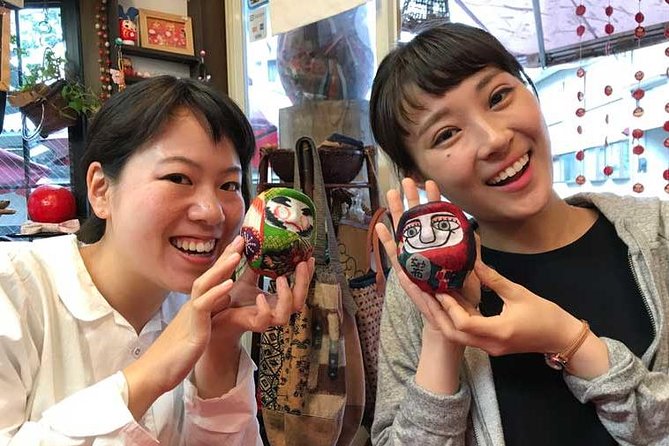
- Make a fabric-covered Daruma: Choose from traditional and modern Japanese fabrics, then cut and paste pieces onto the doll.
- Write your own wish: The doll becomes a personal good-luck charm rather than a standard shop souvenir.
- Meet near Jindaiji Temple: Daru-chan No Ouchi is at 5-chome-5-1 Jindaiji Motomachi in Chofu.
- Work with Keiko-san: The instructor explains the craft and offers patient, friendly help throughout the session.
- Enjoy tea while the glue dries: Japanese tea, coffee, other refreshments, and daruma senbei are part of the relaxed middle section.
- Expect a tiny class: The maximum is four people, and children under 13 need an adult with them.
Why making a Daruma matters
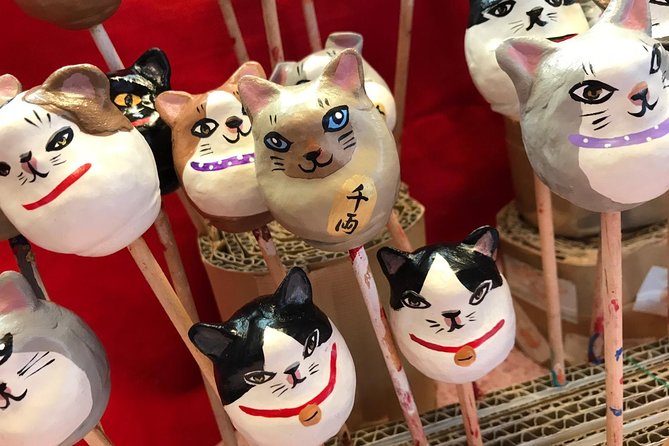
Daruma dolls are round, boldly faced figures associated with good luck and determination. The traditional design is more than decoration. You write a wish or goal on the doll, then keep it where its sharp gaze can watch over you and help repel bad luck.
This workshop lets you take part in that custom in a direct way. Instead of choosing a finished red Daruma from a souvenir shelf, you decide how yours looks. You choose the fabric, add the face, and place your own wish on the body. The result may be neat, playful, or slightly lopsided. That is part of its charm.
The activity also gives you a closer look at Japanese craft traditions. Fabric selection, cutting, painting, and pasting are simple steps, but together they make a very personal object. If you enjoy hands-on activities, this has more staying power than a short photo stop.
The class is also a good fit for friends or couples. Each person can create a different design, compare fabric choices, and laugh over the small decisions that turn two identical dolls into completely different souvenirs.
If you're still narrowing it down, here are other tours in Tokyo we've reviewed.



Finding Daru-chan No Ouchi near Jindaiji Temple
You meet the instructor at Daru-chan No Ouchi, located near the entrance to Jindaiji Temple. The official meeting address is 5-chome-5-1 Jindaiji Motomachi, Chofu, Tokyo 182-0017, Japan. The workshop ends at the same place.
Allow time for the trip from central Tokyo. The journey can take about an hour by train and bus, so this works best as part of a Chofu outing rather than something squeezed between major sights in central Tokyo. A mobile ticket is provided, which is useful when you are moving around Tokyo and do not want to manage paper documents.
The meeting point near Jindaiji Temple gives the activity a stronger sense of place. You are not making a generic craft in a hotel conference room. You are visiting a small Daruma shop in a neighborhood connected to a major local temple.
The supplied directions do not provide a detailed route from a particular Tokyo station, so check your navigation app on the day. Confirmation is sent within 48 hours of booking, subject to availability. Since the activity is limited to four people, do not assume that a preferred date will remain open.
Choosing fabric is the first big decision
The first hands-on step takes about five minutes, but it may be the hardest choice of the day. You select one fabric from a wide range of traditional and modern Japanese patterns.
This is where the workshop begins to feel personal. A familiar floral pattern, a bold modern print, or a quieter design will give your Daruma a different mood. Since the material is cut into pieces, you need to think about how the print will look once it is placed on a curved body.
I would not rush this part. Look at the fabrics, consider the colors of the face you want to paint, and remember that small sections of the pattern may show differently once cut. The choice is not merely about picking the prettiest square. It affects the entire finished doll.
For friends, the fabric selection can become a fun part of the outing. You can choose contrasting designs or try to make a matching pair. Couples can make two dolls that share a color but have different patterns.
Writing your wish and painting the face
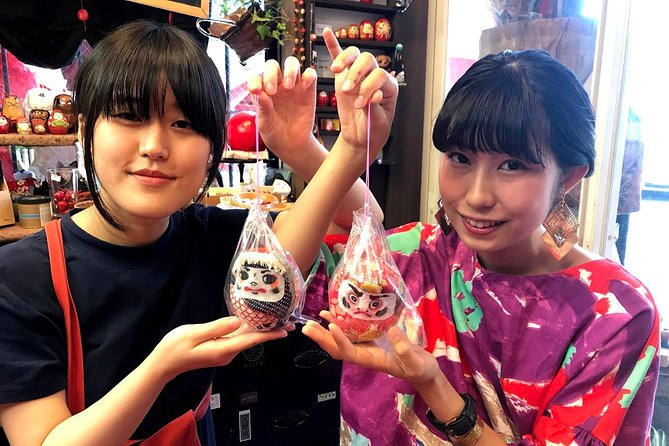
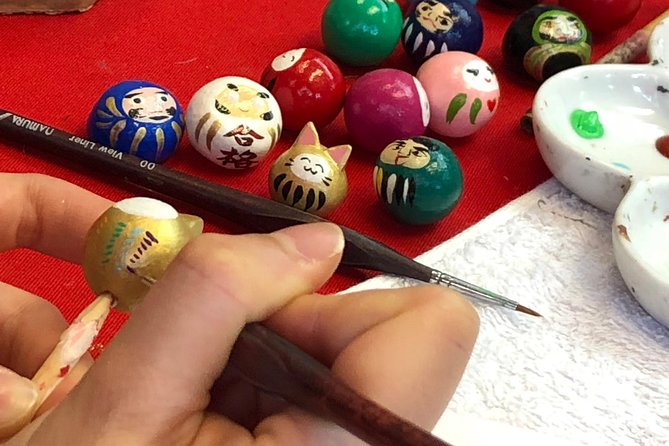
Next, you write your wish on the body of the Daruma and paint the Daruma face on the fabric. This takes about ten minutes.
The wish gives the doll its meaning. You are not just decorating a round object. You are creating something connected to a personal hope or goal. The information provided does not prescribe a particular type of wish, so you can approach this part in your own way.
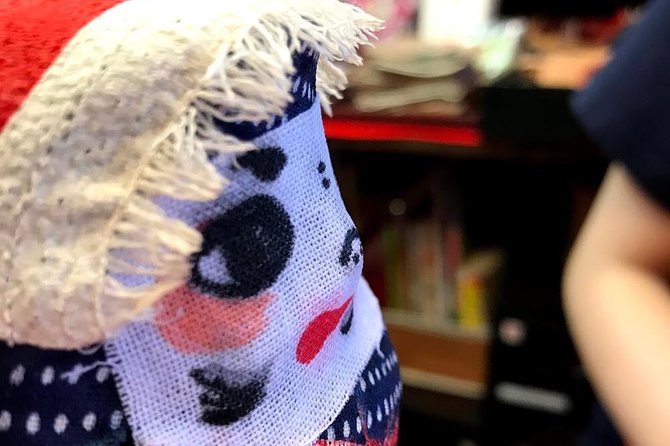
Painting the face also gives the doll its expression. Daruma faces are recognizable, but your brushwork will make yours different from every other one. Do not expect a factory-perfect result. The point is the hand-made character.
Keiko-san provides instruction and guidance during the process. A previous participant described her as patient while communicating with the help of Google Translate. That detail matters if you are concerned about a language barrier. You should still expect some visual demonstration and simple communication rather than a long, lecture-style class.
The workshop includes an instructor, materials, tax, and the material fee. You do not need to bring your own craft supplies.
Cutting and pasting takes the most time
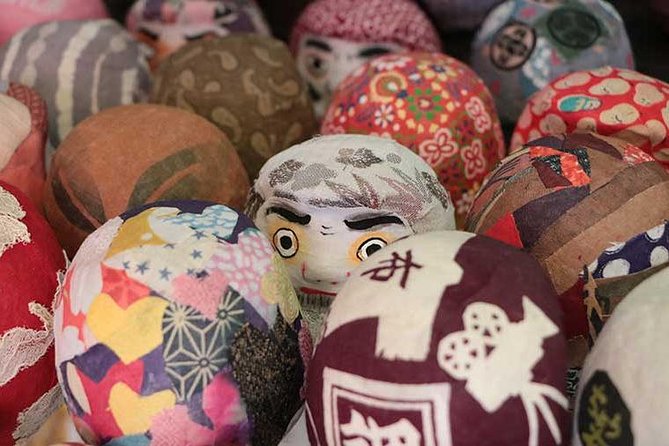
The longest part of the workshop lasts about 30 minutes. You cut the chosen fabric into pieces of different sizes, based on the print and the shape you want, then paste them onto the Daruma’s body.
This is the creative center of the class. The instructions leave room for your own design, so you can place the fabric carefully or let the pattern guide you as you go. Curved surfaces can make small pieces behave differently than they would on a flat sheet. Cutting the pieces in various sizes helps you cover the body and make the design work with the doll’s shape.
I like this stage because it rewards attention without requiring advanced skill. You have a clear sequence to follow, but the finished appearance depends on your choices. A craft-loving person can fuss over the pattern, while someone less experienced can still make something appealing with the available materials and the instructor’s help.
There is also a practical point here: the doll is a real hand-made object, not an instant souvenir. You should be ready to spend time on small cuts, glue, and placement. If you prefer fast sightseeing, this may feel slow. If you enjoy making things, the 30 minutes will likely pass quickly.
The class size makes a difference. With no more than four participants, you have a better chance to ask for help with a tricky piece of fabric or check how to place it on the doll. The small setting also suits people who would rather not perform a craft in front of a large group.






Tea, games, and daruma senbei while the glue dries
After the fabric is attached, the glue needs time to dry. Instead of ending the session at that point, the workshop sets aside about 15 minutes for daruma-themed games, photographs, and refreshments.
Japanese tea and daruma senbei make this pause feel connected to the theme. Tea, coffee, or other refreshments are also provided, so you have a chance to sit back after the more focused craft work.
The games add a social note, especially for a group of friends. You can compare your dolls, take pictures, and enjoy the fact that the creative work is finished but the object is not yet ready to pack away.
The final doll may still need care as it dries. Follow the instructor’s advice before placing it in a bag. The details provided do not specify a drying time after the session, so avoid treating it like a completely dry, hard souvenir the instant the class ends.
What the finished Daruma represents
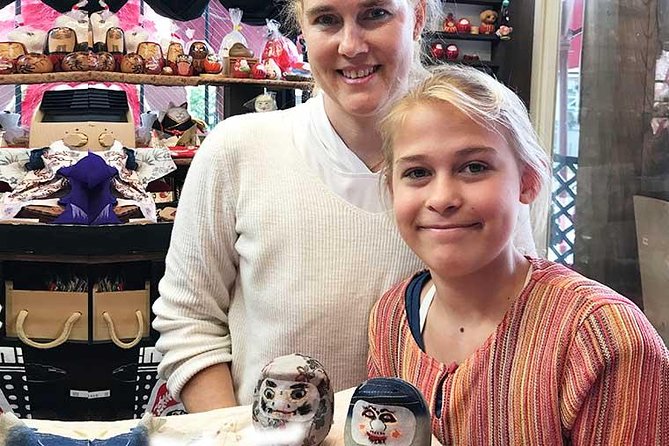
The session ends back at the shop, with your completed Daruma ready to take home once it is suitable for handling. The doll’s sharp glance is believed to repel bad luck, so the custom is to place it somewhere near you where it can watch over you.
That makes the souvenir useful in a symbolic way. You might keep it on a desk, shelf, or another place connected to the wish you wrote. The activity encourages you to remember the goal later, instead of leaving the meaning behind at the shop.
A fabric-covered Daruma also feels more personal than a standard mass-produced model. You chose the material and created the face, so the souvenir records a small part of your time in Chofu. It can remind you of the temple area, the class, and the people who made it with you.
The workshop also introduces a regional angle. The activity focuses on Chofu-style Daruma, and the instructor provides background on the tradition and its local context. If you are interested in the difference between a craft made for tourists and a craft tied to a specific place, this detail adds value.
Time, price, and group size
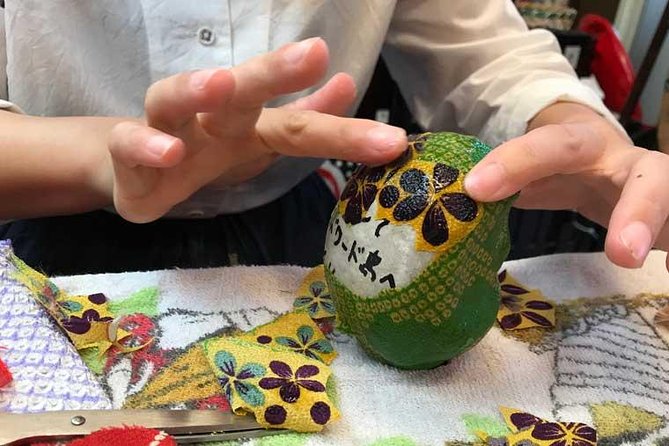
The full session takes about 90 minutes. The schedule breaks down roughly as follows:
- Meeting the instructor: 10 minutes
- Choosing fabric: 5 minutes
- Writing and painting: 10 minutes
- Cutting and pasting: 30 minutes
- Drying time, games, photographs, and tea: 15 minutes
The listed price is $0.00. Based on the supplied information, the instructor, materials, refreshments, tax, and material fee are included. That gives the activity strong apparent value, but I would still verify the final booking screen before committing, especially because no refund is available after booking.
The maximum of four people is one of the best practical features. You are not paying for a large production with a quick explanation and limited attention. The small group supports a calmer pace and makes the craft easier to follow.
The activity is suitable for most people, but children under 13 must be accompanied by an adult. There is no stated requirement for previous craft experience. Since all necessary craft items are included, you can arrive without special preparation.
Who should book this Chofu workshop
I would choose this for a creative afternoon, a couple looking for a shared souvenir, or friends who want an activity with more substance than shopping. It is also a good option if you have already seen many temples and want to add a craft experience to your Tokyo plans.
Families can consider it too, provided children under 13 have an adult with them. The activity has a clear structure, but children may need help with cutting, gluing, and keeping track of the drying stage.
This is less suitable for a visitor with only a short window in central Tokyo. The trip to Chofu can take about an hour by train and bus, and the class itself lasts around 90 minutes. Add time for reaching the meeting point and returning to your next destination.
It is also not the right pick if you want a polished, identical souvenir made by a professional. Your Daruma reflects your own choices and handwork. That is the point, but it also means the result may have small imperfections.
Should you book it?
Book this Daruma workshop if you value a small class, personal instruction, and a souvenir with a story behind it. Keiko-san’s patient teaching, the choice of Japanese fabrics, the tea and daruma senbei, and the connection to Jindaiji Temple make the outing feel thoughtful rather than rushed.
Skip it if your Tokyo schedule is tight or if you are uncomfortable with a non-refundable booking. For everyone else, the combination of craft, local setting, and personal symbolism offers good value, particularly at the listed $0.00 price. Just confirm the final cost, date, and availability before you make the reservation.
FAQ
Where does the Daruma doll workshop take place?
The activity takes place at Daru-chan No Ouchi near the entrance of Jindaiji Temple, at 5-chome-5-1 Jindaiji Motomachi, Chofu, Tokyo 182-0017, Japan.
How long does the workshop last?
The session lasts approximately 1 hour and 30 minutes.
What is the listed price?
The listed price is $0.00. The instructor, materials, material fee, Japanese tea, and tax are included in the supplied tour details.
What do I make during the class?
You make a personalized Daruma doll by choosing fabric, writing a wish on the body, painting the face, and cutting and pasting fabric pieces onto the doll.
Is an instructor included?
Yes. An instructor is included, and Keiko-san leads the workshop.
Are craft supplies provided?
Yes. All necessary craft items and the material fee are included.
Are refreshments provided?
Yes. Japanese tea, coffee, or other refreshments are provided, along with daruma senbei during the drying period.
How many people can join?
The activity has a maximum of four participants.
Can children take part?
Children under 13 must be accompanied by an adult. The supplied information says most people can participate.
Where does the activity end?
The workshop ends back at the meeting point at Daru-chan No Ouchi.
When will I receive confirmation?
Confirmation is sent within 48 hours of booking, subject to availability.
Can I cancel or change the booking?
No. The activity is non-refundable and cannot be changed for any reason. Any cancellation or amendment request forfeits the amount paid.
More tours in Tokyo we've reviewed












Tokyo, compared.
 ★ 5.0Mt Fuji and Hakone 1-Day Bus Tour Return by Bullet TrainFrom $163
 ★ 5.01-Day Tokyo Bus TourFrom $129
 ★ 4.6Tokyo: teamLab Planets TOKYO Digital Art Museum Entry TicketFrom $251 day
 ★ 4.0Mt Fuji & Hakone Cruise, Drum Show Bullet Train 1 Day from TokyoFrom $149
 ★ 5.0Tokyo: Shinjuku Food Tour (13 Dishes at 4 Local Eateries)From $86
 ★ 4.4Tokyo Mt Fuji 5th St & Hakone Cruise Bus Tour w/Bullet TrainFrom $15410 hours