Reviewed · PHOTOGRAPHY SESSIONS
Tokyo Photography Masterclass – Private Photography Lesson
Tokyo gives you plenty to photograph, but the hard part is knowing where to stand, what to watch, and which camera setting will hold the moment together. This private three-hour lesson turns Shibuya, Harajuku, Shinjuku, or Asakusa into a practical classroom, with time to shoot and receive direct help.
In This Article
- Key points to know before booking
- Why Tokyo works so well as a photography classroom
- Starting at Hachiko and working the Shibuya crossing
- Shibuya back streets and practical composition
- Harajuku for people, color, and street style
- The camera lesson: aperture, shutter speed, ISO, and focus
- Choosing between daytime street scenes and Tokyo after dark
- What the private format changes
- Is $190 per person a fair price?
- What to bring and how to prepare
- Who will get the most from this lesson?
- Should you book the Tokyo Photography Masterclass?
- FAQ
- How long does the Tokyo Photography Masterclass last?
- How much does the experience cost?
- Where does the tour begin?
- Where does the tour end?
- Is this a private tour?
- Is a camera included?
- Can I rent a tripod?
- Is the lesson suitable for beginners?
- What happens if I need to cancel?
I like the flexible route, since you can work on Hachiko Crossing, youth fashion in Harajuku, neon-lit Shinjuku, or the calmer paths around Senso-ji. I also like the teaching mix: composition, lighting, focus, aperture, shutter speed, and ISO, not just a walk to attractive places.
The main drawback is the price: $190 per person is a serious cost for three hours, especially if you already know your camera well. You also need to bring your own camera, unless you arrange a tripod rental.
Key points to know before booking

- Meet at Hachiko Statue: The tour begins at 2 Chome-1 Dogenzaka in Shibuya and finishes at the same meeting point.
- Choose your photographic mood: Work on street photography in Shibuya and Harajuku, or photograph Tokyo at night in Shinjuku or Asakusa.
- Private instruction matters: Only your group takes part, so the guide can adjust the pace and route to your interests.
- All skill levels are welcome: The lesson covers first-camera basics as well as more advanced work for semi-professional photographers.
- Bring your own camera: A camera is not supplied, while a tripod is available to rent.
- Strong customer rating: The experience holds a 4.8 rating from 25 reviews, with 96 percent recommending it.
Why Tokyo works so well as a photography classroom
Tokyo changes character every few blocks. One moment you are facing the famous crossing at Shibuya, with people moving in several directions at once. A short walk later, the scene may be a narrow back street, a shopfront, a cluster of unusual clothing, or a quiet temple approach.
That variety gives this lesson a useful advantage. You are not practicing on one repeated subject. You can work on people, architecture, light, texture, lines, motion, and night exposure within a single session.
I also like the fact that the lesson is built around making pictures, not listening to a long lecture. The guide can explain a technique, give you time to try it, and then help you judge the result. That is often the fastest way to understand why a photograph works or fails.
The one-on-one format makes a real difference. In a large group, you may spend much of the time waiting for other people to catch up. Here, the guide can spend more time on your camera, your habits, and the subjects you want to photograph.
Other private tours in Tokyo

Starting at Hachiko and working the Shibuya crossing

The standard meeting point is the Hachiko Statue, beside one of Tokyo’s best-known pedestrian crossings. It is a sensible starting place because it puts you directly into a busy photographic setting rather than easing you in with a quiet view.
The crossing gives you an immediate lesson in timing and composition. You might work on keeping a moving subject sharp, placing people against the surrounding signs, or using the crossing lines to guide the eye through the frame.
This is also where the guide can help you stop taking only the obvious postcard shot. Hachiko Crossing is famous, but the challenge is finding your own angle on it. You may work from a wider view, wait for a particular arrangement of people, or focus on one detail instead of trying to include everything.
The area can feel hectic, and that is part of the exercise. If you are new to street photography, the guide can help you decide what to photograph and when to press the shutter. If you already know your camera, the lesson can focus more on timing, layers, and visual order.
Do not expect a quiet, slow-paced start. Shibuya is noisy and crowded, and the first part of the session may feel more like fast observation than leisurely sightseeing. That makes it useful practice, but it may not suit you if you want a relaxed sightseeing walk with occasional photographs.
Shibuya back streets and practical composition
After the crossing, the route continues through the back streets of Shibuya. This shift is valuable because it moves you away from Tokyo’s most familiar view and toward smaller scenes where composition matters more than fame.
The guide covers tools such as leading lines, repetition, texture, and angles. These ideas sound simple, but they become easier to understand when you can apply them to a real street corner or building front.
You may be asked to look for repeated shapes, frames within the scene, or surfaces that create contrast. The point is not to collect as many photographs as possible. It is to sharpen your eye so you notice a possible picture before lifting the camera.
This section should also help with the question every photographer faces in a busy city: what deserves attention? Tokyo gives you too many possible subjects. Direct feedback can help you separate a strong subject from a cluttered one.
The route is not fixed around a long list of stops. That is good news if you have a clear goal, such as learning how to photograph people, architecture, or motion. Tell the guide what you want to improve, since the tour is designed to adjust to your interests.
Harajuku for people, color, and street style

The street photography route includes Harajuku, known here for its eclectic youth fashion and lively street scenes. This gives you a different set of subjects from Shibuya’s crossing and tall signs.
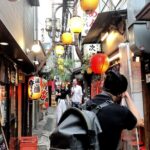
Harajuku is useful for practicing candid street photography, color relationships, and the way clothing becomes part of a portrait. You can also work on background control. A strong subject can disappear when the scene behind it is too busy, so the guide can show you how to choose a cleaner angle or wait for a better moment.
This is not a formal portrait session. The description promises photographic opportunities connected with street scenes and youth fashion, not arranged models or guaranteed encounters. You should be ready to observe and react rather than expect every image to be set up for you.
For beginners, this can be a lively place to learn how aperture affects the subject and background. For more experienced photographers, the focus may shift to anticipating gestures, balancing color, or building a frame from several moving elements.
The camera lesson: aperture, shutter speed, ISO, and focus

The most useful part of the experience may be the technical instruction. The guide covers aperture, shutter speed, ISO, and focusing, then connects those controls to the scene in front of you.
If you are starting out, this can help turn a camera from a confusing collection of buttons into a tool you can control. You can learn why a darker street may require a different approach from a bright daytime crossing, and why a moving subject calls for a different shutter speed from a temple detail.
The lesson is also suitable for semi-professional photographers. At that level, you may not need an explanation of what ISO does. You may instead want help making faster choices, refining focus, or using light and composition with greater purpose.
The guide also reviews your photography during the session. That matters because shooting alone can leave you unsure why one image works better than another. A quick discussion of your pictures can point out habits you can continue using after you leave Tokyo.
One client singled out Karl for his experience, clear teaching, and friendly manner. Karl may not be the guide assigned to every booking, so do not treat his name as a guarantee. Still, the praise gives you a useful idea of the teaching style to expect: practical, direct, and focused on helping you produce better pictures.
Other photography tours in Tokyo


Choosing between daytime street scenes and Tokyo after dark

The experience offers more than one way to use the three hours. A daytime street route can take you through Shibuya and Harajuku, while a night session can focus on Shinjuku or Asakusa.
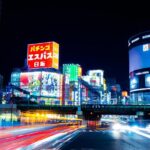
Shinjuku is the choice for a futuristic city look. Neon lights, tall buildings, and busy streets give you strong material for night photography, but they also create technical problems. Bright signs can fool your exposure, dark areas can lose detail, and moving people or cars can blur.
That makes Shinjuku a good place to practice exposure decisions and focus in difficult light. The guide can also help you make a more deliberate choice between recording motion and freezing it.
Asakusa offers a slower mood. You can photograph Senso-ji after dark and use the quieter paths nearby for temple details and night scenes. The setting gives you a chance to work with shape, symmetry, low light, and atmosphere without the constant visual rush of Shinjuku.
There is an important tradeoff here. Shinjuku gives you more modern city energy, while Asakusa offers a calmer subject with strong architectural character. You cannot assume both areas will fit into one three-hour session, so your preferred mood should guide the choice.
The description also refers to capturing streaking car trails against a futuristic Tokyo setting. This suggests a chance to work on long-exposure techniques, but the exact route and result depend on the selected tour and conditions. Ask for the night option that best matches your equipment and experience.
What the private format changes

A private tour is not simply a smaller group. It changes how the lesson can be used.
You can spend more time on a single subject if you are trying to understand it. You can also move on when a technique makes sense, instead of waiting while other people practice the same setting.
The route can be shaped around your interests. You might prefer famous sights, smaller streets, fashion, cars, temples, or night light. The guide can also adjust the teaching level, starting with camera basics or moving toward composition and photographic development.
This format is especially useful if two people in your group have similar goals. It is less useful if you mainly want a general Tokyo tour and do not care about improving your photography. You are paying for instruction and personal attention, so you should arrive with at least one clear goal.
Group discounts are available, but the activity remains private, with only your group participating. The price is listed at $190 per person, so the total depends on the size of your party and any discount offered.
Is $190 per person a fair price?

At $190 per person, this is not a budget walking tour. The value comes from the private teaching, not simply from being taken to Shibuya or Senso-ji. You could visit those places on your own for far less.
The better comparison is the cost of a private photography lesson in a city that can be difficult to read quickly. You are paying for a professional photographer guide, a local guide, a flexible route, and feedback on your pictures during a three-hour session.
I think the price makes the most sense in three cases. First, you are new to photography and want personal help instead of trying to learn from scattered online advice. Second, you have a good camera but still rely on automatic settings. Third, you are making a special trip and want to return with stronger photographs rather than only snapshots.
The value is weaker if you already work comfortably in manual settings and know how to plan street photography. In that case, you may be paying mostly for local route ideas and company.
One useful tip is to book early in your trip if possible. The skills covered here can help with the rest of your Tokyo visit, and perhaps with the rest of your Japan journey. Booking near the end still gives you a focused experience, but you lose the chance to use the new techniques elsewhere.
What to bring and how to prepare
Bring the camera you actually plan to use for the rest of your trip. The camera is not included, and a tripod is available to rent if you need one.
You do not need to arrive as an expert. The lesson is designed for all levels, including people using a camera for the first time. Still, you will get more from the session if you know how to charge the battery, access basic settings, and bring enough storage.
Before meeting the guide, decide what you want to improve. A simple goal such as photographing moving people, using manual exposure, or making cleaner compositions gives the session direction.
You should also decide between daytime street photography and nighttime city scenes. The route can be adapted, but the two options ask for different skills. Daytime work often emphasizes timing, people, and composition. Night work places more pressure on exposure, focus, and stability.
The meeting point is the Hachiko Statue at 2 Chome-1 Dogenzaka, Shibuya, Tokyo 150-0043. It is near public transportation, and the activity ends back at that meeting point.
Who will get the most from this lesson?
This tour suits beginners who want patient, direct help with the controls on a camera. It also fits photographers who know the basics but want to improve composition and street technique in a difficult, visually crowded city.
It is a good choice if you prefer personal attention over a standard sightseeing group. The guide can spend time on your questions, route choices, and photographs instead of following a fixed script.
It may also suit couples, families, or friends who want to learn together, especially since group discounts are available. Just remember that the lesson is still photography-centered. People in your group should be willing to stop, shoot, compare images, and listen to technical advice.
I would think twice if your main aim is a broad introduction to Tokyo’s sights. You will see notable areas, but the purpose is to improve your photography. The route may pause for a composition lesson when a sightseeing tour would keep walking.
The experience has a 4.8 rating from 25 reviews, and 96 percent recommend it. One particularly strong response praised Karl’s ability to teach clearly, his experience, and his friendly approach. That supports the idea that the best part of this activity is the instruction, not just the locations.
Should you book the Tokyo Photography Masterclass?
Book it if you want to return from Tokyo with better control of your camera and a clearer eye for composition. The private format, flexible route, and choice between street scenes and night photography give you more useful practice than a generic photo walk.
I would book it early in your stay, especially if you are still learning. That lets you use the advice at Shibuya, Harajuku, Shinjuku, Asakusa, and other parts of Japan.
Skip it if you only want sightseeing, already feel fully confident with your camera, or find $190 per person too high for a three-hour lesson. For everyone else, it offers a focused way to make Tokyo’s famous scenes feel personal rather than predictable.
Free cancellation is available if you cancel at least 24 hours before the start time. Changes or cancellations made inside that period are not accepted for a refund, and the cut-off follows Tokyo local time.
FAQ
How long does the Tokyo Photography Masterclass last?
The private photography lesson lasts approximately three hours.
How much does the experience cost?
The listed price is $190 per person. Group discounts are available.
Where does the tour begin?
The tour begins at the Hachiko Statue at 2 Chome-1 Dogenzaka, Shibuya, Tokyo 150-0043, Japan.
Where does the tour end?
The activity ends back at the Hachiko Statue meeting point.
Is this a private tour?
Yes. Only your group participates in the private activity.
Is a camera included?
No. You need to bring your own camera.
Can I rent a tripod?
Yes. A tripod is available to rent, but it is not included.
Is the lesson suitable for beginners?
Yes. The lesson is suitable for all photography levels, including people using a camera for the first time and semi-professional photographers.
What happens if I need to cancel?
You can receive a full refund if you cancel at least 24 hours before the experience starts. Cancellations or changes made less than 24 hours before the start time are not accepted for a refund.
More Workshops & Classes in Tokyo


More Photography Tours in Tokyo
More Private Tours in Tokyo
More tours in Tokyo we've reviewed












Photography Sessions, compared.
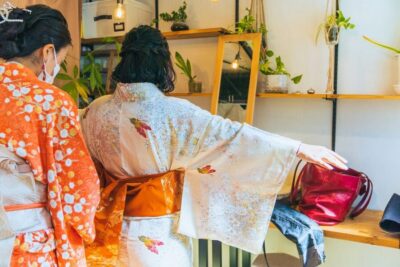 ★ 4.9Tokyo: Kimono Dressing, Walking, and Photography SessionFrom $67
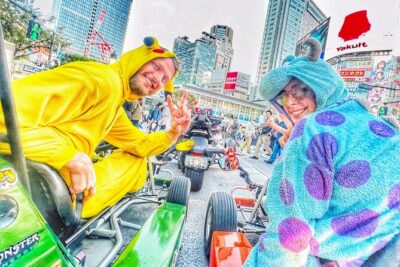 ★ 5.0Best Go Kart Experience in Shibuya Crossing with Iconic PhotosFrom $106
 ★ 4.8Tokyo Go-Karting Experience: Shibuya Crossing with PhotosFrom $901 hour
 ★ 5.0Tokyo Cyberpunk Street Photo TourFrom $184
 ★ 5.0Tokyo by Night Photography Tour (Private Option Available)From $105
 ★ 4.8Tokyo: Exclusive Access to Sumo Morning Practice with PhotosFrom $962 hours