Reviewed · CYCLING TOURS
Small Group Cycling Tour in Tokyo
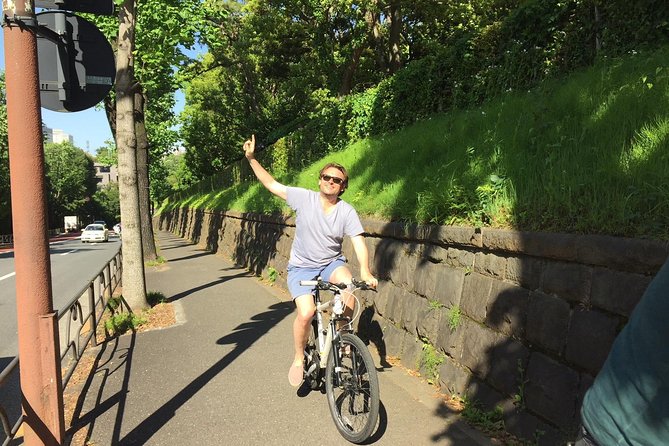
Tokyo reveals itself differently from a train window. On this small-group cycling tour, you pedal through quiet residential lanes, sidewalks, and main roads to reach major sights without spending the day underground. I especially like the maximum group size of eight and the mix of famous landmarks with ordinary city streets.
In This Article
- Key things to know before you book
- Why a bicycle works so well in Tokyo
- Starting in Shinjuku and meeting your guide
- Meiji Jingu, Tokyo’s great Shinto sanctuary
- Aoyama Cemetery and a quieter side of the city
- Roppongi Hills for a quick urban pause
- Zojo-ji and the best Tokyo Tower view
- Shiodome, lunch, and Tokyo Bay from above
- The Imperial Palace moat and the ride home
- How demanding is the cycling?
- The value of a $66.32 cycling tour
- What makes the guides important
- Who will enjoy this tour most?
- Booking, cancellation, and practical details
- Should you book the Tokyo cycling tour?
- FAQ
- How long does the cycling tour last?
- How many people can join the tour?
- Where does the tour start?
- Where does the tour end?
- Is lunch included?
- Are bicycles included?
- Are electric bikes available?
- Is a helmet included?
- What happens if the weather is poor?
I also like the way the route combines riding with short walks, shrine and temple visits, and a high-rise view over Tokyo Bay. Guides such as Aiko, Noriko, Akio, and Keco are praised for clear explanations and steady support. The main caution is fitness: expect roughly 12.5 to 15 miles, or about 20 kilometers, with a few inclines. Request an e-bike and helmet in advance if you want an easier ride.
Key things to know before you book
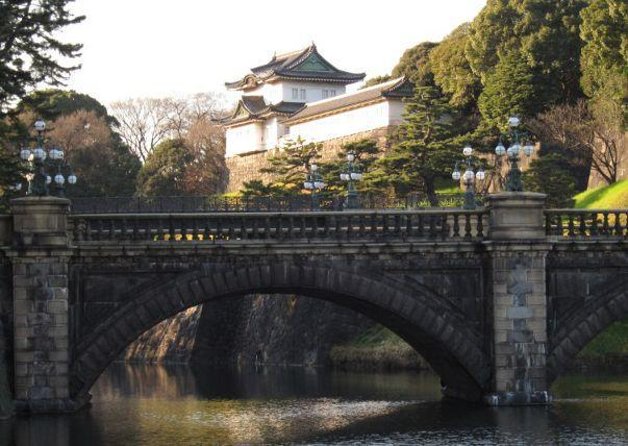
- A broad Tokyo sampler: Visit Meiji Jingu, Zojo-ji, Roppongi Hills, Shiodome, and the Imperial Palace in one outing.
- Back streets make the difference: You reach quieter residential areas and narrow lanes that a bus cannot use.
- Small groups feel personal: The maximum is eight, and solo departures have sometimes operated with several guides.
- The ride is longer than it sounds: The full-day version can run six to seven hours and cover about 20 kilometers.
- Electric bikes help on inclines: The route is mostly flat, but even modest hills feel different after several hours.
- Lunch is not included: You stop in Shiodome, but you pay for your own meal.
Why a bicycle works so well in Tokyo
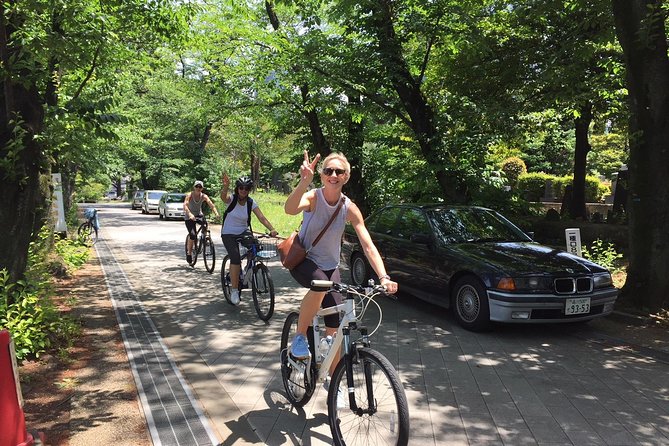
Tokyo is huge, but its most interesting parts are often close enough to connect by bicycle and too spread out for a comfortable walking tour. The train gets you across town quickly, yet it skips the small streets between stations. A bicycle lets you see the shift from office towers to quiet homes, temple grounds, tree-lined avenues, and modest neighborhood shops.
This is not a race or a technical cycling outing. The pace includes regular stops and walking time, and the guide rides at the group’s speed. The route uses a mixture of back streets, sidewalks, and main roads, so you should feel comfortable sharing space with city traffic. The reward is range. You can cover a large section of central Tokyo without the stop-and-start pattern of a bus or the transfers required by the Metro.
The experience comes in shorter and longer forms, with the advertised duration running from about three to six hours. The full route can stretch close to seven hours if the guide takes extra time or the group needs more support. That flexibility can be useful, but do not schedule a tight afternoon flight or another fixed activity immediately afterward.
Other cycling tours in Tokyo
Starting in Shinjuku and meeting your guide
The tour starts at KakouJapan on the third floor of the Hyatt Regency Tokyo in Nishishinjuku. This is a practical base near public transportation, though you should allow time to find the exact meeting point inside the hotel complex.
The group is limited to eight people. That matters in Tokyo, where a large bicycle line would be awkward at crossings and difficult to keep together. A small group also gives you more room to ask about shrine customs, Japanese daily life, or the places you pass between official stops.
The guides named in the tour feedback include Aiko, Noriko, Akio, Keco, and Nikita. Their strengths are consistent: clear explanations, good pacing, patience with less confident cyclists, and help with photographs. Aiko is also praised for adding local observations and taking pictures along the way. You should still confirm the guide assigned to your date, since names and availability can change.
Bikes are included. Electric bikes are offered, but you need to request one before the ride. A helmet may also need to be requested rather than assumed, so ask when booking. The tour requires a moderate level of fitness, and that description is worth taking seriously.
Meiji Jingu, Tokyo’s great Shinto sanctuary
Your first major stop is Meiji Jingu, the largest Shinto shrine in Tokyo. The bicycle gets you close, but you walk around the grounds for roughly 30 to 40 minutes.
This is a good opening stop because it gives you a calm introduction to Japanese religious customs before the route moves into denser city districts. The guide explains shrine rituals and points out details you might otherwise pass without noticing. If the timing is lucky, you might see a traditional Japanese wedding, which adds a memorable human element to the visit.
The stop is included, but the important cost here is time rather than money. Walking on the shrine grounds gives your legs a break from the saddle, though it also means this is not nonstop cycling. Wear shoes that work for both riding and walking.
Aoyama Cemetery and a quieter side of the city
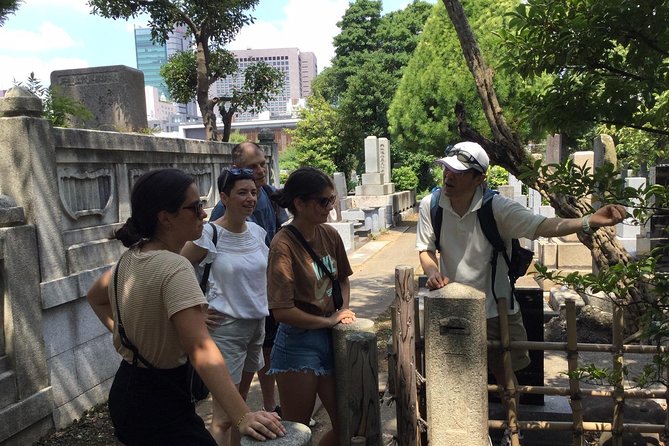
Aoyama Cemetery is a surprising change from the shrine. You spend about 20 minutes among the graves of notable Japanese figures and Western residents connected with Tokyo.
The cemetery helps explain how layered the city is. Tokyo is not only neon signs, department stores, and packed train platforms. Places such as this offer a quieter setting where the guide can share short stories about people and events tied to the city.
This is also one of the route’s less conventional stops. If your priority is ticking off famous attractions, you may find the cemetery less immediately exciting than the Imperial Palace or Tokyo Tower. I think it earns its place because it breaks up the standard sightseeing list and gives you a better sense of Tokyo beyond its postcard views.
Roppongi Hills for a quick urban pause
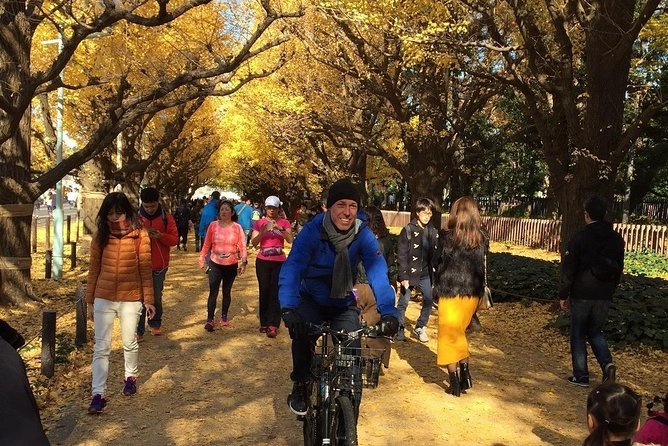
Roppongi Hills is a large complex of shops, cafés, and restaurants. The scheduled stop is brief, about 15 minutes, so think of it as a look around rather than a shopping session.
The contrast is the point. After the shrine and cemetery, you are back among Tokyo’s modern commercial architecture. You might find this a useful moment to stretch, use facilities, or get a quick drink, but there is not enough time for serious browsing.
Cycling makes the transition more interesting than simply arriving at a shopping center by train. You have seen the city change block by block, and Roppongi Hills becomes part of that story rather than an isolated attraction.

Zojo-ji and the best Tokyo Tower view
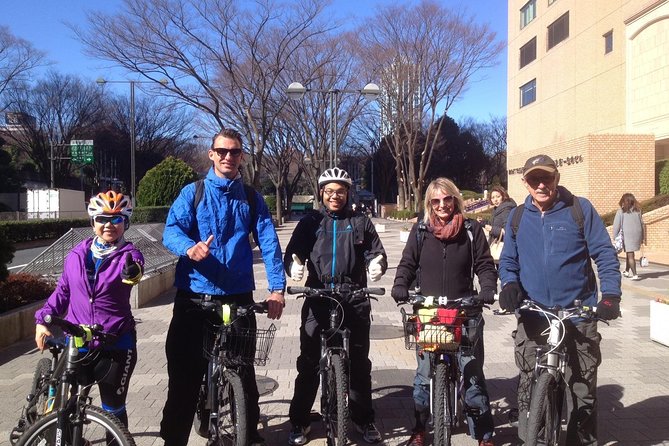
At Zojo-ji, the main temple of the Jodo Buddhist sect in the Kanto region, you stop for about 20 minutes. The temple is also one of the route’s strongest photo locations because Tokyo Tower rises nearby.
This stop gives you a useful comparison with Meiji Jingu. The first is a Shinto shrine, while Zojo-ji is Buddhist. Your guide explains the customs and background in a short, accessible way, so you do not need prior knowledge to appreciate the difference.
The pairing of old religious sites with Tokyo Tower is classic Tokyo: traditional architecture in the foreground, a bold modern landmark behind it. The visit is short, but it delivers one of the clearest visual contrasts on the tour.
Shiodome, lunch, and Tokyo Bay from above
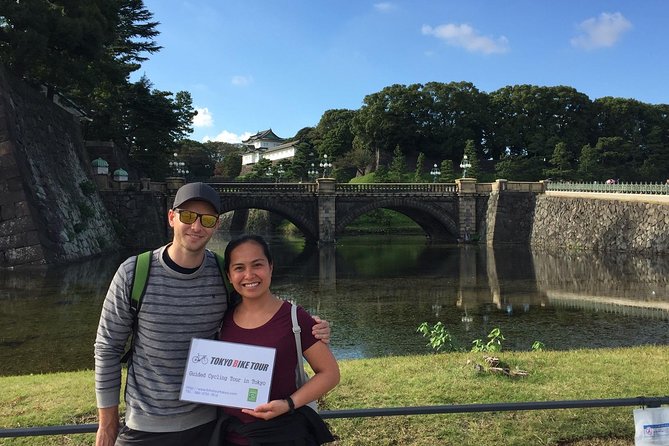
Shiodome is a major redevelopment district filled with modern buildings. Here you take a longer break of about 50 minutes, including lunch at your own expense.
The tour does not include a meal, so budget for food and drink. The exact choice is not specified, but the stop gives you time to eat rather than forcing you to cycle straight through the afternoon. If you have dietary needs, you should ask the operator what options are available on your date rather than assume lunch arrangements are fixed.
After lunch, you view Tokyo Bay from the top of a building. One version of the route reaches the 46th floor, giving you a wide city view from above. This is a welcome change after several ground-level stops and helps you understand Tokyo’s scale.
The drawback is timing. Fifty minutes passes quickly if you want both lunch and the view, so do not plan on a leisurely restaurant meal. Treat this as a practical rest stop with a worthwhile outlook.
The Imperial Palace moat and the ride home
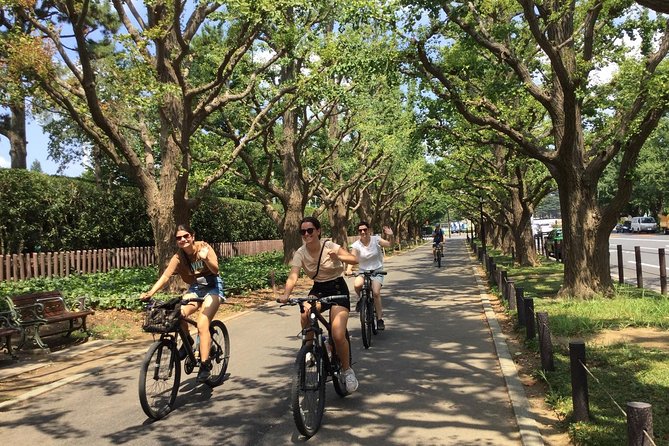
The final major stop is the Imperial Palace, the residence of Japan’s Imperial family. You cycle part of the way around the moat, then begin the return ride toward Shinjuku.
The palace grounds are extensive, and this tour does not promise a full interior visit. You are seeing the area from the outside, with the moat and surrounding streets providing the main experience. That makes the bicycle especially useful because you can cover more of the perimeter than you could comfortably walk after a full day of sightseeing.
This section is also a reminder that the route is a city ride, not a collection of isolated attractions. You keep moving through central Tokyo, passing from imperial grounds back toward the Shinjuku starting point. The group returns to the original meeting point when the activity ends.
How demanding is the cycling?
The route is mostly flat, but it includes a few inclines. One account describes about 12.5 miles with two hills, while another puts the distance at roughly 15 miles or 20 kilometers. Those figures are close enough to give you a useful expectation: this is a substantial recreational ride.
You do not need to be an athlete, but you should be comfortable cycling for several hours. The guides stop for attractions, photos, water, and snacks, and they adjust the pace when someone is struggling. That support is valuable, especially in a small group where the guide can keep an eye on each person.
An e-bike is the sensible choice if you are unsure about hills, have not cycled recently, or want to spend your energy on sightseeing. Several people found standard bikes easy, but their comfort depended on regular cycling or strong fitness. The electric option made the ride more enjoyable for less experienced riders.
Rain can also change the experience. The tour requires good weather and may be canceled if conditions are poor. A rainy day is not automatically a disaster if the tour runs, but wet streets and long hours on a bicycle make the outing harder. Bring suitable clothing and check the forecast.
The value of a $66.32 cycling tour
At $66.32 per person, this is a fairly priced way to combine transport, guiding, bicycle use, and sightseeing across a wide part of Tokyo. You are not paying only for entrance tickets, since most stops are free or simply viewed from outside. You are paying for the route design, equipment, local explanation, and the ability to connect distant districts efficiently.
The value is strongest if you have limited time in Tokyo. In one outing, you see a major Shinto shrine, a Buddhist temple, a cemetery, a modern shopping complex, a redeveloped business district, Tokyo Bay, and the Imperial Palace area. Reproducing that route independently would require careful planning and a mix of trains, walking, and navigation.
It is less compelling if you prefer to linger at each sight. The stops are timed, and some are short. You will not spend half a day at Meiji Jingu or explore every corner of Roppongi Hills. This is an overview tour, designed to show you how several parts of Tokyo fit together.
The 4.9 rating from 184 reviews and 98 percent recommendation rate support the tour’s strong reputation, but the practical details matter more than the numbers. The main pattern is clear: people value the guides, the safe-feeling route, the good bikes, and the chance to see quieter streets. The main limitation is the physical effort.
What makes the guides important
A cycling guide in Tokyo does more than point out monuments. The guide manages crossings, chooses streets that work for a group, keeps the pace steady, and explains customs at the shrine and temple stops.
Aiko is singled out for warmth, local insight, photographs, and careful attention. Noriko is praised for encouragement, water and snack breaks, and checking that everyone was coping with the ride. Akio is described as attentive and professional, while Keco is noted for clear English and thoughtful answers. These details matter because the route can feel demanding if you are not used to cycling in a large city.
The group format also helps. If a participant cannot continue, the pace may slow or the outing may run longer. That happened on one full-day ride, which extended by about an hour. It is a positive sign that the guide did not simply abandon anyone, but you should understand that a small-group tour has less rigid timing than a private transfer.
Who will enjoy this tour most?
I would choose this tour for a first visit to Tokyo if you want a broad introduction and enjoy active sightseeing. It suits couples, families with older children, and people who like to understand a city through its ordinary streets rather than only its top attractions.
It is also a strong choice for anyone who finds the Metro efficient but a little detached from street life. The bicycle lets you notice neighborhood changes, quiet lanes, and small spaces between major districts.
You should think twice if you dislike cycling in traffic, have limited mobility, or want a slow, highly detailed visit at each landmark. The experience requires moderate fitness, walking at several stops, and enough stamina for a half-day or full-day ride. An e-bike can reduce the effort, but it does not remove the need to pedal, stop, and move around the city.
Booking, cancellation, and practical details
The activity uses a mobile ticket, and confirmation is sent within 48 hours, subject to availability. It starts and ends at the Hyatt Regency Tokyo meeting point in Shinjuku and is near public transportation.
You can cancel for a full refund up to 24 hours before the local start time. Cancellations or changes made within 24 hours are not refunded or accepted. Poor weather or failure to reach the minimum number of participants can also cancel the tour, in which case you are offered another date, another experience, or a full refund.
For the best experience, request an e-bike and helmet ahead of time, wear comfortable shoes, and leave room in your schedule in case the ride runs long. Bring money for lunch in Shiodome. Most of all, be honest about your cycling fitness before choosing a standard bike.
Should you book the Tokyo cycling tour?
Book it if you want to cover a large section of Tokyo while seeing the city at street level. The mix of Meiji Jingu, Aoyama Cemetery, Roppongi Hills, Zojo-ji, Shiodome, and the Imperial Palace gives you far more variety than a simple landmark ride.
I would particularly recommend it for a short Tokyo stay, active families, and anyone curious about the neighborhoods between the famous sights. Request the e-bike if you are uncertain about the distance, and do not assume a helmet is included unless you confirm it.
Skip it if you need a tightly timed itinerary or prefer museum-length visits at each stop. For most reasonably fit visitors, though, the combination of quiet lanes, major landmarks, local explanations, and a small group makes $66.32 good value.
FAQ
How long does the cycling tour last?
The tour lasts approximately three to six hours, depending on the version booked and the pace of the group. A full-day outing may run longer if extra time is needed.
How many people can join the tour?
The maximum group size is eight participants.
Where does the tour start?
The tour starts at KakouJapan on the third floor of the Hyatt Regency Tokyo, 2-chome 7-2 Nishishinjuku, Shinjuku City, Tokyo 160-0023.
Where does the tour end?
The activity ends back at the original meeting point at the Hyatt Regency Tokyo.
Is lunch included?
No. The tour includes a lunch break in Shiodome, but lunch is not included in the price.
Are bicycles included?
Yes. Use of a bicycle is included.
Are electric bikes available?
Yes, electric bikes are offered, but they must be requested before the tour.
Is a helmet included?
The tour information does not confirm automatic helmet inclusion. A helmet should be requested in advance.
What happens if the weather is poor?
The experience requires good weather. If poor weather causes a cancellation, you are offered a different date or a full refund.
More Cycling Tours in Tokyo


More tours in Tokyo we've reviewed












Cycling Tours, compared.
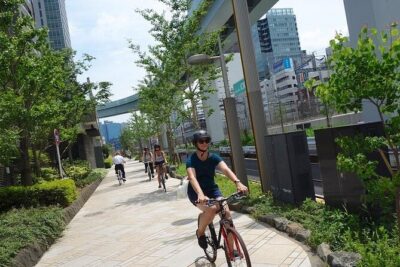 ★ 5.0Tokyo Guided Small-Group Biking TourFrom $106
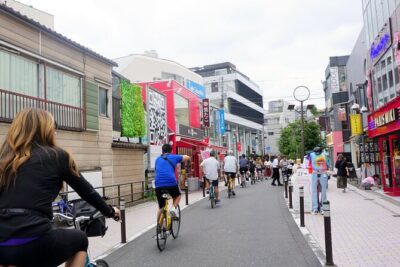 ★ 5.0Tokyo Great Cycling TourFrom $99
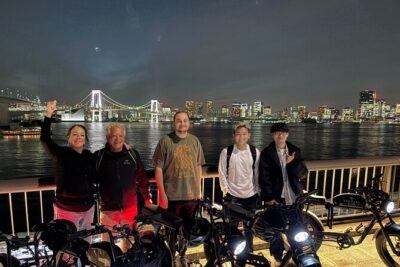 ★ 5.0Tokyo Top Highlights 3h Guided E-bike TourFrom $63
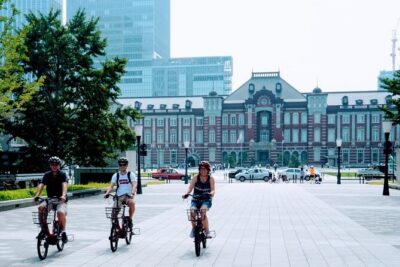 ★ 5.03h Tokyo E-Bike Tour: Hidden Gems, and Local Life with guideFrom $63
 ★ 4.8Tokyo: 3-Hour Bike or E-Bike City Highlights TourFrom $453 hours
 ★ 4.8Tokyo: 3-hour Guided E-Bike Tour of the City’s Hidden GemsFrom $65