Reviewed · PHOTOGRAPHY SESSIONS
Tokyo Cyberpunk Street Photo Tour
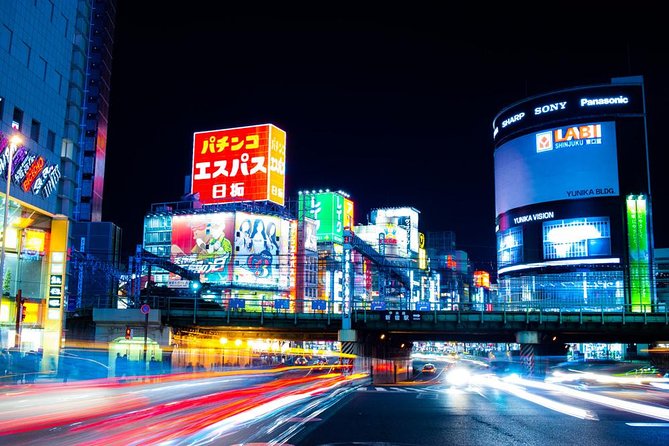
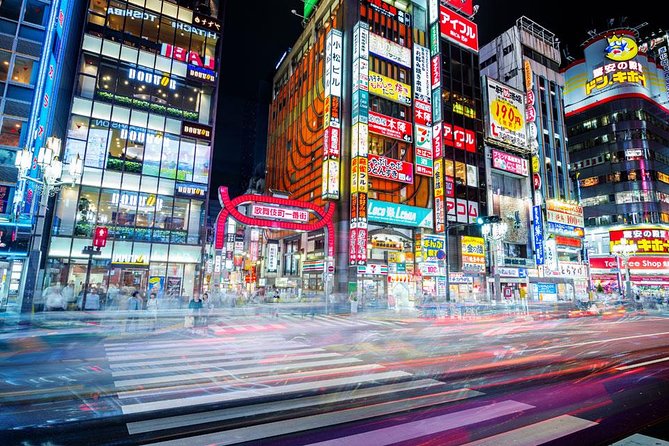
Tokyo looks most like a science-fiction film after sunset, when Kabukicho’s neon signs glow above narrow streets and Shibuya Crossing turns into a river of people. This three-hour walk puts you in the right places at the right time, with a photography instructor beside you to help turn bright lights and quick crowds into usable images.
In This Article
- Key points before you book
- Why Tokyo at night works so well for photography
- Starting near Shinjuku Station at 7 pm
- Kabukicho: neon, traffic, and difficult light
- Omoide Yokocho: a tighter, more atmospheric stop
- The train to Shibuya, with the fare paid separately
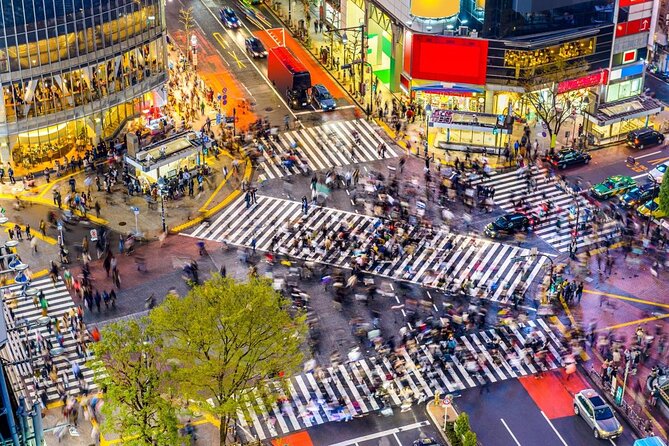
- Shibuya Crossing: the grand finale
- What the photography instruction is really like
- Is $184.99 good value for two people?
- Who will get the most from this evening?
- Weather, cancellation, and practical limits
- Should you book the Tokyo Cyberpunk Street Photo Tour?
- FAQ
- How long does the Tokyo Cyberpunk Street Photo Tour last?
- Where does the tour start?
- Where does the tour end?
- Can I use a smartphone instead of a camera?
- Is transportation included?
- How many people can join the tour?
I like two things here: the guide works with both proper cameras and smartphones, and the group is capped at four people. Guides such as Charles, Lukasz, Luke, and Stephane have been praised for patient, hands-on help, including long-exposure settings, framing, contrast, and phone-camera locks. The main caution is the pace. One participant lost the guide in the crowds, so you should stay close and speak up if the walk feels too fast.
Key points before you book
- Three classic night settings: Photograph Kabukicho, Omoide Yokocho, and Shibuya Crossing in one evening.
- Useful instruction for any skill level: Guides can help with cameras, iPhones, and other smartphones.
- Small group, personal help: The maximum is four people, though the advertised price covers a group of up to two.
- A real street-photography lesson: Expect composition, shutter speed, exposure, long exposure, and candid-moment advice.
- Train transfer between districts: You go from Shinjuku to Shibuya by train, with the fare paid separately.
- Strong overall rating: The experience is rated 4.9 out of 5, with 97 percent recommending it.
Why Tokyo at night works so well for photography
Tokyo gives you several kinds of light within a short walk. A glowing sign may fill one frame, while a few steps later you can find reflections, back alleys, passing trains, crowds, and rows of illuminated shopfronts.
That variety makes this more than a sightseeing walk with cameras in hand. Your guide helps you decide what deserves attention and how to handle difficult night conditions. Bright signs can fool a camera into making the rest of the frame too dark, while moving people require a different approach from a still building.
The tour is especially useful if you want to learn by doing. You receive a suggestion, try it yourself, then adjust the result. Guides have shown participants how to work with shutter speed, exposure, composition, contrast, and phone-camera controls. You do not need to be an experienced photographer, but you should come ready to take part rather than simply follow the guide from one photo stop to the next.
The Blade Runner comparison applies mostly to mood, not to any formal film connection. At Shibuya Crossing, glowing advertisements and streams of pedestrians create the futuristic feeling that attracts many photographers. The appeal is strongest when you slow down long enough to watch the patterns before pressing the shutter.
Other photography tours in Tokyo

Starting near Shinjuku Station at 7 pm
The meeting point is Happy Lemon Keio Shinjuku Shop at 1-chōme-1-4 Nishishinjuku. The start time is 7 pm, and this matters in Shinjuku because the station area is enormous. One person arrived near the station but needed extra time to find the exact meeting place.
I would allow more time than the bare minimum and keep the guide’s contact details handy. The tour is near public transportation, but a large station can turn a simple meeting into a small navigation exercise. Once the group is together, the evening begins on foot.
The format is deliberately small. The stated maximum is four people, while the price of $184.99 is listed per group for up to two. For a couple, that works out to about $92.50 each. For two people who want individual help with camera settings, the cost is easier to justify than the price of a large group walk.
The duration is described as about three hours, with the detailed schedule calling it roughly two and a half hours. Plan for an evening of around that length rather than expecting a precisely timed three-hour class. You will be walking through crowded districts, stopping often, and possibly using a train between areas.
Kabukicho: neon, traffic, and difficult light
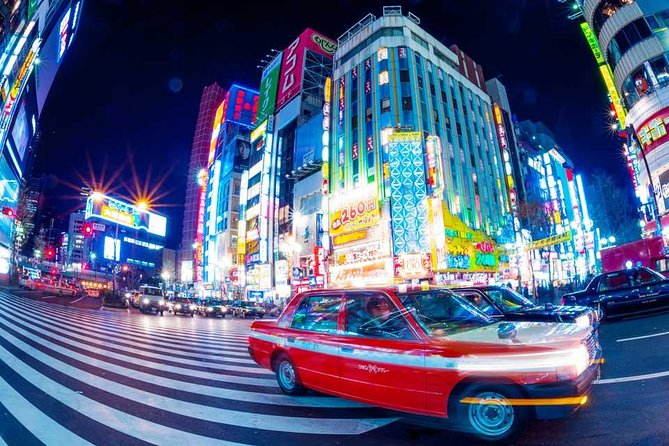
The first main stop is Kabukicho, where you have about an hour to work with Tokyo’s nighttime signs and street activity. This is the most direct introduction to the tour’s style. You are not simply shown a famous sign and sent on your way. You are encouraged to look for lines, color, movement, and small scenes within the larger district.
Kabukicho presents a useful technical challenge. Neon is bright, people move quickly, and streets can look much darker than they feel to your eyes. Your guide may suggest changing shutter speed or overall exposure, then help you compare the result. If you use a dedicated camera, bring one with some control over shutter speed or exposure.
I like this part because it can produce more varied images than a single landmark. You might find a frame built around glowing signage, another around pedestrians passing through light, and another using traffic or reflections. The guide’s local knowledge also helps you notice places you might miss if you were walking alone with your eyes fixed on a map.
There is a practical limit. A photography lesson takes patience, but the group is moving through an active district. If you need extra time to change settings, say so. The most serious criticism of the experience involved a guide walking too fast, and losing the group in an unfamiliar part of Tokyo can ruin the evening.
Omoide Yokocho: a tighter, more atmospheric stop
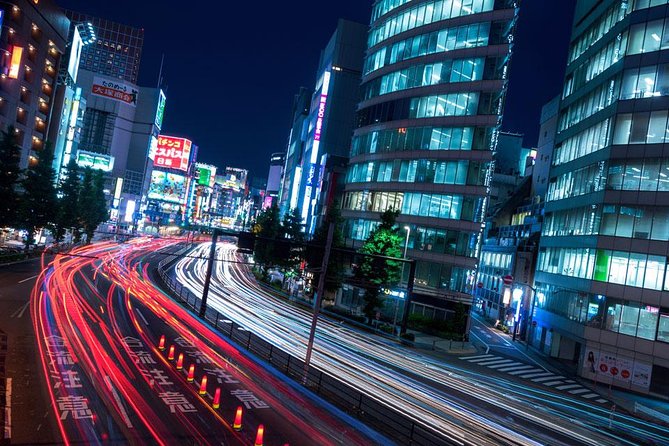
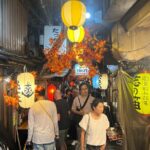
The itinerary then includes about 30 minutes at Omoide Yokocho, also called Memory Lane. This is a shorter stop, but it changes the visual mood. Instead of wide crowds and tall signs, you work in a narrow setting filled with small details and concentrated light.
This is a good place to think about framing. In a tight lane, you need to decide what belongs at the edges of the image and what should be left out. Signs, entrances, people, and overhead details can quickly make a frame feel crowded. Your guide can help you simplify it.
The half-hour visit also means you should not expect a long, relaxed exploration of every corner. Keep your camera ready and listen for the next suggested angle. If you are using a phone, this is a useful place to apply advice about contrast and exposure compensation without getting buried in technical settings.
The stop adds texture to the evening. Kabukicho gives you large-scale neon and movement, while Omoide Yokocho offers closer, more intimate scenes. Together, they teach you to photograph Tokyo as a collection of spaces rather than as a checklist of landmarks.
The train to Shibuya, with the fare paid separately
After Shinjuku, the group travels by train to Shibuya. The train fare is not included, so carry enough cash or a usable transit payment method for this short transfer. The experience description says bus fare is excluded, but the actual movement between these districts is described as a train journey.
This transfer is part of the evening rather than a sightseeing stop. It breaks up the walking and moves you from Shinjuku’s entertainment district to Shibuya’s youth and nightlife center. Since Tokyo stations can be confusing, stay with the group and do not assume you will easily spot the guide after a crowd separates you.
The small group should help here, but only if everyone keeps together. One of the strongest positive comments about the tour praised a guide for making sure the group stayed together even in huge crowds. That is the standard you should expect from a careful guide, but it is still wise to remain attentive.
Shibuya Crossing: the grand finale
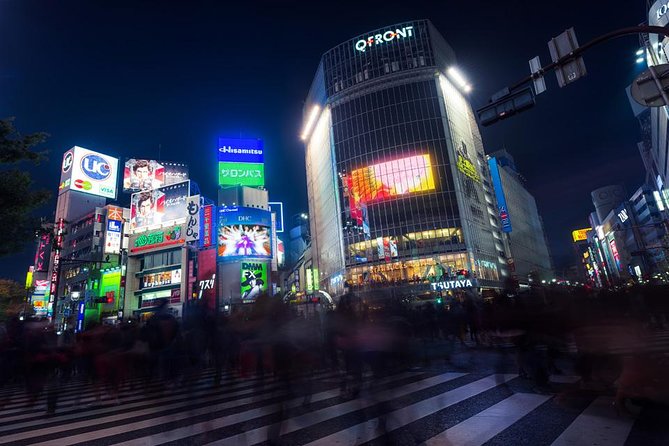
The final major stop is Shibuya Crossing, with about 45 minutes assigned to the area. This is the tour’s most recognizable photo setting and the place where long-exposure technique can become especially rewarding.
You can photograph the crossing from different angles and use the movement of people to create lines across the frame. A slower shutter speed can turn the crowd into flowing shapes, while a faster setting can isolate individual figures. Your guide helps you choose an approach rather than treating one camera setting as the correct answer for everyone.
The crossing is also a test of timing. Thousands of people may pass through the intersection, but the best image is not always the busiest one. Look for a clean arrangement, a person separated from the crowd, or a moment when signs and movement balance each other.
You finish near Shibuya Station at 2-chōme-2-1 Dōgenzaka. That ending point is useful if you want to continue your evening in Shibuya, but the tour itself ends with the station area and your own photographs. It is not designed as a broad cultural tour of the district.
What the photography instruction is really like
The strongest part of this experience is its workshop feel. Guides have used a demonstration-and-practice method: show you a setting, let you try it, then correct the result. That approach is more useful than a long talk about camera theory because you can see what the adjustment does in real time.
Charles is repeatedly praised for camera help, patience, and local knowledge. Lukasz, also referred to as Luke, has worked well with both beginners and experienced photographers, including participants using Canon and Fuji cameras. Stephane has been described as patient and helpful with composition and camera capabilities.
The names matter because the experience seems to depend heavily on who leads your particular departure. The listed guide may vary, and the feedback includes several instructors. You should expect a professional photography guide, but not necessarily one specific person unless the booking confirmation names them.
The instruction covers more than manual camera settings. Participants have received help with where to place the frame, what to remove, how to use contrast, and how to lock focus or exposure on a phone. One phone user learned simple controls that made a lasting difference, which is a good reminder that better photographs do not always require better equipment.
If you have a camera, bring one that lets you control shutter speed or overall exposure. A tripod was suggested by one participant, but it is not listed as an included item or required piece of equipment. If you use a smartphone, make sure it is charged and ready before meeting the guide.
Is $184.99 good value for two people?
The cost is $184.99 per group of up to two people. That is not cheap for a three-hour evening walk, but the comparison should be with a private or nearly private photography lesson, not with a standard sightseeing group tour.
For two people who want direct help, the value is fairly strong. You share the guide’s attention with at most two other participants, and the route includes three distinct settings plus the train transfer. A guide who can adjust advice to your camera, skill level, and goals may save you hours of trial and error.
The value is lower if you only want to see Shinjuku and Shibuya at night. You can visit these areas without a paid tour, and the tour does not include admission tickets or a meal. It also does not promise a formal lesson in Tokyo’s culture, nightlife, or history. One piece of feedback described it as strictly a photography tour, which is the right way to set your expectations.
I would book it for someone who wants stronger photographs and practical instruction. I would not book it for someone seeking a general evening tour with lots of historical explanation.
Who will get the most from this evening?
Beginners are welcome. You do not need prior photography experience, and the guides have worked with people who use only smartphone cameras. That makes the tour a good first-night activity if you want to get your bearings while also learning how to record the city.
Intermediate photographers may get the most technical value. If you already understand basic exposure, you can spend more time on long exposure, composition, and finding stronger positions for the shot. A guide can also help you use features on a camera you already own but have never explored.
Couples are a natural fit because the price is set for up to two people. Small groups also suit anyone who dislikes waiting while a large class takes turns with the instructor.
This is less suitable if you walk slowly, dislike crowded streets, or need a very relaxed pace. It is also a poor match if you want a seated class or guaranteed time at every stop. The route involves active city streets, and one participant missed the final hour after falling behind.
Weather, cancellation, and practical limits
The experience requires good weather. If poor weather cancels it, you are offered another date or a full refund. If you cancel or request a change yourself, the booking is non-refundable and cannot be amended.
That policy makes weather worth checking before you reserve, especially during a season with frequent rain. One guide handled rain by changing plans, but you should not assume every wet evening will run in the same way.
The activity has a mobile ticket and is near public transportation. Most people can participate, but the walking pace and crowds are the key practical issues. Wear comfortable shoes, keep your equipment simple, and stay close to the guide during station transfers and busy crossings.
The tour is recommended by 97 percent and rated 4.9 out of 5 from 165 ratings. Those figures suggest a consistently strong experience, but the lower scores point to the main risk: this works best when communication and pace are handled well.
Should you book the Tokyo Cyberpunk Street Photo Tour?
Book it if you want to photograph Tokyo after dark and would value direct help from a professional photographer. The combination of Kabukicho, Omoide Yokocho, and Shibuya Crossing gives you three different kinds of night scenes, while the small group leaves room for real instruction.
It is especially worth considering if you use an iPhone or another phone camera. You will not be treated as an outsider just because you do not carry a dedicated camera, and simple advice about exposure, contrast, framing, and focus can improve your images immediately.
Skip it if your main goal is cultural commentary, food, or a slow night walk. Also think twice if you are prone to getting separated in crowds. For the right person, this is a focused photo workshop wrapped inside a memorable Tokyo evening. For everyone else, it may feel like an expensive walk through places you could visit on your own.
FAQ
How long does the Tokyo Cyberpunk Street Photo Tour last?
The experience lasts about three hours, although the detailed description gives an approximate duration of two and a half hours. Plan for roughly that evening time frame.
Where does the tour start?
It starts at Happy Lemon Keio Shinjuku Shop, 1-chōme-1-4 Nishishinjuku, Shinjuku City, Tokyo 160-0023. The meeting time is 7 pm.
Where does the tour end?
The tour ends at 2-chōme-2-1 Dōgenzaka, Shibuya, Tokyo 150-0043, near Shibuya Station.
Can I use a smartphone instead of a camera?
Yes. The guide can provide photography advice for smartphones, including iPhones. You can also bring a dedicated camera if it allows some control over shutter speed or overall exposure.
Is transportation included?
No. The transfer from Shinjuku to Shibuya is made by train, and you pay that fare separately. Bus fare is also listed as not included.
How many people can join the tour?
The maximum group size is four people. The listed price is $184.99 per group for up to two people.
More Photography Tours in Tokyo
More tours in Tokyo we've reviewed












Photography Sessions, compared.
 ★ 4.9Tokyo: Kimono Dressing, Walking, and Photography SessionFrom $67
 ★ 5.0Best Go Kart Experience in Shibuya Crossing with Iconic PhotosFrom $106
 ★ 4.8Tokyo Go-Karting Experience: Shibuya Crossing with PhotosFrom $901 hour
 ★ 5.0Tokyo by Night Photography Tour (Private Option Available)From $105
 ★ 4.8Tokyo: Exclusive Access to Sumo Morning Practice with PhotosFrom $962 hours
 ★ 4.7Tokyo: Sumo Practice Tour with Ring-Side Seat and PhotoshootFrom $962 hours