Reviewed · SAMURAI & NINJA EXPERIENCES
Tokyo: Shinobi Samurai Legacy Journey, 90 min
In a private dojo in Asakusa, you move beyond costume photos and try the basic skills of both ninja and samurai tradition. The session draws on a clan history of more than 450 years, with clan-made tools, meditation, stealth walking, shuriken throwing, and sword practice.
In This Article
- Key Points
- A Private Dojo Instead of a Theme Park Show
- Starting With Etiquette and Meditation
- Seeing the Clan’s Handmade Tools
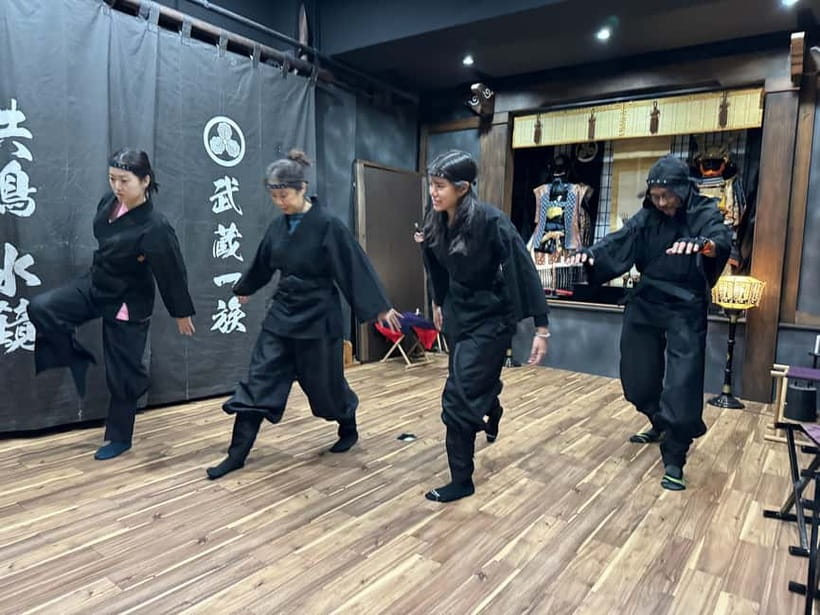
- Learning Namba Walk and Stealth Steps
- Shuriken Throwing and Quiet Concentration
- Changing Into Hakama for Samurai Sword Practice
- Closing With Kujikiri and Photos
- What $170 Buys You in 90 Minutes
- Finding the Dojo Near Kappabashi
- Who Will Enjoy This Experience Most
- Practical Booking Advice for Asakusa
- Should You Book the Shinobi Samurai Journey?
- FAQ
- How long does the Shinobi Samurai Legacy Journey last?
- Where does the activity take place?
- What languages are available?
- What activities are included?
- Are clothing and weapons included?
- Is food included?
- Can spectators attend?
- Who cannot take part?
- What is the cancellation policy?
I like the small, personal setting and the strong English interpretation, which make the history easy to follow. I also like the thoughtful contrast between the two traditions: quiet concentration for the shinobi, formal discipline for the samurai. The main consideration is the price, $170 per person for 90 minutes, which makes this a special-interest activity rather than a casual stop.
Key Points
- 450-plus years of clan tradition: Learn directly from clan members in a private dojo rather than a themed attraction.
- Two types of training: Practice ninja techniques first, then change into hakama trousers for samurai sword work.
- Meditation has a purpose: Opening meditation, silent focus, and kujikiri connect the physical drills with self-control.
- Real tools and weapons: Handle shuriken and Japanese swords under instruction, with permission and close supervision.
- Small-group feel: The intimate format can be especially rewarding for families, couples, and curious beginners.
- Easy Asakusa location: Find the dojo near Kappabashi Dogugai Street, with Tokyo Skytree visible along the approach.
A Private Dojo Instead of a Theme Park Show
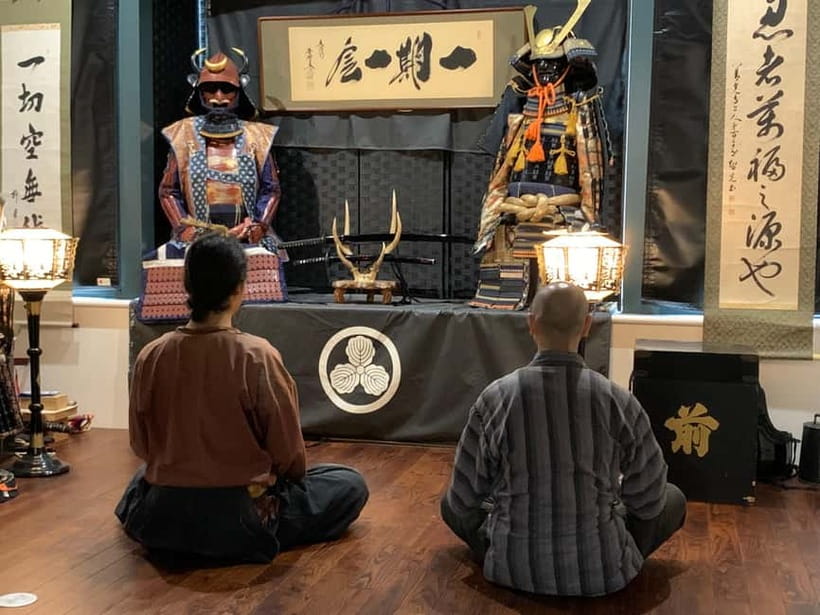
This 90-minute experience takes place at the Musashi Ninja Clan Asakusa Dojo, in a third-floor space near Tokyo’s Kappabashi kitchenware district. You do not simply watch a staged fight. You enter the dojo according to traditional etiquette, listen to clan history, and take part in simple training exercises.
That distinction matters. Tokyo has plenty of places where you can put on a robe and pose with a plastic sword. Here, the focus is on how the weapons were handled, why the movements mattered, and how mental control shaped both shinobi and samurai practice.
The atmosphere is welcoming, but it is still a training space. You are expected to pay attention, avoid chatting while others are working, and never touch a weapon without permission. That gives the session a more serious tone than a quick photo opportunity.
The English interpretation is provided throughout, along with Japanese. This is important because the activity depends on explanation. Without interpretation, shuriken throwing or a sword-drawing lesson could become little more than a novelty. With it, you can connect each movement to a wider idea of discipline, silence, balance, and restraint.
A few more Tokyo tours and experiences worth a look

Starting With Etiquette and Meditation
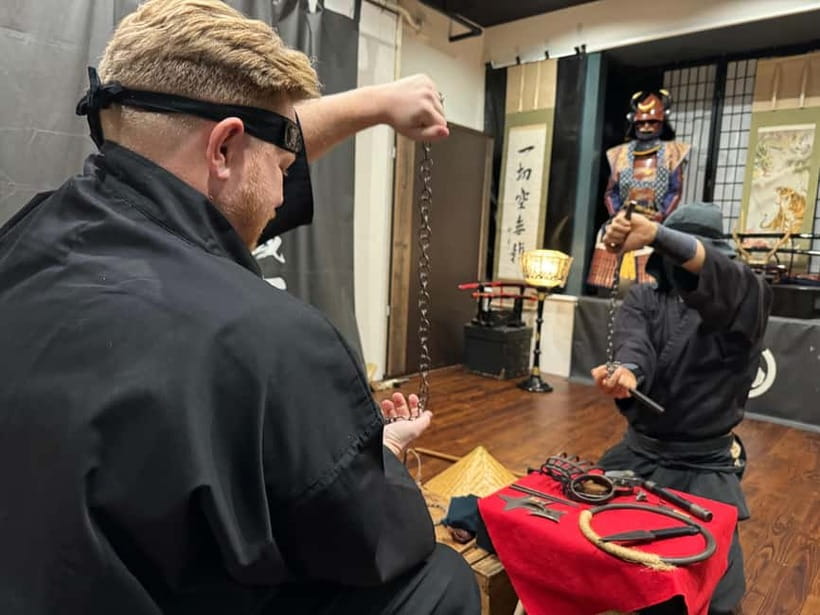
The session opens with dojo etiquette and a short meditation. This is not a long religious ceremony, and you do not need prior experience. It is a way to settle down before handling weapons and to shift your attention away from the noise of Tokyo.
I like this beginning because it sets the tone for everything that follows. The class is not presented as a race to throw the most stars or swing a sword with the most flair. You are asked to be calm, precise, and aware of your body.
The instructor then gives a martial arts demonstration dedicated to the clan’s ancestors. It provides a visual introduction before you begin moving. You can watch the posture, timing, and control first, then try a simpler version yourself.
The demonstration also gives the clan tradition a human connection. You are not learning from a generic ninja character. The session presents the dojo as part of a family or clan line that has continued for more than 450 years.
Seeing the Clan’s Handmade Tools
Before the practical work begins, you are introduced to handmade shinobi tools and weapons. The equipment used in the dojo was made by the clan’s weaponsmiths, so this section adds useful context to the exercises that follow.
You might be familiar with the exaggerated ninja images found in films and video games. The tools here offer a chance to see the subject in a more grounded way. The instructor and interpreter can explain what you are holding and how it fits into the clan’s tradition.
This is also a good moment to ask questions, within the limits of the class. The experience is not designed as a museum lecture, so the time is active and compact. Still, the objects give the session a sense of place and purpose.
Because the equipment is real enough to require care, the safety rules matter. Do not reach for anything until you are told to do so. That simple rule helps keep the training orderly and lets the instructor focus on technique rather than constant correction.
Learning Namba Walk and Stealth Steps
The movement training begins with Namba, described here as the shinobi samurai walk. The goal is to restore more natural body movement by coordinating the body in a traditional way.
You then work on basic stealth steps. Expect simple instruction rather than an elaborate obstacle course. The value is in noticing how you place your feet, shift your weight, and move without unnecessary sound or motion.
This can be one of the more surprising parts of the experience. Most people arrive thinking about stars and swords, but walking slowly and correctly demands more concentration than it appears to. It gives you a physical sense of why quiet movement depends on balance and control.
The exercise is also suitable for beginners because you are learning foundations, not being tested as a trained martial artist. Still, attentive participation matters. The dojo specifically asks inattentive people to leave, so this is not the right choice if you want to chat through the instruction or treat the whole session as a photo shoot.
Shuriken Throwing and Quiet Concentration
Next comes shuriken throwing, one of the most memorable parts for many people. You learn how to handle ninja stars and aim them under instruction.
The stated purpose is not simply to hit a target. The throwing exercise is meant to develop concentration and keep the mind silent. That idea helps explain why the class begins with meditation and why the instructor emphasizes control over showmanship.
You will get the fun of using an actual traditional weapon, but the lesson is framed as practice rather than play. Follow the instructor’s directions carefully, wait for permission before picking up or throwing anything, and pay attention to the safety instructions.
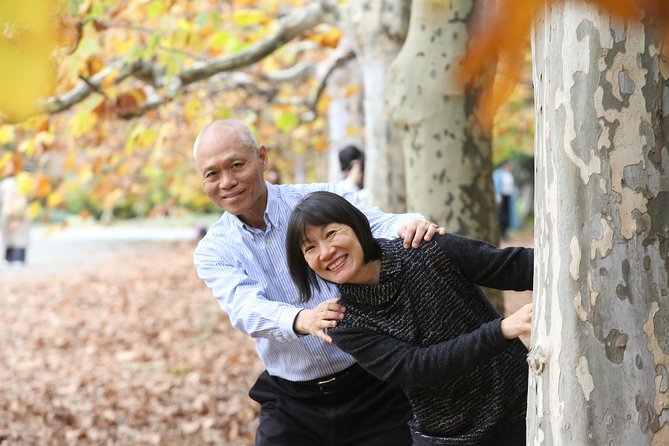
This part can work well for families. A young participant may find the physical activity exciting, while an adult may appreciate the mental side of the exercise. One family session included a grandmother and a 13-year-old girl, with the younger participant showing impressive natural ability. You should not expect instant accuracy, though. The aim is to learn the basic motion and focus, not to become a ninja in one afternoon.






Changing Into Hakama for Samurai Sword Practice
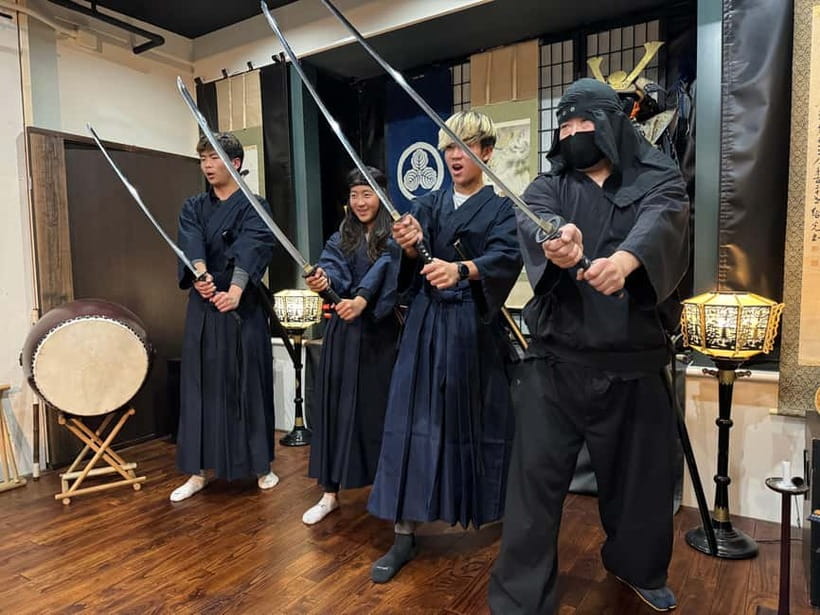
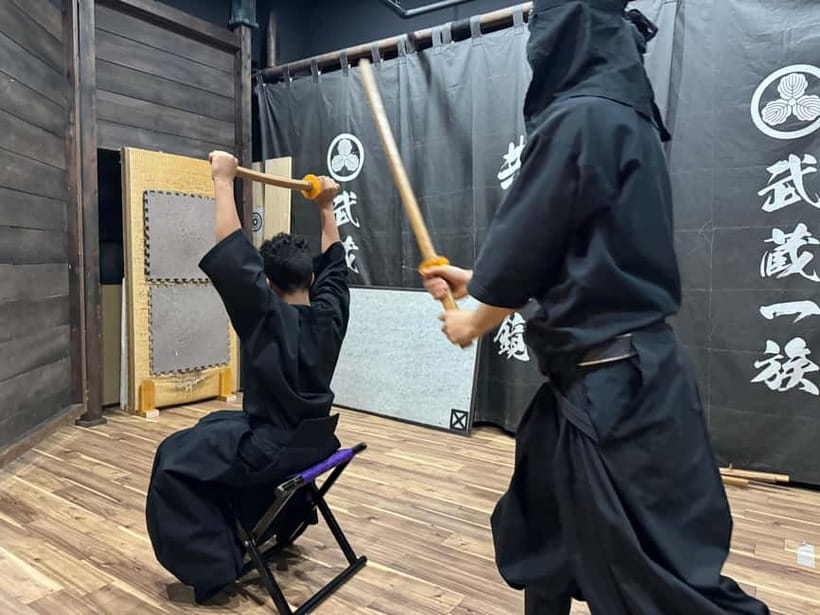
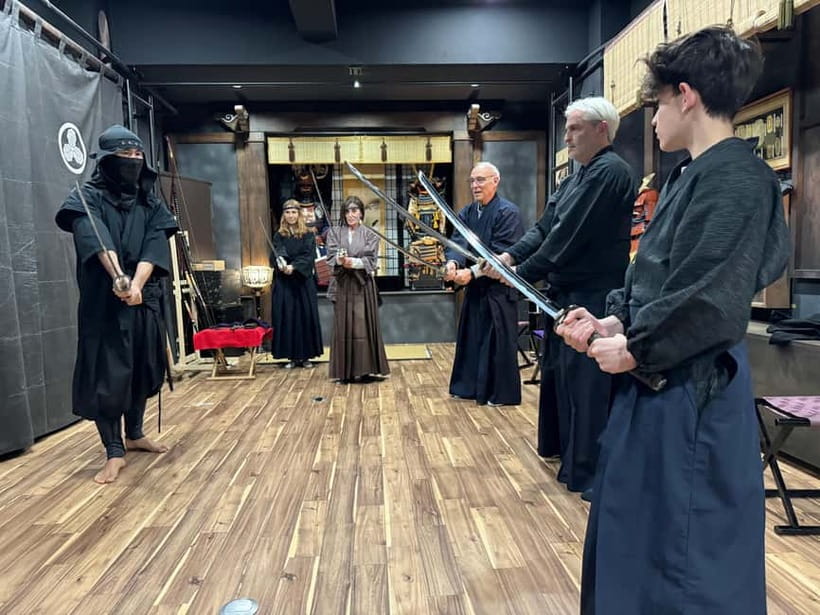
After the shinobi exercises, you change into samurai hakama trousers. This costume change is not just for pictures. It marks the shift from stealth training to the formal posture and handling associated with samurai sword work.
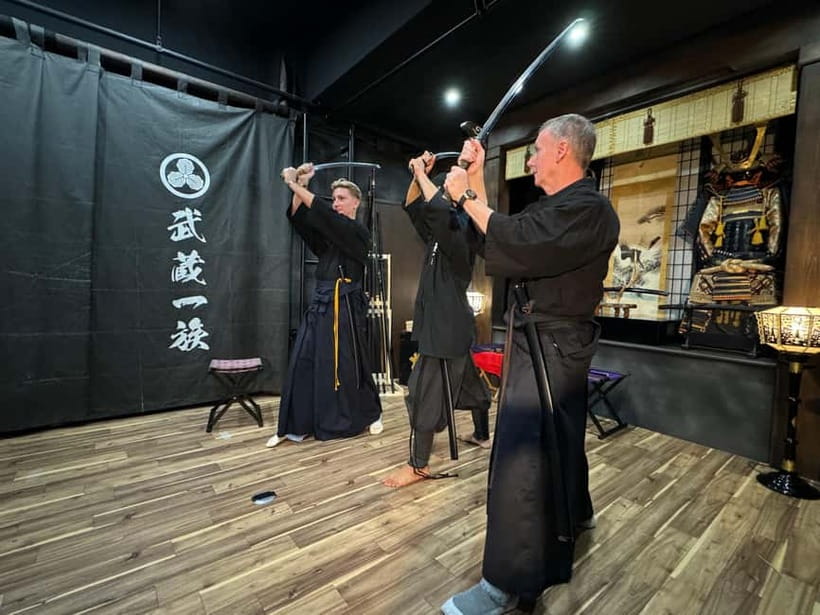
You learn how to hold the sword, how to stand, and how to draw it. The pace is introductory, so you do not need martial arts experience. The instructor guides you through the movements, while the interpreter makes sure you understand the terms and the reason behind each step.
The training stresses self-discipline. One of the central ideas is that the ultimate goal of swordsmanship is to win without drawing the sword. That gives the sword lesson a useful sense of restraint. It is not about waving a blade around dramatically. It is about posture, awareness, and the ability to control yourself.
The sword practice is also where clothing and setting make the activity feel most distinctive. Wearing hakama trousers in the dojo creates a stronger connection to the formal side of the tradition than ordinary street clothes would. You should still remember that this is a short lesson, not a full course in Japanese swordsmanship.
Closing With Kujikiri and Photos
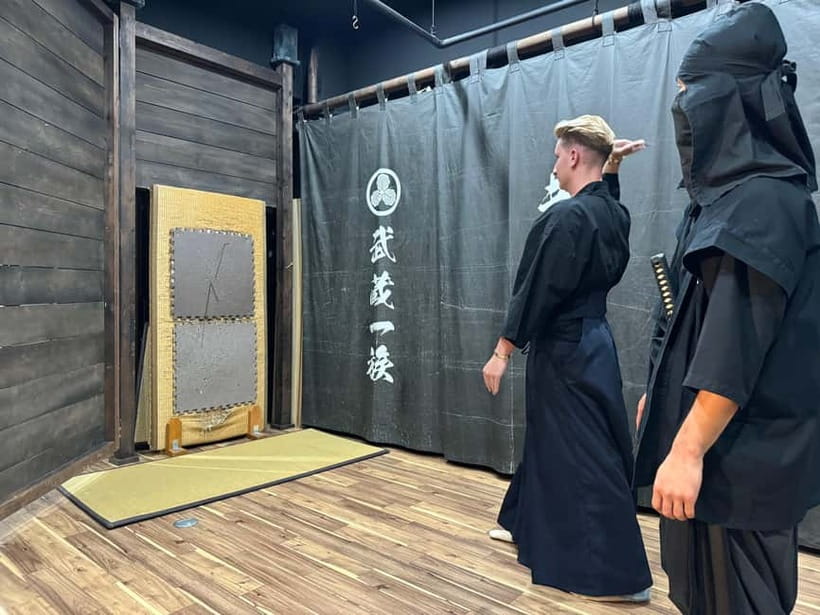
The session ends with a short meditation and kujikiri. This practice uses shinobi mudras, or hand gestures, as a well-wishing exercise intended to help you tap your potential.
You may find this part more symbolic than practical, but it completes the structure of the class. The opening meditation prepares you to train, and the closing meditation gives you a quiet pause after the physical exercises. It also shows that the experience treats shinobi tradition as more than weapons and stealth.
Photo time follows. You can take pictures in the ninja or samurai clothing, with the dojo setting and equipment adding context. This is particularly useful if you want a souvenir that shows what you actually did rather than a standard rental-costume portrait.
Allow yourself time to enjoy the pictures, but keep the photo session secondary. The strongest part of the activity is the instruction and the chance to understand the movements. The photographs work best as a record of that experience.
What $170 Buys You in 90 Minutes
At $170 per person, this is expensive for a 90-minute activity. The price includes the instructor and interpreter, ninja and samurai outfit rental, and weapon rental, so you are not paying extra for the basic equipment once you arrive.
The value depends on what you want from Tokyo. If you only want a quick costume picture, cheaper options may suit you better. If you want private or small-group attention, English interpretation, hands-on training, and a direct connection to a long-running clan tradition, the price becomes easier to justify.
The small-group format is a real advantage. One pair had the dojo experience with only two participants, allowing for a personal feel and plenty of room for instruction. Group size can vary, so you should not assume every session will be private, but the format is clearly designed to feel intimate rather than crowded.
I would compare the cost with other short specialist activities in Tokyo, not with a museum ticket. You are paying for an instructor, an interpreter, clothing, equipment, and a carefully structured session. The experience makes the most sense as a one-time cultural splurge.
Finding the Dojo Near Kappabashi
The meeting point is at the intersection of Kappabashi Dogugai Street and Kappabashi Hondori Street. Look for the traffic light marked Kappabashi, then walk north toward Kototoi Dori Street on the left sidewalk of Kappabashi Dogugai.
As you walk, Tokyo Skytree is visible to your right. Use the signboard shop at the corner of the block as a starting reference. The dojo is on the third floor of the 10th building.
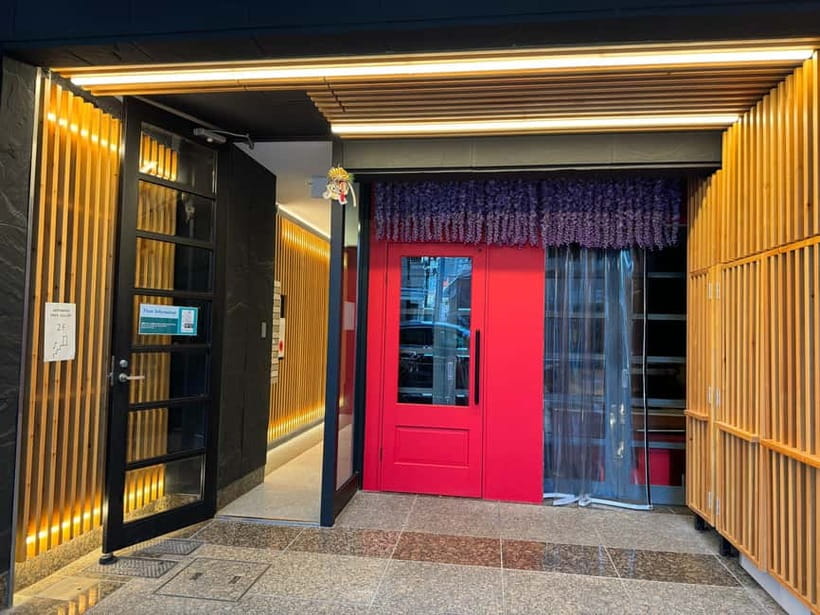
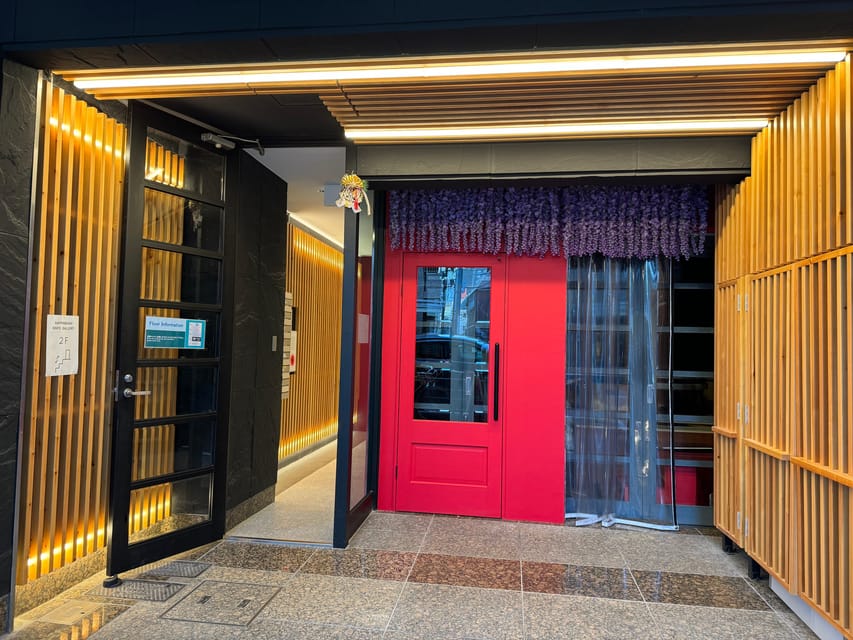
At street level, look for Kirku, a Japanese cafe bar with a red door. The building is between the knife store Takanojin and the coffee shop Touching Sense of Earth. There is another knife store called Musashi across the street, but that is not the meeting point.
These details are worth saving before you set out. Kappabashi has plenty of shops and signs, and the wrong knife store can send you in the wrong direction. The activity finishes back at the meeting point, so you do not need to arrange a separate return transfer.
Who Will Enjoy This Experience Most
I would choose this for someone who wants more than sightseeing photos. It suits couples, families, and solo participants who are curious about martial traditions and willing to listen carefully.
It is also a good fit for a family with a teenager. The shuriken throwing and clothing make the session lively, while the meditation and history give it enough substance for adults. The activity is not suitable for pregnant women, and anyone under the influence of alcohol or drugs will not be allowed to enter.
You should also be comfortable with firm dojo rules. No alcohol, drugs, littering, or chewing gum are allowed. You must not touch weapons without permission, and you should avoid talking while another person is training.
Spectators have a separate admission charge of 2,500 yen per person. If a family member plans to watch rather than participate, include that extra cost in your planning.
Practical Booking Advice for Asakusa
The activity is offered in English and Japanese, with interpretation provided during the training. That makes it a reasonable choice if you want historical explanations but do not speak Japanese.
You can reserve now and pay later, which helps if your Tokyo schedule is still moving around. Cancellation is allowed up to 24 hours in advance for a full refund. Food is not included, but that is easy to manage in Asakusa or around Kappabashi before or after the session.
Wear something that lets you move comfortably beneath the rented clothing. The supplied information does not set out a specific dress code, so avoid planning the activity around a delicate outfit or anything that makes changing awkward.
Keep your expectations in the right place. This is a 90-minute introduction, not professional weapons training, a full history seminar, or a long martial arts course. You will learn basic handling and movement, gain cultural context, and leave with photographs and a clearer sense of the discipline behind the popular ninja and samurai image.
Should You Book the Shinobi Samurai Journey?
Book it if you want a hands-on cultural activity with a small-group feel, strong English interpretation, and a direct connection to a clan tradition more than 450 years old. The best reasons to go are the combination of meditation, shinobi movement, shuriken practice, and formal sword handling in one compact session.
Think twice if $170 feels high for 90 minutes or if you mainly want a costume photo. The price is easier to defend when you take part fully, listen to the explanations, and value the handmade tools and clan background.
For a family, couple, or curious first-time visitor to Tokyo, this is a memorable way to spend part of an Asakusa day. Go ready to focus, follow the rules, and accept that the real lesson is discipline, not theatrical sword swinging.
FAQ
How long does the Shinobi Samurai Legacy Journey last?
The experience lasts 90 minutes and ends back at the meeting point.
Where does the activity take place?
It takes place at the Musashi Ninja Clan Asakusa Dojo, on the third floor of a building near the intersection of Kappabashi Dogugai Street and Kappabashi Hondori Street.
What languages are available?
The activity is offered in English and Japanese. Interpretation is provided throughout the session.
What activities are included?
The session includes opening meditation, an instructor demonstration, an introduction to handmade shinobi tools and weapons, Namba walking, stealth steps, shuriken throwing, hakama trousers, samurai sword handling, short meditation, kujikiri, and photographs.
Are clothing and weapons included?
Yes. Ninja and samurai outfit rental, weapon rental, instructor fees, and interpreter fees are included.
Is food included?
No. Food is not included in the activity.
Can spectators attend?
Yes, spectators can attend for an admission charge of 2,500 yen per person.
Who cannot take part?
The activity is not suitable for pregnant women. People under the influence of alcohol or drugs are not permitted to enter.
What is the cancellation policy?
You can cancel up to 24 hours in advance for a full refund.
More Samurai & Ninja Experiences in Tokyo


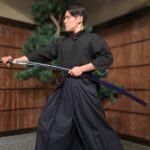
More tours in Tokyo we've reviewed












Samurai & Ninja Experiences, compared.
 ★ 4.5Tokyo: Samurai Restaurant Show Ticket with 2 DrinksFrom $551h 30m
 ★ 4.6Tokyo: Samurai Ninja Museum Guided tour and ExperienceFrom $27
 ★ 5.0Skip the lines Basic Ticket at SAMURAI NINJA MUSEUM TOKYOFrom $28
 ★ 5.0Tokyo: Authentic Samurai Training at a DojoFrom $211
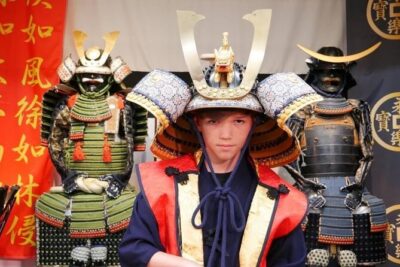 ★ 5.0Best Samurai Experience in TokyoFrom $65
 ★ 4.6Tokyo: Legend Samurai Entertainment Night in Kanda ShrineFrom $44