Reviewed · SUMO EXPERIENCES
Tokyo: Sumo Practice Tour with Ring-Side Seat and Photoshoot
A morning sumo practice brings you much closer to the sport than a tournament seat can. You hear the wrestlers breathe, watch repeated bouts grow more forceful, and see the discipline between the athletes and their stable master. I like the close view of serious training and the way the guide explains what you are seeing instead of leaving you to guess. I also like the small group, limited to 10 people, which keeps the setting quiet and personal.
In This Article
- Key points to know before you book
- Why a practice session can beat a tournament seat
- Meeting at Kiyosumi Shirakawa Station
- At the stable: rules before the ring
- Watching the morning training from close range
- Seating, tatami, and the real comfort question
- The photo at the end is a bonus, not a promise
- What you learn about sumo culture
- Is $96 a fair price?
- Who will enjoy this most
- Important timing and stable changes
- My booking advice
- FAQ
- Where does the sumo tour meet?
- How long does the experience last?
- What happens during the tour?
- Is the practice a staged performance?
- Is a photo with a sumo wrestler guaranteed?
- Are chairs provided?
- Can children join the tour?
- Is the experience wheelchair accessible?
- Is food included?
- What happens if the stable cancels practice?
The main catch is comfort. You may sit on tatami flooring for much of the two hours, and seating varies by stable. Some sessions have several rows of chairs, while others require floor sitting or standing. The tour is also strict about time, age, and stable rules, so this is not a casual drop-in activity.
Key points to know before you book
- Practice, not a staged show: You watch wrestlers train through repeated drills, rituals, and bouts at a working sumo stable.
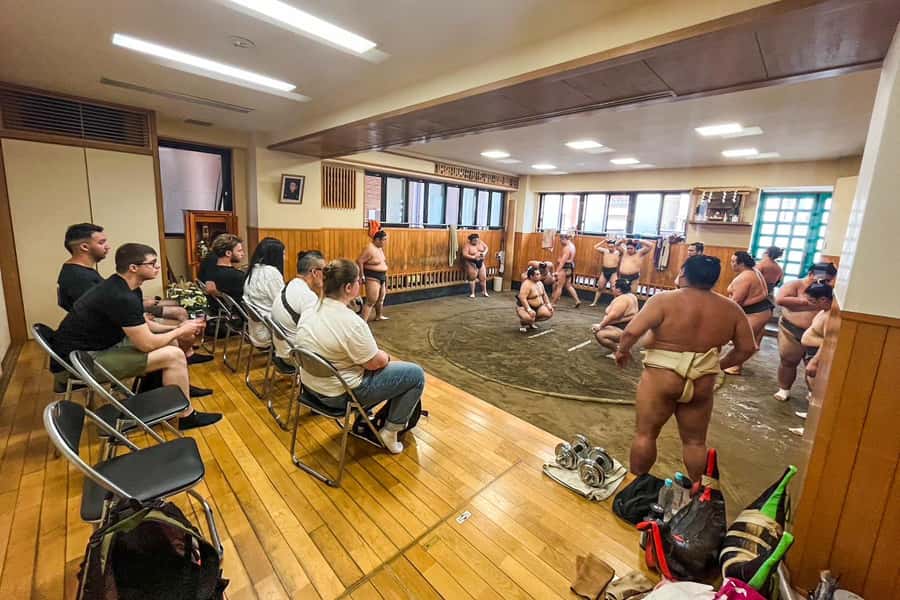
- Close enough to hear the effort: The viewing area is near the ring, and the training can become surprisingly intense.
- Guide-led cultural context: Your English-speaking guide explains rules, ranks, customs, and stable etiquette before practice begins.
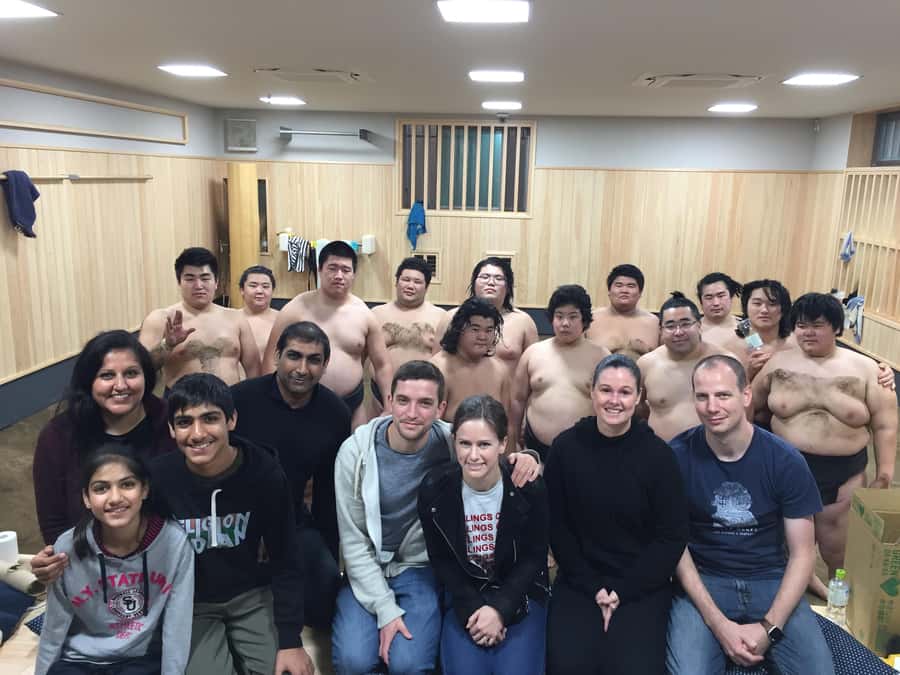
- A possible wrestler photo: A group or individual photo may be arranged after practice, but the wrestler decides if and when it happens.
- Comfort depends on the stable: Chairs are available at some locations, but you should be prepared for tatami sitting or standing.
- For ages 12 and up: Children under 12 cannot enter, and wheelchair access is not available.
Why a practice session can beat a tournament seat
At a tournament, you see the polished public face of sumo. The bouts are official, the audience is large, and the focus is on winning. At practice, you see how wrestlers prepare for that moment.
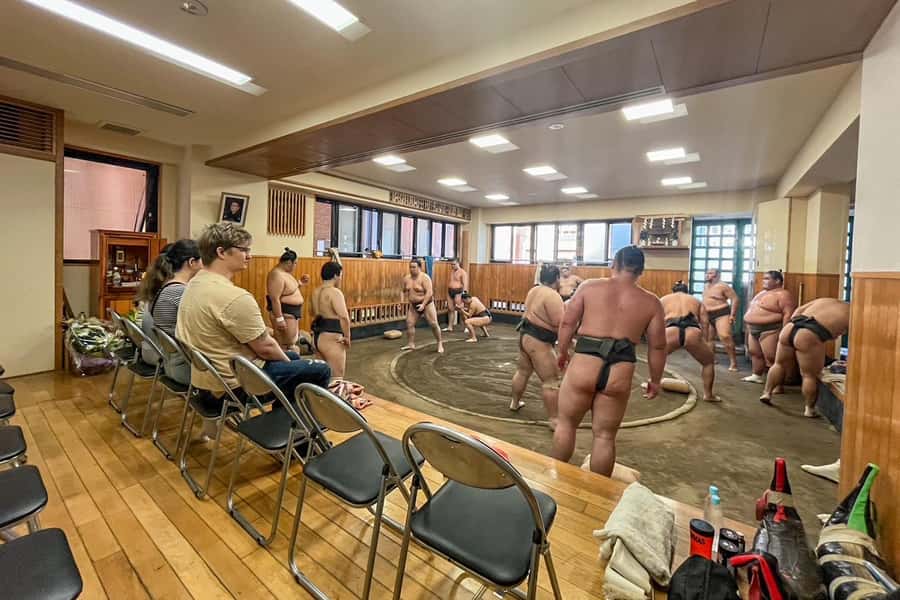
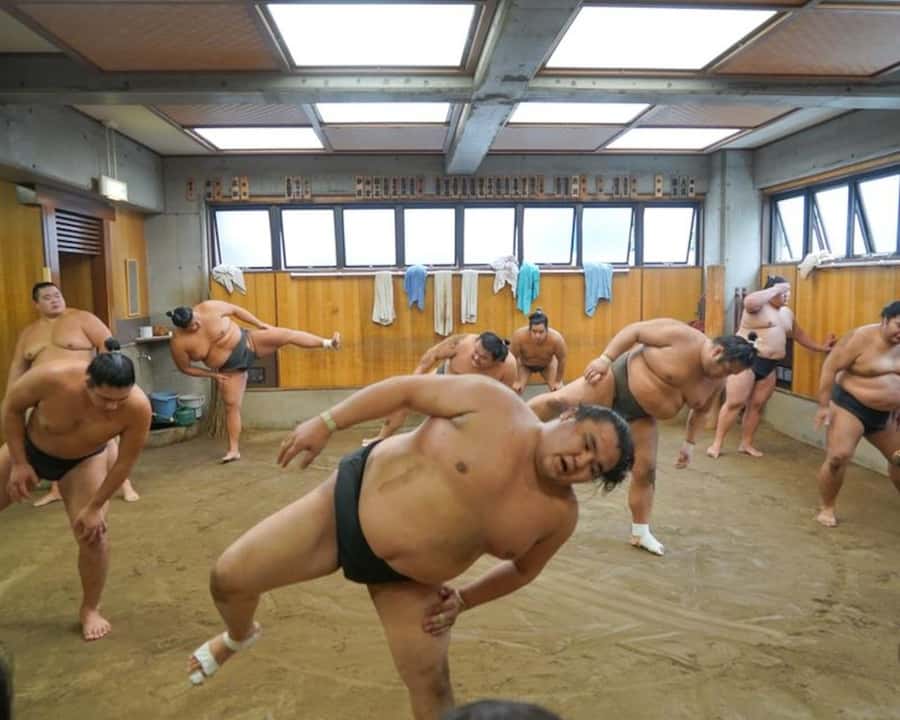
The session may begin with quiet routines and controlled exercises. Then the pace builds. Wrestlers repeat movements, push into each other, test balance, and work through full bouts. The repetition is the point. Sumo is not just a quick collision in a ring. It depends on footwork, timing, strength, endurance, and the ability to keep working after the body is tired.
That close range changes the experience. You can watch small corrections from the stable master and see how seriously the wrestlers treat one another and their training. You may also hear the heavy breathing and slap of bodies against the surface. It is a physical sport, and the session makes that clear.
I would choose this tour if you have already attended a tournament and want the behind-the-scenes side of sumo. I would also choose it if you know little about the sport. The guide gives you enough context to understand what the wrestlers are doing, so you do not need to arrive as a sumo expert.
A few more Tokyo tours and experiences worth a look

Meeting at Kiyosumi Shirakawa Station
Your meeting point is the A1 exit of Kiyosumi Shirakawa Station. Look for a guide carrying a red or orange Magical Trip sign. The stable is only a short walk away, described by one participant as about two minutes from the meeting point.
That short walk matters because the tour begins promptly. Arrive early enough to find the correct exit and meet the guide without rushing. Late arrivals cannot join, and there is no refund or rescheduling for missing the start.
The supplied information includes another reference to Shin-Kawasaki Station, but the detailed meeting instructions identify Kiyosumi Shirakawa Station and the A1 exit. Use the meeting point shown on your final booking confirmation, and check it carefully before leaving your hotel.
The walk itself is not the attraction. Its value is practical: you move quickly from a regular Tokyo station area into a private sumo setting that most people could not enter on their own.
At the stable: rules before the ring
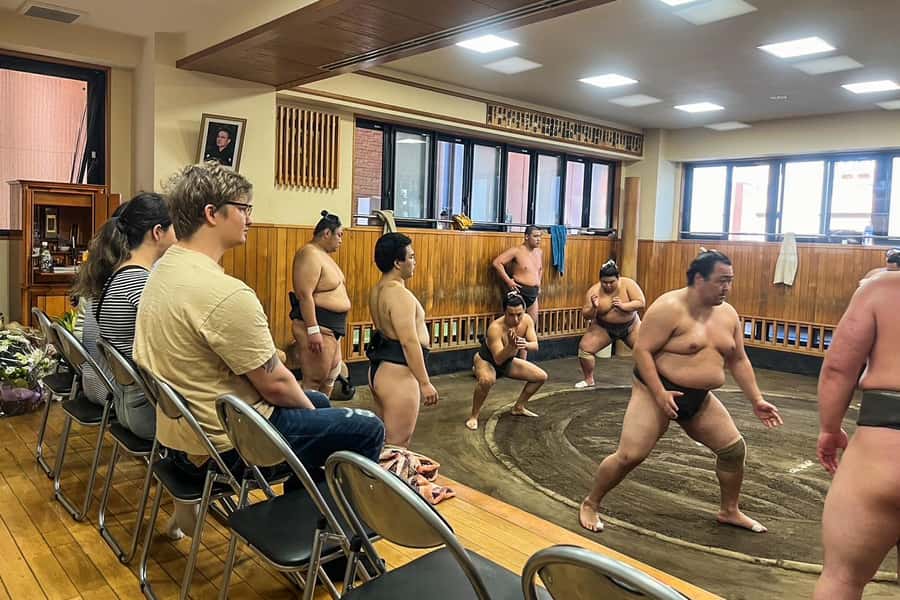
Before you enter, your guide explains how the stable works and what behavior is expected. This briefing is more than a formality. A sumo stable is a training home with its own order and customs, not a theater built for sightseeing.
Guides have included Marie, Sho, and Masao Hiramatsu on different departures, so the person leading your tour can vary. Marie has been especially praised for explaining the history, rules, and basic customs in an engaging way. Sho has covered the ranking system and gave useful background before entering the stable, while Masao has also helped with questions about Japan after the session.
The guide’s role is important because practice can look repetitive at first. You may see the same movement many times, but the explanation helps you notice the purpose behind it. The included Magical Trip Sumo Guidebook adds a useful reference with basic rules, traditions, history, names, and information about the stable.
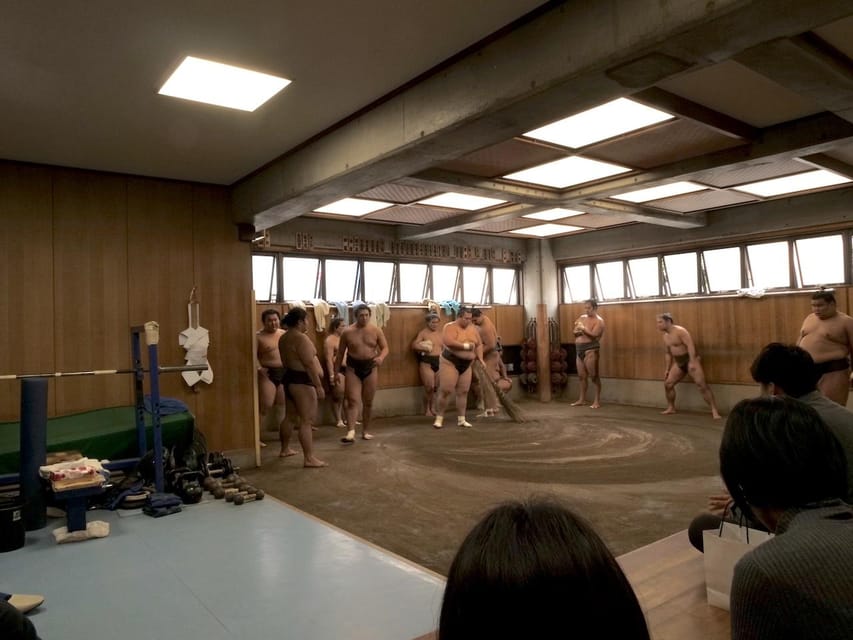
Inside, you may access only the tatami viewing areas. Other parts of the building are off-limits. Follow instructions closely, keep your voice down, and avoid treating the practice like an ordinary photo opportunity. The stable can refuse participation if someone behaves disruptively or ignores its rules, with no refund.
Watching the morning training from close range
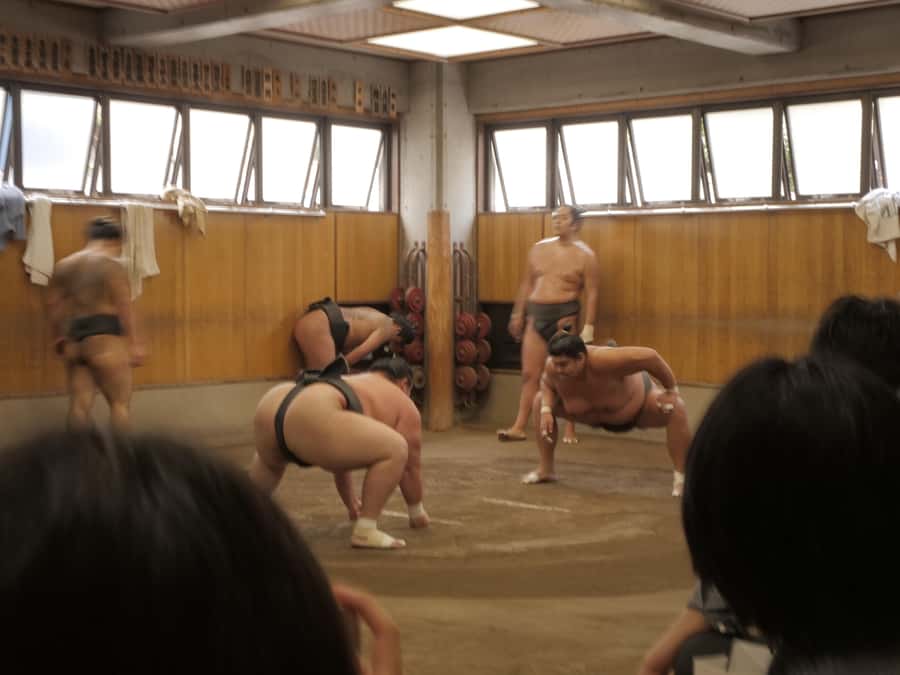
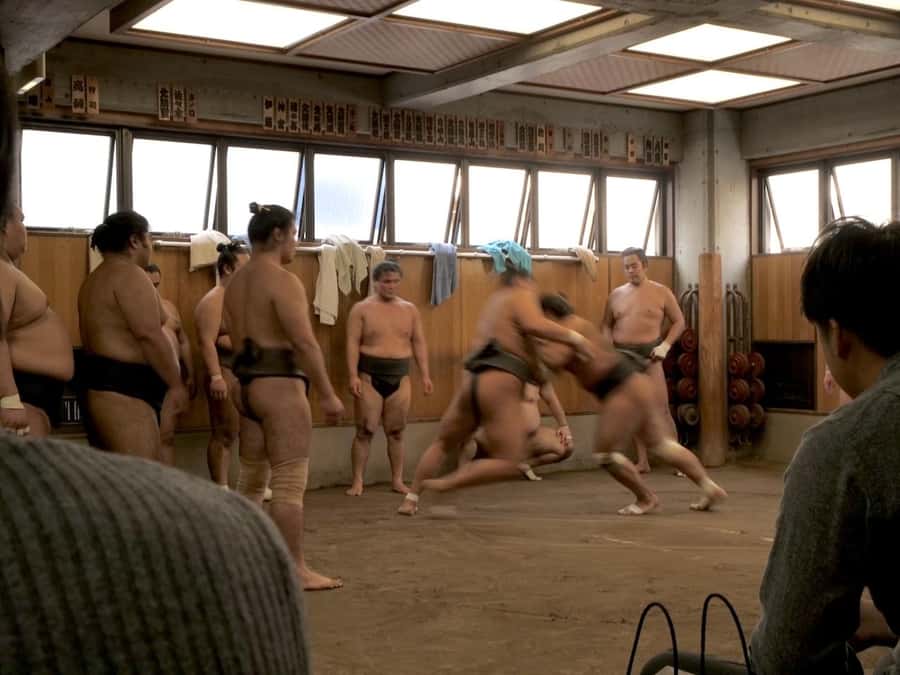
The heart of the two-hour visit is the practice itself. You watch wrestlers prepare, drill, and face one another in bouts. The session can begin at a measured pace and become more intense as it continues.
One of the most useful things to watch is the contrast between routine and effort. Sumo includes formal customs, but the training is also hard physical work. The wrestlers repeat techniques until they are precise, then apply them against someone trying to stop them. You may see different technical movements during the session rather than one simple sequence repeated from start to finish.
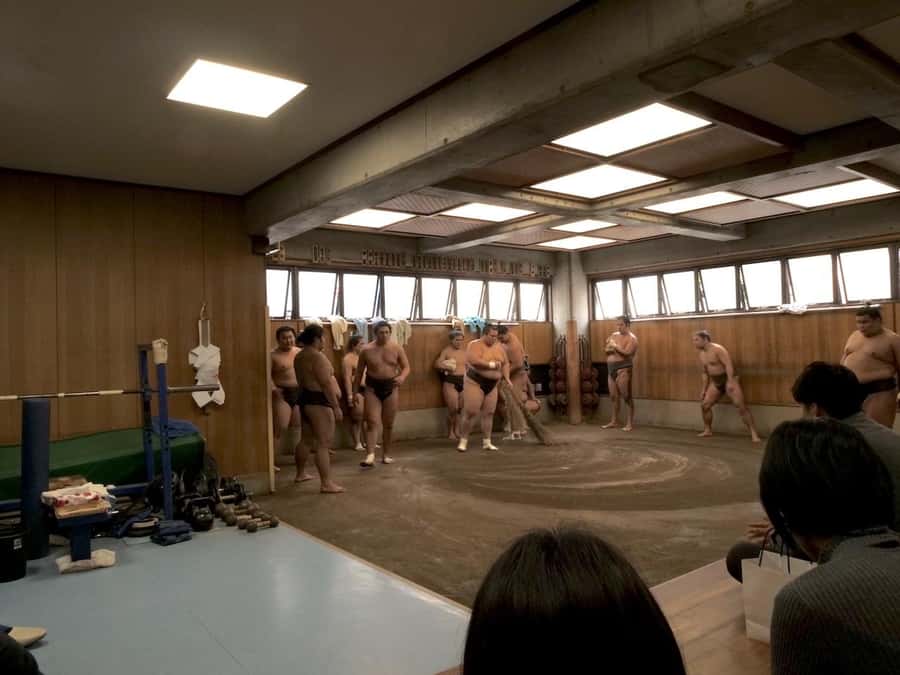
The atmosphere is serious. A stable master gives direction, and the wrestlers follow the training program with focus. That discipline is part of what makes the visit feel different from a normal cultural demonstration. You are not watching a performance arranged to entertain you. You are observing athletes doing their work.
The close setting also lets you notice details that disappear in a large arena. You can see the wrestlers’ expressions, how they reset after a bout, and how their bodies absorb the impact. One participant who had attended a tournament found this up-close session more personal because the wrestlers’ breathing was audible.
Do not expect every minute to be packed with dramatic action. Practice includes repetition, pauses, instruction, and waiting for the next bout. Still, several people found that the two hours passed quickly because the training grew more demanding and the guide provided context along the way.
Seating, tatami, and the real comfort question
The most important practical issue is where you will sit. The official guidance says many stables do not provide chairs, and visitors are expected to sit on tatami. Some areas are not accessible for wheelchairs or strollers.
In practice, seating can vary. One stable had three rows of chairs, while another had four rows. Some people sat on cushion mats near the front, and others stood at the back. A chair is welcome after a long morning of sightseeing, but you should not book this assuming one is guaranteed.
If you have difficulty sitting cross-legged, ask yourself how comfortably you can manage a floor-based session. The experience may still be worthwhile, but it is better to prepare for the less comfortable option. Wear clothing that allows easy movement and avoid bringing a stroller. Baby strollers are not permitted.
The phrase ring-side seat should be read as close viewing, not a guaranteed premium chair. Your position depends on the stable and the seating arrangement that day. Even a place farther back can provide a good view, but standing for two hours may be tiring.
Wheelchair users should not book this activity. The tour is specifically listed as unsuitable for wheelchair users, and only the tatami viewing areas are accessible inside the stable.
Other photography tours in Tokyo




The photo at the end is a bonus, not a promise
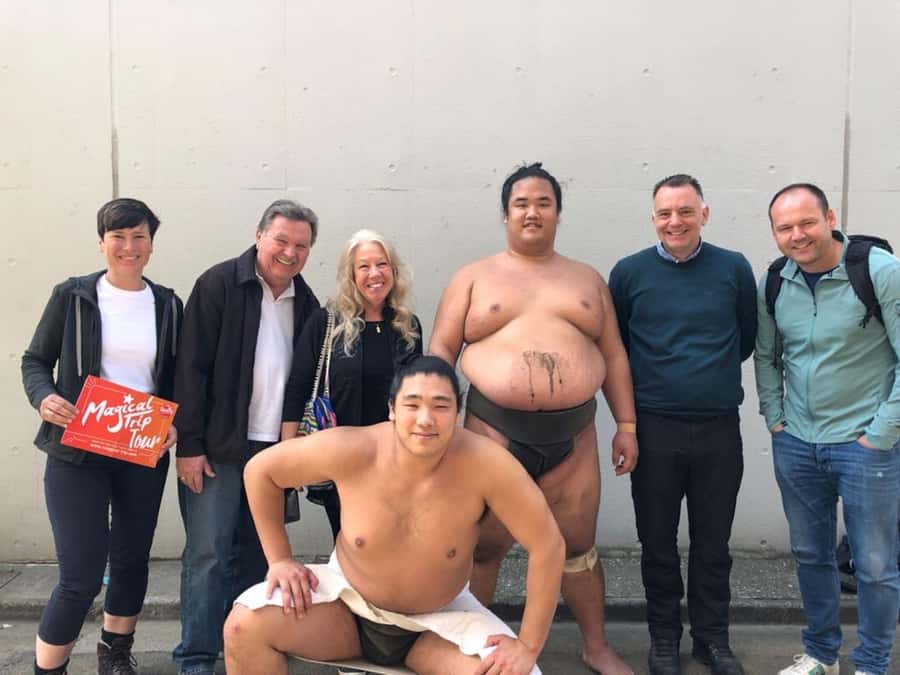
At the end of practice, you may have a chance to take a photo with a sumo wrestler. A group photo has also been arranged on some departures. This is a nice closing moment, especially after spending two hours quietly watching the training.
The wording matters: the photo is at the wrestler’s discretion. It is not guaranteed, and you should respect the decision if no photo is possible. The wrestlers are finishing a serious training session, so the correct attitude is appreciation rather than expectation.
The photo is also less important than the practice itself. If it happens, it gives you a keepsake and a brief personal connection. If it does not, the central experience remains the close look at morning training inside a real stable.
What you learn about sumo culture
A good guide helps turn physical action into a cultural lesson. You learn the basic rules, how the ranking system works, and why the stable operates with such strict discipline.
The guidebook helps with names and faces, which is useful when several wrestlers are training in quick succession. You can also ask questions at the end. One useful question to raise is the level of the wrestlers you are watching. The available information does not promise a detailed introduction to every athlete’s rank or competition record, so ask if that matters to you.
You may notice differences in clothing or status among the wrestlers. A participant specifically wanted more explanation about an older wrestler wearing a different-colored loincloth and what that meant. That is a good reminder to ask about details you notice rather than assuming every visual difference has an obvious explanation.
The value here is not just learning how a bout is won. You get a look at the structure around the sport: respect for the stable master, repeated practice, group discipline, and the daily work behind the public matches.
Is $96 a fair price?
At $96 per person, this is not the cheapest two-hour activity in Tokyo. You are paying for access to a setting that is normally difficult to enter, a small group capped at 10 people, an English guide, the stable admission, the guidebook, and the chance of a photo afterward.
The value depends on what you want. If you only need a quick photograph with a wrestler, the price may feel high. If you want to understand sumo and see real training close up, the cost is easier to justify. A tournament ticket gives you official bouts, but it does not necessarily explain the daily preparation behind them.
I especially like the small-group format. With 10 people or fewer, the guide has a better chance to answer questions and keep the group orderly. That matters in a quiet stable where a large crowd would quickly change the mood.
Food and drinks are not included, though that should not be a major concern for a two-hour morning activity. Plan your meal separately and focus on arriving early and prepared.
The tour also allows free cancellation up to 24 hours before the start and offers reserve-now, pay-later booking. Those terms help if your Tokyo plans are still shifting, but they do not soften the strict late-arrival policy.
Who will enjoy this most
I would recommend this for adults and older children who are curious about Japanese customs, sports, or daily discipline. It works well for a first visit to Tokyo because the guide supplies the basic background you need.
It is also a strong choice for a couple looking for something different from temples, shopping streets, and observation decks. One departure was used as a birthday gift, and the two-hour format fits neatly into a morning without taking over the whole day.
Sumo fans will get the most from the close view and the chance to see training rather than only competition. People who know nothing about sumo can enjoy it too, provided they are willing to watch repeated drills and listen to explanations.
I would hesitate to recommend it to anyone who dislikes quiet observation, floor sitting, strict rules, or uncertain seating. It is not a show where you can arrive late, move around freely, or expect constant action.
Important timing and stable changes
The stable controls the practice schedule. Training can be canceled or adjusted at the last minute because of the wrestlers’ condition or tournament commitments.
If the stable cancels, you receive a full refund. That protection does not apply to arriving late, ignoring the rules, or being denied entry because a participant does not meet the age requirement.
The tour is for people aged 12 and older. Children under 12 cannot enter the stable, and participation may be denied without a refund if a younger child is brought along.
Because the activity is tied to a real training schedule, keep your wider morning flexible. Do not place an important timed attraction immediately afterward if a small change in the practice schedule would cause trouble.
My booking advice
Book this tour if you want to see the work behind sumo, not just its public spectacle. The strongest reasons are the close view, the serious training, and the guide’s explanation of rules and customs. The chance to hear the effort and watch bout after bout gives the visit a physical immediacy that a tournament may lack.
Before paying, check three things: you are comfortable with possible tatami sitting, everyone in your party is at least 12, and you can arrive early at Kiyosumi Shirakawa Station’s A1 exit. If those conditions suit you, $96 is a reasonable price for rare access and useful cultural context.
If you need guaranteed chairs, wheelchair access, or a fixed schedule, choose another Tokyo activity. If you can respect the stable’s quiet rules and accept that the photo is optional, this is a memorable way to understand sumo as a disciplined daily practice.
FAQ
Where does the sumo tour meet?
Meet at the A1 exit of Kiyosumi Shirakawa Station. Your English-speaking guide will hold a red or orange sign marked Magical Trip.
How long does the experience last?
The activity lasts two hours.
What happens during the tour?
You walk from the station to a real sumo stable, hear an explanation of sumo customs and rules, and watch the wrestlers complete their morning practice.
Is the practice a staged performance?
No. You attend a real training session at a working sumo stable.
Is a photo with a sumo wrestler guaranteed?
No. A photo may be offered after practice, but it is at the wrestler’s discretion.
Are chairs provided?
Chairs may be available, but they are not guaranteed. Some stables require you to sit on tatami flooring, and some people may need to stand.
Can children join the tour?
Only people aged 12 and older can participate. Children under 12 are not allowed inside the sumo stable.
Is the experience wheelchair accessible?
No. The activity is not suitable for wheelchair users, and some areas inside the stable are not accessible.
Is food included?
No. Food and drinks are not included in the price.
What happens if the stable cancels practice?
The stable may cancel or change the session because of the wrestlers’ condition or tournament commitments. If the stable cancels, you receive a full refund.
More Photography Tours in Tokyo
More Sumo Experiences in Tokyo

More tours in Tokyo we've reviewed












Sumo Experiences, compared.
 ★ 4.8Tokyo: Sumo Show Experience with Chicken Hot Pot and a PhotoFrom $1032 hours
 ★ 4.8Tokyo: Sumo Show and Dining ExperienceFrom $7990 minutes - 2 hours
 ★ 5.0the SUMO showFrom $89
 ★ 5.0Tokyo Sumo Entertainment Show with Chicken Hot Pot and PhotoFrom $106
 ★ 4.6Tokyo: Sumo Tournament Tour with Chair Seat TicketsFrom $141
 ★ 5.0Tokyo Grand Sumo Tournament Viewing Tour with TicketsFrom $124