Reviewed · MT FUJI DAY TRIPS
Full Day Private Tour to Mount Fuji and Hakone
Mount Fuji is the star here, but the day gives you much more than a single photo stop. You’ll move from high mountain viewpoints and shrine paths to clear ponds, flower gardens, volcanic vents, and Lake Ashi. I like the private car from Tokyo and the freedom to shape the day with your guide. I also like that guides such as Ali and David have helped guests add useful touches, from a ramen stop to an ice cave visit.
In This Article
- Key points to know before booking
- A long day from Tokyo to Mount Fuji
- Mount Fuji 5th Station at 2,300 meters
- Chureito Pagoda and the 398-step climb
- Oshino Hakkai and traditional Fuji country
- Lake Kawaguchi and Oishi Park
- Kitaguchi Hongu Fuji Sengen Shrine
- Hakone and the changing scenery around Lake Ashi
- Owakudani’s sulfur vents and black eggs
- What the $400 group price really buys
- The guide can make or break the day
- Weather is part of the decision
- Who should book this private day trip?
- Should you book it?
- FAQ
- How long does the tour last?
- How many people can join the private tour?
- Is hotel pickup available?
- Is lunch included?
- Are entrance fees included?
- Can the vehicle reach Mount Fuji 5th Station in summer?
- Is the tour available in bad weather?
- What is the cancellation policy?
The catch is distance. Tokyo traffic can eat up hours, and the full list of stops is too much for a relaxed visit in nine or ten hours. Weather can erase Mount Fuji, and the assigned driver may be more focused on transport than guiding, so confirm the English-speaking guide and agree on priorities before departure.
Key points to know before booking
- Private transport for up to five people: The $400 group price can be good value for a family or small group, especially when divided among four or five people.
- Mount Fuji views depend on weather: Clear skies can produce superb views, but cloud, snow, or poor visibility may close access or hide the mountain.
- A packed route: Fuji 5th Station, Chureito Pagoda, Oshino Hakkai, Lake Kawaguchi, Hakone, and Owakudani make for a busy day.
- Some major activities cost extra: Lunch, Mount Fuji admission, the pirate ship, and other entrance fees are not included.
- Driver quality matters: Ali, David, Hati, and Rocky received warm praise for service, but the guide assigned to you may be different.
- Start early if possible: The listed start is 8 a.m., and an earlier departure may help reduce Tokyo traffic.
A long day from Tokyo to Mount Fuji

This is best understood as a private road trip, not a traditional walking tour. Your driver collects you at your Tokyo hotel at about 8 a.m., then takes you toward the Mount Fuji and Hakone areas in an air-conditioned vehicle.
The private setup is the main advantage. You do not need to work out several train and bus connections, and you can leave luggage planning and route changes to the driver. With up to five people in your group, you can also stop for photos without waiting for strangers.
The drive is the main drawback. The trip back to Tokyo alone can take roughly two hours, and traffic may stretch that further. If you try to visit every listed stop, you will spend much of the day getting in and out of the car. I would choose your top three or four stops before leaving Tokyo.
The provider suggests routes that combine Lake Kawaguchi, Mount Fuji 5th Station, the Kachi Kachi Ropeway, Hakone Ropeway, Lake Ashi, and Owakudani. Another suggested plan focuses only on the Fuji area, with Oshino Hakkai, Oishi Park, the shrines, and the pagoda. Ask which version you are receiving. The wording about selecting one route is not entirely clear, and that matters when your time is limited.
A few more Tokyo tours and experiences worth a look
Mount Fuji 5th Station at 2,300 meters

Mount Fuji 5th Station is the highest point on the suggested route that you can reach by road. At about 2,300 meters, it gives you a taste of the mountain without requiring a summit climb. Restaurants, shops, and other visitor facilities make it easy to pause here.
On a clear day, the station can offer impressive views of the surrounding area. It is also a practical place to feel the change in altitude and mountain weather. Bring an extra layer even if Tokyo feels warm.
Access is not guaranteed during the summer climbing season. From July 1 through August 30, private cars cannot pass the Subaru Line toll gate, so the tour cannot drive you to 5th Station during that period. The itinerary may need to change if the road is closed for weather or other conditions.
The description says the stop takes about one hour, but that can be optimistic if the roads are crowded or the weather causes delays. If Fuji itself is hidden, your guide may suggest spending more time at Lake Kawaguchi or the shrines instead.
Chureito Pagoda and the 398-step climb
Arakurayama Sengen Park is one of the classic Mount Fuji photo locations. The Chureito Pagoda sits above Fujiyoshida City, with Fuji often appearing behind it. In spring, more than 600 cherry trees add another reason to visit.
You reach the pagoda by climbing 398 steps. The stairway is steep enough to make this a real walk rather than a quick roadside photo. Allow time to go slowly, especially if someone in your group has trouble with stairs.
The park is free, and the view is worth the effort when the mountain is visible. In poor weather, however, you may climb all those steps only to see cloud. One guest described heavy snow that blocked both the mountain and the pagoda visit. That is a useful reminder not to make this your only Fuji plan.
The nearby Arakura Fuji Sengen Shrine adds a more local and religious side to the stop. Your driver may give you historical background, but the depth of explanation can vary by guide. If learning about Shinto matters to you, say so at the start of the day.
Oshino Hakkai and traditional Fuji country
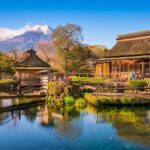
Oshino Hakkai is a calmer stop than the pagoda or 5th Station. Eight clear ponds are fed by snowmelt from Mount Fuji, and that water gives the site its clean, reflective look. Thatched-roof buildings and traditional-style surroundings offer a glimpse of rural life in the Fuji Five Lakes region.
You can walk around the ponds, take photographs, and enjoy a slower break from the car. It is also a good choice if cloud blocks the mountain, since the ponds and old-style buildings remain interesting on their own.
The planned visit is about one hour. The stop can feel busy, especially if you arrive when many buses are there, so do not expect complete quiet. Still, it gives the day some variety. After several grand viewpoints, Oshino Hakkai feels smaller and more grounded.
Lake Kawaguchi and Oishi Park
Lake Kawaguchi is one of the five lakes around Mount Fuji and one of the strongest places for broad views of the mountain. The shoreline offers a change of pace, with room to walk, stop for photographs, or simply look across the water.
Oishi Park sits on the north shore and has a 350-meter flower path. The scenery changes with the season:
- Moss phlox usually colors the park from early April to late May.
- Lavender blooms from late June into late July.
- Kokia shrubs turn red from mid to late October.
The flowers are not a minor detail. They give you something attractive to see even when Fuji is covered by cloud. The park also has the Kawaguchiko Natural Living Center, where you can find fruit jam activities, seasonal fruit picking, a café, and blueberry ice cream.
The planned time at Oishi Park is only about 30 minutes. That is enough for a quick walk and photographs, but not enough to linger over the gardens, café, and lake. If flowers are a priority, ask your driver to protect this stop rather than trying to fit every other sight into the day.
A few more Tokyo tours and experiences worth a look
Kitaguchi Hongu Fuji Sengen Shrine
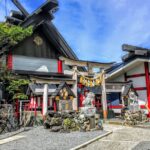
Kitaguchi Hongu Fuji Sengen Shrine is the main Sengen Shrine on the northern side of Mount Fuji. It is dedicated to Konohanasakuya-hime, the Shinto deity associated with Fuji, and is said to date back to the first century.
The shrine gives you a quieter cultural stop after the photo-heavy parks. It is a place to notice the approach, the forest setting, and the feeling of a pilgrimage route connected with Mount Fuji. The visit is planned for about 30 minutes, which is enough to see the main area but not enough for a slow visit.
This is where a guide can add real value. A driver who only points you toward the entrance leaves you to work out the meaning yourself. Guides Ali and David were praised for explaining sites and answering questions, while other accounts describe a guide who acted mainly as a driver. Make it clear that you want cultural context, not only transport.
Hakone and the changing scenery around Lake Ashi
The Hakone portion shifts the focus from Fuji views to volcanic scenery and Lake Ashi. The Lake Ashinoko Sky Line is listed as a short stop, giving you a scenic road experience before the cruise and Owakudani.
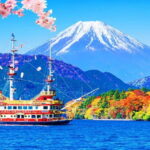
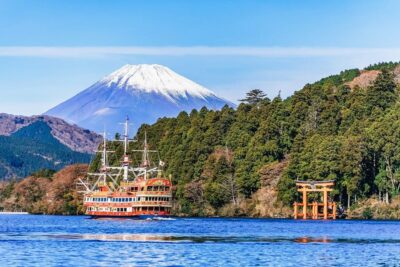
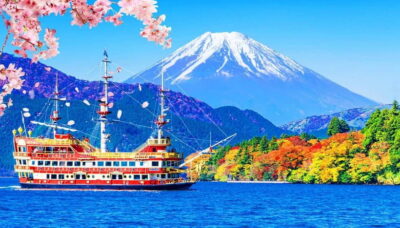
Lake Ashi, also called Ashinoko, is a large scenic lake in Hakone. The cruise from Tōgendai Port uses one of Hakone’s replica pirate ships. The ships are built as sightseeing attractions, with an elaborate design that makes the short ride more memorable than a plain ferry crossing.
The cruise takes about 30 minutes in the supplied schedule. It is an enjoyable change from the vehicle, but the ticket is not included. Bring extra cash or another accepted form of payment, and ask your guide about the current price before boarding.
The Hakone Ropeway is also promoted as part of the experience, but the detailed stop list does not clearly assign it a separate time or confirm that its fare is included. Do not assume it is covered by the $400 price. Ask before the day begins, especially if the ropeway is one of your main reasons for booking.
Trying to fit both the pirate ship and the ropeway into a day that also includes the Fuji area can make the schedule tight. If you care more about Hakone than the Fuji Five Lakes, say so. A private tour works best when you use its flexibility instead of accepting every suggested stop.
Owakudani’s sulfur vents and black eggs
Owakudani is one of Hakone’s most unusual stops. The valley was formed by volcanic activity thousands of years ago, and white smoke rises from the bare ground. You may notice a sulfur smell as you walk near the viewing areas.
The local specialty is the black egg. Its shell darkens through a chemical reaction with geothermal energy. It is an easy food souvenir and a fun detail for children, though the stop itself is more about seeing active volcanic ground than spending a long time there.
The planned visit is about 30 minutes. That is enough for a look around and photographs, but conditions may affect access. The supplied information does not promise a specific walking route or guarantee that every viewing area will be open, so treat this as a short scenic stop rather than a full hike.
Owakudani also illustrates the tradeoff in the combined itinerary. It is a memorable Hakone sight, but reaching it after several Fuji stops takes time. You will get a taste of both regions, not a slow, complete visit to each.
What the $400 group price really buys
The price is $400 for up to five people, not $400 per person. At full capacity, that works out to $80 each. For a family or group of friends, private transport over a long distance can make that reasonable, especially when you compare it with arranging several separate train, bus, and attraction tickets.
The value is strongest if you want convenience and control. Hotel pickup, private transportation, bottled water, and an air-conditioned vehicle are included. You can ask for photo stops, adjust the order, and avoid public transport connections.
The price is less attractive if you are alone or traveling as a couple and do not care about a private car. You must also budget for lunch, Mount Fuji admission, the pirate cruise, and any other entrance fees. The information says the Hakone Ropeway is included in the tour description, but the inclusions do not clearly list its ticket. Confirm this in writing.
Lunch is not provided. That is not a problem if you want to choose your own meal, but it takes time from a packed schedule. One guide was praised for finding a good local ramen restaurant after a request, so tell your guide early if food is part of your plan.
The guide can make or break the day
The best accounts describe guides who did more than drive. Ali was praised for sharing historical facts, answering questions, waiting patiently at stops, taking photographs, and adjusting the day. He also helped with a ramen stop and, in one case, added an ice cave visit.
David received similar praise for safe driving, local knowledge, and taking guests to places that were hard to reach independently. Hati was noted for a clean car, good English, and taking photographs at Lake Kawaguchi, Oishi Park, and a Fuji shrine. Rocky adapted well when cloud hid Fuji and helped make the day worthwhile with other sights.
Those names are useful when comparing the experience, but they are not a guarantee. The assigned driver may be someone else. Some accounts describe weak English communication, rushed visits, poor driving habits, or a driver who provided little explanation. One particularly serious account described frequent braking and phone use while driving.
For that reason, message the provider before departure and confirm:
- The driver’s name.
- That the driver can guide in English.
- The planned priority stops.
- Which tickets are included.
- How much time you will have at each place.
At pickup, explain your pace. If you want time for the pagoda stairs, shrine grounds, or a proper meal, say that clearly. A private tour should not feel like a race between parking lots.
Weather is part of the decision
Mount Fuji visibility is never assured. Cloud can cover the summit, snow can block roads, and poor conditions can remove the main reason many people book this trip.
The experience requires good weather. If the operator cancels because of conditions, you can accept another date or receive a full refund. That protection is useful, but it does not solve the problem of booking the tour on a cloudy day and finding Fuji absent from every viewpoint.
Build the day around more than the mountain. Oshino Hakkai, the shrines, Lake Kawaguchi, Oishi Park, the pirate ship, and Owakudani can still make a worthwhile outing. If your only goal is a perfect Fuji photograph, check the forecast and keep your plans flexible.
Free cancellation is available up to 24 hours before the start time. Cancellations or changes made later are not refunded, and the cut-off uses local Japanese time.
Who should book this private day trip?
I would recommend it most to a family or group of friends that wants a simple way to see a large area outside Tokyo. The private vehicle removes much of the transport work, and the $400 group price becomes more sensible with four or five people.
It also suits you if you want to request a slower pace, add a food stop, or replace a sight that does not interest you. The private format is a real advantage for photography, mixed-age groups, and anyone who would rather not manage several connections.
I would be cautious if you want a detailed history lesson at every stop. The quality of the day depends heavily on the assigned guide, and the service may be closer to private driving than formal guiding. I would also avoid this plan if you dislike long car rides or want an unhurried visit to both Fuji and Hakone.
Should you book it?
Book this tour if your priority is seeing several Mount Fuji and Hakone highlights in one day without handling the transport yourself. The best possible day includes clear weather, an English-speaking guide such as Ali or David, and a short list of agreed priorities.
Before paying, confirm the driver, exact route, 5th Station access, ropeway arrangements, and all extra fees. If Fuji is visible and the driver is flexible, the private format can deliver excellent value for a small group. If the forecast is poor or the operator cannot explain who will guide you, choose a more focused Fuji or Hakone outing instead.
FAQ
How long does the tour last?
The tour lasts approximately 9 to 10 hours, with an 8 a.m. start and an expected hotel drop-off around 6:30 p.m.
How many people can join the private tour?
The price covers one private group of up to five people. Only your group participates.
Is hotel pickup available?
Yes. Pickup is offered, and the meeting information lists an 8 a.m. start time.
Is lunch included?
No. Lunch is not included, so you should plan and pay for your own meal.
Are entrance fees included?
No. Mount Fuji admission and some other entrance fees are not included. The pirate ship ticket is also listed as an extra cost.
Can the vehicle reach Mount Fuji 5th Station in summer?
No private cars can pass the Subaru Line toll gate during the stated hiking season from July 1 through August 30. The tour cannot drive to 5th Station during that period.
Is the tour available in bad weather?
The tour requires good weather. If it is canceled because of poor weather, you can receive a different date or a full refund.
What is the cancellation policy?
You can cancel up to 24 hours before the start time for a full refund. Cancellations or changes made less than 24 hours before departure are not accepted for a refund.
More Private Tours in Tokyo


More Hakone Day Trips in Tokyo
More Mt Fuji Day Trips in Tokyo

More tours in Tokyo we've reviewed












Mt Fuji Day Trips, compared.
 ★ 5.0Mt Fuji and Hakone 1-Day Bus Tour Return by Bullet TrainFrom $163
 ★ 4.0Mt Fuji & Hakone Cruise, Drum Show Bullet Train 1 Day from TokyoFrom $149
 ★ 4.4Tokyo Mt Fuji 5th St & Hakone Cruise Bus Tour w/Bullet TrainFrom $15410 hours
 ★ 4.5From Tokyo: Mount Fuji Full-Day Sightseeing TripFrom $6810 hours
 ★ 4.7Tokyo: Mt. Fuji Tour, Hakone Ropeway, Owakudani, Lake AshiFrom $5410 hours
 ★ 4.4Tokyo:Mt.Fuji,Kawaguchiko Oishi Park,Arakurayama Sengen ParkFrom $5410 hours