Reviewed · GO-KARTS
Akihabara: Go-Kart Experience with Local Guide in Tokyo
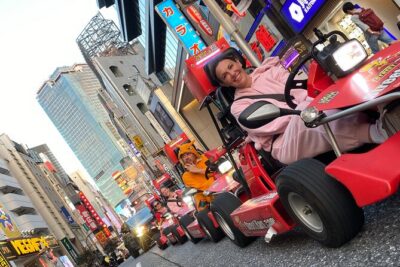
Tokyo sightseeing usually means trains, temples, and walking. This tour offers something far stranger: you drive a go-kart through Akihabara, past neon signs, electronics shops, manga stores, and curious onlookers. I like the costume option and the guide’s habit of taking photos at traffic lights, so you can enjoy the ride without constantly handling your phone.
In This Article
- Key points to know before booking
- Starting in Akihabara, with paperwork first
- Choosing a costume and getting road-ready
- Rolling through Akihabara’s neon streets
- City views, traffic lights, and the photo advantage
- How much Tokyo do you really see?
- Is $72.66 fair for one hour?
- Weather, timing, and group size
- Who should book this Akihabara ride?
- Should you book it?
- FAQ
- Where does the go-kart experience start?
- Where does the activity end?
- What driving documents are accepted?
- Do I need to bring my passport?
- How old must I be to participate?
- Are costumes included?
- What happens if I arrive late or lack the right license?
I also like the small-group setup, with no more than seven people and often fewer. The main catch is serious: you need the correct Japanese driving paperwork, and the operator will not let you ride without it. The one-hour tour can also feel short once you include red lights and the safety lesson.
Key points to know before booking

- The ride begins near Akihabara Station: Find Akiba CartJapan in the basement of Building Sasage, not at a large street-front storefront.
- Your driving documents matter most: Bring a Japanese license, an accepted Geneva Convention international driving permit with passport, or another approved document combination.
- The group stays small: Each kart holds one person, and the total group size is limited to seven.
- The guide handles the photos: At stops and traffic lights, the guide can take pictures with your phone, leaving you free to watch the city.
- Costumes are included, but Mario costumes are not: Choices may include character-style outfits, though cleanliness and selection can vary.
- A longer ride may offer better value: The one-hour version costs $72.66 per person, while two hours gives you more time for sights and photos.
Starting in Akihabara, with paperwork first

Your meeting point is Akiba CartJapan, at 101-0021 Tokyo, Chiyoda City, Sotokanda 2-chome, Building Sasage B1F. It is a short walk from Akihabara Station, but the entrance can be hard to spot. The address is not always enough for a taxi driver, and there may be no obvious sandwich board announcing the business.
I would arrive at least 10 minutes early and use a map app carefully. One late arrival caused a missed ride because the group could not be held for the next participant. The operator states that late guests cannot be refunded, so give yourself extra time to find the basement entrance.
Check-in is not a quick formality. You present your driving documents, attend a mandatory safety lecture lasting about 15 to 20 minutes, and learn how the kart works before heading onto public roads. This is one reason the advertised one-hour duration is not one full hour of driving.
The license rules deserve your full attention. A normal home-country driver’s license is not enough. The accepted choices are:
- A Japanese driver’s license.
- An international driving permit issued under the Geneva Convention, presented with your passport.
- A license from Switzerland, Germany, France, Belgium, Monaco, or Taiwan, plus an approved Japanese translation and your passport.
- A valid SOFA driver’s license for eligible US military personnel.
The operator specifically says that international permits based on the Paris, Washington, or Vienna conventions are not accepted. A military ID or military driver’s license is also not enough for the SOFA option.
If you use a foreign license from one of the approved countries, the translation must come from the relevant embassy or consulate in Japan, or from the Japan Automobile Federation. For Taiwan, the translation can come from the JAF or the East Asia Relations Commission.
Bring the original documents. If you arrive without the right papers, you cannot participate and no refund is provided. This is the single biggest booking risk, especially since at least one failed booking involved a misunderstanding over the license category.
A few more Tokyo tours and experiences worth a look

Choosing a costume and getting road-ready
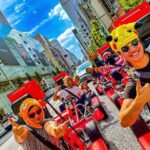
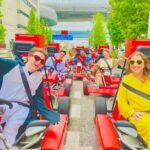
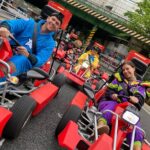
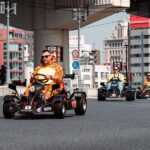
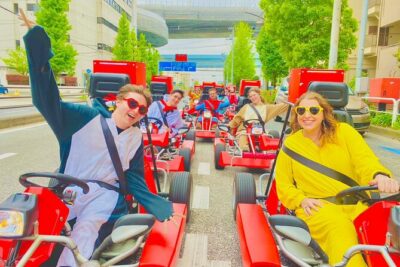
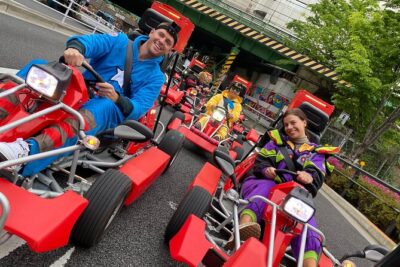
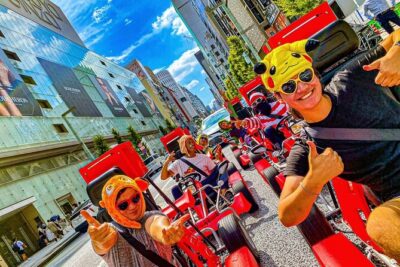
After the document check and safety lesson, you choose a costume to wear while driving. That adds the playful Akihabara touch, and the costumes can make you far more noticeable to people along the route. Children may wave, and you should expect plenty of attention at traffic lights.
The costume selection is not a promise of a particular character. Mario costumes are not available, despite the familiar image many people associate with Tokyo go-kart tours. Some options may be character-inspired outfits or onesies, and the available choices can depend on the day.
Cleanliness and comfort are worth considering. One account described not finding enough clean costumes and being disappointed by the selection. In hot weather, a costume can also feel warm, so choose something light if possible. In cooler months, the extra layer may be useful.
Wear practical clothing and flat shoes. High heels are not recommended, and you should expect to sit in a small kart for the ride. The stated height range is 150 to 185 centimeters, or about 4 feet 11 inches to 6 feet 1 inch. Your weight must be under 100 kilograms, or 220 pounds.
The minimum age is 18. You also need a moderate level of physical fitness, mainly because this is an active driving activity on city streets rather than a seated sightseeing bus.
Rolling through Akihabara’s neon streets
Once the group is ready, you follow the guide into Tokyo traffic. The route is not presented as a fixed list of stops, and the guide can respond to requests and show favorite places within the selected time.
That flexibility is useful, but it also means the ride may not match your mental picture of a grand Tokyo tour. Some outings pass major sights and attractive city streets. Others may use more ordinary connecting roads, and one-hour rides can feel more like a short circuit than a full tour of Tokyo.
Akihabara gives the experience its strongest sense of place. This is Tokyo’s famous district for electronics, manga, anime, arcades, and themed shops. From a low go-kart, the signs and storefronts sit at eye level, and you see the streets from a viewpoint that a train or taxi cannot provide.
The guide leads the group, sets the pace, and watches for safety. You need to pay attention rather than treat the kart like an amusement-park ride. You are driving on public roads, so traffic lights, other vehicles, and normal road rules all matter.
A useful detail for drivers from countries that use the opposite side of the road: the change can feel nerve-racking at first. The safety lesson helps, and the ride is manageable if you follow the guide and stay alert. The karts are described as easy to use, though one participant noticed squeaky brakes. That is not unusual for go-kart equipment, but it is worth knowing if you expect a polished amusement-park machine.
City views, traffic lights, and the photo advantage

The best part of this tour may not be the speed. It is the view from the street.
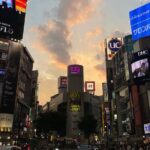
You pass neon-lit shops and city buildings while sitting low to the ground. At night, Tokyo’s signs and skyscrapers provide the strongest backdrop. Dusk is especially appealing because a two-hour outing can begin in daylight and continue into the evening lights.
The guide takes photographs during stops, often at traffic lights, using your phone. This small service makes a major difference. You can keep your hands on the kart and watch the road instead of trying to frame selfies while driving.
Some guides also know good photo locations and can arrange memorable shots with the city behind you. The exact photo quality depends on the guide and the conditions, but the repeated praise for this part is understandable. It turns a fun ride into something you can share later.
Do not expect a dedicated photography tour. The photos happen during safe pauses, not during active driving, and the number of stops depends on traffic and the route. If you want lots of pictures, the two-hour choice gives the guide more room to stop without shortening the actual ride.
Traffic is another part of the calculation. One-hour outings can spend roughly half their time waiting at lights, particularly along busy streets. That waiting gives you chances to take in the signs and city views, but it reduces the amount of time you are actually moving.
Night rides may offer a nice balance. Several outings found the streets less crowded after dark, with fewer delays and striking building lights. Still, traffic varies by time and day, so the operator cannot promise an open road.
How much Tokyo do you really see?

The route can include Akihabara and other nearby parts of Tokyo, with the guide adjusting the outing to requests. You may pass several notable city sights, but the tour does not promise Tokyo Tower, Shibuya, or a specific landmark on every one-hour departure.
This is important for your expectations. You are buying a street-level driving adventure, not a landmark checklist. If you want to tick off famous attractions, confirm the possible route with the operator before booking and consider the longer option.
Some outings cover major sights on this side of the city, while others feel less focused and use random-feeling streets. That difference may come from time, traffic, or the guide’s chosen circuit. The local guide adds value through safety and photos, but the commentary may be light. You might pass through an interesting neighborhood without receiving much explanation about it.
I would treat the guide as a road leader and photographer first, and a traditional sightseeing narrator second. If neighborhood stories and detailed history are your priority, this may not be your best Tokyo tour. If you want an unusual way to see the city, the loose route can be part of the fun.
The experience ends back at the Akihabara meeting point. That makes it easy to continue exploring the district afterward, provided you remember where the basement entrance is.
A few more Tokyo tours and experiences worth a look

Is $72.66 fair for one hour?
At $72.66 per person, the price is reasonable for a specialized activity, but the value depends on what you expect from the hour. Your fee covers the kart, insurance, local guide, and costume. Food, drinks, and hotel transfers are not included.
The insurance and guide are important because you are driving on public streets in a foreign country. You are not simply renting a kart and finding your own way. The guide leads the route, gives the safety instruction, and helps create the photo record.
Still, the clock begins with a safety process that takes 15 to 20 minutes, and traffic lights can consume much of the remaining time. For that reason, I think the two-hour choice, when available, is the better buy for anyone hoping to see several areas and get plenty of photographs. A longer ride also gives you a better chance of experiencing both daylight and night lighting if you choose a late afternoon start.
The one-hour version makes sense if you are short on time, unsure about driving in Tokyo, or mainly want the novelty of a costume ride through Akihabara. It is less appealing if you expect a full city tour.
Weather, timing, and group size
This activity requires good weather. If poor weather forces cancellation, you are offered another date or a full refund. If rain is forecast, check the cancellation deadlines before deciding to take a chance.
You can cancel for a full refund at least six full days before the start time. Cancellation two to six full days ahead allows a 50 percent refund. Less than two full days before the start time brings no refund, and changes are not accepted inside those windows.
The group limit is seven people, with about five to six people commonly accommodated in a time slot. Every kart is for one person. There are no two-person karts, so you and your partner each drive your own vehicle.
That small scale is a real advantage. You are not following a huge convoy, and the guide can keep an eye on the group. A solo departure can still be enjoyable, especially if the guide gives you more attention and takes personal photos.
Morning departures may suit cautious drivers who want less traffic, while dusk and evening offer the strongest city lighting. The best choice depends on your priority: easier roads or a more dramatic Tokyo backdrop.
Who should book this Akihabara ride?

I would recommend it to adults who enjoy unusual sightseeing, are comfortable operating a vehicle in traffic, and want photos in costume. It is also a good pick for couples, solo visitors, and small groups looking for something different from another temple or observation deck.
You should think twice if you dislike public-road driving, have trouble with the required height or weight limits, or want a carefully narrated route through famous landmarks. The permit rules are not flexible, and arriving without the correct documents can cost you the full booking price.
Book only after checking your license against the exact Japanese requirements. Arrive early, use a reliable map, wear flat shoes, and do not assume that the costume will be a Mario outfit. If you can choose two hours, I would favor it over one hour for better sightseeing value.
Should you book it?
Yes, if you want playful, low-to-the-ground Tokyo sightseeing and understand that the ride is about the act of driving through the city, not a guaranteed tour of every major landmark. The guide, small group, costumes, and photos give the activity more value than a basic kart rental.
I would book the one-hour version only for a quick taste of the idea. For the fuller experience, choose two hours, aim for dusk or evening, and verify your driving documents before paying. Get those details right, and this can become one of the most memorable oddball activities in Akihabara.
FAQ
Where does the go-kart experience start?
It starts at Akiba CartJapan in Building Sasage B1F, at 101-0021 Tokyo, Chiyoda City, Sotokanda 2-chome. The meeting point is a short walk from Akihabara Station.
Where does the activity end?
The ride ends back at the same meeting point.
What driving documents are accepted?
You may use a Japanese driver’s license, an accepted Geneva Convention international driving permit with your passport, an approved foreign license with its Japanese translation and passport, or a valid SOFA driver’s license. Paris, Washington, and Vienna convention permits are not accepted.
Do I need to bring my passport?
Yes, a passport must be presented with an international driving permit. It is also required with an approved foreign license and Japanese translation.
How old must I be to participate?
You must be at least 18 years old.
Are costumes included?
Yes. A costume is included for driving, but Mario costumes are not available. Costume selection and cleanliness may vary.
What happens if I arrive late or lack the right license?
You may not participate if you arrive late or cannot show the required documents. The operator states that late arrivals and missing documentation are not refundable.
More Guided Tours in Tokyo


More Go-Kart Tours in Tokyo
More Akihabara & Anime Tours in Tokyo

More tours in Tokyo we've reviewed

Go-Karts, compared.
 ★ 5.0Flagship 2-Hours Official Street Go-Kart Tour – Tokyo Bay ShopFrom $642 hours to 2 hours 30 minutes (approx.)
 ★ 5.0Official Street Go-Kart in ShibuyaFrom $76
 ★ 5.0Official Street Go-Kart Tour – AkihabaraFrom $61
 ★ 5.0Tokyo Go Kart: Asakusa, Skytree, and Akihabara **IDP MUST**From $99
 ★ 5.0Shibuya Official Street Go-Kart in Shibuya AnnexFrom $69
 ★ 4.6Tokyo: Asakusa and Skytree Go-Kart Tour and Photo ShootFrom $67