Reviewed · SAMURAI & NINJA EXPERIENCES
Samurai Training Tokyo Asakusa
The best part of this Asakusa activity is that you do not simply pose in a costume. Jiro Sensei leads you through greetings, sword drawing, sheathing, basic forms, and a choreographed battle, then turns the session into a photo and video shoot. It feels part lesson, part theater, and part family keepsake.
In This Article
- Key points to know before booking
- What this samurai lesson really is
- Changing into samurai clothing in Asakusa
- Greetings, drawing, and sheathing the katana
- The choreographed battle and video recording
- The certificate makes a better souvenir than a trinket
- Why the private format matters
- A good Asakusa activity between major sights
- Is $85.89 a fair price?
- Who should book this experience?
- Booking timing and cancellation details
- Final booking advice
- FAQ
- How long does Samurai Training Tokyo Asakusa last?
- Where does the activity begin?
- What does the price include?
- Is this a private activity?
- Can children take part?
- Do I need previous martial arts experience?
- What do I receive at the end?
I like the private format, which gives your group direct attention, and I like the thoughtful finish: you receive photo and video footage plus a certificate with your picture. The main consideration is expectation. This is a friendly introduction, not a hard-core martial arts class or a long dojo course.
Key points to know before booking
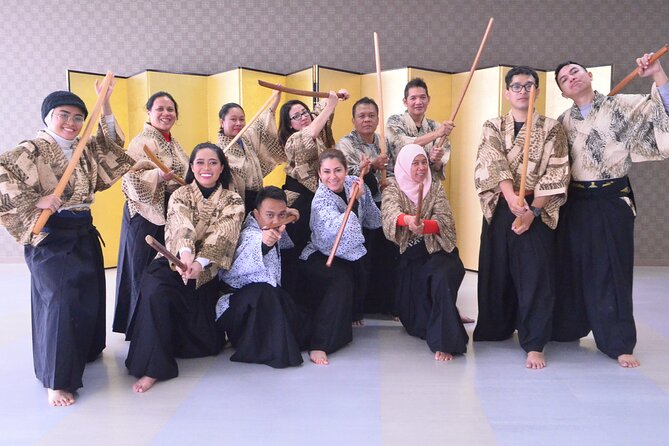
- Private instruction: Only your group participates, with a maximum of 10 people per booking.
- Ages six and up: Children must be accompanied by an adult, and everyone should have moderate physical fitness.
- A full costume experience: You change into samurai clothing, belt on the sword, and pose before training begins.
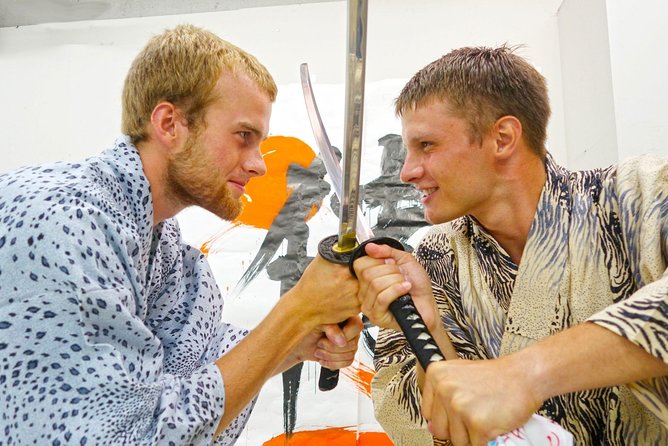
- A simple, staged battle: You learn a short routine and practice simulated sword fighting rather than taking an advanced combat course.
- Strong family appeal: Children, teenagers, couples, friends, and solo visitors can all take part.
- Useful Asakusa location: The meeting point is at Hanakawado Sunny Mansion near public transportation, though the exact training site can change with group size.
What this samurai lesson really is
Samurai Training Tokyo Asakusa is a compact cultural activity built around movement, costume, and performance. The lesson is supervised by Ukon Takafuji, Iemoto of Kenbu Ukon-ryu, also described as the Tachibana samurai kenbu school. That gives the session a formal structure rather than making it a simple dress-up photo stop.
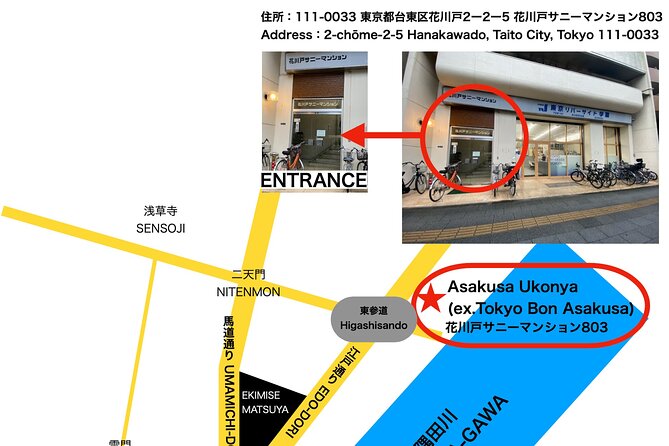
You meet at Hanakawado Sunny Mansion, 2-chome-2-5 Hanakawado, in Taito City. The organizers say the meeting and training locations can vary depending on the number of participants, so watch for a message at least two days before your reserved date. That detail matters in Asakusa, where a few minutes of wrong turns can become a longer search through side streets.
The activity is listed at about one hour. The practical sequence includes gathering, changing, photographs, instruction, video recording, changing back, and the certificate presentation. One detailed account places the full process closer to one to one and a half hours, so I would avoid scheduling a major attraction immediately afterward.
The price is $85.89 per person. That is not the cheapest costumed photo session in Tokyo, but you are paying for more than the outfit. The fee includes a local instructor, costume rental, photographs, and video footage. Since the activity is private, the cost makes more sense for a small family or couple who want personal coaching rather than a large group class.
A few more Tokyo tours and experiences worth a look


Changing into samurai clothing in Asakusa
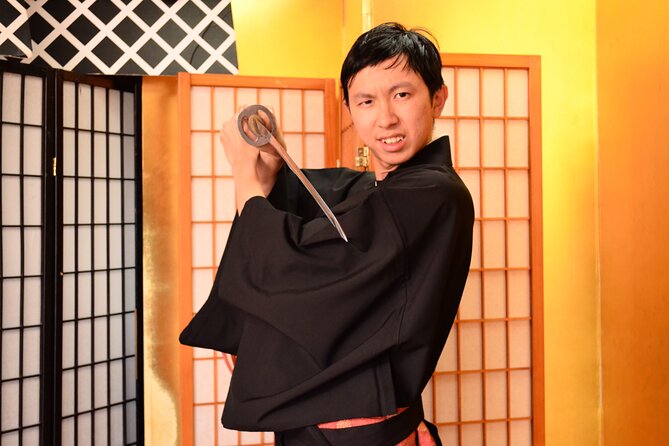
The session begins with a change into samurai attire. The clothing is central to the activity, not a quick accessory added for one picture. You belt on the sword, prepare for the lesson, and take early photographs before the physical instruction starts.
This first stage works well for families because it gives children a clear role right away. The costume helps turn an unfamiliar activity into a story they can follow: dress, greet the instructor, learn the sword, practice the form, and perform the battle. It also gives parents a chance to take part rather than spending the whole hour behind a camera.
The outfit is available as part of the experience, so you do not need to arrange a separate rental. The practical downside is that changing takes time from an already short session. If your main aim is sword instruction, expect only an introduction. If your aim is a memorable family activity with useful photographs, the costume adds real value.
The photo session begins early and continues during the lesson. Jiro and his assistant, named in several accounts as Aya or Akari, help with the process. The staff are also described as able to teach in English, which is useful when the lesson depends on posture, timing, and clear safety directions.
Greetings, drawing, and sheathing the katana
The class starts with greetings. That may sound like a small detail, but it gives the activity a sense of ceremony and helps explain that samurai training was tied to discipline and controlled movement, not just dramatic sword swings.
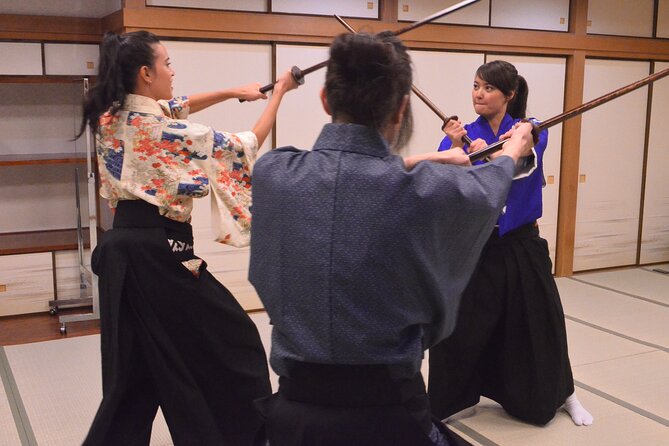
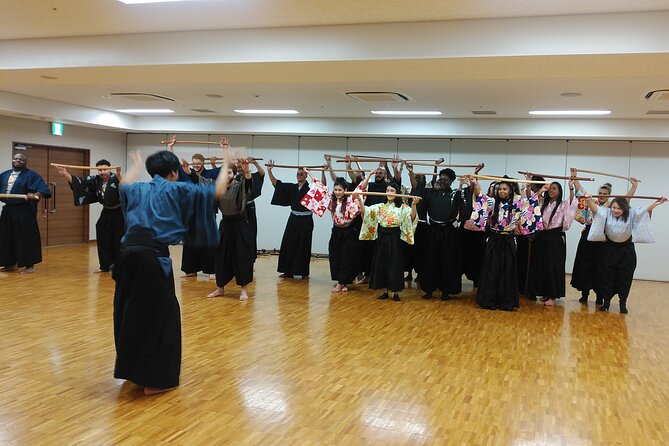
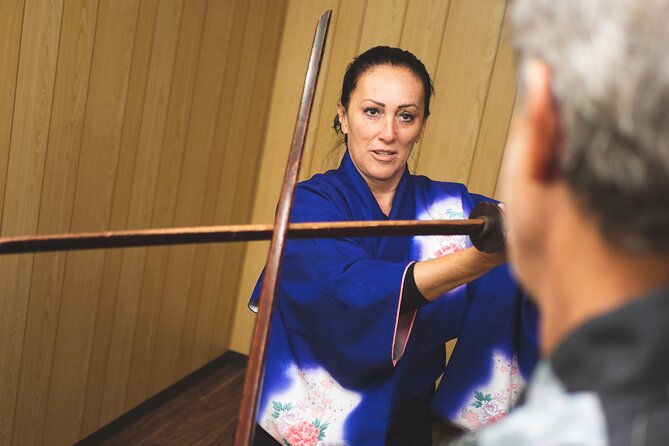
You then practice battou, drawing the katana, and nattou, returning it to its sheath. These are presented as separate movements, and the instructor demonstrates the basic form before you try it. The focus is on learning a short routine you can repeat, not mastering a complex martial art in one sitting.
After that comes kata, a sequence of set movements. The format is approachable for beginners. You do not need previous martial arts experience, and the class is designed for people starting from zero. At the same time, the movement still provides a little exercise. One account describes a small workout and some sweating, while another notes that a trained martial artist will recognize the course as introductory.
That is the right way to judge the lesson. You will learn the outward shape and rhythm of samurai sword handling, but you will not leave with advanced technical ability. The value is in the focused demonstration, the chance to practice under direct guidance, and the memory of performing the moves in costume.
The choreographed battle and video recording
The most playful part is the sword-fighting practice. You learn moves that resemble a samurai battle and then perform a staged exchange. It is a controlled routine, not a competitive fight, and the instructor adjusts the activity for the people in your group.
This works especially well with children and teenagers. Jiro has been described as patient and funny, and one account notes that he paired with an 11-year-old during the simulated combat and helped him feel comfortable. Parents can join the action instead of merely watching, which makes the activity feel like a shared family event.
The battle also gives the class a clear payoff. You are not just repeating isolated movements. You are building toward a short performance that can be photographed and recorded. The resulting videos may be funny as well as dramatic, especially when several family members try to remember the sequence at once.
The provider includes video footage and can also use your phone for recording if you allow it. The supplied information says you receive a memory device or SD card with photo data, while the reviews variously describe a flash drive or memory card. I would treat the included digital files as the key benefit and confirm the exact delivery format when you receive the pre-visit message.
The photo work receives particularly strong praise. Jiro is described not only as an instructor but also as a very capable photographer, taking both posed portraits and images during the lesson. That matters for families: you can participate fully without assigning one parent to stand outside the action with a camera.
The certificate makes a better souvenir than a trinket
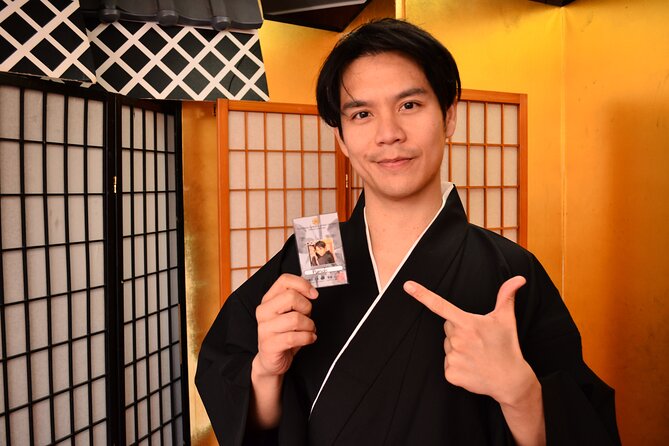
At the end, you change back into your clothes and receive a certificate of recognition with your photograph. You also receive a photo of your face and the digital photo data on an SD card or similar memory device, according to the supplied details.
The certificate is a simple touch, but it gives children something physical to take home. It also helps the activity feel complete. You have learned the greeting, drawn and sheathed the sword, practiced kata, staged the battle, and then received a formal-looking record of the achievement.
I would not mistake the certificate for a professional rank or martial arts qualification. It is a souvenir of participation. That distinction is worth keeping clear, especially for adults or children already studying martial arts. The course can be fun and educational without representing advanced samurai sword training.
A few more Tokyo tours and experiences worth a look



Why the private format matters
Private participation is one of the strongest reasons to choose this activity. Only your group takes part, and bookings can include up to 10 people. That means the instructor can respond to different ages and comfort levels instead of teaching to an anonymous crowd.
For a family, the format allows adults and children to learn together. The instructor can slow down for a younger child, pair people for the mock battle, and keep the tone relaxed. For a couple or a group of friends, it gives you room to laugh at your mistakes without performing in front of strangers.
Solo participation is also allowed. A private lesson for one person costs more per head than a shared class, but it offers unusually direct attention. If you are booking alone, the price is easier to justify if the personal photographs and video are important to you.
There are limits. A group of 10 will have more people waiting for their turn during photographs and staged combat than a couple will. The maximum group size is still small compared with a standard sightseeing tour, but I would expect the experience to feel most personal with one to six participants.
A good Asakusa activity between major sights
The meeting point is in Asakusa, an area already known for traditional Tokyo sights and easy access to public transportation. The activity does not include hotel pickup or drop-off, so you need to make your own way there.
Because the precise training location may change with the number of participants, build in time to find the meeting place and read the organizer’s message. The first location is clearly provided, but the instruction to confirm the final site is important. I would save the address and avoid relying on a last-minute internet search.
The one-hour format fits neatly into a day of sightseeing. You could place it between visits in Asakusa or use it as a morning activity before lunch. Still, do not think of the listed duration as a guarantee that you will be walking away exactly 60 minutes after arrival. Costume changes, photographs, and the certificate all form part of the experience.
There is no hotel transfer, meal, or wider neighborhood tour included. That keeps the activity focused, but it means you should plan the rest of your Asakusa visit separately. The good news is that the class does not consume half a day.
Is $85.89 a fair price?
At $85.89 per person, this experience earns its value through three things: private instruction, the costume, and the media package. A basic photo rental without coaching would cost less, while a serious multi-session martial arts course would provide far more training. This sits between those two options.
I think the price is fair for a family that wants everyone involved. A parent can learn alongside a child, and the included photos and video preserve the event without requiring one person to document it. For a couple, the certificate and personal images make it a stronger choice than a quick costume portrait.
The value is weaker if you want rigorous sword study. The lesson is short and beginner-focused. A second-degree black belt may still enjoy the staged combat and the cultural setting, but should not expect technical depth or demanding dojo practice.
The strong rating of 4.9 from 73 reviews, with 99 percent recommending it, supports the idea that the activity delivers what it promises. More important than the number is the pattern in the feedback: Jiro and his assistants are repeatedly praised for kindness, patience, English communication, photography, and their ability to work with children.
Who should book this experience?
I would recommend it most to:
- Families with children age six or older
- Teenagers who enjoy samurai stories, costumes, or performance
- Couples looking for a shared Tokyo memory
- Friends who want an activity with plenty of photographs
- Solo visitors who value direct instruction and personal attention
- First-time participants with no sword or martial arts background
Children must have an adult with them. Everyone should have moderate physical fitness, since you will stand, move, practice sword forms, and take part in a staged battle.
I would be more cautious if you are looking for historical instruction at academic depth, advanced martial arts training, or a long practice session. The activity offers a guided taste of samurai movement and presentation. It does not claim to turn you into a trained swordsman in an hour.
Booking timing and cancellation details
This activity is often booked about 48 days in advance, so reserving early is sensible if your Tokyo dates are fixed. Confirmation is sent within 48 hours of booking, subject to availability.
You can receive a full refund if you cancel at least six full days before the local start time. Cancellations made two to six full days ahead receive a 50 percent refund, while cancellations less than two full days ahead are not refunded. Changes follow the same cutoff rules.
The activity also requires a minimum number of participants. If the provider cancels because that minimum is not met, you will be offered another date or experience, or receive a full refund.
Final booking advice
Book this if you want a short, friendly samurai activity with real structure, personal attention, and keepsakes you can share at home. The combination of costume, sword forms, mock combat, professional-style photographs, video, and a certificate gives the hour a satisfying beginning and end.
Skip it if your main goal is serious martial arts instruction. For everyone else, especially families and teenagers, this is a smart use of time in Asakusa. Jiro, Aya, and the other assistants appear to understand the assignment: teach enough technique to make the activity feel meaningful, keep the mood light, and send you home with proof that you once carried yourself like a samurai.
FAQ
How long does Samurai Training Tokyo Asakusa last?
The activity is listed as approximately one hour. The full sequence includes gathering, changing clothes, photographs, training, video recording, changing back, and receiving your certificate, so you may want to allow additional time.
Where does the activity begin?
The stated meeting point is Hanakawado Sunny Mansion, 2-chome-2-5 Hanakawado, Taito City, Tokyo 111-0033, Japan. The exact meeting and training locations can vary depending on the number of participants, and the provider will contact you at least two days before the reserved date.
What does the price include?
The $85.89 per person price includes a local instructor, rental costume, photographs, and video footage.
Is this a private activity?
Yes. Only your group participates, with a maximum of 10 people per booking.
Can children take part?
Yes. The minimum age is six, and children must be accompanied by an adult.
Do I need previous martial arts experience?
No previous experience is stated as a requirement. The class covers beginner movements such as drawing and sheathing the katana, kata, and staged sword-fighting practice. Participants should have moderate physical fitness.
What do I receive at the end?
After changing back into your clothes, you receive a certificate of recognition with your photo, a photo of your face, and digital photo data on an SD card or similar memory device. The activity also includes video footage.
More Samurai & Ninja Experiences in Tokyo
More Asakusa Tours in Tokyo
More tours in Tokyo we've reviewed












Samurai & Ninja Experiences, compared.
 ★ 4.5Tokyo: Samurai Restaurant Show Ticket with 2 DrinksFrom $551h 30m
 ★ 4.6Tokyo: Samurai Ninja Museum Guided tour and ExperienceFrom $27
 ★ 5.0Skip the lines Basic Ticket at SAMURAI NINJA MUSEUM TOKYOFrom $28
 ★ 5.0Tokyo: Authentic Samurai Training at a DojoFrom $211
 ★ 5.0Best Samurai Experience in TokyoFrom $65
 ★ 4.6Tokyo: Legend Samurai Entertainment Night in Kanda ShrineFrom $44