Reviewed · ASAKUSA TOURS
Asakusa: Geisha Performance and Tea House Experience
The most memorable part of this Asakusa experience is the chance to meet real geisha in a small tea-house setting, rather than watching a distant stage performance. You’ll see graceful dance, hear live shamisen music, take part in a traditional game, and have time to ask questions about geisha life.
In This Article
- Key points to know before you book
- Entering Miyakodori’s Asakusa tea house
- The opening welcome and first impressions
- Dance, costume, and live shamisen music
- Konpira Fune Fune turns formality into fun
- Matcha, sweets, and time for questions
- The commemorative photo and what is included
- Why the 75-minute format works
- The experience for solo visitors, couples, and families
- Practical planning for your Asakusa visit
- Should you book the Asakusa geisha experience?
- FAQ
- Where does the geisha experience take place?
- How long does the activity last?
- What performances are included?
- Do I get to speak with the geisha?
- What is Konpira Fune Fune?
- Are matcha and sweets included?
- Do I have to buy a drink?
- Is transportation included, and can I cancel?
I like the mix of polished art and easygoing fun. The dance and music provide the beauty, while Konpira Fune Fune gets everyone laughing. I also like that matcha, seasonal sweets, conversation, and a photo are included, so the 75 minutes feel full rather than padded.
The main consideration is the price, $106 per person, plus one required drink order for each person. This is a cultural performance and social experience, not a full meal, and transportation to the Asakusa venue is not included.
Key points to know before you book

- Real geisha and live shamisen: Watch a traditional dance performance accompanied by shamisen music and singing.
- A small-group feel: One recent session had about 16 people, making it easier to see the performers and join the conversation.
- Konpira Fune Fune: Learn an authentic ozashiki-asobi game that turns a formal setting into a cheerful group activity.
- Matcha and seasonal sweets: Enjoy freshly whisked matcha and Japanese sweets, with no full meal included.
- English support: An English-speaking host or greeter and translator help you follow the performance and ask questions.
- Extra drink cost: Each person must order one alcoholic or non-alcoholic drink in addition to the complimentary matcha.
Entering Miyakodori’s Asakusa tea house

The experience takes place at Miyakodori’s Ozashiki Tea House in Asakusa, one of Tokyo’s best-known districts for traditional culture. You arrange your own way there, so allow time to find the venue and arrive before the scheduled start.
The setting is part of the appeal. One account describes entering through a hidden door before being welcomed by the owner and shown to the banquet area. You may sit on low stools in the traditional room, which gives the occasion a more intimate feel than a standard theater show.
The English-speaking host and translator help bridge the language gap. That matters here because the social part is just as important as the performance. You are not simply watching a show, you are being guided through a form of hospitality that can be unfamiliar to first-time visitors.
The group size may vary, but a recent session had roughly 16 people. That is small enough for the performers to interact with the room, though it is not a private appointment. If you want a completely personal conversation, keep your expectations realistic.
A few more Tokyo tours and experiences worth a look


The opening welcome and first impressions
The event begins with a welcome before moving into the main entertainment. You can expect a polished, formal atmosphere, but the tone is not stiff for the entire session. The host introduces the setting and helps everyone settle in before the performance begins.
This opening is useful because geisha culture can be difficult to understand from photographs or a quick street sighting. Here, you get context along with the visual details of costume, movement, music, and etiquette.
You should also choose your required drink early. One alcoholic or non-alcoholic drink must be ordered by each person, and that cost is separate from the complimentary matcha. If you do not drink alcohol, you can select a non-alcoholic option, but you still need to place an order.
Dance, costume, and live shamisen music

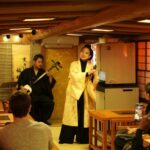
The central performance is a graceful geisha dance accompanied by live shamisen music. The shamisen is a traditional Japanese three-stringed instrument, and its bright, precise sound gives the dance a strong sense of place.
The performance is short enough to hold the attention of most people, yet substantial enough to show the discipline behind it. You will see controlled gestures, careful posture, expressive hand movements, and elaborate dress working together. This is not a casual demonstration put on for a camera. It is a trained performance tradition.
A recent lineup included geiko Chizuru and maiko Tamaaki, with Shisa providing shamisen music and singing. Lineups can change, so you should not book expecting those exact performers, but their appearance gives you a useful sense of the artistic level involved.
The music can be as important as the dance. If you tend to focus only on the costumes, listen to the shamisen and vocals as well. The live sound makes the room feel active and immediate, rather than like a staged recording played behind a demonstration.
Photography may be limited during parts of the performance, so enjoy the first viewing without trying to record every movement. The included photo at the end gives you a clear chance to preserve the memory.
Konpira Fune Fune turns formality into fun
After the performance, you are taught an ozashiki-asobi game called Konpira Fune Fune. This traditional parlor game uses rhythm, quick reactions, and a simple shared action, with players taking turns as the pace changes.
This is often the most relaxed part of the experience. You do not need specialist knowledge, and the translator or host explains how it works. The activity brings the whole room into the event, including people who might otherwise sit quietly through a formal performance.
The game also shows a different side of geisha hospitality. Geisha entertainment is not only about dance and music. Conversation, wit, timing, and playful interaction are part of the experience too.
If you are traveling with children, this section may hold their attention better than the more formal dance. A family group with children aged three to ten found the performance captivating and the game especially enjoyable. Still, younger children may need help sitting quietly during the opening and dance.
Matcha, sweets, and time for questions

The tea portion includes freshly whisked matcha and seasonal Japanese sweets. The sweets add a small taste of the season and pair naturally with the bitter, grassy flavor of matcha.
This is not a tea ceremony lesson in the strict sense, so do not expect a long technical demonstration of every utensil or gesture. Instead, the matcha works as part of the hospitality and gives the group a calm pause after the game.
The chance to ask questions is one of the strongest reasons to choose this activity. You can ask about the performers’ work and daily lives through the translator. That direct exchange helps separate the real profession from the simplified image often presented in popular culture.
Keep questions respectful and focused on the performers as artists and professionals. Personal conversation is welcomed within the setting, but the meeting is still a hosted cultural event rather than an informal private visit.
A few more Tokyo tours and experiences worth a look


The commemorative photo and what is included

The experience ends with a commemorative photo with the geisha. It is a useful finishing touch because the performance itself moves quickly and you may not want to spend the entire time taking pictures.
The $106 price includes the 75-minute cultural program, meeting the geisha, the dance, live shamisen music, the ozashiki-asobi game, seasonal sweets, freshly whisked matcha, and the photo. It does not include transportation or food beyond the sweets.
The value depends on what you want from your Tokyo schedule. If you are looking for a cheap stage show, this will feel expensive. If you value a small cultural setting, live music, guided interaction, and the chance to speak with real performers, the price is easier to justify.
The required drink order adds a cost that is easy to overlook. Budget for that before booking, even if you choose a non-alcoholic drink. The matcha is included, but it does not replace the drink requirement.
Why the 75-minute format works

Seventy-five minutes is a sensible length for this type of activity. You get enough time for several distinct elements without giving up half a day of sightseeing.
The schedule combines:
- A welcome and introduction
- A geisha dance performance
- Live shamisen music and singing
- The Konpira Fune Fune game
- Matcha and seasonal sweets
- Questions and conversation
- A commemorative photo
The compact format also suits a busy Tokyo itinerary. You can pair it with other Asakusa sights before or after, but leave enough time for the journey and finding the tea house. Since transportation is not included, the clock begins to matter if you book a fixed starting time.
I would not choose this as a substitute for a full dinner or an all-evening entertainment program. It is a focused cultural encounter. The reward is concentration and personal contact, not quantity.
The experience for solo visitors, couples, and families
Solo visitors can fit in well because the game and question period encourage group participation. You do not need to arrive with your own party to take part.
Couples may find the performance and photo especially suitable for a special occasion. One couple used the activity during a honeymoon, and the combination of music, dancing, games, and conversation made it a memorable part of their Japan trip.
Small groups also benefit from the relaxed social format. The event can work for families, including children, but remember that a traditional room and formal performance require some patience. The playful game helps, though the full experience is still cultural rather than designed solely as a children’s activity.
This is a good match for you if you enjoy:
- Traditional performing arts
- Small cultural activities with an English guide
- Asking questions directly through a translator
- A balance of formal beauty and group participation
- Matcha and Japanese sweets
- A special photo opportunity
It may be less suitable if you dislike group activities, do not want to order a drink, or prefer to spend your money on a longer meal or private tour.
Practical planning for your Asakusa visit

Plan your route before the day of the booking. The venue is in Asakusa, but transportation to it is not part of the package. Arriving early is sensible, especially since one person specifically advised giving yourself extra time.
Wear something that lets you sit comfortably on low stools if that arrangement is used for your session. The supplied details do not promise a particular seating setup every time, but traditional banquet-room seating has been part of the experience.
The host or greeter speaks English, and translation is available for interaction with the performers. You should still keep questions clear and allow a moment for interpretation. That makes the conversation easier for everyone and gives you more time to hear thoughtful answers.
Cancellation is flexible: you can cancel up to 24 hours before the activity for a full refund. You can also reserve now and pay later, which helps if your Tokyo plans are still shifting.
The overall rating is 5 out of 5 from 52 reviews, with repeated praise for the welcoming staff, beautiful performances, fun games, direct conversation, and strong sense of cultural value. Those are the parts I would prioritize when deciding if this fits your trip.
Should you book the Asakusa geisha experience?
Book it if you want a direct introduction to geisha performance in a welcoming setting, with more substance than a quick photo stop. The live shamisen, skilled dancing, translator-supported questions, and Konpira Fune Fune game give the 75 minutes a good mix of art and human contact.
The strongest reason to go is the chance to see trained performers and speak with them, not simply to admire the costumes. The strongest reason to hesitate is cost: $106 per person, plus one drink, is a serious outlay for a short activity that does not include a meal.
For a honeymoon, anniversary, first visit to Japan, or carefully chosen cultural afternoon in Asakusa, I think the price can be worthwhile. If you are on a tight budget or mainly want an inexpensive traditional show, choose something else. For everyone else, this is a polished, personal glimpse into a living performance tradition, with enough laughter to keep it from feeling like a lecture.
FAQ
Where does the geisha experience take place?
It takes place at Miyakodori’s Ozashiki Tea House in Asakusa, Tokyo, on Honshu.
How long does the activity last?
The cultural experience lasts 75 minutes.
What performances are included?
You will see a graceful geisha dance accompanied by live shamisen music. Singing may also accompany the shamisen performance.
Do I get to speak with the geisha?
Yes. The experience includes an opportunity to ask questions and learn more about geisha life, with English support and translation.
What is Konpira Fune Fune?
Konpira Fune Fune is an ozashiki-asobi game, a traditional lighthearted activity played with the performers and other people in the room.
Are matcha and sweets included?
Yes. Freshly whisked matcha and seasonal Japanese sweets are included. Other meals are not included.
Do I have to buy a drink?
Yes. Each person must order one drink, either alcoholic or non-alcoholic, in addition to the complimentary matcha.
Is transportation included, and can I cancel?
Transportation to the venue is not included. You can cancel up to 24 hours in advance for a full refund, and the reserve-now, pay-later option is available.
More Shows & Performances in Tokyo
More Asakusa Tours in Tokyo

More tours in Tokyo we've reviewed












Asakusa Tours, compared.
 ★ 4.8Tokyo: Japanese Dance Cabaret Theater Asakusa-Kaguwa TicketFrom $492 hours
 ★ 4.7Tokyo: Meiji Shrine, Asakusa, Skytree Bus Tour and CruiseFrom $12210 hours
 ★ 4.9Tokyo: Roll and Authentic Sushi Making Class in AsakusaFrom $581h 40m
 ★ 4.8Tokyo: Asakusa Walking Tour with Sensoji Temple VisitFrom $222 hours
 ★ 5.0Tokyo Asakusa Rickshaw TourFrom $42
 ★ 4.5Tokyo Panoramic 1 Day: Meiji Shrine, Asakusa, Odaiba and SKYTREE®From $85