Reviewed · SUMO EXPERIENCES
Tokyo Sumo Practice Watching & Visit Town from Samurai era
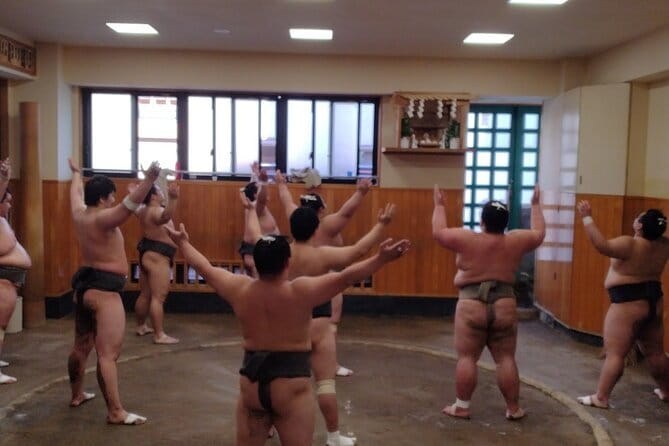
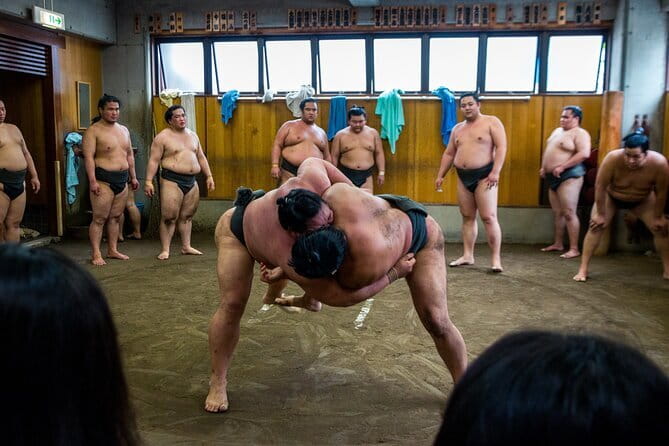
Tokyo sumo practice is the heart of this 3.5-hour morning tour. With special permission, you watch real wrestlers train from ringside at Shikoroyama-beya, where warmups and drills show the sport as hard physical work, not just a tournament spectacle.
In This Article
- Key points to know before booking
- Why the sumo practice matters more than a tournament snapshot
- Ken’s role in making sumo easier to understand
- Starting at Kiyosumi-shirakawa Station at 8:30 am
- Kiyosumi Teien, a calm change of pace
- Fukagawa Edo Museum and a recreated Tokyo neighborhood
- How the three stops work together
- What the $123.79 price includes
- Who will get the most from this morning
- Practical details that affect your decision
- Should you book Tokyo Sumo Practice Watching and Visit Town from Samurai Era?
- FAQ
- What time and where does the tour begin?
- How long does the experience last?
- Will I watch real sumo wrestlers practice?
- Is a photo with the sumo wrestlers included?
- What is included in the price?
- Can I cancel for a full refund?
I like the rare access and Ken’s personal guidance, which helps you understand what you are seeing. I also like the smart pairing with Kiyosumi Teien and the Fukagawa Edo Museum, two quieter stops that give the sumo visit a wider setting. The main drawback is that the tour begins at 8:30 am and packs three substantial stops into one morning, so the pace may feel brisk.
Key points to know before booking
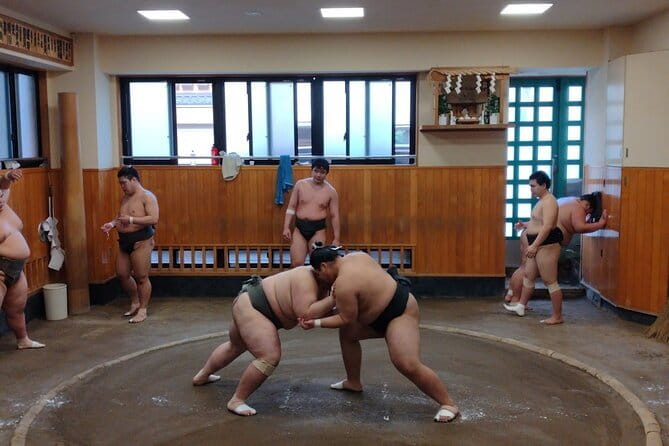
- Ringside access at Shikoroyama-beya: Watch genuine sumo practice inside a stable with special permission.
- Guide Ken leads the morning: He speaks fluent English and explains sumo customs, Tokyo history, and Japanese culture.
- A possible sumo photo session: You may have the chance to take photos with the wrestlers.
- Three very different Tokyo experiences: The tour moves from athletic training to a formal garden and a recreated Edo neighborhood.
- Small group format: The maximum group size is 15 people, which matters in a compact sumo stable and during guided walks.
- Admission is included: The $123.79 price covers the guide, entry fees, and taxes, but not private transportation.
Why the sumo practice matters more than a tournament snapshot
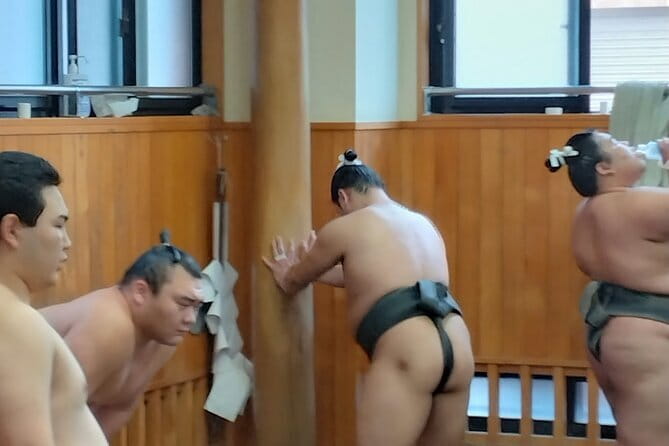
Many first-time visitors hope to see sumo but find that tournament schedules do not match their trip. This tour offers another way into the sport: you watch wrestlers practice, warm up, and repeat training routines at a real stable.
That setting changes what you notice. A tournament gives you the drama of a public match, but practice lets you see the daily discipline behind it. You are close enough to watch the physical intensity of the work, while Ken explains the traditions and customs that can be hard to understand on your own.
The stable visit lasts about 90 minutes, making it the clear centerpiece of the morning. Special permission is required to enter, so this is not simply a stop outside a building where you hope to catch a glimpse through a door.
You should also understand the tone of the visit. This is a working training space, not a theater built for tourists. The most rewarding approach is to watch quietly, listen to the guide, and let the practice unfold rather than expect a staged performance.
The chance for a photoshoot with sumo wrestlers adds a memorable personal moment. The information describes this as a chance, so you should treat it as a possible part of the visit rather than the sole reason to book.
A few more Tokyo tours and experiences worth a look
Ken’s role in making sumo easier to understand
A sumo stable can be fascinating and confusing at the same time. Without context, you may see powerful athletes moving through exercises without knowing why certain actions, rituals, or routines matter.
Ken guides you from the meeting point through the end of the tour. His fluent English, patience with questions, punctuality, and careful organization are important advantages, especially if you are new to sumo.
His explanations cover sumo tradition, Japanese culture, and Tokyo history. One particularly useful feature is that the conversation continues during the garden and museum visits, so the morning is not split into three unrelated attractions.
The available feedback points to Ken as the strongest part of the experience. He is described as friendly, helpful, polite, and willing to discuss many topics. That matters in a small group, where the quality of the guide can shape the entire morning.
There is one fair limitation. If you already know a great deal about sumo, you may want more detail about the sport, the Edo period, or recent competitions than this tour provides. One participant specifically wanted more background and suggested a handout would help. You can improve the experience by reading a short introduction to sumo before arriving and bringing your own questions.
Starting at Kiyosumi-shirakawa Station at 8:30 am
The tour begins at Kiyosumi-shirakawa Station, at the ground level of B1 Exit, at 1-chōme-6-13 Shirakawa in Koto City. Ken meets you there and walks with the group to the sumo stable.
This arrangement keeps the start simple. You do not need to find the stable on your own, and the guide gives you a clear meeting point near public transportation. Still, an early start in Tokyo deserves planning. Allow enough time to reach Kiyosumi-shirakawa without rushing, since the tour begins promptly at 8:30 am.
The first walk is listed as about 10 minutes. Private transportation is not included, but that is not a serious concern for this experience because the route is designed around walking and public transit.
The group can include up to 15 people. That is small enough to feel personal compared with a large bus tour, though the stable itself may make the group feel more compact. If you prefer quiet, direct access to a guide, a smaller group is generally an advantage here.
Kiyosumi Teien, a calm change of pace

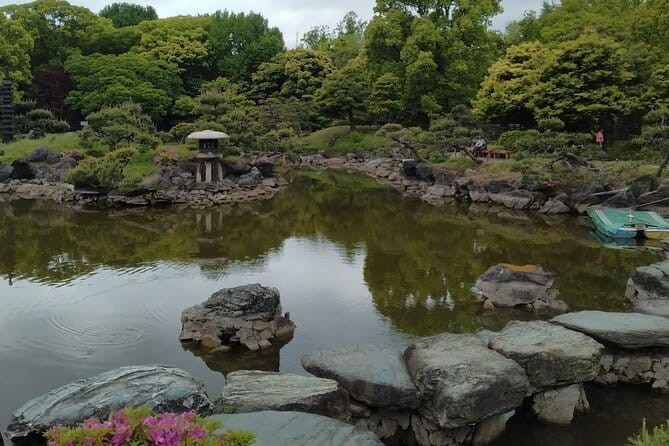
After the sumo practice, the tour turns to Kiyosumi Teien for about 50 minutes. The garden offers a sharp contrast to the noise, effort, and concentration of the stable.
Kiyosumi Teien is described as a walking forest garden, with artistic scenery and a quiet atmosphere. You can expect a place shaped for slow movement and careful looking, rather than a checklist of monuments.
The garden includes koi and, depending on the season, cherry blossoms. Those details give you something immediate to enjoy, while Ken supplies context about Japanese gardens and the area’s past.
I like this middle stop because it prevents the tour from becoming a single-topic outing. Sumo is physical and highly specialized. The garden gives you time to reset and see another side of Japanese culture through design, water, plants, and silence.
The 50-minute visit is long enough for a guided look but not long enough for a full, unhurried garden visit. If gardens are a major interest for you, you may wish you had more time. If you are fitting several experiences into a busy Tokyo schedule, the shorter visit keeps the morning moving.
Fukagawa Edo Museum and a recreated Tokyo neighborhood
The final stop lasts about an hour at the Fukagawa Edo Museum. Instead of displaying only objects behind glass, the museum presents a life-size reproduction of a Tokyo townscape from the end of the Edo period.
This is valuable because it lets you picture ordinary urban life. Everyday tools are placed inside the reproduced houses, and changes in sound and lighting recreate the passing hours of the day.
The museum helps connect the morning’s separate themes. At the sumo stable, you see a tradition still practiced today. In the garden, you encounter Japanese ideas about space and beauty. At Fukagawa Edo Museum, you get a physical sense of how people lived in an earlier Tokyo.
The recreated setting may appeal more to you than a conventional museum because it is easy to walk through and understand. You are not asked to absorb a long series of labels before the place makes sense.
The tradeoff is that this is a focused museum visit, not a broad survey of Tokyo history. If you want detailed information about modern competitions or a full account of the Edo period, you may need another source. Ken’s commentary adds useful background, but the tour’s strength is the combination of places rather than an academic lecture.
A few more Tokyo tours and experiences worth a look


How the three stops work together
The route is well chosen for a first visit to Tokyo. You begin with an experience that most independent sightseeing plans cannot easily reproduce, then move through a garden and a museum that are close in character but very different in mood.
The sequence also makes practical sense. The sumo practice receives the longest and freshest part of the morning, when you are most likely to be alert for explanations. The garden provides a quieter pause, and the museum ends the tour with a more structured look at Tokyo’s past.
You do not spend the morning crossing the city from one famous sight to another. That saves time and avoids the usual Tokyo problem of losing half a day to transportation between distant neighborhoods.
At the same time, this is a walking-based cultural tour, not a relaxed sightseeing bus ride. You should be comfortable moving between the meeting point and each location. Since private transportation is not included, expect the guide to lead the group on foot and through the area’s public transit network as needed.
What the $123.79 price includes
At $123.79 per person, this is not a bargain-priced walking tour. Its value rests on access rather than on the number of hours alone.
The fee includes a professional guide from the meeting point through the end, admission to all listed locations, and all fees and taxes. The sumo stable is the key value item because special permission is required to enter. Without that access, you would lose the part of the morning that is hardest to arrange independently.
You are also paying for interpretation. A garden and a museum can be visited on your own for less, but Ken ties them to sumo, Tokyo, and Japanese culture. That extra explanation is especially helpful if you are unfamiliar with the customs behind the sport.
The price makes the most sense for a first-time visitor who wants one organized cultural morning and would rather not arrange several separate visits. It is less compelling if you only want to see a sumo match, or if you are already comfortable navigating Tokyo and studying the sites without a guide.
Because all admission fees are included, you do not need to calculate separate entry costs. Food and private transportation are not listed as included, so plan your morning around the stated 3.5-hour duration and handle any additional purchases yourself.
Who will get the most from this morning
I would recommend this experience to a first-time Tokyo visitor with a strong interest in sumo, Japanese traditions, or local history. It suits someone who wants access to a real working setting rather than a themed presentation.
Families can also find plenty to enjoy. The intensity of the practice is memorable, the garden adds open space and visual variety, and the life-size museum displays are easier for many people to grasp than a room of small objects.
The tour has no stated age, height, or weight restrictions for the included activities, and most people can participate. That makes it broadly accessible in terms of eligibility, although you should still consider your own comfort with a 3.5-hour morning that includes walking.
You may not find it ideal if you need a late start, want a private tour, or prefer to spend a long time at one attraction. The group size can reach 15, and the schedule gives each stop a defined amount of time.
It is also not the best match if your main goal is detailed technical study of sumo. The tour explains the culture and tradition, but one piece of feedback indicates that serious students may want more information about competitions and a written summary.
Practical details that affect your decision
The meeting point is clear, but do not confuse Kiyosumi-shirakawa Station with the stable itself. Ken meets you at the ground level of B1 Exit, then walks the group to the first stop.
The activity ends back at the meeting point. That is useful if you want to continue exploring the Koto City area afterward, and it avoids leaving you at an unfamiliar point elsewhere in Tokyo.
Confirmation is sent within 48 hours of booking, subject to availability. The tour is commonly booked about 17 days ahead, so I would not leave it until the last morning of your trip if the stable visit is important to you.
The cancellation terms are friendly but firm. You receive a full refund if you cancel at least 24 hours before the local start time. Cancellations or changes made inside that 24-hour window are not accepted for a refund.
The current rating is 4.9 from eight ratings, which suggests a strong early reception but is still a small sample. I would put more weight on the repeated praise for Ken’s organization, English, patience, and cultural explanations than on the number alone.
Should you book Tokyo Sumo Practice Watching and Visit Town from Samurai Era?
Book it if you want real sumo practice, a guide who can explain what you are seeing, and a compact morning that adds a Japanese garden and an Edo-period town setting. The special stable access is the reason to choose this tour over a standard city walk.
Think twice if you need a slow pace, a late start, or advanced sumo instruction. For most first-time visitors, the $123.79 cost is reasonable because it combines unusual access, three admissions, and a guide in one well-focused outing. Just arrive ready for an early meeting, a walking route, and a cultural experience that is more informative than showy.
FAQ
What time and where does the tour begin?
The tour begins at 8:30 am at Kiyosumi-shirakawa Station, at the ground level of B1 Exit, at 1-chōme-6-13 Shirakawa, Koto City, Tokyo.
How long does the experience last?
The tour lasts approximately 3 hours and 30 minutes. It ends back at the meeting point.
Will I watch real sumo wrestlers practice?
Yes. You watch real sumo wrestlers practice from ringside at Shikoroyama-beya Sumo Stable. Special permission is required to enter the stable.
Is a photo with the sumo wrestlers included?
The experience includes the chance to have a photoshoot with sumo wrestlers. The information presents this as an opportunity rather than a guaranteed session.
What is included in the price?
The price includes a professional guide, admission fees for all locations visited, and all fees and taxes. Private transportation is not included.
Can I cancel for a full refund?
Yes. You can cancel at least 24 hours before the local start time for a full refund. Cancellations or changes made less than 24 hours before the start time are not accepted for a refund.
More Samurai & Ninja Experiences in Tokyo
More Sumo Experiences in Tokyo

More tours in Tokyo we've reviewed












Sumo Experiences, compared.
 ★ 4.8Tokyo: Sumo Show Experience with Chicken Hot Pot and a PhotoFrom $1032 hours
 ★ 4.8Tokyo: Sumo Show and Dining ExperienceFrom $7990 minutes - 2 hours
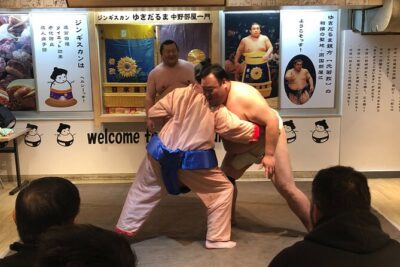 ★ 5.0the SUMO showFrom $89
 ★ 5.0Tokyo Sumo Entertainment Show with Chicken Hot Pot and PhotoFrom $106
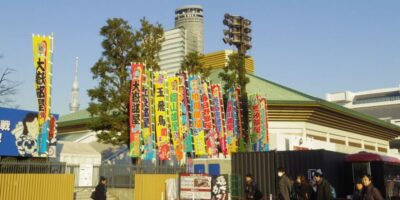 ★ 4.6Tokyo: Sumo Tournament Tour with Chair Seat TicketsFrom $141
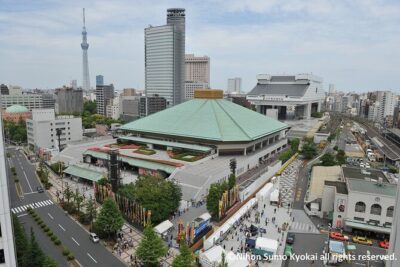 ★ 5.0Tokyo Grand Sumo Tournament Viewing Tour with TicketsFrom $124