Reviewed · TICKETS
Tokyo: TOKYO SKYTREE® Admission ticket
Tokyo Skytree gives you the clearest sense of how enormous Tokyo really is. From the 350-meter Tembo Deck, the city spreads in every direction, with the Sumida River, Tokyo Bay, Tokyo Dome, Tokyo Tower, and, on a clear day, Mount Fuji laid out below. The smooth elevator ride is part of the show.
In This Article
- Key points to know before you go
- Why Tokyo Skytree is worth seeing from above
- Arriving at the 4th floor and using the voucher
- The elevator ride to the 350-meter Tembo Deck
- The 450-meter Tembo Galleria: worth the extra cost?
- The glass floor on Floor 340
- Skytree Café and the stop on Floor 345
- Tokyo Solamachi makes this more than a one-hour stop
- Choosing the best time of day
- How much value do you get for $13?
- Who should book this admission?
- Final recommendation
- FAQ
- Where do I exchange the Tokyo Skytree voucher?
- What does the basic ticket include?
- Is the Tembo Galleria included?
- How long is the ticket valid?
- What languages are available?
- Where is the glass floor?
- Is food available at Tokyo Skytree?
I like the choice of viewpoints: the Tembo Deck offers the main 360-degree experience, while the optional 450-meter Tembo Galleria adds a sloping skywalk and a better feeling of height. I also like the easy voucher system and the chance to visit at dusk, when daylight gives way to a sea of city lights.
The main drawback is weather and crowd timing. Clouds can erase the view completely, and sunset slots can bring long waits for the elevators. The small glass-floor section on Floor 340 is fun for a quick photo, but it may not satisfy anyone expecting a major thrill attraction.
Key points to know before you go
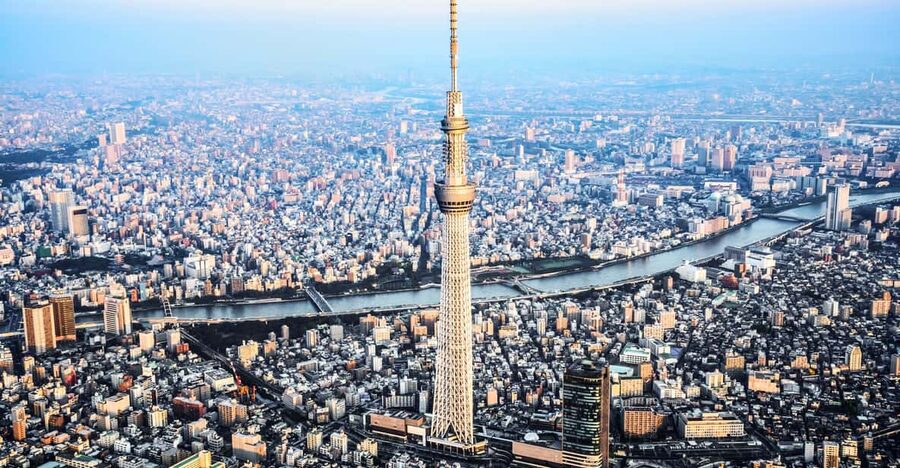
- Japan’s tallest tower reaches 634 meters, but the public viewing areas are at 350 and 450 meters.
- The 16:30 or late-afternoon period can be ideal, giving you daylight, sunset, and Tokyo after dark in one visit.
- The 450-meter Tembo Galleria costs extra, and its spiral ramp offers more height and motion rather than a wholly different view.
- The glass floor is on Floor 340, though the viewing panel is smaller than some dedicated glass-floor attractions.
- The voucher is exchanged on the 4th floor, where staff and ticket machines help direct you to the elevators.
- Tokyo Solamachi adds value, with about 300 shops and restaurants, a food court, and a planetarium below the tower.
Why Tokyo Skytree is worth seeing from above
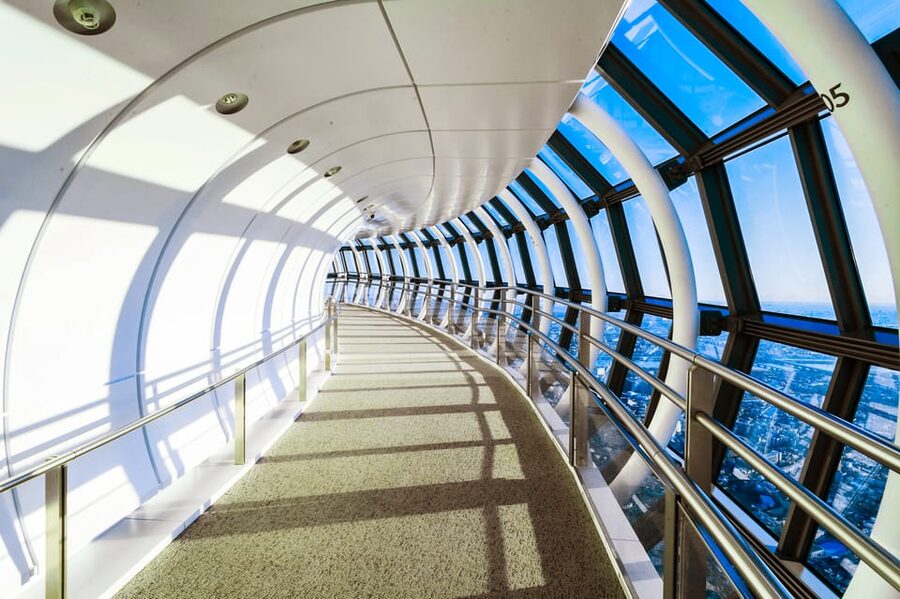
Tokyo is so broad that it can be hard to understand from street level. Neighborhoods blur into one vast spread of roofs, towers, rail lines, rivers, and distant hills. Skytree fixes that problem in one quick elevator ride.
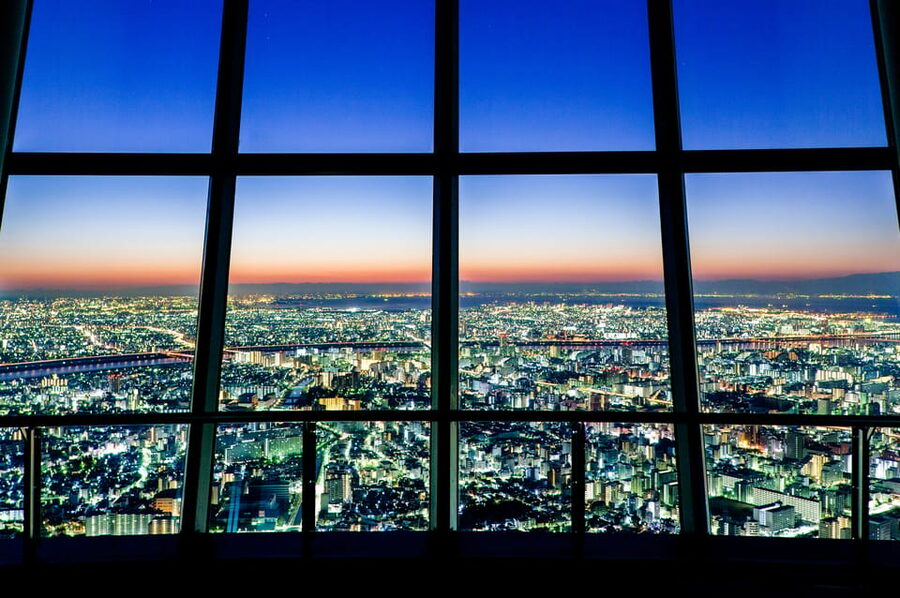
The tower is in the eastern part of Tokyo, near Asakusa and the Sumida River. From the observation decks, you can pick out the city’s better-known markers: Tokyo Tower toward the central skyline, Tokyo Dome, the river winding below, Tokyo Bay, and Mount Fuji far to the west when visibility is good.
The view changes sharply with the hour. In daylight, you can study Tokyo’s structure and see how tightly packed the neighborhoods are. At sunset, the western sky may turn orange behind Mount Fuji. After dark, the roads and buildings light up, giving you a very different sense of the city’s size.
I would not treat this as only a photo stop. Give yourself time to look at the interactive displays and match landmarks to the real view. They help you get your bearings fast, especially if this is your first time seeing Tokyo from such a height.
Arriving at the 4th floor and using the voucher
Your meeting point is Tokyo Skytree itself, at approximately 35.7100627, 139.8107004. Go to the 4th floor to exchange the voucher for your admission ticket. The supplied information describes a ticket counter, while several recent bookings used the QR code at a self-service machine, so look for both and follow the signs on arrival.
Finding the 4th-floor entrance can be the trickiest part. Tokyo Skytree Town is a large complex, and one visitor specifically found the entrance harder to locate than the tower itself. Allow a little extra time, especially if you are arriving for a timed entry.
The ticket includes access to the 350-meter Tembo Deck. Access to the 450-meter Tembo Galleria depends on the option you purchase. Check this carefully before booking, since the two-level pass is not automatic and one purchaser wished they had selected the upper level.
This is a non-refundable activity, so choose your date with care. The ticket is valid for one day, and available starting times are shown during booking. Some people were admitted after arriving earlier or later than their selected time, but you should not rely on that. Follow the time printed on your voucher and check the redemption instructions before setting out.
The admission process is generally simple. Staff members direct you through the tower, and English and Japanese assistance is available. A small-group option is listed, but this is mainly an observation-deck admission rather than a guided sightseeing tour.
The elevator ride to the 350-meter Tembo Deck

The elevator climbs from the 4th floor to the Tembo Deck at 350 meters, or about 1,150 feet. It is very fast and notably smooth, which matters if you dislike heights or worry about a rough ascent.
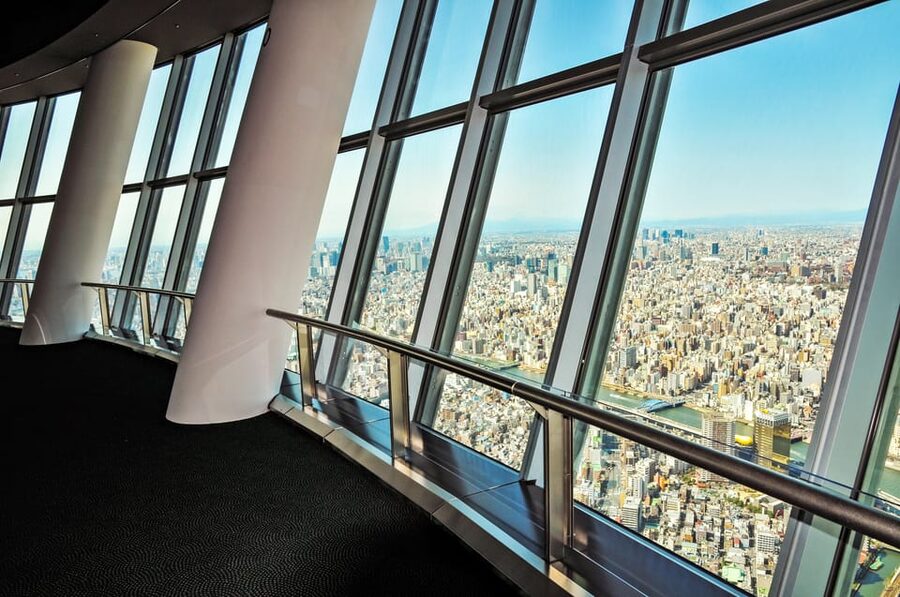
At the top, the circular deck gives you windows on all sides. That layout is important because Tokyo has no single front-facing view. You can circle the floor and compare the dense eastern neighborhoods with the central towers, the river corridor, and the distant mountains.
The large windows are excellent for general viewing, though busy periods can make the best spots along the glass competitive. Staff keep people moving, and several people found the crowd control efficient even when the tower was full. Still, a sunset visit can mean patience at the elevator and some difficulty holding a front-row position.
The Tembo Deck is the best choice if you want the main experience without paying for the upper level. It gives you the essential panorama, the interactive displays, and access to the café and glass floor on the lower observation levels.
On clear winter days, Mount Fuji may appear beyond the city. That sight is never guaranteed. Tokyo’s humidity, haze, clouds, and weather can change the view quickly. If Fuji matters to you, a clear morning may offer better odds than a hazy afternoon, though the late-day light can be more rewarding for photography.
The 450-meter Tembo Galleria: worth the extra cost?
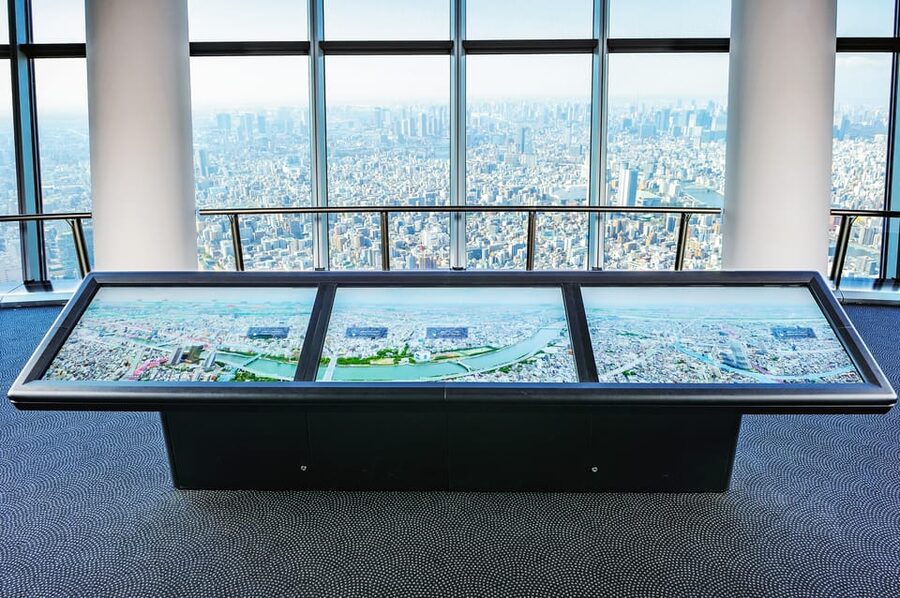
If your ticket includes the Tembo Galleria, another elevator takes you up to 450 meters, or roughly 1,475 feet. The upper level is not a separate tower with a totally new direction of view. It is a higher version of the same great panorama.
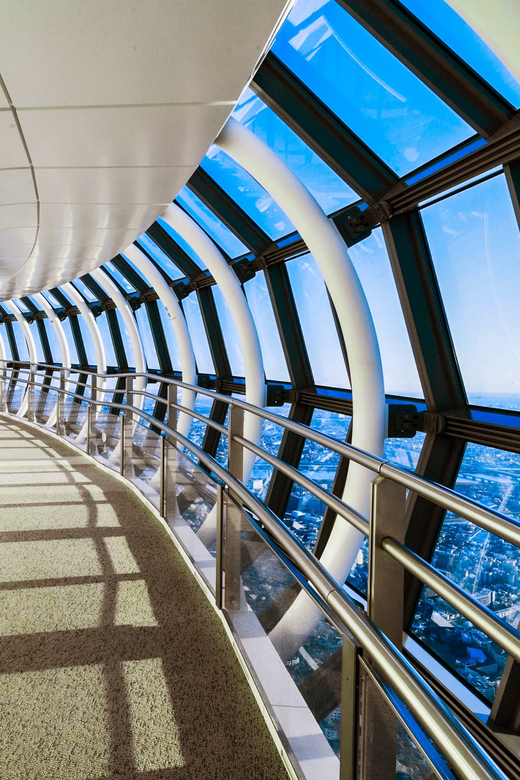
The special feature is the long, sloping spiral ramp. As you walk upward, the view shifts gradually, and you get a stronger sense of being suspended over Tokyo. The ramp is more dynamic than simply standing beside a window, and the upper level can sometimes feel less crowded, making photographs easier.
I recommend adding it if you enjoy architecture, heights, or big-city views and the price difference is modest for your budget. Several people found the upper level especially impressive at night, when the city lights stretch out below. Others felt the view was much the same as the 350-meter deck and did not think the extra cost was essential.
That is the fair way to judge it. The Galleria adds height, the spiral walk, and a more dramatic sense of space. It does not double the number of landmarks you can see. If you are watching every yen, the Tembo Deck alone delivers the central experience.
The glass floor on Floor 340
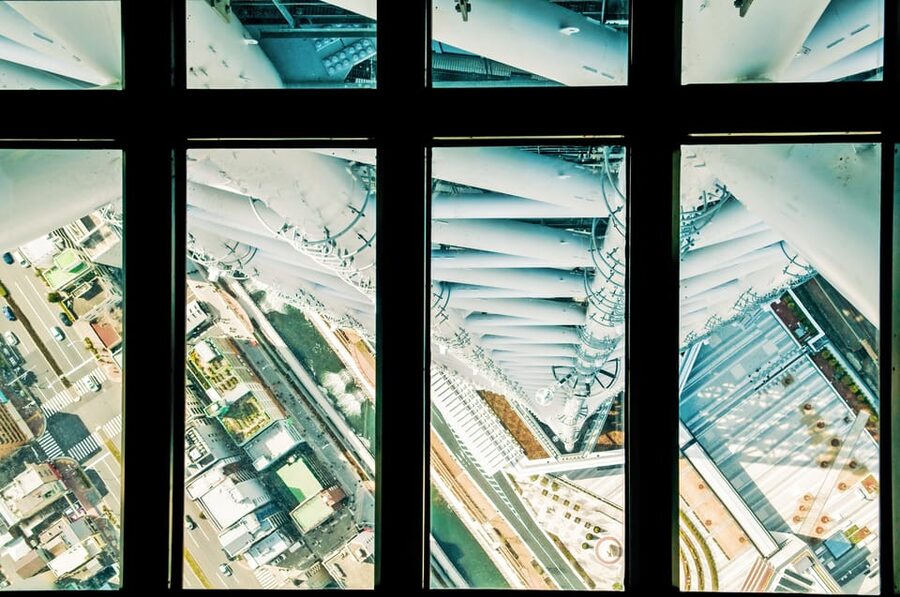
On the way down, stop at Floor 340 for the glass-floor section. You can look directly toward the ground through a sturdy transparent panel. It is a good place for a quick family photo or a test of your nerve.
Keep your expectations in check. This is a relatively small feature, not a long glass walkway or a major attraction in its own right. Some people found it thrilling, while others considered it underwhelming and noted that the panel needed polishing.
I see it as a bonus rather than the reason to buy the ticket. If you are comfortable with heights, step onto it and look straight down. If you are not, the surrounding windows already provide plenty of height without forcing you over the panel.
Floor 340 also has Skytree Café 340, with seating for 64 people. It is the better café choice if you want to sit down, rest your feet, and enjoy the view at a slower pace.
Skytree Café and the stop on Floor 345
Skytree Café 350 is on the 350th floor and is described as Japan’s highest café. It focuses on drinks and light snacks, with open views across Tokyo. It is suited to a quick standing break while you keep an eye on the skyline.
For a more relaxed stop, use Skytree Café 340. The seating makes it easier to pause after the elevator ride or settle in while the city changes from day to night. Prices and menu details are not included here, so I would think of the cafés as part of the experience rather than a replacement for a full meal.
On Floor 345, you can browse the gift shop before descending. The lower parts of Tokyo Skytree Town also have a substantial food court and many places to eat. Several people found the food options downstairs more useful than settling for a snack at the observation deck.
This makes Skytree easy to pair with a meal. You can visit the tower first, then walk through the complex without needing to search for a restaurant elsewhere.
Tokyo Solamachi makes this more than a one-hour stop
Tokyo Skytree is part of Tokyo Skytree Town, whose Tokyo Solamachi complex contains about 300 shops and restaurants. There is also a planetarium.
That matters because the tower visit itself may take about one to two hours, depending on crowds and how long you spend taking photos. Solamachi gives you a reason to stay in the area before or after your timed admission.
The surrounding area also connects naturally with Asakusa and the Sumida River district. You can treat Skytree as a stand-alone viewpoint, or build it into a half-day in eastern Tokyo. The tower’s illuminated exterior and the approach around the entrance can be especially attractive after dark.
The activity information also mentions a combo ticket with TeamLab Planets TOKYO. That can suit you if you want to combine a high city view with a separate art experience in one booking, but the Skytree admission itself is the focus here. Check the exact combo terms and timing before choosing it.
Choosing the best time of day
Your timing may shape the visit more than the ticket type.
Morning can offer a calmer start. One Saturday morning visit had no line at 9:30 and little crowding, with clear views and even a sight of Mount Fuji. Morning light is also useful for seeing Tokyo’s layout without the glare that can build later in the day.
Late afternoon is the most varied option. A 16:30 arrival can give you daylight, sunset, and the first city lights, all in one stay. This is popular for good reason, but it is also the period most likely to be crowded.
Night gives Tokyo its most theatrical appearance. At around 18:30 or 20:30, the roads and buildings glow in every direction. The city can look almost unreal from 450 meters, and the upper gallery is particularly compelling at night.
The tradeoff is simple: the best light often brings the largest crowds. One late-afternoon visit involved long waits for the upward and downward elevators, while other evening visits had no queues. Demand changes by day, season, weather, and special events, so leave room in your schedule.
How much value do you get for $13?
At $13 per person, the basic admission is fairly priced for a major Tokyo landmark, particularly if you want a planned viewpoint rather than a free city lookout. The 350-meter deck gives you a large circular viewing area, multiple directions, landmark displays, fast elevators, and access to the lower-floor features.
The value improves if you use the area well. Add a café stop, browse Tokyo Solamachi, or combine the tower with Asakusa instead of traveling across town only for a short look.
The 450-meter upgrade is more personal. Pay for it if the spiral skywalk and extra height sound important to you. Skip it if your main goal is simply to see Tokyo from above, since the Tembo Deck already provides the defining view.
Tokyo also has free high viewpoints, including the Tokyo Metropolitan Government Building. A free lookout can be a smart choice for a tight budget, and it lets you see Skytree as part of Tokyo’s skyline. The paid Skytree experience is different because you are inside the landmark itself, looking down from one of the highest public decks in the country.
Who should book this admission?
I would recommend Tokyo Skytree to first-time visitors who want a clear visual sense of Tokyo’s scale. Families may enjoy the elevator, landmark displays, glass floor, and food options, while photographers should consider a late-afternoon time if they can tolerate crowds.
It also suits anyone staying near Asakusa or eastern Tokyo. The tower gives that part of the city a strong anchor, and Solamachi makes the visit easy to extend.
You should think twice if heights make you uncomfortable, if the weather forecast is poor, or if you already plan to visit several paid observation decks. Clouds can leave you with little to see, and the glass floor is not large enough to carry the experience by itself.
Final recommendation
Book this if you want Tokyo’s most dramatic paid city view and can choose a reasonably clear day. The basic 350-meter ticket is the best value for most people. Add the Tembo Galleria if you want the spiral skywalk, extra height, and a quieter chance at upper-level photos.
For the most complete visit, aim for a late-afternoon slot, arrive early enough to find the 4th-floor entrance, and leave time for possible elevator queues. If the forecast is clear, Tokyo Skytree can turn a familiar city map into a vast, glowing world beneath your feet.
FAQ
Where do I exchange the Tokyo Skytree voucher?
Exchange your voucher at the ticket counter on the 4th floor of Tokyo Skytree and collect your admission ticket on the day of your visit. QR-code ticket machines may also be available at the entrance.
What does the basic ticket include?
The basic ticket includes admission to the Tembo Deck at 350 meters.
Is the Tembo Galleria included?
The 450-meter Tembo Galleria is included only if you select the appropriate ticket option when booking.
How long is the ticket valid?
The activity is valid for one day. Available starting times are shown when you check availability.
What languages are available?
English and Japanese assistance are available. The listed host or greeter languages are English and Japanese.
Where is the glass floor?
The glass-floor section is on Floor 340. It lets you look straight down toward the ground.
Is food available at Tokyo Skytree?
Yes. Skytree Café 350 serves drinks and light snacks on Floor 350, while Skytree Café 340 has seating for 64 people. Tokyo Solamachi below also has many restaurants and shops.
Tickets, compared.
 ★ 4.6Tokyo: teamLab Planets TOKYO Digital Art Museum Entry TicketFrom $251 day
 ★ 3.9Tokyo: Hop-On Hop-Off Sightseeing Bus TicketFrom $301 - 2 days
 ★ 4.6Tokyo Tower: Admission TicketFrom $91 hour - 3 days
 ★ 4.8Tokyo: Japanese Dance Cabaret Theater Asakusa-Kaguwa TicketFrom $492 hours
 ★ 4.5Tokyo: Kamakura & Enoshima Day Trip including Temple TicketsFrom $589 hours - 570 minutes
 ★ 4.5Tokyo: Samurai Restaurant Show Ticket with 2 DrinksFrom $551h 30m