Reviewed · TOKYO
Tokyo : Authentic Soba Noodle Making Experience
Making soba by hand turns a familiar Japanese meal into a lesson in patience and precision. In this two-hour class near Nippori Station, a soba master shows you how buckwheat flour becomes thin noodles, then cooks the results so you can eat what you made.
In This Article
- Key Points
- From Nippori Station to a Working Soba Restaurant
- Learning Why Soba Takes Skill
- English Help From Rie or Miho
- Cooking and Eating Your Handmade Noodles
- What the $154 Price Really Buys
- Practical Clothing and Allergy Rules
- Who Will Enjoy This Class Most
- Booking Details That Matter
- Should You Book the Nippori Soba Class?
- FAQ
- Where does the soba-making experience meet?
- Where does the activity end?
- How long does the soba class last?
- Is the activity conducted in English?
- How many people can join the group?
- Is the meal included?
- Can vegetarians join?
- Can I join if I have a food allergy?
I like the direct, hands-on format, and I like that you work in a real soba restaurant rather than a classroom kitchen. The English support, including guides such as Rie and Miho, also helps you follow the chef’s demonstrations and ask questions about Japanese food culture.
The main drawback is the $154 price, which is high for a two-hour activity. It makes better sense if you value expert instruction, a small group limited to six people, and a full meal with your noodles, rather than simply wanting a quick cooking demonstration.
Key Points
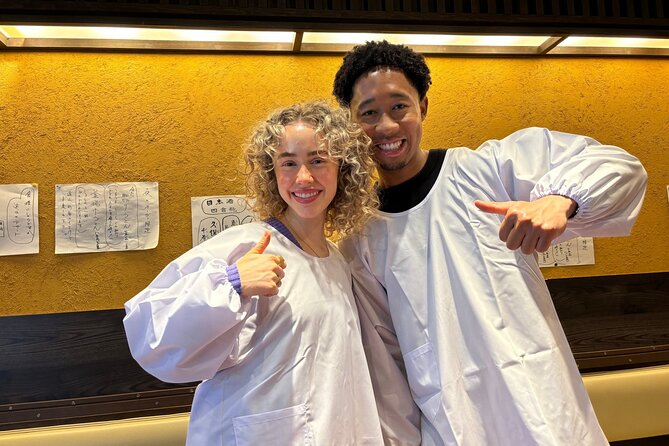
- Work beside a Japanese soba master: Mix, knead, roll, and cut buckwheat dough with professional utensils.
- Eat the noodles you make: Your fresh soba is cooked on site and served as part of the meal.
- Compare your noodles with the chef’s: The meal can include noodles prepared by the master, giving you a useful taste comparison.
- Enjoy cold dipping soba and tempura: The finished meal includes a classic soba presentation with dipping sauce and a variety of tempura.
- Small English-guided group: The class is limited to six participants, with English interpretation and time for questions.
- Meet one minute from Nippori Station: Find the guide near the McDonald’s, holding a signboard, then return to the same point at the end.
From Nippori Station to a Working Soba Restaurant
The meeting point is easy to reach. From Nippori Station, walk about one minute to the McDonald’s and look for a guide holding a signboard. Since the activity ends at the same meeting point, you do not need to plan a second pickup or navigate an unfamiliar neighborhood afterward.
That simple start matters in Tokyo. Nippori is a useful rail stop, but stations can have several exits and plenty of foot traffic. Give yourself enough time to find the McDonald’s and guide without rushing. The exact starting time depends on the date you select, so check availability before arranging other plans.
This is not a private lesson. The group can include up to six people, and more than one booking group may take part. That keeps the lesson small enough for personal instruction while still giving the class a social feel. If you want a completely private chef session, this is not the right format.
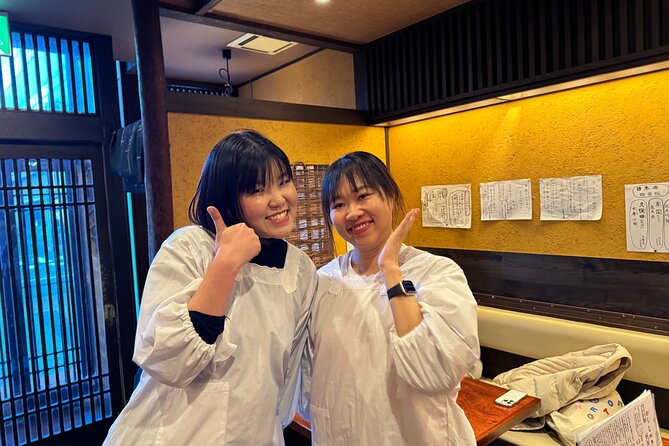
The restaurant is rented out during breaks for the participating group or groups. You get access to the master’s work area and professional cooking tools, rather than watching from a separate visitor space. That gives the activity a more genuine working-kitchen feel, though it also means you should expect flour, movement, and a practical setting instead of a polished studio.
If you're still narrowing it down, here are other tours in Tokyo we've reviewed.

Learning Why Soba Takes Skill
Soba has been part of Japanese food culture since the Edo period, and the class uses the noodle itself to explain that tradition. You are not simply shown a finished bowl. You handle the ingredients at each stage and see how much care is needed to produce noodles that are even, firm, and easy to cook.
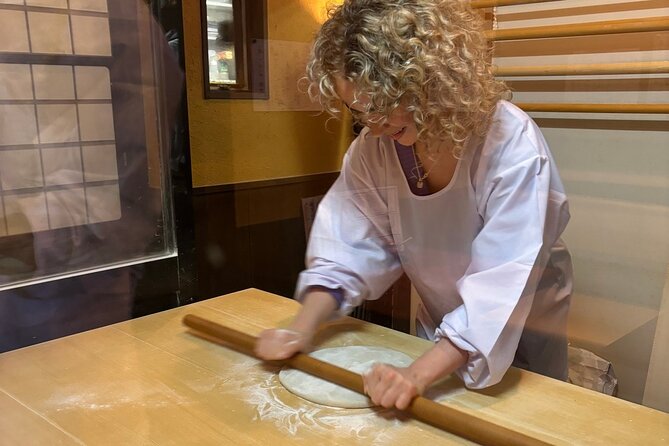
The ingredients are prepared for you, including those used for the buckwheat noodles. The chef first explains the process, then guides you through the work. You mix the dough, knead it, roll it out, and cut it into thin noodles. Each step requires a different kind of touch.
Mixing and kneading can look easy when an experienced soba maker does it. At your station, you quickly see how texture affects the next stage. If the dough is not handled properly, rolling becomes harder. If the sheet is uneven, cutting it into consistent noodles takes more care.
The rolling stage is especially useful because it shows the craft behind a bowl of soba. You are working toward a thin sheet that can be cut into noodle strips. The master’s demonstration gives you a model to copy, while the English guide helps explain what your hands should be doing.
Cutting the dough is the most satisfying part for many people. The goal is a neat set of narrow noodles, but handmade noodles naturally show small differences. That is part of the charm, and it also gives you a clear reason to pay attention when the chef demonstrates the professional technique.
You use the restaurant’s cooking utensils and work area. That is more valuable than a simple talk because the lesson connects the food with the tools and motions used in an actual soba kitchen. You leave with a better sense of why handmade soba is a craft rather than just another noodle dish.
English Help From Rie or Miho
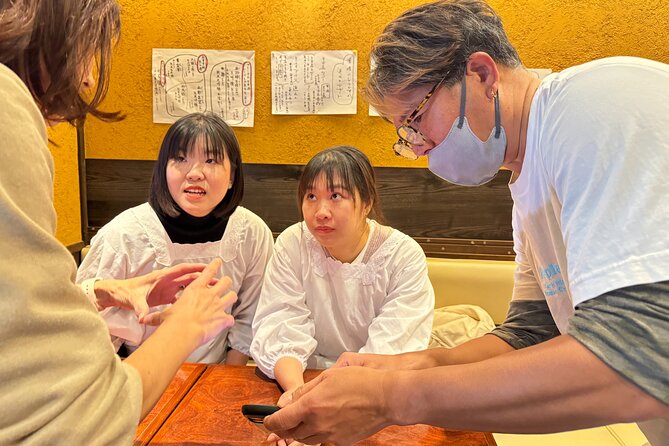
The chef may not explain every step in English, so interpretation is an important part of the experience. English-speaking guides support the lesson and help you understand the chef’s instructions, the cooking method, and the wider food customs connected with soba.
Rie has provided translation during the experience, and Miho has served as an English interpreter. The guide is also a useful bridge between the chef and the group. You can ask about the ingredients, the noodle-making process, and how soba is normally served in Japan.
That support makes the class more approachable for first-time cooks. You do not need previous soba-making experience, and the practical demonstrations help even when a technique is hard to explain with words alone.
You are welcome to take photos and videos. This is useful during the rolling and cutting stages, when you may want a record of the process or a reference for trying soba at home. Still, keep your phone out of the way while working with flour and utensils, and follow the guide’s directions inside the restaurant.
Cooking and Eating Your Handmade Noodles
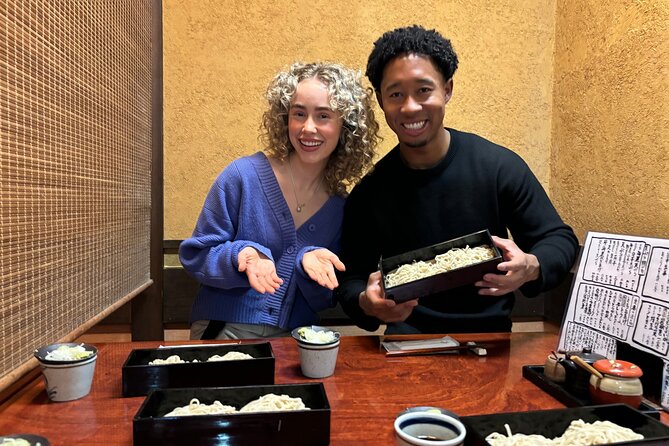
Once the noodles are cut, the chef shows you how the fresh soba is cooked. You then get to eat your own handmade noodles at the restaurant, which gives the class a satisfying finish rather than leaving you with a take-home product.
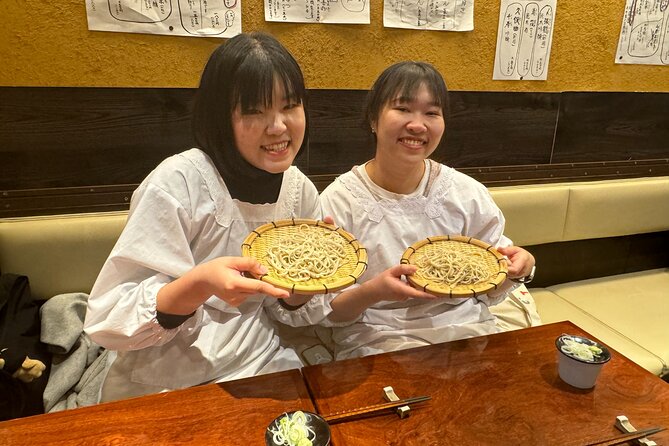
The meal is served as cold dipping soba with dipping sauce and a variety of tempura. This is a classic way to appreciate soba. You pick up the noodles, dip them into the sauce, and taste their texture without a heavy broth covering the flavor.
One particularly useful part of the meal is the chance to compare your noodles with soba prepared by the chef. That side-by-side taste helps you notice the difference between a beginner’s handmade noodles and a professional version. It turns the meal into a final lesson, not just a reward after the work.
The tempura adds variety to the meal and makes the experience feel more complete. Extra food or drinks ordered beyond what is included cost more, so you should not assume every item at the restaurant is covered by the activity price.
Eating what you have just made also gives the lesson a personal touch. You have seen the flour change form, worked the dough, and cut the strands yourself. The finished bowl connects all those stages in a way that a standard restaurant meal cannot.
What the $154 Price Really Buys
At $154 per person, this is not a budget food activity. The lesson lasts two hours, so you are paying for more than the meal itself. The price covers an English-speaking guide, the buckwheat noodle ingredients, use of the professional work area and utensils, instruction from a soba master, and the meal made from your noodles.
You are also paying for access to a real soba restaurant and a group limited to six people. A small group gives the chef more room to watch your technique and correct mistakes. It also means you are less likely to spend the session standing at the back of a large demonstration.
The value depends on what you want from Tokyo food experiences. If you only want to eat soba, a restaurant meal will cost much less. If you want to understand how the noodles are made, use professional equipment, speak with a chef through an English guide, and eat your own work, the price is easier to justify.
The experience is also a good choice for people who prefer an activity with a clear beginning and end. You meet near a station, spend two hours in the restaurant, eat the finished dish, and return to the meeting point. There is no long transfer or full-day commitment.
I would think carefully before booking if your main aim is quantity. This is a focused class, not a broad food tour with several stops. The price makes the most sense for someone who values personal instruction and the chance to take part in a traditional cooking process.


Practical Clothing and Allergy Rules
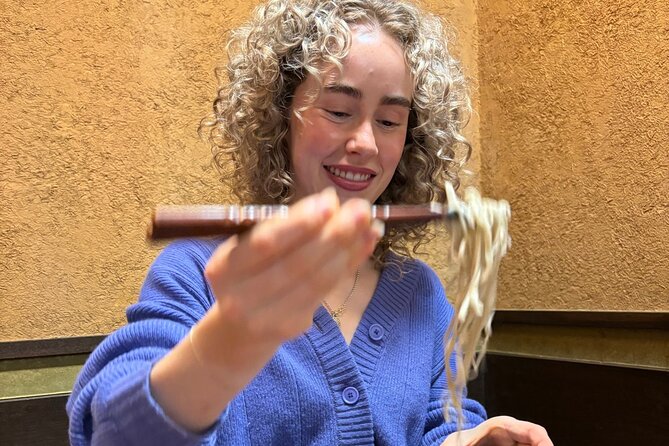
Wear clothes you do not mind getting dirty. An apron is provided, but buckwheat flour and wheat flour can still get onto your sleeves or clothing while you mix, knead, roll, and cut the dough.
Food allergies require serious attention here. You cannot join if you are allergic to buckwheat, wheat, or soybeans. These ingredients are central to the food and cooking process, so this restriction is not something to treat casually.
Vegetarians are welcome, but tell the operator about dietary restrictions in advance. The meal includes tempura, and advance notice gives the team a chance to understand your needs. The provided information does not promise that every dietary request can be accommodated, so ask before booking if your restrictions go beyond vegetarian eating.
The activity is not suitable for wheelchair users. The class takes place in a working restaurant and involves hands-on preparation, so check the physical requirements before reserving.
Who Will Enjoy This Class Most
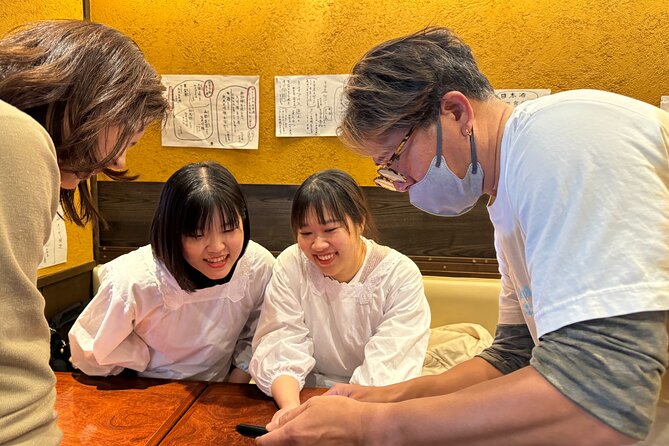
I would choose this for couples, friends, and small groups who want to do more than take photos of Japanese food. The class gives you a shared task, and the final meal gives everyone a natural reason to compare results and talk about the process.
It also suits curious home cooks. You may not leave with a formal recipe or professional-level technique, but you will understand the basic sequence of soba production and the care required at each stage.
Families with older children might enjoy it if they can follow kitchen instructions and work carefully with the ingredients. The small group can make the session feel personal, but the food restrictions and physical setup should be considered first.
This is less suitable for someone with very limited time in Tokyo who wants to stay near the city’s biggest sights. Nippori is convenient by train, but the class still takes two hours plus the time needed to reach the meeting point. It is also not ideal for anyone hoping for a private experience.
The activity received a top rating from the available feedback, with particular praise for the hands-on instruction, the working restaurant, the English interpretation, and the chance to eat both handmade and chef-prepared soba. Those are the parts I would use to judge the class, since they define what you are actually buying.
Booking Details That Matter
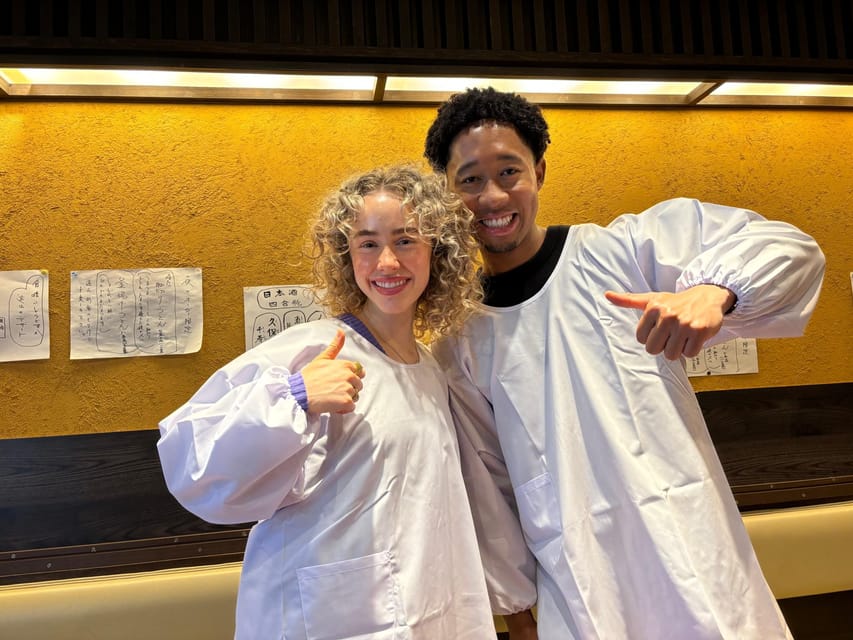
The tour lasts two hours, and starting times vary by date. Check the available time before you book, especially if you have restaurant reservations or train connections later in the day.
You can reserve now and pay later, which helps if your Tokyo schedule is still shifting. Cancellation is free up to 24 hours in advance for a full refund. The activity is operated by gotcha Corporation.
The group is not private, but it is limited to six people. That is a useful middle ground: more personal than a large food demonstration, but not the quiet one-on-one lesson some people may expect from the price.
The guide language is English. If clear explanations matter to you, this is a stronger choice than a class where you simply copy gestures without knowing why each step matters.
Should You Book the Nippori Soba Class?
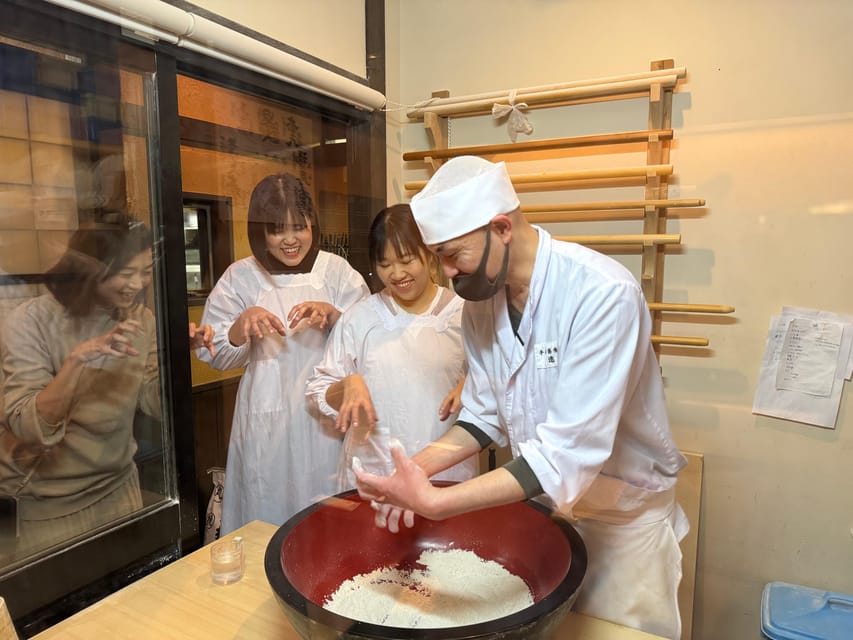
Book it if you want a practical introduction to Japanese food culture, enjoy working with your hands, and like the idea of eating a meal you helped prepare. The strongest features are the soba master’s instruction, the real restaurant setting, the small group, and the comparison between your noodles and the chef’s.
Skip it if $154 feels too high for a two-hour activity, if you need a private class, or if you have buckwheat, wheat, or soybean allergies. For everyone else, this is a focused and memorable way to understand a Japanese staple from the inside out, one careful noodle at a time.
FAQ
Where does the soba-making experience meet?
Meet near Nippori Station, about a one-minute walk from the station at the McDonald’s. Look for a guide holding a signboard.
Where does the activity end?
The activity ends back at the meeting point near Nippori Station.
How long does the soba class last?
The class lasts two hours. Starting times vary, so check availability for your chosen date.
Is the activity conducted in English?
Yes. The experience includes a live English-speaking guide, with English interpretation provided during the lesson.
How many people can join the group?
The group is limited to six participants. The experience is not private, and more than one booking group may participate.
Is the meal included?
You can eat the soba you make during the experience. The class also includes the ingredients and the cooking instruction. Extra food or drinks ordered separately are not included.
Can vegetarians join?
Yes, vegetarians are welcome. Tell the operator about dietary restrictions in advance.
Can I join if I have a food allergy?
No. The experience is not suitable for people allergic to buckwheat, wheat, or soybeans.
More tours in Tokyo we've reviewed
Tokyo, compared.
 ★ 5.0Mt Fuji and Hakone 1-Day Bus Tour Return by Bullet TrainFrom $163
 ★ 5.01-Day Tokyo Bus TourFrom $129
 ★ 4.6Tokyo: teamLab Planets TOKYO Digital Art Museum Entry TicketFrom $251 day
 ★ 4.0Mt Fuji & Hakone Cruise, Drum Show Bullet Train 1 Day from TokyoFrom $149
 ★ 5.0Tokyo: Shinjuku Food Tour (13 Dishes at 4 Local Eateries)From $86
 ★ 4.4Tokyo Mt Fuji 5th St & Hakone Cruise Bus Tour w/Bullet TrainFrom $15410 hours