Reviewed · MT FUJI DAY TRIPS
Mt Fuji and Hakone Private Day Tour
Mt Fuji is the star here, but the real advantage is having a private car and driver for a long day beyond Tokyo. You can choose the classic Fuji route with Chureito Pagoda, Lake Kawaguchiko, and Oishi Park, or spend the day around Hakone’s ropeway, shrine, lake, and museums.
In This Article
- The real choice: Fuji views or Hakone variety
- Starting with Chureito Pagoda
- Iyashi no Sato and old-style village life
- Lake Kawaguchiko and Oishi Park
- Narusawa Ice Cave below the ground
- Hakone begins with Mishima Sky Walk
- Hakone Shrine beside Lake Ashi
- Riding the Hakone Ropeway
- Lake Ashi and the pirate cruise
- Art among the trees at the Open-Air Museum
- A private driver changes the pace
- What the extra costs mean
- Who should choose this day out
- Booking, weather, and cancellation details
- Should you book the Mt Fuji and Hakone private day tour?
- FAQ
- How long is the Mt Fuji and Hakone private day tour?
- Can I visit both Mt Fuji and Hakone on the same tour?
- How many people can join the private tour?
- Is hotel pickup included?
- Is transportation included?
- Are meals and drinks included?
- How much are the extra admissions?
- Does the tour guarantee a view of Mount Fuji?
- Is the Hakone Ropeway included?
- What is the cancellation policy?
I like the hotel-to-hotel service, which removes the puzzle of linking trains, buses, and mountain roads. I also like the freedom to spend more time at the places that suit your group, as guide Ali did for one family and guide Rafay did with a personable, flexible approach. The main caution is weather: clouds, rain, or snow can hide Fuji and make mountain stops difficult.
- Two distinct routes: Choose the Mt Fuji area or the Hakone area, not both as the standard itinerary.
- Private transport for up to five people: Your group travels together rather than following a large coach schedule.
- A strong Fuji photo stop: Chureito Pagoda offers the famous pagoda and mountain view when skies cooperate.
- Hakone’s big attractions: The ropeway, Lake Ashi cruise, Hakone Shrine, and Open-Air Museum create a varied day.
- Ten hours includes transfers: Pickup and drop-off count toward the tour time, so early departure matters.
- Extra costs add up: Several signature stops charge admission, including the ropeway, museum, ice cave, and Mishima Sky Walk.
The real choice: Fuji views or Hakone variety
This is not one giant tour covering every stop listed. You choose one of two routes when booking. The Mt Fuji option focuses on the Fuji Five Lakes area and nearby cultural sights, while the Hakone option combines volcanic scenery, a ropeway, a lake cruise, a shrine, and art.
That choice matters. A 10-hour day sounds generous, but Tokyo sits some distance from both areas, and the drive to and from your hotel uses part of the clock. You can see several major sights, but you should not expect to race through both regions and enjoy either one properly.
The cost is $400.59 per group of up to five people. For a full private vehicle, that can be sensible for a family or small group, especially when compared with buying separate transport for everyone. You still pay for food and several admissions, so the advertised price is not your total day cost.
Starting with Chureito Pagoda
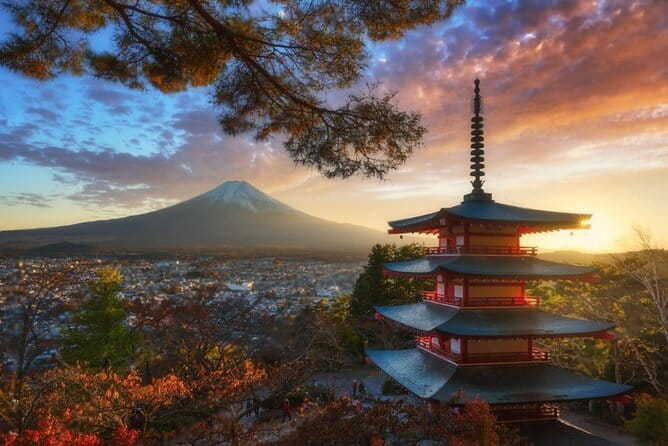
On the Mt Fuji route, Chureito Pagoda is likely to be the day’s signature image. The five-storied pagoda sits above a view framed toward Mount Fuji, giving you the classic combination of red architecture, green or autumn-colored hills, and the mountain behind it.
The stop allows about an hour, which gives you time to take in the view and photograph the pagoda rather than simply stopping at a roadside viewpoint. The attraction itself has no admission charge.
The catch is that the famous panorama depends on clear weather. One full-day outing encountered clouds that blocked Fuji, but the pagoda and surrounding sights still made the trip worthwhile. That is a useful way to think about this route: Fuji is the prize, not a guarantee.
A few more Tokyo tours and experiences worth a look
Iyashi no Sato and old-style village life
Iyashi no Sato offers a change of pace from photo stops. The open-air village is made up of thatched-roof houses, with artisans, cultural displays, and traditional surroundings. You get an hour here, enough to see the setting and browse at a relaxed speed.
Admission is ¥500 per person. That fee is modest, but it is one more cost to remember if you are traveling with several people.
I like this stop for groups who want more than scenic overlooks. It gives the day a cultural center and helps balance the natural sights around the lake. If your group prefers fast sightseeing and mountain views, though, this may feel less essential than Chureito Pagoda or Kawaguchiko.
Lake Kawaguchiko and Oishi Park
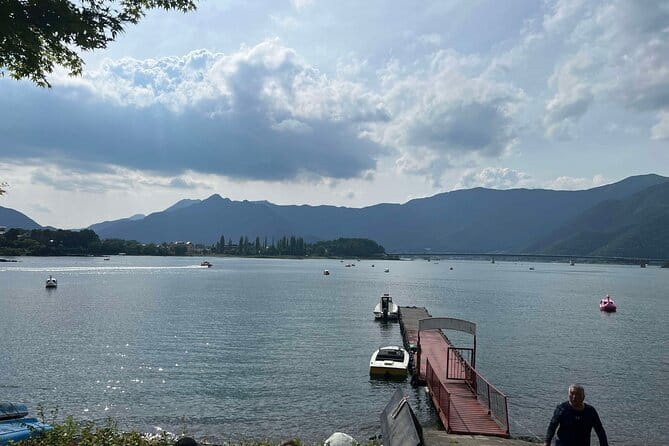
Lake Kawaguchiko is one of the best places on the Fuji route for open views and calm water. The lake provides a broad setting for Fuji, and the planned hour lets you pause rather than squeeze in a quick photo from the car.
At Oishi Park, gardens and seasonal flowers add color to the view toward the mountain. The park is free, and it works well as a short walking stop. The appearance changes with the season, so the exact flowers and the quality of the Fuji view will depend on when you go.
These two stops complement each other. Kawaguchiko gives you the lake, while Oishi Park gives you gardens and a more arranged viewpoint. If Fuji is covered, the lake and park remain pleasant, but the day loses its main visual punch.
Narusawa Ice Cave below the ground
The Narusawa Ice Cave adds a volcanic feature to the Mt Fuji day. You descend into an underground cave where ice remains in the cool interior, creating a striking contrast with the outdoor stops.
The planned time is one hour, and admission is ¥1,100 per person. This is not a free add-on, so check that everyone in your group wants the cave experience before treating it as a must.
The cave is a good pick if you enjoy unusual natural sites and want more variety than lakes and viewpoints. It may be less appealing if anyone in your party dislikes underground spaces or wants every minute devoted to seeing Fuji.
Hakone begins with Mishima Sky Walk
The Hakone route opens with Mishima Sky Walk, Japan’s longest suspension bridge according to the tour description. From the bridge, you look across valleys with the chance of seeing Mt Fuji.
This stop is planned for an hour and costs ¥1,000 per person. As with the Fuji route, visibility controls much of the payoff. A cloudy day can still give you a high bridge and broad views, but the mountain may disappear.
The bridge makes sense for people who want a scenic attraction with a clear physical focus. It is less about quiet temple time and more about height, distance, and open views. If you dislike suspension bridges, you may prefer more time at Hakone Shrine or the Open-Air Museum.
A few more Tokyo tours and experiences worth a look
Hakone Shrine beside Lake Ashi
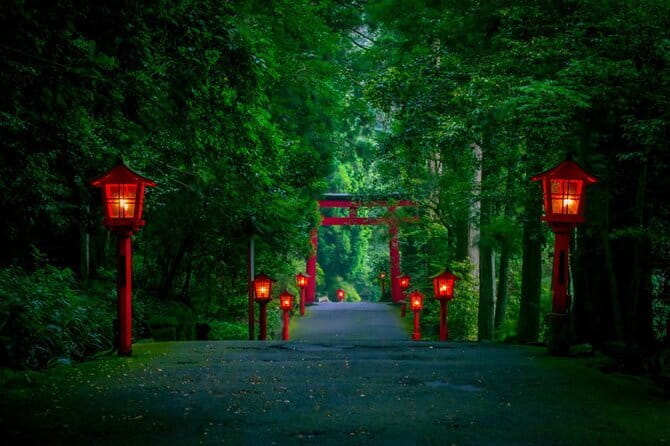
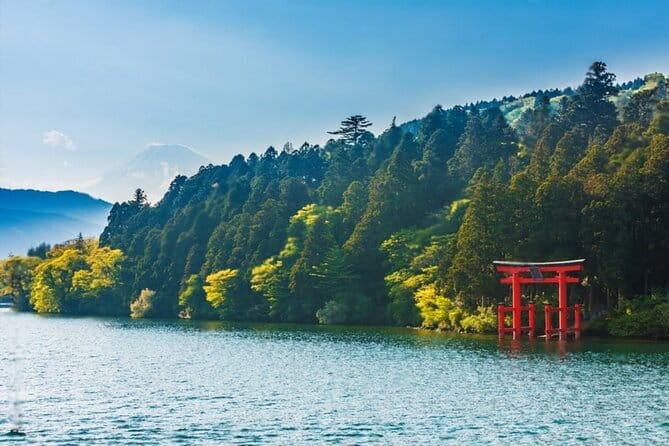
Hakone Shrine brings a quieter cultural note. Its best-known feature is the crimson torii gate rising from the water at Lake Ashi, a memorable setting that combines sacred architecture and the lake.
The shrine has no listed admission fee, and you get about an hour. It is one of the easiest stops on the Hakone route to enjoy without adding another ticket to your budget.
The shrine also helps break up the more commercial or transport-focused parts of the day. You can take photographs, enjoy the lakeside setting, and experience a very different mood from the ropeway. Keep your expectations practical, though. The tour promises the stop and its setting, not a private religious ceremony or extended guided history lesson.
Riding the Hakone Ropeway
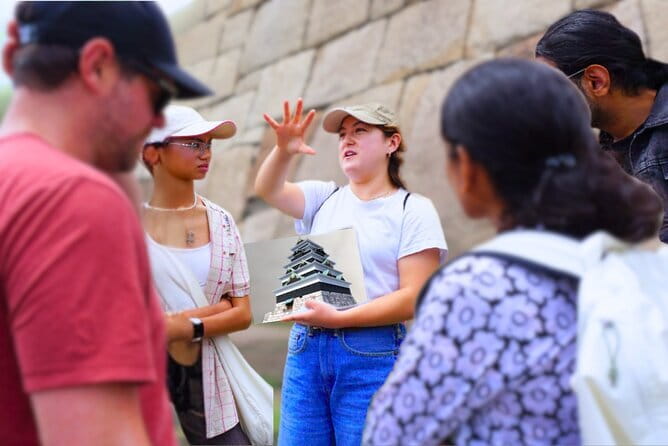
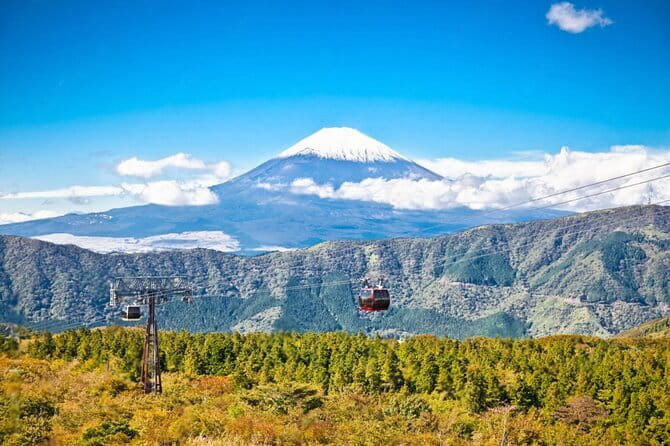
The Hakone Ropeway is the route’s major aerial ride. You travel above steaming volcanic valleys, gaining a view that a road trip cannot provide. It is one of the best reasons to choose Hakone over the Fuji itinerary if you want movement and changing views rather than a series of fixed viewpoints.
The listed cost is ¥2,000 per person for a one-way trip. That price is important because a family of five would add ¥10,000 for this one activity. The tour includes private transportation, but it does not include this admission.
Allow about an hour for the stop. The exact experience depends on operating conditions and weather, neither of which is guaranteed in the supplied details. Ask your driver how the day’s timing works before you commit to other paid stops.
Lake Ashi and the pirate cruise
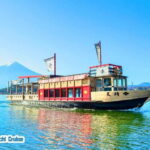
Lake Ashi is the centerpiece of Hakone’s water scenery. The tour includes a cruise on a distinctive pirate-style vessel, with panoramic views across the volcanic lake. One family singled out the cruise, the ropeway, and the black eggs as the day’s highlights.
The description lists Lake Ashi as a free stop, but the cruise itself should be clarified with the driver because the included details do not give a separate cruise price. Do not assume every activity connected with the lake is covered simply because the lake stop has no listed admission fee.
This part of Hakone gives the day a sense of progression. You are not only looking at the lake from shore, you are also seeing it from the water. On a clear day, the views can connect naturally with the mountain and shrine stops. On a wet or cloudy day, the cruise still offers a pleasant change from the road, but the wide views may be muted.
Art among the trees at the Open-Air Museum
The Hakone Open-Air Museum is the most substantial cultural stop on the route. World-class sculptures are set outdoors among gardens and natural surroundings, with more to see than you can absorb in a rushed visit.
Admission is ¥2,000 per person, making it one of the day’s larger extra charges. For a group of five, that is ¥10,000 before food and any other tickets.
You get about an hour, which is enough for a taste but may feel short if you enjoy sculpture. One full-day account called this museum a must-see and described it as incredible. I would agree with the practical part of that advice: if art matters to you, protect your museum time instead of treating it as a spare stop after the ropeway and cruise.
If your group includes children or people who prefer scenery to galleries, the outdoor setting makes this a safer choice than a conventional indoor museum. Still, the admission cost and one-hour limit mean you should decide in advance how much it matters to your group.
A private driver changes the pace
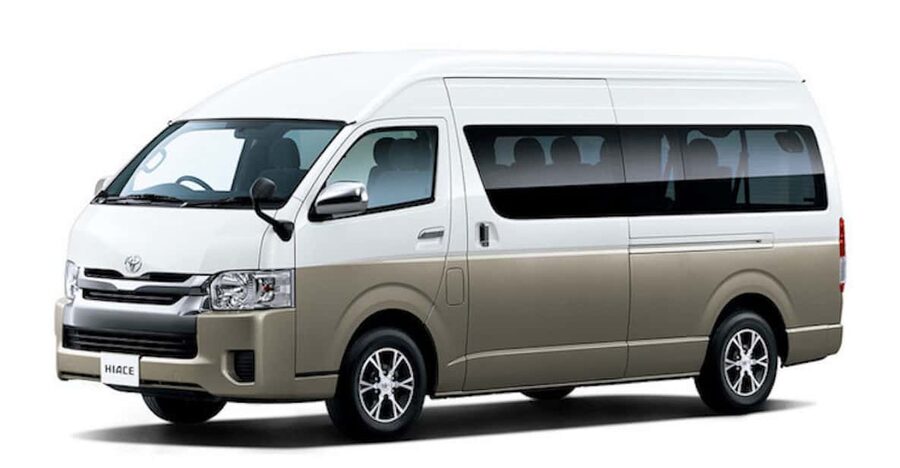
The English-speaking driver and private transport are the core service. You are not joining strangers, and only your group participates. That gives you a simpler day, especially when everyone wants the same route and you would rather not manage several train and bus connections.
The driver’s role appears most useful when conditions change. One outing met a snowstorm on the way to Mt Fuji. The roads became slippery, and the driver took a cautious approach. The group eventually returned to Tokyo, with stops at Diver City and Shibuya to get out of the cold and rain.
That story also shows the limit of a private day tour. A flexible driver can adjust the plan, but cannot create a Fuji view in bad weather or guarantee that every planned attraction will be enjoyable. The tour states that negative feedback based on unexpected bad weather will not be accepted, so you should book this with realistic expectations.
The service includes pickup and drop-off at your Tokyo hotel. Because the full 10 hours run from pickup to drop-off, a late start can reduce your time outside the city. Confirm the pickup time and your chosen route before the day begins.
What the extra costs mean
The base price covers the private vehicle and English-speaking driver. It does not cover meals, drinks, or the following listed admissions:
- Iyashi no Sato: ¥500 per person
- Narusawa Ice Cave: ¥1,100 per person
- Mishima Sky Walk: ¥1,000 per person
- Hakone Ropeway, one way: ¥2,000 per person
- Hakone Open-Air Museum: ¥2,000 per person
You will not pay for every item because the route includes only one region. A group taking the Fuji route could pay extra for Iyashi no Sato and the ice cave. A Hakone group could pay for the Sky Walk, ropeway, and museum.
For five people, the three listed Hakone admissions total ¥25,000. Add the group price, food, drinks, and any other activity charges, and the day becomes a sizable purchase. It can still offer good value when you want a private vehicle and direct hotel service, but it is not a budget sightseeing day.
The private format makes the strongest financial sense for two to five people who would otherwise need several separate tickets and taxis. A solo visitor should compare the total against public transport options before booking.
Who should choose this day out
I would choose this tour for a family, a group of friends, or anyone who values convenience over the lowest possible cost. It also suits people who want to see several major sights without spending the day reading transport maps.
The Mt Fuji route is best for photographers, first-time visitors who want the famous mountain setting, and groups interested in a mix of pagodas, lakes, gardens, a traditional village, and a cave. Pick it with the understanding that Fuji may be hidden.
The Hakone route suits you if you want more variety in one area. You can combine a suspension bridge, shrine, ropeway, lake cruise, and outdoor art. It has more paid attractions, but it also offers more ways to enjoy the day when one view is blocked.
Guides Ali and Rafay are specifically associated with positive experiences of flexibility and friendly service. The available feedback gives no reason to expect a fixed script, but you should still state your priorities early. Tell the driver which stops matter most, especially if you want a full hour at the museum or extra time around the lake.
Booking, weather, and cancellation details
Confirmation is provided at booking, and the activity has a mobile ticket. Pickup is offered from your Tokyo hotel, and the tour is near public transportation. Most people can participate, but the supplied details do not give more specific accessibility information.
You must select either the Mt Fuji Area or Hakone Area. Overtime costs ¥5,000 for each extra hour after the 10-hour hotel-to-hotel period, so keep an eye on the clock if traffic or a long lunch begins to cut into the schedule.
Free cancellation is available when you cancel at least 24 hours before the local start time. Cancellations or changes within 24 hours are not accepted for a refund. Weather deserves special attention: clear Fuji views are never assured, and snow or heavy rain can force major changes.
Should you book the Mt Fuji and Hakone private day tour?
Book it if you want a simple, private day from Tokyo and can accept that weather may rewrite the plan. The strongest reasons are the hotel pickup, direct transport, small-group privacy, and the chance to combine several major stops without handling public transport.
Choose the Mt Fuji route for iconic views and cultural stops. Choose Hakone for the ropeway, Lake Ashi cruise, shrine, and Open-Air Museum. Do not book expecting a standard 10-hour tour of both areas, and budget separately for admissions.
For a group of up to five, the price can be fair when convenience matters. For one or two people focused mainly on saving money, compare other transport choices first. If you can live with cloud cover and keep your must-see list short, this is a practical way to reach Japan’s most popular mountain regions from Tokyo.
FAQ
How long is the Mt Fuji and Hakone private day tour?
The tour lasts approximately 10 hours. The total time includes pickup from your hotel and drop-off back at your hotel.
Can I visit both Mt Fuji and Hakone on the same tour?
You need to choose either the Mt Fuji Area itinerary or the Hakone Area itinerary. The standard booking does not include both routes.
How many people can join the private tour?
The listed price is for one group of up to five people. Only your group participates in the activity.
Is hotel pickup included?
Yes. Pickup and drop-off from your hotel in Tokyo are included.
Is transportation included?
Private transportation is included, along with an English-speaking driver.
Are meals and drinks included?
No. Food and drinks are not included in the tour price.
How much are the extra admissions?
Iyashi no Sato costs ¥500 per person, Narusawa Ice Cave costs ¥1,100, Mishima Sky Walk costs ¥1,000, the Hakone Ropeway one-way trip costs ¥2,000, and the Hakone Open-Air Museum costs ¥2,000 per person.
Does the tour guarantee a view of Mount Fuji?
No. The available information specifically warns that bad weather can affect the experience. Clouds, rain, or snow may block the mountain or change the route.
Is the Hakone Ropeway included?
The Hakone Ropeway is an optional paid admission, listed at ¥2,000 per person for a one-way trip. It is not included in the tour price.
What is the cancellation policy?
You can receive a full refund by canceling at least 24 hours before the experience start time. Cancellations or changes made less than 24 hours before the start time are not refunded or accepted.
More Private Tours in Tokyo


More Hakone Day Trips in Tokyo
More Mt Fuji Day Trips in Tokyo

More tours in Tokyo we've reviewed

Mt Fuji Day Trips, compared.
 ★ 5.0Mt Fuji and Hakone 1-Day Bus Tour Return by Bullet TrainFrom $163
 ★ 4.0Mt Fuji & Hakone Cruise, Drum Show Bullet Train 1 Day from TokyoFrom $149
 ★ 4.4Tokyo Mt Fuji 5th St & Hakone Cruise Bus Tour w/Bullet TrainFrom $15410 hours
 ★ 4.5From Tokyo: Mount Fuji Full-Day Sightseeing TripFrom $6810 hours
 ★ 4.7Tokyo: Mt. Fuji Tour, Hakone Ropeway, Owakudani, Lake AshiFrom $5410 hours
 ★ 4.4Tokyo:Mt.Fuji,Kawaguchiko Oishi Park,Arakurayama Sengen ParkFrom $5410 hours