Reviewed · AUDIO TOURS
Tokyo: Open Top Panoramic Sightseeing Bus with Audio Guide
Tokyo makes a strong first impression from the top deck of a bus. For $11, you can pass Tokyo Tower, Ginza, Rainbow Bridge, and Odaiba without wrestling with a train map on your first day. The route gives you a quick sense of how far-flung this city really is.
In This Article
- Quick facts about the Tokyo open-top bus
- What this 70-minute ride is really good for
- Choosing between the Bay Course and City Course
- Bay Course: Rainbow Bridge and Odaiba
- City Course: Imperial Palace, Roppongi, and Ginza
- The GPS audio guide: helpful, with one small annoyance
- Tokyo Station meeting point and boarding routine
- Weather, seating, and comfort on the open deck
- Is $11 good value for Tokyo?
- Who should book this bus tour?
- Should you book the Tokyo open-top bus?
- FAQ
- How long is the Tokyo open-top bus tour?
- Which routes can I choose?
- What languages are available for the audio guide?
- Are headphones included?
- Where do I meet the bus?
- What happens if it rains?
I like the automatic GPS commentary, which follows the bus and adjusts to traffic, and I like the choice between a Bay Course and a City Course. The catch is the weather. Heat, cold, rain, and wind matter here, and the roof may be closed in rain.
Quick facts about the Tokyo open-top bus
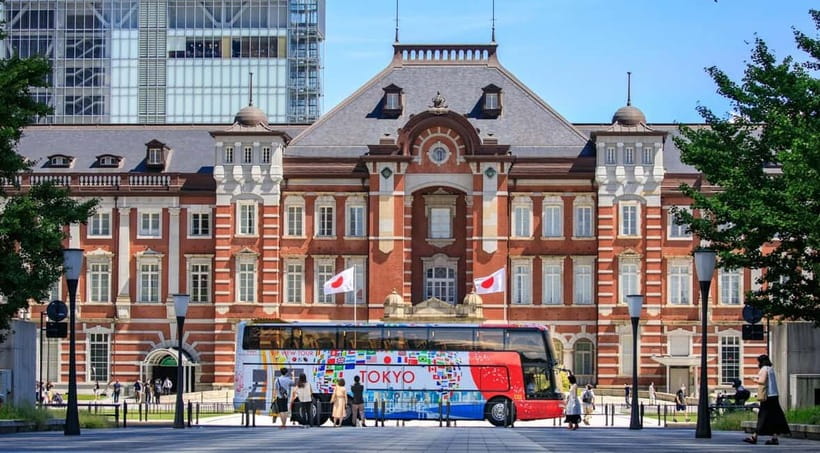
- Two useful 70-minute routes: Choose the Bay Course for Tokyo Bay, Rainbow Bridge, and Odaiba, or the City Course for the Imperial Palace area, Roppongi, Tokyo Tower, and Ginza.
- Seven audio languages: Commentary is listed in Japanese, English, Chinese, French, Korean, Vietnamese, and Thai.
- A good first-day orientation: You cover a wide stretch of Tokyo without changing trains or planning several separate visits.
- A remarkably low price: At $11 per person, the ride is best viewed as a broad city introduction, not a full guided tour.
- Simple meeting point: Check in at the Tokyo VIP Lounge, about five minutes from Tokyo Station’s Yaesu North Exit.
- Weather affects the experience: The tour runs in ordinary rain, but the open top can be closed. Umbrellas are not allowed on the vehicle.
What this 70-minute ride is really good for
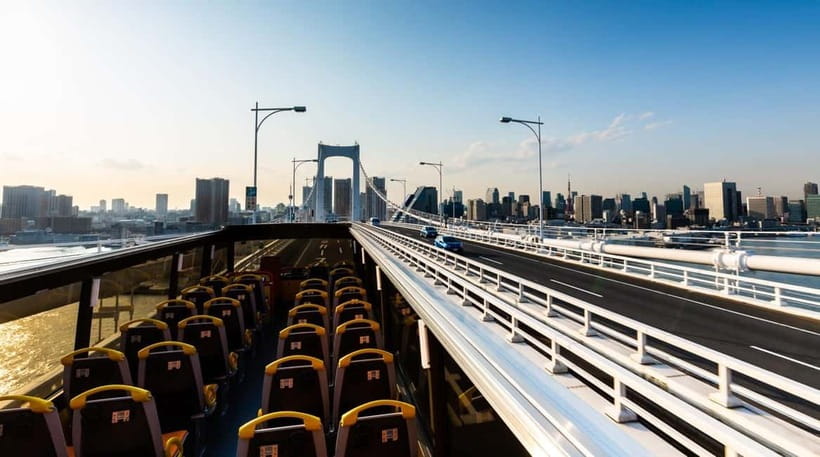
This is a sightseeing circuit, not a hop-on, hop-off bus. You remain aboard for the 70-minute journey, taking in Tokyo from the road and stopping later at the places that appeal to you. That makes it useful when you have limited time, but less useful if your main goal is to explore several attractions in depth.
The bus gives you a broad view of Tokyo’s scale. One route links the station district with the waterfront. The other crosses central neighborhoods filled with government buildings, parks, shopping streets, and high-rise towers. You will not get a long visit at each landmark, but you will understand how the pieces of the city fit together.
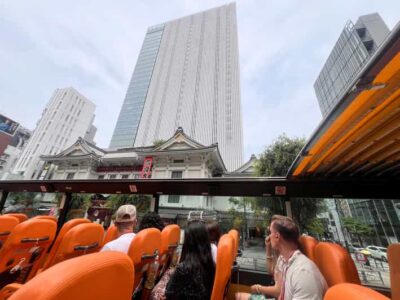
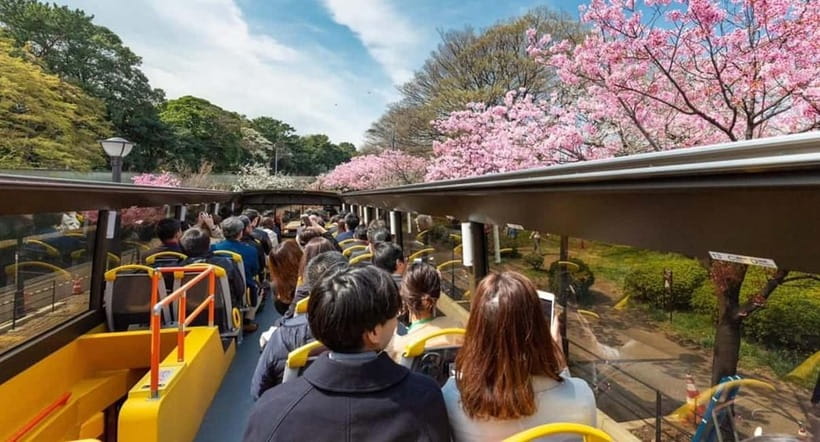
The open roof is the main appeal. From an elevated seat, you can look above some street-level clutter and get a clearer view of towers, bridges, and large buildings. On a sunny day, the ride should feel open and breezy. On a cold or wet day, that same exposure becomes the main weakness.
At this price, the tour works especially well as a get your bearings fast outing. I would consider it on your first day in Tokyo, after arriving at Tokyo Station, or during a short stay when you do not have time to visit every district separately.
Other guided tours in Tokyo
Choosing between the Bay Course and City Course
The two routes cover different sides of Tokyo. Both begin and end around Tokyo Station, and both last about 70 minutes with the audio guide.
Bay Course: Rainbow Bridge and Odaiba
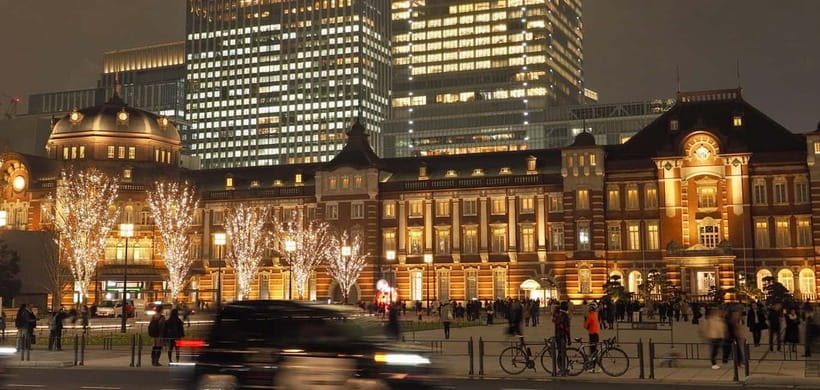
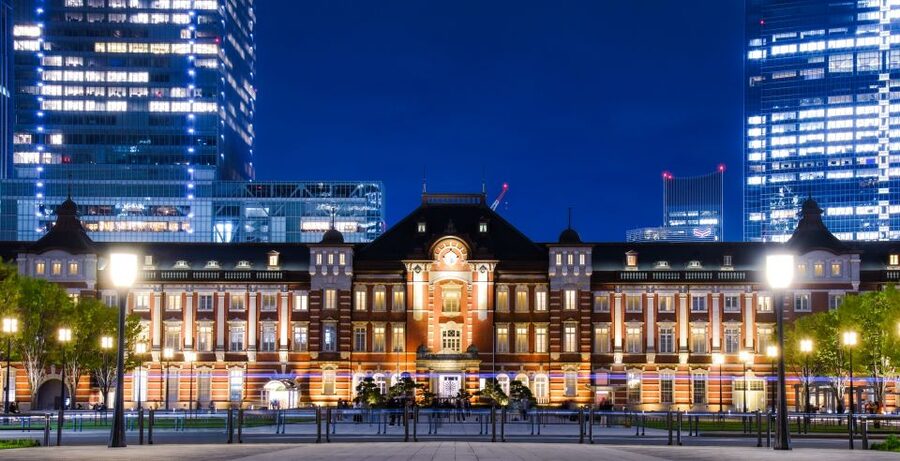
The Bay Course begins at the Tokyo Station Red Brick Station Building and heads through Marunouchi, the polished business district beside the station. This opening section gives you a quick look at Tokyo’s formal center before the bus moves toward older temple grounds and the waterfront.
The route passes Zojoji Temple and Tokyo Tower, a pairing that neatly captures the city’s contrast. Zojoji brings a traditional Buddhist setting, while Tokyo Tower rises nearby as one of Tokyo’s most recognizable modern-era landmarks. You see both from the moving bus, so keep your camera ready rather than expecting time to get off.
The highlight for many passengers is the run across Rainbow Bridge. The Bay Course includes views from both the first and second levels of the bridge, according to the route description. That is a useful detail because the crossing is not just a quick glimpse of the structure. You get a sense of the road connection between central Tokyo and the waterfront districts.
On the Odaiba side, the bus passes the Fuji TV Building, the Statue of Liberty, and Odaiba Seaside Park. The small Statue of Liberty is a playful landmark, while the park and bay views give this section a more open feel than central Tokyo. You also get a look at the modern development around Odaiba without needing to plan a separate trip there.
The return section passes through Shiodome and Ginza. Shiodome is known for its tall office and hotel buildings, while Ginza brings the route back to one of Tokyo’s best-known shopping districts. The result is a varied ride: station architecture, temple grounds, a tower, a bridge, waterfront development, and upscale central streets.
Pick the Bay Course if you want the most scenic route or if Rainbow Bridge is high on your list. It offers the clearest mix of water, bridge views, Odaiba architecture, and central Tokyo streets.
City Course: Imperial Palace, Roppongi, and Ginza
The City Course also starts at the Tokyo Station Red Brick Station Building and first moves through Marunouchi. From there, it heads toward Chidorigafuchi, a green area associated with the Imperial Palace surroundings. The route then passes the Akasaka State Guest House, a formal building with a very different character from Tokyo’s glass towers.
Next comes Meiji Jingu Gaien, followed by Tokyo Midtown and Roppongi. This stretch is useful if you want to see how Tokyo shifts from government and ceremonial spaces to parks, offices, design-focused buildings, and nightlife districts.
Tokyo Midtown and Roppongi offer some of the route’s strongest city views. Tokyo Midtown is a major complex in a district known for tall buildings and international cultural attractions. Roppongi gives you another angle on Tokyo’s modern center before the bus reaches Tokyo Tower.
The final portion passes Hibiya and Ginza before returning toward the station. Hibiya adds another central park and office-district perspective, while Ginza provides a familiar finish among broad avenues and high-end shops.
Pick the City Course if you are more interested in central Tokyo, the Imperial Palace area, Roppongi, Tokyo Midtown, and skyscraper views. It is also a sensible choice if you plan to spend your day around Marunouchi, Ginza, Hibiya, or Roppongi.
If your schedule allows, taking both routes on the same day gives you a much fuller overview. One past passenger combined the City and Bay routes, including an evening Bay ride, and found the city lights especially enjoyable. That plan costs more than a single $11 ticket, but it can work well if you want a structured introduction before exploring on foot.
The GPS audio guide: helpful, with one small annoyance
The audio system is automatic. GPS tracks the bus, then provides information tied to your current location. It also accounts for changes caused by road traffic, so the commentary is designed to arrive at the right part of the route rather than playing as a fixed recording at an awkward moment.
For you, this means less work. You do not need to match a printed map with every building or wonder if you missed the explanation. The guide is available in seven listed languages: Japanese, English, Chinese, French, Korean, Vietnamese, and Thai.
Headphones are not included. You can buy them for 100 yen, and the headphone socket accepts only a 3.5-millimeter mini plug. Bring compatible earphones if you have them, or plan to purchase a pair before boarding.
The commentary provides historical facts and information about the sights. It is more focused on landmarks than on everyday Tokyo life. If you want stories about local neighborhoods, food, or how residents use the city, you may find the narration a little formal.
There is also a practical sound issue. Japanese announcements may play over a loudspeaker while you are listening to the recorded guide. At times, that can make the audio harder to hear. Some passengers also found the music between sections too loud compared with the spoken information. Lowering the volume or using good earphones may help, but you cannot control the onboard announcements.
The ride includes Japanese-speaking staff for assistance, but this is not a live English-language guided tour. Keep that distinction clear when booking. You are paying for the route, the elevated views, and the recorded commentary, not for a guide walking beside you and answering questions throughout.
A few more Tokyo tours and experiences worth a look

Tokyo Station meeting point and boarding routine
The meeting point is the Tokyo VIP Lounge on the second and third floors of a building with Family Mart on the ground floor. It is about a five-minute walk from Tokyo Station’s Yaesu North Exit, at approximately 35.681763, 139.7713517.
Give yourself time to find it. Tokyo Station is large, and a five-minute walk on paper can take longer if you leave through the wrong exit or have luggage. The operator asks you to check in 20 to 40 minutes before departure. I would aim for the earlier end of that window if you are unfamiliar with the area.
The lounge is a shared paid facility. Open-top bus passengers can use it free from 40 minutes before departure. Outside that period, a facility fee may apply. It is not a private luxury lounge, so set your expectations accordingly. The space is shared with other users, and you are asked to keep order while waiting.
The boarding process includes a short walk from the lounge to the bus. Japanese-speaking staff assist with this part, and the check-in arrangement includes a map. Allow extra time if you need to use the restroom, buy headphones, or sort out your ticket before departure.
Do not cut it close. The bus leaves at the scheduled time and does not wait for late arrivals. Arriving at the wrong location or missing the departure does not qualify for a refund, even if you contact the operator before the bus leaves. The listed contact number may also be difficult to reach outside Monday to Saturday, 9:30 AM to 6 PM Japan time.
Weather, seating, and comfort on the open deck
Weather is not a minor detail here. The tour runs in ordinary rain, with cancellations reserved for severe conditions such as typhoons. If rain begins, the open roof may be closed, changing the experience from an open-air ride to a more enclosed bus tour.
Cold weather can make the upper deck uncomfortable, especially at speed or on Rainbow Bridge. Summer heat can be tiring as well. Check the forecast and dress in layers. Since umbrellas are not allowed in the vehicle, rain protection needs to come from suitable clothing rather than something you plan to open on board.
The seats can have limited knee space. If you are tall or carrying bulky items, comfort may be less than you expect from the low ticket price. Food, smoking, and selfie sticks are not allowed. Those rules are practical on an open-top bus, where loose objects and crumbs can quickly become a nuisance.
Traffic can also affect the pace. Tokyo roads are busy, and the schedule may change slightly because of weather, traffic, or other unexpected conditions. The GPS audio is designed to adjust, but a slow section of road still means less time moving past the next part of the route.
Is $11 good value for Tokyo?
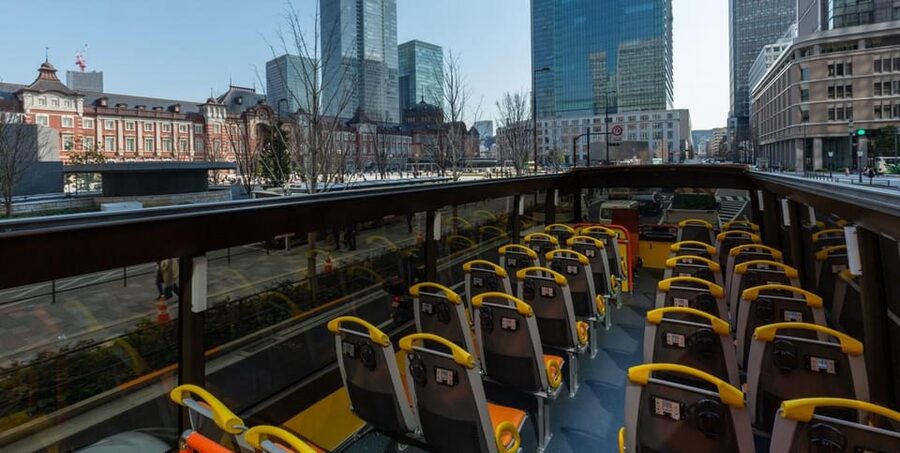
Yes, if you judge the ticket as a city overview. For $11, you get 70 minutes of transport, a choice of two routes, elevated views, and recorded commentary in several languages. It is a low-risk way to see a wide portion of Tokyo before deciding where to spend your limited walking time.
The value is strongest for first-time visitors, short stays, and people who find Tokyo’s rail system overwhelming at first. It is also a pleasant break if you have already been walking for hours and want to see more without navigating another transfer.
The value is weaker if you expect a detailed guided visit to each landmark. You do not get off at Tokyo Tower, Zojoji Temple, Odaiba Seaside Park, the Imperial Palace area, or Ginza for a long stop. The bus shows you the city, then you decide which places deserve a return visit.
The overall rating is 3.8 out of 5 from 254 reviews, which fits the experience as described. Many passengers praised the organization, friendly staff, safe driving, useful information, and broad views. The less positive points are also clear: the meeting point can be confusing or unwelcoming, audio music can be too loud, live Japanese announcements can interfere, and poor weather can spoil the open-deck advantage.
Who should book this bus tour?
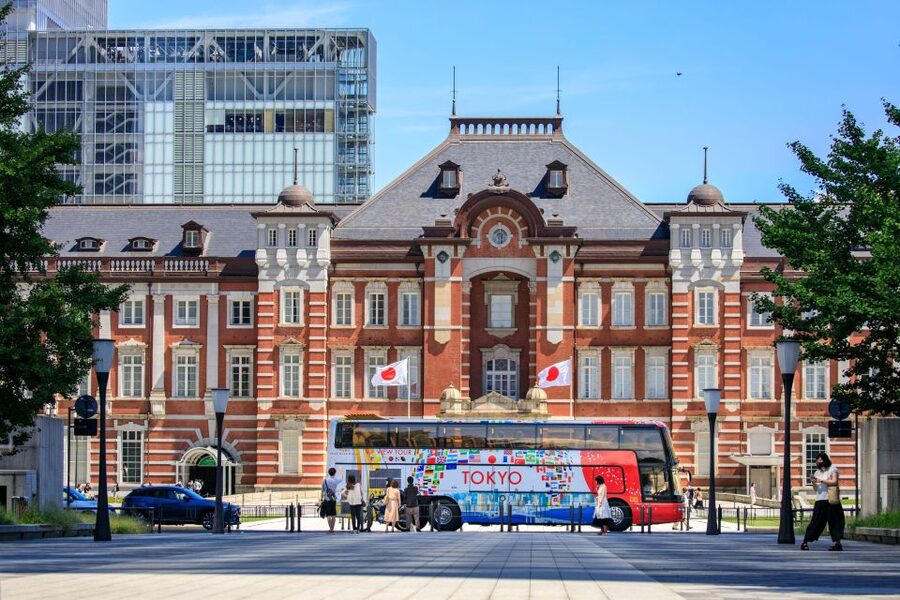
I would recommend it to:
- First-time visitors who want a quick view of several Tokyo districts.
- People with only one or two days in the city.
- Families or couples who prefer a simple ride over a complex sightseeing plan.
- Visitors interested in Tokyo Bay, Rainbow Bridge, and Odaiba.
- Anyone who wants a low-cost orientation before choosing where to return on foot.
I would think twice if your priority is a fully live, personal guide. I would also reconsider it if the forecast calls for heavy rain, extreme heat, or cold. The tour still operates in ordinary bad weather, but the open-top feature may be reduced or lost.
Should you book the Tokyo open-top bus?
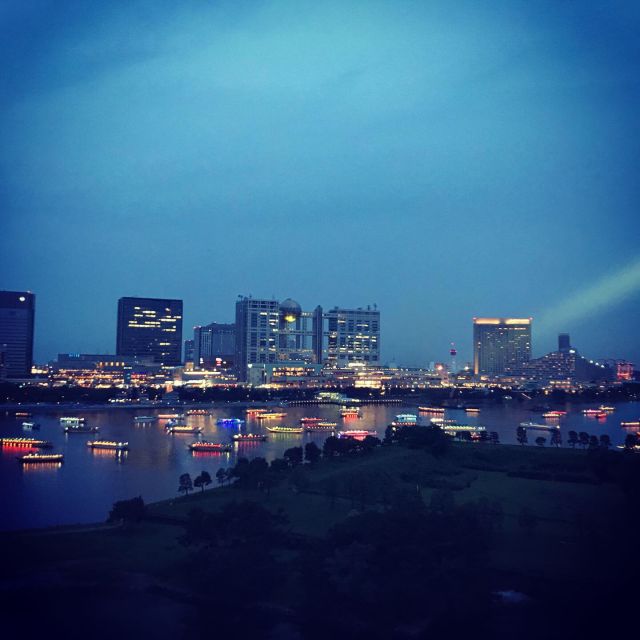
Book it if you want a cheap, broad first look at Tokyo and can accept a moving view rather than time inside the sights. Choose the Bay Course for Rainbow Bridge, Odaiba, and waterfront scenery. Choose the City Course for the Imperial Palace area, Roppongi, Tokyo Tower, and central skyscrapers.
Arrive early at the Tokyo VIP Lounge, bring compatible headphones, check the weather, and do not assume the bus will wait. With those details handled, this is a practical introduction to a huge city, especially on your first day or during a short visit.
FAQ
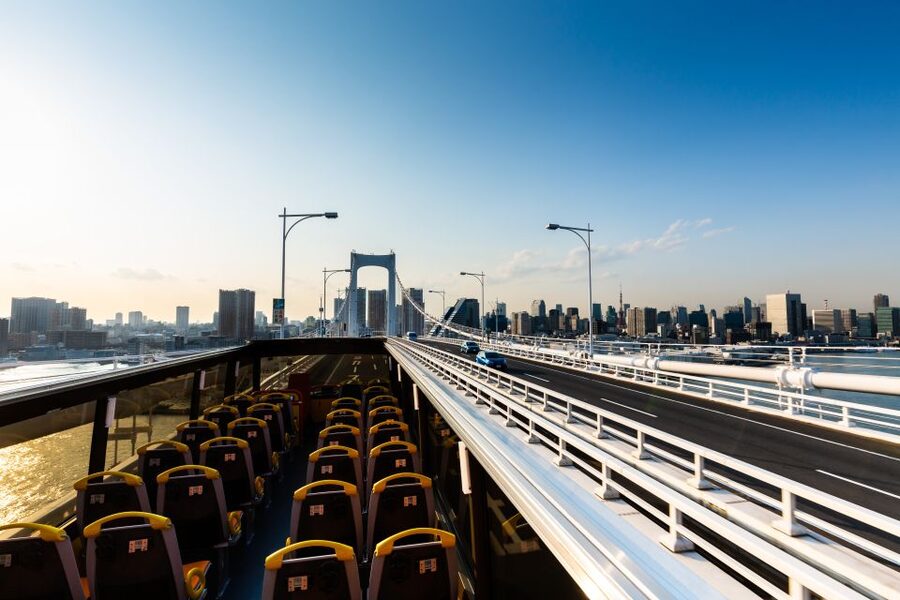
How long is the Tokyo open-top bus tour?
The tour lasts 70 minutes, including the GPS audio guide.
Which routes can I choose?
You can choose the Bay Course or the City Course. The Bay Course includes Tokyo Bay, Rainbow Bridge, Fuji TV, the Statue of Liberty, Odaiba, Tokyo Tower, and Ginza. The City Course includes the Imperial Palace area, Chidorigafuchi, Akasaka State Guest House, Meiji Jingu Gaien, Tokyo Midtown, Roppongi, Tokyo Tower, Hibiya, and Ginza.
What languages are available for the audio guide?
The audio guide is listed in Japanese, English, Chinese, French, Korean, Vietnamese, and Thai.
Are headphones included?
No. Headphones are optional and cost 100 yen. The headphone jack supports 3.5-millimeter mini plugs only.
Where do I meet the bus?
Meet at the Tokyo VIP Lounge on the second and third floors of the building with Family Mart on the ground floor. It is about a five-minute walk from Tokyo Station’s Yaesu North Exit.
What happens if it rains?
The tour runs in ordinary rain, but the open roof may be closed. Cancellations occur only in extreme weather conditions, such as typhoons. Check the forecast before you go and dress for the conditions.