Reviewed · AUDIO TOURS
Tokyo Self-Guided Audio Tour
Tokyo is too large for one tidy walking tour, and this self-guided audio experience accepts that fact. It gives you audio for 22 major sights, from Tokyo Station and the Imperial Palace gardens to Shibuya Crossing, Odaiba, Skytree, and Ueno Park. You choose the order, the pace, and where to linger.
In This Article
- Key points to know before you buy
- What the $9 audio tour really gives you
- How the phone-based setup works
- Imperial Tokyo begins at Tokyo Station
- Gardens, government, and Shinjuku views
- Shibuya and Tokyo’s contemporary art scene
- Hama Rikyu, Rainbow Bridge, and Odaiba
- Skytree, Senso-ji, and old Asakusa
- Three Ueno museums and one large public park
- The main weakness: audio accuracy and organization
- Who should book this Tokyo experience?
- Should you book the Tokyo Self-Guided Audio Tour?
- FAQ
- How long does the Tokyo Self-Guided Audio Tour last?
- Can I start and end the tour anywhere?
- Is transportation included?
- How do I access the audio guide?
- Do I need to visit all 22 attractions?
- Are admission fees included?
- How long do I have to use the access links?
I like the freedom to skip places that do not interest you, and I like the low price of $9 per person. The access links remain valid for up to six days, so you can split the route across several outings instead of forcing all of Tokyo into four hours.
The catch is that this is not a guided walking tour with a person beside you. You must use the map, manage your own transport, and make sure you receive and open the audio links. Some users found the audio hard to follow or poorly matched to their location, so careful preparation matters.
Key points to know before you buy
- Twenty-two sights in one package: The route covers imperial landmarks, Shinto shrines, Buddhist temples, museums, parks, shopping districts, and Tokyo viewpoints.
- Your phone is the guide: You receive a SoundCloud audio link and a Google My Maps link, with each map point connected to its matching commentary.
- Four hours is only an estimate: The listed stops total about 220 minutes before travel time, meals, museum visits, and queues.
- Transport is your responsibility: No pickup, drop-off, or transportation is included, so you will need to move around Tokyo on your own.
- Some admission fees are extra: Gardens, museums, towers, and art museums may charge separately.
- Use the six-day validity well: You can plan a few favorite areas together and spread the rest across several days.
What the $9 audio tour really gives you
At $9, this is best viewed as a low-cost city orientation tool, not a full sightseeing package. You are buying access to audio commentary and a map, not tickets, transfers, reservations, or a human guide.
That price can be good value if you already feel comfortable navigating Tokyo. You get a broad list of places to consider, plus background to help turn a quick stop into something more meaningful. The audio can also help you decide which sites deserve more of your time.
The value drops if you expect a tightly choreographed route. Tokyo’s attractions are spread across several districts. Tokyo Station, Shinjuku, Shibuya, Roppongi, Asakusa, Ueno, and Odaiba are not next-door neighbors. You can follow the suggested order, but you will need to use trains, subways, or other transport between many stops.
Entry costs also add up. The East Gardens and some religious sites are free, while Shinjuku Gyoen, the Mori Art Museum, Tokyo Tower, Hama Rikyu Gardens, Odaiba attractions, Skytree, and several museums list separate admission fees. You can keep the outing inexpensive by focusing on free sites and outdoor viewpoints.
Other guided tours in Tokyo
How the phone-based setup works
Before your selected start time, you are supposed to receive two private access links by email. One opens the audio content through SoundCloud. The other opens a Google My Maps route showing all 22 locations.
You can listen to individual stops or play the full audio sequence while planning. At each attraction, tap the matching map point and open its audio guide. This sounds simple, but the experience depends on your phone, email access, map skills, and ability to identify the correct stop.
The tour information says you do not need to be online to use the audio tour. Still, the access process uses web links, so I would prepare before leaving your hotel. Open both links, test the audio, and confirm that the map points appear. If possible, save what you need for offline use. Do not wait until you are standing outside a busy station to discover that the email or audio page will not load.
One important limitation appears in the practical instructions: the access links are valid for up to six days. That is useful, but it also means you should not treat the purchase as permanent access. Save your preferred route early and plan your sightseeing within that window.
There is no guide waiting at the starting point. You can begin anywhere in Tokyo and finish anywhere that suits you. That is convenient, but it also means customer support is handled remotely rather than face to face.
Imperial Tokyo begins at Tokyo Station
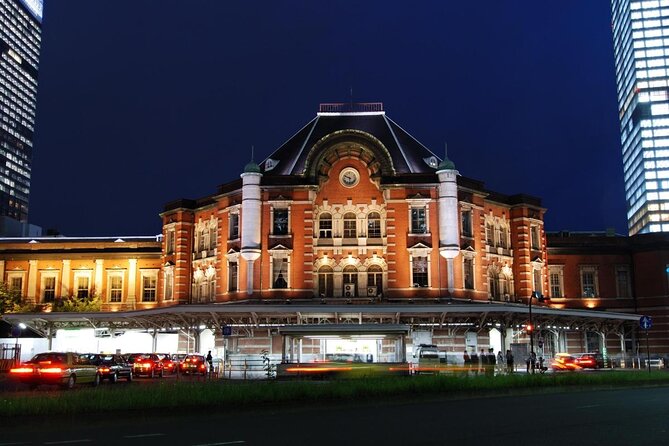
Tokyo Central Railway Station is a sensible opening point if you want a look at the city’s modern foundations. The audio explains the station’s architecture and its role in Japan’s modernization. You get a taste of how rail travel helped shape Tokyo into the enormous city you see today.
From there, the East Gardens of the Imperial Palace offer a quieter change of pace. These grounds occupy part of the former Edo Castle, and the remaining ruins give the audio a clear link to the age of shoguns and imperial power. Entry is free, making this one of the better-value stops on the route.
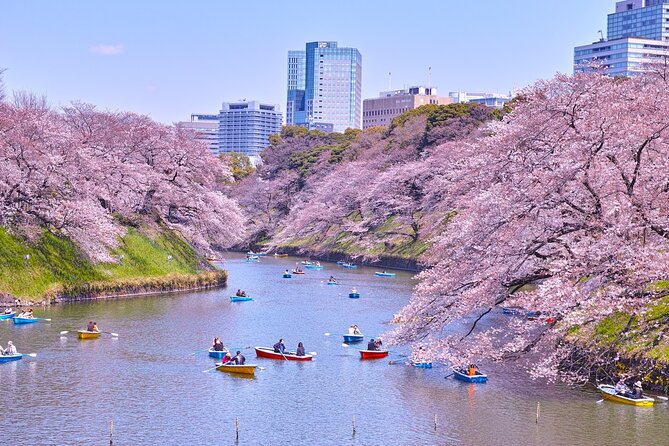
Chidorigafuchi adds a scenic moat, with its strongest appeal in spring when cherry trees line the water. The commentary connects the moat to Edo’s defenses. Admission is not included, and the stop is brief in the plan, so you may want to treat it as a photo and history pause rather than a long visit.
Yasukuni Shrine requires a more careful tone. It honors Japan’s war dead and carries a complicated political and historical meaning. The audio introduces that background, but ten minutes is not enough for a full treatment. Listen with an open mind, and do not reduce the site to a simple photo stop.
Gardens, government, and Shinjuku views
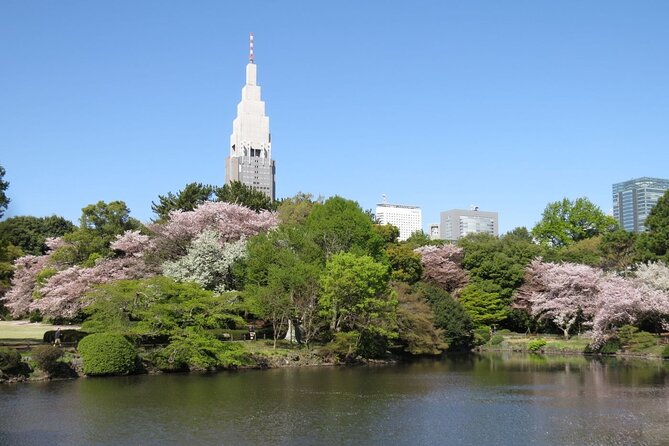
Shinjuku Gyoen National Garden is one of the route’s most appealing pauses. Its Japanese, French, and English garden styles give you several different views within one park, while its imperial beginnings and later postwar role add useful context.
This is another paid stop, and it deserves more than the listed ten minutes if gardens are your thing. The six-day access period helps here. You can return to the garden on a separate outing instead of trying to squeeze it between distant neighborhoods.
The Tokyo Metropolitan Government Buildings bring you back into modern Tokyo. The audio covers city administration and the building’s architecture, while the observation areas provide wide views across the capital. Admission is free, which makes this one of the strongest stops for a budget-conscious itinerary.
Meiji Jingu Shrine then gives you a forested Shinto setting in the middle of urban Tokyo. It honors Emperor Meiji and Empress Shoken, and the audio introduces the shrine’s imperial connection and Shinto customs.
The contrast is the point: government offices, a garden, a shrine, and a huge modern city all sit within the same broad sightseeing plan. If you are short on time, this cluster may offer a better return than trying to reach every stop on the full list.
Shibuya and Tokyo’s contemporary art scene
Shibuya Crossing is the tour’s most instantly recognizable modern stop. The audio explains how the area changed from a residential district into a fashion and entertainment center. You do not need an admission ticket, and the crossing is easy to add to your own schedule.
Give yourself time to experience the area beyond the crossing if you enjoy city energy. The audio provides context, but it cannot choose your best viewpoint or tell you when the crowds feel right for you. That is part of the tradeoff with a self-guided format.
The National Art Center, Tokyo offers a different kind of modern architecture. Called an empty museum because it does not keep a permanent collection, it hosts changing exhibitions instead. The audio explains the building’s design and cultural role, while admission depends on the exhibition you choose.
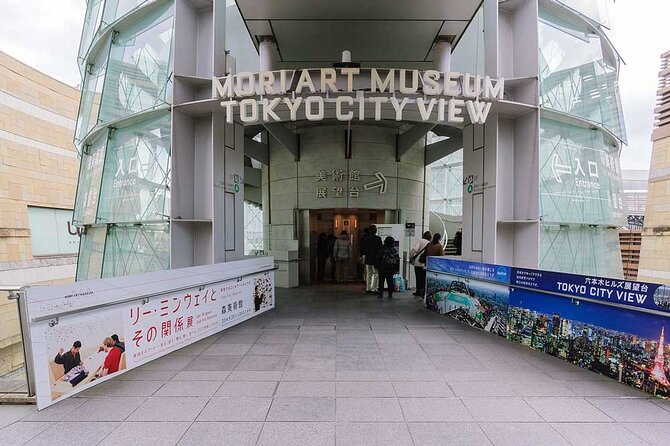
The Mori Art Museum takes you higher, into the Roppongi Hills art district. Its contemporary exhibitions and city views make it a strong choice for people who want culture with a skyline backdrop. Admission is extra, and the museum works better as a planned visit than as a quick ten-minute glance.
Tokyo Tower provides another major view and a slice of postwar history. Its design was inspired by the Eiffel Tower, but its meaning is distinctly tied to Japan’s recovery and modernization. You can admire it from outside for free, while going up requires a ticket.
Nearby Zojoji Temple creates one of Tokyo’s classic contrasts: an old Buddhist temple with Tokyo Tower rising behind it. The audio explains the temple’s connection to the Tokugawa shogunate. The temple grounds are free, so this is an easy pairing with Tokyo Tower if you want to control costs.
A few more Tokyo tours and experiences worth a look



Hama Rikyu, Rainbow Bridge, and Odaiba
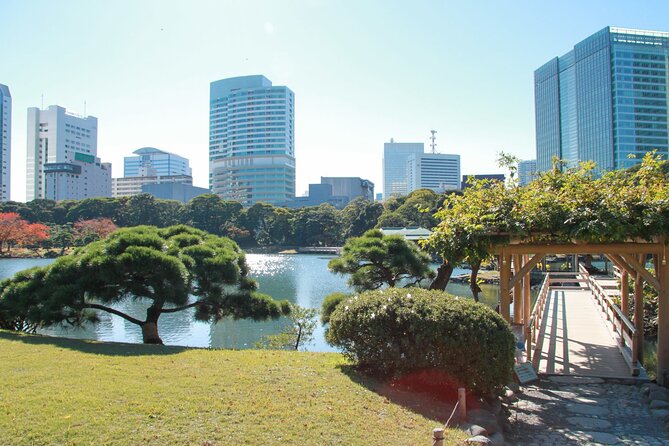
Hama Rikyu Gardens once belonged to a feudal lord and now offer a historic green space amid the city. The audio follows the gardens through different eras of Tokyo’s growth. Admission is extra, and the gardens are worth prioritizing if you enjoy formal grounds and connections between old and new Tokyo.
Rainbow Bridge provides a broad view across Tokyo Bay and a chance to hear about the bridge’s construction and nighttime lighting. The stop itself is free, though getting to the best viewing area still requires your own transport planning.
Odaiba is one of the most unusual parts of the route. Built on artificial islands, it developed from a defensive fortress area into a leisure and entertainment district. The audio gives you a useful before-and-after story, but Odaiba is spread out, so do not underestimate the time needed to move around.
This section shows why the four-hour estimate needs a little caution. Hama Rikyu, Rainbow Bridge, and Odaiba can form a logical bay-area outing, but they should not be treated as three tiny stops in a race. You will get more from them if you choose one or two priorities.
Skytree, Senso-ji, and old Asakusa
Tokyo Skytree is the route’s giant modern marker. The audio covers its design and the way traditional Japanese aesthetics influenced the tower. Entry to the observation levels costs extra, but you can admire the structure without buying a ticket.
Senso-ji Temple provides a sharp contrast. It is Tokyo’s oldest temple, with a founding legend and a strong connection to life during the Edo period. The grounds are free, and this is one of the stops where the audio can add useful meaning to what you are seeing.
Asakusa surrounds Senso-ji with an older Tokyo atmosphere. The audio traces its shift from an entertainment district to a cultural center. I would treat Senso-ji and Asakusa as one combined visit rather than two separate ten-minute stops. The area makes more sense when you give yourself time to walk between the temple and surrounding streets.
Three Ueno museums and one large public park
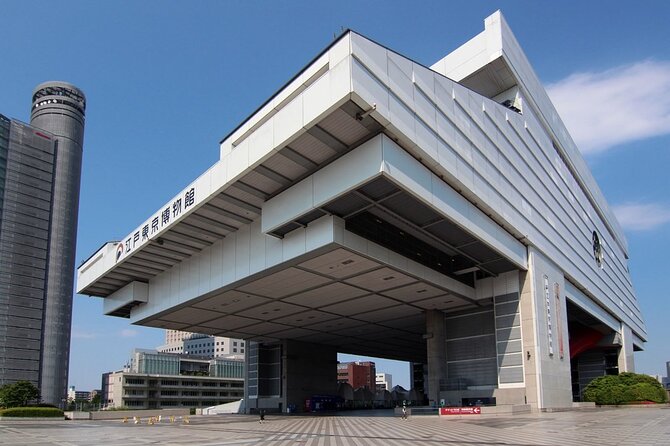
The final group is Ueno, where several stops sit close enough to make a practical museum day. The Tokyo National Museum is Japan’s oldest and largest museum, with collections of Japanese art and antiquities. Admission is not included, and the scale of the collection means you should not plan it as a quick stop.
The National Museum of Nature and Science focuses on the natural world and technological progress. It gives the route a different subject from the temples, gardens, and art museums. Entry is extra, and families or anyone interested in science may prefer it over another city viewpoint.
The National Museum of Western Art is housed in a building designed by Le Corbusier. Its collection of Western works and UNESCO World Heritage status give it a strong architectural and cultural reason to visit, even if you are not planning a full museum day.
Ueno Park ties the group together. It is a major public park with museums and strong cherry blossom associations. Entry to the park itself is free, while the museums charge separately. During spring, the trees are a major draw, while autumn may appeal if you want changing leaves. One useful suggestion from the available feedback is to plan around the seasons, since some locations are at their best in spring or fall.
The main weakness: audio accuracy and organization
The biggest concern is not the range of sights. It is how well the audio matches your actual position.
The instructions connect each map point to a specific audio file, so you have a clear system to follow. But the content is not described as a GPS-triggered guide. You must choose the stop yourself and start the recording manually. If you walk ahead, take a wrong turn, or play the wrong track, the commentary may not line up with what you see.
That distinction matters. If you want a guide that reacts to your exact location, this product may feel basic. A few users found the narration confusing, unhelpful, or difficult to use, and one reported not receiving the audio file. The operator’s instructions place responsibility on the buyer to read the details and use the links correctly. That makes pre-trip testing especially important.
I would also keep customer support expectations modest. Help is available for access questions, but there is no person on location to rescue you if you miss a stop or misread the map.
Who should book this Tokyo experience?
I would consider it a good fit for independent visitors who enjoy making their own plans and want background for a selection of famous sites. It also suits repeat visitors who already know Tokyo’s transport system and want a flexible list of places rather than a fixed group schedule.
It works less well for anyone who wants a guide to handle directions, timing, tickets, and local decisions. It is also a poor match if you expect to see all 22 attractions thoroughly in four hours. The number is useful as a menu, not as a promise of 22 complete visits.
Book only if you are comfortable paying separately for admissions and transport. Since the experience is non-refundable and cannot be changed after booking, read the instructions before you commit, confirm that you understand the phone-based setup, and make sure the listed format suits you.
Should you book the Tokyo Self-Guided Audio Tour?
At $9, this can be a sensible add-on for an organized, independent Tokyo visit. Its best features are the wide range of sights, the freedom to start and stop, the six-day access period, and the chance to skip places that do not interest you.
I would not buy it as your only Tokyo plan. Use the map to build two or three area-based outings, test both links before you leave, and choose the audio stops that fit your day. If that sounds easy, the price is fair. If you want reliable location matching and hands-on guidance, spend your money on a live guide or a more interactive navigation product instead.
FAQ
How long does the Tokyo Self-Guided Audio Tour last?
The estimated duration is about four hours. Because the route includes 22 attractions across Tokyo, travel time, museum visits, meals, and time spent at each site can make the day longer.
Can I start and end the tour anywhere?
Yes. You choose both your starting point and ending point because this is a self-guided activity.
Is transportation included?
No. Pickup, drop-off, and transportation are not included. You are responsible for moving between the attractions.
How do I access the audio guide?
You receive an email with two private links before your selected travel time. One opens the audio through SoundCloud, and the other opens a Google My Maps route with the attraction locations and audio connections.
Do I need to visit all 22 attractions?
No. You can choose the places that interest you, skip others, start and stop the audio, and split the experience across several days.
Are admission fees included?
No. Entry fees are separate wherever they apply. Some sites, including several shrines, temples, parks, and viewpoints, are free, while museums, gardens, and towers may charge admission.
How long do I have to use the access links?
The private access links are valid for up to six days. Plan your visits within that period and check the links before setting out.
More Audio Tours in Tokyo
More Self-Guided Tours in Tokyo
More Guided Tours in Tokyo



More tours in Tokyo we've reviewed












Audio Tours, compared.
 ★ 3.8Tokyo: Open Top Panoramic Sightseeing Bus with Audio GuideFrom $111h 10m
 ★ 4.0Tokyo: 60min Panoramic Open Top Bus Tour with Audio GuideFrom $141 hour
 ★ 4.8Tokyo: Sumo Keiko Training Tour with Audio Guide & PhotoFrom $8540 - 90 minutes
 ★ 3.0Audio Guide App Japan Tokyo Kyoto Takayama Kanazawa Nikko and othersFrom $87