Reviewed · SUMO EXPERIENCES
Tokyo: Sumo Keiko Training Tour with Audio Guide & Photo
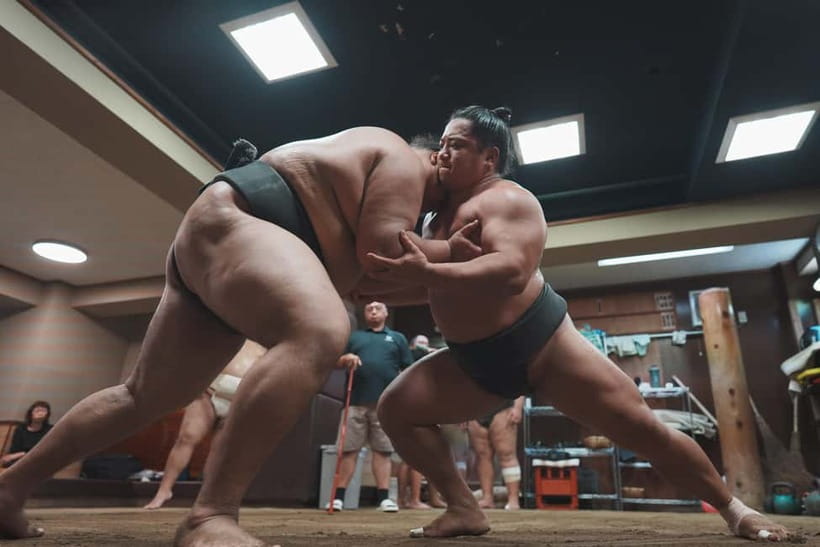
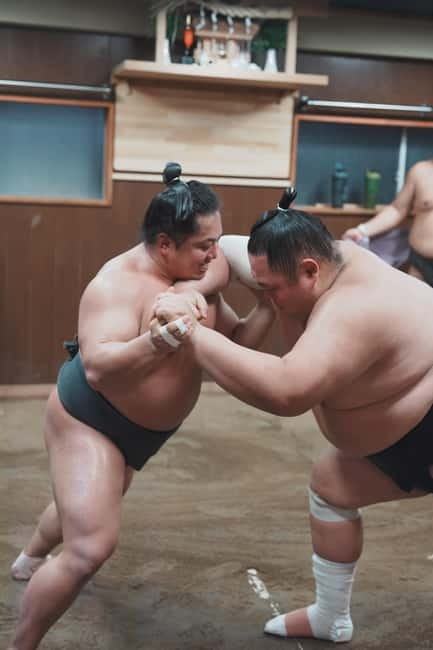
Professional sumo practice is the main event here, and you watch it at Nakamura-beya Sumo Stable rather than from a distant tournament seat. The close view lets you notice the force, discipline, and repeated technique behind the sport. I especially like the nearby Ryogoku location and the chance to take a photo with sumo wrestlers afterward.
In This Article
- Key points to know before booking
- Watching sumo before the tournament crowds arrive
- What the keiko session is really like
- Using the audio guide without missing the action
- Seating, manners, and comfort inside the stable
- Why the Ryogoku location adds value
- Is $85 a fair price?
- Who will enjoy this most
- A practical plan for your visit
- Should you book the Nakamura-beya sumo tour?
- FAQ
- Where does the sumo training tour meet?
- How long does the activity last?
- What will I watch during the visit?
- Is a guide included?
- Which languages are available for the audio guide?
- Do I need to bring earphones?
- Can I take photographs?
- Is seating provided?
- Can children join the activity?
- Is hotel pickup included?
I also like the audio guide and training pamphlet, which give you useful context without turning the practice into a noisy presentation. The main consideration is seating: bench chairs are limited, and most people sit on cushions for about 1.5 hours. You must also watch quietly, so this is not a chatty, hands-on attraction.
Key points to know before booking
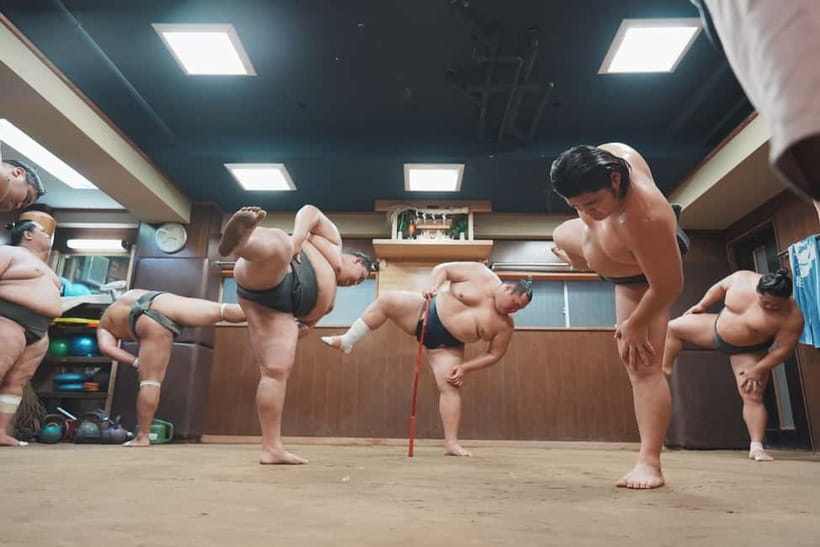
- Watch real keiko at Nakamura-beya: This is a professional training session, not a staged performance.
- Reach it in two minutes: The stable is just off JR Ryogoku Station, beside Ryogoku Kokugikan National Sumo Arena.
- Use your own phone for context: Audio commentary is available in several languages, and earphones are recommended.
- Take a sumo photo: A photograph with sumo wrestlers is included.
- Expect cushion seating: Only a limited number of bench chairs are available, with priority for people with disabilities.
- Plan for a quiet visit: No flash, no sunglasses, no bare feet, and late arrivals lose viewing time.
Watching sumo before the tournament crowds arrive
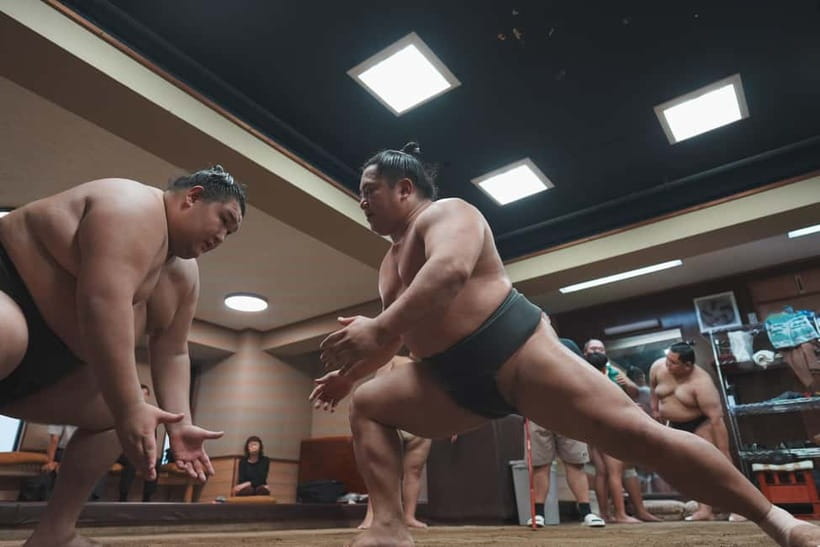
A sumo tournament gives you ceremony, packed stands, and bouts with official rankings on the line. This visit gives you something different: the working side of the sport. You watch wrestlers train at Nakamura-beya, where practice focuses on strength, movement, repetition, and discipline.
That distinction matters. A tournament bout lasts only a short time, but training helps explain how wrestlers prepare for those few intense moments. You are not simply watching two athletes push against each other. You are seeing the physical habits that make sumo possible.
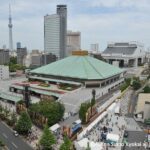
The setting is close to Ryogoku Kokugikan National Sumo Arena, one of Tokyo’s best areas for learning about sumo. The stable is only about two minutes from JR Ryogoku Station, so you do not need a long walk through unfamiliar streets or a complicated transfer after arriving in the district.
The stable is also air-conditioned, with free Wi-Fi and charging stations. Those details may sound ordinary, but they help in Tokyo, particularly when you are carrying a phone for the audio guide and need to conserve battery for the rest of your day.
A few more Tokyo tours and experiences worth a look
What the keiko session is really like
The central activity is a live training session, called keiko. The available information describes the visit as lasting from 40 to 90 minutes, while the scheduled visit is also described as 1.5 hours. Check the available time when booking, since the exact length can vary.
You need to treat the practice like a quiet observation session. Speaking should be kept to a minimum, and you are expected to watch without interrupting the wrestlers. That rule is not a minor footnote. It shapes the whole mood of the visit and helps preserve the training environment.
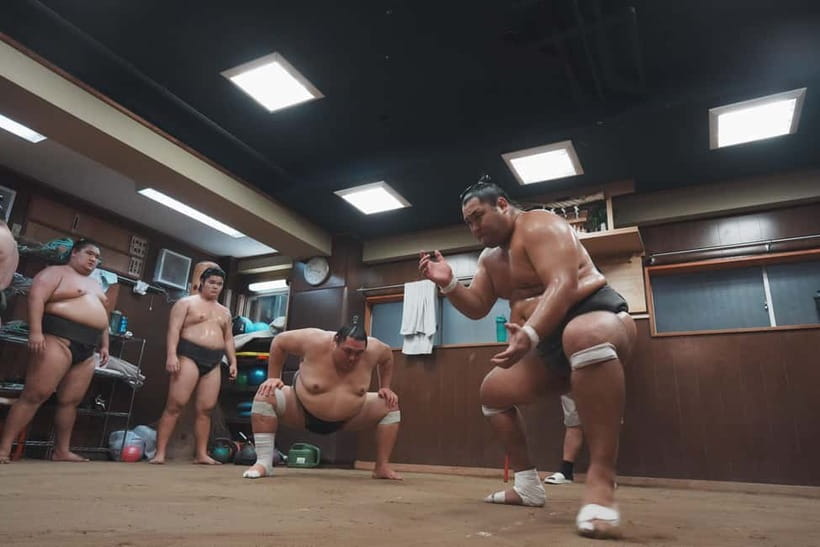
The best reason to book is the close view. The physical power of sumo is easy to understand from a distance, but being near the practice makes the sport feel less like a spectacle and more like a demanding daily routine. You can pay attention to balance, footwork, posture, and the repeated effort behind each movement.
You should not expect a guided lesson in which you try sumo techniques yourself. The included explanation pamphlet and audio commentary provide background, but the main activity is watching. If you prefer a lively attraction with games or constant narration, this may feel restrained.
That restraint is also its strength. The experience lets you concentrate on the wrestlers instead of on a stage show. One of the strongest points in the available feedback is the rare chance to see practice from close range, even for someone who already knows a lot about sumo.
Using the audio guide without missing the action
The audio guide adds useful structure to what you see. It covers sumo history, ranks, and training techniques, so you can understand why the wrestlers are doing particular movements rather than simply watching a sequence of powerful collisions.
The listed audio languages are Chinese, English, French, German, Hindi, Italian, Japanese, Korean, Polish, Spanish, and Portuguese. The activity description refers to a 10-language audio guide, but the language list provided includes 11 options. English, Japanese, and Korean are also supported by the live staff.
Bring your own earphones so you can listen on your phone. If you arrive without them, a pair can be lent to you, but carrying your own is the safer plan. Your phone should also have enough battery for the audio, which is why the venue’s charging service is practical.
I like this format because it gives you information without requiring a guide to speak constantly during practice. You can follow the commentary while keeping the room quiet. The pamphlet gives you another way to review the basics if you would rather not listen to your phone the entire time.
Still, the audio guide has a small practical weakness. If you are focused on listening, you might miss a movement in the training area. I suggest using the commentary to get oriented at the start, then watching closely when the practice becomes especially active.
Seating, manners, and comfort inside the stable
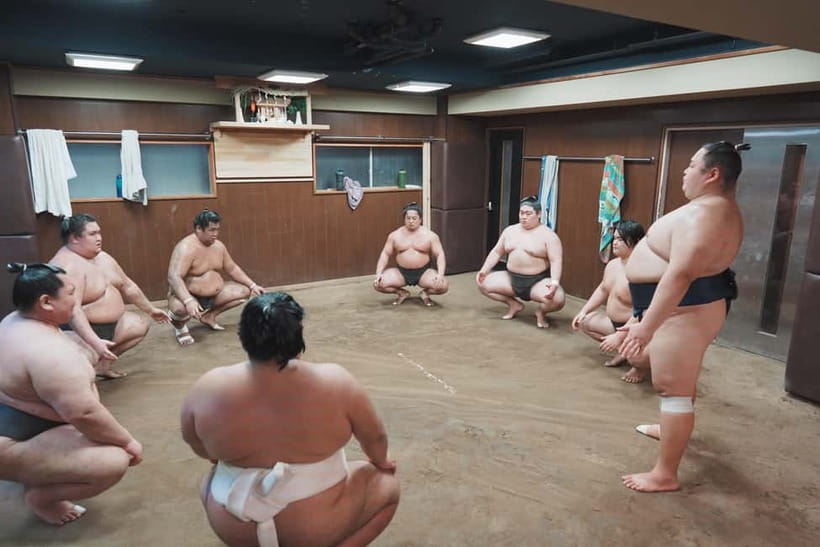
Seating deserves more attention than it usually gets. The number of bench chairs is limited, and priority goes to people with disabilities. Others sit on cushions, with the visit described as lasting around 1.5 hours.
For many people, cushion seating will be fine. If you have trouble sitting on the floor, plan ahead and contact the provider before booking rather than assuming a bench will be available. The activity is not suitable for children under six, and the minimum age is six.
You should use the restroom before joining. The instructions specifically ask you to do so, and the quiet practice setting is not the place to create interruptions.
A few rules are simple but important:
- Do not use flash photography.
- Do not wear sunglasses inside the viewing area.
- Do not go barefoot.
- Speak as little as possible during practice.
- Arrive on time, since late arrivals have a shorter viewing period and do not receive an extension.
Photography is allowed, so you can take pictures without treating the visit as a strict no-camera event. The included photo with sumo wrestlers is the more personal souvenir. Since the details do not specify exactly when or how that photo is arranged, follow the staff’s instructions on the day.
The air-conditioning is a real advantage. You may be sitting quietly for a while, and the comfortable indoor setting makes the wait and viewing period easier. Free Wi-Fi and charging stations are useful extras, though they should not distract you from the practice itself.
Why the Ryogoku location adds value
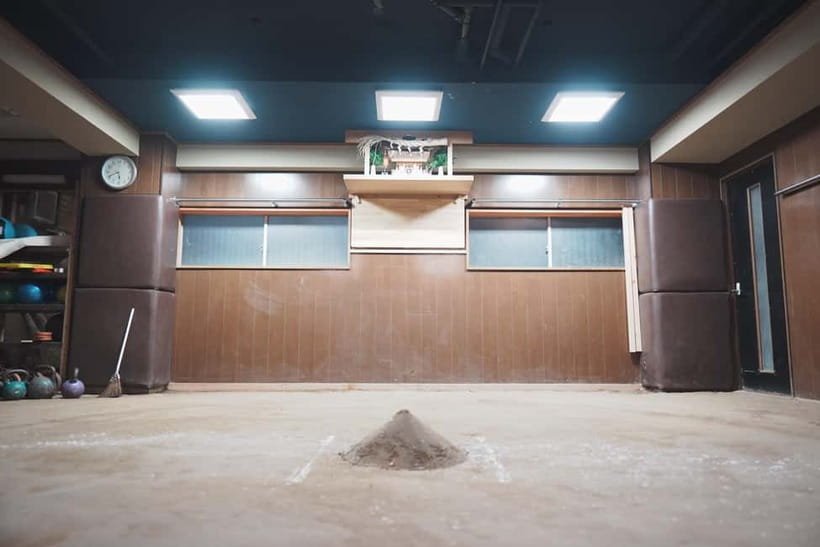
The stable’s location makes this more than a single short appointment. After the practice, you can walk to Ryogoku Kokugikan and the Sumo Museum, then continue toward the Tokyo waterfront.
That nearby cluster is a good reason to place the activity early in your day. You can connect the live practice with museum displays and the wider sumo district without spending extra time crossing Tokyo. I like tours that make a neighborhood easier to understand, and this one gives you a clear starting point.
Ryogoku Kokugikan National Sumo Arena is right beside the meeting point, but the activity does not include a tournament ticket or a separate arena tour. The Sumo Museum is listed as a nearby attraction to explore on foot, not as an included stop. Keep that difference clear when planning your schedule.
The meeting point itself is Nakamura-beya Sumo Stable. There is no hotel pickup or drop-off, so you make your own way there and return to the same location at the end. A directions video is provided for finding the stable, which is helpful because sumo stables are working facilities, not large tourist entrances with obvious signs.
Other guided tours in Tokyo



Is $85 a fair price?
At $85 per person, this is not a bargain attraction in the usual Tokyo sightseeing sense. You are paying for access to a rare professional training setting, interpretation in several languages, a pamphlet, the photo opportunity, and the convenience of a central location.
The value depends on your interest in sumo. If you already plan to visit Ryogoku, the short walk from the station and the nearby museum make it easy to fit into your day. If sumo is only a passing interest, the price may feel high for a quiet viewing session with cushion seating.
I think the price makes more sense for someone who wants to understand the sport beyond a quick bout. The close-up practice is the part that gives the activity its value. The audio guide and venue facilities support that main purpose, but they are not the reason to book by themselves.
You also get some scheduling flexibility. Free cancellation is available up to 24 hours before the activity for a full refund, and you can reserve now and pay later. That helps if your Tokyo plans are still changing, though you should still check the available start time before building your day around it.
Who will enjoy this most
I would recommend this for:
- First-time visitors who want a direct introduction to sumo.
- Dedicated sumo fans who want to see training rather than only tournament bouts.
- Families with children aged six and older who can sit quietly.
- People already visiting Ryogoku Kokugikan or the Sumo Museum.
- Anyone who values multilingual explanations and an easy-to-find meeting point.
I would be more cautious if you need guaranteed chair seating, dislike quiet observation, or expect a performance with a host speaking throughout. The activity is also less suitable for very young children, since anyone under six cannot join.
The language support is a strong point for international visitors. Staff speak English, Japanese, and Korean, while the audio guide covers a wide range of languages. That gives you more control over how much background you want and reduces the need to understand every spoken explanation in real time.
A practical plan for your visit
Allow extra time to reach the stable, even though it is only two minutes from JR Ryogoku Station. The key issue is not the distance. It is arriving calmly and finding the correct entrance without rushing into a quiet session.
Bring earphones, a charged phone, and clothing that lets you sit comfortably. Follow the rules on footwear and photography, and use the restroom before the visit begins.
Afterward, keep time for Ryogoku Kokugikan, the Sumo Museum, and a walk toward the Tokyo waterfront. Since no pickup is included, you are free to continue exploring once the activity ends, but you must arrange your own transport from the meeting point.
The tour provider is NexSpark Co., Ltd. Live support is offered in English, Japanese, and Korean. The experience has an overall rating of 4.8 from five ratings, and its most praised qualities are the rare access to real practice and the unusually close view of the wrestlers.
Should you book the Nakamura-beya sumo tour?
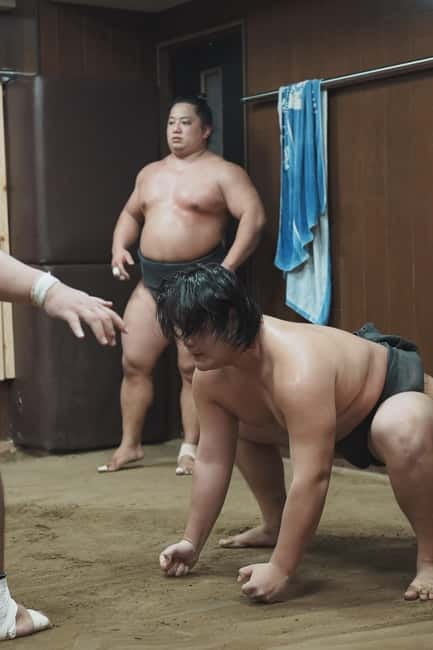
Book it if you want the working side of sumo, not just the tournament spectacle. The strongest reasons are the professional training session, the close viewing position, the included wrestler photo, and the easy Ryogoku location.
Think twice if sitting on a cushion for up to 1.5 hours is difficult or if you want an interactive show. For most people who have a genuine interest in Japanese sumo, $85 is a reasonable price for access to a setting that is difficult to experience on your own. Arrive on time, bring earphones, stay quiet, and use the rest of the day to explore Ryogoku on foot.
FAQ
Where does the sumo training tour meet?
The meeting point is Nakamura-beya Sumo Stable, about two minutes from JR Ryogoku Station and next to Ryogoku Kokugikan National Sumo Arena.
How long does the activity last?
The duration is listed as 40 to 90 minutes. The scheduled visit is also described as lasting 1.5 hours, so check the available time when booking.
What will I watch during the visit?
You will watch professional sumo wrestlers during a live keiko training session at Nakamura-beya Sumo Stable.
Is a guide included?
Yes. Live support is available in English, Japanese, and Korean. An audio guide and a sumo keiko explanation pamphlet are also included.
Which languages are available for the audio guide?
The listed audio options are Chinese, English, French, German, Hindi, Italian, Japanese, Korean, Polish, Spanish, and Portuguese.
Do I need to bring earphones?
You should bring your own earphones to listen to the audio guide on your phone. A pair can be lent to you if you do not have one.
Can I take photographs?
Yes, photography is allowed, but flash photography is not permitted. A photo with sumo wrestlers is included.
Is seating provided?
A limited number of bench chairs are available, with priority for people with disabilities. Other participants sit on cushions for about 1.5 hours.
Can children join the activity?
Children must be at least six years old. Children under six are not allowed to participate.
Is hotel pickup included?
No. Pickup and drop-off are not included, so you must make your own way to Nakamura-beya Sumo Stable and leave from there afterward.
More Self-Guided Tours in Tokyo


More Guided Tours in Tokyo
More Sumo Experiences in Tokyo

More tours in Tokyo we've reviewed












Sumo Experiences, compared.
 ★ 4.8Tokyo: Sumo Show Experience with Chicken Hot Pot and a PhotoFrom $1032 hours
 ★ 4.8Tokyo: Sumo Show and Dining ExperienceFrom $7990 minutes - 2 hours
 ★ 5.0the SUMO showFrom $89
 ★ 5.0Tokyo Sumo Entertainment Show with Chicken Hot Pot and PhotoFrom $106
 ★ 4.6Tokyo: Sumo Tournament Tour with Chair Seat TicketsFrom $141
 ★ 5.0Tokyo Grand Sumo Tournament Viewing Tour with TicketsFrom $124