Reviewed · TOKYO
Karate Experience with the Shotokan Karate-do Instructor
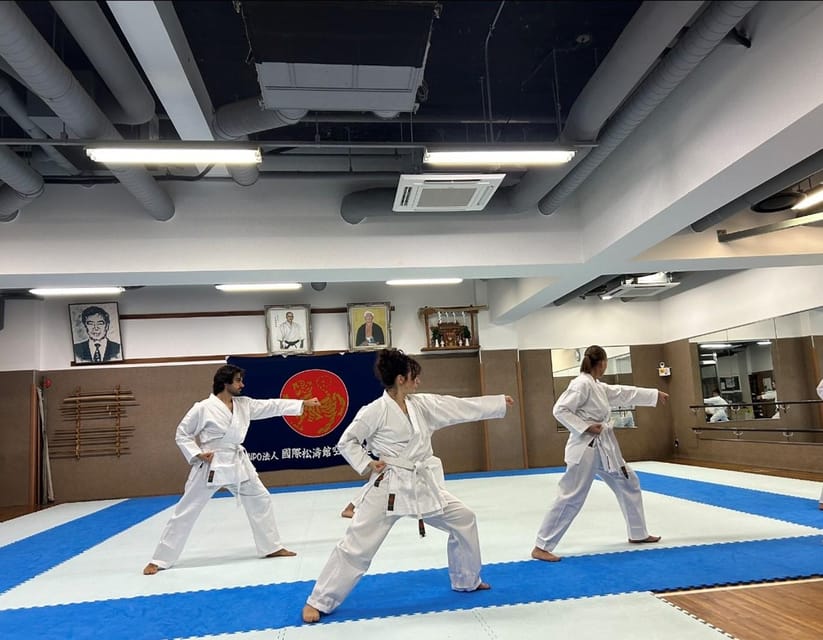
The unusual part of this Tokyo-area activity is the address: SKIF Headquarters dojo, where world champions train and teach. In 90 minutes, you move beyond watching martial arts in a film or museum and learn basic Shotokan karate from an accomplished instructor in a working dojo.
In This Article
- Arriving at Kugahara Station
- Entering a Working Shotokan Dojo
- The Opening Lesson: Karate as Technique and Discipline
- Kata and Promise Kumite
- Board Breaking and the Instructor Demonstration
- A Friendly Finish and Photo Opportunity
- What the $220 Price Really Buys
- Who Will Enjoy This Most
- What to Bring and How to Prepare
- Should You Book This Karate Experience?
- FAQ
- How long does the karate experience last?
- Where does the activity take place?
- How close is the dojo to a train station?
- Is the experience taught in English?
- Do I need previous karate experience?
- What techniques will I learn?
- Can I try breaking a board?
- Is a karate uniform provided?
- What is the cancellation policy?
I like the small group size, limited to 10 people, and the chance to request training suited to your background. I also like the mix of serious practice and fun moments, especially board breaking and the instructor demonstration. The main drawback is the price, $220 per person, which is a lot for a 90-minute activity. It makes the most sense if the setting, instruction, and cultural side matter as much to you as the physical workout.
- Train at SKIF Headquarters: Practice in the dojo of the Shotokan Karate-do International Federation.
- Meet a high-level instructor: Your teacher may be a medal winner from SKIF World Championships or the All Japan Karate Championships.
- Learn more than punches: The session covers strikes, kicks, kata, and promise kumite.
- Try board breaking: This gives the class a memorable hands-on finish.
- Join a small group: With no more than 10 participants, instruction can be more personal.
- Reach it easily: The dojo is a two-minute walk from Tokyu Ikegami Line Kugahara Station.
Arriving at Kugahara Station
The dojo is a two-minute walk from Tokyu Ikegami Line Kugahara Station. That short walk matters because martial arts sessions work best when you arrive calm, on time, and ready to move, rather than after a long search through unfamiliar streets.
Plan to reach the station area at least 10 minutes before your start time. If you are unsure of the route, contact the provider ahead of time and ask for a pickup at the station. A late arrival does not extend the session, so even a small delay cuts into your practice.
The meeting point is in Honshu, in the Tokyo area, and the activity is conducted in English. The provided details do not specify a hotel pickup or transportation from central Tokyo, so you need to make your own way to the station. Check your route before leaving, especially if you have a timed reservation elsewhere afterward.
Entering a Working Shotokan Dojo
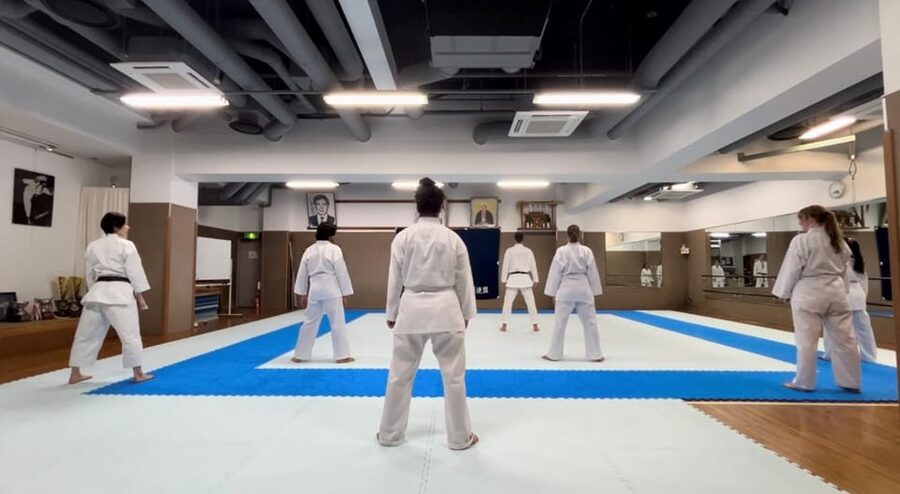
This is not a generic tourist martial arts class held in a hotel room. The session takes place at the headquarters of the Shotokan Karate-do International Federation, known as SKIF. The organization is described as one of the world’s historic and respected karate groups, and the dojo is a place where world champions train and teach.
That setting gives the class a clear sense of purpose. You are not only learning how to throw a punch or lift your knee for a kick. You are seeing how karate is taught within a traditional organization, with attention to form, discipline, control, and repeatable technique.
You should not expect a long sightseeing program or a lecture on Japanese culture. The cultural value comes through the practice itself: entering a dojo, learning the basic ideas behind Shotokan karate, following instruction, and taking part in a respectful exchange at the end.
The instructors have impressive competitive records. Depending on the day, your teacher may have won kumite gold at an SKIF World Championship, claimed a national title in kata or kumite, or finished as a runner-up in major national or international competition. The specific instructor is assigned on the day, so you should not book expecting one named teacher every time.
One instructor identified for this experience is Paul. If he leads your session, you can tell him about your background and ask for extra attention to traditional karate, technical questions, or Japanese terminology. That sort of conversation can make the lesson more useful for someone who already practices karate.
If you're still narrowing it down, here are other tours in Tokyo we've reviewed.



The Opening Lesson: Karate as Technique and Discipline
The session begins with a short introduction to the history and philosophy of karate. This opening gives beginners a frame for the physical work that follows, while experienced karateka can use it to explain what they want from the class.
For a first-time participant, the philosophy section helps prevent karate from becoming a string of disconnected movements. You begin to understand that stance, balance, control, and repetition matter as much as force. The class is designed as an introduction, so the explanation should not take over the practical portion.
After the introduction, the instructor leads you through basic techniques. These include striking and kicking, with attention to how the body moves as a unit. The activity details do not promise a fixed sequence of individual punches, kicks, or drills, so the exact content can vary with the instructor and the group.
That flexibility is useful for a mixed class. A complete beginner may need time to understand basic movement, while an experienced karateka may want correction on form or a more traditional approach. Tell the instructor in advance what style you practice and what kind of training you want. The provider specifically says this allows for a more satisfying program for experienced participants.
Kata and Promise Kumite
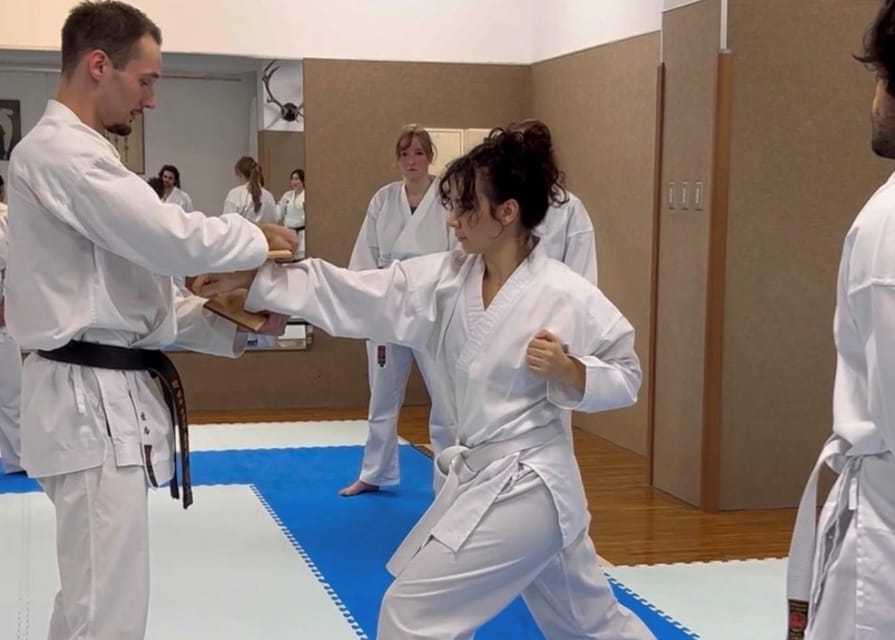
Kata means a set form, or pattern, of karate movements. It brings together technique, rhythm, stance, direction, and control. For a newcomer, kata can feel like learning a short physical language. You are not simply hitting targets. You are remembering a sequence and trying to make each movement deliberate.
For someone already familiar with martial arts, kata offers a chance to notice differences in style and teaching. Shotokan has its own approach to posture, movement, and power, so it can be useful even if your regular training comes from another karate tradition.
The class also includes promise kumite, which is pre-arranged sparring. Unlike free sparring, the partners follow an agreed sequence. That makes it suitable for a beginner because you can focus on distance, timing, defense, and control without facing an unpredictable exchange.
The word promise here refers to the planned nature of the exercise, not a casual promise between partners. The format lets the instructor show how techniques work together while keeping the practice structured. You should still listen closely and follow directions, since martial arts movements require care even when the sequence is fixed.
These two parts give the activity more depth than a simple self-defense demonstration. Kata shows solo form. Promise kumite adds a partner and a sense of timing. Together, they introduce two central ways karate is practiced.
Board Breaking and the Instructor Demonstration
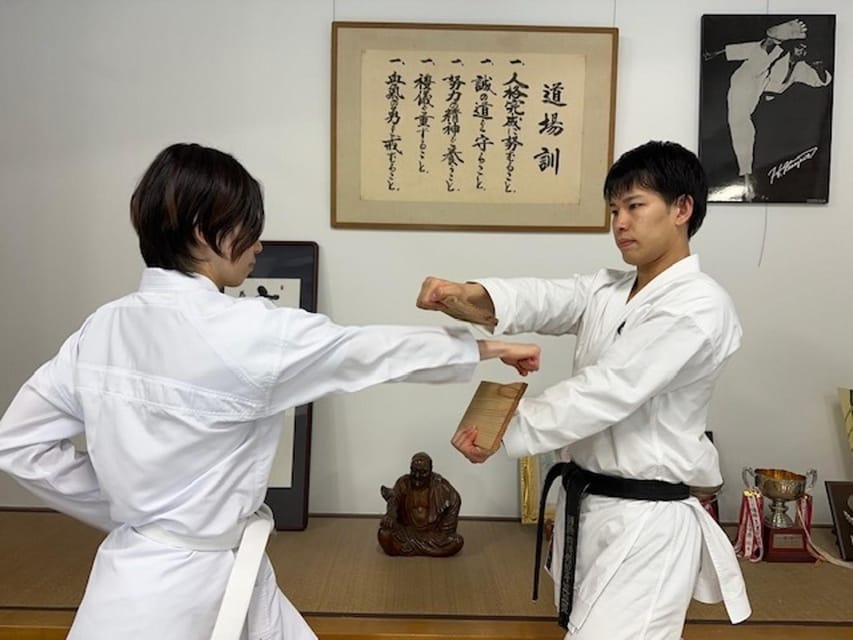
Board breaking is likely to be the most playful part of the class. You get the chance to try breaking a board, with instruction from the teacher. It is a memorable activity, but it should not be treated as a test of raw strength.
The value of the exercise is in applying a controlled technique. Proper alignment, focus, and commitment matter more than swinging as hard as possible. Listen carefully to the instructor and follow the method shown. The supplied information does not specify the number or type of boards, so the exact setup may vary.
The instructor also gives a powerful demonstration. This is where the difference between a short introduction and high-level martial arts training becomes clear. You can watch the speed, balance, precision, and control of someone who has competed at major national and international events.
The demonstration is included, not an optional add-on. It gives you a useful visual reference after you have tried the basic movements yourself. You see what polished technique looks like, then return to your own practice with a better sense of the goal.
A Friendly Finish and Photo Opportunity
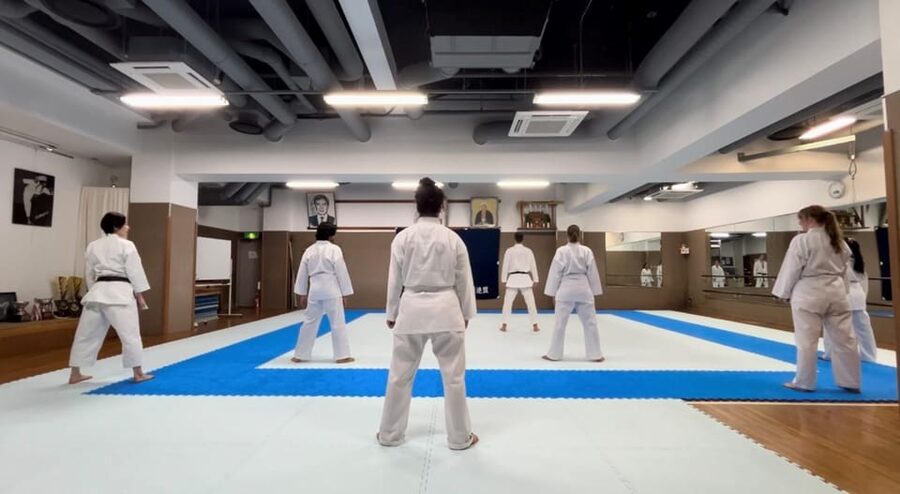
The session ends with a friendly exchange and time for photographs. That closing keeps the experience from feeling like a one-way lesson in which the instructor talks and you simply follow orders.
The exchange is also a chance to ask final questions. If you are curious about a Japanese karate term, a particular technique, or the difference between training for kata and kumite, this is a good moment to raise it. One participant specifically valued being able to ask about techniques and Japanese words, especially while focusing on traditional karate.
The photo opportunity gives you a lasting record of the visit to the dojo. If you rent a uniform, the photograph will also feel more connected to the activity than a quick snapshot taken on the street. Do not assume you need to bring your own karate gi, since rental uniforms are included.
A towel and drinks are not provided, so bring both. You will be moving for most of the session, and having water ready is a simple way to stay comfortable. Bottled water is not included.





What the $220 Price Really Buys
At $220 per person, this is not a budget introduction to karate. The session lasts 90 minutes, which means the raw cost per minute is high compared with a regular local class or a longer group activity.
The price becomes easier to understand if you value the setting and the instructor’s level. You are paying for access to SKIF Headquarters, a small group capped at 10 people, English-language teaching, a uniform rental, direct instruction, a demonstration, and board breaking. You are also buying a short cultural experience in a place that is normally part of serious martial arts training.
The value is strongest for three kinds of people. A complete beginner gets a structured and accessible first look at Shotokan karate. An experienced karateka can request a tailored session and learn from an instructor with major competition results. A Japan visitor who cares about traditional arts gets a focused activity that feels connected to an actual organization rather than a staged performance.
The value is weaker if you only want a cheap physical activity, a long workout, or a guaranteed private lesson. The class is small, but it is not advertised as private. You may share the floor with up to nine other participants, and the exact instructor and teaching emphasis can vary.
Free cancellation is available up to 24 hours before the start time, with a full refund. You can also reserve now and pay later, which helps if your Tokyo schedule is still shifting. Those policies do not change the price, but they reduce some of the risk of booking an expensive short activity.
Who Will Enjoy This Most
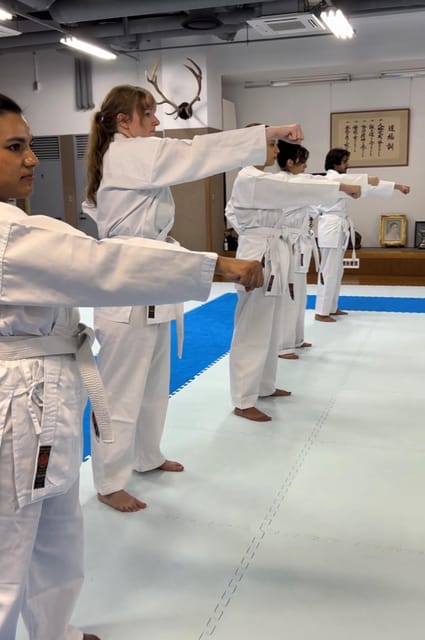
You do not need prior karate experience. The class is designed for both beginners and experienced practitioners, and the instructor can adjust the program when you provide information about your background before arrival.
For a beginner, the best approach is to arrive with modest expectations. You will learn basic techniques, not become proficient in Shotokan in one session. The goal is to understand the movements, feel how a dojo class works, and gain a respectful introduction to the art.
For an experienced karateka, send your style and training requests ahead of time. You might ask to focus on traditional karate, kata, specific techniques, or terminology. The experience can be much more rewarding when the teacher knows what you already understand and what you want to study.
Children under seven are not suitable for the activity. If a child aged seven or older wants only to visit rather than participate, contact the provider first. The information does not promise a separate children’s program, so do not assume that a young child can simply wait on the sidelines.
The activity is also not suited to every mobility need. Non-folding wheelchairs and electric wheelchairs are not allowed. If accessibility is important for you, ask the provider before booking rather than relying on the short walk from the station as a sign that the dojo itself will meet your needs.
What to Bring and How to Prepare
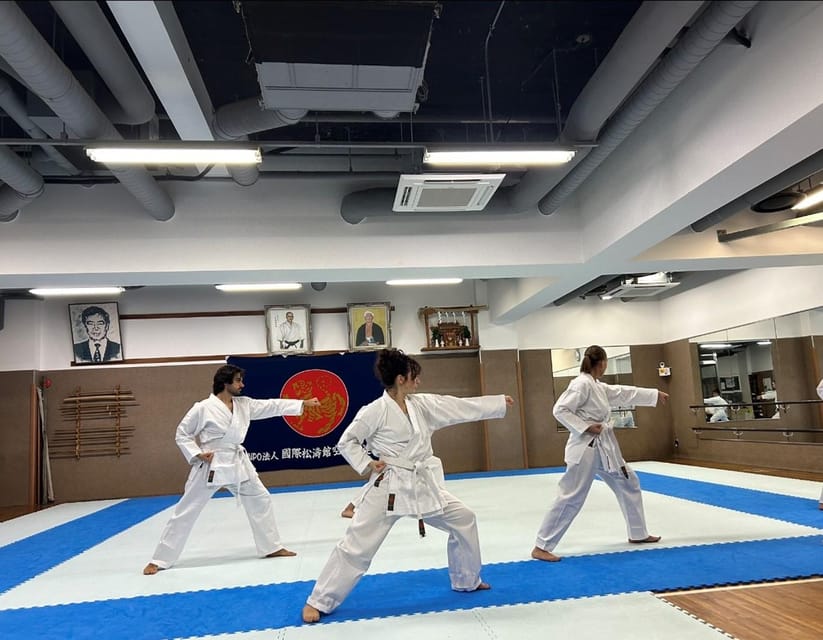
Wear comfortable clothing that allows you to move. Uniform rental is included, so you do not need to own a karate uniform. Bring a towel and drinks, since neither is supplied. Food, alcohol, and drugs are not allowed, and smoking is not permitted.
Arrive early enough to change and get oriented. The provider asks you to arrive at least 10 minutes before the starting time, and the session cannot be extended for late arrivals.
Before booking, decide what you want from the experience. If you are new to karate, you may want a broad introduction with time for basic strikes, kicks, kata, and board breaking. If you already train, send your style and preferred focus in advance.
It also helps to remember that martial arts instruction depends on attention. Listen to the instructor, copy the movement carefully, and do not force a technique simply to make it look powerful. The demonstration is there to show what years of practice can produce, not to suggest that you should match it in one afternoon.
Should You Book This Karate Experience?
Book it if you want a serious but approachable introduction to Japanese martial arts, especially if training at SKIF Headquarters appeals to you. The combination of a high-level English-speaking instructor, small group, kata, promise kumite, board breaking, and a demonstration gives the 90 minutes a clear shape.
I would be most likely to recommend it to an experienced karateka who contacts the provider in advance with specific requests. The activity has the ingredients for a useful technical session, not just a souvenir photograph. It also suits first-timers who want a cultural experience with real physical participation.
I would hesitate if $220 feels high for a short class or if you want a long, intense workout. The price is justified by the venue and instruction rather than by the amount of time. For the right person, that makes this a memorable Tokyo-area experience. For everyone else, a standard martial arts class may offer better value.
FAQ
How long does the karate experience last?
The session lasts 90 minutes. It cannot be extended if you arrive late.
Where does the activity take place?
It takes place at the SKIF Headquarters dojo in Honshu, Japan, near Tokyo.
How close is the dojo to a train station?
The dojo is a two-minute walk from Tokyu Ikegami Line Kugahara Station.
Is the experience taught in English?
Yes. The instructor language is English.
Do I need previous karate experience?
No. Beginners and experienced karateka can join the program.
What techniques will I learn?
The session covers basic striking, kicking, kata, and promise kumite, which is pre-arranged sparring.
Can I try breaking a board?
Yes. The opportunity to try board breaking is included.
Is a karate uniform provided?
Uniform rental is included. You should also bring a towel and drinks.
What is the cancellation policy?
You can cancel up to 24 hours before the activity for a full refund. Reserve-now, pay-later booking is also available.
More tours in Tokyo we've reviewed












Tokyo, compared.
 ★ 5.0Mt Fuji and Hakone 1-Day Bus Tour Return by Bullet TrainFrom $163
 ★ 5.01-Day Tokyo Bus TourFrom $129
 ★ 4.6Tokyo: teamLab Planets TOKYO Digital Art Museum Entry TicketFrom $251 day
 ★ 4.0Mt Fuji & Hakone Cruise, Drum Show Bullet Train 1 Day from TokyoFrom $149
 ★ 5.0Tokyo: Shinjuku Food Tour (13 Dishes at 4 Local Eateries)From $86
 ★ 4.4Tokyo Mt Fuji 5th St & Hakone Cruise Bus Tour w/Bullet TrainFrom $15410 hours