Reviewed · TOKYO
Watch the Young Geisha do their makeup and Get Ready!
A young geisha sits before you and prepares for work, applying oshiroi, the striking white makeup associated with geisha. You see the careful process up close, then watch her choose the kimono and finery she will wear to evening banquets. This is a rare look at a private part of geisha life, not a staged dance show.
In This Article
- Key Points to Know Before You Book
- Inside the Fukagawa Kimono Room
- Watching Oshiroi Go On
- Choosing the Kimono for an Evening of Work
- A Rare Meeting With a Young Geisha
- Why Your Booking Supports Fukagawa
- Timing, Group Size, and the Booking Problem
- Who Will Get the Most From This Visit
- Getting to the Meeting Point
- What the Three-Star Rating Means for Your Decision
- Should You Book This Fukagawa Geisha Experience?
- FAQ
- Where does the geisha makeup experience take place?
- How long does the experience last?
- What will I see during the visit?
- How many people can join?
- Is transportation included?
- Does the booking include makeup for visitors?
- What does the booking support?
- Can I cancel or change the booking?
I like the small maximum group of eight, which gives the visit a personal feel, and I like that your money helps support a young geisha during her first crucial year of training. The main drawback is booking clarity: the listed time can appear as a broad 10:00 AM to 7:00 PM window, and the experience is non-refundable, so you should confirm the exact appointment before paying.
Key Points to Know Before You Book
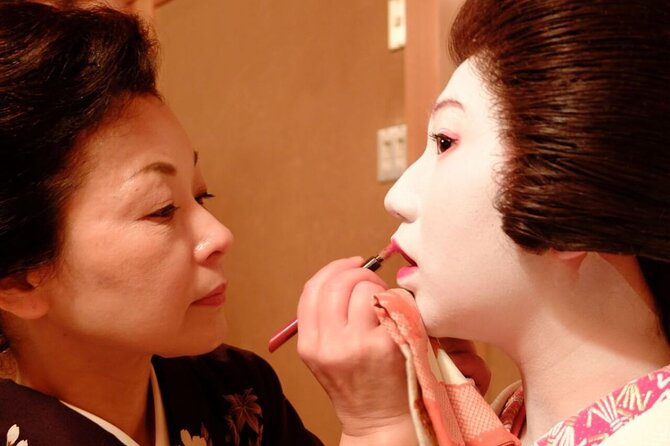
- Watch oshiroi makeup being applied: See the traditional white face makeup used by geisha and learn how its role has changed over time.
- Enter a traditional kimono room: The setting provides a more intimate look at geisha preparation than a public performance.
- Meet a young geisha in Tokyo: This is a rare chance to see her prepare for professional evening work.
- Keep the group small: No more than eight people can take part.
- Support Fukagawa’s revival: The booking helps fund training for young geisha and supports the local geisha district.
- Check the appointment time carefully: The operating hours cover 10:00 AM to 9:00 PM, but a booking record may show a wide 10:00 AM to 7:00 PM range rather than a precise start time.
Inside the Fukagawa Kimono Room
This experience takes place at 1-chōme-26-7 Tomioka in Koto City, Tokyo. The address places you in the Fukagawa area, a part of the city connected with the effort to revive its geisha district.
You enter a traditional Japanese kimono room rather than a theater or restaurant. That setting matters. The main attraction is not a polished stage act. It is the quiet preparation that normally happens before a geisha goes to work.
The room gives you a close view of clothing, makeup, and presentation. You are watching a professional routine, but the purpose is also educational. The host explains what you are seeing and why the makeup and clothing matter.
The experience lasts about one hour. That is long enough to follow the main preparation without turning the visit into a full evening program. You should think of it as a focused cultural encounter, not a full geisha banquet or entertainment package.
The meeting point is also the end point. Private transportation is not included, so you need to make your own way to Tomioka using Tokyo’s public transport network. The location is listed as being near public transportation, but the available details do not specify a particular train or subway station.
If you're still narrowing it down, here are other tours in Tokyo we've reviewed.



Watching Oshiroi Go On
The central part of the visit is the application of oshiroi, the white makeup traditionally worn by geisha. You see the young geisha prepare her face and learn about the methods connected with this distinctive look.
The makeup is more than a costume detail. It signals a formal working role and creates the appearance audiences associate with geisha. The explanation also covers how oshiroi has changed as the role of the geisha has changed.
That point gives the activity more value than simply watching someone put on makeup. You are shown a tradition that has had to adjust over time. The presentation connects the visible look with the working life behind it.
The supplied information says full makeup is included. In context, this refers to the geisha’s preparation. Do not assume that you will receive a geisha makeover yourself, since no visitor makeup service is described.
You may find the makeup process especially worthwhile if you care about craft and ritual. The pace is likely more measured than a sightseeing stop, allowing you to notice how preparation builds toward the evening’s work.
At the same time, the exact amount of explanation and audience interaction is not specified. The experience promises an introduction to oshiroi and geisha clothing, but it does not promise a formal lecture, a performance, or a hands-on workshop.
Choosing the Kimono for an Evening of Work
After the makeup, the young geisha chooses her outfit and dresses in her finery for banquets. This is the second major part of the visit, and it helps place the makeup in context.
A geisha’s appearance is a complete presentation. The white makeup, kimono, and other finishing details work together. Watching the clothing selection lets you see that the preparation is not simply about putting on a pretty garment at random.
The experience takes place in a kimono room, so the clothing is shown in the setting where it belongs. You are not only looking at a garment behind glass. You are seeing it selected as part of a working evening.
The available information does not list specific kimono patterns, colors, accessories, or seasonal rules. I would not book expecting a detailed catalog of every item. The clear promise is that you will watch the young geisha choose her outfit and dress for work.
This part should appeal to anyone interested in Japanese textiles, formal clothing, or the visual discipline of traditional arts. It also gives you a better sense of the preparation required before a geisha appears at a banquet.
A Rare Meeting With a Young Geisha
The chance to meet a young geisha is the heart of the activity. Much of geisha life remains private, and preparation is normally hidden from outsiders. This project opens a small window into that private routine.
The word young matters here. The project is designed to help geisha during training, especially the first year after they begin their geisha career. Your booking is intended to provide practical financial support during that demanding stage.
You should approach the meeting with respect. This is not presented as a comedy show or a photo opportunity built around a performer. It is a look at someone preparing for professional obligations.
No guide names are provided, and the experience description does not promise a question-and-answer session or photographs. You can expect information about makeup and clothing, but you should avoid assuming that every form of interaction is included.
The small group helps. With a maximum of eight people, the room should feel less crowded than a large cultural demonstration. You have a better chance of seeing the makeup clearly and following the explanation without a wall of people between you and the preparation.
Still, small group does not mean private. Eight participants may attend, and the activity is sold as a group experience. If you want a one-on-one meeting, private transportation, or a custom schedule, this is not described as that kind of tour.
Why Your Booking Supports Fukagawa
This experience has a social purpose beyond sightseeing. The money helps young geisha afford training during the first year of their career, while also supporting the revival of the Fukagawa geisha district.
That gives the price a different meaning. You are paying for a one-hour cultural experience, but part of the value comes from helping maintain a local tradition and giving practical support to people entering the profession.
The price is $213.48 per person. For one hour, that is a high price compared with a standard museum visit, neighborhood walk, or short cultural demonstration. You should book only if the personal access and support for the Fukagawa project matter to you.
The cost may feel more reasonable if you value uncommon access and direct cultural support. There is no large itinerary packed with several sights, so the price is not about quantity. It is about the setting, the small group, the young geisha’s preparation, and the project behind the visit.
You should also keep your expectations in check. The price does not include private transportation, and the available details do not list a meal, banquet, performance, souvenir, or visitor makeover. Those omissions do not make the experience poor, but they affect the value calculation.





Timing, Group Size, and the Booking Problem
The activity lasts approximately one hour, while the operating schedule is listed as Monday through Sunday from 10:00 AM to 9:00 PM for the stated availability period. That broad schedule does not tell you when your particular session begins.
One booking record showed an event time of 10:00 AM to 7:00 PM. The buyer had paid in full and tried to get a separate, exact start time, but received the same broad time information. This is a serious practical warning, especially if you are building a tight Tokyo schedule.
Before booking, confirm the precise appointment time with the provider, Sayuki. Do not assume that the displayed operating hours are your actual meeting time. If you cannot get a clear answer, think carefully before making a non-refundable purchase.
The experience is non-refundable and cannot be changed for any reason. A cancellation or amendment request does not result in a refund. That policy makes timing even more important.
Confirmation is supposed to arrive when you book. The activity accepts mobile tickets, and group discounts are listed as available. The group discount rules are not provided, so you should check the final price before assuming that a larger party will save money.
The small group limit is firm at eight participants. That is good news for the atmosphere, but it may reduce flexibility if you are traveling with a larger party.
Who Will Get the Most From This Visit
I would recommend this experience to you if you have already seen Tokyo’s major sights and want a close look at a less visible part of Japanese working culture. It suits visitors who prefer one carefully focused encounter over a long list of stops.
It is also a good fit for people interested in makeup, clothing, traditional arts, and the preservation of local customs. The explanation of oshiroi gives the visit a clear subject, while the kimono preparation adds a visual element.
The activity may suit photographers in principle, but no photography rules are provided. You should not assume that photographs are allowed during the makeup or dressing process. Ask the provider before taking pictures.
Families may be able to attend because most participants can take part, but the information gives no child age policy or special family format. You should confirm any age-related question before booking.
This is less suitable if you want a performance. You will watch the preparation for a banquet, but no dance, music, tea ceremony, or meal is included in the stated program.
It is also a poor match for anyone who needs a flexible cancellation policy. The non-refundable terms are strict, and the reported uncertainty around exact timing adds another reason to plan cautiously.
Getting to the Meeting Point
You meet at 1-chōme-26-7 Tomioka, Koto City, Tokyo 135-0047, Japan. The activity returns to this same point at the end.
Public transportation is nearby, which is useful in Tokyo, but the details do not name the closest station or give a recommended route. Use the full street address when planning, and allow enough time to find the room in Tomioka.
Private transport is not included. You must arrange your own route to the meeting point and your own onward travel after the one-hour visit.
The address and time deserve extra attention because a missed appointment may be costly under the no-refund policy. Keep your mobile ticket available, and confirm the exact start time rather than relying only on the broad opening schedule.
What the Three-Star Rating Means for Your Decision
The experience currently carries a rating of 3 from three reviews, so the sample is small but not especially reassuring. One published complaint described the booking as paid in full with a confirmation that did not provide a clear event time, followed by an unsuccessful attempt to get a more precise schedule.
That issue does not tell you that the geisha preparation itself is poor. It tells you that the booking process may need careful checking. The cultural idea is unusual and well defined, but the practical arrangements are just as important as the subject.
I would separate the two questions. First, do you want to see a young geisha apply oshiroi and prepare a kimono in a traditional room? Second, can you get a confirmed appointment time before accepting a strict no-refund rule?
If the answer to both is yes, the activity may offer a rare and meaningful hour in Tokyo. If the provider cannot clarify the time, the price and cancellation terms make the risk hard to justify.
Should You Book This Fukagawa Geisha Experience?
Book it if you want an intimate look at geisha preparation, care about supporting young performers during training, and are comfortable paying $213.48 for a one-hour cultural experience. The maximum group of eight and the traditional kimono room give it a personal scale that a large show cannot match.
Before you commit, get the exact meeting time in writing. Confirm what full makeup means, ask about photography if that matters to you, and remember that transportation, meals, performances, and refunds are not included in the stated details.
I would choose this experience for its rare access and local purpose, but only after solving the timing question. The makeup and kimono preparation are the reason to go. The unclear schedule and strict cancellation policy are the reasons to pause.
FAQ
Where does the geisha makeup experience take place?
It takes place at 1-chōme-26-7 Tomioka, Koto City, Tokyo 135-0047, Japan.
How long does the experience last?
The activity lasts approximately one hour.
What will I see during the visit?
You will watch a young geisha apply traditional oshiroi makeup, learn about its use and evolution, and see her choose and put on her kimono and finery for work at banquets.
How many people can join?
The activity has a maximum of eight participants.
Is transportation included?
No. Private transportation is not included. The meeting point is near public transportation.
Does the booking include makeup for visitors?
The included item is listed as full makeup, but the description refers to the young geisha applying her own makeup. No visitor makeover is explicitly included.
What does the booking support?
Your booking helps young geisha afford training during the first year of their career and supports the revival of the Fukagawa geisha district.
Can I cancel or change the booking?
No. The experience is non-refundable and cannot be changed for any reason.
More tours in Tokyo we've reviewed




Tokyo, compared.
 ★ 5.0Mt Fuji and Hakone 1-Day Bus Tour Return by Bullet TrainFrom $163
 ★ 5.01-Day Tokyo Bus TourFrom $129
 ★ 4.6Tokyo: teamLab Planets TOKYO Digital Art Museum Entry TicketFrom $251 day
 ★ 4.0Mt Fuji & Hakone Cruise, Drum Show Bullet Train 1 Day from TokyoFrom $149
 ★ 5.0Tokyo: Shinjuku Food Tour (13 Dishes at 4 Local Eateries)From $86
 ★ 4.4Tokyo Mt Fuji 5th St & Hakone Cruise Bus Tour w/Bullet TrainFrom $15410 hours