Reviewed · SUSHI MAKING CLASSES
Small Group Sushi roll and Tempura Cooking Class in Nakano
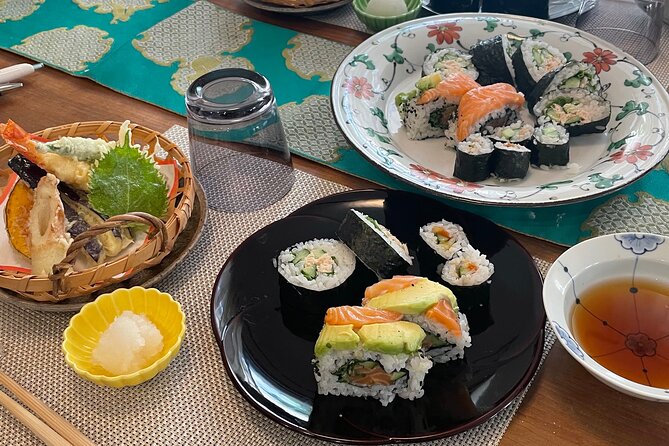
Tokyo food is best understood with your hands busy. In this private home cooking class, Eri shows you how Japanese rice, dashi, and nori work together before you prepare three kinds of sushi rolls and fluffy, crisp tempura. You eat the results at a Japanese-style table, saying itadakimasu before the first bite.
In This Article
- Key points to know before booking
- Starting at JR Asagaya Station
- A home kitchen instead of a restaurant table
- The first lesson: rice, dashi, and nori
- Making three kinds of sushi rolls
- Preparing fluffy and crisp tempura
- Sitting down for itadakimasu
- What the $160 price really buys
- Who will get the most from this class
- Practical details that affect your day
- Should you book this sushi and tempura class?
- FAQ
- Where does the cooking class meet?
- How long does the activity last?
- Is the class private?
- What will I learn to cook?
- Can the menu accommodate dietary restrictions?
- What is the cancellation policy?
I like the class for two clear reasons: you get practical recipes and techniques to repeat at home, and you see a small slice of local life inside your host’s home rather than only sitting in a restaurant. The main consideration is the $160 per-person price, which is a serious outlay for two and a half hours, especially if you are mainly looking for a meal rather than instruction.
Key points to know before booking
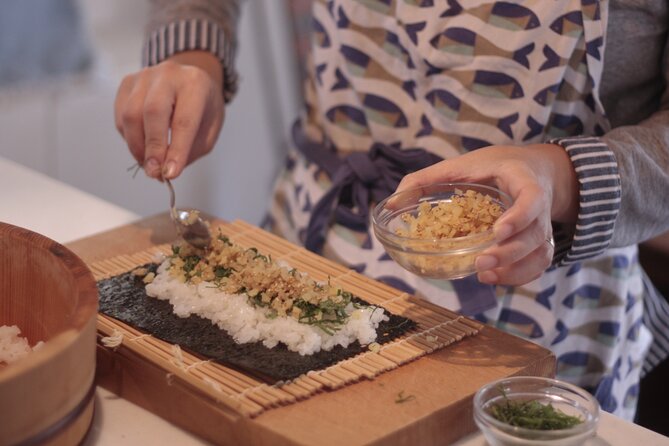
- Three sushi rolls, not just one: You practice choosing fillings, rolling neatly, and cutting the finished sushi.
- Tempura is hands-on: Prepare seafood and vegetables with guidance, aiming for a light, crisp coating.
- Eri hosts at home: The setting gives you a more personal look at daily life in Tokyo.
- Flexible food choices: Adjustments can be made for vegetarian diners and other dietary restrictions.
- Private group format: Only your own group takes part, with more room for questions and help.
- Easy but important meeting point: Meet at NewDays on the second floor, outside the ticket gates at JR Asagaya Station.
Starting at JR Asagaya Station
The meeting point is NewDays, located on the second floor outside the ticket gates at JR Asagaya Station. The address is listed as 3-chome Minami 3361, Asagayakita, Suginami City, Tokyo 166-0004. Since the station directions include both English and Japanese, keep the exact meeting details handy on your phone.
This first step matters more than it sounds. Tokyo stations can have several exits, concourses, and convenience shops, so do not simply arrive at Asagaya and wait somewhere random. Look for the NewDays shop on the second-floor concourse outside the gates. Eri has been praised for sending clear directions before the class and arriving on time, which helps take the pressure out of finding the right spot.
From there, you go with your host to her home. The class is described as taking place in the Nakano area, while the meeting point is at JR Asagaya Station in neighboring Suginami. Your confirmation should be the final word on the exact route and home address. The activity returns to the meeting point when the lesson is over.
A few more Tokyo tours and experiences worth a look
A home kitchen instead of a restaurant table
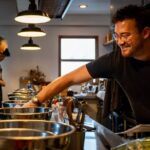
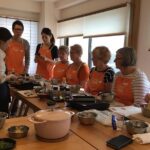
The home setting is the heart of this experience. A sushi restaurant can show you a finished plate, but it rarely shows you how the rice was prepared, how a roll was tightened, or why a particular ingredient is handled in a certain way. Here, you watch the process and then repeat it yourself.
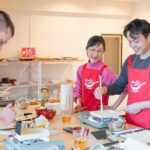
That setting also keeps the lesson personal. This is a private activity for your own group, even though the description presents it as a small-group class. You are not placed into a large cooking school with a crowd at several workstations. Eri can support your rolling, cutting, and frying as you work.
The home format is not for everyone. If you prefer a polished commercial kitchen, a formal demonstration, or a class with a fixed restaurant menu, this may feel more informal than expected. If you want a friendly exchange and a look at how a Tokyo local entertains at home, it offers something a restaurant cannot.
The first lesson: rice, dashi, and nori
The class begins with an explanation of Japanese ingredients. Rice, dashi, and nori are specifically included, giving you a useful base before the hands-on work starts. These are not decorative details. Sushi depends on rice that is seasoned and prepared properly, while nori affects the texture and flavor of every roll.
Eri first shows you tips for making sushi rice tasty. This is a valuable part of the lesson because rice is easy to underestimate. At home, many people focus on the filling and treat the rice as a blank carrier. The class instead puts attention on the foundation of the dish.
You also learn how to roll sushi neatly. That sounds simple until the rice, fillings, and seaweed begin to shift. With Eri nearby, you can ask for help as you work instead of trying to copy a finished example after the fact.
The ingredient introduction should also help you shop and cook later. You leave with recipes, so the class has value beyond the meal served that day. The available information does not specify every ingredient or recipe format, so you should not expect a full shopping list until the lesson or follow-up instructions provide it.
Making three kinds of sushi rolls
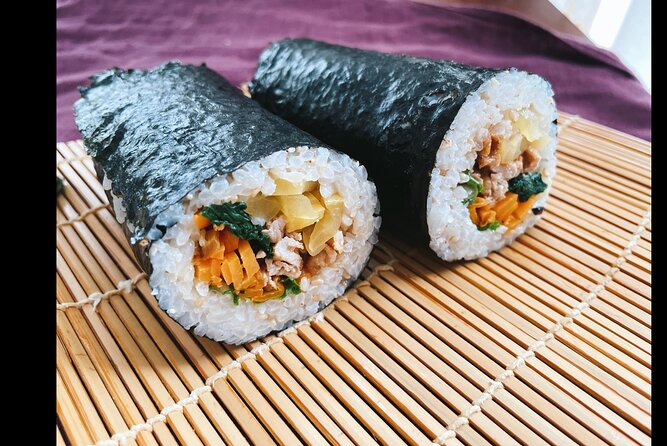
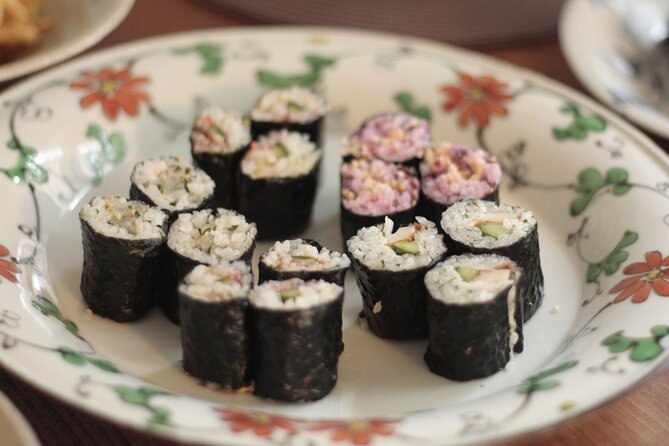
The sushi section gives you three different rolls to prepare. A particularly appealing feature is the freedom to choose what to use for the roll and what to roll it in, with Eri’s support. The exact choices are not fixed in the supplied details, so the range may depend on the ingredients available and your dietary needs.
That freedom turns the sushi into a small creative exercise. You are not simply following a rigid recipe with no room to think. You choose combinations, learn how to place them, and see how the roll changes when the filling is distributed well.
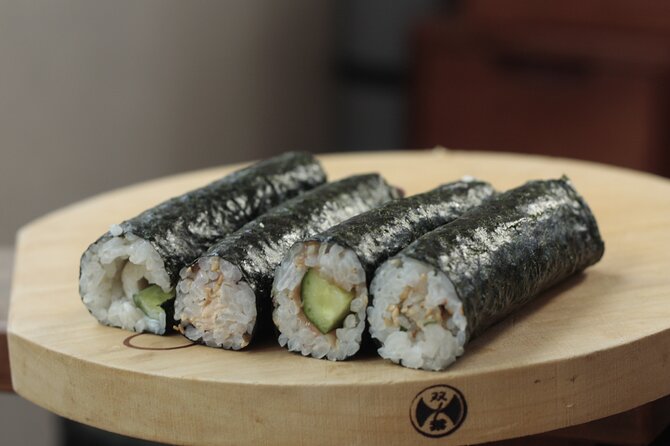
Eri also shows you how to cut the rolls beautifully. Cutting is where a homemade roll can quickly lose its tidy shape. Good slicing affects both presentation and ease of eating, so this is a useful skill for anyone planning to serve sushi to family or friends.
The lesson is especially suited to people who enjoy learning by doing. You may make an imperfect first roll, but that is part of the point. The host’s support lets you correct the pressure and shape as you go. Families, couples, and friends who like working together in the kitchen should get more from this than diners who only want to watch.
Preparing fluffy and crisp tempura
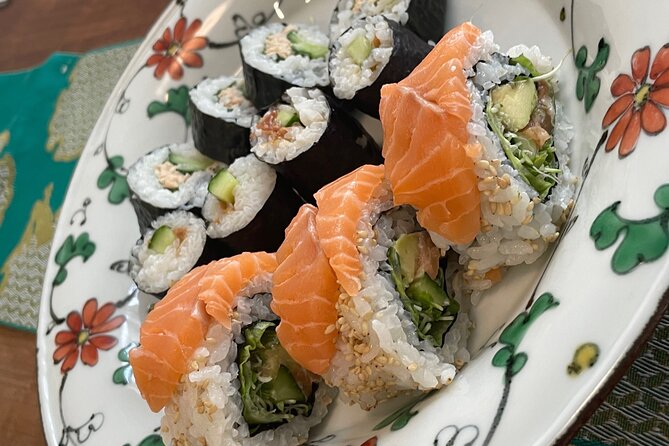
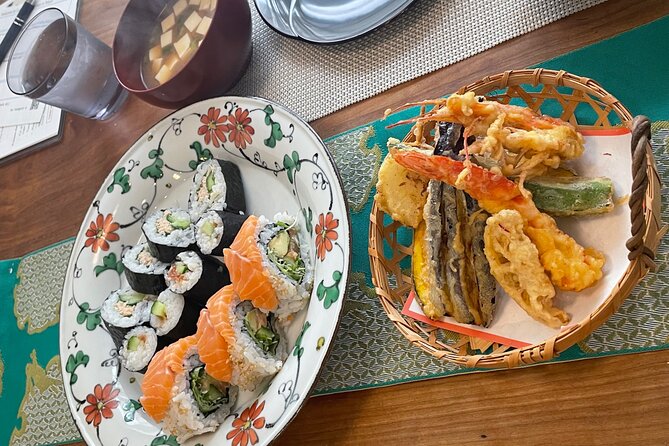
The second major dish is tempura, with seafood and vegetables available to choose from. Again, the class allows some personal choice rather than assigning one identical plate to everyone. Eri prepares tempura with you and helps you aim for the light, crisp texture that makes the dish so appealing.
Tempura is a good match for a short cooking lesson because the difference between heavy and crisp can be felt right away. You prepare the food, cook it, and eat it soon after. The description does not give exact frying times, batter ingredients, or a full list of seafood and vegetables, so those details will come from Eri during the class.
You should also tell the host about dietary needs before cooking begins. Vegetarian adjustments can be made for both the sushi rolls and tempura, and other dietary restrictions can be accommodated. That is useful, but it is still wise to provide clear information at booking and confirm it in advance. The available details do not promise that every possible restriction can be handled.
For people who already eat tempura often in Tokyo, this class adds a practical layer. You learn what goes into the dish and take part in the cooking instead of only judging the finished batter. For first-time visitors, it gives context to two famous Japanese foods without requiring a long formal course.
Other cooking classes in Tokyo


Sitting down for itadakimasu
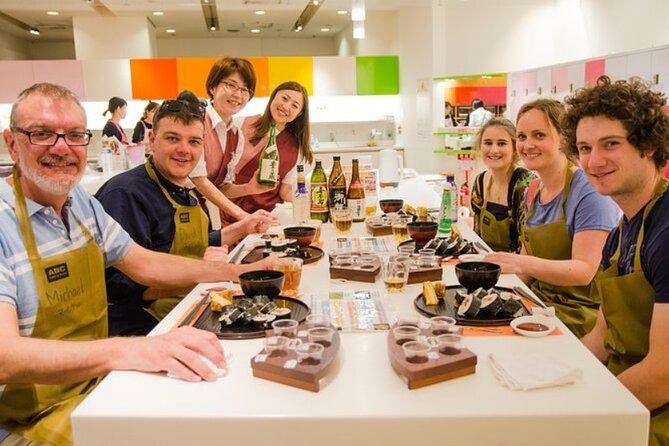
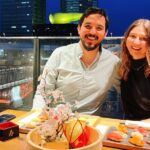
Once the sushi and tempura are ready, you help set the table in Japanese style. Then you say itadakimasu and eat the meal together. That small ritual gives the class a natural ending and connects the cooking to Japanese table manners.
The meal is not an afterthought. It lets you compare what you made with what you expected, and it gives Eri a chance to talk with you in a relaxed setting. One particularly useful part of the experience is the local conversation. Eri’s earlier communication has been praised for being welcoming and clear, and her response to a class participant also suggests she enjoys talking about Tokyo life and encouraging people to keep practicing at home.
Do not expect the atmosphere of a restaurant tasting menu. This is a home meal built around your own work. The result may look less perfect than a professional chef’s plate, but you gain a better sense of how the food is assembled and served.
What the $160 price really buys
At $160 per person, this is not a budget food activity. The class lasts about two hours and thirty minutes, so the price includes more than the time spent eating. You are paying for a private setting, hands-on instruction, ingredient explanations, three sushi rolls, tempura preparation, a shared meal, and recipes to use later.
The value is strongest if you are genuinely interested in Japanese cooking. A restaurant meal may cost less, but it will not teach you how to prepare sushi rice, roll and cut sushi, or make seafood and vegetable tempura with guidance. The home setting and private format also offer a quieter exchange than a large public class.
The value is weaker if your main goal is simply to sample sushi and tempura. Tokyo has many ways to eat both dishes without spending this much. You should book this class for the instruction and personal contact, not as the cheapest route to lunch.
Group discounts are available, which may make the price easier to justify for a larger booking. Since the activity is private, the per-person cost should be weighed against the amount of personal help your group wants. Ask about the discount when comparing options, as the exact reduction is not provided here.
Who will get the most from this class
I would point this class toward several types of visitor:
- Home cooks: You receive recipes and practical methods you can repeat after returning home.
- Food-focused visitors: The class explains ingredients and technique rather than treating Japanese food as a finished product.
- Couples and families: A private activity gives your own group time to work, make mistakes, and eat together.
- Vegetarian diners: Adjustments are available for vegetarian sushi and tempura, along with other dietary restrictions.
- Visitors seeking local contact: You enter a host’s home and hear local insights in a personal setting.
It may be less suitable if you want a fast, low-cost meal, a large social class, or a very formal cooking school. It is also worth remembering that the experience lasts two and a half hours. That is enough time for a proper lesson, but it will take a meaningful part of your Tokyo day.
Practical details that affect your day
The mobile ticket makes it easy to keep your booking available while moving through Tokyo. Confirmation is normally issued at booking, but reservations made within nine hours of the start time are confirmed as soon as possible and remain subject to availability. I would avoid making this a last-minute plan if your schedule is tight.
The activity is near public transportation, and it begins and ends at the stated meeting point. Plan your timing around JR Asagaya Station rather than assuming the class starts at the host’s home. The end point is useful because you return to a known station location after the meal.
Cancellation is free up to 24 hours before the start time for a full refund. Inside 24 hours, the payment is not refunded, and changes made during that period are not accepted. Cut-off times use Tokyo local time, so check the clock carefully if you are changing plans from another time zone.
The activity has a top rating from seven submitted ratings, with special praise for Eri’s communication, punctuality, warm welcome, and patient instruction. That pattern matters because meeting a host in a private home requires trust and clear coordination. Still, seven ratings are a small sample, so I would treat them as encouraging rather than as a guarantee that every group will have the same experience.
Should you book this sushi and tempura class?
Book it if you want to do more than eat Japanese food. The strongest reasons are the home setting, Eri’s personal instruction, the chance to make three sushi rolls, and the practical tempura work. The recipes give the experience a second life once you leave Tokyo.
Think twice if $160 feels high for a two-and-a-half-hour activity or if you are not interested in cooking. In that case, spend the money on a restaurant meal and another neighborhood experience. But if you enjoy food, want direct help rather than a demonstration, and like the idea of saying itadakimasu over dishes you prepared yourself, this is a thoughtful choice for a Tokyo itinerary.
FAQ
Where does the cooking class meet?
You meet at NewDays on the second floor, outside the ticket gates at JR Asagaya Station in Suginami City, Tokyo. The activity ends back at the meeting point.
How long does the activity last?
The cooking class lasts approximately two hours and thirty minutes.
Is the class private?
Yes. Only your own group takes part in the activity.
What will I learn to cook?
You learn to prepare three kinds of sushi rolls, along with fluffy and crisp tempura using seafood and vegetables.
Can the menu accommodate dietary restrictions?
Yes. Adjustments can be made for vegetarian diners and other dietary restrictions for both the sushi rolls and tempura.
What is the cancellation policy?
You can cancel at least 24 hours before the experience starts for a full refund. Cancellations or changes made within 24 hours are not accepted for a refund.
More Cooking Classes in Tokyo
More Cooking Classes in Tokyo
More Sushi Making Classes in Tokyo
More tours in Tokyo we've reviewed












Sushi Making Classes, compared.
 ★ 5.0Sushi Making Tokyo Roll and Authentic Japanese Sushi ClassFrom $59
 ★ 4.9Tokyo: Roll and Authentic Sushi Making Class in AsakusaFrom $581h 40m
 ★ 4.9Tokyo: Sushi Making Class in a Happi Coat near a Famous SpotFrom $421h 30m
 ★ 5.0Sushi Making Tokyo! Popular Maki Sushi & Japanese Sushi(+Recipe!)From $63
 ★ 5.0Tokyo Sushi Making Class in Tsukiji with Professional ChefFrom $49
 ★ 5.0Tokyo Night Foodie Tour in Shinjuku – Seasonal Sushi, Wagyu BeefFrom $111