Reviewed · CRAFT WORKSHOPS
Tokyo: Calligraphy and Kakejiku (Hanging Scroll) Workshop
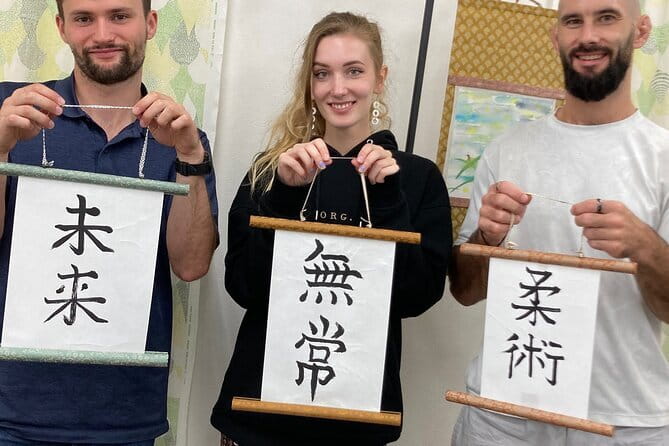
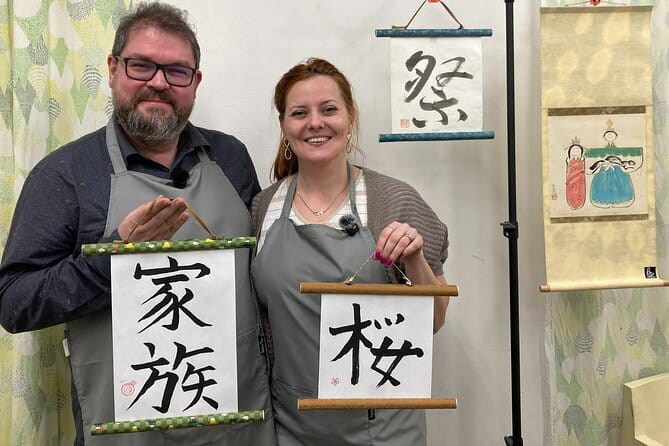
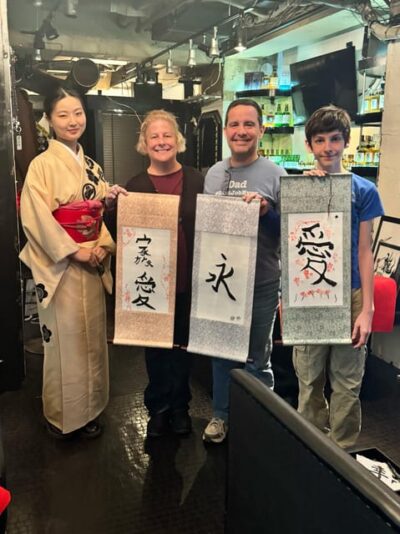
The unusual part of this Tokyo workshop is that your brushwork does not end as a loose sheet of paper. After about an hour of calligraphy practice, Ryuta Toda helps turn your favorite piece into a traditional Japanese kakejiku, giving you a finished work to display at home.
In This Article
- Key points at a glance
- What makes this Tokyo workshop different
- Starting with brush and ink
- Choosing the piece that becomes your artwork
- Turning paper into a kakejiku
- The authentic finishing option takes longer
- Why the 1936 workshop background matters
- Location, timing, and group size
- Understanding the value and price
- Who will enjoy this experience most
- Practical booking advice
- Should you book the calligraphy and kakejiku workshop?
- FAQ
- Where does the workshop take place?
- How long does the activity last?
- Is the workshop suitable for beginners?
- How many people can join?
- Can I make a painting instead of calligraphy?
- Can I choose which artwork becomes the final piece?
- What finishing choices are available?
- Can I take my finished item home the same day?
- How long does an authentic kakejiku take?
- Does the authentic kakejiku cost extra?
- Is cancellation free?
I like the patient beginner-friendly format, and I like that you can choose your best attempt rather than risk your final piece on the first try. The main consideration is the finishing choice: a fully authentic scroll may take about two months and cost extra for professional finishing and shipping.
Key points at a glance
- Practice before choosing: You get about an hour to learn brush calligraphy and select the piece you like best.
- A 100-year craft tradition: The workshop connects your artwork with a kakejiku studio founded in 1936.
- Small group setting: The maximum is six people, allowing for a more personal session.
- Several finishing levels: Choose calligraphy with backing, a simple traditional fabric finish, or a kakejiku with magnetic attachment.
- Authentic upgrade available: A professionally finished kakejiku takes about two months and requires additional payment for finishing and shipping.
- Easy half-day plan: The session lasts about two and a half hours and begins and ends at the Tokyo meeting point.
What makes this Tokyo workshop different
Many calligraphy activities give you a brush, a few sheets of paper, and a short lesson. That can be enjoyable, but the result often goes into your luggage as a souvenir. This workshop takes the idea further. You practice first, choose the work you want to keep, and then have it prepared as a Japanese hanging scroll.
That changes the feel of the activity. You are not simply copying a character for a photograph. You are making something intended to remain on display. A kakejiku is designed to present calligraphy or painting vertically, with the artwork framed by carefully arranged materials. The finished object can bring a small piece of Japanese craft into your home.
The host, Ryuta Toda, comes from a kakejiku studio founded in 1936. The workshop describes its craft as drawing on techniques refined over more than 1,000 years. You do not need prior calligraphy experience, and the format is built to help first-timers feel comfortable with brush and ink.
The experience lasts about two hours and 30 minutes. That is long enough for instruction, practice, selection, and finishing without taking an entire day from your Tokyo plans.
A few more Tokyo tours and experiences worth a look
Starting with brush and ink
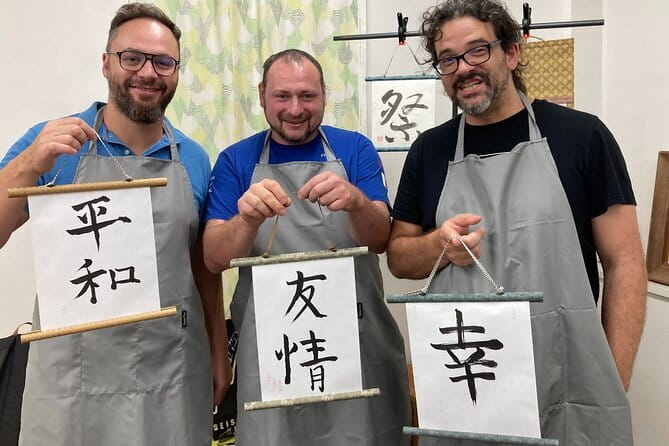
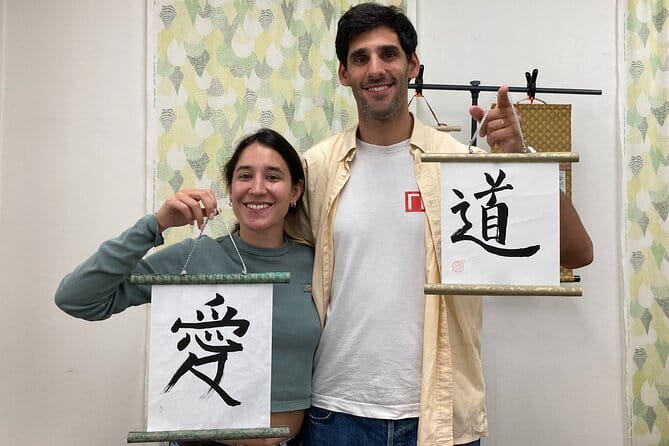
The first hour focuses on calligraphy practice. You begin from scratch, making this a practical choice if you have never held a Japanese calligraphy brush before. The goal is not to produce a perfect character immediately. You have time to get used to the ink, brush movement, spacing, and pressure.
That practice time is one of the strongest features. Brush calligraphy can look simple when someone else does it, but the brush responds differently from a pen. A heavy stroke, a light stroke, and the empty space around a character all affect the final result. Giving you repeated attempts makes the activity less stressful and more useful.
You can also paint a picture instead of writing calligraphy. The information provided does not specify the range of painting subjects or the exact materials, so you should ask Toda about your preferred idea when booking or at the start. The important point is that the workshop is not limited to one type of brush artwork.
I appreciate the chance to make several attempts before selecting a final piece. A typical fixed-paper calligraphy class can leave you with one rushed sheet. Here, you can treat the first attempts as practice, then choose the work that has the best balance of shape and character.
Choosing the piece that becomes your artwork
Once you have practiced, you select the calligraphy or painting you want to preserve. This is where the workshop becomes more personal. Your final piece does not have to be your first successful attempt, and it does not need to be perfect in the Western sense.
The appeal of Japanese calligraphy includes the visible evidence of the hand that made it. A slight variation in ink, pressure, or spacing gives the work its individual character. The workshop presents this as a form of wabi-sabi, the appreciation of beauty in imperfection and change.
That idea may be helpful if you are worried about making a mistake. Your artwork is handmade. The aim is not to produce something that looks printed or machine-made. Your chosen sheet becomes a record of your time in Tokyo and your first effort with the brush.
The small maximum group of six should also help here. A class of this size is more likely to let you ask questions and receive direct guidance than a large public demonstration. The supplied information names Ryuta Toda as the host, and the activity is designed around his instruction and kakejiku work.
Turning paper into a kakejiku
The workshop’s most distinctive stage is the transformation from loose artwork to hanging scroll. Rather than simply handing you a pre-made scroll and asking you to insert your work, the process connects your calligraphy with the traditional presentation format.
A kakejiku is meant to be hung vertically. It provides a formal setting for calligraphy or painting, so the surrounding material becomes part of how the artwork is seen. The result is more than a sheet of paper, but the exact finish depends on the course you select.
The supplied choices include calligraphy and backing only, with no hanging scroll included; calligraphy, backing, and a simple traditional fabric finish; and calligraphy, backing, and a kakejiku with magnetic attachment. The description refers to four course options but names three finishing levels, so you should confirm the exact choices and prices on the day.
The magnetic attachment option sounds particularly practical for home display. It should make hanging the work simpler than dealing with a more traditional rod system, though the precise design and hardware are not specified. Ask for a clear explanation of what is included before choosing your finish.
You can take home the item made during the session on the same day for the available immediate-finishing options. That is useful if this is part of a short Tokyo visit and you want to pack your souvenir before moving on.
The authentic finishing option takes longer
If you want the artwork upgraded to an authentic kakejiku, the professional finishing process takes about two months. It will then be shipped to you, with additional costs for finishing and delivery explained during the workshop.
This delay is not a flaw, but you should plan for it. If you are flying home tomorrow, you will not receive the fully finished scroll in your suitcase. Instead, you will need to provide the necessary shipping details and wait for the completed work.
The longer process may suit you if you care more about traditional presentation than immediate possession. A professionally finished scroll is intended to last for more than 100 years, according to the workshop information. That makes the upgrade a serious craft purchase rather than a casual add-on.
I would treat this as an important decision point. If you want a same-day souvenir, choose one of the options available to take home immediately. If you want a more formal family keepsake, ask about the authentic version, total cost, shipping destination, and expected delivery time before committing.
A few more Tokyo tours and experiences worth a look




Why the 1936 workshop background matters
The workshop traces its work to a studio founded in 1936. That does not mean every visitor receives a long lecture on the craft, but it gives the activity a stronger connection to working Japanese tradition than a generic craft class.
Kakejiku themselves have a long technical history, with methods refined over more than 1,000 years. Their purpose is both decorative and protective. The artwork is prepared for display, and the mounting helps it function as an object that can be kept and shown.
For you, the value is not just the materials. It is the chance to see how a modest piece of brushwork becomes part of a larger Japanese art form. You can leave with a better sense of why calligraphy is presented in homes, studios, and cultural spaces rather than treated as a flat paper exercise.
The activity also offers an accessible way to encounter Japanese culture. You do not need to know Japanese characters or have studied art. Your finished piece can be meaningful even if you cannot read every character you write.
Location, timing, and group size
The meeting point is reboot, a coworking, shared office, and shared atelier space at 2F Soleil Iriya, 1-11-15 Shitaya, Taito City, Tokyo 110-0004. The workshop returns to this same location at the end.
It is near public transportation, which helps you fit the session into a day in Tokyo. The information does not identify the nearest station or give walking directions, so check the route carefully before leaving your hotel. Tokyo addresses can be difficult to interpret quickly, and arriving with a few extra minutes is sensible.
The two-hour-30-minute duration makes this a manageable morning or afternoon activity. You could pair it with other plans in Taito City, but the workshop itself is the main event rather than a quick stop. Allow extra time for the meeting point and for any questions about finishing and shipping.
With a maximum of six people, this is a better match for you if you prefer a quiet, hands-on class. It may be less suitable if you want a large social group or a fast demonstration with little individual practice.
Understanding the value and price
The listed price is shown as $0.00, but the information also describes several course choices and possible additional costs. You should not assume that every backing or scroll option is included at no charge. Confirm the current price for your selected course before the activity begins.
The value here rests in the combination of instruction and craft finishing. You are paying for more than access to brushes and ink. You receive guidance from a kakejiku specialist, time to practice, a chance to select your best work, and the option to have it prepared for display.
The basic backing option may suit you if you want the hands-on calligraphy lesson without committing to a hanging scroll. The simple traditional finish offers a more decorative result, while the magnetic kakejiku option is aimed at home display. The authentic professional upgrade is the choice for a long-term heirloom, but its extra finishing and shipping costs need to be part of your budget.
Group discounts are available, which may improve the value if you are booking with family or friends. The small group limit means discounts may be especially useful for a compact party, though the exact discount is not stated.
Who will enjoy this experience most
I would recommend this workshop to you if you want a souvenir that carries a personal story. A mass-produced fan or key ring is easy to pack, but your own calligraphy mounted as a hanging scroll has a direct connection to the time you spent in Japan.
It also suits families and small groups, especially if some people are nervous about trying calligraphy. The beginner format and repeated practice make the activity less intimidating. Group members can choose different words, characters, or paintings, then compare the finished results.
Art-minded visitors will find more substance here than in a brief brush demonstration. You get to think about composition, preservation, and presentation. You also have a clear choice between an immediate finished item and a later professional finish.
This may not be your best choice if you want a sightseeing tour, a fast activity, or a guaranteed same-day authentic scroll. The fully finished traditional option takes about two months, and the session requires patience with the practice stage.
Practical booking advice
Confirmation is provided when you book, and mobile tickets are available. The activity is near public transportation, but the meeting point details are limited, so save the address and plan your route in advance.
Most people can participate, and the group is capped at six. The information does not provide detailed accessibility notes, so contact the provider directly if you have specific mobility, seating, or other participation needs.
Free cancellation is available if you cancel at least 24 hours before the local start time. Cancellations inside that period are not refundable, and changes made within 24 hours are not accepted. Tokyo plans can shift quickly, so keep that deadline in mind.
Ask these questions before the brushwork begins:
- Which finishing options are available today?
- What is included in the displayed price?
- What extra costs apply to the authentic kakejiku?
- How much will shipping cost to your home country?
- When should you expect the professionally finished scroll?
Should you book the calligraphy and kakejiku workshop?
Book this experience if you want to make something yourself and take home a piece of Japanese craft that can remain on display. The strongest reasons are the generous practice time, the small group, and the unusual chance to connect calligraphy with kakejiku mounting in one session.
Choose the same-day finish if you need an immediate souvenir. Choose the authentic professional option only if you are comfortable waiting about two months and paying extra for finishing and shipping.
For a two-hour-30-minute activity in Taito City, this offers a focused cultural experience with a clear result. It is not a tour of Tokyo, but it gives you a personal object and a better understanding of how Japanese brushwork can be preserved and displayed.
FAQ
Where does the workshop take place?
It begins and ends at reboot, a coworking, shared office, and shared atelier space at 2F Soleil Iriya, 1-11-15 Shitaya, Taito City, Tokyo 110-0004.
How long does the activity last?
The workshop lasts approximately two hours and 30 minutes.
Is the workshop suitable for beginners?
Yes. Ryuta Toda teaches calligraphy from scratch, and the activity includes about an hour of practice so first-timers can build confidence.
How many people can join?
The maximum group size is six people.
Can I make a painting instead of calligraphy?
Yes. You can write calligraphy or paint a picture, then have the chosen artwork prepared in one of the available finishing styles.
Can I choose which artwork becomes the final piece?
Yes. You practice first and select the piece you want to use as your final artwork.
What finishing choices are available?
The named choices include calligraphy with backing only, calligraphy with backing and a simple traditional fabric finish, and calligraphy with backing plus a kakejiku with magnetic attachment.
Can I take my finished item home the same day?
Yes, items made with the same-day finishing options can be taken home that day.
How long does an authentic kakejiku take?
Professional finishing for an authentic kakejiku takes approximately two months, followed by shipping.
Does the authentic kakejiku cost extra?
Yes. Additional costs for professional finishing and shipping are explained during the workshop.
Is cancellation free?
You can receive a full refund if you cancel at least 24 hours before the experience start time. Cancellations or changes made less than 24 hours before the start are not accepted and are not refundable.
More Workshops & Classes in Tokyo
More Craft Workshops in Tokyo

More tours in Tokyo we've reviewed






Craft Workshops, compared.
 ★ 4.8Chopstick Making Workshop in GinzaFrom $251 hour
 ★ 5.0Kintsugi Experience: Art of Golden Joinery in TokyoFrom $59
Tokyo: Shinjuku Chopstick Making ClassFrom $121 hour
 ★ 5.0Private Craft Your Own Ring Handmade Experience in Asakusa, TokyoFrom $21
 ★ 5.0Authentic Pure Gold Kintsugi Workshop with Master Taku in TokyoFrom $142
 ★ 5.0Tokyo: Calligraphy on Kanji Fan & Scroll with DrinkFrom $531h 20m