Reviewed · UENO & YANAKA WALKS
Private Workshop for Making Paper Last 1,000 years in Ueno
Japanese paper starts with a tree, and this small Ueno workshop lets you handle nearly every step. You will peel bark, beat fibers, and form your own sheets rather than simply watch a craft demonstration. The result is four handmade paper pieces to take home.
In This Article
- Key points at a glance
- Turning a tree into Washi in Ueno
- Hyouhitor and Dakai: the work behind the sheet
- Forming four different paper products
- The drying break with Kozo-leaf tea
- Why the private format matters
- A small space with a warm character
- Finding the workshop and planning your time
- Is $130 a fair price?
- Who will enjoy this Washi workshop?
- What to know before you book
- Should you book this Ueno paper workshop?
- FAQ
- Where does the Washi papermaking workshop take place?
- How long does the workshop last?
- How many paper products will I make?
- What papermaking steps are included?
- Is the workshop private?
- What languages does the instructor speak?
- Are materials included?
- Is there a cat at the workshop?
I like the private format and the amount of hands-on work. I also like the quiet pause for Kozo-leaf tea and local Japanese sweets while your paper dries. The main drawback is practical: the workshop can be tricky to find, especially if a Metro disruption affects the nearest station, and a cat lives in the space.
Key points at a glance
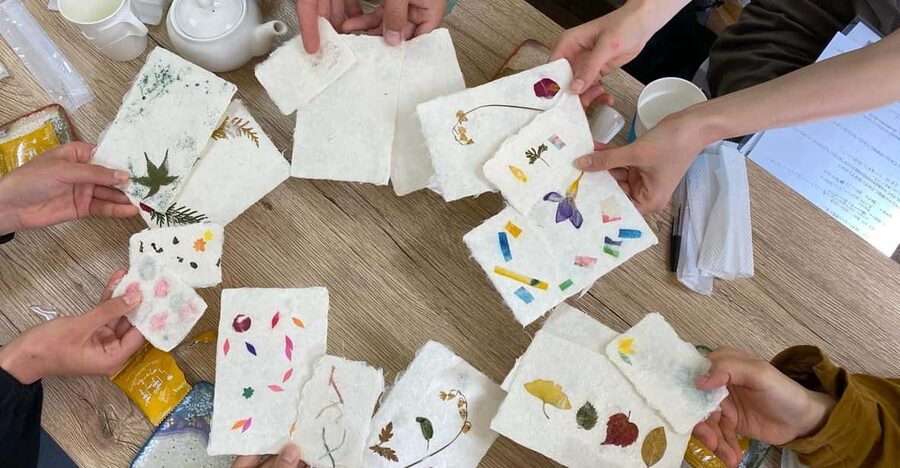
- Four finished paper pieces: Make two decorated postcards, one Rakusui paper, and one A5 sheet.
- The full paper process: Try Hyouhitor, peeling the outer bark, and Dakai, beating tree fibers.
- Private instruction: Your group receives focused help in Japanese and English.
- A calm drying break: Drink original tea made from Kozo leaves with sweets from a local shop.
- Compact but busy workshop: The 150 minutes are filled with practical tasks, not passive watching.
- Important allergy note: A cat named Kami-chan is part of the workshop setting.
Turning a tree into Washi in Ueno
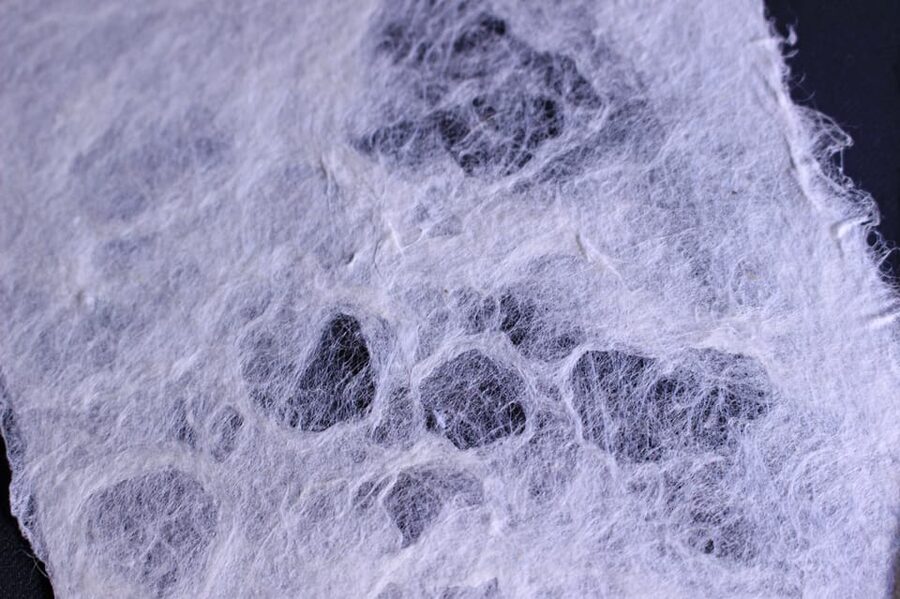
This is not a quick craft table where you decorate a ready-made sheet. You begin by learning how Japanese Washi paper is made from plant fiber, then take part in the physical work that prepares the material.
The instructor first gives a general explanation. That introduction matters because the later steps can seem unusual if you do not know what each tool and mixture is doing. You will see how the raw material changes from a fibrous plant product into a smooth, usable sheet.
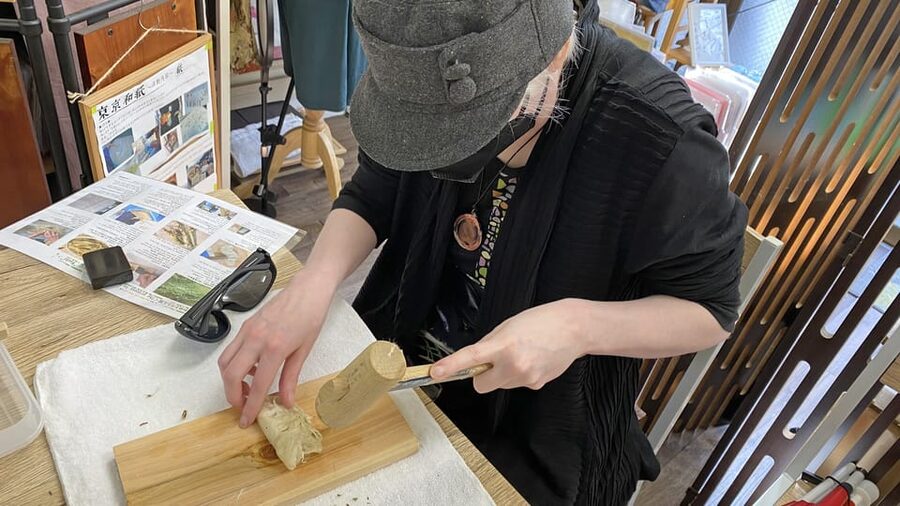
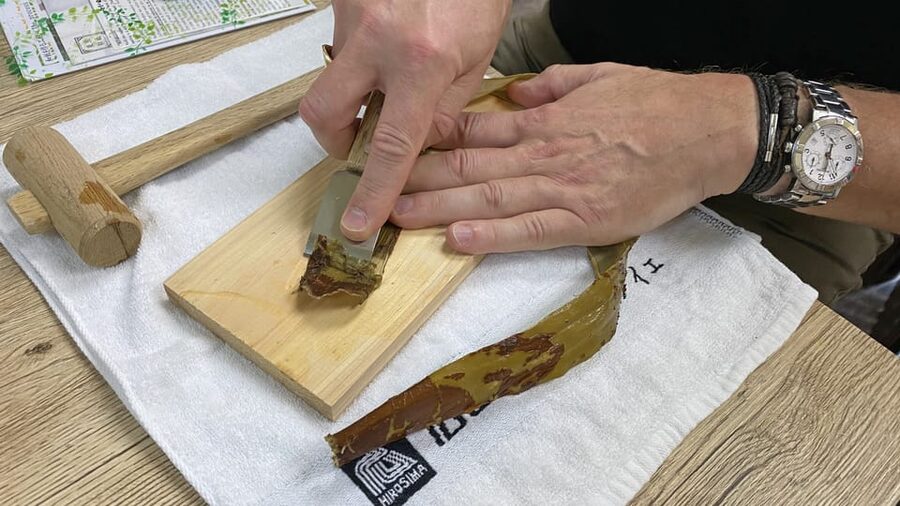
The workshop covers two traditional stages by name: Hyouhitor and Dakai. Hyouhitor means peeling away the outside bark. Dakai is the beating of the tree fibers, a repetitive step that helps prepare them for papermaking.
You do not need prior experience. The teacher demonstrates the process, and each stage is shown as you go. One practical advantage is that visual instruction supports the spoken English, so you can follow along even if technical vocabulary is new to you.
A few more Tokyo tours and experiences worth a look


Hyouhitor and Dakai: the work behind the sheet
Peeling bark gives you a direct sense of how far handmade paper is from a factory product. The material begins as part of a tree, and the early work is slow and physical. That is part of the point. You are not only making a souvenir, you are seeing the preparation that gives the paper its character.
Dakai brings a different rhythm. You beat the fibers by hand rather than skipping the preparation stage. I like this part because it turns an abstract idea, paper made from a tree, into something you can feel in your arms and see change before you.
The activity is carefully packed into 150 minutes, so there is plenty to do. It is worth wearing something you can work in, although work clothes are provided according to one account of the session. Since exact clothing arrangements can vary, check the current details when booking if this matters to you.
Forming four different paper products
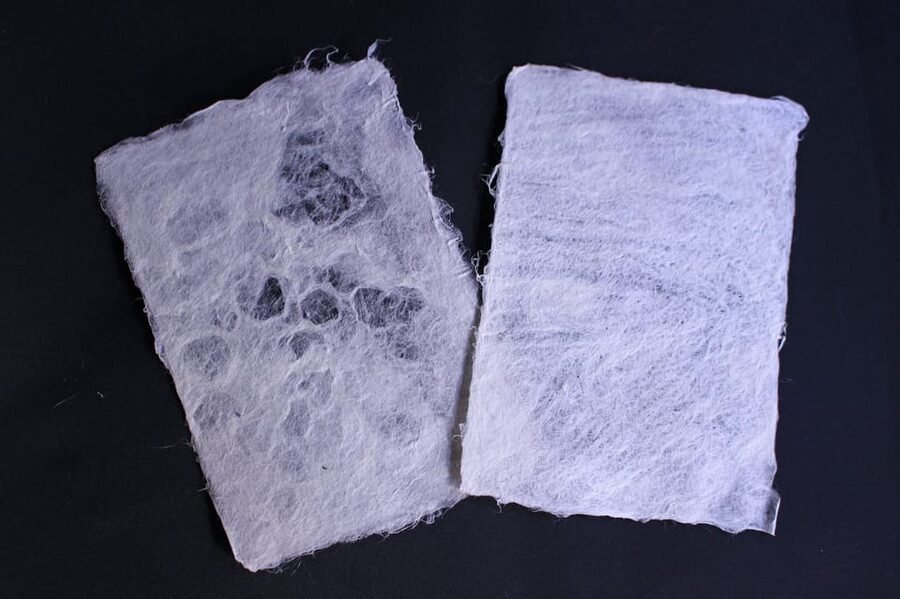
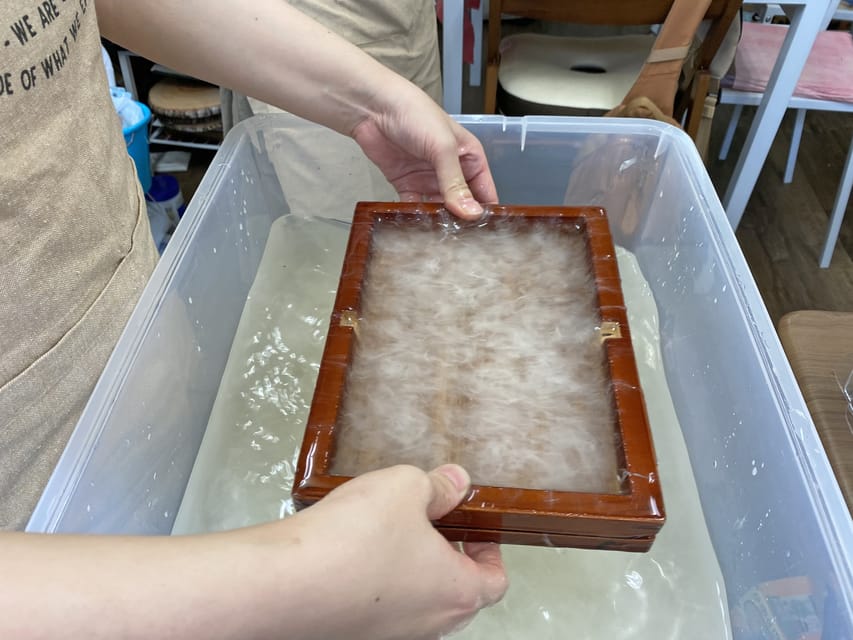
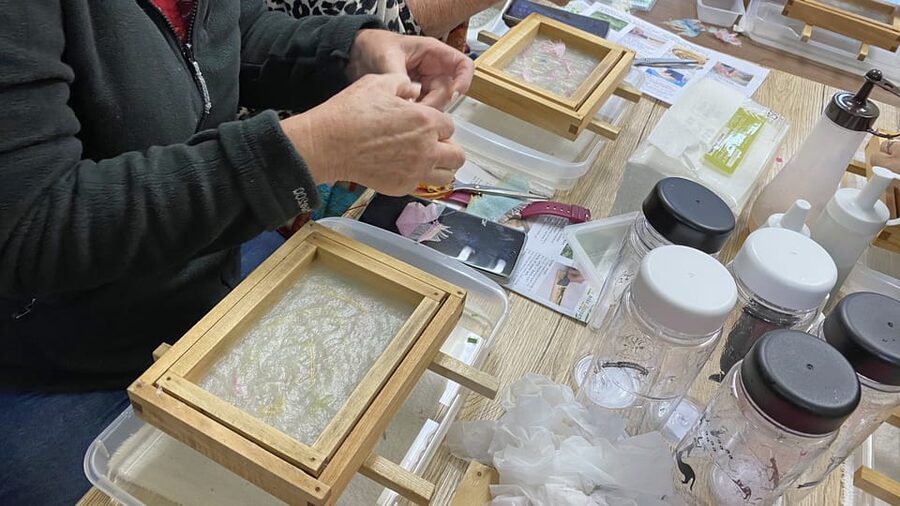
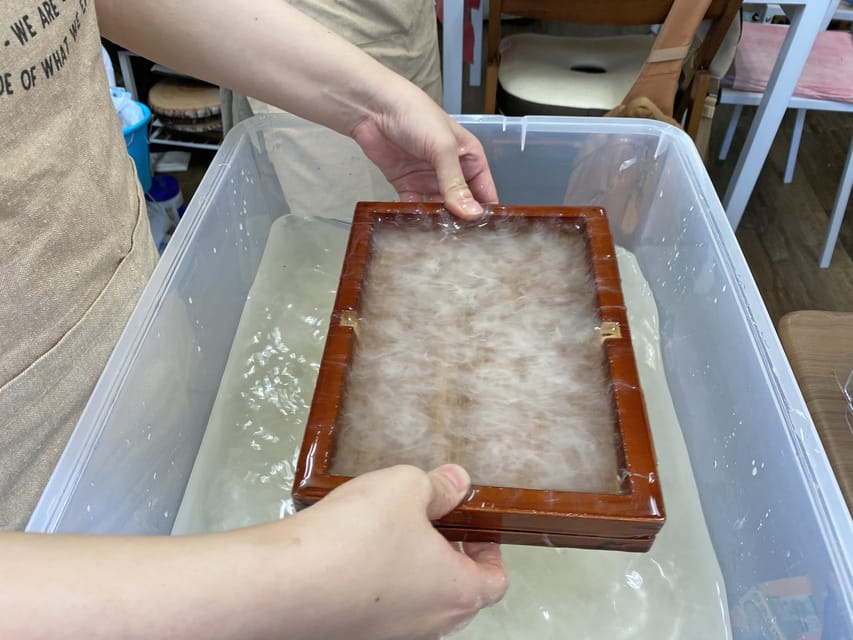
Once the fiber mixture is ready, you pour it into a papermaking mold and deckle. You then sift the solution so the fibers spread into an even, flat sheet. This is the part that most clearly shows the skill involved in making paper: a small change in how you handle the mold can affect the final result.
You will make two postcard designs, a Rakusui paper, and an A5 paper. The four pieces give the workshop useful variety. You are not repeating one project four times, and you leave with items in different formats.
The postcards are easy to picture as gifts or personal keepsakes. The Rakusui paper adds a more distinctive object to the set, while the A5 sheet gives you a larger surface that shows the texture and finish of your work more clearly.
The information provided does not specify the exact decoration choices or designs available on the day. You should expect to create the designs yourself, but do not assume a particular color, pattern, or printed motif unless the workshop confirms it.
The drying break with Kozo-leaf tea
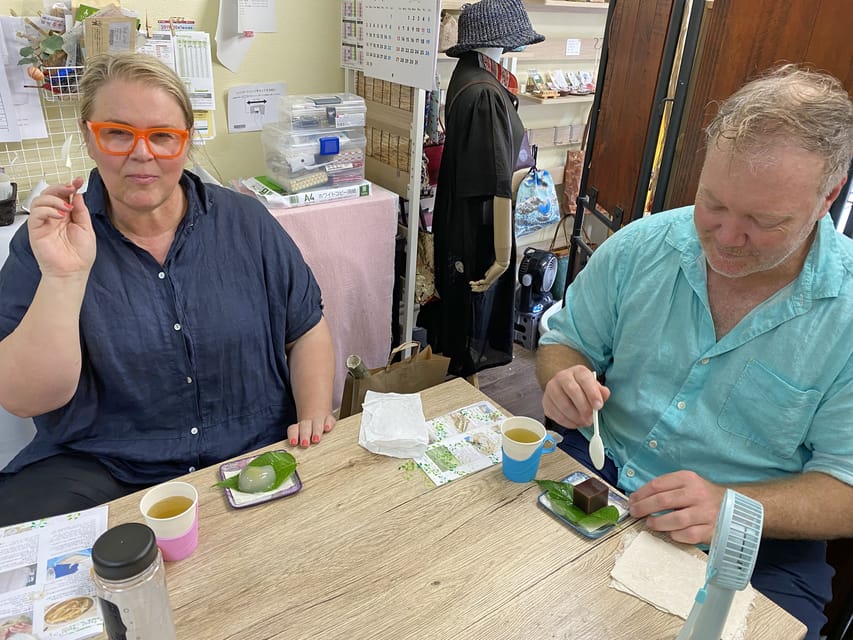
Fresh paper cannot be rushed. While your pieces dry, the workshop serves its original Japanese paper tea, made from Kozo leaves, the same raw material associated with making the paper. You also receive local Japanese sweets from a well-loved shop.
This is a small detail, but it adds meaning to the break. You are not simply waiting for glue or paint to set. The drink connects the refreshment to the plant at the center of the craft, and the sweets give you a taste of something local without requiring a separate food stop.
Coffee or tea is included. The supplied information specifically describes the Kozo-leaf tea, so ask the instructor what is available if you have dietary concerns or want to know more about the sweets.
The drying period also gives you a chance to look over the work and talk with the instructor. Because the group is private, questions do not have to compete with a large class.
Why the private format matters
The workshop is offered as a private group, which changes the feel of the lesson. You can work at your own pace within the fixed 150-minute session, ask for help when a sheet is not spreading evenly, and receive direct attention during the mold-and-deckle stage.
That matters most for the paper forming. This is not just a matter of pouring and hoping. You have to spread the fibers evenly and keep the sheet flat. A friendly instructor who watches your technique can make the difference between frustration and a satisfying finished piece.
The private format also suits people who prefer a quieter activity. One session had only one person attending, and the workshop is described as small and compact. That can be a benefit if you want a personal lesson, though it also means this is not the place for a large, lively class atmosphere.
The instructor teaches in Japanese and English. Demonstration is an important part of the lesson, so you are not dependent on perfect spoken English to understand the sequence.
Other private tours in Tokyo




A small space with a warm character
Washi labo TOKYO is a compact workshop rather than a large cultural center. That limits the scale, but it puts the focus on the materials, the teacher, and your own work.
The resident cat, Kami-chan, adds to the cozy atmosphere. The cat was described as well behaved, but this is still a real consideration for anyone with allergies or a strong fear of cats. Inform the workshop in advance about allergies, as requested by the instructor.
The small setting also means you should not expect a broad museum display or a long guided tour through multiple rooms. The value comes from taking part in the process. If you want to spend an afternoon making something with your hands, the compact room works in your favor. If you want a large-scale cultural attraction with many exhibits, choose a different Ueno activity.
Finding the workshop and planning your time
The session lasts 150 minutes, or two and a half hours. That is long enough to cover the explanation, bark peeling, fiber beating, sheet forming, four products, and the tea break without feeling like a rushed taster.
Finding the place may require extra attention. One participant had difficulty locating it because a Metro line serving the nearest station was disrupted. That problem was connected to the transport disruption rather than the workshop itself, but it gives you useful advice: allow some spare time and check the route before setting out.
The activity is listed in Ueno, in Tokyo on Honshu. The exact meeting directions are not provided in the supplied details, so rely on the booking confirmation for the final address and access instructions.
Since the workshop is private, the timing is less about joining a huge group and more about arriving promptly for your reserved start. Starting times depend on availability. Reserve a slot that gives you enough time to find the studio without cutting your arrival close.
Is $130 a fair price?
At $130 per person, this is not a cheap souvenir-making stop. The price makes more sense if you value personal instruction, a private group, and the chance to complete the full process from raw plant material to finished paper.
You are paying for 150 minutes of teaching and materials, plus four handmade pieces, tea or coffee, sweets, and the use of work clothes. The private format is especially important to the value. A solo participant or small group receives attention that would be hard to get in a large public class.
The price is less compelling if you only want to decorate one postcard or spend an hour on a simple craft. You would be paying for several stages that you may not care about. The real value lies in understanding how Washi is prepared and formed, not just in taking home a pretty card.
The workshop also gives you something more personal than a standard purchased gift. The finished paper carries the marks of your own handling, including any small irregularities. That is part of handmade paper’s appeal.
Who will enjoy this Washi workshop?
I would choose this for anyone interested in Japanese craft, plant-based materials, or hands-on cultural activities. It suits couples, families with suitable ages, solo visitors, and small private groups who want a slower change of pace from Ueno’s major sights.
It is also a good option for people who like useful souvenirs. The postcards can be sent or given away, while the Rakusui and A5 papers can be kept as artwork, stationery, or reminders of the day.
English-speaking visitors can participate, and Japanese is also available. You do not need to speak Japanese to follow the process, since the instructor demonstrates each stage. Still, the craft has its own terms, so do not worry if you need a step repeated.
I would think twice if you have cat allergies, dislike close indoor workshops, or prefer an unstructured activity. The schedule is full, the space is compact, and the craft requires attention during the paper-forming stages.
What to know before you book
Bring patience rather than expectations of factory-perfect paper. The point is to learn how fibers behave and to produce your own sheets. Small variations are normal in handmade work and make each piece personal.
Plan your route carefully. The nearest-station connection can be affected by Metro problems, and one person specifically found the location difficult to reach during a disruption. Save the address and allow a little extra time.
Tell the workshop about allergies before arrival, especially if you react to cats. Kami-chan is part of the setting, and the workshop specifically asks visitors to give notice.
The activity includes required materials, a friendly instructor, and coffee or tea. It also offers free cancellation up to 24 hours before the session for a full refund, plus a reserve-now-and-pay-later option. These policies help if your Tokyo schedule is still shifting, but check the current terms when booking.
Should you book this Ueno paper workshop?
Book it if you want a serious, personal craft session rather than a quick tourist activity. The strongest reasons are the full process, the four finished paper pieces, the private instruction, and the thoughtful Kozo-leaf tea break.
I would especially recommend it for a small group that values direct contact with a traditional Japanese craft. The 150 minutes pass quickly because you are busy from the first explanation through the final drying stage.
Skip it if $130 feels high for a souvenir activity, if you need a large, open space, or if the cat is a health concern. For everyone else, this is a focused way to leave Ueno with something you made from the raw material up.
FAQ
Where does the Washi papermaking workshop take place?
The workshop takes place at Washi labo TOKYO in Ueno, in Tokyo on Honshu, Japan.
How long does the workshop last?
The workshop lasts 150 minutes, or two and a half hours.
How many paper products will I make?
You will make four products: two postcard designs, one Rakusui paper, and one A5 paper.
What papermaking steps are included?
You will take part in Hyouhitor, peeling off the outer bark, and Dakai, beating the tree fibers. You will also pour the raw material into a mold and deckle, then sift it to form an even sheet.
Is the workshop private?
Yes. The activity is offered for a private group.
What languages does the instructor speak?
Instruction is available in Japanese and English.
Are materials included?
Yes. The required workshop materials are included, along with coffee or tea and instruction from the teacher.
Is there a cat at the workshop?
Yes. A cat named Kami-chan is present at the workshop. Inform the workshop in advance if you have allergies.
More Workshops & Classes in Tokyo



More Private Tours in Tokyo
More Ueno & Yanaka Walks in Tokyo
More tours in Tokyo we've reviewed












Ueno & Yanaka Walks, compared.
 ★ 5.0Eat and Drink Like a Local: Tokyo Ueno Food Tour-Taverns&RamenFrom $95
 ★ 4.5The Old Quarter of Tokyo – Yanaka Walking TourFrom $40
 ★ 5.0Yanaka Walking Tour: Historic and Traditional District of TokyoFrom $72
 ★ 4.8Tokyo: Old Quarter Yanaka Walking TourFrom $323 hours
 ★ 5.0Tokyo: Food Tour in Ueno with 10+ Tastings of Japanese ClassicsFrom $142
 ★ 4.9Tokyo:Stroll in Old traditional culture towns~Yanaka & NezuFrom $293h 30m