Reviewed · MT FUJI DAY TRIPS
Tokyo: Mt. Fuji Highlights Tour with Lake Kawaguchi Cruise
Mt. Fuji is the star, but this day works because you see it from several different angles. You climb to Arakurayama Sengen Park, photograph the mountain from old Fuji-Yoshida streets, visit spring-fed ponds, then view Fuji from the water.
In This Article
- The five details that matter most
- From Ginza to Fuji country
- Arakurayama Sengen Park and the 398-step climb
- Shimoyoshida Honcho Street and the Fuji-facing view
- Oshino Hakkai, eight ponds fed by snowmelt
- Lake Kawaguchi and the Sengoku-style Appare boat
- Oishi Park and the seasons of Lake Kawaguchi
- The biggest risk: Mt. Fuji may hide
- Guide service and language support
- Is $79 good value for a 10-hour day?
- Who should book this Fuji day trip?
- My call: book it for variety, not certainty
- FAQ
- Where does the tour start?
- Where does the tour finish?
- How long does the experience last?
- How long is the bus ride to the Fuji area?
- Is transportation included?
- Is the Lake Kawaguchi boat cruise included?
- Is lunch included?
- What languages are available from the guide?
- How many steps are there at Arakurayama Sengen Park?
- Does the tour visit Oishi Park all year?
I like the mix of postcard scenery and small cultural stops, especially Oshino Hakkai and the Appare boat on Lake Kawaguchi. I also like the seasonal planning, from cherry blossoms and lavender to autumn leaves. The catch is simple: this is a long 10-hour day, and clouds can hide Mt. Fuji completely, as they did on one September outing.
The five details that matter most
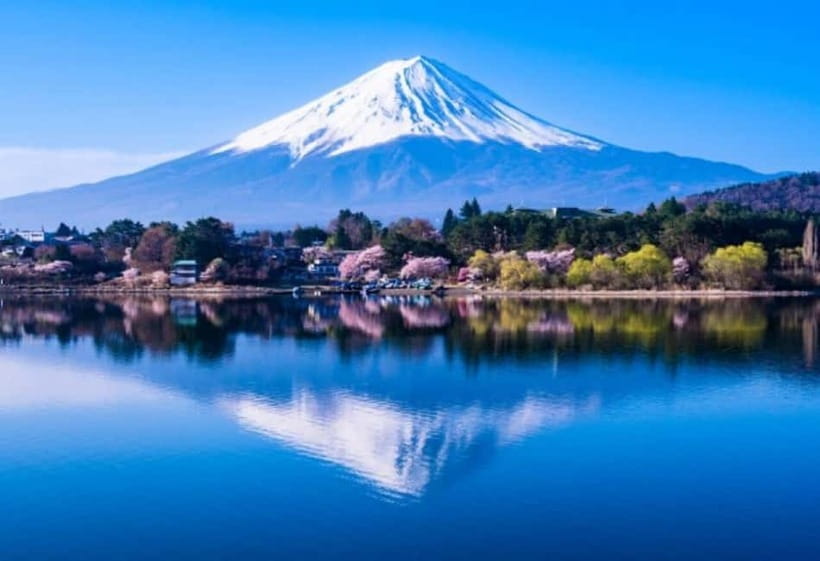
- 398 steps to the classic pagoda view: Arakurayama Sengen Park gives you the famous Fuji, pagoda, and city composition, but you must climb to reach it.
- Four strong Fuji viewpoints: You see the mountain from a high park, a traditional street, spring ponds, and Lake Kawaguchi.
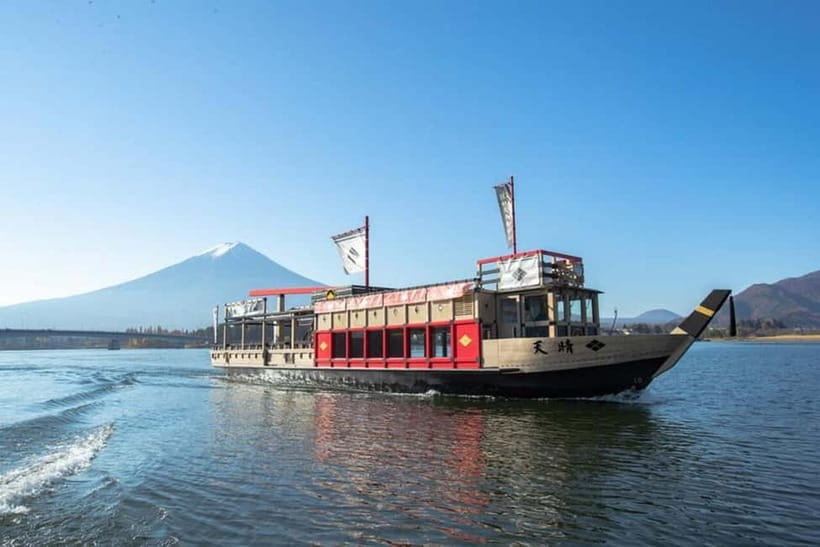
- A real boat ride is included: The Appare is styled like a Sengoku-era warship, with open decks and a Japanese-style cabin.
- Season changes the final stop: Oishi Park offers different flowers through the year. From November 1 to November 23, it is replaced by the Lake Kawaguchi Maple Corridor.
- Guide quality matters: English, Chinese, and Japanese are offered, but English explanations can vary by guide. Carp Feng and another guide, Shilpa, were specifically praised for making sure English speakers were included.
- The $79 price is strong value: Transportation, a guide, and the cruise are included, but lunch, drinks, and personal purchases are not.
From Ginza to Fuji country
The day begins at the first floor of Tokyu Plaza Ginza. The coach ride to the Fuji area takes about two and a half hours, so this is not a quick side trip from Tokyo. It is a full day away from the capital, with roughly 10 hours from start to finish.
That long ride is the price of seeing several distant sights in one day. If you tried to connect all five stops on your own, you would need to handle regional buses, changing schedules, and the return journey. Here, the transportation is arranged and the guide handles the flow.
I would arrive at the meeting point early. The stated location is TOKYU PLAZA GINZA 1F, and the tour returns there at the end of the day. Your meals are not included, so keep money or food handy. The supplied information does not specify a lunch stop, which means you should not count on a long restaurant meal during the sightseeing portion.
A few more Fujikawaguchiko tours and experiences worth a look


Arakurayama Sengen Park and the 398-step climb
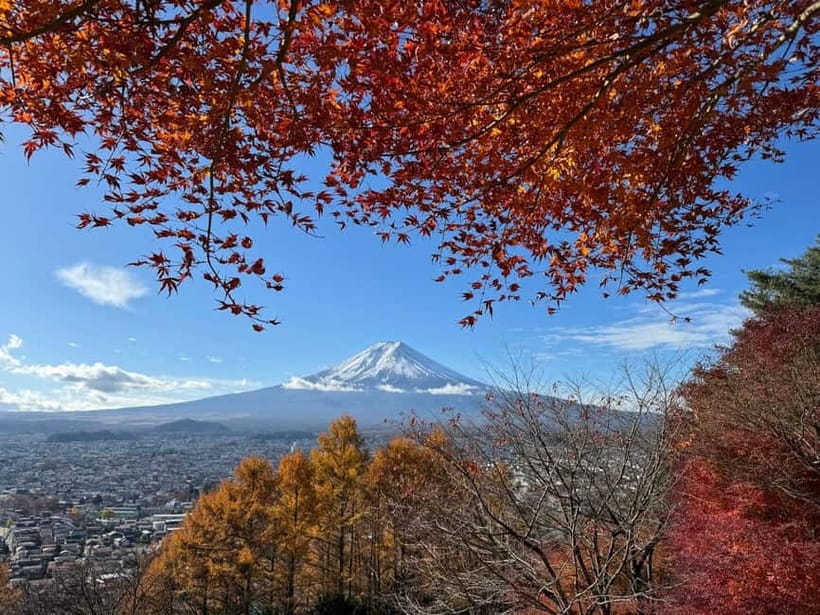
The first major stop is Arakurayama Sengen Park, one of the most recognizable Fuji photo locations in Japan. From the upper viewing area, you look over Fuji-Yoshida city toward Mt. Fuji, with the Chureito Pagoda adding the classic red-and-white foreground.
Getting there takes effort. The Konohana-sakuya-hime Stairs rise for 398 steps, so comfortable shoes are not a minor suggestion. The climb may feel especially demanding if you are carrying camera gear or visiting after a long bus ride.
The reward is a broad view rather than a close encounter with the mountain. In spring, more than 650 cherry trees add pink blossoms to the scene. In fall, the trees turn red and gold. On a clear winter day, the snow-covered Fuji can provide the strongest contrast, but weather remains the deciding factor in every season.
Give yourself time for the climb, photographs, and descent. This stop is not ideal for anyone who has difficulty with stairs, and the schedule may feel tight if you want a slow visit. For most people, though, it is the visual high point of the day.
Shimoyoshida Honcho Street and the Fuji-facing view
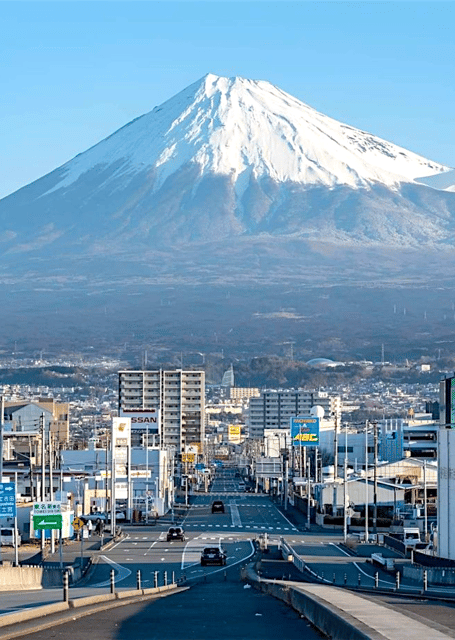
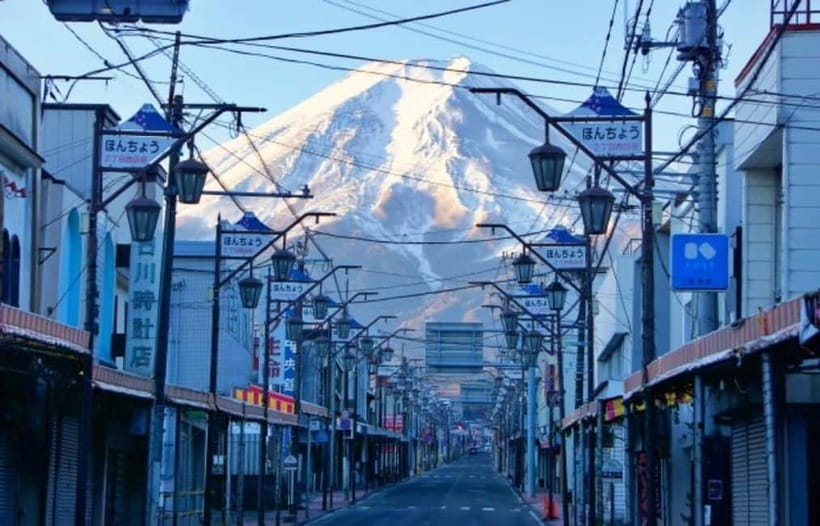
Next comes Yoshida Honmachi Street, also called Shimoyoshida Honcho Street. This is a useful change of pace after the park. Instead of a formal lookout, you get a traditional Japanese town street with Mt. Fuji rising at the end of the view.
The appeal is the composition. Telephone wires, shopfronts, pavement, and the mountain line up in a way that gives the street a stairway-to-the-sky effect. It is highly suited to photographs, but it also shows how Fuji fits into ordinary town life rather than appearing only from a purpose-built viewpoint.
This stop is mainly for walking and pictures. Do not expect a long shopping visit or a major museum. Its value is visual and local: you get a short look at Fuji-Yoshida’s retro-style street setting, then move on.
The best advice here is to keep your camera ready and pay attention to where the guide positions the group. The view depends on alignment, and a small change in angle can make the mountain appear much stronger in your photograph.
Oshino Hakkai, eight ponds fed by snowmelt
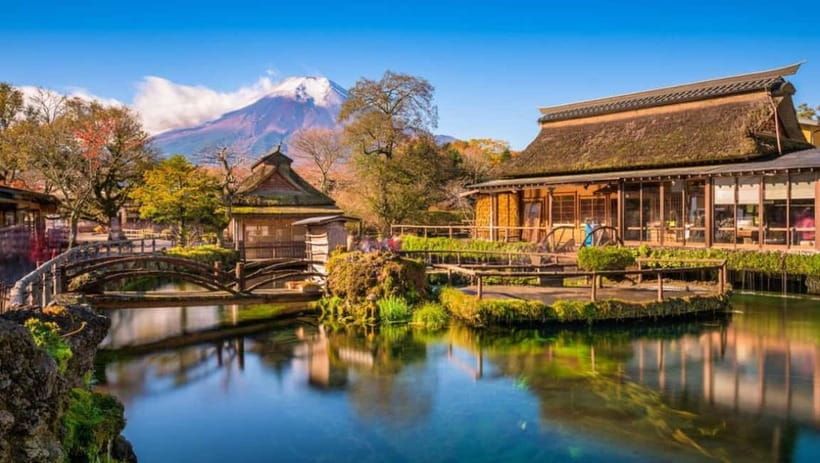
Oshino Hakkai offers the day’s most peaceful stop. The village is built around eight clear spring ponds fed by Mt. Fuji’s snowmelt. The water, wooden bridges, streams, and thatched-roof buildings create a rural setting that feels far removed from Tokyo.
The ponds are designated a Natural Monument of Japan. Their appeal is not only the water itself. Look for reflections of the sky, nearby trees, and Fuji when visibility allows. The setting gives you a closer sense of the mountain’s role in the area’s water and village life.
You can walk between the ponds, take photographs, and enjoy the old-style buildings. This is a good place to slow down after the more demanding stair climb. It also gives the tour some cultural texture, so the day is not just a parade of mountain viewpoints.
Keep your expectations practical. Oshino Hakkai is a sightseeing village rather than an untouched rural settlement. The visit is still worthwhile because the ponds and traditional structures make a clear contrast with Tokyo and with the modern street view earlier in the day.
Lake Kawaguchi and the Sengoku-style Appare boat
The Lake Kawaguchi stop includes the tour’s main paid extra: a cruise aboard the Appare boat. The vessel is modeled after a Sengoku-era warship and has open decks along with a Japanese-style cabin.
That design makes the ride more than a simple transfer across the lake. You can stand outside for open views or sit inside if the weather turns cool. The key benefit is the angle: instead of looking toward Fuji from land, you see the mountain across the water. On a clear day, the reflection can appear on the lake’s surface.
The cruise is included in the $79 price, which improves the package’s value. Many day trips charge separately for a boat ride or limit the experience to a brief photo stop. Here, the water portion gives the schedule a welcome pause.
Weather matters greatly. Clouds may cover Fuji from the boat just as they can from the parks. Still, Lake Kawaguchi remains a pleasant setting even when the peak disappears, and the boat adds variety to a day otherwise spent walking and taking photographs.
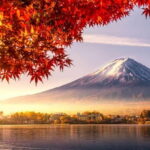
Oishi Park and the seasons of Lake Kawaguchi
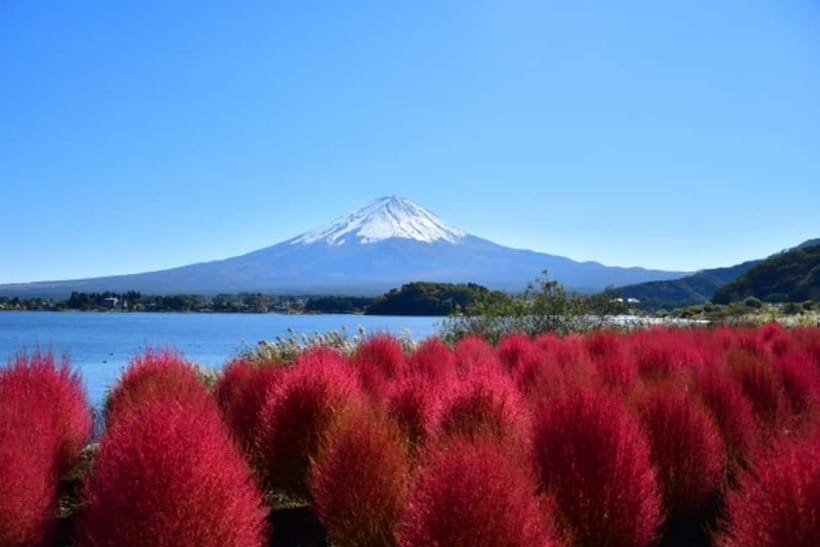
Oishi Park is the final listed sightseeing stop in the standard seasonal plan. It sits beside Lake Kawaguchi and pairs views of Mt. Fuji with changing flowers.
The scenery shifts through the year:
- Spring brings golden rapeseed flowers and cherry trees.
- Summer brings lavender.
- Autumn brings red kochia plants.
- Winter brings snow, with Fuji reflected on the water when conditions cooperate.
This seasonal focus is one of the tour’s best features. You are not seeing the same park in every month, so the character of the visit depends on your date. Summer lavender and winter snow create very different photographs from spring blossoms or fall color.
There is one important exception. From November 1 through November 23, the tour temporarily skips Oishi Park and visits the Lake Kawaguchi Maple Corridor instead. That is a sensible seasonal change, since the corridor is the more suitable foliage stop during that period.
Do check the calendar before booking if a particular flower display matters to you. The tour promises access to the area’s seasonal sights, but not a specific bloom condition on your exact day.
The biggest risk: Mt. Fuji may hide
Every Fuji tour has a built-in gamble. The mountain can vanish behind cloud, even when the rest of the day is pleasant. One October visit had lovely stops but too much cloud for a clear view of Fuji, while other outings produced strong photographs from several angles.
That is why I would not book this only for one exact Chureito Pagoda photograph. The route gives you multiple chances, which improves your odds, but it cannot control the weather. Arakurayama, Honcho Street, Oshino Hakkai, Lake Kawaguchi, and Oishi Park all depend on visibility to some degree.
The route remains useful on a cloudy day because each stop has a separate reason to visit. Oshino Hakkai still has its ponds and traditional houses. The boat still provides a lake outing. The street and park still offer seasonal scenery. You simply should not expect the famous full-mountain image every time.
Guide service and language support
The tour offers live guiding in English, Chinese, and Japanese. That is useful on a long day with several stops, since a guide can explain where to go, keep the schedule moving, and add context to the sights.
English support deserves a careful note. Carp Feng was described as kind and helpful, and made sure the only English-speaking people on the bus received the explanations. Another guide repeated information twice so the English speakers could follow along.
At the same time, English ability may not be consistent across every guide. One French-speaking participant found the advertised English support very limited. I would treat the language service as available but not guaranteed to feel equally strong on every departure.
For small groups, the driver may also serve as the guide. That can make the operation more personal, but it also means the person managing the road and the commentary may be the same person. If detailed English explanations are your main reason for booking, keep this limitation in mind.
Is $79 good value for a 10-hour day?
At $79 per person, the package is priced reasonably for what it covers. You get transportation from Ginza and back, a guide, five sightseeing areas, and the Appare boat cruise. The route would be awkward to reproduce independently in one day, especially if you want to fit in both the Fuji-Yoshida area and Lake Kawaguchi.
The price does not include lunch, meals, drinks, or personal purchases. That is normal for a sightseeing day, but it means your real cost will be higher than the advertised fare. Bring money for food and any items you buy at the villages or shops.
The main tradeoff is time. A 2.5-hour ride each way uses a large part of the day. You are paying for convenience and coverage, not for a slow stay in one Fuji town. If you want long meals, quiet walks, or extended photography at one location, this schedule may feel rushed.
For a first visit to the Mt. Fuji region, I think the value is good. You see the area’s most famous visual settings without arranging the transport yourself, and the cruise adds something beyond standard road-based sightseeing.
Who should book this Fuji day trip?
This experience fits you best if you want a broad first look at Mt. Fuji and prefer a fixed plan from central Tokyo. It is particularly suitable for photographers, couples, families who want several recognizable sights, and anyone who values easy transport over independent routing.
You should be comfortable with a long day and the 398-step climb at Arakurayama. Wear comfortable shoes, bring weather-appropriate clothing, and carry a camera if pictures are a priority.
I would be more cautious if your main goal is hiking, a relaxed pace, or guaranteed English commentary. The tour is built around viewpoints, short walks, a village visit, and a boat cruise. It is not a mountain trek, and no weather plan can guarantee a clear peak.
Free cancellation is available up to 24 hours before departure for a full refund, and you can reserve now while paying later. Those terms help if your Tokyo schedule or the weather forecast is still unsettled.
My call: book it for variety, not certainty
I would book this tour if I wanted one efficient day covering the classic Fuji area. The combination of Arakurayama’s high view, Honcho Street’s town scene, Oshino Hakkai’s ponds, the Appare boat, and Oishi Park gives you a stronger range of experiences than a single lookout stop.
Book it with realistic expectations. Mt. Fuji may be hidden, lunch is not included, the day is long, and guide language quality can vary. If you can accept those points, $79 is a sensible price for a convenient Fuji sampler with a boat ride included.
FAQ
Where does the tour start?
The meeting point is on the first floor of Tokyu Plaza Ginza, written in the tour information as TOKYU PLAZA GINZA 1F.
Where does the tour finish?
The tour returns to Tokyu Plaza Ginza.
How long does the experience last?
The full activity lasts 10 hours.
How long is the bus ride to the Fuji area?
The listed bus or coach journey takes about 2.5 hours.
Is transportation included?
Yes. Transportation by car is included.
Is the Lake Kawaguchi boat cruise included?
Yes. The Appare boat cruise on Lake Kawaguchiko is included.
Is lunch included?
No. Lunch, meals, drinks, and personal purchases are not included.
What languages are available from the guide?
Live guiding is offered in Chinese, English, and Japanese.
How many steps are there at Arakurayama Sengen Park?
The Konohana-sakuya-hime Stairs have 398 steps leading to the viewing platform.
Does the tour visit Oishi Park all year?
Not during the specified autumn foliage period from November 1 through November 23. During those dates, the tour replaces Oishi Park with the Lake Kawaguchi Maple Corridor.
More Mt Fuji Day Trips in Fujikawaguchiko
More tours in Fujikawaguchiko we've reviewed
Mt Fuji Day Trips, compared.
 ★ 5.0Mt Fuji and Hakone 1-Day Bus Tour Return by Bullet TrainFrom $163
 ★ 4.0Mt Fuji & Hakone Cruise, Drum Show Bullet Train 1 Day from TokyoFrom $149
 ★ 4.4Tokyo Mt Fuji 5th St & Hakone Cruise Bus Tour w/Bullet TrainFrom $15410 hours
 ★ 4.5From Tokyo: Mount Fuji Full-Day Sightseeing TripFrom $6810 hours
 ★ 4.7Tokyo: Mt. Fuji Tour, Hakone Ropeway, Owakudani, Lake AshiFrom $5410 hours
 ★ 4.4Tokyo:Mt.Fuji,Kawaguchiko Oishi Park,Arakurayama Sengen ParkFrom $5410 hours