Reviewed · E-BIKES
Tokyo Cherry Blossoms blooming spots E-bike Tour, 3hrs
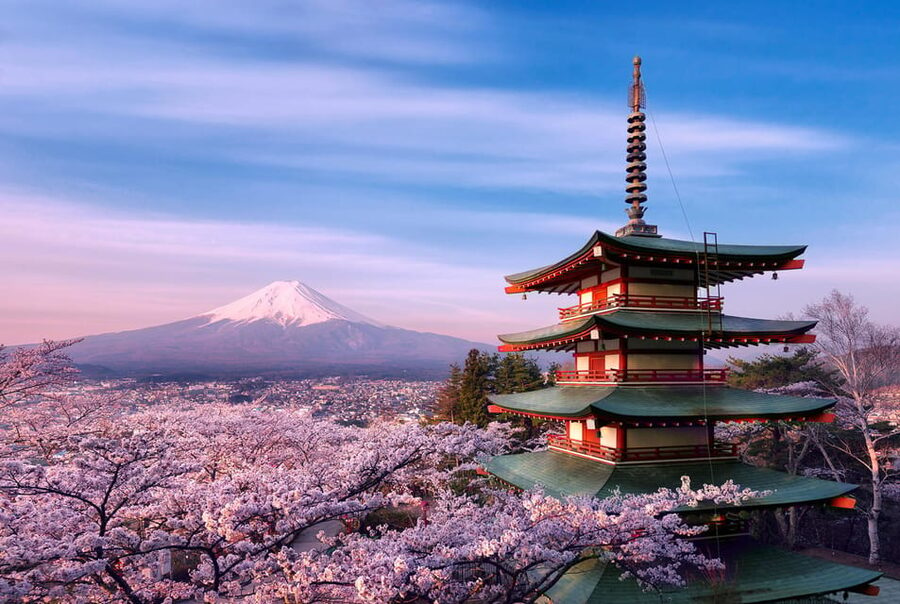
Tokyo’s cherry blossoms are spread across central Tokyo, and this three-hour e-bike tour lets you connect several major viewing spots without wearing out your legs or waiting for taxis. You ride paths and streets that cars cannot use, stopping for photographs and short visits along the way.
In This Article
- Key points before you book
- Why an e-bike works so well for Tokyo’s cherry blossom season
- Starting near Kanda Station
- Chidorigafuchi: a strong opening view
- Yasukuni Shrine: get off and look around
- Sotobori Park: blossoms along the outer moat
- Hibiya Park: a quick pass through central Tokyo
- Kensei Kinenkan: a final park stop
- The guides make the difference
- What happens in a poor blossom year
- Is $64.57 good value?
- Who will enjoy this ride most?
- Practical details that affect your day
- Should you book the Tokyo cherry blossom e-bike tour?
- FAQ
- Where does the tour start?
- Which train lines serve the meeting area?
- How long does the activity last?
- Where does the tour end?
- What locations are included?
- Is an e-bike provided?
- Can I leave luggage at the meeting point?
- What is the minimum age?
- Is there a height requirement?
- What happens if the weather is poor or the blossoms are late?
I like the way the electric assist makes a 15-kilometer route manageable for ordinary cyclists, and I like the small groups, capped at six people. Guides including Kenta, Jenny, Take, and Yoshihisa add Tokyo history and cultural context rather than simply pointing at trees.
The main catch is timing. Sakura can bloom late, fade early, or appear unevenly across the city. The company may offer a regular Tokyo cycling route instead, but a late season can still mean fewer blossoms than you hoped to see.
Key points before you book

- Five central Tokyo blossom stops: Chidorigafuchi, Yasukuni Shrine, Sotobori Park, Hibiya Park, and Kensei Kinenkan are covered in one compact ride.
- Electric assistance does the hard work: The e-bikes make the route easier for mixed-ability groups, but you still need to ride a bicycle confidently.
- Small groups keep the ride practical: The maximum is six people, with other participants possible.
- Guides add more than directions: Kenta, Jenny, Take, Yoshihisa, and other guides explain local history, Tokyo life, and cherry blossom customs.
- The season is never guaranteed: The experience depends on bloom conditions and good weather.
- The price includes the essentials: E-bike, helmet, guide, insurance, and temporary luggage storage are included for $64.57 per person.
Why an e-bike works so well for Tokyo’s cherry blossom season

Cherry blossom viewing in Tokyo is often a walking game played among crowds. One park may have fine blooms, while another area a few kilometers away is better. Subways get you near the action, but not always along the prettiest routes.
An e-bike changes the rhythm. You can cover more ground while still seeing the city at street level. The electric motor helps on longer stretches and makes the ride less demanding for people with different fitness levels. You will not simply be transported from one attraction to another. You ride between them, with the city unfolding around you.
The route has been described as roughly 15 kilometers, though the listed stop times are short. That means this is primarily a moving sightseeing experience, not a long picnic at each park. If you want hours beneath one tree with a lunch box, choose a walking visit instead.
The e-bike is still a bicycle. You must be able to ride, follow the guide, and handle Tokyo streets and paths. The minimum age is 12, and the minimum height is 147 centimeters. People who cannot ride a bicycle cannot join.
Other cycling tours in Tokyo
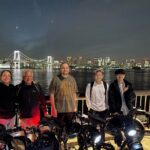
Starting near Kanda Station
The tour begins at Cycling Holiday Tokyo, at 3-chome-8-6 Uchikanda in Chiyoda City. The base is near Kanda Station, served by the JR Yamanote Line and Tokyo Metro. That makes the meeting point practical from many parts of central Tokyo.
You can use the shop’s free Wi-Fi before setting off. A helmet and rental e-bike are supplied, and you may leave luggage with the company during the ride. Do not leave valuables behind.
Allow a little time to find the exact base and get ready. The supplied information does not give a detailed check-in procedure or a precise departure time, so confirm those details after booking. Confirmation is sent within 48 hours, subject to availability.
The group can have up to six people. That limit matters in Tokyo, where a large bike group would be awkward at crossings, narrow paths, and busy viewing areas. A small group also gives you a better chance to ask your guide questions. One-person bookings may be possible if you contact the company, but the normal minimum is two people per booking.
Chidorigafuchi: a strong opening view
Chidorigafuchi is one of the most recognizable cherry blossom areas connected with Tokyo’s Imperial Palace district. On this tour, you enjoy the trees while riding an e-bike, with about 10 minutes assigned to the stop.
That short time gives you a first look at the scale of the spring display without using up the morning. It is also a useful place for photographs, though you should expect a popular public setting rather than a quiet private garden.
The value here is the approach. Cycling lets you see more of the surrounding area than a single stationary viewpoint. Your guide can also help place the trees and palace district in the wider story of central Tokyo.
Yasukuni Shrine: get off and look around

At Yasukuni Shrine, you leave the bicycle and spend about 15 minutes seeing the cherry blossoms in the park. This is one of the more worthwhile pauses because you have time to walk a little, take photographs, and listen to your guide.
A visit here also adds cultural and historical context to a route that could otherwise become a string of pretty trees. Guides such as Take and Yoshihisa have been praised for explaining Tokyo and Japan in a way that goes beyond basic sightseeing facts.
The stop remains brief. You will not have time for a long, unhurried visit to every shrine building or surrounding feature. Think of it as a focused blossom stop with commentary.
Sotobori Park: blossoms along the outer moat

Sotobori Park is seen largely from the bicycle. You ride along the outer moat for about 10 minutes, with cherry trees lining the route.
This is one of the tour’s best examples of why an e-bike is useful. The attraction is not just one entrance or one viewing platform. The trees stretch along a route, and cycling gives you a changing series of views.
The tradeoff is that you need to stay attentive while riding. You cannot stop at every appealing tree, and photography must fit around the group’s movement and local conditions. If you want a particular picture, tell your guide clearly and early.
A few more Tokyo tours and experiences worth a look
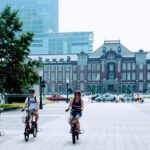


Hibiya Park: a quick pass through central Tokyo

Hibiya Park is a short five-minute pass-by. You remain on the e-bike while looking at the blossoms in the park.
This is a compact part of the itinerary, so do not book the tour expecting a full park visit. Its purpose is to add another central Tokyo setting and keep the route moving toward the later stops.
I see this as a bonus rather than the tour’s main event. It helps you connect the palace area with the city’s office and government district, but the limited time means it may feel rushed if you want a careful look around.
Kensei Kinenkan: a final park stop

At Kensei Kinenkan, you get off the bike and spend around 10 minutes viewing the blossoms in the park. Like Yasukuni Shrine, this pause gives you a chance to put the bike aside and focus on the surroundings.
By this point, you have seen different forms of Tokyo’s spring scenery: trees near the palace district, blossoms by a moat, shrine grounds, and an urban park. The variety is more important than the length of any single stop.
The tour then returns to the Kanda meeting point. Since the activity starts and ends at the same base, you do not need to arrange a second pickup location.
The guides make the difference

A bike route can be pleasant on its own, but the guide determines how much you take away. The named guides connected with this experience include Kenta, Jenny, Take, Yoshiko, Yoshihisa, Takako, and Kay.
The strongest part of the guiding is the mix of practical direction and local explanation. Take guided a parent and 13-year-old daughter with background on Tokyo, the sights, and cherry blossoms. Yoshihisa has been praised for historical stories and for helping groups make the most of uneven bloom conditions. Jenny and Takako have also led rides when the sakura arrived late.
This matters because bloom dates are not exact. Even Japanese residents cannot know the precise peak each year, and different varieties flower at different times. A good guide can adjust the route and point out earlier or later blossoms instead of treating the printed plan as unchangeable.
Still, communicate your preferences. One participant disliked repeated group photographs and wanted more time for blossom pictures. If you do not want posed photos, say so at the start. If you would rather stop for photos than food, say that too.
What happens in a poor blossom year
This is the most important booking issue. The tour is named for cherry blossoms, but the flowers may not cooperate. Several rides took place when the season was late, and the guides adapted by finding the best available trees or offering a regular Tokyo e-bike tour.
That flexibility is useful, but it cannot create a full bloom. If seeing peak sakura is the central reason for your Japan trip, check the forecast close to your date and keep expectations sensible. A few blossoms can still make a pleasant ride, but it will not match photographs taken at peak season.
The company has offered a refund or an alternative route when conditions were poor. The activity also requires good weather. If rain or another weather problem cancels the ride, you are offered a different date or a full refund.
Bring sunscreen and a towel in summer. In colder months, wear warm clothing and gloves. Rain gear and food are not included, so plan accordingly.
Is $64.57 good value?
At $64.57 per person, the price is reasonable if you want transport, equipment, and a guide in one package. You are paying for the e-bike, helmet, insurance, and a three-hour route that links several parts of central Tokyo. Temporary luggage storage is another useful extra, especially if you have checked out and are carrying bags.
The value is strongest for first-time visitors who want orientation. You get a broad look at the palace district and nearby parks without spending the day planning bicycle routes, checking paths, and working out how to move between blossom areas.
It is less compelling if you already know central Tokyo well or only want a slow, photo-focused visit at one park. You could spend less on public transport and walk through a single blossom area at your own speed.
Small groups improve the deal. Six is the maximum, and a smaller group makes it easier to ride together and ask questions. The actual group size can vary, so you should be prepared to share the ride with other participants.
Who will enjoy this ride most?
I would choose this tour for:
- First-time Tokyo visitors who want a quick sense of central Tokyo.
- Families with children aged 12 or older who can ride confidently.
- Couples and friends who want photos at several blossom spots.
- People who are comfortable on a bicycle but do not want to pedal a long route without assistance.
- Anyone who values local explanations as much as sightseeing.
- Visitors with limited time who want several parks in three hours.
I would think twice if you dislike cycling in cities, need a completely flexible schedule, or want guaranteed peak blossoms. The route is short enough for many riders, but it is still an active tour with fixed stops and a group pace.
Practical details that affect your day
The tour lasts approximately three hours and returns to the starting point. Admission to the parks and listed stops is free, but meals and drinks are not included.
Wear clothes suitable for the weather and shoes you can pedal in. Sunscreen is recommended in summer, while winter riders should bring gloves and warm layers. Since the tour depends on good weather, check for changes before setting out.
Free cancellation is available up to 24 hours before the start time for a full refund. Cancellations or changes made less than 24 hours in advance are not refunded or accepted. The tour also requires a minimum number of participants, so a cancellation for that reason brings an offer of another date, another experience, or a full refund.
Should you book the Tokyo cherry blossom e-bike tour?
Book it if you want to cover several blossom districts in one morning and prefer a guide-led ride to piecing the route together yourself. The electric assist, six-person limit, included equipment, and return to Kanda make it a practical choice, especially for a first Tokyo visit.
The tour is not a guarantee of perfect flowers. Book with flexible expectations, check the forecast and bloom timing, and tell your guide how you want to use photo stops. If the blossoms are late, the regular e-bike alternative can still give you a useful Tokyo outing, but anyone seeking peak sakura should keep a backup plan.
FAQ
Where does the tour start?
It starts at Cycling Holiday Tokyo, 3-chome-8-6 Uchikanda, Chiyoda City, Tokyo 101-0047, near Kanda Station.
Which train lines serve the meeting area?
Kanda Station is served by the JR Yamanote Line and Tokyo Metro.
How long does the activity last?
The tour lasts approximately three hours.
Where does the tour end?
It returns to the same meeting point near Kanda.
What locations are included?
The route includes Chidorigafuchi, Yasukuni Shrine, Sotobori Park, Hibiya Park, and Kensei Kinenkan.
Is an e-bike provided?
Yes. E-bike rental, helmet rental, a guide, and insurance are included.
Can I leave luggage at the meeting point?
You can leave luggage with the company during the tour, except for valuables.
What is the minimum age?
The minimum age is 12 years.
Is there a height requirement?
Yes. Riders must be at least 147 centimeters tall.
What happens if the weather is poor or the blossoms are late?
The activity may be moved or canceled in poor weather, with another date or a full refund offered. If blossoms are late, the company may adjust the route or offer a regular Tokyo e-bike tour.
More E-Bikes in Tokyo
More Cycling Tours in Tokyo
More tours in Tokyo we've reviewed


E-Bikes, compared.
 ★ 5.0Tokyo Top Highlights 3h Guided E-bike TourFrom $63
 ★ 5.03h Tokyo E-Bike Tour: Hidden Gems, and Local Life with guideFrom $63
 ★ 4.8Tokyo: 3-Hour Bike or E-Bike City Highlights TourFrom $453 hours
 ★ 4.8Tokyo: 3-hour Guided E-Bike Tour of the City’s Hidden GemsFrom $65
 ★ 5.0Tokyo: 3-Hour Bike/E-Bike Tour of the City’s HighlightsFrom $63
 ★ 5.03-Hour Tokyo Private E-Bike Tour Starting from Your HotelFrom $145