Reviewed · SUMO EXPERIENCES
Tokyo: Morning Sumo Practice with Guide + Culture Option
Tokyo: Morning Sumo Practice With Guide Review
In This Article
- Key points to know before booking
- Why morning practice feels different from a tournament
- Meeting at Kiyosumi-shirakawa Station
- Inside the stable during the 2.5-hour practice
- The guide’s explanation after training
- Photos with wrestlers after the session
- Understanding the three to seven hour time range
- Is $123 a fair price?
- Who should book this sumo experience
- Practical advice for a smooth morning
- Should you book it?
- FAQ
- Where does the sumo practice tour meet?
- Where does the activity finish?
- How long does the experience last?
- Is the tour conducted in English?
- Can I take photographs during practice?
- Can I take a photo with a sumo wrestler?
- Is the activity suitable for children?
- Can I cancel the booking?
Sumo practice is not a staged show. You sit quietly near a working stable and watch wrestlers warm up, collide, stretch, and repeat the same demanding movements until the stable master is satisfied. That close view of morning training is the heart of this experience.
I like the chance to see sumo outside the limited tournament calendar, and I like the small group size, which is capped at nine people. The short English presentation after practice also matters because it explains the rules and customs instead of leaving you to guess what each ritual means.
The main drawback is that the practice has no fixed ending time. The stable master sets the pace, so the visit may run longer than expected. You must also arrive on time at Exit B1 of Kiyosumi-shirakawa Station, since a late arrival can hold up the whole group.
Key points to know before booking

- Watch real stable training: See wrestlers work through warmups, drills, bouts, and stretching in a traditional sumo stable.
- Expect quiet observation: Talking and video recording are not allowed during practice, though photography is permitted.
- Meet near Kiyosumi-shirakawa Station: The meeting point is Exit B1, close to a FamilyMart convenience store.
- Learn what you are seeing: An English-speaking local guide gives a short explanation of sumo basics after the session.
- Keep your schedule flexible: The activity is listed as three to seven hours, and the practice itself depends on the stable master.
- Best for older children and adults: Children under nine are not accepted, and comfortable shoes are important.
Why morning practice feels different from a tournament

A professional sumo tournament gives you spectacle: formal entrances, a packed arena, ranked bouts, and a clear timetable. This visit gives you the working side of the sport. You see how wrestlers prepare before the public ever sees them compete.
Japan has 44 operating sumo stables, but only a small number permit outsiders to watch morning practice. That restriction is part of the appeal. You are not simply attending a cultural performance arranged for visitors. You are observing a training session in a place where the wrestlers are focused on their own work.
Sumo is also unusual because there are no weight classes. A much larger wrestler can face someone smaller, so size, balance, timing, and technique all matter. From close range, the force of the collisions is easier to understand than it is from a distant arena seat.
The setting calls for respect. You are entering a place of training, not a photo studio. Sit quietly, follow the guide’s instructions, and treat the wrestlers as athletes at work.
A few more Tokyo tours and experiences worth a look
Meeting at Kiyosumi-shirakawa Station
The tour begins at Exit B1 of Kiyosumi-shirakawa Station, beside a FamilyMart convenience store. This is a useful meeting point because you can arrive by train, taxi, or another form of transport, but you need to be there before the stated start time.
I would build in extra time for the station. Tokyo stations can be confusing, and a wrong exit can cost you several minutes. The guide waits at the exit so people arriving by taxi can find the group easily, but that does not mean the activity can wait indefinitely.
One late group once caused a delay of about an hour, which is a reminder that punctuality matters here. If you are running late, contact the operator at once. The guide may try to help, but this is a small group activity and the group schedule comes first.
The walk from the station is part of the opening portion of the visit. The first guided section lasts about 15 minutes, followed by the walk toward the stable. The supplied timing also includes two on-foot sections of about 10 minutes each, so wear shoes that are comfortable for walking and easy to manage.
Inside the stable during the 2.5-hour practice

The main guided portion is listed at about two and a half hours, but the actual session is controlled by the stable master. You may see the wrestlers move through several stages of work rather than a tidy program with a fixed start and finish.
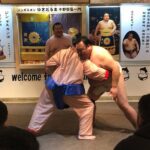
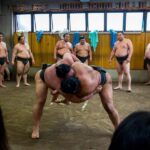
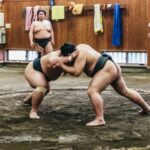
A typical session can include warmup exercises, repeated practice movements, bouts between wrestlers, and stretching at the end. The work is physical and direct. Wrestlers may be exhausted by the final exercises, which helps you understand that sumo is built on conditioning as much as size.
You will likely notice the contrast between the calm setting and the force of the action. The stable is quiet while people watch, but the impact of two wrestlers meeting can be startling. That makes the no-talking rule sensible. It also keeps the focus on the athletes rather than on the audience.
Video recording is not allowed during practice. Still photography is permitted, so you can bring a camera, but you should use it discreetly and follow the guide’s instructions. The restrictions are a small price for seeing training in a respectful setting.
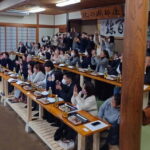
Seating can vary. Some people sit on cushions at the front, while seats are used farther back. The front position may give you a close view, but sitting farther back can offer a broader view of the entire stable. Do not expect the arrangement of a theater with numbered seats.
The wrestlers may be young or promising rikishi, and you may also see the stable master taking an active role in training. One session included a stable master who trained with the energy of someone much younger. That sort of moment is difficult to predict, but it is one reason a live practice is more interesting than a recorded demonstration.
The guide’s explanation after training
After practice, your English-speaking local guide gives a short presentation on the basics of sumo. This is not just a quick photo stop. It gives you a framework for understanding what you have watched.
You can learn about the sport’s basic traditions and how a bout works. The explanation is especially useful if you do not know the difference between a legal push and a foul, or if the warmups and rituals seemed mysterious at first.
The timing after the practice is well chosen. You have just watched the wrestlers work, so the guide can connect the explanation to what you saw. You can ask questions and take away more than a collection of dramatic photographs.
The guide is described as enthusiastic and well informed about the sport, though no individual guide name is provided. The tour is conducted in English, so it suits you best if you want a clear introduction without relying on translated signs or a self-guided booklet.
Photos with wrestlers after the session
A photo opportunity may follow the training. You may be able to take a picture with one or more rikishi once the practice is finished, when the athletes are no longer in the middle of their workout.
This is a memorable extra, but you should keep your expectations polite and flexible. The wrestlers have just completed hard training, and the stable’s rules come first. Ask before taking close-up photos and follow the guide’s directions.
A small tip may be requested for the wrestlers after the session. It is described as helping with the cost of feeding and housing the stable members. This is not included in the $123 price, so carrying a little cash may be sensible if you want to participate.
The final photo stop lasts about 15 minutes in the stated schedule. From there, the group walks back through the area and returns to Kiyosumi-shirakawa Station.
Other guided tours in Tokyo



Understanding the three to seven hour time range

The advertised duration is unusually broad, from three to seven hours. That range reflects the uncertainty of the morning practice rather than a promise that you will spend seven hours watching sumo.
The practice may end when the stable master decides the work is complete. Some sessions run for a couple of hours, but there is no fixed finish time. The stated schedule includes the meeting, guided walking, the practice, the photo stop, and the return to the station.
I would avoid booking a tightly timed museum reservation, meal, or airport transfer immediately afterward. If you have a major afternoon plan, leave a generous buffer. The flexible schedule is part of the authentic nature of the visit, but it can be inconvenient for a tightly packed Tokyo day.
The starting times also vary, so check the available date and start time carefully before you pay. The tour operator asks you not to be late, and that request is more important here than on a standard walking tour.
Is $123 a fair price?
At $123 per person, this is not a cheap sightseeing stop. You are paying for access to a restricted practice setting, a local English-speaking guide, the post-practice explanation, and a small-group format.
The value depends on what you want from Tokyo. If your goal is the lowest-cost cultural activity, there are many cheaper choices. If you are fascinated by sumo, this offers something you cannot easily reproduce on your own, since most stables do not allow visitors into morning practice.
The group limit of nine is important. A larger group could make a quiet stable feel crowded and make it harder to see the action. Here, the guide can explain what is happening without turning the visit into a large production.
I would call the price reasonable for a serious sumo fan and acceptable for someone seeking one memorable Tokyo experience. It may feel expensive if you only want a quick look at large athletes or a guaranteed photo opportunity. The session itself is the main product, and its length and exact rhythm are not fully predictable.
Who should book this sumo experience
This visit suits you if you enjoy seeing how a sport works behind the scenes. It is especially good for people who want a cultural activity with real rules and real athletes rather than a performance designed around audience participation.
It also works well for older children. Children aged 12 and 15 enjoyed the experience, while children under nine are not permitted. Younger children may find the long, quiet observation period difficult even if they are interested in sumo.
Serious sumo fans will get the most from the stable atmosphere, the hard training, and the chance to see promising rikishi at close range. First-time visitors can also enjoy it, provided they are willing to learn the basic customs and remain quiet during practice.
I would not choose this activity if you need a guaranteed end time, want to record video, or prefer a lively tour where you can talk throughout. The quiet rules and uncertain duration are central parts of the visit.
Practical advice for a smooth morning
Arrive early at Exit B1. Check the station route before leaving your hotel, and do not assume that a taxi driver will drop you at the exact meeting point without a little direction.
Wear comfortable shoes. You may walk for roughly 10 minutes in each of the return sections, and easy footwear is useful if the stable requires you to remove shoes or adjust your position.
Bring a camera, but keep it ready for still photographs only. Do not record video during practice, and do not talk while the wrestlers are training.
Plan food and later sightseeing around the longest possible schedule. The experience is listed at three to seven hours, and the stable master determines when the morning work is done.
Kiyosumi-shirakawa Station is both the start and finish, which makes the return simple. You do not need to arrange a separate pickup from the stable.
The activity is wheelchair accessible, but you should still confirm any personal mobility needs when booking because the visit includes walking and seating inside a working stable. Free cancellation is available up to 24 hours before the activity, and you can reserve now and pay later if you want to keep your plans flexible.
Should you book it?
Book this experience if you want the real training room rather than a tournament-only view of sumo. The chance to watch warmups, bouts, stretching, and the stable master’s instruction is rare, and the English explanation makes the visit useful even if you know little about the sport.
Skip it if your Tokyo schedule cannot absorb a flexible three to seven hour morning, or if you need to take video. At $123, the visit is a special-interest purchase, but the small group, restricted access, and close view of serious training give it a fair case. Arrive on time, respect the rules, and you may come away with a much clearer sense of why sumo is more than a contest of size.
FAQ
Where does the sumo practice tour meet?
The meeting point is Exit B1 at Kiyosumi-shirakawa Station, near a FamilyMart convenience store.
Where does the activity finish?
The activity ends back at Kiyosumi-shirakawa Station, at or near the original meeting point.
How long does the experience last?
The listed duration is three to seven hours. The exact timing depends on the available start time, walking portions, and how long the stable master allows practice to continue.
Is the tour conducted in English?
Yes. The activity includes a live English-speaking local guide and a short presentation about the basics of sumo.
Can I take photographs during practice?
Photography is allowed, but video recording and talking are not permitted during the practice session.
Can I take a photo with a sumo wrestler?
A photo opportunity with a rikishi may be available after practice. Follow the guide’s instructions, since the wrestlers have just completed training.
Is the activity suitable for children?
Children under nine are not permitted. Older children may enjoy it, but they must be comfortable sitting quietly during the practice.
Can I cancel the booking?
You can cancel up to 24 hours in advance for a full refund. The reserve-now, pay-later option is also available.
More Morning in Tokyo


More Guided Tours in Tokyo
More Sumo Experiences in Tokyo

More tours in Tokyo we've reviewed












Sumo Experiences, compared.
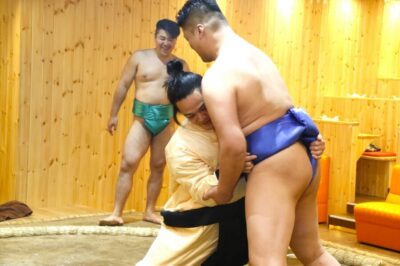 ★ 4.8Tokyo: Sumo Show Experience with Chicken Hot Pot and a PhotoFrom $1032 hours
 ★ 4.8Tokyo: Sumo Show and Dining ExperienceFrom $7990 minutes - 2 hours
 ★ 5.0the SUMO showFrom $89
 ★ 5.0Tokyo Sumo Entertainment Show with Chicken Hot Pot and PhotoFrom $106
 ★ 4.6Tokyo: Sumo Tournament Tour with Chair Seat TicketsFrom $141
 ★ 5.0Tokyo Grand Sumo Tournament Viewing Tour with TicketsFrom $124