Reviewed · ASAKUSA TOURS
Asakusa: Culture exploring bar visits after history tour
Asakusa changes character as this tour moves along. You begin with riverside views, temple gates, and old shopping lanes, then settle into three local drinking spots for a proper Japanese evening meal. The best part is the shift from sightseeing to conversation, with history explained over food and drinks rather than rushed past in a photo stop.
In This Article
- Key points to know before booking
- Why this Asakusa tour works as an evening plan
- Starting beside the Sumida River
- Walking through Kaminarimon and Nakamise
- Sensoji, Hozomon, and Asakusa Shrine
- From temple grounds to the Rokku entertainment district
- Hoppy Street: your first izakaya stop
- Kamiya Bar and a piece of Tokyo drinking history
- Learning about sake at the final stop
- What the $156.07 price really covers
- Timing, walking, and practical details
- Who should book this experience
- Should you book the Asakusa culture and bar tour?
- FAQ
- How long does the Asakusa culture and bar tour last?
- What time does the tour start?
- Where does the tour meet?
- How many people can join the tour?
- Are food and drinks included?
- Which places does the walking portion visit?
- Can I cancel for a full refund?
I like the small maximum of eight people, which gives your guide room to answer questions and manage the narrow streets. I also like the clear value: three or four drinks and three or four dishes are included, enough to replace dinner rather than merely provide a taste.
The main consideration is the price, $156.07 per person. That is a serious outlay for a four-hour walk, and the experience suits you best if you want both guided sightseeing and a social food-and-drink evening, not just a temple tour.
Key points to know before booking
- Three izakaya visits are included: You stop at Hoppy Street, historic Kamiya Bar, and a sake-focused bar or restaurant.
- Dinner is part of the price: Plan on 3 to 4 drinks and 3 to 4 dishes during the evening.
- The walking route covers classic Asakusa: Sumida Park, Kaminarimon, Nakamise Shopping Street, Hozomon, Sensoji Temple, and Asakusa Shrine all feature.
- The group is capped at eight people: That is useful for questions, street navigation, and shared table seating.
- The tour starts at 3:00 pm: You see Asakusa in the afternoon and continue into its evening drinking culture.
- You return to the starting point: Meet at Burger King Asakusa Azumabashi and finish back there after about four hours.
Why this Asakusa tour works as an evening plan
Many Asakusa outings stop after Sensoji Temple. This one keeps going. You get the major sights first, then see how the district functions after the temple crowds thin out and the lanterns begin to matter more than the guidebook map.
That combination gives the tour a useful shape. The opening walk helps you understand the district before you sit down to eat. Then the izakaya visits give the sights some context. You are not simply looking at a red gate and moving on. You hear how Asakusa developed as a place of religion, entertainment, trade, and everyday social life.
The tour lasts about four hours, with roughly 15 minutes at each early sightseeing stop and 40 minutes at each of the three drinking stops. That timing tells you where the emphasis lies. The temple section is a brisk overview. The food and drink portion gets longer, slower visits.
The experience has a rating of 4.8 from four reviews, a small sample but a strong result. The praise focuses on the guide’s friendly manner, clear knowledge, and ability to keep a conversation going. That matters here, since the difference between a good food walk and a forgettable one is often the guide’s skill at explaining what you are eating and why the place matters.
A few more Tokyo tours and experiences worth a look

Starting beside the Sumida River
The meeting point is outside Burger King Asakusa Azumabashi, at 2-chome 20-6 Kaminarimon in Taito City. The tour begins at 3:00 pm. You should allow enough time to locate the exact storefront and arrive ready to walk, since hotel pickup is not included.
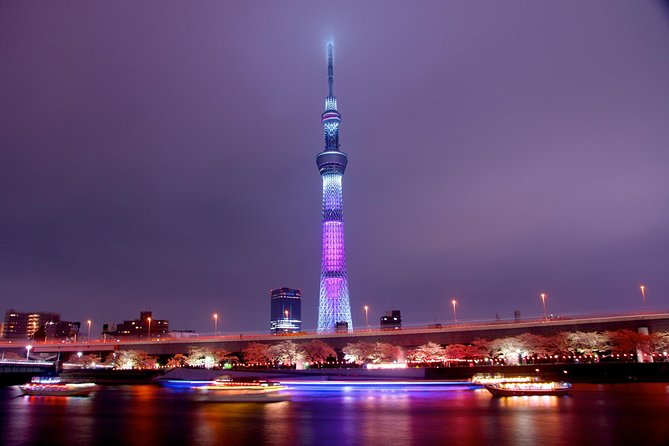
The first stop is Sumida Park. The river has a central place in Asakusa’s story, and the tour connects it to the origin story of Sensoji, which reaches back about 1,400 years. You also get a view toward Tokyo Skytree, giving you a quick sense of how old Asakusa sits beside modern Tokyo.
This is a good opening because it gives you direction. You see the water, the major skyline marker, and the district you are about to cross on foot. The 15-minute stop is short, so expect an introduction rather than a long riverside walk.
Next comes the Asakusa Culture Tourist Information Center. The building was designed by a well-known Japanese architect, and its upper viewpoint lets you look across the area from above. Your guide uses this stop to preview the route, which can help you understand how the river, temple complex, shopping street, and entertainment quarter fit together.
Walking through Kaminarimon and Nakamise
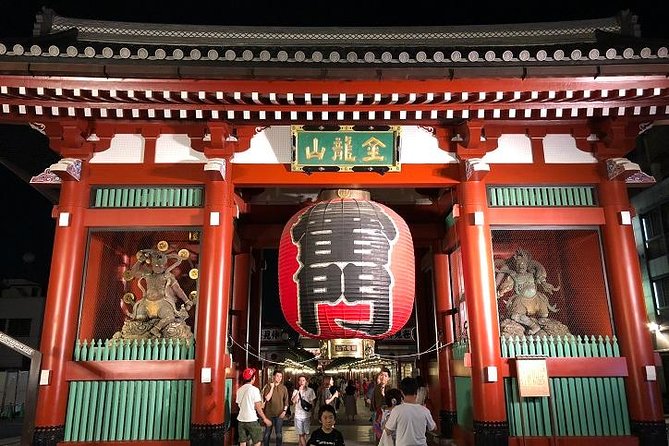
Kaminarimon, or Thunder Gate, is one of Tokyo’s most recognizable entrances. Its huge red lantern marks the approach to the Buddhist temple and the nearby Shinto shrine. The gate is free to see, but the value of stopping with a guide is learning what you are looking at instead of treating it as a backdrop for a quick photograph.
From Kaminarimon, you walk along Nakamise Shopping Street toward Sensoji. This lane can surprise first-time visitors. You may expect the approach to Japan’s oldest temple to feel solemn, yet Nakamise is lined with shops and has an open, welcoming feel.
The street is also useful preparation for the rest of the tour. Asakusa is not a single quiet religious compound. It is a place where worship, souvenirs, snacks, entertainment, and daily commerce sit close together. Your guide can point out that contrast while you walk, though the 15-minute timing means you will not have much free shopping time.
Keep your pace steady. The route includes several short stops before the longer food visits, and Nakamise can be crowded. You will get more from the walk if you listen while moving instead of trying to pause at every shop.
Sensoji, Hozomon, and Asakusa Shrine
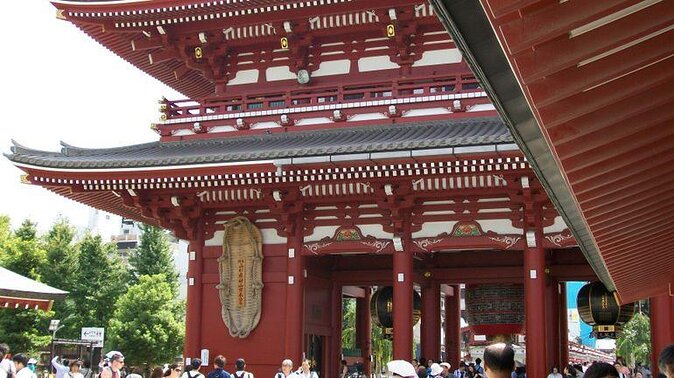
Hozomon is the inner of Sensoji’s two major entrance gates. Kaminarimon is the outer gate, while Hozomon leads you farther into the temple grounds. The two-story structure has religious and historical details that are easy to miss when you walk through alone, so this is one of the places where a local guide earns part of the tour price.
Sensoji is the main sightseeing stop. It is Tokyo’s oldest temple and one of the city’s essential sights. The tour gives you a guided introduction to the temple rather than leaving you to decipher the buildings, customs, and layout on your own.
Do not expect a private or quiet temple visit. Sensoji is a major attraction, and the tour moves through a public site. The benefit is interpretation and route planning, not special access or a line-skipping arrangement. Admission is free, and the listed schedule allows about 15 minutes here.
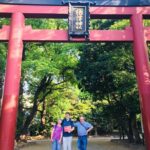
Asakusa Shrine sits beside Sensoji. This brings Shinto, Japan’s indigenous religion, into the same compact area as Buddhism. The coexistence can seem confusing at first, particularly if you assume that a temple and a shrine must be separated. The guide explains the relationship and helps you tell the two traditions apart.
For many people, this is the most useful cultural part of the walk. You are not only seeing famous structures. You are learning why two different forms of worship share the same neighborhood and why Asakusa developed around both.
From temple grounds to the Rokku entertainment district
After the main temple complex, the route turns toward Asakusa Demboin-dori and the Rokku area. This is the district’s traditional entertainment quarter, with a different mood from the grand gates and formal temple buildings.
The walk here adds balance. Asakusa is often reduced to Sensoji, but its identity also comes from theaters, bars, old commercial streets, and places where people gather after work. The route presents that shift in a compact way, connecting the Meiji period to the present day.
The description allows another 15-minute stop in this area. That is enough for orientation and a few explanations, but not for a full tour of every side street. If you enjoy exploring at your own pace, you may wish you had more free time. In exchange, the guided route keeps you from wasting part of the afternoon on navigation.
Other historical tours in Tokyo
Hoppy Street: your first izakaya stop
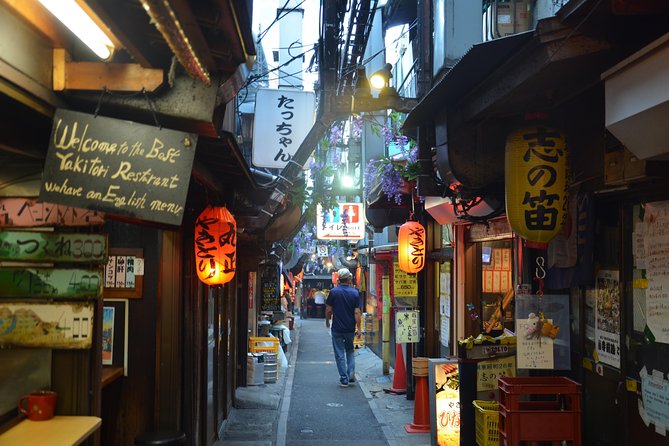
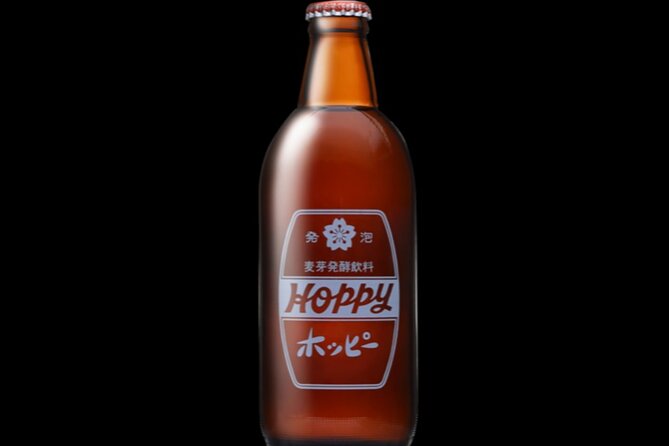
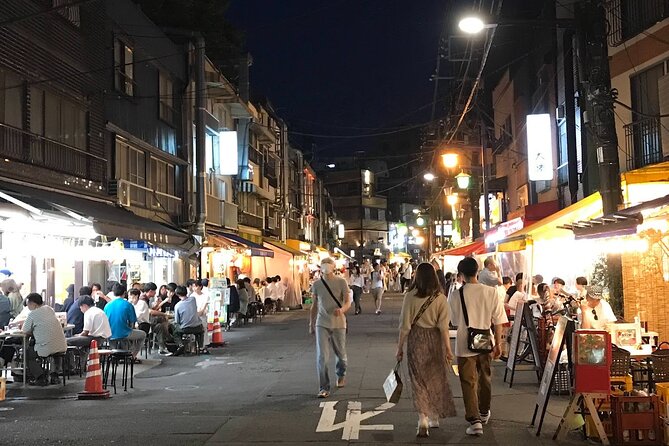
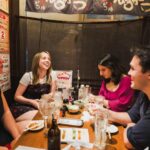
The first drinking stop is Hoppy Street, an approximately 80-meter lane lined with izakayas. Lanterns and outdoor seating give it a distinctly local drinking-street feel. The establishments operate day and night, though the atmosphere becomes more social later in the day.
You spend about 40 minutes here. The exact dishes and drinks are not specified, so you should think of this as an introduction to the area rather than a fixed tasting menu. Your guide manages the visit and helps you settle into the casual style of an izakaya, where small dishes and drinks are shared over conversation.
This is a good place to begin the food section because it is informal. You can get a sense of the way Asakusa’s older drinking streets work before moving to the more historic Kamiya Bar and the sake-focused final stop.
The included food is described as dinner, not just a snack. Across the three venues, you receive 3 to 4 dishes and 3 to 4 drinks. That amount should be enough for a full meal for many people, though appetite varies and the tour does not promise a particular cuisine, drink list, or accommodation for every dietary preference.
Kamiya Bar and a piece of Tokyo drinking history
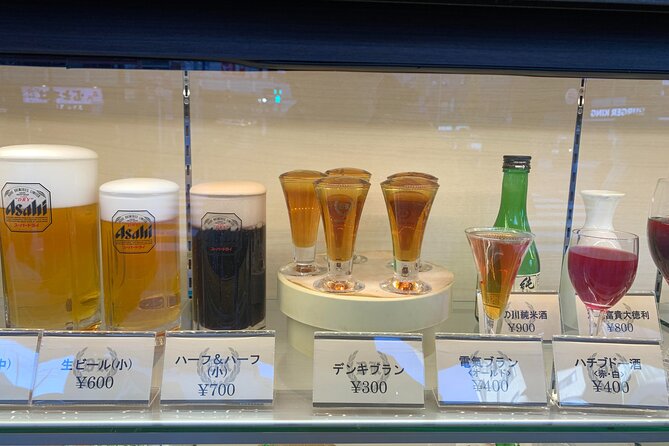
The second stop is Kamiya Bar, established in 1880 and regarded as Japan’s oldest Western-style bar. Its name may sound more formal than the experience itself. The tour description notes that it is actually a Western-style drinking establishment, making it a useful example of how foreign influences became part of Tokyo’s everyday culture.
You have about 40 minutes here. The appeal is not simply age. A business operating since the late 19th century gives you a direct link to the city’s modern development, especially the period when Japan was adapting to new commercial and social ideas.
This stop also breaks up the rhythm of the evening. Hoppy Street offers a lane of casual izakayas, while Kamiya Bar gives you a single historic institution with its own identity. The guide’s explanations are especially useful here, since you may not know what to order or how the bar fits into Asakusa’s past.
The experience does not promise a private table or exclusive seating. If you prefer a carefully planned meal with a quiet atmosphere, this tour may feel too social and improvised. If you enjoy places with character and a long local story, Kamiya Bar is likely to be one of the most memorable stops.
Learning about sake at the final stop
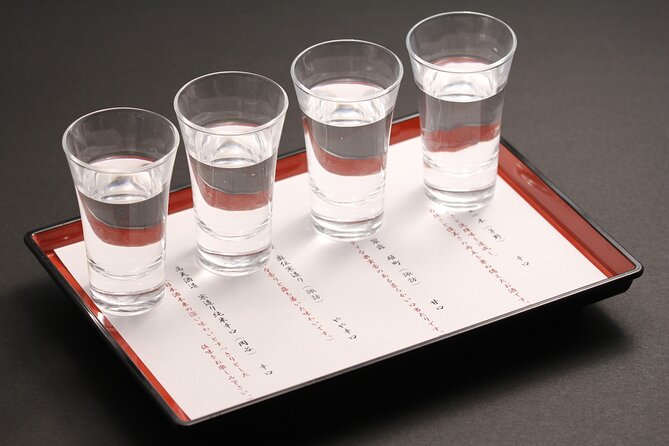
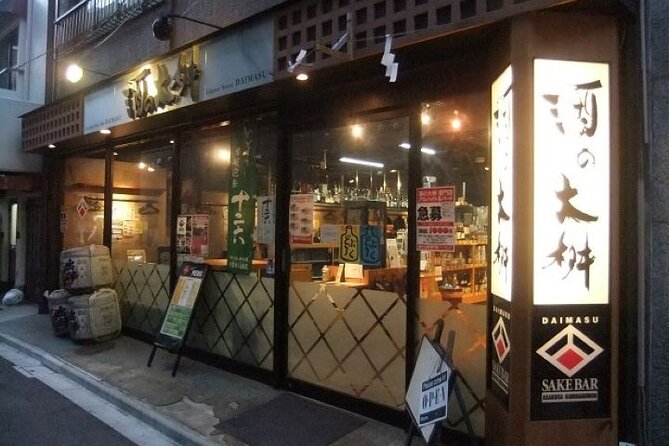
The final izakaya specializes in sake and carries an impressive range of varieties. Your guide explains why sake developed in Japan and which ingredients play an important role in its production.
That short lesson adds purpose to the final drink. Instead of simply sampling alcohol, you get a basic framework for understanding the national drink: its origins, its ingredients, and the factors that shape different varieties. The information supplied does not name specific sake brands or guarantee a particular tasting flight, so do not book this expecting a formal sommelier session.
You spend about 40 minutes at the last stop. By then, the three-venue format should feel like a full evening meal rather than a series of rushed samples. Each stop has a different angle: street-side izakaya culture, an old Western-style bar, and sake education.
The guide’s role matters most here. A friendly, conversational guide can turn unfamiliar dishes and drinks into a shared discussion. The strongest feedback for this experience centers on exactly that combination of clear explanations, warmth, and good conversation.
What the $156.07 price really covers
At $156.07 per person, this is not a budget walking tour. You are paying for a four-hour guided program, a small group capped at eight, a planned route through several major Asakusa sights, and dinner with 3 to 4 drinks and 3 to 4 dishes.
The value improves if you would otherwise pay for a separate evening meal and a food tour. It also improves if you want help ordering, crossing between venues, and understanding the religious and historical sites. The price is harder to justify if you mainly want to see Sensoji, since the temple and other sightseeing stops are free to enter.
I would compare it with two separate plans. A self-guided temple walk costs little, but you would need to research the district and arrange your own dinner. A casual night of drinks may cost less, but it will not include the structured explanation of Sumida River, Sensoji, Asakusa Shrine, or the Rokku area.
Group discounts are available, though the supplied details do not state the discount amount or the number of people required. Check the final booking price if you are traveling with a larger party.
Timing, walking, and practical details
The tour starts at 3:00 pm and ends back at the meeting point after about four hours. That timing is convenient if you want a relaxed morning elsewhere in Tokyo, but it also means you should not plan another fixed evening activity immediately afterward.
Hotel pickup and drop-off are not included. You need to reach the Burger King Asakusa Azumabashi meeting point yourself, using nearby public transportation if convenient.
This is a walking tour through streets, temple grounds, shopping areas, and entertainment lanes. Most people can participate, and service animals are allowed. The experience requires good weather, and it also requires a minimum number of participants. If weather or group size forces cancellation, you are offered another date or experience, or a full refund.
Free cancellation is available up to 24 hours before the 3:00 pm start time. Changes or cancellations inside that window are not accepted for a refund, and the cutoff follows Tokyo local time.
The group maximum of eight is one of the tour’s best practical features. A large group would make narrow streets and shared izakaya seating harder. With eight or fewer, you have a better chance to ask about temple customs, drink choices, and the district’s past.
Who should book this experience
I would recommend it to a first-time Tokyo visitor who wants a guided introduction to Asakusa and prefers an evening built around local drinking culture. It also fits you if you are curious about sake, enjoy small dishes, and like learning through conversation rather than through a formal lecture.
It suits couples, friends, and solo visitors who want company at dinner. The small group gives solo participants a natural social setting, while the included meal removes the need to find a restaurant after the tour.
Families should consider the drinking-focused format carefully. The tour includes several alcoholic drinks and spends two hours at izakayas, so it is not primarily a family sightseeing activity.
You should also think about your food preferences before booking. The total meal is specified, but individual dishes and drink selections are not. If you have strict dietary needs, confirm them with the provider before paying.
Should you book the Asakusa culture and bar tour?
Book it if you want one compact afternoon and evening that combines Sensoji, Asakusa’s religious landmarks, old entertainment streets, and a full dinner with drinks. The guide, small group, and three different drinking stops give the experience more depth than a standard temple walk.
Skip it if you only want free sightseeing, dislike drinking venues, or prefer to choose every dish and restaurant yourself. At $156.07, the tour needs to replace both a guided walk and a meal to feel worthwhile.
For the right person, it is a practical way to understand Asakusa beyond the famous red lantern. You see the district’s sacred center, then sit down where its everyday social life happens.
FAQ
How long does the Asakusa culture and bar tour last?
The tour lasts approximately four hours and ends back at the meeting point.
What time does the tour start?
The tour starts at 3:00 pm.
Where does the tour meet?
The meeting point is Burger King Asakusa Azumabashi, Japan, 111-0034 Tokyo, Taito City, Kaminarimon, 2-chome 20-6 Cross Building Royal Palace.
How many people can join the tour?
The activity has a maximum group size of eight travelers.
Are food and drinks included?
Yes. Dinner is included, with an average of 3 to 4 drinks and 3 to 4 dishes, described as enough for a full dinner meal.
Which places does the walking portion visit?
The route includes Sumida Park, the Asakusa Culture Tourist Information Center, Kaminarimon, Nakamise Shopping Street, Hozomon, Sensoji Temple, Asakusa Shrine, and Asakusa Demboin-dori in the Rokku area.
Can I cancel for a full refund?
Yes. You can cancel at least 24 hours before the experience start time for a full refund. Cancellations made less than 24 hours before the start time are not refunded.
More Historical Tours in Tokyo
More Asakusa Tours in Tokyo
More tours in Tokyo we've reviewed












Asakusa Tours, compared.
 ★ 4.8Tokyo: Japanese Dance Cabaret Theater Asakusa-Kaguwa TicketFrom $492 hours
 ★ 4.7Tokyo: Meiji Shrine, Asakusa, Skytree Bus Tour and CruiseFrom $12210 hours
 ★ 4.9Tokyo: Roll and Authentic Sushi Making Class in AsakusaFrom $581h 40m
 ★ 4.8Tokyo: Asakusa Walking Tour with Sensoji Temple VisitFrom $222 hours
 ★ 5.0Tokyo Asakusa Rickshaw TourFrom $42
 ★ 4.5Tokyo Panoramic 1 Day: Meiji Shrine, Asakusa, Odaiba and SKYTREE®From $85