Reviewed · ASAKUSA TOURS
Asakusa & Ueno Private Tour
Asakusa and Ueno make a smart Tokyo pairing: one gives you grand temple gates and old shopping streets, the other gives you market lanes, snacks, and everyday city life. This private tour lets you see both without spending half the day puzzling over train connections or deciding where to go next.
In This Article
- Key points to know before booking
- Why Asakusa and Ueno work well together
- Starting above Asakusa with the Skytree view
- Senso-ji and the streets beyond Nakamise
- Snacks, shopping, and everyday Tokyo at Ameyoko
- What a private guide changes
- Is this a good choice for a Tokyo layover?
- The physical side of the day
- Weather, meals, and other practical matters
- Who will get the most from this tour?
- Should you book the Asakusa and Ueno private tour?
- FAQ
- How long does the Asakusa and Ueno private tour last?
- What time does the tour start?
- Which main places are visited?
- Is this a private tour?
- Is transportation included?
- Is lunch included in the price?
- Can I cancel for a full refund?
I like the view of Tokyo Skytree from the Asakusa Tourist Information Center, and I like that the guide takes you beyond the obvious Nakamise Shopping Street. The main consideration is pace: five to seven hours on foot, with shopping and food stops, calls for moderate fitness and comfortable shoes.
Key points to know before booking
- A two-neighborhood Tokyo sampler: Combine Senso-ji in Asakusa with Ameyoko Shopping Street in Ueno.
- Your own guide and group: This is a private activity, so only your party takes part.
- A useful layover option: The schedule fits a substantial Tokyo visit into a half-day or slightly longer window.
- More than the famous street: Your guide can point out other interesting streets around Asakusa, not just Nakamise.
- Food is part of the fun: Ameyoko is suited to grazing, shopping, and trying casual treats, but lunch costs extra.
- A flexible, personal experience: Guide Miyuki is named in the available feedback, and the tour can leave room for interests such as kimono, takoyaki, ramen, or sweets, depending on time and arrangements.
Why Asakusa and Ueno work well together
Tokyo can feel like several cities stitched into one. Shiny towers and giant stations sit close to quiet temple grounds, small food shops, and narrow streets. Asakusa and Ueno show you that contrast without requiring a long cross-city journey.
Asakusa is the more traditional half of the day. Senso-ji gives you a memorable first look at Tokyo’s Buddhist architecture, while the surrounding streets offer shopping and snack stops. Ueno feels more practical and urban, with Ameyoko’s tightly packed shops and food counters.
I see this pairing as especially useful if you have limited time. You get a major temple, a city view, local shopping, and plenty of chances to ask questions. You are not simply ticking off two attractions. You are seeing two different sides of the same neighborhood area.
The tour begins at 9:30 a.m. and lasts about five to seven hours. That makes it long enough to feel substantial, yet short enough to leave part of the day open. For a layover, this can be a good fit, provided your flight schedule leaves a generous buffer for transport and airport procedures.
A few more Tokyo tours and experiences worth a look


Starting above Asakusa with the Skytree view
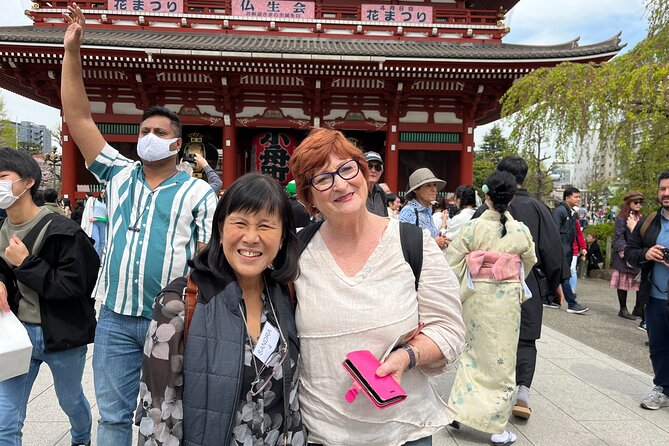
The first stop begins at the Asakusa Tourist Information Center. From its observation deck, you can look across toward Tokyo Skytree and get your bearings before heading into the older streets below.
This is a useful start because Asakusa can feel confusing at first. The view gives you a quick sense of the area’s layout, while your guide explains what you are seeing. It also gives you a chance to ask for a day shaped around your interests before the walking begins.
The deck is not the main event, but it is a practical introduction. You see the modern Tokyo skyline from a district known for its temple and old-style streets. That contrast is one of the pleasures of this part of the city.
Your guide’s presence matters here. On your own, you might take a quick photograph and move on. With a private guide, you can ask about the Skytree, the temple district, or the surrounding streets and get answers suited to your group rather than a standard speech.
Senso-ji and the streets beyond Nakamise
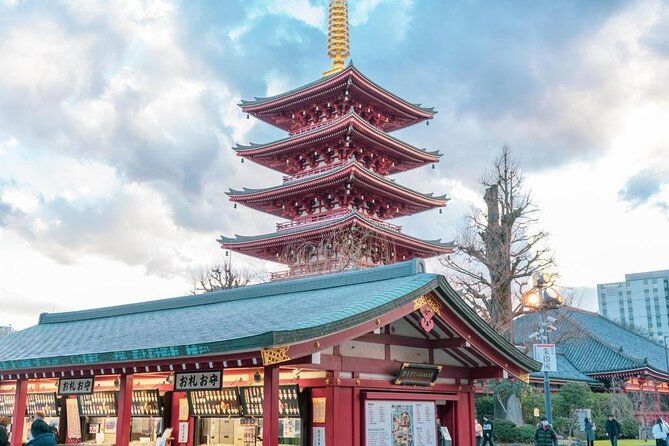
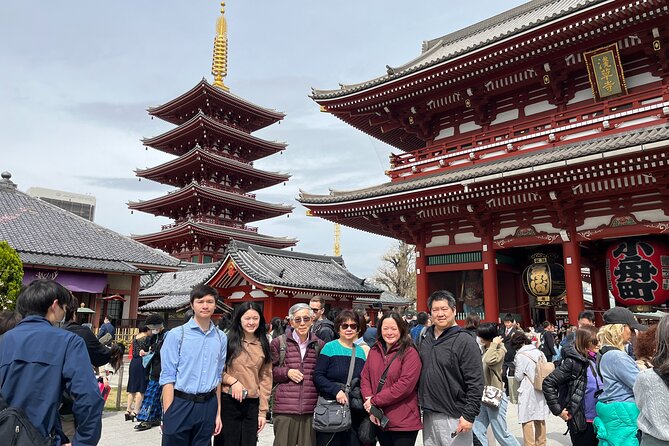
The tour then heads to Senso-ji Temple, one of Asakusa’s defining sights. Admission to the stop is free, so the value comes from your guide’s explanation, route planning, and attention to the details around the temple.
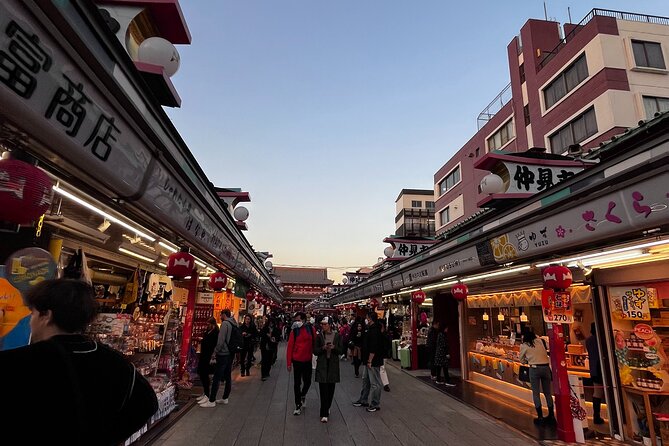
The approach through Nakamise Shopping Street is an easy introduction to Asakusa. It is lined with shops selling souvenirs, snacks, and traditional-looking goods. It can also be crowded, so having someone show you alternative streets is a real advantage.
That promise of going beyond Nakamise is important. The most famous street is easy to find, but it is not the whole district. Your guide can introduce other interesting lanes around Asakusa, helping you see more than the standard entrance route and souvenir shops.
Expect the Senso-ji portion to take about three hours. That does not mean three hours inside the temple itself. Time can include the observation deck, walking between sights, looking at shops, and stopping for food or photographs.
The exact balance depends on your group. You may want more time for temple details, or you may prefer a faster look before moving toward Ueno. A private format gives you more room to make that choice.
A practical note: temple grounds and shopping streets mean steady walking, and the tour calls for a moderate level of fitness. You should wear shoes that can handle several hours on city pavement. If someone in your group needs frequent breaks, mention that when arranging the day.
Snacks, shopping, and everyday Tokyo at Ameyoko
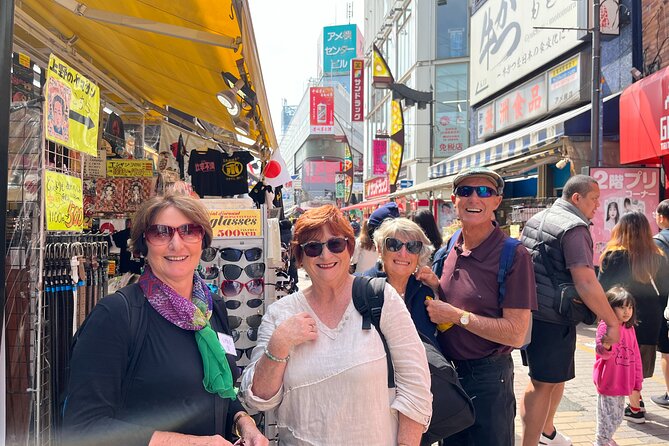
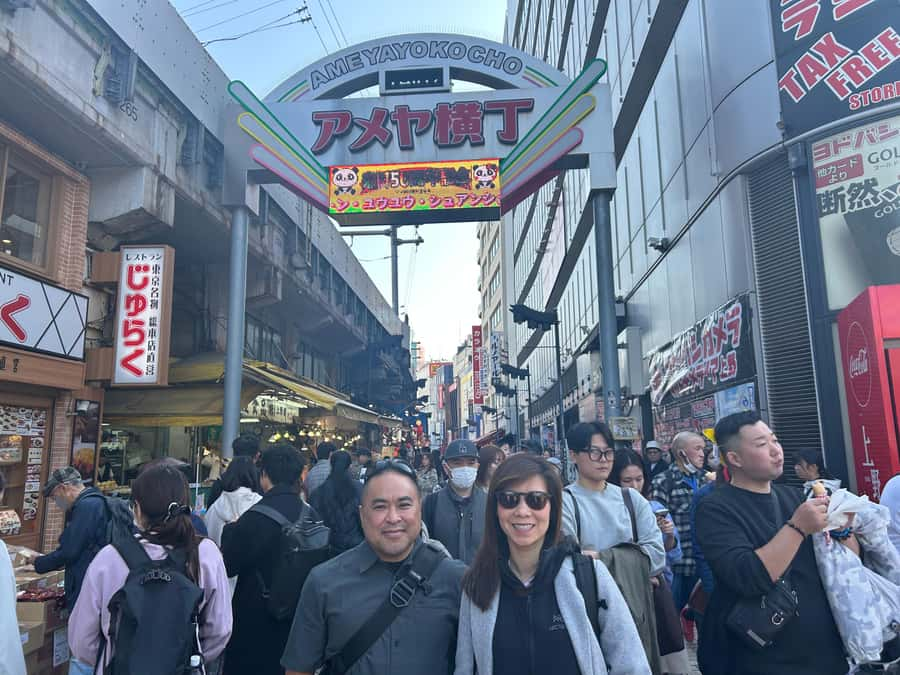
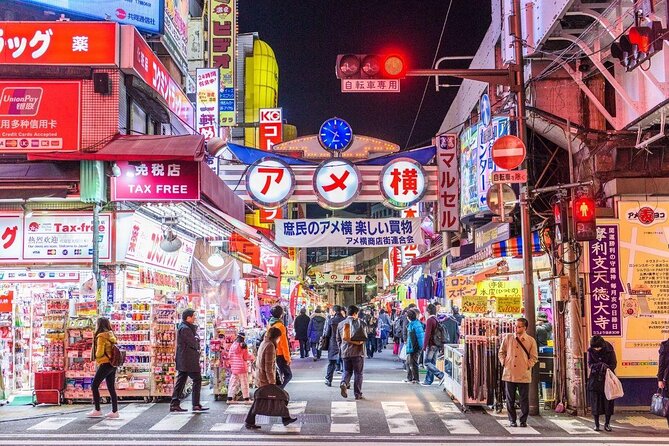
The second major stop is Ameyoko Shopping Street, with about two hours set aside for browsing and eating. This is a different experience from Senso-ji. Instead of temple architecture and ceremonial space, you get a tight commercial street lined with shops selling groceries, miscellaneous goods, and food.
Ameyoko works best when you approach it with an appetite and some curiosity. You can look for small treats, compare goods, and watch the street activity unfold. Lunch is not included, so you should plan to pay separately for whatever you eat.
That extra cost is not a flaw, but it does affect the final price. The tour fee covers the private experience and transportation, not your meal. If you want to keep spending controlled, set a food budget before you arrive.
I like the two-hour block because it does not force you to rush through Ameyoko. Shopping streets are more enjoyable when you have time to pause. You can ask your guide what is worth trying, decide what interests you, and still keep the day moving.
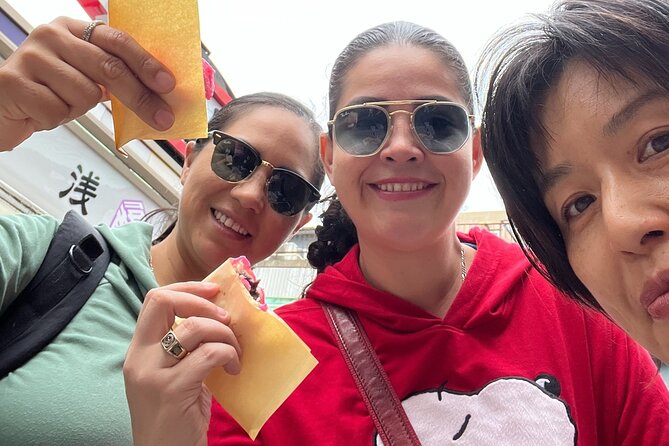
The market can also be a better place for casual food than a formal restaurant if you want to sample several things. One successful day included takoyaki, strawberry candy, and ramen, along with time to wear a kimono. Those details are not guaranteed parts of the standard schedule, but they show how the experience can become personal when the timing and arrangements allow.
Do not expect a fixed food tour with a set menu. The information provided describes shopping and eating through Ameyoko, not a list of included tastings. That flexibility is useful for some people and less appealing if you prefer every meal and stop planned in advance.
What a private guide changes
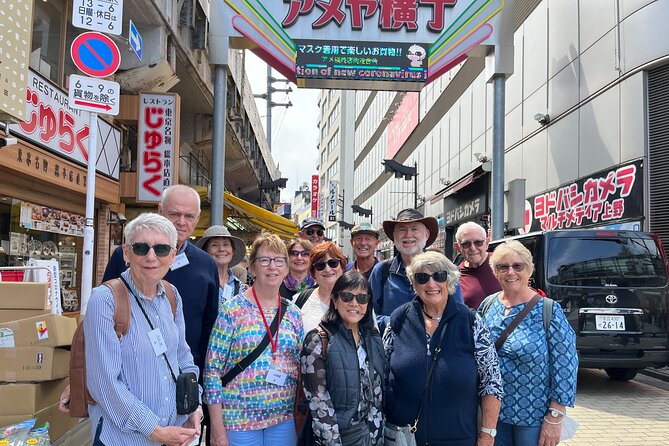
The largest difference between this and a group sightseeing walk is control. You are not waiting for strangers to take photographs, shop, or catch up. You can ask more questions, linger at a point that interests you, or move along when your attention fades.
A private guide is also helpful in Tokyo because the best experience often depends on small choices. You may want temple details, food advice, shopping help, or a simple route through the neighborhoods. Your guide can adjust the emphasis instead of delivering the same day to every group.
Guide Miyuki is specifically associated with a warm, friendly style in the available customer feedback. A first-time visitor described a day that included a kimono, takoyaki, strawberry candy, ramen, and train travel back toward Haneda. Another visitor said Miyuki went out of her way to make the Tokyo experience memorable.
Those details suggest a guide who can handle both sightseeing and practical help. Still, you should treat them as examples, not promises. The published plan centers on Asakusa and Ueno, and the standard duration is five to seven hours.
Private also means the cost is easier to justify for a small group than for one person. At $84.55 per person, the price is reasonable if you value one-on-one attention, local route planning, and the ability to ask questions throughout the day. For a solo visitor, it is a larger expense than joining a group walk. For a couple or family, the personal service may offer better value.
Private transportation is included. The details do not specify the exact vehicle, route, or how every transfer works, so you should confirm pickup arrangements when booking. The tour is near public transportation, and one successful outing included train travel on the way between Tokyo sights and Haneda.
A few more Tokyo tours and experiences worth a look

Is this a good choice for a Tokyo layover?
This experience has several qualities that suit a layover. It starts in the morning, covers two distinct districts, and lasts long enough to give you a real taste of Tokyo. You do not have to build a route from scratch, and a private guide can help keep the day moving.
The risk is the clock. A five to seven-hour tour is not the same as a quick airport excursion. Add travel time to and from the airport, security, immigration, and possible delays. If your flight connection is tight, this is not the place to gamble.
The tour may work best for a long layover or for a first full day in Tokyo when you want an organized introduction. If you are returning to Haneda, ask in advance how the pickup and final transport will work. The experience includes private transportation, but the supplied details do not promise a direct airport transfer as part of every booking.
You should also remember the 9:30 a.m. start. That is convenient for seeing the districts before the day gets too far along, but it may not suit a late arrival or a group that struggles with early mornings.
The physical side of the day
The day includes walking through temple grounds, shopping streets, and market lanes. Even though no demanding hike is involved, five to seven hours can feel long if you are not used to city walking.
I would plan for:
- Comfortable walking shoes
- A small bag that leaves your hands free
- Room in your budget for lunch and snacks
- Patience in crowded shopping areas
- A willingness to use trains or walk between points if your guide recommends it
The tour is listed as suitable for people with moderate physical fitness. Service animals are allowed, and the activity is near public transportation. No other specific accessibility details are provided, so anyone with mobility needs should ask about the exact route, stairs, seating, and vehicle arrangements before booking.
The private format helps if your group needs a slower pace, but it does not remove the physical demands of an active sightseeing day. Discuss limitations early rather than expecting the standard route to change at the last minute.
Weather, meals, and other practical matters
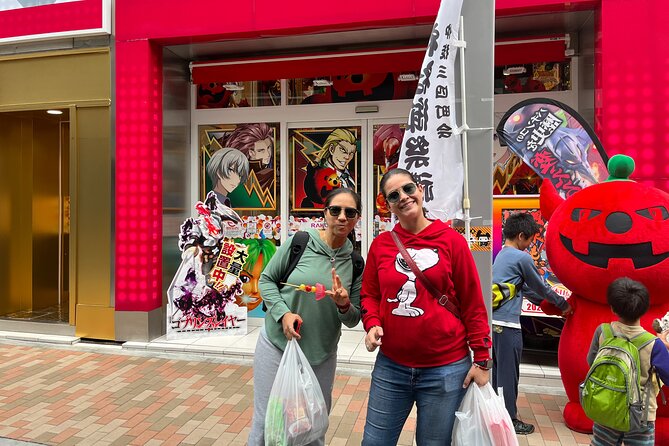
This experience requires good weather. If poor conditions force cancellation, you will be offered another date or a full refund. That matters because much of the day takes place outdoors on streets and temple grounds.
Lunch is not included. Ameyoko is the natural point to buy food, but you pay for your own meal and snacks. You can also tell the guide about food interests ahead of time, though the provided details do not list dietary arrangements or a set menu.
Your booking confirmation should arrive within 48 hours, subject to availability. The tour is booked an average of 133 days in advance, which suggests that people often reserve it well ahead of a Tokyo visit. If your dates are fixed, early planning is sensible.
You can cancel for a full refund up to 24 hours before the local start time. Changes made inside that 24-hour window are not accepted, and cancellations made then are not refunded. Keep the weather rule in mind, since the provider handles poor-weather cancellations differently.
Who will get the most from this tour?
I would recommend it to first-time visitors who want context without having to manage every detail themselves. It also suits couples, families, and small groups who prefer a private pace and want to ask plenty of questions.
It is a strong match for anyone who wants several kinds of Tokyo in one day:
- Temple and neighborhood sightseeing
- Shopping and casual food
- Modern skyline views
- Local route advice
- A guide focused only on your group
It may not suit you if you want a quiet, slow temple visit with no shopping, or if you would rather spend a full day in one district. It is also less compelling if your main goal is an included food experience, since lunch is separate and the food stops are flexible.
The tour can be especially helpful for visitors who find Tokyo’s rail system intimidating. You still may use public transportation, but you have someone handling the route and explaining what is happening. That is a useful service on your first day.
Should you book the Asakusa and Ueno private tour?
Book it if you want a well-shaped introduction to two very different Tokyo districts, especially during a long layover or your first visit. The strongest reasons are the private attention, the Skytree view from the information center, the extra Asakusa streets beyond Nakamise, and the freedom to ask for help with food, shopping, and local customs.
At $84.55 per person, the value depends on group size and how much you value convenience. The price makes more sense when shared by two or more people who want their own guide. Remember to budget for lunch, and allow plenty of time if you must return to an airport.
I would skip it only if you prefer to explore independently, need a fully accessible route that has not been confirmed, or have a tight connection. For everyone else, this is a practical way to see temple Asakusa and market-style Ueno in one manageable day.
FAQ
How long does the Asakusa and Ueno private tour last?
The tour lasts approximately five to seven hours.
What time does the tour start?
The stated start time is 9:30 a.m.
Which main places are visited?
The tour visits Senso-ji Temple in Asakusa and Ameyoko Shopping Street in Ueno. It also includes a view of Tokyo Skytree from the observation deck of the Asakusa Tourist Information Center.
Is this a private tour?
Yes. Only your group participates in the activity.
Is transportation included?
Private transportation is included. The experience is also near public transportation.
Is lunch included in the price?
No. Lunch is not included, so you should plan to pay separately for your meal and any snacks.
Can I cancel for a full refund?
Yes. You can cancel at least 24 hours before the local start time for a full refund. Cancellations or changes made less than 24 hours before the start time are not accepted for a refund.
More Private Tours in Tokyo

More Ueno & Yanaka Walks in Tokyo
More Asakusa Tours in Tokyo
More tours in Tokyo we've reviewed












Asakusa Tours, compared.
 ★ 4.8Tokyo: Japanese Dance Cabaret Theater Asakusa-Kaguwa TicketFrom $492 hours
 ★ 4.7Tokyo: Meiji Shrine, Asakusa, Skytree Bus Tour and CruiseFrom $12210 hours
 ★ 4.9Tokyo: Roll and Authentic Sushi Making Class in AsakusaFrom $581h 40m
 ★ 4.8Tokyo: Asakusa Walking Tour with Sensoji Temple VisitFrom $222 hours
 ★ 5.0Tokyo Asakusa Rickshaw TourFrom $42
 ★ 4.5Tokyo Panoramic 1 Day: Meiji Shrine, Asakusa, Odaiba and SKYTREE®From $85