Reviewed · THEME PARKS & DIGITAL ART
Tokyo: teamLab Borderless Museum Admission Ticket
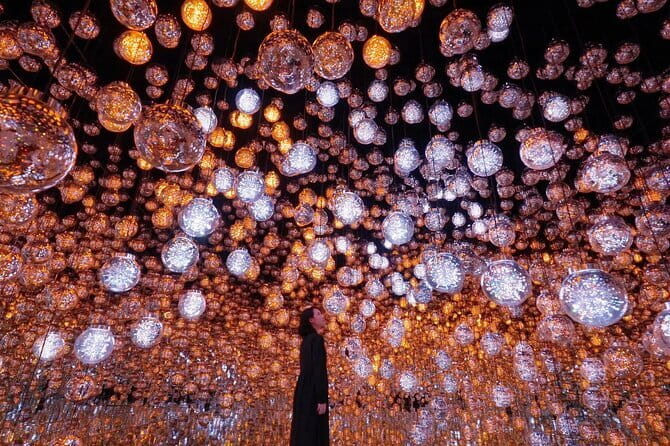
The most interesting thing about teamLab Borderless is that it refuses to behave like a normal museum. There is no map and no fixed route. Digital artworks move beyond their rooms, meet other works, and change the way the whole space feels as you walk through it. I like the sense of discovery, and I like that your visit can be different from someone else’s.
In This Article
- Key points at a glance
- What teamLab Borderless is trying to do
- Entering a museum with no route
- The art moves beyond the room
- Why the QR codes are worth your time
- A good choice for families and mixed interests
- Making sense of the $24 price
- Timing your visit in Azabudai Hills
- What to expect from the visit
- Who should book teamLab Borderless
- Should you book this Tokyo experience?
- FAQ
- Where is teamLab Borderless located?
- How long does the visit take?
- Is there a fixed route through the museum?
- What is included with the ticket?
- Is coffee or tea included?
- Is private transportation included?
- Is the experience guided?
- Can I learn more about each artwork?
- Is the experience suitable for children?
- Can I cancel or change my ticket?
I also like that this works for families and mixed-age groups, not just serious art fans. Scanning the QR codes gives you more context about the works, which adds meaning to the lights and sounds. The main drawback is simple: you pay about $24 for an experience that may last anywhere from one to three hours, and the ticket is non-refundable. That makes the timing and price worth considering before you book.
Key points at a glance
- A museum without a map: You wander freely instead of following a marked route from gallery to gallery.
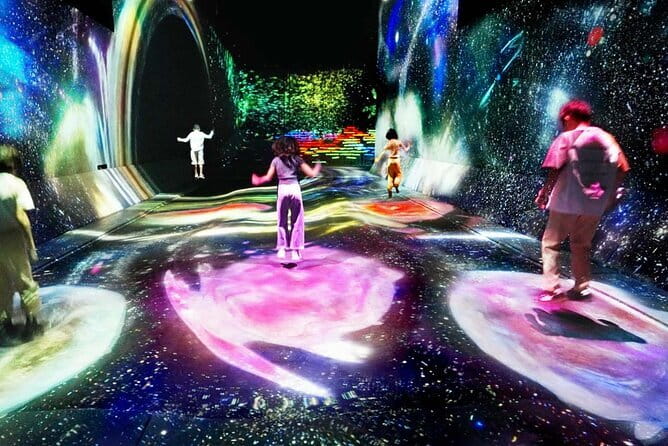
- Artworks cross boundaries: Digital works can move out of rooms, interact with nearby works, and form one connected world.
- Light, sound, and movement work together: The appeal comes from the changing combination of media, not from static displays.
- QR codes add useful context: Scan them to read about the artworks and get more from what you are seeing.
- Plan for 1 to 3 hours: Your visit can be a quick visual stop or a longer period of exploration.
- The $24 price buys admission only: Coffee, tea, and private transportation are not included, and the reseller price is higher than the official website.
What teamLab Borderless is trying to do
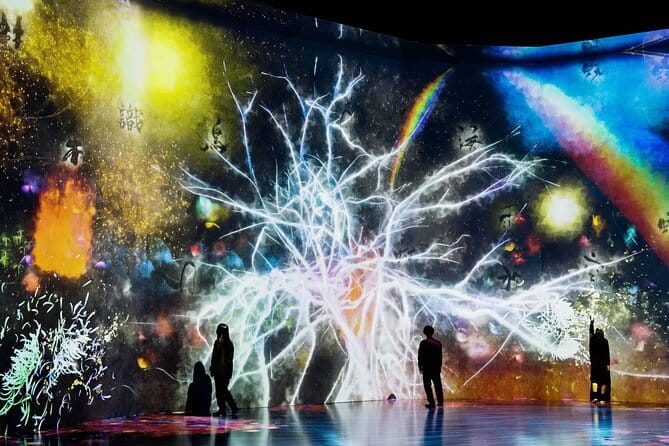
teamLab Borderless Tokyo is built around a straightforward idea: art does not have to stay inside its assigned room. The digital works can move outward, overlap, affect one another, and create a continuous environment rather than a series of separate galleries.
That idea changes how you visit. In a conventional museum, I usually study a room, read the label, and move on to the next one. Here, you are encouraged to wander, notice movement, and decide how long to stay with a particular work. There is no single correct route and no promise that your experience will follow the same sequence as another person’s.
The museum is located at teamLab Borderless Tokyo Azabudai Hills, and the ticket provides admission to this single attraction. It is near public transportation, so you can reach it without arranging a private vehicle. Private transportation is not part of the ticket, but that is unlikely to matter for most visitors planning their own way around Tokyo.
The word borderless is more than a marketing label here. It describes the way the works relate to one another. A piece that begins in one area may not feel confined to that space, and neighboring works can influence the overall scene. The result is less like walking through framed pictures and more like entering a changing digital environment.
A few more Tokyo tours and experiences worth a look


Entering a museum with no route
The lack of a map is one of the biggest attractions, but it also requires a small change in expectations. You cannot rely on a standard sequence that guarantees you will see every work in a neat order. Instead, you wander and make choices as you go.
I like this format because it gives the visit a personal rhythm. You can pause when a work catches your eye, move on when it no longer holds your attention, or return to an area that feels different later. You are not simply ticking off galleries.
The tradeoff is that visitors who prefer a clear plan may find the experience less tidy. There is no conventional checklist of rooms in the information provided, and the appeal depends on being willing to explore without knowing exactly what comes next. If you need a tightly scheduled museum visit, allow extra time rather than trying to squeeze this into a narrow gap.
The 1 to 3 hour estimate is useful for planning. One hour may give you a brisk look at the main concept and several works. Three hours gives you more time to slow down, notice changes, and scan information about the pieces. Your pace, interest, and group size will shape the visit.
The art moves beyond the room
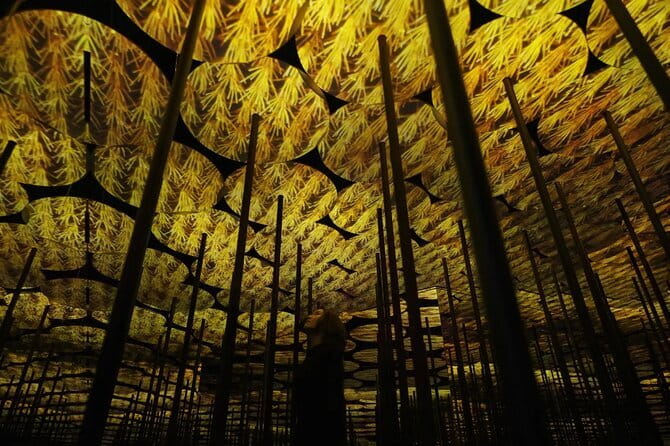
Traditional galleries separate works with walls, labels, and a clear division between one display and the next. At teamLab Borderless, works may move out of rooms and intermingle with others. That creates a more connected experience, where one area does not necessarily feel sealed off from the next.
This matters because the art is not only something you stand in front of. It is something you track as it shifts around you. Light and sound help create the mood, while movement gives the works a sense of change. You may notice a detail in one place and then see how it relates to another work nearby.
I find this especially useful for people who are curious about the meeting point between art and technology. You do not need a background in digital art to understand the basic appeal. The experience communicates through color, motion, sound, and space before you read any explanation.
Still, it is worth knowing what this ticket does not provide. There is no listed guide, docent, or private tour included. The visit is self-directed. That freedom suits many people, but you should not expect a scheduled talk or a staff member leading you from one installation to the next.
Why the QR codes are worth your time
One of the most practical tips for this visit is to scan the QR codes connected with the artworks. The codes provide information about what you are seeing and help explain the ideas behind the digital pieces.
It is easy to rush through a place like this, taking in the lights and sounds without pausing to ask what each work is doing. The QR codes give you a way to add context. I would not scan every code if your group is eager to keep moving, but choosing a few works to investigate can make the experience feel more thoughtful.
This is also useful if you are visiting with children or teenagers. The visual effects may capture attention first, while the short artwork explanations give older children and adults something to discuss. The attraction is suitable for all ages according to the available information, and the QR codes help different members of a group engage at their own level.
Do not treat the codes as homework. Use them when a work interests you. The point of this museum is still to wander and respond to the art, not to turn the visit into a reading assignment.
A good choice for families and mixed interests

The strongest audience for teamLab Borderless is a group with different tastes. One person may care about art. Another may enjoy technology. Someone else may simply want an unusual Tokyo activity. Because the experience uses visual effects, sound, and changing movement, you do not all need the same reason to attend.
Families are a natural fit. The attraction offers a shared experience rather than a quiet row of displays where everyone walks separately. Children can focus on the movement and color, while adults can think about how the works connect and read the accompanying information.
That said, the museum is not described as a guided family activity, so you will need to keep your own group together and decide how to spend your time. The absence of a fixed path gives you flexibility, but it also means you should agree on a meeting plan if members of your party want to explore at different speeds.
Couples and friends may also enjoy the open-ended format. You can compare what caught your eye and revisit works that felt different later. Solo visitors get the most freedom to set their own pace, though the experience is also designed to create a world that people share.
A few more Tokyo tours and experiences worth a look




Making sense of the $24 price

At about $24, this is not a minor add-on like a quick photo stop. It is a paid admission attraction that deserves a place in your Tokyo schedule. The value depends largely on how much time you give it and how interested you are in digital art.
The ticket includes admission based on the option you select. It does not include coffee or tea, and it does not include private transportation. Those exclusions are easy to understand, but they matter if you are comparing the total cost of several Tokyo activities.
There is also an important price warning: this ticket costs more than the official website price because it includes customer and support services through the seller. That extra cost may be worthwhile if you value help with booking and support, but you should compare prices before paying. If the official website has availability and you are comfortable booking there, the direct price may be lower.
For the reseller ticket, the best value comes when you use the full visit window. A one-hour stop can feel expensive if you expected a large traditional museum. Two to three hours gives the admission fee more weight, especially if you take time to explore and read about selected works.
The cancellation rule makes the purchase less flexible. This experience is non-refundable and cannot be changed for any reason. I would book only after checking your Tokyo schedule carefully.
Timing your visit in Azabudai Hills

The listed duration is approximately 1 to 3 hours. Build your day around that range rather than assuming you will be finished quickly. The open format can tempt you to leave after a short look, but it can also keep you exploring longer than planned.
If you have a packed sightseeing day, one hour may be enough for a focused introduction. If teamLab Borderless is one of your main activities, allow closer to three hours so you can wander without watching the clock.
Because the attraction is near public transportation, it can fit into a day of independent sightseeing. The ticket does not include private transport, so you are responsible for getting to Azabudai Hills. The available details do not specify a pickup service, guided meeting point, or transport arrangement.
Most people can participate, and the booking information says it is suitable for most visitors. No separate accessibility details are provided, so anyone with specific mobility or sensory needs should confirm current conditions before purchasing.
What to expect from the visit

Expect a self-guided art experience rather than a tour with commentary. You enter with your admission ticket, then explore the connected digital works at your own pace.
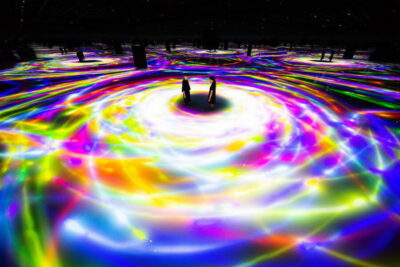
Expect the atmosphere to change as you move. Light, sound, and motion are central to the visit, and the works are designed to interact across boundaries. The key experience is not simply looking at one screen. It is noticing how the whole setting changes as the works relate to one another.
Expect some uncertainty about what comes next. That is part of the design. The museum is specifically described as a place without a map, so you should be comfortable wandering, retracing your steps, and making your own route.
Expect to spend a little time with the QR codes. They are a useful tool for learning about the art, particularly if you want more than a fast visual hit.
Do not expect refreshments or transport to be included. Coffee and tea are not part of the admission, and private transportation is excluded.
Who should book teamLab Borderless
I would recommend this ticket to you if you want a different kind of Tokyo museum and enjoy art that changes as you move through it. It is a good match for families, couples, friends, and groups with a mix of interests.
You should also consider it if you prefer to explore independently. There is no guide listed, so you control the pace and decide which works deserve more of your attention.
I would be more cautious if you want a conventional museum with a clear route, extensive historical displays, or a scheduled expert explanation. This is a technology-driven art environment, not a traditional collection of objects and paintings.
The price is another reason to pause. Since the ticket is higher than the official website price, compare the cost before booking. If you choose this option, make sure the added support is worth the difference to you.
Should you book this Tokyo experience?
Book teamLab Borderless if you want a visually striking, self-guided activity that works well for different ages and interests. The moving artworks, connected rooms, and no-map format give you a visit that feels personal rather than strictly programmed.
Give yourself up to three hours, use the QR codes for added context, and check the price against the official website. Do not book until your schedule is firm, since the ticket cannot be refunded or changed.
For a family or group looking for an unusual shared experience, this is a strong choice. For a visitor who wants a traditional museum, a guide, or a lower-cost short stop, it may not be the best use of your Tokyo budget.
FAQ
Where is teamLab Borderless located?
The experience takes place at teamLab Borderless Tokyo in Azabudai Hills, Tokyo, Japan.
How long does the visit take?
The approximate duration is 1 to 3 hours. Your total time depends on how long you spend exploring the artworks and reading the information connected to them.
Is there a fixed route through the museum?
No. teamLab Borderless is described as a museum without a map, with no fixed paths or directions.
What is included with the ticket?
The selected ticket option includes admission to teamLab Borderless.
Is coffee or tea included?
No. Coffee and tea are not included in the ticket.
Is private transportation included?
No. Private transportation is not included. The attraction is near public transportation.
Is the experience guided?
No guide is listed as part of the experience. You explore the museum independently.
Can I learn more about each artwork?
Yes. You can scan QR codes connected with the artworks to read more about them.
Is the experience suitable for children?
The available information says most travelers can participate and specifically notes that the experience is suitable for all ages.
Can I cancel or change my ticket?
No. The ticket is non-refundable and cannot be changed for any reason.
More Tickets in Tokyo



More Theme Parks & Digital Art in Tokyo
More Tickets & Passes in Tokyo

More tours in Tokyo we've reviewed











Theme Parks & Digital Art, compared.
 ★ 4.6Tokyo: teamLab Planets TOKYO Digital Art Museum Entry TicketFrom $251 day
 ★ 4.5Tokyo: DisneySea 1-Day PassportFrom $571 day
 ★ 4.6Tokyo Disneyland 1-Day PassportFrom $571 day
 ★ 4.1Tokyo: ‘Red Tokyo Tower’ Digital Amusement Park TicketFrom $37
 ★ 4.3Tokyo Disneyland or DisneySea Ticket & Door to Door TransferFrom $1431 day
 ★ 4.2Tokyo Disneyland: 1-Day Entry Ticket and Private TransferFrom $154