Reviewed · KAMAKURA & ENOSHIMA DAY TRIPS
Kamakura: One Day Private Tour with English Speaking Guide
Kamakura’s Great Buddha is the star here, but the real appeal is having a private van and a flexible schedule for a long day south of Tokyo. You can pair famous temples with Komachi Street, Enoshima, or even Yokohama, depending on what matters most to you.
In This Article
- Key points to know before booking
- Why Kamakura makes a fine day outside Tokyo
- The Great Buddha at Kōtoku-in
- Hase-dera and the first taste of Kamakura’s temple country
- Bamboo at Hokokuji
- Komachi Street and Tsurugaoka Hachimangu
- Enoshima and the Benten shrines
- The Yokohama extension: useful, but possibly too much
- Yokohama Chinatown
- Sankeien Gardens
- Shin-Yokohama Ramen Museum
- What the private van changes
- Guide quality and how to protect your day
- Timing, cost, and what is not included
- Who will get the most from this tour
- Should you book it?
- FAQ
- Where does the tour begin and end?
- How long does the tour last?
- How many people can join the private group?
- What languages are available?
- Is lunch included?
- Are attraction admission fees included?
- Can the itinerary be changed?
- What should I bring?
I like the chance to shape the day around your interests, and I like the comfort of door-to-door transport for a group of up to six. Guide Ali has earned especially warm praise for being patient, friendly, and willing to adjust the schedule. The main concern is important: one past booking received a driver rather than a guide who joined the group at the sights, so confirm the guiding arrangement before you pay.
Key points to know before booking
- Great Buddha and Hase-dera: See Kamakura’s best-known religious sights with time set aside for each.
- Private van from Tokyo: Your group avoids train changes and can travel together for the full 10-hour day.
- Flexible planning: Ask for a temple-focused, nature-focused, or Kamakura-and-Yokohama route.
- Enoshima option: Visit shrines linked with Benten, the deity of luck, wealth, music, and knowledge.
- A packed possible route: The advertised stops include Kamakura, Yokohama Chinatown, Sankeien Gardens, and the Shin-Yokohama Ramen Museum.
- Guide quality needs checking: The experience includes a live guide in English, Hindi, or Japanese, but past service has not been perfectly consistent.
Why Kamakura makes a fine day outside Tokyo
Kamakura was a political center in Japan during the 12th century. Today, it offers a useful change of pace from Tokyo, with temple grounds, shrine approaches, bamboo, coastal views, and old shopping streets packed into a relatively small area.
A private tour makes sense here because Kamakura’s sights are spread across different parts of town. Public transport can reach many of them, but a van saves you the work of changing trains, finding the right bus, and regrouping after each stop. For a group of three to six, that convenience can be worth more than it would be for a solo visitor.
The trade-off is time. The full program includes nine listed stops over 10 hours, beginning with pickup in Tokyo and ending back there. That is a lot of ground. If you want long temple visits, a relaxed lunch, shopping, Enoshima, and three Yokohama sights, you will need to set priorities before the day begins.
I would ask for a clear plan at pickup. The flexible format is useful only if you and the guide agree on what to drop.
A few more Tokyo tours and experiences worth a look
The Great Buddha at Kōtoku-in
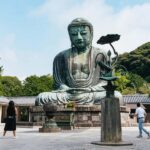
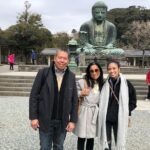
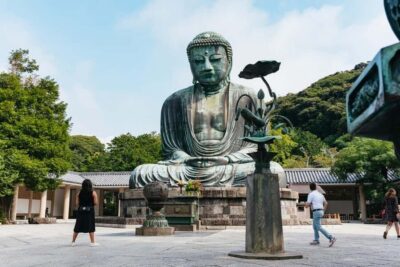
Kōtoku-in is the essential Kamakura stop. Its large seated Buddha gives the tour an immediate sense of place and is the sight most closely linked with the city in the public imagination.
You have about an hour scheduled here, including a guided visit. That should give you time to see the statue, take photographs, and hear about its role within the temple setting. The stop is not just a quick roadside photograph, which is a good thing. The scale of the Buddha is best understood when you stand near it and take in the surrounding space.
January can be cool, while summer brings stronger sun, so comfortable shoes and sunscreen are sensible year-round advice. Bring a camera, but keep the visit focused on the setting rather than treating it as a single photo stop.
Admission fees are not included. Ask your guide how entrance costs will be handled during the day, and carry a payment method suitable for small temple and attraction charges.
Hase-dera and the first taste of Kamakura’s temple country
Hase-dera receives another hour. It is one of the city’s most important temple visits on this route, and it helps balance the famous Buddha with a broader look at Kamakura’s religious life.
The tour description also refers to visiting nearly all the major temples, though the detailed schedule names only selected sites. Treat that wording as a starting point, not a promise that every famous temple can fit into one day. Tell the guide which temples matter most to you.
The Hase area also helps explain why this is better than a simple point-to-point transfer. You can ask questions as you go, pause for photographs, and adjust the pace. One solo participant found the guide flexible when extra time was wanted at a particular stop. That kind of flexibility is a real benefit in a place where quiet temple grounds can reward a slower visit.
Still, flexibility depends on having an actual guide with you at each sight. Make that expectation clear at the start.
Bamboo at Hokokuji
Hokokuji Bamboo Forest is listed as a one-hour visit and photo stop. It gives the day a different mood from the open plaza around the Great Buddha or the formal approach to a major shrine.
The bamboo area is compact, so an hour may be enough for a calm walk and photographs. If you want extensive time at several temples, though, this is one of the stops that may need to be shortened. Ask the guide whether the bamboo forest fits your priorities or if another temple would suit you better.
This is also a place where footwear matters. You should expect to walk on temple paths and spend much of the day getting in and out of the van. Comfortable shoes are not a minor suggestion here.
Komachi Street and Tsurugaoka Hachimangu
The route from Komachi Street to Tsurugaoka Hachimangu gives you Kamakura’s most approachable mix of shopping, food, and shrine culture. Komachi Street is the place to browse for souvenirs and local products, so it is worth keeping some free time rather than racing through it.
The street also provides a useful contrast with the temple grounds. You can look at traditional goods, sample local treats, and see how modern shopping fits around Kamakura’s older religious sites. It is not a substitute for a quiet temple visit, but it makes the day feel more complete.
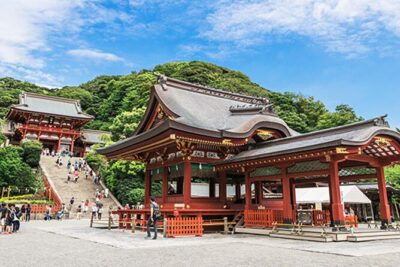
Tsurugaoka Hachimangu receives about an hour for guided sightseeing. The shrine is one of Kamakura’s major landmarks and a natural centerpiece for the city portion of the tour. Plan to wear shoes that handle walking and remember that admission to attractions is not included in the tour price.
If shopping matters to you, say so early. A private schedule lets you protect that time. If your priority is temples and gardens, you can keep the stop brisk and use the saved time elsewhere.
Other guided tours in Tokyo

Enoshima and the Benten shrines
Enoshima is described as a small island west of Kamakura, with several shrines devoted to Benten. In Japanese tradition, Benten is linked with luck, wealth, music, and knowledge, making these shrines appealing to visitors with different interests.
The island adds a coastal element to a day otherwise centered on temples and urban sights. On a clear day, Mount Fuji may be visible, though you should treat that as a weather-dependent bonus rather than a guaranteed feature.
Enoshima also makes the schedule harder to manage. It is not a tiny photo stop that can always be added without consequence. If you want time for the island’s shrines and views, ask the guide to remove one or more Yokohama stops. If your visit falls on a clear day and scenery matters to you, Enoshima may be the better use of your afternoon.
The Yokohama extension: useful, but possibly too much
The detailed route includes three Yokohama stops after the Kamakura sights. That makes this more than a standard Kamakura day trip.
Yokohama Chinatown
Yokohama Chinatown receives about an hour for guided sightseeing. It changes the cultural focus again, moving from Kamakura’s temples and shrines to a major city district. If you want variety, this is a worthwhile addition. If you want an unhurried look at Kamakura, it may feel like a detour.
Lunch is not included, so Chinatown could be a practical place to eat, but the tour information does not promise a specific restaurant or a dedicated lunch break. Discuss meal timing before leaving Tokyo. Ten hours can pass quickly, especially when each stop has its own parking and walking time.
Sankeien Gardens
Sankeien Gardens offers an hour of walking in a more spacious setting. It is a good counterpoint to shopping streets and shrine courtyards, and it may appeal to you if gardens and photographs matter more than another urban stop.
Again, the one-hour allocation suggests a focused visit, not a leisurely garden afternoon. You will need to decide if the garden deserves more time than Chinatown or the Ramen Museum.
Shin-Yokohama Ramen Museum
The Shin-Yokohama Ramen Museum is the most unusual stop on the schedule. It gives the day a food and popular-culture angle, rather than another historic site.
You can include it if you want a playful final stop in Yokohama. But if your main reason for booking is Kamakura’s temples, the museum is the easiest stop to cut. A custom tour should serve your interests, not force you to collect every listed location.
What the private van changes
The van is the backbone of this experience. Pickup is in Tokyo, and transportation returns you there at the end of the 10-hour day. Parking fees and private transportation are included, along with water bottles.
For a family or group of friends, this is far simpler than coordinating several train journeys. You can leave bags in the vehicle between stops, remain together, and avoid the fatigue of navigating unfamiliar connections. For a solo visitor, the value is less obvious because the full price is charged per group rather than per person.
The price is $486 for up to six people. Split six ways, that is $81 per person before attraction fees and lunch. Split among three people, it becomes $162 each. For a full private vehicle and guide, the price can be reasonable for a larger group, but a couple may find public transport and a standard small-group tour cheaper.
Parking is also the reason to clarify the guide’s role. One disappointing booking involved a driver who dropped the group at sights and did not provide historical explanations on site, citing difficult or expensive parking. That does not match what most people expect from a live guided tour. The issue appears to be an exception rather than the main pattern, but it is too significant to ignore.
Guide quality and how to protect your day
The strongest feedback centers on guides who are kind, patient, informative, and flexible. Ali is specifically praised for explaining the sights, adjusting the schedule, and making a solo participant feel safe. Another booking described the day with Ali as friendly and full of interesting information about the Great Buddha, Hase-dera, and coastal views.
That is the service you should expect from the advertised format: not just a driver, but a person who accompanies you and provides context at the sights.
Before departure, confirm three points:
- The guide’s name and language for your booking
- That the guide will enter the sites and accompany you during visits
- Which stops are fixed and which can be changed
The available languages are English, Hindi, and Japanese. If you need English guiding, confirm it directly rather than assuming the vehicle driver and guide will be the same person.
The overall rating is 4.8 from seven ratings, which suggests strong satisfaction but is still a small sample. I would place more weight on the repeated praise for Ali and the clear warning about the one driver-only experience than on the number alone.
Timing, cost, and what is not included
The tour lasts 10 hours, with starting times subject to availability. Pickup and return are in Tokyo. The schedule is long enough for a substantial day, but not long enough to linger at every temple, shop at length, enjoy a full meal, spend much time on Enoshima, and complete all three Yokohama stops without careful planning.
Lunch is not included. Entrance fees are also not included. Water bottles and parking fees are included, which removes two small but useful costs from the day.
The activity allows cancellation up to 24 hours in advance for a full refund, and you can reserve now and pay later. Those terms are helpful if your Tokyo plans may shift. The tour is not considered suitable for pregnant women, and smoking is not allowed.
Who will get the most from this tour
I would recommend it most strongly to a group of four to six people who want a private day outside Tokyo without managing transport. Families may also value the ability to change the pace and spend longer at a stop that suits them.
It is a good fit if you want a mix of:
- Major Buddhist temples
- Shinto shrine culture
- Shopping and local products
- Bamboo and gardens
- Coastal views
- Yokohama food and city sights
It is less suitable if you want a slow, specialist temple tour. The schedule covers too many possible stops for deep attention at every one. It is also less attractive for a couple on a tight budget, since the group price becomes expensive when divided by only two people.
The tour works best when you treat the listed route as a menu. Pick the Great Buddha, Hase-dera, and Tsurugaoka Hachimangu as your foundation. Then choose Enoshima or the Yokohama extension, not necessarily both.
Should you book it?
Book this tour if private transport, schedule control, and a full day beyond Tokyo matter more to you than the lowest price. A group of four to six can get solid value, especially with a guide such as Ali who explains the sites and adjusts the pace.
Before booking, confirm that your guide will personally accompany you into the attractions. That one question addresses the main weakness in the service record. If you receive a clear answer and narrow the itinerary to your top priorities, this can be an efficient and enjoyable way to see Kamakura without fighting the transport system.
FAQ
Where does the tour begin and end?
Pickup is in Tokyo, and the tour returns to Tokyo after the 10-hour experience.
How long does the tour last?
The tour lasts 10 hours. Starting times depend on availability.
How many people can join the private group?
The price covers a private group of up to six people.
What languages are available?
Live guiding is available in English, Hindi, and Japanese.
Is lunch included?
No. Lunch is not included in the tour price.
Are attraction admission fees included?
No. Admission fees to attractions are paid separately.
Can the itinerary be changed?
Yes. The itinerary is customizable, so you can discuss your interests and preferences with the guide.
What should I bring?
Bring comfortable shoes, a camera, and sunscreen. Smoking is not allowed, and the activity is not suitable for pregnant women.
More Private Tours in Tokyo

More Guided Tours in Tokyo
More Kamakura & Enoshima Day Trips in Tokyo


More tours in Tokyo we've reviewed












Kamakura & Enoshima Day Trips, compared.
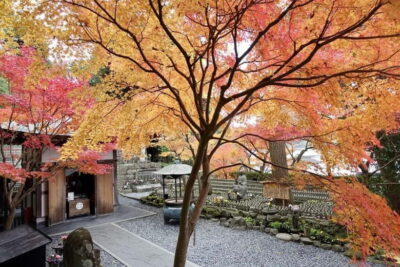 ★ 4.5Tokyo: Kamakura & Enoshima Day Trip including Temple TicketsFrom $589 hours - 570 minutes
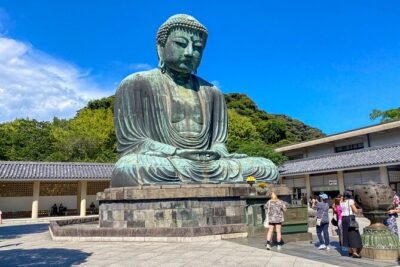 ★ 5.0Mount Fuji, Kamakura, Big Buddha, & Lake Ashi Day TripFrom $109
 ★ 4.7Tokyo: Mt Fuji, Kamakura, Lake Ashi & Big Buddha Guided TourFrom $50
 ★ 4.5From Tokyo: Kamakura & Enoshima 1-Day Bus TourFrom $66
 ★ 4.9Tokyo:Sea of Mount Fuji, Hakone Ropeway, Ōwakudani, EnoshimaFrom $5010 hours
 ★ 5.0Kamakura 8 hr Private Walking Tour with Licensed Guide from TokyoFrom $201