Reviewed · SUMO EXPERIENCES
Tokyo Sumo Culture Tour with Chanko-Nabe Lunch in Ryogoku
Ryogoku is Tokyo’s sumo neighborhood, and this 3.5-hour walk gives you the backstory behind the sport instead of only a seat in the stadium. You’ll see sumo stables from outside, learn old rituals at Nominosukune Shrine, inspect a full-size ring, and finish with chanko-nabe, the hot-pot meal tied to wrestlers’ training.
In This Article
- Key points to know before booking
- Why Ryogoku is the right place to learn sumo
- Hakkaku-beya and the careful view of a sumo stable
- Nominosukune Shrine and sumo’s legendary beginnings
- Ryogoku Kokugikan, seen from outside
- Ryogoku Edo Noren and the full-size sumo ring
- Ekoin Temple and sumo in the Edo period
- Kasuganobeya and the practical side of wrestler life
- Chanko-nabe at Tomoegata, the tour’s warm finish
- What the $131.12 price really covers
- Timing, walking, and practical planning
- Who will get the most from this sumo walk
- Should you book the Tokyo Sumo Culture Tour?
- FAQ
- Does the tour include watching a sumo match?
- Is lunch included in the price?
- How many people can join the tour?
- Where does the tour start and end?
- How long does the experience last?
- Can I cancel for a full refund?
I like the small maximum of eight, which makes it easier to ask questions and keep up with the guide. I also like the route’s mix of sumo and local history, from the Edo-period tournament site at Ekoin Temple to the modern Ryogoku Kokugikan.
The main catch is important: you do not watch a practice or match. Sundays can be especially limiting because training-facility tours may be closed, so check your date if seeing active wrestlers is your main goal.
Key points to know before booking

- Small-group format: The tour accepts no more than eight people, with guides such as Jeff, Taka, and Aki-san praised for clear, friendly explanations.
- Seven sumo-related stops: You visit stables, a shrine, the national arena exterior, a sumo ring, and a former Edo tournament site.
- Lunch is included: The tour ends at Tomoegata Chanko for a one-hour chanko-nabe meal.
- No live sumo viewing: The route offers culture and history, not a match, public practice, or stable training session.
- Good location for a walking tour: It begins near Ryogoku Station at 9:30 a.m. and ends at the restaurant, with no hotel transfer.
- Worth checking your calendar: The experience is best suited to a day when you want context and conversation, not guaranteed access to wrestlers.
Why Ryogoku is the right place to learn sumo

Sumo makes more sense once you see the neighborhood that supports it. Ryogoku is known as Sumo Town because it contains the national arena and several stables where wrestlers live and train.
This tour uses that setting well. Rather than placing you in a classroom, it moves through the district on foot, linking religious sites, old tournament grounds, training stables, and modern sumo facilities. The walking helps you see sumo as part of Tokyo life, not just as a sport staged inside an arena.
Your guide supplies the meaning behind each stop. That matters because many details of sumo are easy to miss on your own. A shrine may look like a quick photo stop, while a guide can explain its connection to the sport’s founding figure. A stable may appear to be an ordinary building from the street, while the guide explains why it matters and how wrestlers use the surrounding area.
The group limit of eight is a real advantage. You are not trying to hear a guide over a large crowd, and you can ask about rules, rank, customs, and daily life as the questions occur to you.
A few more Tokyo tours and experiences worth a look
Hakkaku-beya and the careful view of a sumo stable
The first stop is Hakkaku-beya Sumo Stable. You look at the stable from outside, where wrestlers live and train, for about 15 minutes.
Keep your expectations in check. This is not an open training visit, and you should not expect to walk inside or see a practice. The value is in learning how a stable fits into sumo culture and in seeing one of the places connected with the wrestlers’ daily routine.
For anyone hoping to photograph active wrestlers, this stop may feel brief. For someone new to sumo, it gives useful orientation before the more historical parts of the walk. Your guide can also help you understand the difference between a stable, a tournament venue, and a public attraction.
A short stop here works well early in the morning, when you still have time to build a picture of the district before lunch.
Nominosukune Shrine and sumo’s legendary beginnings
At Nominosukune Shrine, you spend about 30 minutes learning about the figure regarded as the founder of sumo. The guide explains how sumo is said to have begun around 1,500 years ago and how its rules changed over time into the form used today.
This is one of the most useful stops for first-time followers because it connects modern competition with older ritual and legend. You are not simply learning who wins a bout. You are learning why sumo carries religious and ceremonial associations, and why the sport’s rules and customs have such weight.
The shrine also breaks up the walk with a quieter setting. After seeing a working stable from outside, you get a place where the guide can explain ideas in more depth without the arena or street taking all the attention.
You should treat the early origin story as cultural tradition rather than a modern sporting record. The appeal is not proving every ancient detail. It is understanding how sumo presents its own past and why that past still shapes the sport.
Ryogoku Kokugikan, seen from outside

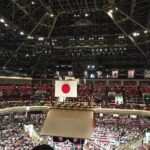
Ryogoku Kokugikan is the major sumo arena and the setting for three Grand Sumo Tournaments each year. The tour spends around 30 minutes outside, using the building as a starting point for stories about sumo and its dedicated home.
This stop is valuable even without a ticket. You get a clear sense of where the biggest official events take place, and your guide can explain the arena’s role in the sumo calendar. If you later attend a tournament, the earlier explanation should help the event feel less mysterious.
But this is not a substitute for entering the arena. The tour does not include a sumo match, and the price does not cover actual tournament viewing. If your dream is to watch bouts, you need a separate ticket and a separate plan.
The outside visit works best for people who want context before arranging a tournament visit. It is less satisfying for anyone who expects the tour itself to provide live action.
Ryogoku Edo Noren and the full-size sumo ring

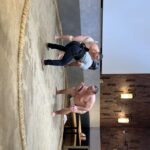
Ryogoku Edo Noren brings the old Edo atmosphere into the route and includes a full-scale sumo ring. You have about 30 minutes to see the ring up close while your guide explains how sumo is observed and why the ring matters.
This is likely to be one of the most visual stops. A full-size ring gives you a better sense of the space used in a bout than a television screen can. It also helps you picture the formal structure of a match, even though no competitors are present.
The stop adds variety to the tour. You have already seen a stable and a major arena, but here you focus on the ring itself. That makes the rules and rituals easier to picture when the guide discusses them.
There is also a useful distinction to keep in mind: seeing a ring is not the same as seeing it in competition. You receive the setting and explanation, not the noise, pressure, and speed of a tournament.
A few more Tokyo tours and experiences worth a look


Ekoin Temple and sumo in the Edo period

At Ekoin Temple, the tour pauses for about 15 minutes at a site connected with sumo tournaments held during the Edo period. Your guide explains how those events worked and what social status wrestlers held in the pre-modern era.
This stop widens the subject beyond technique. Sumo has not always occupied the same place in society, and learning about wrestlers’ status helps explain how the sport changed over time.
The short visit is enough to add historical depth without turning the morning into a long temple tour. If you have little interest in the social side of sumo, it may feel less immediate than the stable or the ring. I think it earns its place because it shows that sumo’s story includes work, rank, public entertainment, and social rules.
Kasuganobeya and the practical side of wrestler life

The next stable is Kasuganobeya, another outside stop lasting about 15 minutes. The guide points out the stable and the large bicycles used by wrestlers in daily life. A Bulgarian-born wrestler is associated with the stable.
The bicycles are a small but memorable detail. They make the scale of wrestlers’ everyday lives more concrete than abstract talk about size and strength. This is the kind of observation that can give a walking tour personality.
Again, the stable visit is viewed from outside. You are learning about the place and its role, not entering the training room. That limitation should be clear before you book, particularly if your main interest is watching wrestlers practice.
The two stable stops also let you compare the idea of a working sumo neighborhood with the formal sites connected with tournaments. Together, they make the route feel more grounded.
Chanko-nabe at Tomoegata, the tour’s warm finish

The final stop is Tomoegata Chanko, where you spend about one hour over lunch. Chanko-nabe is a nutrient-packed hot-pot dish associated with sumo wrestlers’ diets, helping them build weight and muscle as they train.
Lunch is included in the tour price, while alcoholic drinks are not. This is more than a convenient meal at the end of a walk. It gives you a direct connection to one of the best-known parts of wrestler life: food prepared and eaten as part of a demanding training culture.
The restaurant stop also gives the morning a clear finish. You do not return to the station or end at a general meeting point. The tour ends at Tomoegata Chanko, at 2-17-6 Ryogoku, so you can continue your day from there after eating.
I like that the meal is built into the route rather than left for you to arrange. It saves time and makes the experience feel like one complete introduction to Ryogoku. Still, if you do not enjoy hot-pot meals, this is a significant part of the booking, not a minor extra.
What the $131.12 price really covers
At $131.12 per person, this is not a cheap neighborhood walk. The value comes from three things: a guide focused on one subject, a very small group, and a full lunch at the end.
You are paying for interpretation rather than admission tickets. The listed stops are free, and there is no tournament entry, stable practice visit, hotel transfer, or alcohol included. If you measure value by paid attractions, the price may seem high.
I would judge it by the quality of the explanation and the fit with your interests. A strong guide can connect the shrine, stables, arena, ring, temple, and meal into one clear story. Past guides named Jeff, Taka, and Aki-san received especially warm praise for being personable, clear, and well informed about sumo culture. The exact guide for your date is not guaranteed, but the small group gives you a good chance to ask direct questions.
The 96 percent recommendation rate and 4.9 rating from 26 reviews suggest a strong record, though the sample is modest. One less positive experience pointed out that a Sunday visit fell between tournaments and did not allow access to training facilities. That is a fair warning, not a reason to reject the tour outright.
The price makes the most sense when you want a guided introduction and lunch, not when you are only seeking live sumo.
Timing, walking, and practical planning
The tour begins at 9:30 a.m. near Ryogoku Station, at 1-4-29 Yokoami. You should arrive ready to walk through the neighborhood for roughly three and a half hours.
The route includes several short stops of 15 or 30 minutes and one hour for lunch. That pace gives you regular changes of subject, but it also means the day is structured. You will not have unlimited time at any one location.
The tour ends at Tomoegata Chanko rather than back at the station. Since the restaurant is in Ryogoku, the end point remains near the same sumo district, but you should plan your next move from the restaurant.
Most people can participate, and the meeting area is near public transportation. Hotel pickup and drop-off are not included, so you make your own way to Ryogoku Station.
The tour accepts mobile tickets and offers group discounts. Confirmation arrives when you book, and free cancellation is available until 24 hours before the 9:30 a.m. start time. Changes or cancellations inside that 24-hour window are not refunded.
Who will get the most from this sumo walk
I would recommend this experience to you if you are curious about sumo but do not yet know how the sport works. It suits visitors who want the customs, places, and stories explained in plain language, with lunch included and no need to research a route.
It is also a good choice for families or small groups who prefer a private-feeling outing. A maximum of eight people gives the guide room to respond to questions, and past tours have sometimes felt effectively private when fewer people booked.
You may want something else if you require live sumo. This tour does not promise practice, matches, or access inside a stable. It is also not ideal if you dislike walking between several brief stops or do not want chanko-nabe for lunch.
Plan carefully around the calendar. The main tournaments take place three times a year, but being in Ryogoku during a tournament does not mean this tour includes a ticket. Sundays may also be less useful for anyone hoping to see training, since training-facility tours may be closed.
Should you book the Tokyo Sumo Culture Tour?
Book it if your priority is understanding sumo’s place in Ryogoku, seeing its key landmarks, and sharing a traditional hot-pot lunch with a guide. The route is well chosen, the group is small, and the guides named in past outings, including Jeff, Taka, and Aki-san, have made the experience personal and easy to follow.
Skip it if live action is non-negotiable. For the $131.12 price, you receive access to sumo culture and explanation, not a match or practice. Choose a weekday when possible, confirm what is available on your date, and think of the morning as a walking history lesson with lunch rather than a ringside event.
FAQ
Does the tour include watching a sumo match?
No. Actual sumo viewing, including practice or matches, is not included.
Is lunch included in the price?
Yes. Chanko-nabe lunch at Tomoegata Chanko is included. Alcoholic drinks are not included.
How many people can join the tour?
The group has a maximum of eight participants.
Where does the tour start and end?
It starts near Ryogoku Station at 1-4-29 Yokoami, Sumida City. It ends at Tomoegata Chanko at 2-17-6 Ryogoku, Sumida City.
How long does the experience last?
The tour lasts about three hours and 30 minutes, beginning at 9:30 a.m.
Can I cancel for a full refund?
Yes, if you cancel at least 24 hours before the start time. Cancellations or changes made less than 24 hours before the tour are not refunded.
More Lunch Experiences in Tokyo
More Sumo Experiences in Tokyo

More tours in Tokyo we've reviewed












Sumo Experiences, compared.
 ★ 4.8Tokyo: Sumo Show Experience with Chicken Hot Pot and a PhotoFrom $1032 hours
 ★ 4.8Tokyo: Sumo Show and Dining ExperienceFrom $7990 minutes - 2 hours
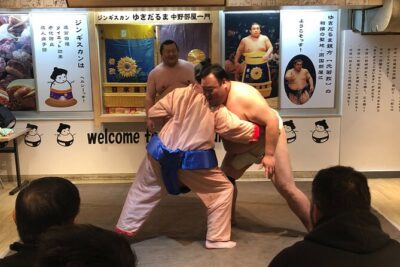 ★ 5.0the SUMO showFrom $89
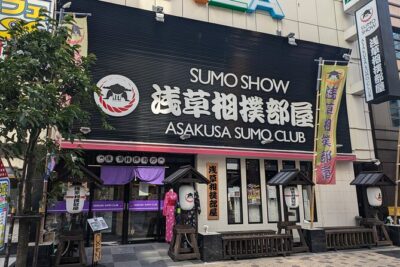 ★ 5.0Tokyo Sumo Entertainment Show with Chicken Hot Pot and PhotoFrom $106
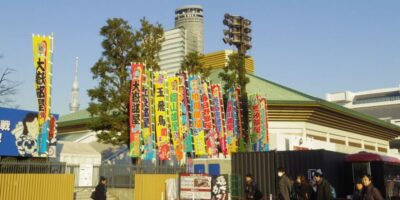 ★ 4.6Tokyo: Sumo Tournament Tour with Chair Seat TicketsFrom $141
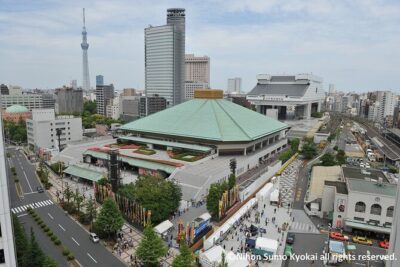 ★ 5.0Tokyo Grand Sumo Tournament Viewing Tour with TicketsFrom $124