Reviewed · SHINJUKU TOURS
Shinjuku Izakaya and Golden Gai Bar Hopping Tour
Shinjuku after dark is a maze of glowing signs, tiny drinking alleys, smoky yakitori counters, and bars so small you could miss them while looking straight at them. This tour gives you a guide through Omoide Yokocho, Kabukicho, and possibly Golden Gai, with dinner, drinks, and local explanations along the way.
In This Article
- Key points to know before booking
- Why Shinjuku works so well for a first night out
- Starting at Omoide Yokocho
- Walking through Kabukicho’s neon streets
- The dinner and nomihodai stop
- Finishing in Golden Gai
- The guides make the biggest difference
- What the $99.10 price includes
- Who should book this evening
- Booking and cancellation details
- Should you book the Shinjuku bar-hopping tour?
- FAQ
- Where does the tour start?
- Where does the tour end?
- How long does the tour last?
- What food and drinks are included?
- Can people under 20 join?
- Can the tour accommodate dietary restrictions?
I like the small maximum group of eight and the useful mix of food and drink: yakitori, fish, vegetables, sake, Japanese whisky, and other local pours. I also like that guides such as Hiro, Ryota, Tak, and Kiyo have helped people order, understand unfamiliar dishes, and find another bar after the official tour.
The main caution is that the evening is not always a fixed three-bar crawl. Golden Gai may depend on the customized plan, and one account describes a disappointing night with fewer venues and less food than expected. You should also arrive hungry, pace your drinking, and be comfortable walking through Kabukicho, Tokyo’s red-light district.
Key points to know before booking
- Omoide Yokocho starts the night with old Tokyo atmosphere: Expect narrow lanes, local izakaya, and yakitori rather than polished dining rooms.
- Kabukicho adds the neon and nightlife: The route passes through bright entertainment streets, narrow back lanes, and the Godzilla building area.
- Golden Gai may be the finale: Ask in advance if you specifically want to finish in its famous miniature bars.
- Food is a major part of the value: The package includes dinner with about 6 to 8 food items, not just a drink in each bar.
- One stop includes nomihodai: You receive all-you-can-drink service at one bar, alongside the stated three alcoholic drinks.
- The group is capped at eight: That makes small counters easier to enter and gives you more time with the guide.
Why Shinjuku works so well for a first night out
Shinjuku can feel like several cities packed into one district. The station area is huge, the signs are easy to misread, and the narrow alleys change character from one block to the next. You can find department stores, office towers, pachinko parlors, restaurants, bars, and adult entertainment all within a short walk.
That is where a guided evening helps. You do not need to spend your first night trying to work out which door leads to a welcoming izakaya and which one is aimed at a different sort of nightlife. The guide leads the way, explains what you are seeing, and handles the practical problem of ordering food and drinks in unfamiliar places.
The experience is designed for international visitors, with a maximum of eight people. That is a useful size in Shinjuku, where some counters and bars are extremely compact. A larger group could easily split up or find itself unable to enter small venues.
The tour lasts about two hours. That is enough time for a strong introduction, but not enough for an exhaustive tour of Shinjuku. Think of it as a guided dinner and orientation, followed by the option to continue on your own.
A few more Tokyo tours and experiences worth a look
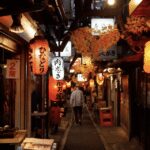
Starting at Omoide Yokocho
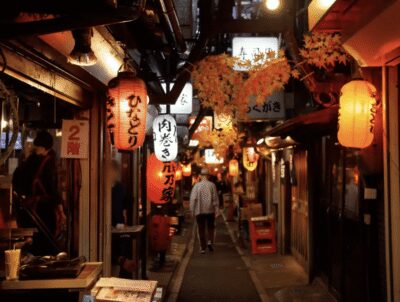
The meeting point is Tajimaya Coffee at 1-chome-2-6 Nishishinjuku. From there, the first stop is Omoide Yokocho, a traditional drinking alley near Shinjuku Station.
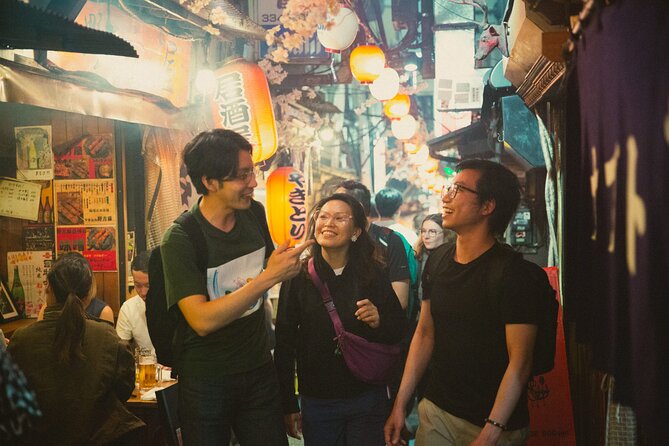
Omoide Yokocho is sometimes called Piss Alley, an old nickname that does not describe the experience today. The lanes are lined with compact izakaya, cooking smoke, hanging signs, and closely packed seats. This is one of the best places in Shinjuku to see the casual, after-work side of Tokyo dining.
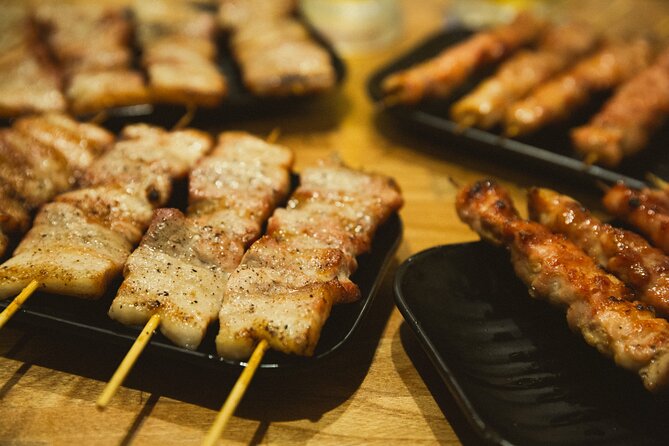
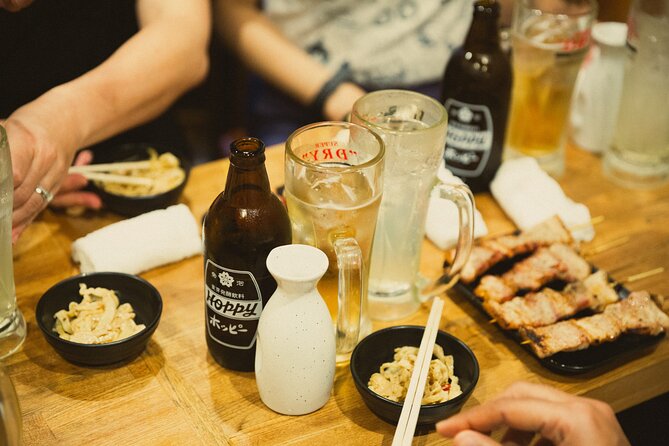
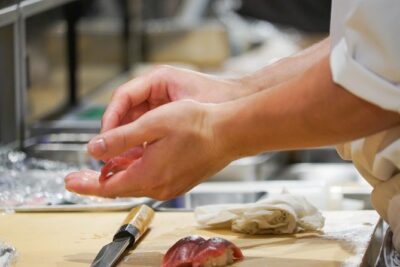
Here you might try yakitori, the simple but deeply satisfying Japanese food of grilled chicken pieces served on skewers. The tour can also include vegetables, fish, and other small dishes. The point is not a formal meal with one large plate. You sample several things, share them with the group, and learn how an izakaya meal works.
The 30-minute stop is short, so do not expect to settle into one restaurant for the whole evening. Its value is the setting and the first taste of the night. The guide can also help you identify what you are eating, which matters when menus are mainly in Japanese.
Walking through Kabukicho’s neon streets
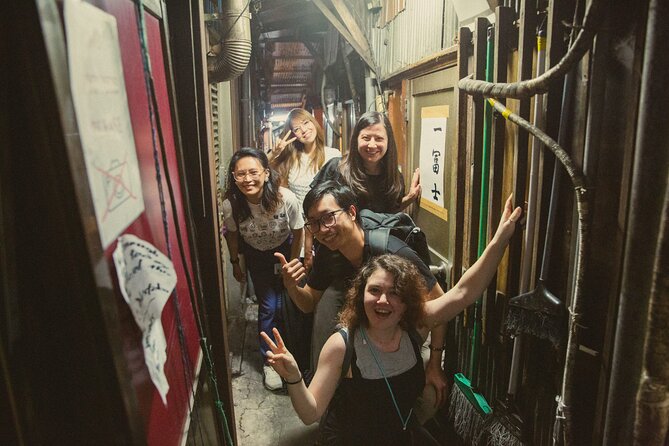
From Omoide Yokocho, the route continues into Kabukicho, Tokyo’s best-known red-light district and one of its main nightlife zones. The walk takes about 45 minutes and gives the evening a change of pace.
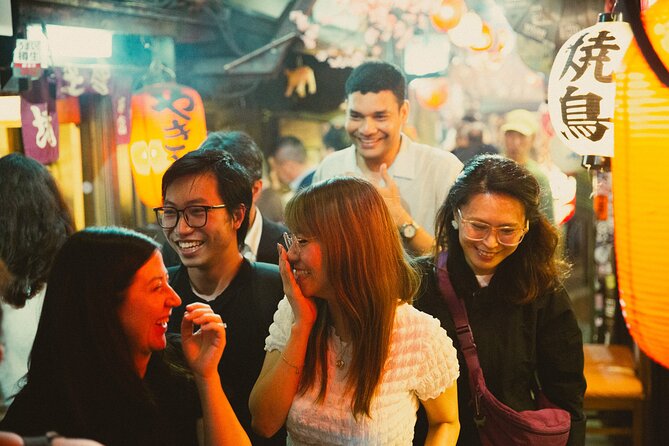
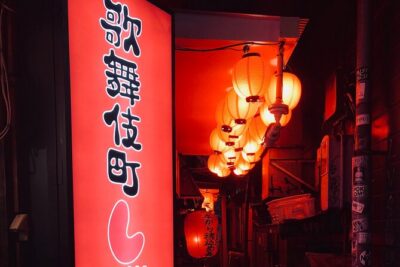
Kabukicho is famous for its glowing signs, entertainment buildings, narrow side streets, and late-night energy. The route passes by the Godzilla building area, and some versions of the walk include a pachinko parlor or newer entertainment complexes. You are not simply moving from one restaurant to another. You are getting a quick look at how Tokyo’s nightlife is arranged.
The guide is especially useful here because Kabukicho can feel confusing even in daylight. At night, the bright signs and side streets make it easy to lose your bearings. A local guide also gives context about what is ordinary, what is aimed at visitors, and how to move through the district sensibly.
Still, this is not a quiet cultural walk. Kabukicho is loud, crowded at times, and associated with adult entertainment. You should stay with the group and avoid accepting invitations from street touts. If you prefer calm neighborhoods or do not enjoy red-light districts, this part may not suit you.
The dinner and nomihodai stop
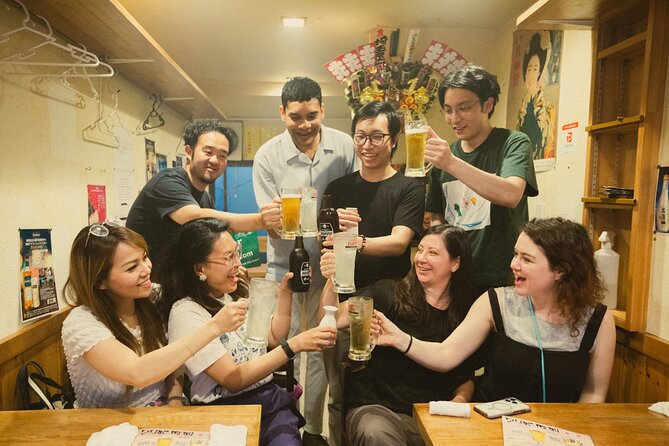
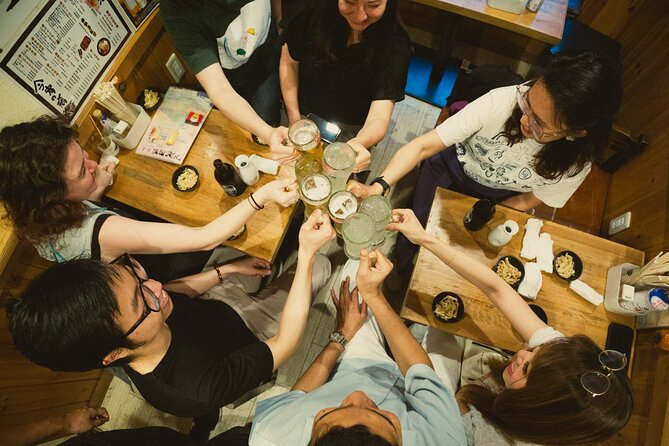
The food and drink stop is the heart of the experience. The package includes roughly 6 to 8 food items and three alcoholic drinks, with nomihodai service at one bar.
Nomihodai means all-you-can-drink service for a set period. In practice, that can make the meal feel generous, but it also makes pacing important. The tour information specifically asks you not to arrive already drunk. That is sensible advice. You will enjoy the food, conversation, and walk far more if you begin sober and drink slowly.
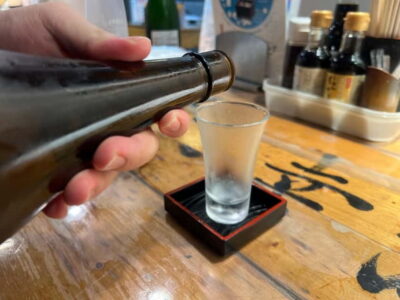
The menu may include yakitori, fish, vegetables, sake, Japanese whisky, and other local drinks. Exact dishes can vary, and one account describes the destinations as fairly flexible, shaped by the group and the available budget rather than a completely fixed menu. That flexibility can be a strength when the guide adapts to the group, but it also means you should not expect a guaranteed list of restaurants or dishes.
Come hungry. Several people found there was more food than expected, and one particularly useful tip is not to eat dinner before arriving. The meal is spread across small dishes rather than served all at once, so it helps to leave room.
The food also gives you a simple introduction to Japanese drinking culture. Izakaya dining is social and informal. You order several dishes for the table, taste a little of everything, and keep the meal moving. A guide can explain the food and show you how to approach items that may be unfamiliar.
Finishing in Golden Gai
Shinjuku Golden Gai is listed as the ending point, but the itinerary says it can be included as part of a customized plan, so confirm this before booking if Golden Gai is your main reason for going.
Golden Gai is made up of narrow lanes packed with tiny bars. Many venues have only a handful of seats, and each bar has its own personality and house rules. This is not a standard pub district with large open rooms. It is intimate, quirky, and often more social than polished.
Ending here makes practical sense. After the guide has shown you how the area works, you can return later with more confidence. Several guides have also helped people continue their evening, find another local izakaya, or choose a place for more sake after the formal tour ends. That extra help is not guaranteed as part of the package, but it shows the value of having a local contact.
Golden Gai is also where the drinking can catch up with you. If you have made full use of the nomihodai stop, you may arrive already feeling the effects. Pace yourself, drink water when you can, and remember that the narrow streets are not the place to wander alone while heavily intoxicated.
A few more Tokyo tours and experiences worth a look
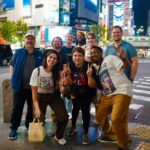
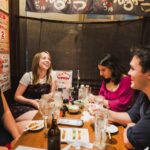
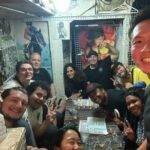
The guides make the biggest difference
The tour’s strongest feature is the guide. The most positive accounts repeatedly point to guides who were friendly, attentive, and comfortable explaining both food and local customs.
Hiro is praised for introducing people to places they would not normally find and for making first-time visitors feel at ease. Ryota is described as warm and inclusive, with a talent for explaining popular Tokyo foods and drinks. Tak is noted for his stories, clear communication, and explanation of sake production and Tokyo-style drinks such as Hoppy with liquor.
Kiyo has been appreciated for keeping the group entertained while walking through Kabukicho and Golden Gai. Tetsu, a Tokyo native, has helped people read intimidating menus and suggested other places to visit after the tour. Other named guides include Yota, Sean, Jimmy, ChiChi, Amigo, Suzuki, and Tsuyoshi Mutoh.
Guide quality can vary, of course. Some people found the explanations too brief or the guide less conversational than expected. One solo participant left early because the guide was alone with her in the red-light district after no other bookings were made. That is not a criticism of the guide’s character, but it is a useful point about the booking pattern.
If you are traveling alone, ask how many people are booked before the cancellation deadline if that matters to your comfort. The maximum is eight, but the actual group may be much smaller.
What the $99.10 price includes
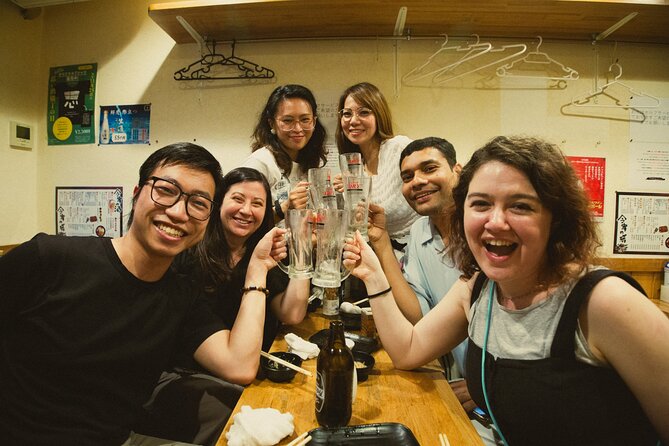
At $99.10 per person, this is not the cheapest way to eat and drink in Shinjuku. You could order inexpensive yakitori and drinks on your own for less, especially if you are confident reading menus and choosing small bars.
The price makes more sense when you value access and guidance. You receive dinner, 6 to 8 food items, three alcoholic drinks, and nomihodai at one bar. You also avoid the risk of walking into a tiny venue that does not suit you, misunderstanding the menu, or spending your first evening lost among the streets around Kabukicho.
The small group adds value too. A guide who knows the owners and can bring a group of eight into compact venues is providing something beyond a meal. You are paying for an organized route, local explanations, and the social ease of meeting other international visitors.
The value is weaker if you want a strict three-venue crawl with a drink at each stop. The published details emphasize three alcoholic drinks and one nomihodai stop, while some accounts describe a flexible route. Ask what is planned for your date, particularly if the number of venues matters more to you than the food.
Extra food and drinks are not included. You also pay your own way to the meeting point, and there is no hotel pickup or drop-off. The start and finish are both in central Shinjuku, near public transportation, so the logistics are straightforward.
Who should book this evening
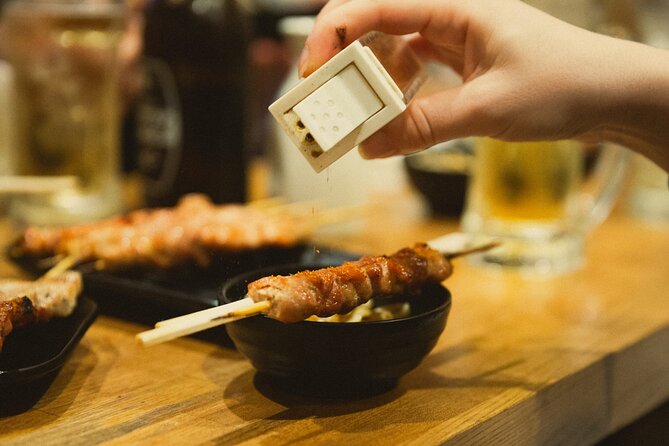
I would recommend this tour to a first-time Tokyo visitor who wants a gentle introduction to Shinjuku nightlife without having to choose every restaurant alone. It also suits anyone who enjoys trying several small dishes rather than sitting down for one long dinner.
It is a good early-trip activity. Afterward, you will know where Omoide Yokocho, Kabukicho, and Golden Gai are located, making it easier to return later. The social setup can also work well for solo visitors, provided other people are booked and you are comfortable with the possibility of a small group.
You should think twice if you do not drink alcohol, dislike red-light districts, need vegetarian, halal, or gluten-free food, or have serious food allergies. The provider says it cannot accommodate those dietary requests. Anyone under 20 receives soft drinks instead of alcohol, and Japan’s minimum drinking age is 20.
You also need moderate physical fitness. The evening involves walking through busy streets and narrow lanes, with time spent standing or sitting in compact venues.
Booking and cancellation details
You receive confirmation when you book, and the experience is available with a mobile ticket. It is often reserved well ahead of time, with an average booking lead time of about 49 days, so popular dates can fill early.
Free cancellation is available up to 24 hours before the local start time for a full refund. Changes or cancellations inside 24 hours are not accepted and are not refunded. The experience requires good weather, so a weather cancellation brings the choice of another date or a full refund.
Should you book the Shinjuku bar-hopping tour?
Book it if you want food, local guidance, and a quick look at several sides of Shinjuku in one evening. The combination of Omoide Yokocho, Kabukicho, and Golden Gai gives you a useful first map of the district, while the included dishes keep the night from becoming a simple drinking walk.
I would book near the start of your Tokyo stay and ask two questions first: Is Golden Gai definitely included on my date, and how many people are currently booked? If the group is confirmed and you are happy with a flexible route, $99.10 is a fair price for the food, drinks, and local help.
Skip it if your priority is a fixed three-bar itinerary, special-diet accommodation, or a quiet dinner. For everyone else, arrive hungry, start sober, keep your expectations flexible, and let the guide show you the small streets you might otherwise pass by.
FAQ
Where does the tour start?
The meeting point is Tajimaya Coffee at 1-chome-2-6 Nishishinjuku, Shinjuku City, Tokyo 160-0023, Japan.
Where does the tour end?
The stated ending point is Shinjuku Golden Gai in Kabukicho, Tokyo 160-0021. Golden Gai may be part of a customized itinerary, so confirm its inclusion if it is important to you.
How long does the tour last?
The experience lasts approximately two hours. The listed stops allow about 30 minutes at Omoide Yokocho, 45 minutes in Kabukicho, and 45 minutes around Golden Gai.
What food and drinks are included?
Dinner includes about 6 to 8 food items and three alcoholic drinks. Food may include yakitori, fish, vegetables, sake, Japanese whisky, and other Japanese dishes or drinks. One bar provides nomihodai, or all-you-can-drink service.
Can people under 20 join?
Yes, but the minimum drinking age is 20. The provider serves soft drinks to anyone under 20 instead of alcohol.
Can the tour accommodate dietary restrictions?
No. Vegetarian, halal, gluten-free, and allergy-related requests cannot be accommodated. Additional food and drinks, transportation to the meeting point, and hotel pickup or drop-off are also not included.
More Nightlife Experiences in Tokyo

More Bar Hopping & Izakaya Tours in Tokyo
More Shinjuku Tours in Tokyo
More tours in Tokyo we've reviewed












Shinjuku Tours, compared.
 ★ 5.0Tokyo: Shinjuku Food Tour (13 Dishes at 4 Local Eateries)From $86
 ★ 5.0Tokyo Bar Hopping Tour in Shinjuku (All-You-Can-Drink + Dinner)From $106
 ★ 4.9Tokyo: Shinjuku Local Bar and Izakaya Guided Walking TourFrom $343 hours
 ★ 4.9Tokyo: Shinjuku Food Tour (13 Dishes and 4 Eateries)From $97
 ★ 5.0Tokyo Night Foodie Tour in Shinjuku – Seasonal Sushi, Wagyu BeefFrom $111
 ★ 5.0Tokyo: Shinjuku Local Bar & Izakaya Crawl TourFrom $39