Reviewed · GUIDED
Private Tokyo Discovery: Explore Tokyo with an Expert Guide
Tokyo feels very different when you leave the famous center and spend time in places such as Sasazuka, Hatagaya, and Gakugei-daigaku. This private tour pairs those local neighborhoods with major sights, and guide Shingo adjusts the day to your interests. You might browse a small shopping street in the morning, learn ninja skills in Asakusa, then finish among the lights of Shinjuku.
In This Article
- Key points
- A private look at Tokyo’s local side
- How the four-to-eight-hour schedule really works
- Hatagaya Fudoson and the Sasazuka shopping streets
- Gakugei-daigaku for a slower hour
- Ninja training in Asakusa
- Meiji Jingu and the calm behind Harajuku
- Takeshita Street and Tokyo youth culture
- Akihabara for anime, manga, and electronics
- Shinjuku Golden Gai after dark or in the afternoon
- Senso-ji and old Asakusa
- Hands-on choices that make the day personal
- Meeting point, transport, and practical details
- Who will get the most from this Tokyo tour
- Should you book this private Tokyo experience?
- FAQ
- How long does the private Tokyo tour last?
- What time does the tour operate?
- Where does the tour begin?
- Can the guide meet me at my accommodation?
- Is the tour private?
- Is an English-speaking guide included?
- Is transportation by private car included?
- Are food and drinks included?
- Is ninja training included in the tour price?
- Can I cancel for a full refund?
I like the private format, since your group can set the pace and ask for food, shopping, history, or pop culture. I also like the unusual activity choices, including Japanese sweets, sushi, manga, ninja training, and traditional hairpin making. The main consideration is time: the advertised stops add up to far more than four hours, so you will need to choose carefully rather than expect a full visit at every stop.
Key points
- Local Tokyo beyond the standard route: Explore Sasazuka, Hatagaya, and Gakugei-daigaku, where daily life takes center stage.
- Shingo leads a private English-language tour: Your group travels without strangers and can shape the day around your interests.
- Hands-on culture is available: Choose from sweets making, sushi making, manga drawing, ninja training, or hairpin crafting.
- Big-name sights can be added: Meiji Jingu, Takeshita Street, Akihabara, Shinjuku Golden Gai, and Senso-ji are all listed options.
- Public transportation is part of the plan: There is no car, and pickup can be arranged at your accommodation.
- The $180 price buys flexibility: It is strongest value for a small group that wants a custom day, not for someone seeking a fixed sightseeing checklist.
A private look at Tokyo’s local side
Many Tokyo tours stick to the same famous sights. This one takes a different approach by connecting major landmarks with neighborhoods that show how the city works between the postcard views.
Sasazuka and Hatagaya offer a more ordinary side of Tokyo. The area has older streets, local vendors, and a traditional shotengai, or covered shopping street. Sasazuka’s 10 Street is described as winding and nostalgic, with shops serving local residents rather than sightseers. That gives you a chance to see a quieter rhythm of Tokyo life.
Gakugei-daigaku brings another change of mood. The area has a relaxed residential feel with local shops and cafés around the station. It is a useful counterpoint to Harajuku, Shinjuku, and Akihabara, where crowds and bright signs can take over your attention.
I like this mix because Tokyo is not just temples, towers, and electronics stores. A guide who has lived in the city for more than 10 years can help connect those grand sights to the neighborhoods where people shop, eat, and spend regular afternoons.
Other guided tours in Tokyo
How the four-to-eight-hour schedule really works
The experience lasts approximately four to eight hours. The suggested stops include eight separate places, with most assigned about an hour and Takeshita Street assigned 30 minutes. Taken literally, that is already more than seven hours before allowing for train rides, transfers, meals, or activity time.
That is not a flaw in a private tour, but it is an important planning point. The list works best as a menu. You might choose local neighborhoods plus one or two famous sights, or focus on Asakusa and pop culture, or build the day around a hands-on class.
At $180 per person, the value depends heavily on group size and your goals. For one person, it is a costly way to sightsee. For a small private group, the price can make more sense because it includes an English-speaking local guide, custom planning, and the ability to avoid places that do not interest you.
Ask yourself what you want from Tokyo before booking. If you want someone to help you understand the city, navigate between districts, and recommend food and drinks, the flexibility has real worth. If you simply want transportation between eight attractions, this is not the right product. There is no car, and food, drinks, and the ninja activity are not included.
Hatagaya Fudoson and the Sasazuka shopping streets
The day may begin around Hatagaya Fudoson, with time in the Sasazuka and Hatagaya area. The temple stop itself is listed as free, but the larger appeal is the surrounding neighborhood.
Sasazuka’s 10 Street gives you a look at the shotengai tradition. These covered shopping streets often combine small food shops, practical services, and family-run businesses. Here, you can expect an atmosphere that feels less staged than the main sightseeing districts.
This is a good opening for a first day in Tokyo because it introduces a less hectic side of the city. Shingo can help explain what you are seeing and point out the difference between a neighborhood shopping street and a district built mainly for visitors.
The possible drawback is that the area may feel too quiet if you want immediate spectacle. There are no major admission-ticket attractions here. Its value comes from the setting, local activity, and conversation with your guide.
Gakugei-daigaku for a slower hour
Gakugei-daigaku Station sits in an area with residential character and a strong local identity. The name comes from Gakugei University, which has helped shape the area’s feel.
This stop works well for people who want a break from Tokyo’s biggest crowds. You can stroll near the station, see the mix of shops and neighborhood streets, and ask Shingo about daily life in the city. It is also a useful choice for repeat visitors who have already seen the standard temple and shrine circuit.
The tradeoff is simple: Gakugei-daigaku is more about atmosphere than famous sights. If you have only four hours and this is your first time in Tokyo, you may prefer to spend that time at Meiji Jingu or Senso-ji. If you have a longer day, the contrast is worthwhile.
Ninja training in Asakusa

At the Musashi Japan Asakusa dojo, you can take part in a one-hour ninja activity led by instructors. The admission cost is not included, so check the added price when arranging your day.
This is more than a photo stop. It gives you a hands-on cultural activity and a change from walking through temples and shopping streets. A ninja lesson can work especially well for families, groups with children, or anyone who prefers learning by doing.
Keep the format in mind. The tour provides access to the activity as an optional part of the day, but the supplied information does not state exactly which skills are taught, what equipment is provided, or the age rules. Ask for those details before booking if they matter to you.
Asakusa itself is one of Tokyo’s best areas for combining a class with traditional sights. If you choose the ninja lesson, you can pair it with Senso-ji nearby rather than spending much of the day crossing the city.
Other private tours in Tokyo


Meiji Jingu and the calm behind Harajuku
Meiji Jingu offers a sharp change from the shops and street fashion of Harajuku. A broad wooded approach leads you away from the city noise to one of Tokyo’s best-known Shinto shrines.
The shrine is free to enter and suits first-time visitors who want a peaceful cultural stop without a long trip outside central Tokyo. Your guide can explain shrine customs and help you approach the site respectfully, though the exact depth of historical commentary will depend on your interests and the time available.
The key benefit is contrast. Within the same part of Tokyo, you can go from a quiet shrine setting to the youthful energy of Takeshita Street. I would not rush both if you have only a short tour. Meiji Jingu rewards a slower walk, while Takeshita Street is easy to sample in 30 minutes.
Takeshita Street and Tokyo youth culture
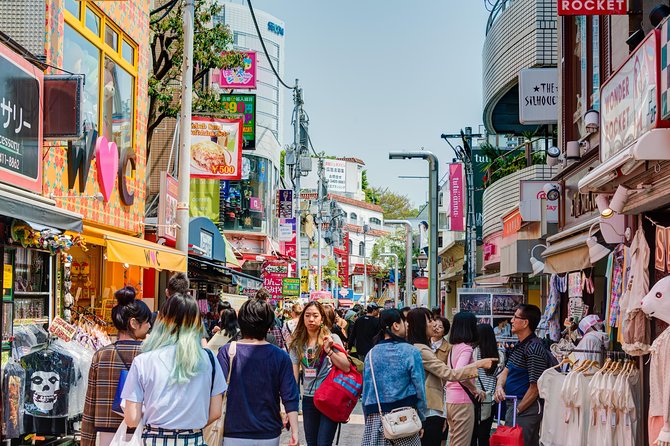
Takeshita Street is a pedestrian shopping lane known for youth fashion, unusual stores, pop culture, and street food. It is compact, loud, and crowded by design.
You will find more energy here than in Hatagaya or Gakugei-daigaku. It is a good stop if you want a quick look at Harajuku style or hope to try a snack while walking. Shingo can help you make sense of the shops and direct your attention to the parts that match your interests.
Thirty minutes is a sensible starting point. You can see the character of the street quickly, but shopping or eating will take longer. If you want time for both Meiji Jingu and Harajuku, tell Shingo that in advance so the schedule does not become a race.
Akihabara for anime, manga, and electronics
Akihabara is the clearest choice for fans of anime, manga, games, and electronics. The district’s shops cater to many corners of Japanese pop culture, and even a short visit can feel packed with things to look at.
This stop is particularly useful if you are unsure where to begin. Akihabara can be confusing because its shops are spread across several streets and buildings. A local guide can help you focus on the type of merchandise or technology you actually want.
It is also a place where your personal interests matter. Someone seeking anime goods needs a different route from someone browsing gadgets or manga. Tell Shingo what you collect or hope to see rather than treating Akihabara as one large shop.
The drawback is timing. An hour is enough for an introduction, but not for serious shopping across the district. If Akihabara is your main reason for booking, make it the center of the tour and drop several other stops.
Shinjuku Golden Gai after dark or in the afternoon
Shinjuku’s east side is known for neon, shopping, and Golden Gai, the famous cluster of very small bars. The area gives you a close-up look at Tokyo’s nightlife culture, but the experience will depend greatly on the time of day.
The tour operates from 9 a.m. to 5 p.m., so do not assume you will experience Golden Gai at its late-night best. During the listed hours, you can still explore the streets and see the compact bar district, but many venues may not be operating in the same way they do after dark.
This is a good stop for orientation, photographs, and an explanation of how the district fits into Shinjuku. Food and drinks are not included, so budget separately if you want to stop somewhere. Shingo’s recommendations for food and drinks are one of the more useful extras mentioned in the tour details.
Senso-ji and old Asakusa
Senso-ji is one of Tokyo’s essential temple visits. You enter through Kaminarimon, or Thunder Gate, with its giant red lantern, then walk along Nakamise Street toward the temple buildings.
Nakamise is lined with stalls selling snacks, souvenirs, and traditional items. It can be crowded, but that is part of the experience. The area shows Tokyo’s long-running connection between worship, commerce, and public celebration.
The temple grounds are free, making Senso-ji a strong value stop within a paid private tour. The benefit of having Shingo here is not simply finding the entrance. It is having someone explain what you are seeing and help you fit the temple into a wider Asakusa visit.
Senso-ji and the ninja dojo are natural partners, but they should not automatically be combined with every other district. Tokyo is large, and travel between neighborhoods can consume more time than expected.
Hands-on choices that make the day personal
The tour offers several cultural activities beyond sightseeing:
- Japanese sweets making
- Sushi making
- Manga drawing
- Ninja clan training
- Traditional hairpin making
These options are the strongest reason to book this experience instead of a standard city walk. A workshop gives you something to do, not just something to photograph. It can also help you connect with Japanese culture in a direct, memorable way.
The supplied details do not specify which activity is included in the $180 price, so confirm that before paying. The ninja admission is specifically listed as extra, and the same may or may not apply to other activities.
If you are traveling with family or friends, choose one activity and build the rest of the day around it. Trying to add a class, several districts, and all eight sightseeing stops would leave little time to enjoy any of them.
Meeting point, transport, and practical details
The standard meeting point is the police box at the west exit of Shinjuku Station. The address is 1-chome 5, Nishishinjuku, Shinjuku City, Tokyo 160-0023. An optional meeting at your accommodation is also available.
The tour uses public transportation rather than a private car. That is both a limitation and a benefit. You will need to walk and use trains, but you will also see Tokyo in the way residents move around it. Wear comfortable shoes and allow time for station transfers.
The experience operates Monday through Sunday from 9 a.m. to 5 p.m. Confirmation is provided at booking, and the activity is offered with a mobile ticket. Most people can participate, and the meeting areas are near public transportation.
Free cancellation is available if you cancel at least 24 hours before the start time. Changes or cancellations made inside that window are not accepted for a refund.
Who will get the most from this Tokyo tour
I would recommend this experience to you if you want a private guide, have several interests, or prefer local neighborhoods to a fixed bus-style route. It also suits first-time visitors who want help getting oriented, as well as repeat visitors looking for a different side of Tokyo.
Families may appreciate the choice of ninja training, manga, sweets, or sushi. Pop culture fans can make Akihabara the focus. Couples or small groups may prefer a slower combination of local shopping streets, Meiji Jingu, and Asakusa.
I would be more cautious if you want a fully fixed schedule, a private vehicle, or admission to every activity included in the price. The tour is built around customization, so you need to communicate clearly and accept that you cannot do everything in one short day.
Should you book this private Tokyo experience?
Book it if you value personal attention and local guidance more than a rigid checklist. Shingo’s experience living in Tokyo for more than a decade, his help with city navigation, and his food and drink recommendations can make the day useful beyond the scheduled stops.
The best plan is to choose two or three priorities before you meet. For example, select Sasazuka and Hatagaya for local life, Meiji Jingu and Takeshita Street for a first visit, or Asakusa with ninja training and Senso-ji for culture and hands-on fun.
At $180 per person, this is not the cheapest way to see Tokyo. It can be good value for a private group that wants a custom day, but it is poor value if you expect to race through every listed stop. Decide what you want to learn, eat, make, or see, then let the schedule follow those priorities.
FAQ
How long does the private Tokyo tour last?
The experience lasts approximately four to eight hours.
What time does the tour operate?
It operates Monday through Sunday from 9 a.m. to 5 p.m.
Where does the tour begin?
The standard meeting point is the police box at Shinjuku Station’s west exit.
Can the guide meet me at my accommodation?
Yes. An optional meeting at your accommodation is available.
Is the tour private?
Yes. Only your group participates in the activity.
Is an English-speaking guide included?
Yes. The tour includes an English-speaking local guide.
Is transportation by private car included?
No. There is no car. The tour is near public transportation.
Are food and drinks included?
No. Food and drinks are not included in the price.
Is ninja training included in the tour price?
The ninja activity at Musashi Japan Asakusa has an admission fee that is not included.
Can I cancel for a full refund?
Yes, if you cancel at least 24 hours before the experience begins. Cancellations or changes made less than 24 hours before the start time are not accepted for a refund.
More Private Tours in Tokyo
More Guided Tours in Tokyo

More tours in Tokyo we've reviewed












Guided, compared.
 ★ 5.0Tokyo 6hr Private Tour with Government-Licensed GuideFrom $155
 ★ 4.9Tokyo: Shinjuku Local Bar and Izakaya Guided Walking TourFrom $343 hours
 ★ 4.8Tokyo: Private City Highlights Tour with Local GuideFrom $1064 - 8 hours
 ★ 4.9Tokyo: Tsukiji Fish Market Guided Walking TourFrom $222 hours
 ★ 5.0Tokyo 4hr Private Tour with Government-Licensed GuideFrom $109
 ★ 5.0Tokyo Guided Small-Group Biking TourFrom $106