Reviewed · CRAFT WORKSHOPS
Tokyo: Chopstick Making Workshop with Artisan
Making chopsticks by hand turns an everyday Japanese object into a personal keepsake. At Hashiyuki Chopsticks Shop in Tokyo’s Taito district, you use traditional tools to shape, smooth, and finish your own pair under guidance from an artisan.
In This Article
- Key points to know
- Why making chopsticks works so well in Tokyo
- Your first few minutes with the wood
- Shaving, sanding, and fixing small mistakes
- The cultural meaning behind an everyday object
- Choosing extras and personalizing the final pair
- Why the small group matters
- A peaceful break from the city
- Who should book this workshop
- Is $16 good value?
- Final decision: book it if you want a souvenir with a story
- FAQ
- Where is the chopstick-making workshop held?
- How long does the workshop last?
- How much does the workshop cost?
- How many types of wood can I choose from?
- Can I engrave the chopsticks?
- Can I take the chopsticks home?
- Is the workshop suitable for beginners?
- What languages are available?
- Is the workshop wheelchair accessible?
I like the small-group setting, limited to 10 people, and the fact that you take the finished chopsticks home the same day. I also like the calm pace and simple, hands-on work, though one hour can feel tight if the room is full or groups begin at different times.
Key points to know
- Choose your wood: Three wood types are included, with more than 10 options available if you want to pay extra for a higher-grade choice.
- Make a useful souvenir: You shape and finish chopsticks that you can use at home, not just a decorative craft.
- Expect close guidance: Staff members such as Yuki, Angie, Chihiro, and Tomo have helped participants with shaving, sanding, and correcting mistakes.
- Consider engraving: Personal engraving costs an additional ¥1,000 and gives the finished pair a more gift-ready touch.
- Good for mixed ages: One family enjoyed the workshop with children and adults ranging from age 8 to 42.
- Allow for a brisk hour: The process may take about an hour, though a confident participant could finish in roughly 30 minutes.
Why making chopsticks works so well in Tokyo
Tokyo offers no shortage of big sights, crowded crossings, and polished department stores. This workshop gives you something quieter to do with your hands. You are not simply buying a pair of chopsticks in a shop. You are learning how the wood changes as you shave and smooth it.
That difference matters. A souvenir picked from a shelf may remind you of Japan for a few days. A pair you shaped yourself carries the memory of the work: the feel of the tool, the care needed to keep both sticks balanced, and the small decisions you make about finish and style.
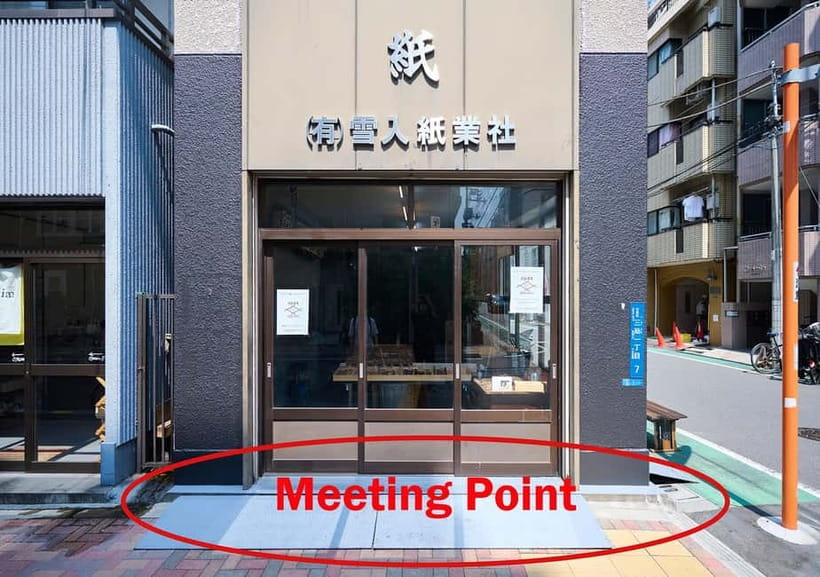
The activity is held at Hashiyuki Chopsticks Shop & Workshop, at 1-7-1 Misuji in Taito-ku. The meeting point is also identified by the Japanese name 雪入紙業社, or Yukiirishigyosya, and the listed coordinates are 35.7032168, 139.7853879. Check the exact location carefully before setting out, especially if you are using a map app with English-language place names.
The workshop has earned a 4.8 rating from 122 bookings, and the praise is unusually consistent around three points: patient instruction, friendly staff, and a pleasing finished product. Those are the qualities that matter most here, since the activity itself is straightforward but depends on good coaching.
A few more Tokyo tours and experiences worth a look
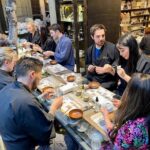
Your first few minutes with the wood
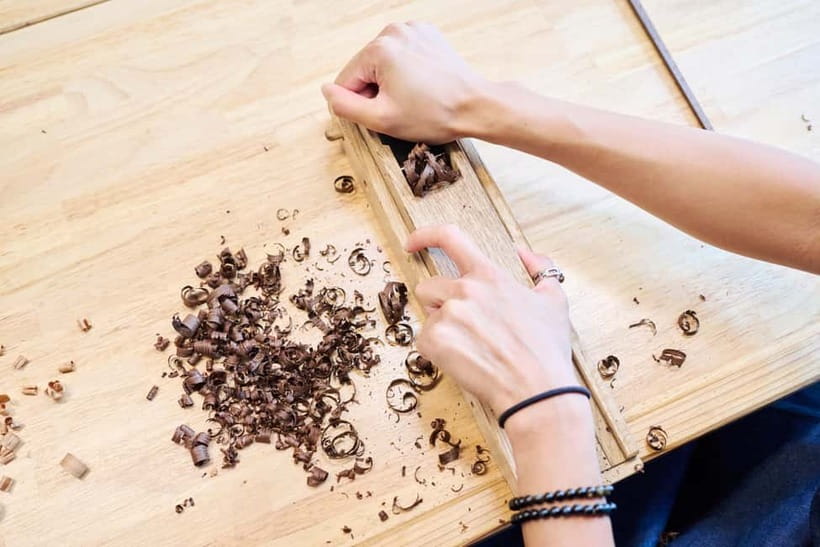
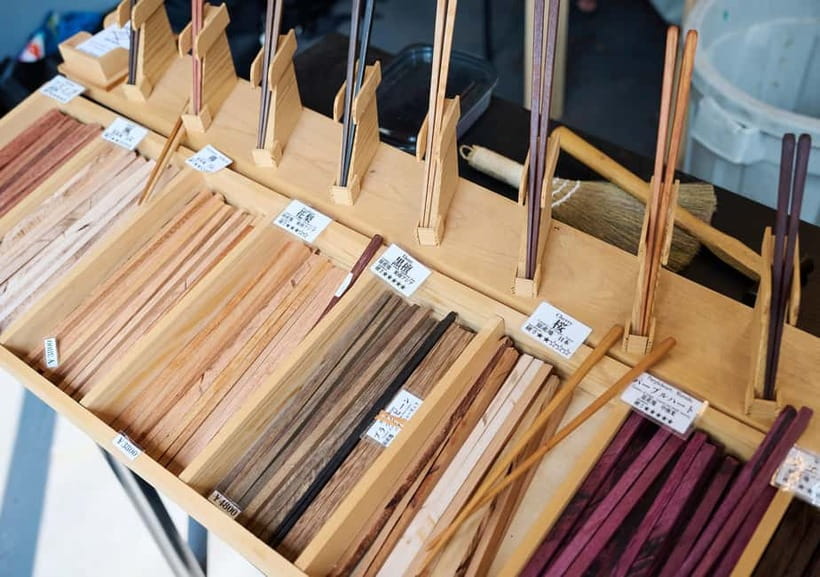
The session begins with an introduction to the materials and tools. You choose from three included wood types, while higher-grade options are available for an extra charge. If you care about the look or feel of the final pair, ask about the differences before you start.
The selection is one of the more interesting parts of the workshop. Wood is not just a color choice. Different types can produce different textures and visual patterns, and the staff explain the available options before you commit. José specifically praised the explanation of wood types, along with the instruction on shaving and sanding.
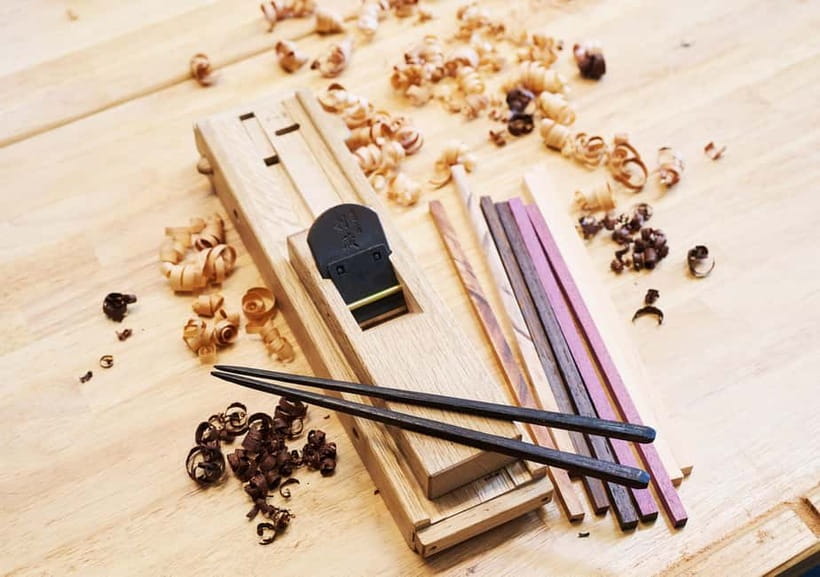
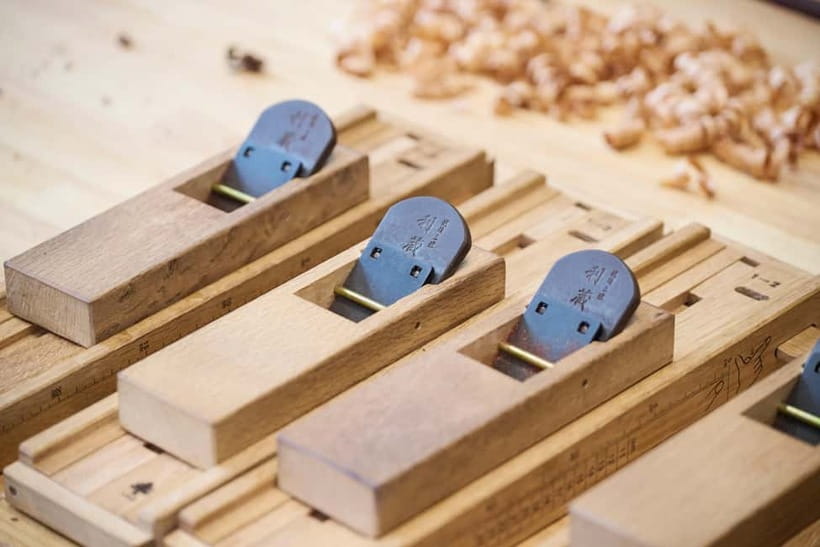
You then learn the basic method for shaping the chopsticks. The work involves removing wood, refining the form, and smoothing the surface. The tools and materials are provided, so you do not need craft equipment or previous experience.
This is beginner-friendly work, but it is not completely passive. You have to pay attention to pressure and direction. The point is not to rush through the steps. It is to see how a rough piece gradually becomes a pair of usable utensils.
Shaving, sanding, and fixing small mistakes
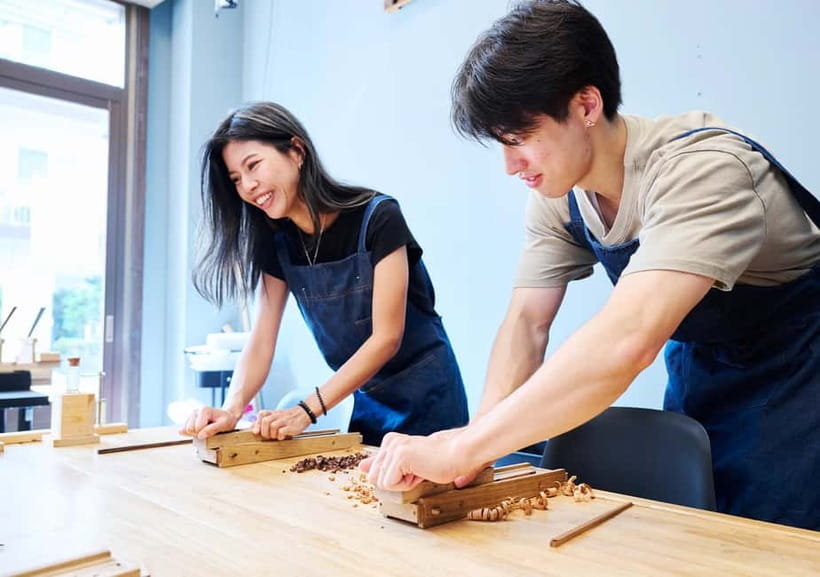
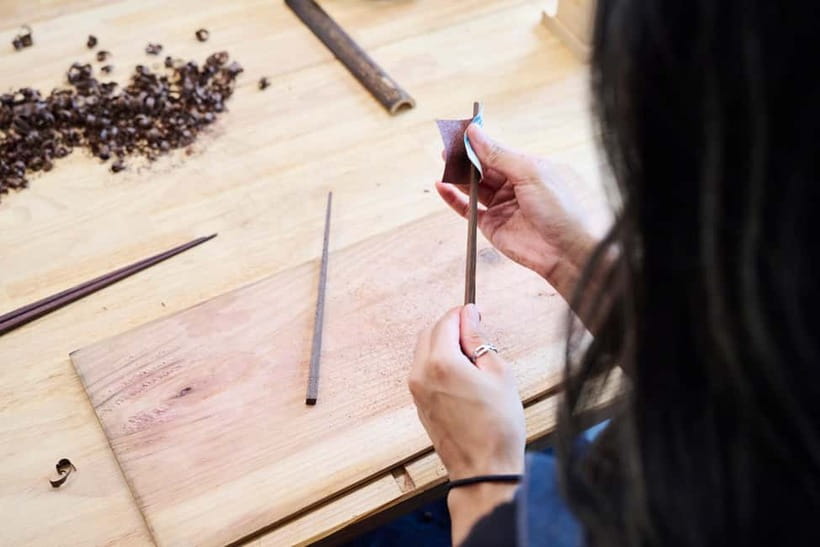
The central part of the workshop is the hands-on shaping. You work on the wood yourself while the instructor checks your progress and demonstrates how to get a better result. The staff are there to keep you on track, not to take over the project.
That balance is important. The process is simple enough for a first-time maker, yet it gives you enough control to feel responsible for the final result. Several instructors, including Angie, Chihiro, Yuki, and Tomo, received praise for explaining each step clearly and helping when a participant made a mistake.
You should expect some variation in speed. One participant finished in about 30 minutes, while others used the full hour. Your pace will depend on how carefully you work and how much guidance you need. If you are making chopsticks as a gift, you may want to slow down and spend more time checking the shape and surface.
The sanding stage is especially satisfying because it changes the feel of the wood quickly. Rough edges become smoother, and the chopsticks begin to look finished rather than freshly carved. You can also ask for help if the two sticks do not match perfectly. The instructors are accustomed to correcting small problems as you work.
The cultural meaning behind an everyday object
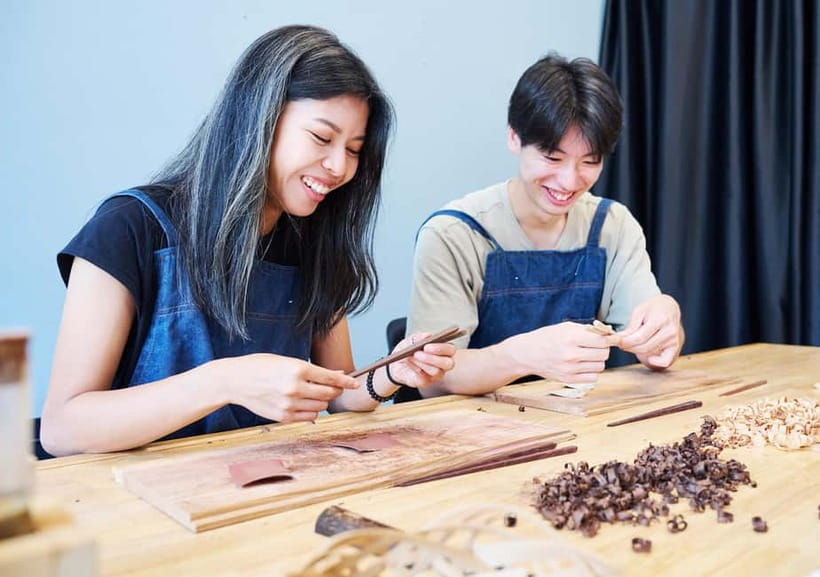
The workshop is not only a craft lesson. You also learn about the cultural significance of chopsticks in Japan. That context gives the activity more weight than a generic souvenir-making class.
Chopsticks are used at nearly every Japanese meal, but their meaning reaches beyond the mechanics of picking up food. They are tied to table manners, presentation, and the care given to ordinary household objects. Making your own pair helps you notice details that are easy to overlook when you simply use disposable chopsticks at a restaurant.
The cultural explanation is also useful because it connects the finished item to daily life. You leave with something practical, not a trinket that sits in a drawer. Each time you use the chopsticks, the object can bring back the workshop and your time in Tokyo.
The English-speaking staff make the explanation accessible. Instruction is available in English and Japanese, and the personal exchanges are part of the appeal. Declan enjoyed chatting with the instructors about Japan and Scotland, while Isobel received extra Tokyo suggestions during a solo visit. Those conversations can make the session feel more personal without turning it into a formal lecture.
Choosing extras and personalizing the final pair
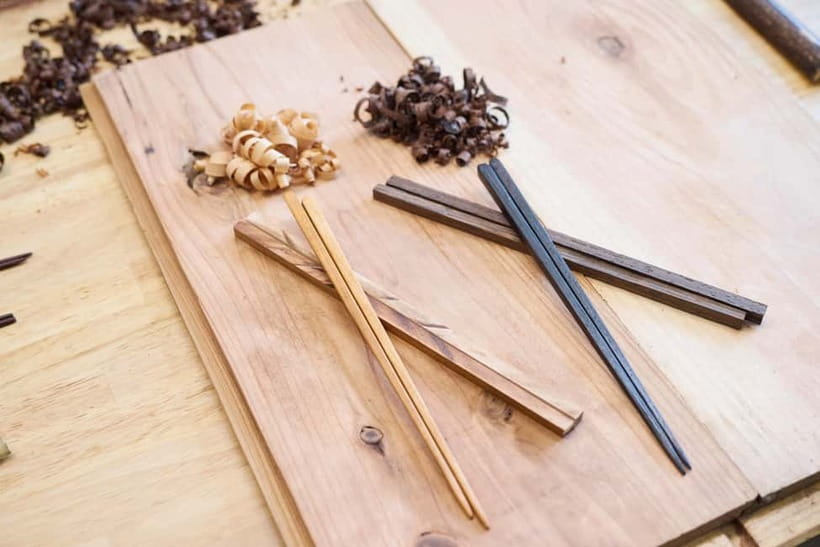
The basic price is $16 per person, which is strong value for a one-hour activity that includes instruction, tools, materials, and a handmade item to take home. You are not paying only for a demonstration. You are paying for access to the workspace, the materials, and the guidance needed to finish the chopsticks yourself.
Three wood types are included at no extra cost. More than 10 types are available overall, so you can spend more if a particular high-grade wood appeals to you. This is optional, not a requirement for having a good experience. The included choices are enough to complete the workshop.
Engraving is another optional extra. It costs ¥1,000, according to one participant, and can add a name or personal message. That makes sense if you are preparing a gift or want the pair to mark a special trip. Christopher considered the engraving beautifully done, and Laura also chose to add it after making the chopsticks.
You should decide about extras early enough to avoid feeling hurried at the end. The workshop already has several stages, and the hour can pass quickly. If your main goal is simply to make the chopsticks, the base price is sufficient. If you want a more polished gift, the wood upgrade or engraving may be worthwhile.
A few more Tokyo tours and experiences worth a look


Why the small group matters
The group limit is 10 people. That is small enough for staff to move around the work area and offer individual help, at least when the session is running smoothly. A family of five, including children and adults, found the activity engaging across a wide age range.
The staff-to-participant ratio can vary in practice. One less-positive experience involved about 10 participants and two employees, with groups starting at slightly different times. That participant felt rushed because the room was small and the instructors had to move quickly between people.
This is the main caution I would keep in mind. The workshop is designed to fit into one hour, but that hour may feel relaxed for a small booking and brisk for a full session. A booking with only two participants felt especially accommodating, while a busier period required faster explanations.
If you prefer a slower craft experience, ask about quieter starting times when you book. The available start times can change, so check the schedule. Also arrive ready to begin rather than treating the hour as a loose drop-in visit.
A peaceful break from the city
The workshop suits Tokyo well because it offers a change of rhythm. You spend much of the hour seated or working in one place, concentrating on a small task. That can be a welcome pause after several days of museums, shopping, and crowded streets.
Kaitlyn described the activity as calming and a good change from the busy city. That is a fair way to think about it. The workshop does not require athletic effort or a long block of sightseeing, but it still gives you something active to do.
It also works well on different kinds of days. You can book it as a morning activity, as a family stop, or as a creative break between other plans. The session lasts one hour, so it is easier to fit around a Tokyo itinerary than a longer cooking or craft class.
The final product adds a sense of purpose. You are not making a model that needs special care to display. You are creating utensils that can be used at home or wrapped as a gift.
Who should book this workshop
I would recommend it to first-time craft participants, families, couples, solo visitors, and anyone who wants a small souvenir with a personal story. The instructions are clear, the staff speak English and Japanese, and the instructors are used to helping participants correct mistakes.
It is also a good choice for people who want a cultural activity without a formal museum setting. You learn about chopsticks through making them, which is often easier to remember than reading a short explanation on a display panel.
Families should note the useful age range shown by the activity itself. A group including an 8-year-old and adults in their forties enjoyed the session together. Individual confidence and attention span will still vary, but the format can accommodate mixed ages.
I would be more cautious if you dislike timed activities or want a long, slow woodworking lesson. This is a compact introduction, not an advanced artisan course. The hour is enough to make a finished pair, but not necessarily enough for endless experimenting.
The workshop is listed as wheelchair accessible. Group size is limited to 10, and cancellation is free up to 24 hours before the activity for a full refund. You can also reserve now and pay later, which helps if your Tokyo schedule is still changing.
Is $16 good value?
At $16, the workshop offers more than a quick souvenir purchase. The price includes the class, materials, tools, English-speaking staff, and personalized chopsticks that you take home the same day.
The value is strongest if you care about the process. Someone who only wants inexpensive chopsticks can buy them elsewhere for less effort. Someone who wants a handmade reminder of Japan gets a guided activity and a usable object for a modest price.
The optional charges do not ruin the value, but they can change your final cost. Higher-grade woods cost extra, and engraving adds ¥1,000. I would treat those as choices rather than expected fees. Set a budget before you arrive so the final decision feels easy.
For a family or group of friends, the shared activity gives the price extra weight. Everyone works on a separate pair, but you still have a common project and a story to compare afterward.
Final decision: book it if you want a souvenir with a story
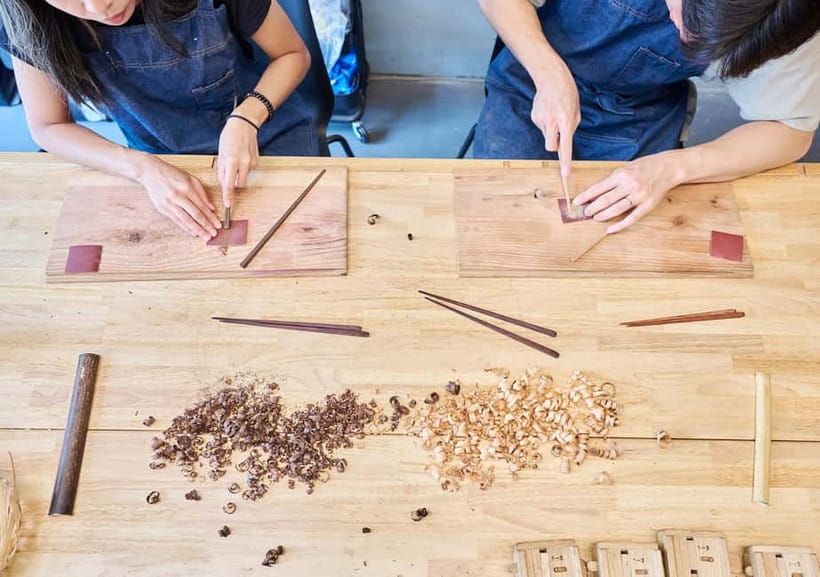
Book this workshop if you want to slow down, try a simple Japanese craft, and take home something you made yourself. The strongest reasons are the friendly instruction, the practical finished product, the modest base price, and the chance to choose wood and add engraving.
Keep the one-hour limit in mind. A full session may feel rushed, especially with only two staff members helping around 10 participants. If you want the calmest possible experience, aim for a quieter time and avoid packing another appointment immediately afterward.
For most people, this is an easy activity to recommend. It is accessible to beginners, works for families and solo visitors, and gives you a souvenir that has a clear connection to Japanese daily life.
FAQ
Where is the chopstick-making workshop held?
It is held at Hashiyuki Chopsticks Shop & Workshop, 1-7-1 Misuji, Taito-ku, Tokyo. The meeting point is also listed as 雪入紙業社, or Yukiirishigyosya.
How long does the workshop last?
The scheduled duration is one hour. One participant noted that someone working quickly might finish in about 30 minutes.
How much does the workshop cost?
The listed price is $16 per person. Three wood types are included, while higher-grade wood choices cost extra.
How many types of wood can I choose from?
More than 10 types of wood are available in total. Three types are included free of charge, and the additional high-grade options require an extra payment.
Can I engrave the chopsticks?
Yes. Engraving is available for an additional ¥1,000.
Can I take the chopsticks home?
Yes. You take your personalized chopsticks home the same day, wrapped for use or gifting.
Is the workshop suitable for beginners?
Yes. The activity is designed for beginners, and the instructors guide you through shaving, sanding, and finishing the wood. All tools and materials are provided.
What languages are available?
Instruction and staff support are available in English and Japanese.
Is the workshop wheelchair accessible?
Yes. The activity is listed as wheelchair accessible.
More Workshops & Classes in Tokyo
More Craft Workshops in Tokyo

More tours in Tokyo we've reviewed












Craft Workshops, compared.
 ★ 4.8Chopstick Making Workshop in GinzaFrom $251 hour
 ★ 5.0Kintsugi Experience: Art of Golden Joinery in TokyoFrom $59
Tokyo: Shinjuku Chopstick Making ClassFrom $121 hour
★ 5.0Kintsugi Experience: Art of Golden Joinery in TokyoFrom $59
Tokyo: Shinjuku Chopstick Making ClassFrom $121 hour
 ★ 5.0Private Craft Your Own Ring Handmade Experience in Asakusa, TokyoFrom $21
 ★ 5.0Authentic Pure Gold Kintsugi Workshop with Master Taku in TokyoFrom $142
 ★ 5.0Tokyo: Calligraphy on Kanji Fan & Scroll with DrinkFrom $531h 20m