Reviewed · SUSHI MAKING CLASSES
Taisho Sushi Making Class in Tokyo
Tokyo sushi is easy to eat and hard to make well. This class lets you tackle the tricky part in a compact session, starting with practice models before you handle real rice and fish. You will make nigiri and gunkan, learn the front and back of the nori, and finish by eating what you prepare.
In This Article
- Key points to know before you book
- Starting in Kōjimachi with everything provided
- Why the model practice is more useful than it sounds
- Making nigiri with real fish and rice
- Learning gunkan and the small details of nori
- Maki rolling and the food you make
- Vegetarian and vegan choices
- What the $109.01 price really buys
- Who will get the most from this class
- Timing, booking, and cancellation
- Is Taisho Sushi Making worth booking?
- FAQ
- Where does the Taisho Sushi Making Class take place?
- How long does the sushi-making class last?
- How much does the class cost?
- Are equipment and ingredients provided?
- Do I get to eat the sushi I make?
- What types of sushi will I learn to make?
- Are vegetarian and vegan options available?
- How many people can join the class?
- Can I cancel for a full refund?
I like the careful training method and the generous food component. You do not simply watch a chef assemble a few pieces. You repeat the grip on models, then move to actual sushi, with seasonal toppings and enough food to make the meal feel worthwhile.
The main consideration is timing. The tour is described as about one hour in the summary, while the detailed program calls it a 90-minute experience. Check the confirmed schedule when you book, especially if you have a train, dinner reservation, or another class afterward.
Key points to know before you book

- Practice comes first: You use models to repeat the correct hand position before working with real fish and rice.
- Three sushi skills are covered: The program includes nigiri, gunkan, and maki techniques.
- You eat your finished sushi: The session includes instruction in proper sushi-eating etiquette and time to consume your creations.
- Non-fish eaters have choices: Vegan and vegetarian options are available if you request the suitable menu.
- The location is central and simple to reach: The meeting point is at 1-chōme-4-4 Kōjimachi in Chiyoda City, near public transportation.
- The class suits groups: The maximum group size is 50, and the activity has been especially noted as a good fit for larger groups and families.
Starting in Kōjimachi with everything provided
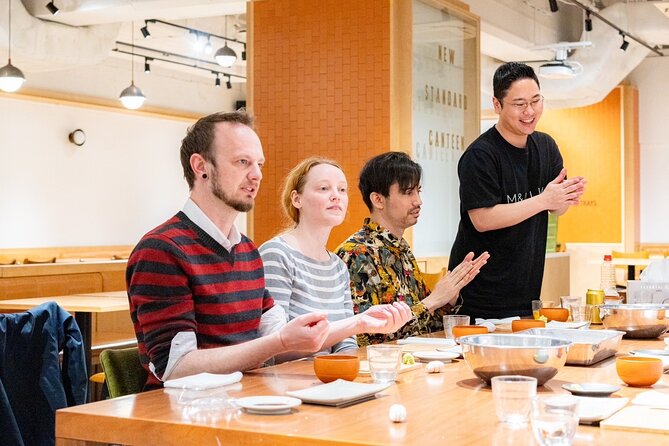
The class begins at 1-chōme-4-4 Kōjimachi, Chiyoda City, Tokyo 102-0083. Since the location is near public transportation, you can fit it into a day of sightseeing without carrying cooking gear or shopping for ingredients first.
That come empty-handed setup matters in Tokyo. You do not need to bring knives, mats, rice, fish, or serving items. The equipment and ingredients are supplied, so your only real preparation is arriving on time and ready to work with your hands.
The activity ends where it begins. That makes the class easier to plan than an experience that drops you in a different neighborhood. Still, give yourself enough time to find the meeting point, since the available details do not specify a particular station exit or walking time.
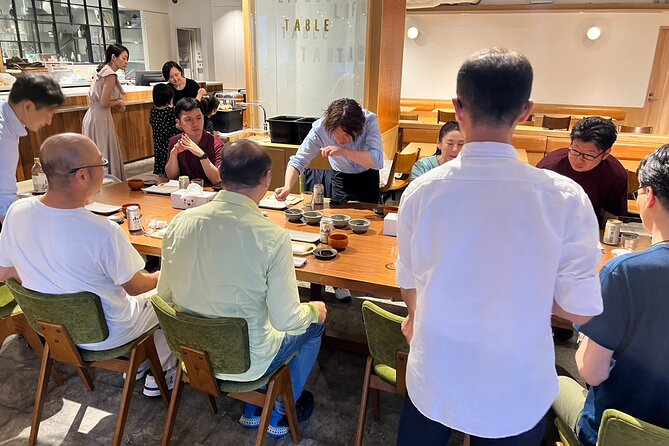
The class can accommodate up to 50 people. That is useful for families, school groups, and larger parties, though it also means the atmosphere may feel more like a shared workshop than a quiet lesson at a tiny sushi counter.
A few more Tokyo tours and experiences worth a look
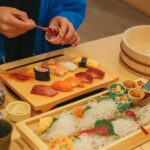
Why the model practice is more useful than it sounds
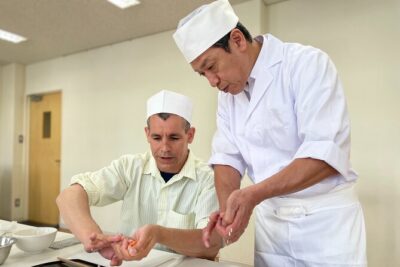
Many first-time sushi classes would hand you rice and fish right away. Here, the opening practice uses models so you can learn the grip before worrying about texture, temperature, or presentation.
That is a smart choice. Nigiri looks simple, but the rice must be shaped without being crushed. Your fingers need to apply enough pressure to hold the piece together, yet not so much that the rice becomes dense. Repeating the movement on a model gives you a chance to understand the motion before food is involved.
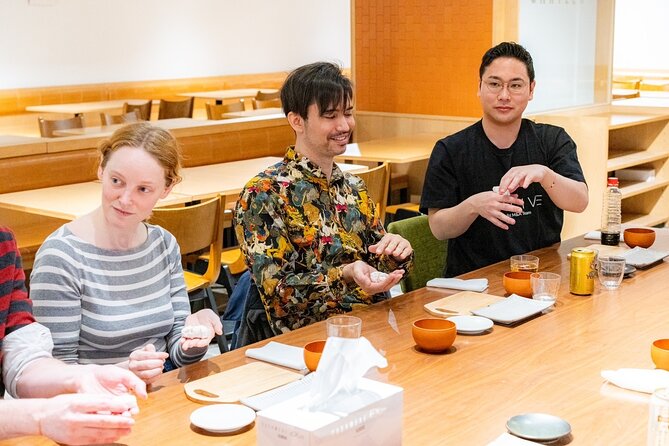
The practice also helps families and beginners. Children can focus on hand placement without feeling that they are wasting ingredients. Adults who have made sushi at home can correct habits before moving on to the more delicate stage.
The program describes this grip practice as a central part of its method, similar to the type of repeated training used in sushi chef schools. That does not turn a short class into professional chef training, but it does give the lesson a more serious structure than a quick demonstration.
You should expect instruction rather than complete freedom. The point is to follow a method, repeat it, and improve your control. If you want a relaxed craft activity with no technical guidance, this may feel more formal. If you want to understand why sushi is shaped a certain way, the method is a good use of your time.
Making nigiri with real fish and rice
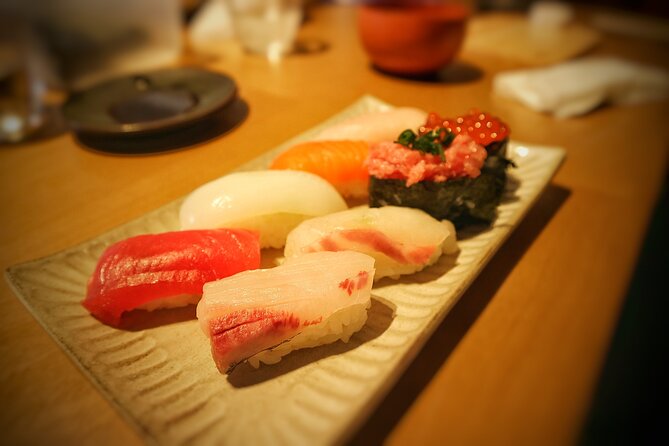
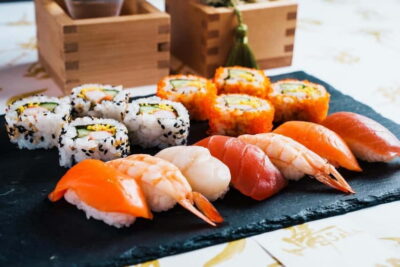
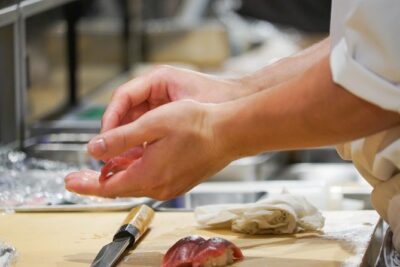
After the model practice, you move to nigiri. This is the classic hand-shaped sushi made from a small portion of rice with a slice of fish or another topping placed on top.
The fish selection changes with the season. That is a plus because the class is not locked into one fixed menu all year. It also means you should not book expecting a particular fish unless the provider confirms it in advance.
The detailed program promises a substantial amount and variety of sushi, with the chance to eat until full. That makes the $109.01 price easier to assess. You are paying for instruction, ingredients, equipment, and a full tasting meal, not just for a single sample made under supervision.
The quantity is especially helpful if you are comparing this with a short food demonstration. A demonstration can be entertaining, but you may leave hungry and still have no idea how the technique feels in your own hands. Here, the food you make is part of the lesson and part of the value.
There is a practical tradeoff. Real fish and rice are less forgiving than the practice models. Your first pieces may not look like those made by a trained sushi chef. That is normal. The useful goal is learning how to form a stable piece and understanding the steps, not producing restaurant-perfect sushi on your first try.
Learning gunkan and the small details of nori
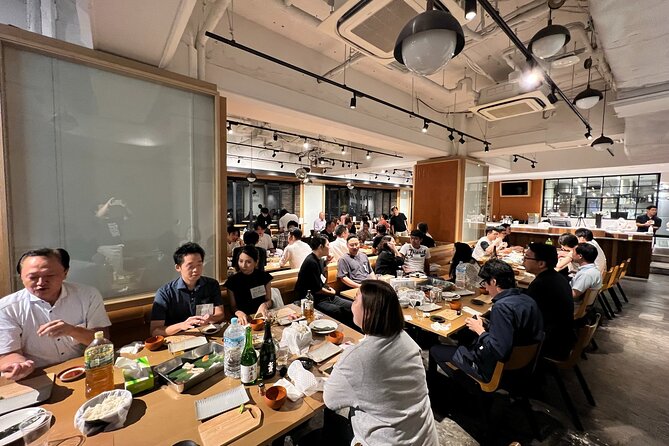
The class also covers gunkan, sometimes called warship sushi because a strip of nori wraps around the rice and holds a soft topping. This style is useful for ingredients that would not sit neatly on ordinary nigiri.
The lesson includes fillings such as salmon roe and negitoro, described as crushed tuna, along with other similar items. The exact ingredients may vary, so consider the examples a guide rather than a guaranteed menu.
One of the most practical details is the explanation of the nori itself. You learn that the seaweed sheet has a front and back, and you practice how to roll it correctly. That is the kind of small point many home cooks miss. It affects the feel and appearance of the finished sushi, yet it is rarely obvious until someone shows you.
Gunkan also gives the class a useful change of pace. Nigiri asks you to shape rice and place a topping cleanly. Gunkan asks you to build a holder around the rice, manage the nori, and add a filling that may be soft or loose. You get to see that sushi is not one single technique.
Maki rolling and the food you make
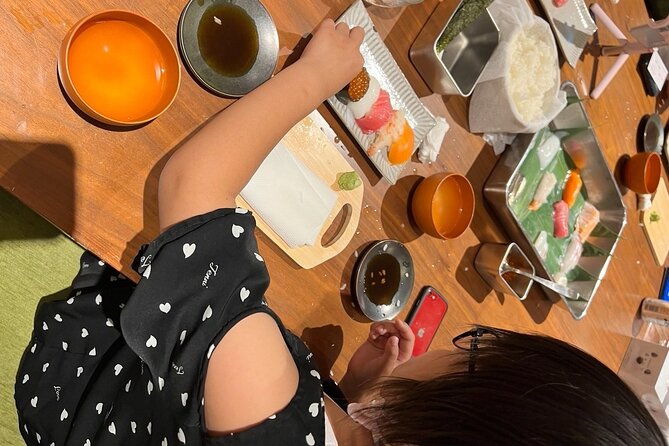
The experience description promises instruction in preparing and rolling hand-made maki as well as making nigiri. Maki gives you another basic skill: spreading fillings, controlling the roll, and using the mat without squeezing out the ingredients.
The available details do not specify the exact number of rolls or the full ingredient list. You should therefore think of maki as one part of the session rather than assume it will be a long, separate rolling workshop.
That said, the combination of maki, nigiri, and gunkan gives you a broad introduction in a short period. You are not learning only one shape. You see how rice, nori, fish, and toppings behave in several forms.
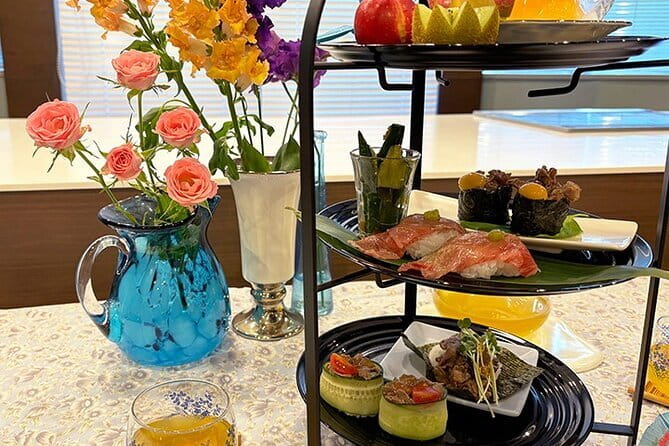
The end of the session is built around eating your creations. You also receive guidance on sushi etiquette, which can be useful if you plan to visit traditional sushi restaurants during the rest of your time in Japan. The lesson may cover how to handle the pieces properly and how to approach the food with the right habits, though the supplied details do not list every etiquette rule.
I like this finish because it closes the loop. You prepare the food, learn how to treat it, and then sit down to eat it. The result feels more like a small meal with instruction than a cooking lecture.
A few more Tokyo tours and experiences worth a look
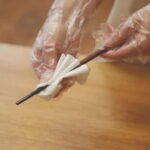


Vegetarian and vegan choices
You do not need to eat fish to consider this class. Vegetarian and vegan options are available for non-fish eaters.
That makes the activity more practical for mixed groups. One person can enjoy fish while another follows a plant-based menu, rather than the whole party having to choose a different activity.
You should make your dietary preference clear when booking or as soon as possible. The information confirms that these options exist, but it does not list the exact ingredients or promise that every part of the lesson will use the same substitutions.
For strict dietary needs, ask for the available menu before the class. The details do not address allergies, gluten, soy, or cross-contact, so you should not assume those concerns are covered without confirmation.
What the $109.01 price really buys
At $109.01 per person, this is not a cheap way to eat sushi. Tokyo offers plenty of less expensive meals. The value comes from combining a meal with instruction and a hands-on activity.
You receive the equipment and materials, practice before using real food, work through several sushi forms, and eat the results. If you already planned to spend about the same amount on a guided food experience, the class gives you more participation than a simple tasting.
The price is easier to justify for a first visit to Tokyo or for a special family activity. It gives you a story to carry home and a technique you can try again. The model practice is also valuable because it helps you understand what your hands should do, not just what the finished sushi should look like.
For a serious sushi student, keep your expectations in check. The session is short, and the maximum group size is 50. You will not receive the depth of training offered by a long professional course or a private apprenticeship.
For a casual food lover, the compact format is the advantage. You can fit it into a sightseeing day and still leave with a meal. The class is booked, on average, 23 days ahead, so reserve early if your Tokyo dates are fixed.
Who will get the most from this class
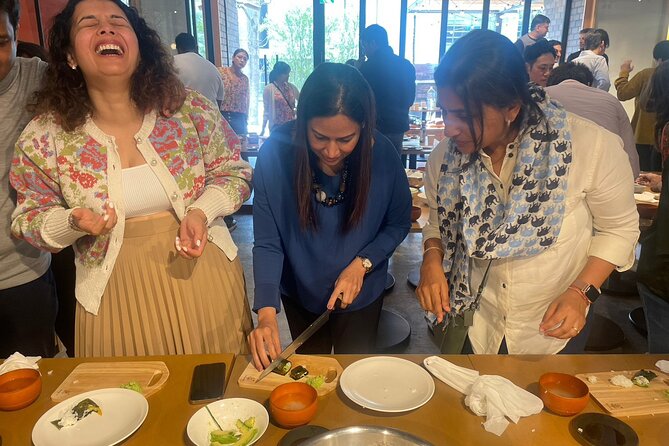
I would put this near the top of the list for first-time sushi makers, families, and groups of friends who want to do something together rather than sit quietly at a counter.
It also suits people pressed for time. The advertised duration is short, yet the program covers several core forms. You get a focused introduction without giving up half a day.
Vegetarian and vegan diners have a reason to consider it too. Mixed groups can take part together, though you should confirm the exact alternative ingredients if your diet is strict.
The class may be less appealing if you want an intimate, private setting. With up to 50 people, the room can have a social group feel. That can be a benefit if you like meeting other sushi fans, but it may not satisfy someone seeking a quiet chef-led lesson.
It is also not ideal if you need a guaranteed menu. Fish varies by season, and the available information does not promise specific toppings. Book the experience for the method, variety, and chance to make sushi, not for one particular piece of fish.
Timing, booking, and cancellation
The activity is sold with a mobile ticket, so you can keep the admission details on your phone. Confirmation is sent within 48 hours, subject to availability.
Pay close attention to the timing discrepancy. The tour summary gives an approximate duration of one hour, while the detailed experience calls it 90 minutes. Treat the class as taking up to 90 minutes when planning your day, then confirm the exact start and finish times.
Free cancellation is available if you cancel at least 24 hours before the local start time. Cancellations or changes made inside that window are not refunded or accepted.
The class requires a minimum number of participants. If the provider cancels because that minimum is not reached, you can receive another date or experience, or take a full refund.
Service animals are allowed, and the activity is near public transportation. Those details make it easier to fit into a wider Tokyo itinerary, though the supplied information does not give specific information about wheelchair access or the room layout.
Is Taisho Sushi Making worth booking?
Book it if you want to make and eat sushi rather than only watch someone else do it. The strongest parts are the repeated model practice, the coverage of nigiri, gunkan, and maki, and the amount of food included after the lesson.
The class is also a good choice for families and larger groups. Vegetarian and vegan options widen its appeal, and the central Kōjimachi meeting point keeps the logistics simple.
Skip it if you want a private chef experience, a guaranteed list of fish, or a long professional course. At $109.01, the value depends on using the instruction and meal together. For a hands-on introduction that fits into a busy Tokyo schedule, that combination makes the price reasonable.
FAQ
Where does the Taisho Sushi Making Class take place?
The class starts and ends at 1-chōme-4-4 Kōjimachi, Chiyoda City, Tokyo 102-0083, Japan.
How long does the sushi-making class last?
The tour summary describes the activity as approximately one hour, while the detailed program describes a 90-minute experience. Confirm the exact duration when booking.
How much does the class cost?
The listed price is $109.01 per person.
Are equipment and ingredients provided?
Yes. You can arrive empty-handed because all equipment and materials are provided.
Do I get to eat the sushi I make?
Yes. The class finishes with the chance to eat your creations, along with instruction in proper sushi-eating etiquette.
What types of sushi will I learn to make?
The program includes hand-made maki, nigiri, and gunkan sushi.
Are vegetarian and vegan options available?
Yes. Vegetarian and vegan options are available for people who do not eat fish.
How many people can join the class?
The activity has a maximum capacity of 50 participants.
Can I cancel for a full refund?
Yes, if you cancel at least 24 hours before the experience start time. Cancellations or changes made less than 24 hours before the start are not refunded or accepted.
More Workshops & Classes in Tokyo
More Sushi Making Classes in Tokyo
More tours in Tokyo we've reviewed












Sushi Making Classes, compared.
 ★ 5.0Sushi Making Tokyo Roll and Authentic Japanese Sushi ClassFrom $59
 ★ 4.9Tokyo: Roll and Authentic Sushi Making Class in AsakusaFrom $581h 40m
 ★ 4.9Tokyo: Sushi Making Class in a Happi Coat near a Famous SpotFrom $421h 30m
 ★ 5.0Sushi Making Tokyo! Popular Maki Sushi & Japanese Sushi(+Recipe!)From $63
 ★ 5.0Tokyo Sushi Making Class in Tsukiji with Professional ChefFrom $49
 ★ 5.0Tokyo Night Foodie Tour in Shinjuku – Seasonal Sushi, Wagyu BeefFrom $111