Reviewed · PRIVATE
Tokyo Private Off-Beat Tour Hidden Oddities & Icons with a Local
Tokyo has plenty of famous sights, but this private walk points you toward the city’s stranger, more playful corners. You may pass from Harajuku street fashion to Akihabara’s anime shops, hear about the Meguro Parasitological Museum, and finish among the lanterns of Piss Alley.
In This Article
- Key points at a glance
- Why this Tokyo walk feels different
- Starting at Harajuku’s youth culture
- Akihabara beyond the obvious anime shops
- The Meguro Parasite Museum, seen from outside
- Piss Alley and Tokyo’s older atmosphere
- What the private guide adds
- Walking, timing, and route planning
- Price and what you receive
- Who should book this experience
- Should you book the Tokyo oddities walk?
- FAQ
- How long does the Tokyo private offbeat tour last?
- Is this a private tour?
- Where does the tour start?
- Where does the tour end?
- Is hotel pickup available?
- Is transportation included?
- Are attraction tickets included?
- Is food or a drink included?
- Can I cancel for a full refund?
I like the private format, since your group can focus on pop culture, odd museums, food, history, or neighborhood life instead of following a fixed script. I also like the personal contact with the host, including direct planning before the walk and a drink and snack at a quirky café or izakaya.
The main catch is the price: $207.63 per person is a serious spend for four hours, especially because attraction tickets and transport are extra. This makes the tour most sensible for a small group that values a custom guide rather than a low-cost sightseeing walk.
Key points at a glance
- Harajuku starting point: Meet at NewDays Harajuku near the Omotesando Exit and begin among Tokyo’s youth fashions and playful street culture.
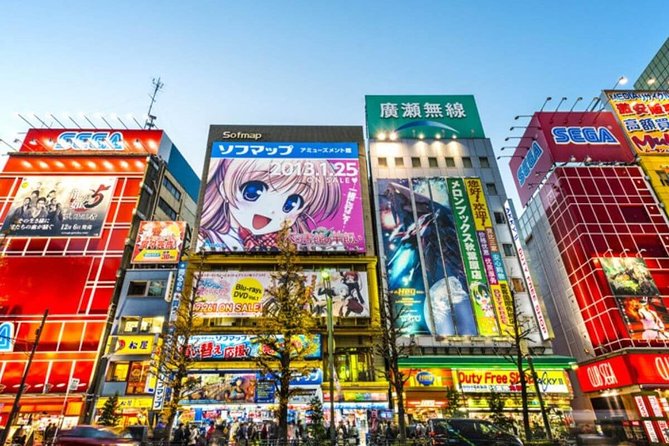
- Akihabara’s pop culture: See anime, manga, video game, character, and arcade sights with a local to help explain what you are seeing.
- Odd Tokyo details: The route can include unusual subjects such as a snake café or the exterior of the Meguro Parasitological Museum, depending on your plan.
- Piss Alley ending: Finish in a lantern-lit alley with postwar roots and a strong old-Tokyo mood.
- A drink and snack included: One small café or izakaya stop is part of the experience, while other food and drinks cost extra.
- Private and adjustable: Only your party takes part, and a questionnaire helps match the walk to your interests.
Why this Tokyo walk feels different

I like tours that help you see a city as more than a checklist of famous buildings. This one takes a less polished route through Tokyo’s creative, eccentric, and sometimes downright odd side.
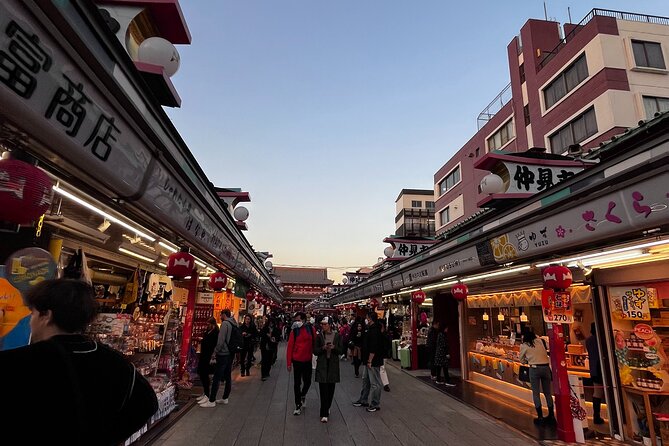
The appeal is not one grand attraction. It is the contrast between places. You might begin with bold fashion in Harajuku, move into the highly specialized world of anime and games in Akihabara, hear about parasites in Meguro, and end with tiny drinking spots in Piss Alley. That mix gives you a better sense of how many versions of Tokyo exist side by side.
Because the tour is private, you are not tied to a large group’s pace or interests. If you are fascinated by Japanese popular culture, your host can give more time to Akihabara. If you prefer food and neighborhood character, you can ask for more local stops and less shopping.
The booking process includes a short online questionnaire. Use it well. Tell the host what you already plan to see, what you want to avoid, and how much walking or public transport you prefer. The better your answers, the more useful the four hours should be.
Other private tours in Tokyo


Starting at Harajuku’s youth culture
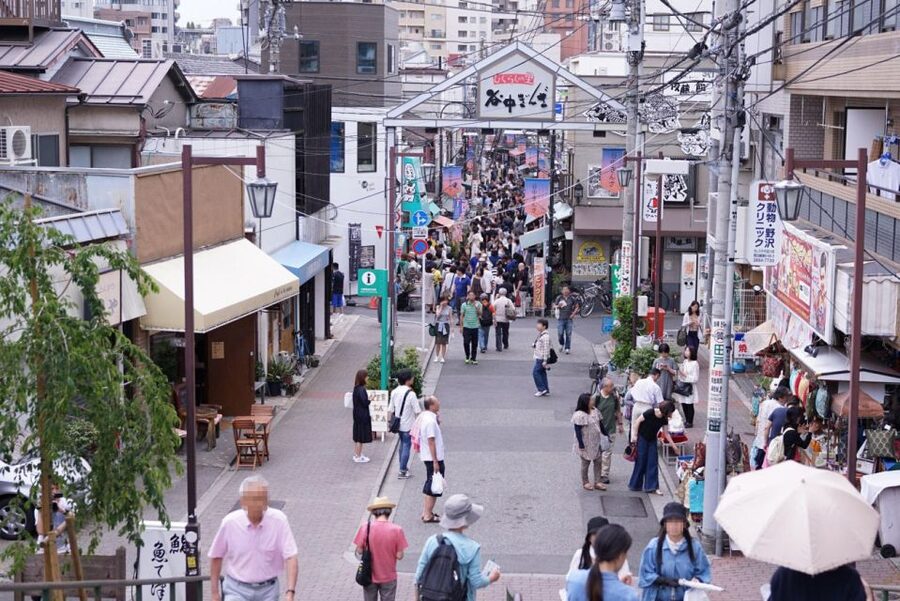
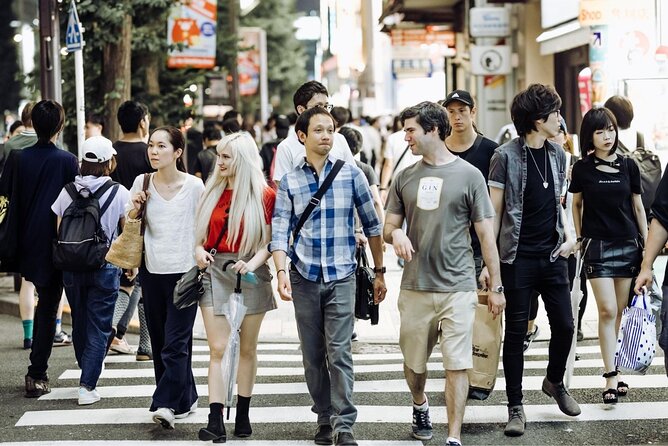
The meeting point is NewDays Harajuku, near the Omotesando Exit, at the start of the walk. Harajuku is a smart place to begin because it introduces Tokyo’s playful side quickly.
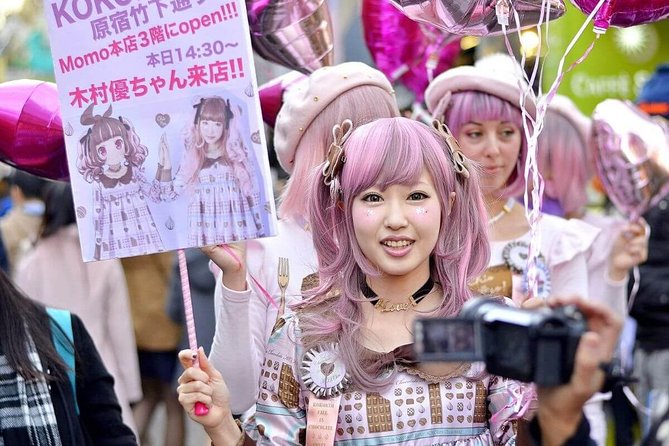
This area is associated with bold clothing, unusual accessories, whimsical shops, and street styles that change with the mood of the neighborhood. You are not simply looking at stores. You are seeing how young Tokyo expresses identity through fashion, character designs, color, and small details.
Your host can give context that is easy to miss when walking alone. A shop window may look like simple pop art, while a local guide can explain the subculture or point out how a style fits into Tokyo’s wider youth scene.
There is one practical point to keep in mind. Harajuku can be crowded and visually busy, so this part may feel less like a quiet neighborhood walk and more like an energetic introduction. If shopping is not your priority, say so before the tour. The custom format lets you shift attention toward street details, food, or cultural background.
Akihabara beyond the obvious anime shops
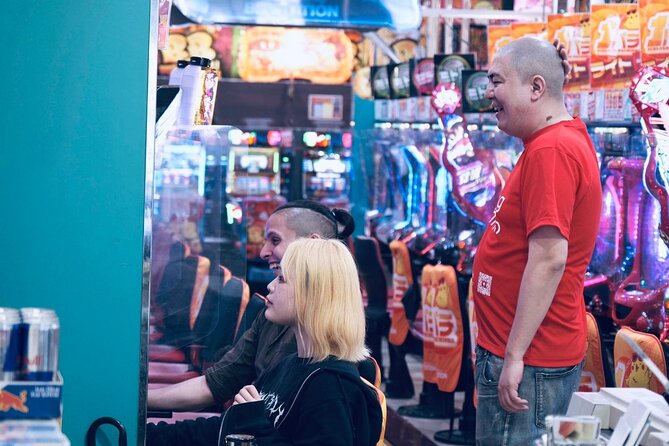
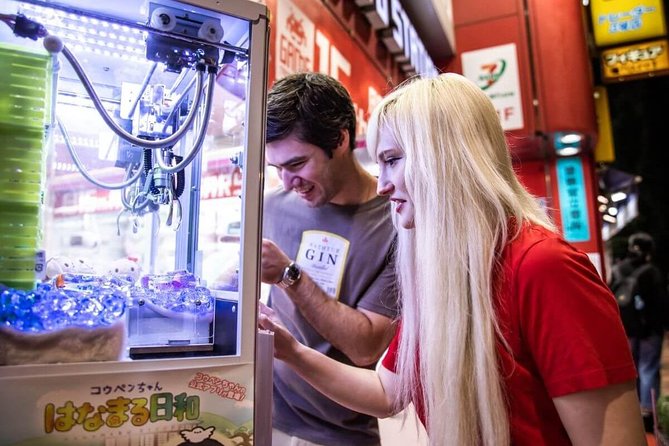
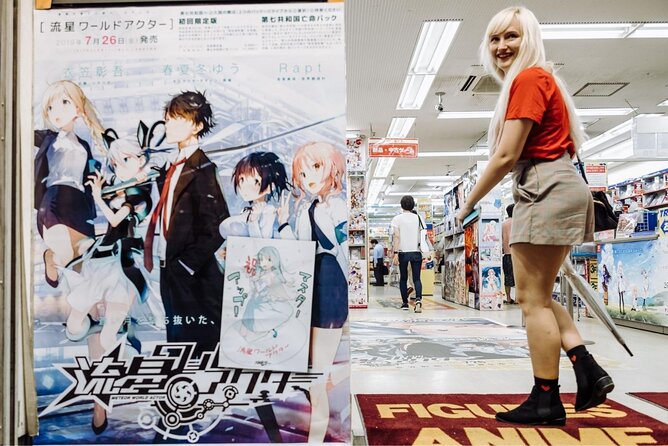
Akihabara is the tour’s clearest stop for Japanese anime, manga, and video game culture. The district is known for character shops, vintage arcades, collectibles, and small backstreets packed with specialist interests.
You will likely get more from this area if you arrive with a few questions. Ask your host to explain a character or franchise you do not recognize. Ask how arcades fit into modern city life. Ask which shops are aimed at collectors and which are more accessible to a first-time visitor.
A local guide is particularly useful here because Akihabara can feel like a wall of signs and products. Without context, you might spend your time taking photos without understanding what makes one store, arcade, or side street worth your attention.
The district also raises a value question. If you already know Akihabara well and have a precise shopping list, you may not need a guide for this part. If you are new to anime and gaming culture, the host’s explanations can save time and help you notice more than the main roads.
The private setting is helpful for families and mixed-interest groups. One person can ask about manga, another about games, and another about the neighborhood’s changing character. The host can adjust the emphasis instead of delivering a standard speech.
The Meguro Parasite Museum, seen from outside
One of the most unusual subjects connected with this experience is the Meguro Parasitological Museum. The stop is listed as an exterior pass-by, so you should not expect admission or an indoor museum visit as part of the four-hour walk.
That distinction matters. The museum is dedicated to parasites, making it one of Tokyo’s more unusual cultural stops. Your host can explain why the building is notable and add an odd scientific detail to the day, but you will need to pay separately if you want to go inside, assuming the customized plan includes that option.
I appreciate this kind of stop because it breaks up the usual Tokyo formula. You are not being led only to temples, observation decks, or shopping streets. At the same time, the exterior visit may feel too brief if you have a strong interest in science or the museum itself.
Tell your host in advance if this is a must-see. The tour includes no attraction tickets, and the published plan specifically describes passing by the exterior. Confirming the details before the day will prevent a mismatch between your expectations and the actual route.
Piss Alley and Tokyo’s older atmosphere

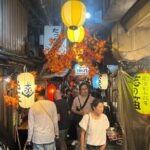
The walk ends at Piss Alley, a narrow, lantern-lit area with a strong nostalgic feel. Its name is blunt, but the atmosphere is the real reason to come. The alley was once linked to Tokyo’s postwar black-market district and now contains small drinking places and old-style character.
This is a fitting finish for a tour about Tokyo’s contrasts. After the bright signs and pop culture of Harajuku and Akihabara, Piss Alley offers a more compact, weathered setting. You can get a sense of how the city preserves fragments of its past even as the surrounding districts keep changing.
Do not expect a large historic site with formal exhibits. This is a living alley, not a museum. The appeal comes from its scale, lanterns, narrow passages, and stories. Your host can help you read the setting rather than simply walk through it.
A drink and snack at a quirky local café or izakaya is included. The exact venue may depend on the host and the customized route, so ask what is planned. Additional food and drinks are not included, and Piss Alley is the sort of place where you may be tempted to order more.



What the private guide adds

The strongest part of this experience is the host relationship. After booking, you receive a questionnaire and can communicate directly with your host about the plan. That is more useful than a generic promise of customization. You can state specific interests before meeting in Tokyo.
The guide can help with subjects that are hard to understand at first glance. Japanese pop culture has its own vocabulary, local etiquette can be subtle, and a place such as Piss Alley carries layers of meaning that are easy to miss without explanation.
Hiroko is one guide associated with this experience. The feedback about her highlights three qualities that matter on a private walk: she was informative, flexible, and kind. Those traits are especially important here because the route may need to change as your interests become clearer.
A private host can also make the day easier for families. One booking describes a daughter enjoying the scenery while the guide helped shape the experience around the group. That suggests this can work well when adults and children do not have identical interests, provided you explain the family’s needs in advance.
Still, the guide is not a substitute for a full sightseeing bus or a private vehicle. This is mainly a walking experience. Public transport or local taxis may be used between areas, but those costs are extra and should be discussed with the host once the reservation is finalized.
Walking, timing, and route planning
Four hours is enough for a focused introduction, not a complete tour of Tokyo. The distance between Harajuku, Akihabara, Meguro, and Piss Alley means the final route may not include every example mentioned in the description at equal length.
This is where the customization matters. Ask your host which neighborhoods will receive the most time and how transfers will work. If you want to spend meaningful time in both Harajuku and Akihabara, adding Meguro and Piss Alley could make the schedule feel compressed.
You are picked up on foot at your accommodation if it is central. Otherwise, the listed starting point is NewDays Harajuku. The activity ends back at the meeting point, so plan your onward travel from there rather than assuming you will finish in a different neighborhood.
Comfortable shoes are a sensible choice. The tour is primarily on foot, and transport is not included. Most people can take part, and service animals are allowed, but the available details do not promise a step-free route or a private car.
Price and what you receive
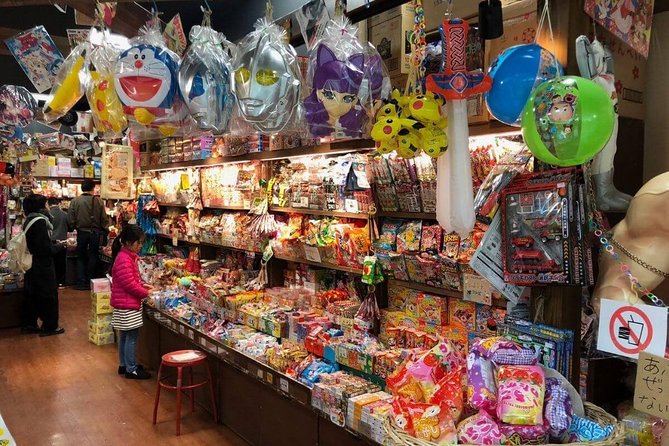
At $207.63 per person, this is not a bargain walk. Its value depends heavily on your group size, the quality of the host match, and how well you use the planning stage.
For one person or a couple, the cost may feel high compared with a public group tour. For a family or small private party, the calculation is different because the guide is reserved for your group. You are paying for flexibility, direct communication, local interpretation, and a route built around your preferences.
The included drink and snack add a modest benefit, but they are not the main reason to book. Attraction tickets, extra food, drinks, and transport are not covered. Set aside money for those items if you want to enter attractions or spend more time at an izakaya.
This tour is booked an average of 73 days ahead, so it is wise to reserve early if your Tokyo dates are fixed. Free cancellation is available up to 24 hours before the start time. A cancellation inside that window is not refundable, and late changes are not accepted.
Who should book this experience
I would consider this walk if you have already seen Tokyo’s major landmarks or if your interests do not fit a standard sightseeing route. It is particularly well suited to:
- Families who want a flexible day with different interests in one group
- First-time visitors curious about anime, manga, gaming, and youth culture
- Repeat visitors looking for unusual subjects rather than another major shrine
- Couples or friends who want a private host and neighborhood stories
- Anyone who prefers conversation and local guidance to a fixed group schedule
I would be more cautious if you want a full museum visit, a private vehicle, or a tightly defined list of guaranteed attractions. The parasite museum is an exterior stop, transport costs extra, and the exact route depends on the conversation with your host.
You should also decide how much shopping you want. Akihabara and Harajuku can absorb a lot of time, but browsing is not the same as guided sightseeing. Tell the host if you want fewer shops and more local cafés, street scenes, or cultural explanation.
Should you book the Tokyo oddities walk?
Book it if you value a personal guide and want Tokyo’s stranger details explained in context. The private setup, flexible planning, and strong feedback about Hiroko’s informative and kind manner make it more appealing than a fixed group route.
Skip it if $207.63 per person stretches your budget or if you can happily explore Harajuku and Akihabara alone. The best value comes when you arrive with clear interests and use the host’s local perspective to connect several very different parts of Tokyo.
For the right group, this is a lively four-hour introduction to the city behind the standard postcard. Just confirm the final route, transport plan, and any attraction visits before you set out.
FAQ
How long does the Tokyo private offbeat tour last?
The experience lasts approximately four hours.
Is this a private tour?
Yes. Only your party participates in the activity.
Where does the tour start?
The listed meeting point is NewDays Harajuku near the Omotesando Exit in Tokyo’s Shibuya area.
Where does the tour end?
The activity ends back at the meeting point.
Is hotel pickup available?
Pickup on foot is offered from central accommodations. A private vehicle is not included.
Is transportation included?
No. The experience is mainly walking. Public transport or local taxis may be used at an additional cost, with details discussed with your host after booking.
Are attraction tickets included?
No. Tickets to attractions are not included. The Meguro Parasitological Museum is described as an exterior pass-by.
Is food or a drink included?
One drink and snack at a quirky local café or izakaya are included. Additional food and drinks cost extra.
Can I cancel for a full refund?
Yes. You can cancel at least 24 hours before the local start time for a full refund. Cancellations and changes made less than 24 hours before the start time are not accepted for a refund.
More Private Tours in Tokyo

More tours in Tokyo we've reviewed












Private, compared.
 ★ 5.0Tokyo 6hr Private Tour with Government-Licensed GuideFrom $155
 ★ 5.0Private Tour to Mt. Fuji and Hakone (Fully Licenced Operator)From $497
 ★ 5.0Tokyo Customized Private Tour (Must See Places in 1 Day)From $145
 ★ 4.8Tokyo: Private City Highlights Tour with Local GuideFrom $1064 - 8 hours
 ★ 5.0Private Custom Tour: Tokyo in a DayFrom $159
 ★ 5.0Tokyo 4hr Private Tour with Government-Licensed GuideFrom $109