Reviewed · VIP
Full Day Tokyo Private Tour by Luxury Vehicle
Tokyo is a huge city, and this private vehicle tour gives you a practical way to see its far-flung highlights in one day. You can move from Senso-ji and Tsukiji to Meiji Jingu, Harajuku, and Shibuya without learning several train routes first.
In This Article
- Key Things to Know Before You Book
- A Full Tokyo Day Without Wrestling the Train Map
- Senso-ji Gives You Tokyo’s Traditional Opening Scene
- Akihabara Shows Tokyo’s Playful Side
- Tsukiji Means Small Bites, Not the Old Wholesale Market
- The Imperial Palace Stop Is Brief and Mostly Exterior
- Meiji Jingu Offers a Forest Break in the City
- Takeshita Street Is Short, Sweet, and Very Harajuku
- Shibuya Crossing Finishes With Tokyo’s Big City Image
- What the Guides Add to the Day
- Comfort, Timing, and Mobility
- Is $495.39 Good Value for Your Group?
- Who Will Get the Most From This Tour?
- Should You Book the Private Tokyo Vehicle Tour?
- FAQ
- How long does the private Tokyo tour last?
- How many people can join the private tour?
- Does the tour include hotel pickup and drop-off?
- Is transportation private?
- Which Tokyo sights are included?
- Are admission tickets included?
- Is a walking tour guide included?
- Can the itinerary be changed?
I like the easy hotel pickup and the freedom to adjust the day around your interests. I also like the clean, comfortable van, bottled water, onboard Wi-Fi, and guides such as Rich and Jordan, who have been praised for clear communication and useful local advice. The tradeoff is simple: this is mainly a driving and sightseeing service, not a full walking tour, so visitors wanting detailed commentary at every stop should ask about adding a walking guide.
Key Things to Know Before You Book

- Seven major Tokyo areas in one day: Visit Senso-ji, Akihabara, Tsukiji, the Imperial Palace, Meiji Jingu, Takeshita Street, and Shibuya Crossing.
- A private van for up to six people: Your group stays together, with hotel pickup and drop-off included.
- Flexible plans: You can adjust the route for shopping, food, family needs, mobility concerns, or a scheduled lunch.
- Strong English-language support: Guides named in the feedback include Rich, Jordan, Caleb, and Khalid.
- Good for first-time orientation: You see very different sides of Tokyo, from temples and shrines to anime shops and street fashion.
- Important limitation: A walking guide may cost extra, and admission fees such as Tokyo Skytree are not included.
A Full Tokyo Day Without Wrestling the Train Map

The main appeal here is coverage. Tokyo is not one compact sightseeing district. Senso-ji sits in Asakusa, Akihabara is farther south, Tsukiji lies near the bay, and Harajuku and Shibuya are on the western side of the city. Seeing all of them by public transport in one day is possible, but it takes planning, station changes, and plenty of walking.
With a private vehicle, you get picked up at your accommodation and driven between districts. Your driver can drop you at a useful entrance, explain where to meet again, and have the van ready when you return. That matters in Tokyo, where a short visit can otherwise turn into a long search through a station or shopping street.
The tour lasts about seven to nine hours, though the exact rhythm depends on traffic, your pickup point, and how long you spend at each stop. Heavy traffic has been handled well by the guides, but no driver can make Tokyo rush hour disappear. Keep your schedule sensible, especially if you have a train, flight, or cruise departure later in the day.
The group limit is six people. For a family or small group, the advertised price of $495.39 becomes more appealing when divided among several passengers. For one or two people, the cost is harder to justify unless comfort, privacy, and efficient transport matter more to you than saving money.
Other private tours in Tokyo

Senso-ji Gives You Tokyo’s Traditional Opening Scene
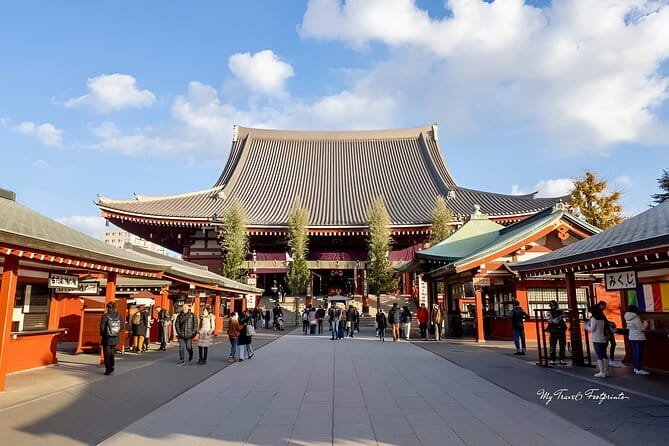
The first listed stop is Senso-ji, Tokyo’s oldest Buddhist temple. It is a strong introduction because you get both a major religious site and the lively shopping streets around it.
Plan on about 90 minutes. You can approach the temple through the busy Nakamise shopping area, where small stores sell handmade goods, snacks, and local treats. The area is more than a quick photo stop. Give yourself time to look at the shopfronts, browse souvenirs, and notice how the temple precinct works as part of daily city life.
Admission to the temple area is free. The drawback is crowding. Senso-ji is one of Tokyo’s best-known sights, so your visit will feel active rather than quiet. If you want a calm temple experience, Meiji Jingu later in the day provides a very different mood.
Akihabara Shows Tokyo’s Playful Side
Akihabara gives the day a sharp change of tone. This is the stop for electronics, anime, game centers, and maid cafes. You do not need to be a serious fan to enjoy the visual change from temple lanes to bright storefronts and specialist shops.
The planned time is about 90 minutes. That is enough for a first look and some shopping, but not enough to explore every store in detail. If anime, games, or electronics are central to your interests, ask the guide to give Akihabara more time and shorten a stop that matters less to you.
The itinerary also allows for a possible stop at Mitsukoshi Department Store, depending on your preferences. That flexibility is useful for mixed groups. One person can focus on pop culture while another looks for more traditional shopping or gifts.
Tsukiji Means Small Bites, Not the Old Wholesale Market

It is important to set expectations at Tsukiji. The old wholesale fish market is no longer operating there, but the outer market remains a popular food area. You will find small restaurants and stalls selling seafood along with wagyu, fruit, and other street foods.
The scheduled visit is about 90 minutes. This makes Tsukiji a good place for lunch or grazing rather than a formal meal. You can choose what looks good instead of committing the whole group to one restaurant, though individual food purchases are not listed as included.
The outer market can feel crowded, and the selection is focused on food and shopping rather than a museum-style account of the former market. I would use this stop to eat and sample a few things, not to expect the fish auction experience associated with older descriptions of Tsukiji.
The Imperial Palace Stop Is Brief and Mostly Exterior

The Imperial Palace visit is listed as a 30-minute stop. The vehicle drives through the outer gardens of the Imperial Residence, but you should not expect to see the royal family’s residence itself. The buildings are intentionally screened from public view.
This is best treated as a quick central Tokyo landmark rather than a full palace tour. The short timing makes sense, since there is no listed interior admission or extended palace walk. If palace grounds are a top priority for you, ask in advance how much time can be given to this stop.
The value here is the contrast. After the food and retail energy of Tsukiji, the palace area offers a more formal side of the capital. It also works well as a photo and orientation stop between districts.
A few more Tokyo tours and experiences worth a look




Meiji Jingu Offers a Forest Break in the City

Meiji Jingu is scheduled for about 90 minutes and is one of the most rewarding stops for anyone who wants a pause from traffic and shops. The shrine sits within a forest of more than 100,000 trees across roughly 170 acres.
The setting makes this shrine different from Senso-ji. Senso-ji is framed by commerce and city movement, while Meiji Jingu offers a broad, wooded approach and a quieter feel. The shrine was built for the souls of Emperor Meiji and Empress Shoken, giving the visit a clear connection to Japan’s modern imperial past.
You will still be walking here. Comfortable shoes are sensible, and anyone with limited mobility should discuss the route with the guide before the day begins. One particularly useful aspect of the private format is the ability to adjust the pace. The service has accommodated families traveling with older parents and a wheelchair, according to the supplied information, though you should confirm your own needs before booking.
Takeshita Street Is Short, Sweet, and Very Harajuku

Takeshita Street brings you into Harajuku’s youth fashion and snack scene. The street is known for unusual clothing shops, crepes, strawberries, candy apples, and animal cafes. It is a good place to let teenagers or shoppers take the lead.
The planned time is another 90 minutes. That gives you room to browse and eat, but the street can be crowded and visually busy. I would not try to force a detailed shopping plan here. Instead, use the stop to sample a snack, look at the fashion, and enjoy one of Tokyo’s most recognizable people-watching areas.
This is also a useful example of why a private itinerary helps. If Takeshita Street feels less interesting to your group, you can request more time elsewhere. The tour is not locked into a rigid group schedule.
Shibuya Crossing Finishes With Tokyo’s Big City Image

Shibuya Crossing is the final listed stop and lasts about 30 minutes. It is a quick visit, but it gives you the classic image of people moving across a huge city intersection from every direction.
The short stop works best for photos, a first crossing, and a look at the surrounding district. If you want time for shopping or a meal in Shibuya, ask about extending the visit and trimming another part of the route. The tour description links the crossing with well-known films, but you do not need to know those movies to appreciate the spectacle.
Because this is the last stop, it may also be a convenient place to end the day if your accommodation or later plans are nearby. Confirm the final drop-off arrangement with your guide so the timing fits your evening.
What the Guides Add to the Day
The people guiding these tours appear to be a major part of the experience. Rich is described as an English and Japanese speaker who has lived in Japan for more than 25 years. He has also handled pickups from train stations and Yokohama cruise port, including groups with luggage, and helped arrange stops for early cherry blossoms, souvenirs, and a prearranged lunch.
Jordan is praised for prior communication and for shaping the route around the sights most important to the group. Caleb is described as an English and Japanese-speaking driver who explains the places visited. Khalid is noted for being friendly, flexible, and willing to give people time to shop, eat, and relax.
These details point to a service where the guide can be more than a person behind the wheel. You can ask questions about Japanese culture, daily life, food, and city history. Several comments also highlight clear meeting instructions after drop-offs, which is a small but valuable benefit in a city this large.
Still, do not assume every booking includes the same guide or the same level of commentary. The information specifically says a walking tour guide may be available for an added charge, depending on availability. If detailed interpretation is your main reason for booking, request that service before paying or make your expectations clear.
Comfort, Timing, and Mobility
The vehicle includes private transportation, Wi-Fi, bottled water, and hotel pickup and drop-off. The van has been described as clean and comfortable, with enough room in one case for a wheelchair. That makes this a practical choice for parents, grandparents, or anyone who finds Tokyo’s train stations and long walks tiring.
The private format also lets you leave luggage in the vehicle during stops when appropriate, though you should ask the operator about luggage arrangements rather than assume. Pickup is offered from accommodations, and the service has also handled train station and Yokohama port pickups according to the supplied details.
Most people can participate, and the tour is near public transportation, but the private vehicle is the main reason to choose it. You are still visiting places on foot once you arrive. Senso-ji, Meiji Jingu, and Takeshita Street all involve walking, so tell the guide if your group needs shorter routes or more frequent breaks.
Is $495.39 Good Value for Your Group?
At $495.39 for up to six people, this is not a budget sightseeing option. It is a transport-and-flexibility purchase. A full vehicle, hotel transfers, Wi-Fi, bottled water, and a private schedule can be worthwhile for a group that would otherwise need taxis, several train rides, and careful coordination.
The value improves with four to six people. Split among six, the cost is roughly $83 per person before any optional charges, food, or admission fees. For a couple, the same total feels steep, especially because the listed attractions are mostly free and can be reached by public transport.
No entrance fees are included. The itinerary itself lists free admission at the main stops, but Tokyo Skytree costs ¥3,000 per person if added. Food, shopping, and any extra walking guide are also outside the stated inclusions.
I would compare this with the cost of private taxis and the time you would spend planning the route. If your priority is seeing many districts with little stress, the price can make sense. If you enjoy navigating trains and want long, detailed visits at two or three sights, public transport and a specialist guide may suit you better.
Who Will Get the Most From This Tour?
I would recommend it most strongly to:
- First-time visitors with only one full day in Tokyo
- Families who need a private pace and simple transfers
- Small groups that can share the vehicle cost
- Cruise passengers arriving through Yokohama
- People who want shopping, food, temples, and modern city sights in one day
- Visitors who are nervous about Tokyo’s scale or public transport
- Groups with limited mobility that need a more adaptable plan
It is less suited to you if you want a long guided walk inside each district, a specialist food tour, or a slow visit to one neighborhood. The day covers a lot of ground, so each stop is an introduction rather than an exhaustive visit.
The booking has a 4.9 rating from 41 reviews, with 95 percent recommending it. That points to strong satisfaction, especially with the guides, communication, flexibility, and vehicle. I would still ask which guide is assigned and whether a walking guide is included, since the depth of commentary may vary.
Should You Book the Private Tokyo Vehicle Tour?
Book it if you want a comfortable first look at Tokyo and value having someone manage the driving, route, timing, and meeting points. Rich, Jordan, Caleb, and Khalid are all specifically praised for courtesy, flexibility, and local explanations, while Rich receives especially detailed praise for helping groups with luggage, mobility needs, lunch plans, and cruise schedules.
Before booking, decide which three stops matter most to you. The full route is ambitious, and Tokyo traffic can cut into sightseeing time. Tell the operator about shopping priorities, food interests, wheelchair use, children, or a fixed dinner and transport deadline.
I would choose this tour for a group of four to six, a first day in Tokyo, or a family that wants to conserve energy. I would skip it for a solo budget visit or for a traveler who prefers trains, long walks, and detailed site-by-site guiding.
FAQ
How long does the private Tokyo tour last?
The experience lasts approximately seven to nine hours.
How many people can join the private tour?
The price covers one private group of up to six people.
Does the tour include hotel pickup and drop-off?
Yes. Hotel pickup and drop-off in Tokyo are included.
Is transportation private?
Yes. Private transportation by vehicle is included, along with bottled water and Wi-Fi onboard.
Which Tokyo sights are included?
The listed stops are Senso-ji Temple, Akihabara, Tsukiji Fish Market’s outer market, the Imperial Palace outer gardens, Meiji Jingu Shrine, Takeshita Street, and Shibuya Crossing.
Are admission tickets included?
The listed main stops have free admission. Tokyo Skytree is not included and costs ¥3,000 per person if added.
Is a walking tour guide included?
A walking tour guide may be available for an additional charge, depending on availability. The standard inclusions list private transportation, Wi-Fi, bottled water, and hotel pickup and drop-off.
Can the itinerary be changed?
Yes. The itinerary can be adapted to your requirements, and the tour is private to your group. Changes made less than 24 hours before the start time are not accepted, and cancellations made at least 24 hours ahead receive a full refund.
More Full-Day in Tokyo


More VIP Experiences in Tokyo
More Private Tours in Tokyo
More tours in Tokyo we've reviewed












VIP, compared.
 ★ 4.7Tokyo:Luxury Sumo Show Experience & Japanese cuisine & DrinkFrom $1032 hours
 ★ 4.5Luxury van Ride to famous car meet up spot DaikokuFrom $72
 ★ 4.9From Tokyo: Mt Fuji Private Day Tour In Luxury Land CruiserFrom $388
 ★ 4.9From Tokyo/Nagano: Luxury Snow Monkey Private Full-Day TourFrom $537
 ★ 4.5Haneda Airport Private Transfer – Luxury Car & Meet & GreetFrom $86
 ★ 5.0Tokyo VIP Hidden Food & Bar Night – Private Local ExperienceFrom $254