Reviewed · TEA CEREMONY & MATCHA
【NEW】Matcha Making Experience and Matcha Comparison in Tokyo
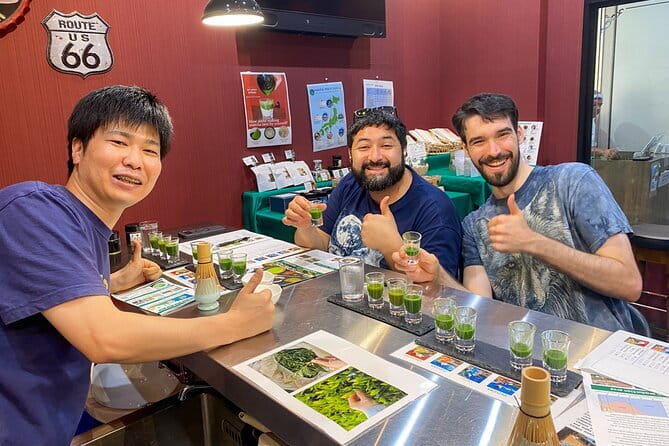
Tokyo is a fine place to learn what matcha really is. In this small, hands-on session, you compare teas from five Japanese growing areas, including six ceremonial-grade matchas and two products sold worldwide as matcha but not technically defined as matcha. You taste first, then whisk your own cup.
In This Article
- Key points to know
- Why this Tokyo matcha session is different
- Meeting Chisei and Rina in Taito City
- A welcome drink with a lesson attached
- Comparing Kyoto, Shizuoka, Aichi, Fukuoka, and Kagoshima
- Whisking your own ousucha
- Matcha latte and sweets to finish
- Is $62.12 a fair price?
- Who should book this experience?
- Should you book this matcha experience?
- FAQ
- How long does the matcha experience last?
- What time does the experience begin?
- Where is the meeting point?
- How many people can join the experience?
- What is included in the price?
- Can I cancel for a full refund?
I like the unusually personal teaching: Chisei spent six years growing tea in Kyoto and has an agricultural science degree, while Rina brings a pharmacy background. I also like the practical finish, since you make your own ousucha with a bamboo whisk and can repeat the method at home. The main consideration is price: at $62.12 for about 90 minutes, this is best for curious tea drinkers, not for anyone seeking a quick cup of green tea.
Key points to know
- Ten matchas from five regions: Compare teas connected with Kyoto, Shizuoka, Aichi, Fukuoka, and Kagoshima.
- A former Kyoto tea farmer leads the learning: Chisei grew tea for six years and has a degree in agricultural science.
- You taste with your eyes, nose, and palate: Color and fragrance come before the first sip.
- You whisk your own favorite: Pick one tea and make ousucha with a bamboo whisk.
- The group is capped at five people: Expect a small setting rather than a large demonstration.
- The finish is sweet and easygoing: Try a matcha latte and matcha sweets made with an original milk-friendly blend.
Why this Tokyo matcha session is different
Many visitors first meet matcha as a sweet latte or a bright green powder in a souvenir tin. This experience takes a more useful approach. It asks you to compare several teas side by side, then explains why they look, smell, and taste different.
The point is not simply to drink a lot of matcha. You learn how matcha is defined, how tea is grown, and how production affects the finished powder. Chisei’s background gives the session a farming angle that is often missing from tea demonstrations. His agricultural science degree, along with six years as a Kyoto tea farmer, connects the cup to soil, cultivation, and processing.
That matters because matcha is not one fixed flavor. One sample may seem gentle and sweet, while another has more bitterness, aroma, or body. You may find that the matcha you prefer is not the one with the strongest color. The comparison gives you a better chance of finding your own taste instead of accepting a shop’s general claim that one powder is best.
The session is also designed to sort out a common source of confusion. Six of the eight teas in the main comparison are described as ceremonial grade. Two others are sold as matcha around the world but are not technically defined as matcha. You can see and taste the difference rather than relying on packaging language.
The full experience is described as offering ten kinds of matcha from five production areas. The detailed tasting sequence specifically mentions eight teas, followed by your chosen matcha, a latte, and sweets. If the exact count of separate powders is important to you, confirm the serving plan when booking. Either way, the focus is on comparison, not a single ceremonial cup.
A few more Tokyo tours and experiences worth a look

Meeting Chisei and Rina in Taito City
The meeting point is matcha tripJapan at 111-0042 Tokyo, Taito City, Kotobuki 3-chome 198, on the second floor of Henn Na Hotel, inside Sports Bar Leaf. The start time is 9:30 a.m., and the activity returns you to the same place.
This is useful to plan around. You are not being taken across several Tokyo neighborhoods, so the experience fits neatly into a morning. It also leaves the rest of the day open for nearby sights, shopping, or another part of Tokyo.
The small maximum of five people is a real advantage for a subject like this. Tea preparation involves fine movements, and tasting different powders works better when you can ask questions. Chisei has said that tea conversations can easily run past the planned hour and a half when people ask questions. That is a good sign for an engaged group, though it also suggests you should arrive ready to listen and participate rather than rush through the program.
Chisei is the main tea specialist described for the experience. He worked as a tea farmer in Kyoto for six years and was involved in cultivation and processing. Rina, the assistant, has a bachelor’s degree in pharmacy and works as a pharmacist. Their backgrounds are different, which should give the session both a farm-to-cup focus and careful attention to what you are tasting.
Use the mobile ticket for entry, and allow enough time to locate the hotel and second-floor venue before 9:30 a.m. The provided details do not give a more specific station exit or neighborhood walking time, so check the meeting point on your phone before leaving.
A welcome drink with a lesson attached
The session begins with a welcome drink. While you sip, the hosts explain the history and production of the matcha you will taste.
This opening is more than a polite greeting. It gives you a framework for the lineup. Without some context, ten small servings can blur together. With an explanation of cultivation and processing first, you have something to watch for in the cup.
You will hear about the definition of matcha and the ways it is grown. The teaching also touches on soil science, an unusual detail for a short Tokyo food experience. That emphasis can help explain why two teas from different regions may not taste alike, even when both are prepared as matcha.
The welcome drink also gives you time to meet the hosts and settle into the setting. Since the group is limited to five, you should have a chance to ask questions directly. If you are interested in Japanese agriculture, regional foods, or the difference between a traditional product and a modern export version, this part may be as useful as the tasting itself.
Comparing Kyoto, Shizuoka, Aichi, Fukuoka, and Kagoshima
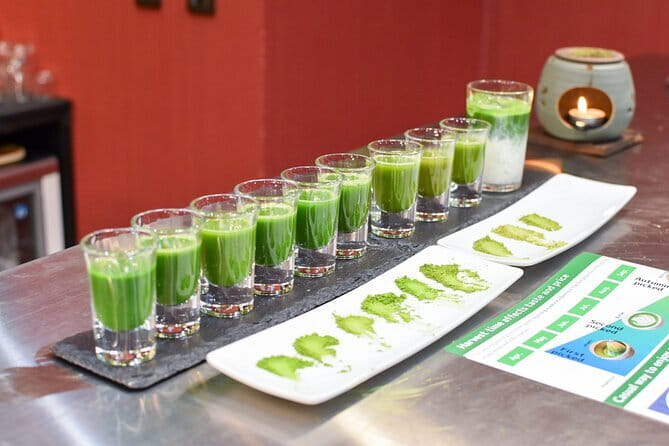
The central section is the comparison tasting. The teas come from Kyoto, Shizuoka, Aichi, Fukuoka, and Kagoshima, five well-known tea-producing areas in Japan.
The hosts first show you the color of each matcha. Then they prepare it and serve it for tasting. That order is important. Color can suggest freshness and style, but it does not tell the whole story. You also pay attention to fragrance and flavor, which makes the process more like a guided tasting than a simple drink service.
You receive small portions, allowing you to compare without becoming overwhelmed by a large volume of caffeine or liquid. The teas cover a range of flavors and aromas. You may find one that seems soft and approachable, another with a stronger character, and another that suits you better once it is paired with food or milk.
The two non-matcha products are especially useful for shoppers. Products sold as matcha can vary widely, and bright green powder alone does not prove that you are buying traditional matcha. Tasting these alongside six ceremonial-grade examples helps you understand what your money is buying.
Do not approach this part as a contest in which one region wins. The useful question is simpler: Which tea do you like, and why? You may prefer a flavor that is less forceful or a scent that reminds you of fresh plants. The session gives you enough variety to form that judgment yourself.
The supplied details describe ten kinds overall but list eight for the comparison flight. That difference may reflect the way the later servings are counted, or it may be a shorthand description of the full menu. The important point is that you get a broad selection from five regions, and you should ask for clarification if a precise ten-tea tasting is your main reason for booking.
Whisking your own ousucha
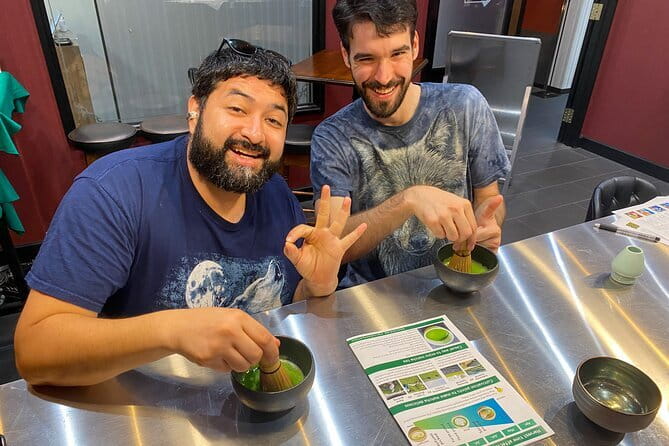
After comparing the samples, you choose the matcha you like best and prepare it yourself. The final traditional drink is ousucha, a thinner style of matcha made with a bamboo tea whisk.
This is the hands-on part that turns information into a skill. You are not only watching a host move the whisk. You handle the tools, mix the powder, and learn the basic method for making matcha at home.
That makes the $62.12 price easier to assess. A standard tea tasting might let you sample several cups, but this one adds instruction and a repeatable activity. If you already own a bamboo whisk, the lesson may help you use it with more confidence. If you do not, you still leave with a clearer sense of how matcha should be prepared.
Your favorite tea may not be the host’s favorite, and that is part of the fun. The comparison comes before the making, so your choice is based on your own palate. You can also ask questions while preparing the drink, a benefit of the five-person limit.
The details do not promise a full formal tea ceremony with traditional clothing or a historic tea-house setting. This is a modern educational tasting in Tokyo. You should book it for the tea, the comparison, and the practical whisking lesson rather than for elaborate ceremony.


Matcha latte and sweets to finish
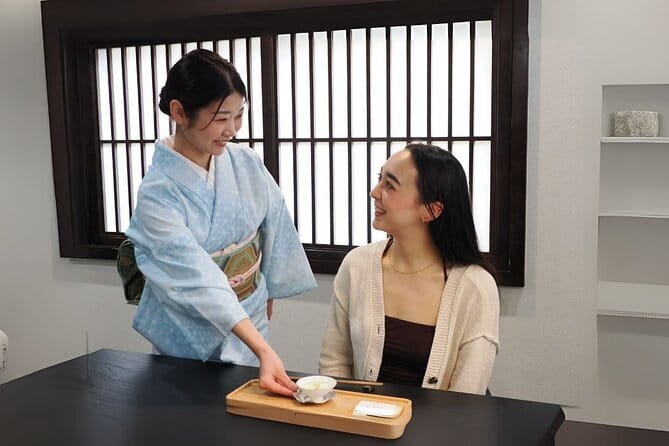
The final food and drink pairing shifts the mood. You try a matcha latte and matcha sweets made with an original matcha blend designed to work well with milk and sugar.
This is a smart ending because it shows how matcha behaves outside a plain bowl. A powder that is subtle on its own may disappear under milk, while a stronger blend can hold its flavor in a latte. The sweet finish also gives you a familiar point of comparison if unsweetened matcha tastes too intense.
I like that the experience does not treat latte-style matcha as inferior. It first teaches you to notice the traditional drink, then shows you a more casual way to enjoy the ingredient. That makes the lesson useful for daily life, not just for a single morning in Tokyo.
Food details are limited, so do not book this as a full breakfast or dessert tour. The description confirms matcha latte and matcha sweets, but it does not list portion sizes or accommodate specific dietary needs. If allergies or dietary restrictions matter to you, contact the provider before booking.
Is $62.12 a fair price?
At $62.12 per person, this is not a bargain-priced beverage stop. You are paying for a small group, a guided comparison of regional teas, instruction from a former tea farmer, your own whisking practice, and the latte and sweets at the end.
For a person who already enjoys matcha, the value is in the range and context. You can taste ten kinds overall as described, compare five production areas, and learn why matcha products differ. You also receive local guidance in English or Japanese.
For a casual visitor who only wants a sweet green drink, the cost may feel high. Tokyo has plenty of cheaper places to order a matcha latte. This experience earns its price only if you want to understand the ingredient and take part in making it.
The 90-minute length helps. It is long enough for a proper tasting without taking over your day. The five-person cap adds value, especially if you have questions about cultivation, processing, or preparation.
The experience has a perfect rating from seven published reviews, but the sample is small. I would treat that as encouraging rather than proof that every person will love it. Your enjoyment will depend on how interested you are in comparing subtle tea flavors and listening to a detailed explanation.
Who should book this experience?
I would recommend it to matcha fans, curious food lovers, and visitors who want a small activity with a strong Japanese connection. It is also a good choice if you have been buying matcha overseas and want to understand the difference between traditional matcha and products marketed under the same name.
It suits solo visitors and couples particularly well because the group is limited to five. English and Japanese guiding are available, so you can take part even if you do not speak Japanese.
Families with older children may also enjoy the tasting and whisking, but the supplied details do not set a minimum age. Ask the provider before booking for younger children.
You may want to skip it if you dislike bitter drinks, want a grand tea ceremony, or have only a short window in Tokyo. The morning start is fixed at 9:30 a.m., and the experience ends where it begins.
Service animals are allowed, and the meeting point is near public transportation. Free cancellation is available if you cancel at least 24 hours before the local start time. Changes or cancellations made later are not accepted for a refund.
Should you book this matcha experience?
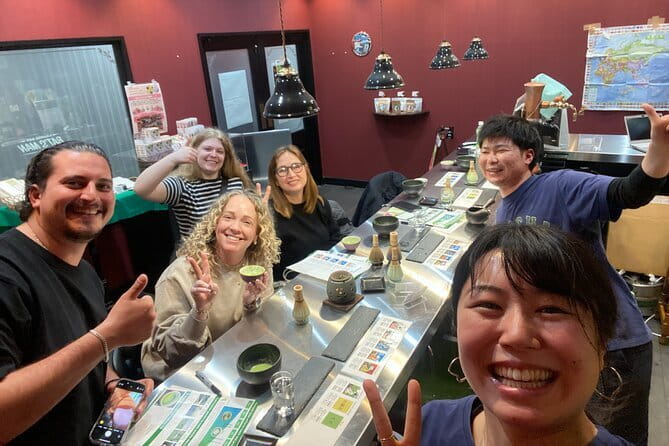
Book it if you want more than a photo of green tea. The best parts are the five-region comparison, the chance to taste products that are and are not technically matcha, and the practical lesson in whisking your own favorite.
I would be especially inclined to book if you are staying in Tokyo for several days and want a focused morning activity led by people with direct tea experience. Chisei’s Kyoto farming background gives the session a useful link to cultivation, while the small group leaves room for questions.
Skip it if your main goal is a cheap latte or a formal ceremony in a traditional setting. At $62.12, this is a specialist tasting. For the right person, though, it offers something hard to get from a café menu: a better palate, a clearer understanding of matcha, and a method you can use after you return home.
FAQ
How long does the matcha experience last?
The experience lasts approximately 1 hour and 30 minutes.
What time does the experience begin?
It begins at 9:30 a.m.
Where is the meeting point?
Meet at matcha tripJapan, 111-0042 Tokyo, Taito City, Kotobuki 3-chome 198, on the second floor of Henn Na Hotel, inside Sports Bar Leaf. The activity ends at the same location.
How many people can join the experience?
The activity has a maximum of five travelers.
What is included in the price?
The experience includes tea, ten kinds of matcha as described in the overall program, one matcha that you make yourself, and a local guide in English or Japanese. Matcha latte and matcha sweets are also part of the program.
Can I cancel for a full refund?
Yes. You can cancel at least 24 hours before the experience start time for a full refund. Cancellations or changes made less than 24 hours before the start time are not accepted for a refund.
More Tea Ceremony & Matcha in Tokyo


More tours in Tokyo we've reviewed












Tea Ceremony & Matcha, compared.
 ★ 5.0Matcha Making Class in Tokyo with Authentic Japanese Sweets SetFrom $21
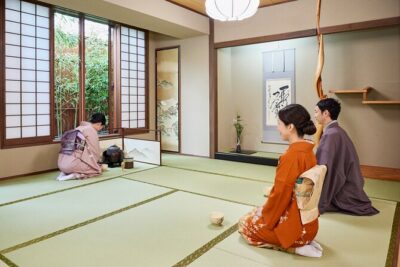 ★ 5.0Kimono Tea Ceremony at Tokyo, Asakusa MaikoyaFrom $55
 ★ 5.0Tokyo: Traditional Tea Ceremony with a Tea MasterFrom $381 hour
 ★ 4.5Dynamic Tokyo: Tokyo Tower, Tea Experience, Bay Cruise Day TourFrom $99
 ★ 4.9Tokyo: Matcha Making Experience with Mochi Sweets in AsakusaFrom $221 hour
 ★ 4.7Tokyo: Matcha and Kimono ExperienceFrom $57