Reviewed · SUMO EXPERIENCES
Tokyo: Morning Sumo Practice Viewing
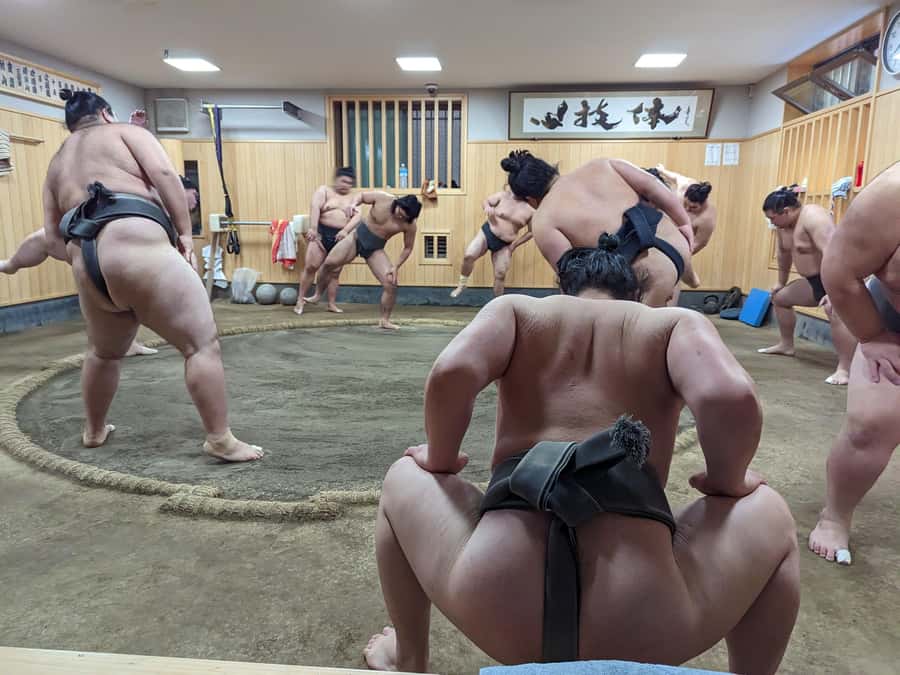
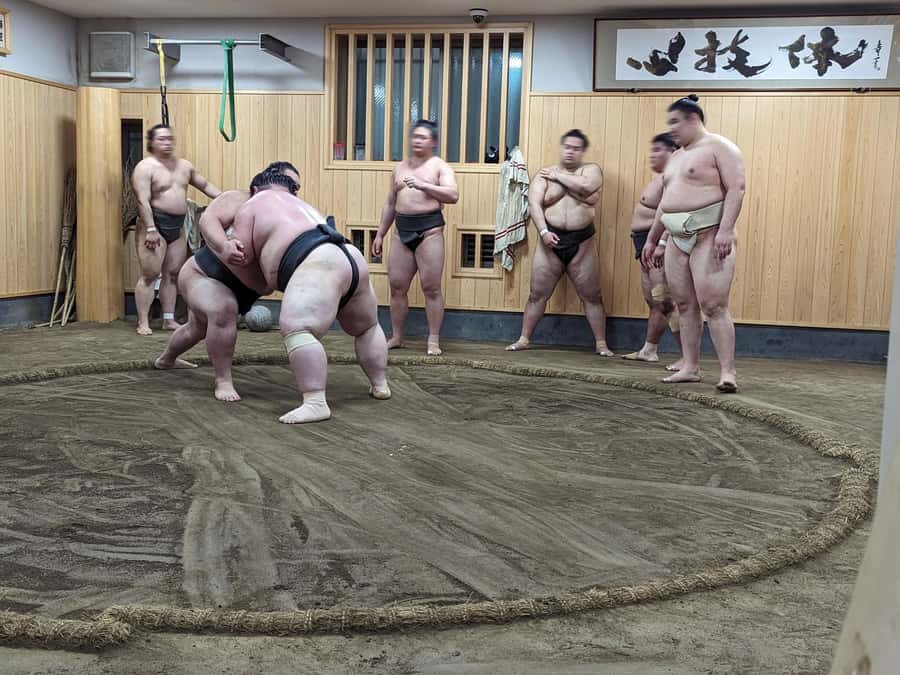
The first thing you notice is the seriousness. This is not a comic sumo performance staged for visitors. You sit close to a working training ring and watch professional rikishi push, shove, stretch, and repeat their drills with one goal: earning or keeping their place in the sport. The silence is part of the experience.
In This Article
- Key points to know before you book
- Why morning practice feels different from a sumo show
- Meeting at Tokyo Skytree Station
- The guide sets the rules before you enter
- Sitting ringside on a cushion
- Watching the wrestlers fight for rank
- The personal moment after practice
- How the guides shape the morning
- Value compared with a tournament or show
- Who should book this sumo experience
- Practical advice for a respectful visit
- Should you book it?
- FAQ
- Where does the sumo practice tour meet?
- How long does the experience last?
- Is the tour conducted in English?
- How large is the group?
- Is this a real sumo practice or a performance?
- Can I speak with or photograph the wrestlers?
- Will I sit on a chair during the training?
- Is the activity suitable for wheelchair users?
I like two things especially. First, you see the real daily work behind the polished tournament spectacle, including lower-ranked wrestlers challenging athletes from the top division. Second, the English-speaking guides make the customs easier to understand, with guides such as Aki, Jeff, Taka, Dawn, Sue, and Yasu praised for clear explanations and patient answers. The main drawback is practical: you sit on a cushion on a flat floor, with no chairs provided, and you must remain quiet and still during practice.
Key points to know before you book
- A working stable, not a stage show: The wrestlers belong to the Japan Sumo Association and train for official tournaments held six times each year.
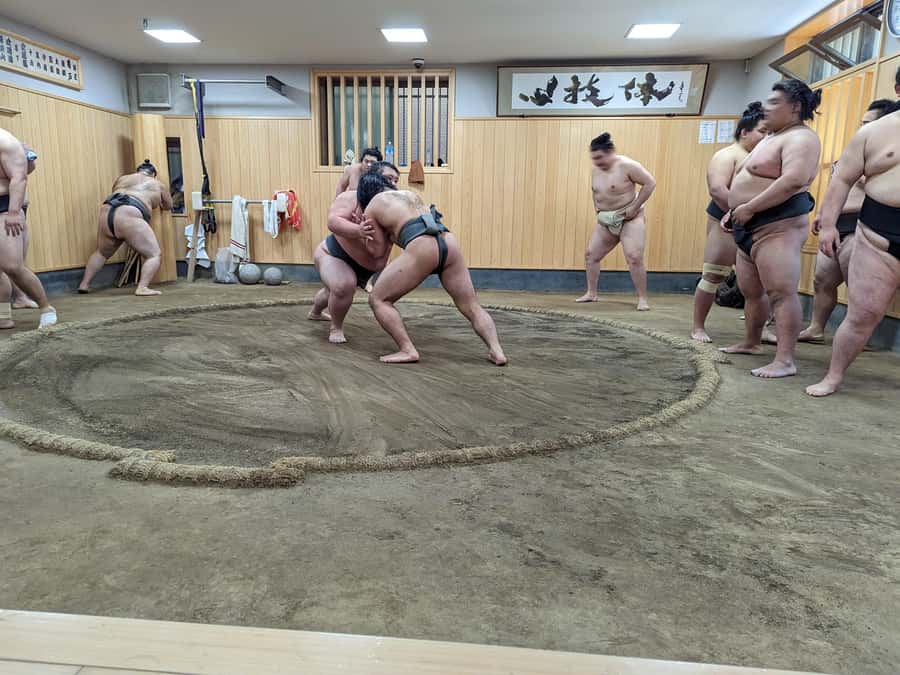
- Two top-division wrestlers train here: You can watch lower-ranked rikishi work to challenge their position in demanding practice bouts.
- Silence and good manners matter: This is a serious training session, so follow your guide, avoid conversation, and do not treat the stable like a photo attraction.
- Small groups make the view personal: The group is limited to eight people, allowing you to sit close to the ring.
- The best contact comes after practice: Once the wrestlers leave the ring, commemorative photographs are possible.
- Plan for floor sitting: You sit on a cushion, and the experience is not suitable for wheelchair users.
Why morning practice feels different from a sumo show
Tokyo offers polished sumo-themed entertainment, and those shows can be a fun way to learn a few moves and laugh with performers. This visit gives you something much less produced. The wrestlers are not there to entertain you. They are training.
That difference changes the mood from the moment you enter the stable. During practice, the athletes focus on their work rather than the people watching. Their warmups, footwork, flexibility exercises, and bouts form part of the daily routine of professional sumo. You are present, but you are not the center of the room.
The stable’s wrestlers belong to the Japan Sumo Association, the governing body of professional sumo in Japan. They also take part in the six grand tournaments held every year. That matters because you are not watching actors imitate a famous sport. You are seeing athletes who compete within the official sumo system.
I find this especially useful for anyone deciding between a practice visit and a commercial show. A show offers more direct entertainment and audience participation. This visit offers a closer look at discipline, rank, ritual, and the hard physical work that happens before a tournament bout.
A few more Tokyo tours and experiences worth a look

Meeting at Tokyo Skytree Station
You meet your English-speaking guide at Hanami Zaka Square, beside Tokyo Skytree Station, station TS02 on the Tobu Skytree Line. The location is given at approximately 35.710300, 139.808807, and clear meeting directions are important because Tokyo Skytree Station has several nearby exits and busy streets.
From the meeting place, the stable is only a short walk, according to the available tour details and visitor instructions. One person even needed help after getting lost at the train stop, so do not treat the meeting point as a vague suggestion. Check the map before you leave your hotel and allow a little extra time.
The morning start is a feature, not an inconvenience. Sumo stables train early, so this is one of those Tokyo activities that gives you a useful start to the day. Afterward, you are already near the Skytree area and can continue sightseeing there, though the exact practice start time should be checked when booking.
Your group is limited to eight people. That is small enough for the guide to explain etiquette before entering and answer questions without turning the walk into a lecture. Some past guides, including Aki, Jeff, Taka, and Dawn, received particularly warm praise for their clear English, calm manner, and detailed introductions.
The guide sets the rules before you enter
Before you step inside, the guide explains what you will see and how to behave. This briefing is not filler. It protects the stable’s routine and helps you avoid an awkward mistake.
You must follow the guide’s instructions throughout the practice. The stable is a workplace, not a visitor center, and the training continues whether you understand every ritual or not. You must sit still and avoid talking with other people in your group while the wrestlers are training.
The guide also gives you useful background on the sport. You might learn how the divisions work, how wrestlers enter a stable, how rank affects a rikishi’s life, and how training connects to the grand tournaments. Dawn, for example, has been praised for explaining stable life, salary levels, divisions, and what to expect before the group went inside.
The quality of the visit depends partly on the guide’s ability to make a quiet scene understandable. Names and guides can vary, but the strongest guides on this experience, including Taka, Jeff, Aki, Sue, and Yasu, have been praised for answering questions and explaining both modern sumo culture and older traditions.
If you know little about sumo, that guidance is valuable. Without it, you might see a series of powerful collisions and miss the meaning of rank, repetition, and the wrestlers’ strict routine.
Sitting ringside on a cushion
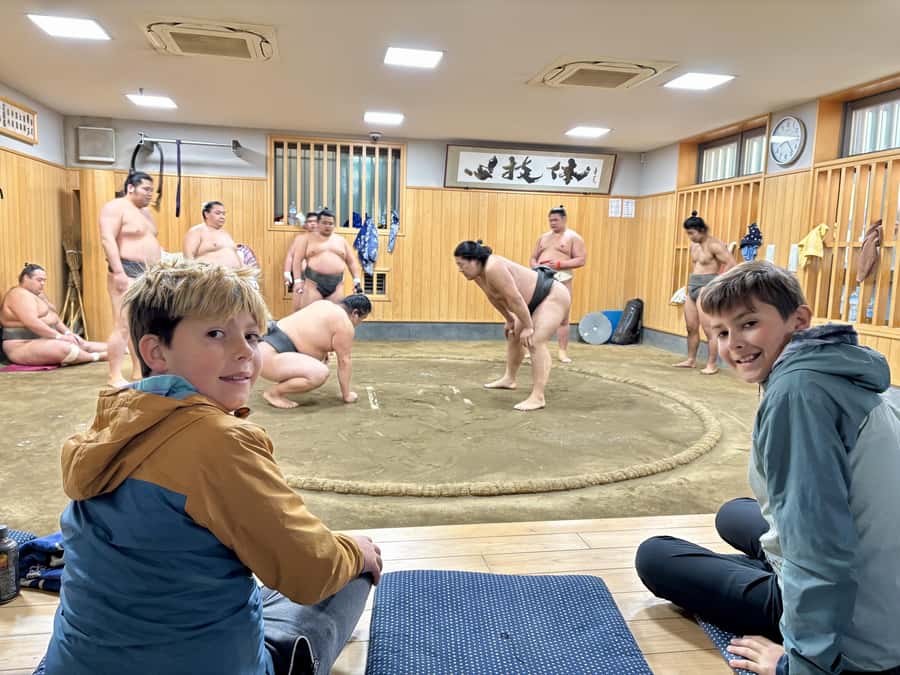
Inside the stable, you sit on a cushion on the floor. There are no chairs supplied by the stable, and this is the most important comfort issue to consider before booking.
Floor sitting can be hard on your knees, hips, or back, especially during a session that lasts several hours. One person specifically noted that the cushion became uncomfortable because of personal inflexibility, although leaving for the restroom or asking about a chair was possible in that case. Do not assume a chair will be available, but tell your guide if you have a serious physical concern.
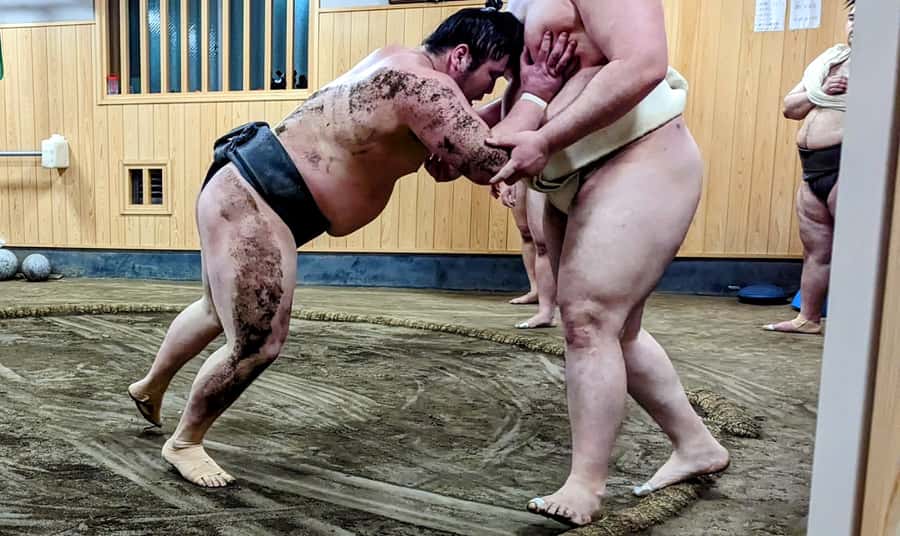
The close seating is also what makes the visit special. You are not watching from the distant upper rows of a stadium. You can study the wrestlers’ size, balance, speed, and flexibility at close range. The contrast is striking: these large athletes can move with surprising quickness and perform demanding stretching and footwork.
You also need to accept the limits of the setting. Do not eat, chat, wander around, or treat the practice as a casual open house. The experience asks you to behave like a respectful observer. If sitting silently on the floor sounds uncomfortable or difficult, an official tournament seat may suit you better.
Watching the wrestlers fight for rank
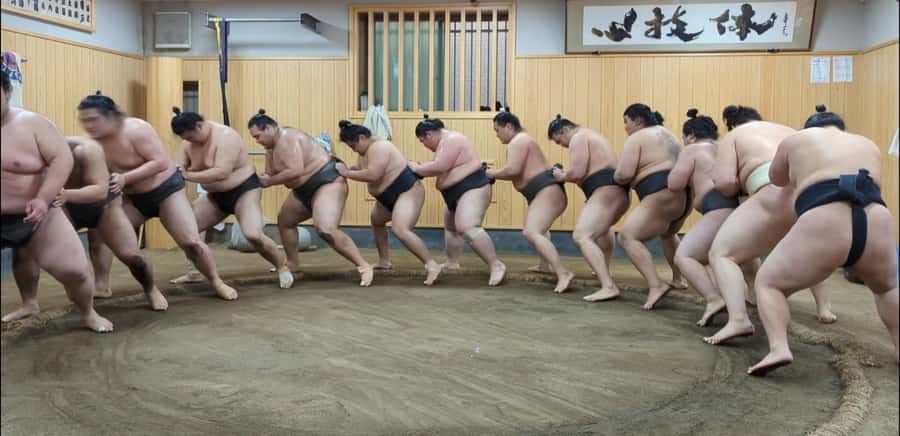
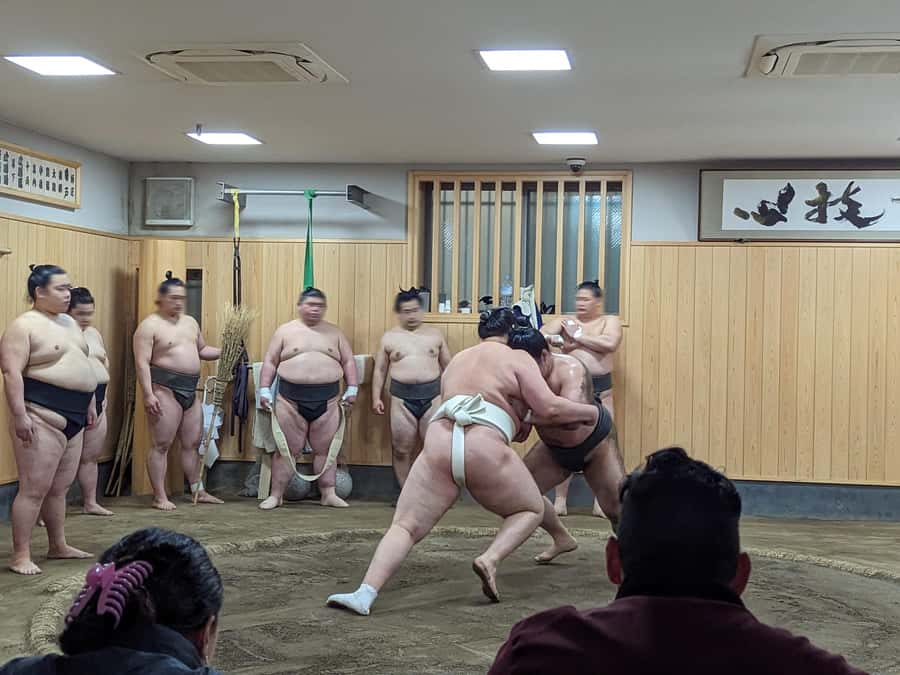
The stable includes two top-division wrestlers. That gives the session a useful structure because you can see the gap between established competitors and the lower-ranked rikishi trying to challenge them.
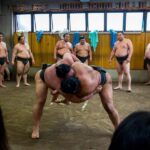
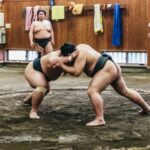
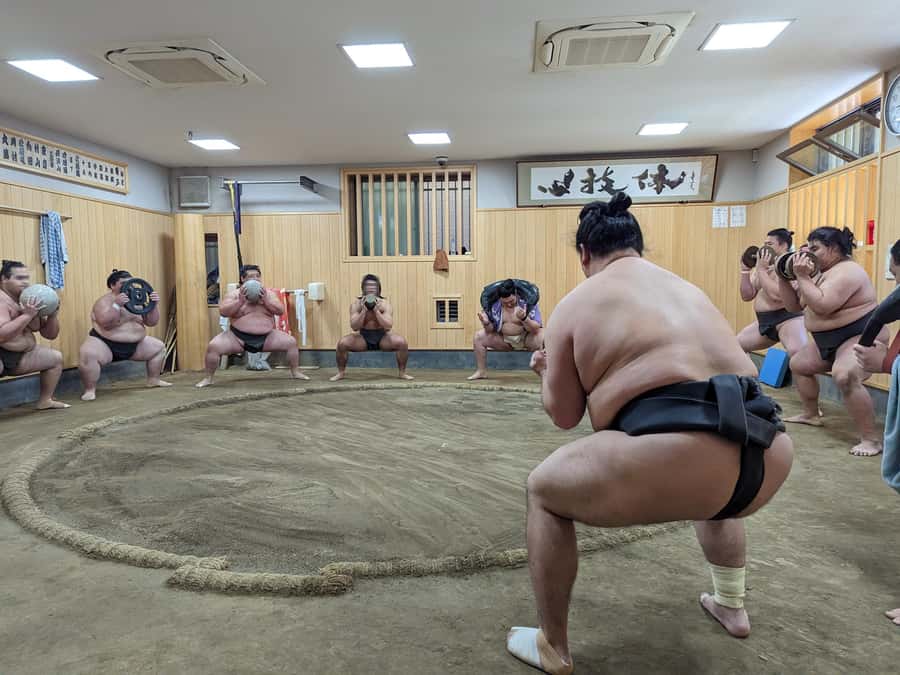
Practice is not a tournament, and you should not expect a formal match card or a predictable sequence. Instead, you watch repeated bouts and exercises designed to improve strength, timing, balance, and technique. The physical effort is plain to see. Wrestlers push themselves against one another, recover, and repeat the work.
What impressed me most about this type of viewing is the absence of spectacle. In a show, a wrestler may exaggerate a move for a laugh. Here, the pressure comes from the training itself. A lower-ranked athlete is not trying to amuse the room. He is trying to improve enough to move up or protect his position.
The practice also corrects a common misunderstanding about sumo. Strength matters, but so do flexibility, foot placement, balance, speed, and control. Several people have been struck by how agile the rikishi are once the bouts begin. Watch the legs and feet as much as the collisions. That is where much of the technical work appears.
The atmosphere can feel unapproachable while practice is underway. That is appropriate. The wrestlers are concentrating, and your quiet attention shows respect. You may find the lack of interaction more meaningful than constant access because it lets you see the training on its own terms.
A few more Tokyo tours and experiences worth a look


The personal moment after practice
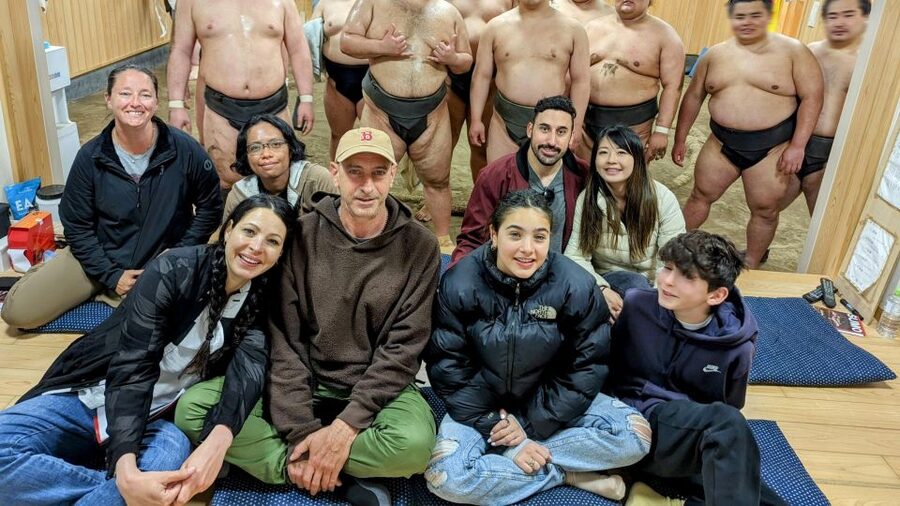
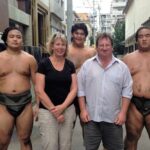
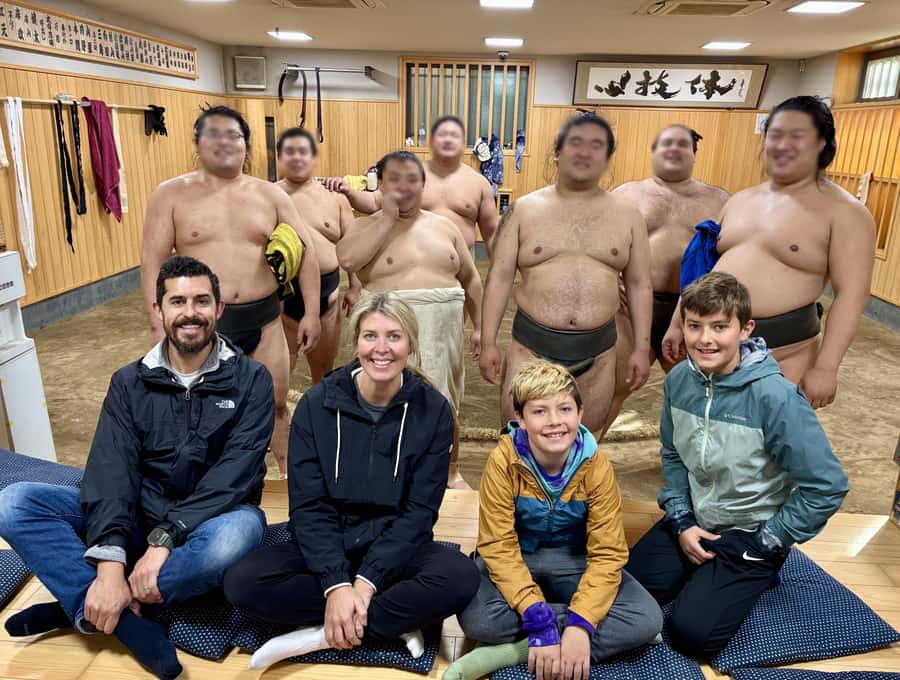
The tone changes once the wrestlers are finished and away from the ring. The athletes are described as friendly and approachable after practice, and you can take commemorative photographs with them.
This is the right order for the interaction. First, you respect the work. Then, if the stable permits it, you have a brief personal moment. Do not expect a long conversation with every wrestler or assume that a photo is guaranteed in every circumstance, but the opportunity is an important part of the visit.
The photographs also give the experience a satisfying close. You have just watched an intense session in near silence, and then you see the people behind the ring in a more relaxed setting. That contrast helps make the sport feel less distant.
Bring patience rather than a list of demands. The stable controls the rhythm, not the visitors. Your guide will explain what is appropriate after training.
How the guides shape the morning
This experience is sold around the practice, but the guide makes a big difference. A good guide helps you understand the customs before you enter, points out what matters during the training, and fills in the parts you cannot easily see.
Aki has been praised for enthusiasm and clear communication. Jeff has been singled out for explaining current sumo culture, tournament systems, and the sport’s background while leaving plenty of room for questions. Taka has been praised for patience, kindness, and careful answers.
Dawn’s introduction has included explanations of stable life, divisions, and pay. Sue has been described as a serious sumo fan with plenty of useful detail. Yasu has helped visitors understand rituals and the daily life of a rikishi. Guides can change, so you should not book on the assumption that one particular person will lead your group, but the repeated strength of the guiding team is a real advantage.
The tour is conducted in English. That makes the briefing and question period much easier for English-speaking visitors, especially if this is your first close look at sumo. You get more from the practice when you know why the wrestlers are arranged as they are and what the repeated exercises are meant to develop.
Value compared with a tournament or show
No price is provided here, so I cannot judge the exact cost against other Tokyo activities. I can still explain what you are paying for. The value lies in access to a working professional stable, a small group, an English-speaking guide, and a close view of athletes preparing for official competition.
A grand tournament gives you the excitement of live competition, formal rankings, a full day of bouts, and a larger public setting. It may be the right choice if you want the complete event. Practice viewing gives you a different kind of access and can be a strong alternative when tournament dates do not match your trip.
A commercial sumo show is usually easier for casual entertainment. You can expect a more relaxed performance and a clearer focus on audience fun. This stable visit is better if you want to understand the discipline behind the sport and are willing to sit quietly for it.
The experience also has a meaningful connection to developing wrestlers. Money from visits such as this supports the stable and its early-career rikishi, according to the supplied details. That gives the activity more substance than a simple photo stop, though you should still choose it because you respect the setting, not because you expect a staged performance.
Who should book this sumo experience
I would recommend it to first-time visitors to Japan who want a cultural activity that feels specific to Tokyo rather than interchangeable with a museum or sightseeing bus. It also suits martial arts practitioners, sports fans, photographers, and anyone curious about the daily work behind a public competition.
You will get the most from it if you can:
- Sit on the floor on a cushion for the training period
- Remain quiet and still while practice is underway
- Follow instructions without treating the stable as a normal tourist site
- Wake up early enough to reach Tokyo Skytree Station on time
- Listen to explanations about rank, customs, and the Japan Sumo Association
Families and casual sightseers may enjoy it, but children or adults who need to move around frequently could find the rules demanding. Wheelchair users should not book this activity, as it is specifically listed as unsuitable.
The small group is helpful for solo visitors and couples. You can hear the guide, ask questions before and after practice, and sit close enough to see the action clearly. The experience may be less suitable for anyone who wants a highly interactive tour from beginning to end.
Practical advice for a respectful visit
Wear clothes that allow you to sit comfortably on the floor. The stable provides a cushion, but it does not provide chairs, and the low seating position can be tiring.
Arrive at Hanami Zaka Square with your meeting instructions ready. The guide may be able to help if you are lost, but you should not rely on a late arrival being easy to solve. The group enters a working stable on a schedule.
Keep your phone quiet and put it away during the active training unless your guide says photography is acceptable. Save your questions for the briefing or the period after practice. The silence is not an empty rule. It is how you avoid interrupting the wrestlers.
Do not compare the wrestlers’ behavior during practice with their behavior afterward. A focused, distant mood in the ring is normal. Once practice ends, the atmosphere can become much friendlier, and photographs may be arranged.
Free cancellation is available up to 24 hours before the experience for a full refund, and you can reserve while postponing payment. Starting times vary, so check availability for your chosen date.
Should you book it?
Book this morning visit if you want the real training environment and can accept its rules. The combination of two top-division wrestlers, demanding practice bouts, a close floor-level view, and a guide who explains the sport gives you a much clearer picture of sumo than a quick photo or staged demonstration.
Skip it if you need chairs, want constant conversation, or prefer a lighthearted performance. For everyone else, this is one of Tokyo’s more unusual three-hour activities, especially when official tournament dates do not fit your schedule. Go in quietly, watch the feet as well as the collisions, and let the discipline of the room do the talking.
FAQ
Where does the sumo practice tour meet?
The meeting point is Hanami Zaka Square at Tokyo Skytree Station, TS02, on the Tobu Skytree Line. The listed coordinates are 35.71030044555664, 139.80880737304688.
How long does the experience last?
The experience lasts three hours. Check availability for the starting time on your chosen date.
Is the tour conducted in English?
Yes. The activity includes a live English-speaking guide.
How large is the group?
The group is limited to eight participants.
Is this a real sumo practice or a performance?
It is a real morning training session at a sumo stable. The wrestlers belong to the Japan Sumo Association and take part in the official grand tournaments held six times a year.
Can I speak with or photograph the wrestlers?
You must remain quiet and still during practice. After practice, commemorative photographs with the wrestlers are possible.
Will I sit on a chair during the training?
No. Participants sit on cushions on a flat floor, and the stable does not provide chairs.
Is the activity suitable for wheelchair users?
No. The experience is listed as unsuitable for wheelchair users.
More Morning in Tokyo
More Sumo Experiences in Tokyo

More tours in Tokyo we've reviewed












Sumo Experiences, compared.
 ★ 4.8Tokyo: Sumo Show Experience with Chicken Hot Pot and a PhotoFrom $1032 hours
 ★ 4.8Tokyo: Sumo Show and Dining ExperienceFrom $7990 minutes - 2 hours
 ★ 5.0the SUMO showFrom $89
 ★ 5.0Tokyo Sumo Entertainment Show with Chicken Hot Pot and PhotoFrom $106
 ★ 4.6Tokyo: Sumo Tournament Tour with Chair Seat TicketsFrom $141
 ★ 5.0Tokyo Grand Sumo Tournament Viewing Tour with TicketsFrom $124