Reviewed · TOKYO
Tokyo: KABUKI, BUNRAKU, etc. presented by National Theatre
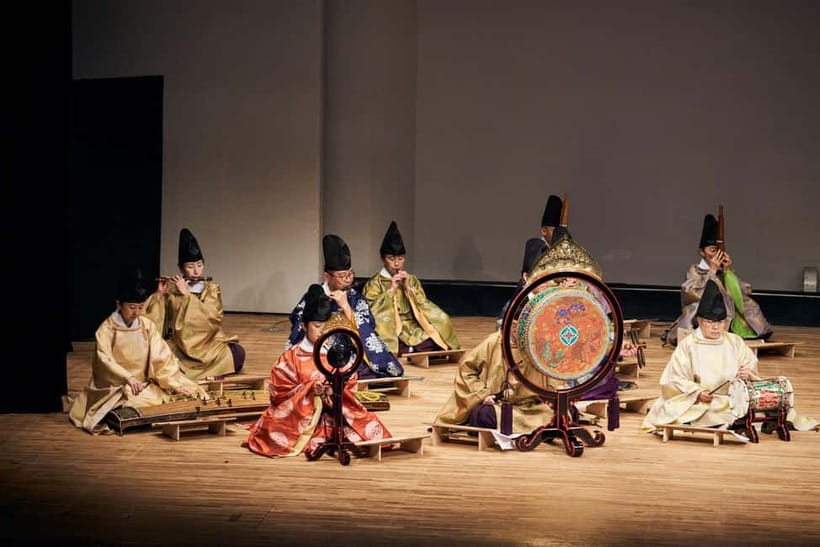
Japan’s classical theatre can look strange at first, then suddenly become gripping. This National Theatre Japan program brings you Kabuki, Bunraku, or Hogaku performed by artists trained in forms passed down for hundreds of years. You see the real thing, not a tourist imitation.
In This Article
- Key points to know before booking
- Why this is a serious cultural experience
- Bunraku at KAAT Kanagawa Arts Theatre
- What Bunraku asks you to watch
- Kabuki combines music, dance, and drama
- Hogaku listens for the sound of snow
- The English guide is useful, but not magic
- Timing, pauses, and the pace of the theatre
- A strong price for an authentic performance
- Theatre manners and practical preparation
- Who should book this performance?
- Should you book it?
- FAQ
- Where does the Bunraku performance take place?
- Is the venue the National Theatre in Hanzomon?
- How do I enter the theatre?
- Is an English translation included?
- How long does the activity last?
- Can I choose my seat?
- Can I take photographs or record the performance?
I especially like the English audio guide for Kabuki and Bunraku, and the chance to hear the performers without loud speakers covering their voices. The price is also fair at $37. The catch is that the venue is in Yokohama, and some programs run for several hours, so this is not an easy add-on to a tightly packed Tokyo day.
Key points to know before booking
- The actual venue is in Yokohama: Bunraku performances take place at KAAT Kanagawa Arts Theatre, not the National Theatre in Hanzomon.
- The English guide gives the outline, not every line: It explains the main action while leaving space for the live voices, music, and stage sounds.
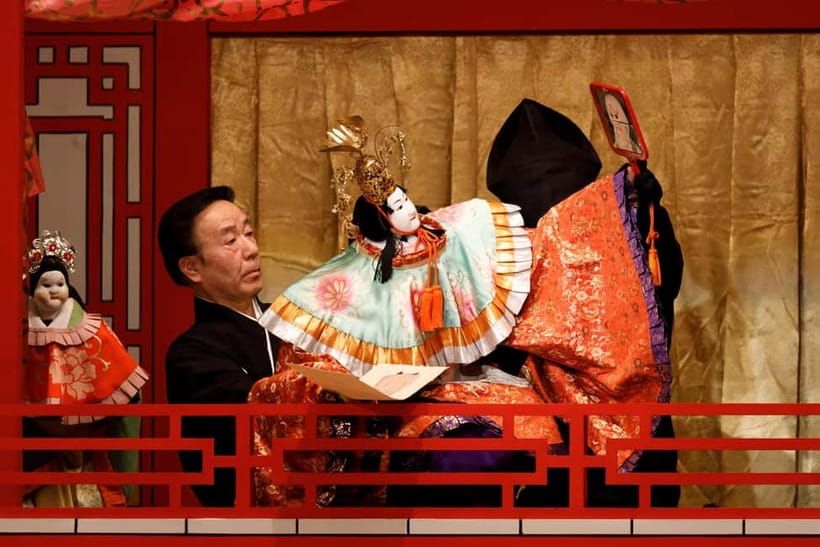
- Bunraku combines three art forms: A narrator, shamisen player, and puppet performers work together with remarkable precision.
- Kabuki is more than colorful costumes: Music, dance, dramatic poses, scenery, and changing social themes all shape the performance.
- Hogaku focuses on traditional music: The English explanation sheet helps you listen for the snow melody known as Yuki no Aikata.
- Expect assigned seating: The theatre selects your seat, and you must exchange your booking voucher for the theatre ticket at the entrance.
Why this is a serious cultural experience
This is a good choice if you want to see Japanese culture in its original setting rather than through a short demonstration designed only for sightseeing. The National Theatre Japan has supported traditional performing arts since 1965, and the program uses leading performers who have carried these forms forward across generations.
That matters because Kabuki and Bunraku are not simply old shows put on for visitors. They are living theatre. Kabuki has changed with each era, while Bunraku remains a highly disciplined partnership between spoken narrative, shamisen music, and puppetry.
I would not book this expecting a quick explanation followed by a photo opportunity. You sit quietly, watch closely, and let the rhythm of the performance build. Some parts may feel slow if your idea of theatre is fast dialogue and a clear beginning, middle, and end.
The program is also not identical every day. Your option title tells you whether you are booking Kabuki, Bunraku, or Hogaku, so read it carefully before paying. The photographs may show earlier performances, and the content can change by date.
If you're still narrowing it down, here are other tours in Tokyo we've reviewed.
Bunraku at KAAT Kanagawa Arts Theatre
The supplied meeting information identifies the Bunraku program with KAAT Kanagawa Arts Theatre in Yokohama. This is the detail most likely to trip you up. The experience may be sold under a Tokyo heading, but you do not go to the National Theatre at Hanzomon.
KAAT is five minutes on foot from Nihon-odori Station, using Exit 3 or 4. It is also about eight minutes from Motomachi-Chukagai Station, Exit 1. From Shibuya, trains bound for Motomachi-Chukagai run directly through the Tokyu Toyoko Line and the Tokyo Metro Fukutoshin Line, with a journey of about 45 minutes.
Allow time to find the theatre and exchange your GetYourGuide voucher for the theatre’s ticket. Staff ask for the name used on the reservation at the venue entrance. Keep that name and your booking details easy to reach.
The theatre assigns seating. You cannot choose a particular row or section, so I would not book this if a precise seat is important to you. If you use a wheelchair, contact the operator as soon as possible so accessible seating can be arranged.
What Bunraku asks you to watch
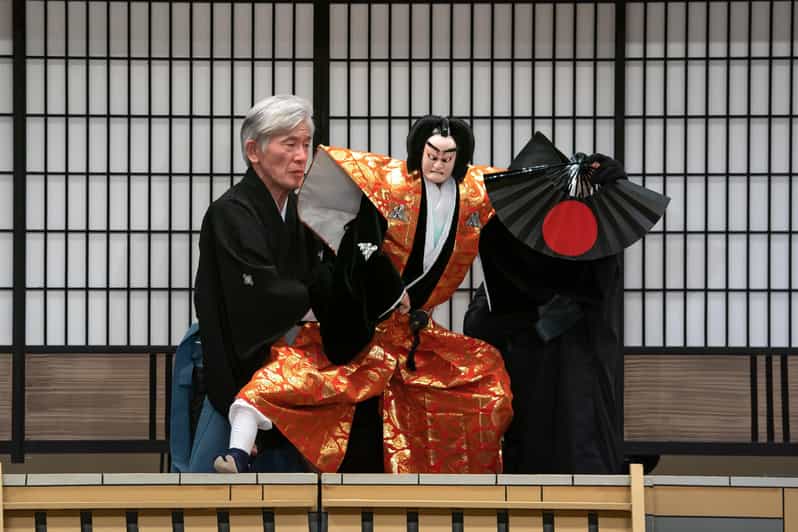
Bunraku is puppet theatre for adults, but that description can undersell it. The puppets move through stories with the help of highly trained performers, while a narrator delivers the text and a shamisen player supplies the musical frame.
The striking feature is the division of work. One performer tells the story with force and vocal range. Another plays the shamisen, an instrument with a bright, spare sound. The puppeteers bring the figures to life through controlled movement. The effect can be delicate one moment and startlingly dramatic the next.
You may see a familiar Japanese theme such as love, duty, family pressure, or sacrifice. One program included a story about a love suicide, a serious subject that parents may want to understand before bringing older children. The exact story depends on the date, so check the performance details rather than assuming every Bunraku program has the same tone.
The English audio guide helps you follow the action. It is not a word-for-word translation. Instead, it summarizes the main points so you can keep watching the stage and hearing the Japanese performance.
That compromise works well, but it takes a few minutes to adjust. You may hear the English explanation in one ear while the narrator and musicians perform in the theatre. The guide can make the story accessible, yet it cannot carry every poetic detail or cultural nuance.
Kabuki combines music, dance, and drama
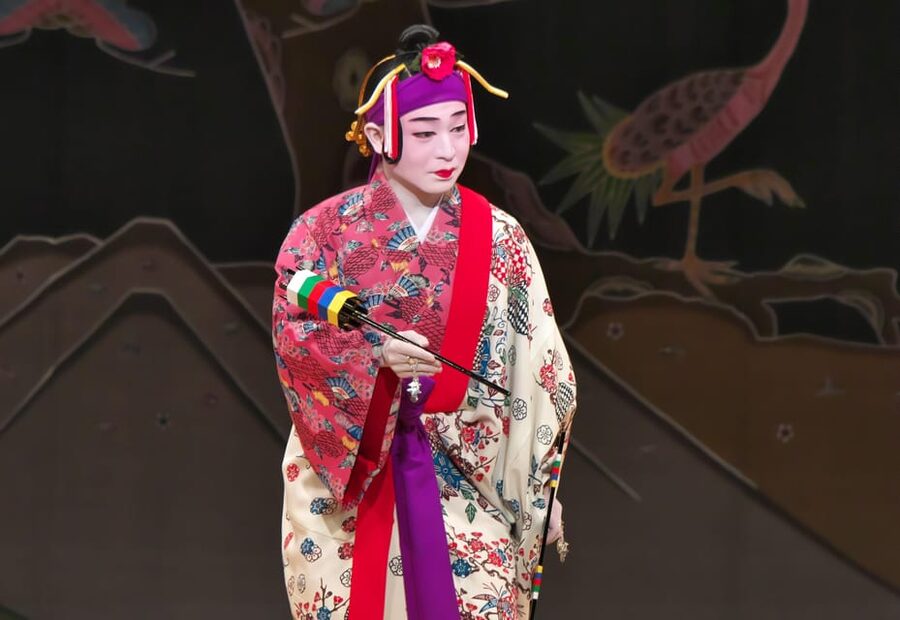
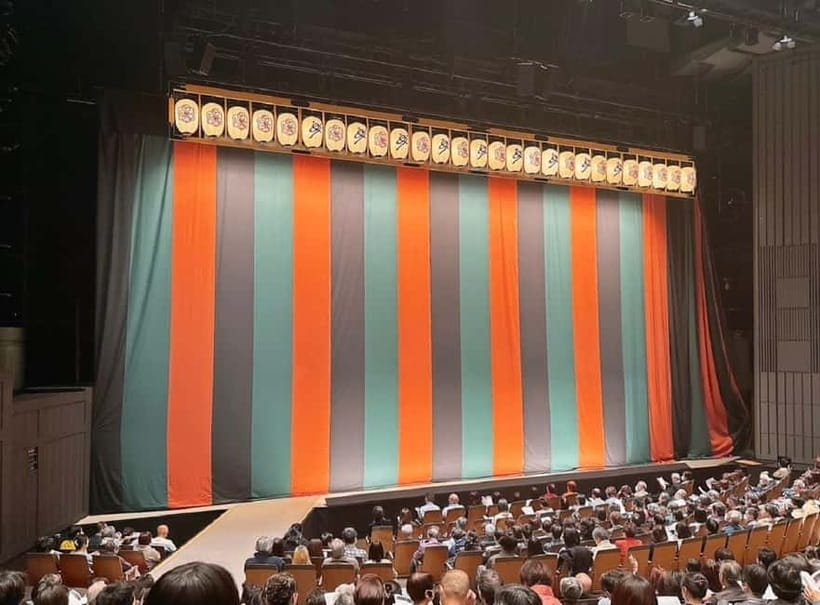
Kabuki is Japan’s best-known classical theatre form, and it rewards you for watching the whole stage rather than waiting for ordinary spoken dialogue. Music, dance, costumes, scenery, movement, and dramatic poses all carry meaning.
The stories can be exciting, but the style is often formal and highly controlled. A performer may hold a pose for effect, move in a way that signals a character’s mood, or use costume and makeup to tell you more than the words do.
The English audio guide gives you a short introduction to the form and explains the main action. It also helps with a basic cultural adjustment: Kabuki does not always follow the pacing or stage habits familiar from Western theatre.
You should still expect some material to remain untranslated. The guide is designed to avoid drowning out the actors’ voices, music, and acting. That is a strength if you want to hear the real performance, but it can frustrate you if you want every line explained.
I recommend reading a little about Kabuki before you go, especially if you have time. Knowing that gestures, clothing, and stage movement can carry meaning makes it easier to appreciate what you are seeing. The opening explanation is useful too, so arrive early enough to hear it.
Hogaku listens for the sound of snow
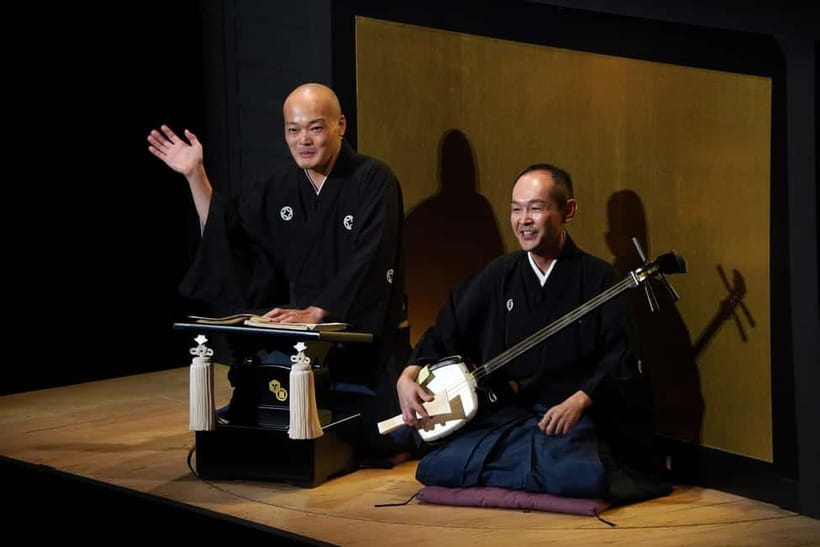
Hogaku is the music-focused option. Its program highlights melodies connected with snow, including Yuki no Aikata, a long shamisen interlude from the jiuta piece Yuki, or Snow.
That melody appears in songs used with scenes of falling snow. You are invited to listen for how traditional Japanese music represents that image through sound rather than scenery alone.
Unlike Kabuki and Bunraku, Hogaku does not include the English audio guide. Instead, you receive a free English explanation sheet. This gives you useful background, but you need to read it before or around the performance rather than relying on spoken guidance as the music unfolds.
I would choose Hogaku if you already enjoy instrumental concerts or want a quieter introduction to Japanese performance. If you need a clear plot to hold your attention, Kabuki or Bunraku may suit you better.



The English guide is useful, but not magic
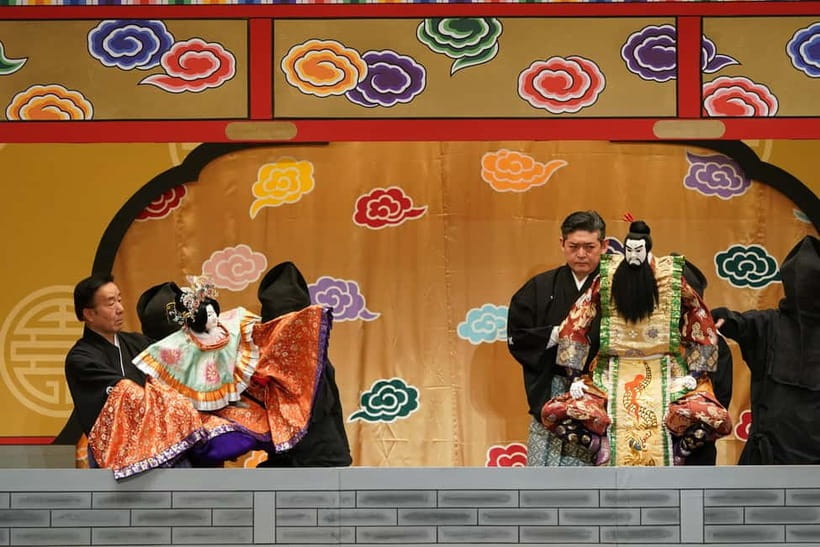
For a non-Japanese speaker, the guide can make the difference between following the basic action and losing the thread completely. It explains the main points in English and provides context about the performance style.
Its limits are important. It does not translate every sentence, and Japanese is still the language of the live performance. You may miss jokes, wordplay, lyrical shades, or small cultural references.
The best way to use it is to glance at it for orientation, then return your attention to the stage. Trying to listen to every English word while watching every performer can become tiring. Some people need a short adjustment period before the two sound tracks feel natural.
The audio is English only. Japanese and other languages are not available. Hogaku uses an English explanation sheet instead.
Timing, pauses, and the pace of the theatre
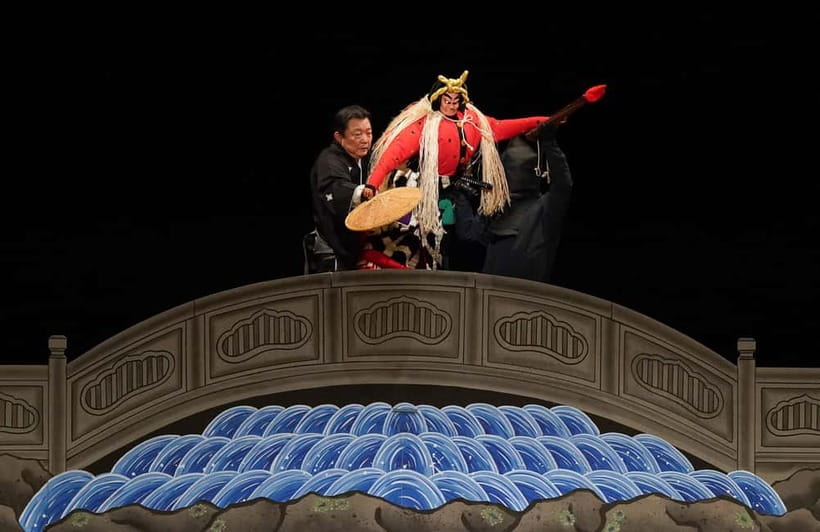
The listed duration ranges from 75 minutes to three hours, depending on the program. Some performances include breaks, and a longer event can take about half a day once you add travel to Yokohama and time at the theatre.
That length is worth considering if you are in Tokyo for only a few days. A multi-hour performance can replace a large block of sightseeing, even before the train ride. If you have five or more days, or if traditional theatre is high on your list, the time becomes easier to justify.
During a break, you may go outside or have something to eat. Drinks are not allowed inside the theatre, so finish them before returning to your seat. Keep an eye on the time, since the second part begins after the interval.
The pace may feel slow at first, especially if you are used to English-language theatre. I would give it a fair opening stretch before deciding that it is not for you. The visual style, music, and story often become easier to read once your eye adjusts.
This is not a good match for very young children. The performances can be lengthy and quiet, and noise is not well received. Older children who can sit still and handle serious themes may find Bunraku memorable.
A strong price for an authentic performance
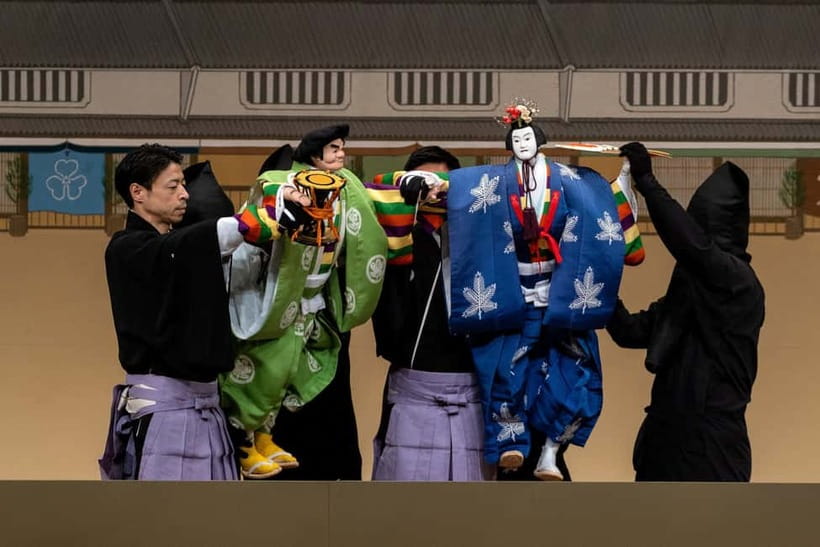
At $37 per person, the ticket offers good value for a formal performance by top-level artists. You are not paying for transportation, a private guide, or a staged tourist demonstration. Your money goes toward the theatre ticket and, for Kabuki or Bunraku, the English audio support.
The value depends on your interests. If you mainly want to fill an hour between other attractions, a long Kabuki or Bunraku program may feel expensive in time even though the ticket is reasonably priced.
For someone curious about Japanese theatre, the price is easier to defend. You get access to an art form that can be hard to experience without local knowledge, plus enough English help to understand the broad structure.
Free cancellation up to 24 hours before the performance and reserve-now, pay-later booking make it easier to fit into a changing itinerary. Still, confirm the date, performance type, and venue before booking. The wrong option can put you in Yokohama when you thought you were heading to central Tokyo.
Theatre manners and practical preparation
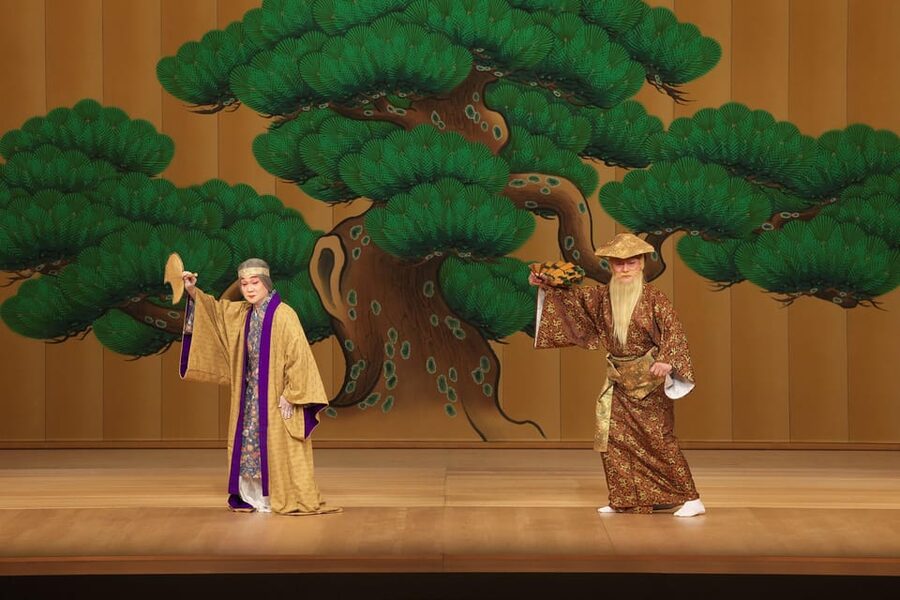
Smoking, alcohol, drugs, pets, photography, video recording, audio recording, and unnecessary noise are not allowed. Assistance dogs are permitted.
Wear whatever is comfortable for a quiet theatre visit, but plan to remain seated for long stretches. You may want to eat before the performance, especially if your program lasts several hours.
Read the option description carefully. The performance could be Kabuki, Bunraku, or Hogaku, and these are different experiences. Kabuki gives you dramatic theatre with music and dance. Bunraku focuses on the unusual teamwork of narrator, shamisen, and puppetry. Hogaku centers on traditional Japanese music.
I would also read the English introduction before the curtain or opening music. A little preparation helps you notice costume, gesture, rhythm, and stage convention instead of judging the show by modern Western pacing.
Who should book this performance?
I recommend it to you if you enjoy theatre, music, museums, cultural history, or performances that ask for patience. It is particularly good for anyone who wants an authentic Japanese experience without needing fluent Japanese.
Bunraku is the strongest choice if the mechanics of performance interest you. Watching several artists coordinate one puppet is unusual even for people who attend theatre often.
Kabuki is better if you want a broad, dramatic introduction to Japan’s classical stage traditions. Hogaku fits you if music matters more than plot and you would rather listen for mood and musical patterns.
I would skip it if your Tokyo schedule is already packed, you dislike slow-paced performances, or you need a full English translation. I would also think twice about bringing small children.
Should you book it?
Book this if you want the real sound, movement, and discipline of Japanese classical performance, and you can spare 75 minutes to three hours. The English guide makes Kabuki and Bunraku much easier to follow, but it will not translate every word.
Check the option title and venue with care. For the Bunraku program described here, you go to KAAT Kanagawa Arts Theatre in Yokohama, not Hanzomon. With that detail sorted, this is a fairly priced way to encounter an art form you are unlikely to see presented with the same seriousness elsewhere.
FAQ
Where does the Bunraku performance take place?
The Bunraku performance takes place at KAAT Kanagawa Arts Theatre in Yokohama. It is about five minutes from Nihon-odori Station, Exit 3 or 4, and about eight minutes from Motomachi-Chukagai Station, Exit 1.
Is the venue the National Theatre in Hanzomon?
No. The venue is not the National Theatre in Hanzomon. The location varies by date and performance, so check the meeting information for your selected option.
How do I enter the theatre?
You must exchange the GetYourGuide voucher for the theatre’s ticket at the venue entrance on the performance day. Staff ask for the name of the person who made the reservation.
Is an English translation included?
Kabuki and Bunraku include an English audio guide. It explains the main points rather than translating every line. Hogaku includes a free English explanation sheet instead.
How long does the activity last?
The duration ranges from 75 minutes to three hours, depending on the selected performance. Check the available times and program details for your date.
Can I choose my seat?
No. Seating positions are assigned by the theatre. If you use a wheelchair, contact the operator as soon as possible so accessible seating can be arranged.
Can I take photographs or record the performance?
No. Photography, video recording, and audio recording are not allowed inside the theatre. Smoking, alcohol, drugs, pets, and making noise are also prohibited, although assistance dogs are allowed.
More tours in Tokyo we've reviewed












Tokyo, compared.
 ★ 5.0Mt Fuji and Hakone 1-Day Bus Tour Return by Bullet TrainFrom $163
 ★ 5.01-Day Tokyo Bus TourFrom $129
 ★ 4.6Tokyo: teamLab Planets TOKYO Digital Art Museum Entry TicketFrom $251 day
 ★ 4.0Mt Fuji & Hakone Cruise, Drum Show Bullet Train 1 Day from TokyoFrom $149
 ★ 5.0Tokyo: Shinjuku Food Tour (13 Dishes at 4 Local Eateries)From $86
 ★ 4.4Tokyo Mt Fuji 5th St & Hakone Cruise Bus Tour w/Bullet TrainFrom $15410 hours