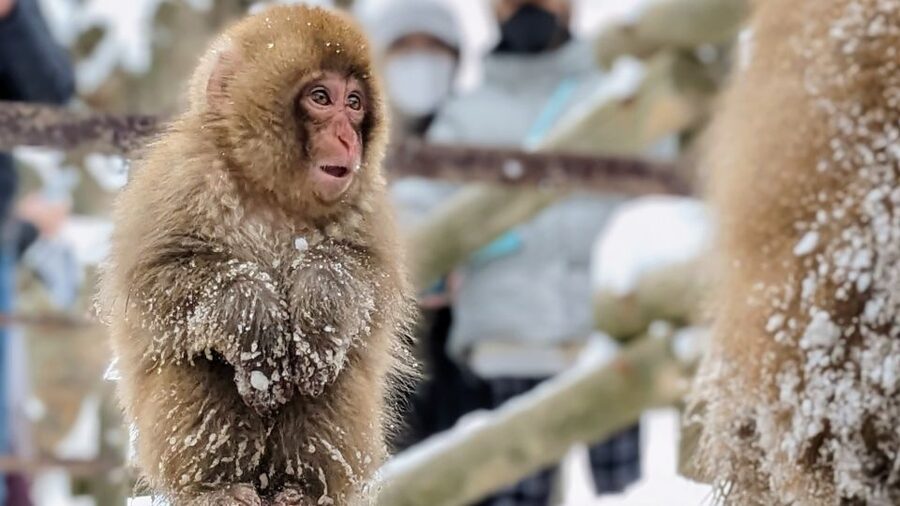
Reviewed · YAMANOCHI
From Tokyo: Snow Monkey 1 Day Tour with Beef Sukiyaki Lunch
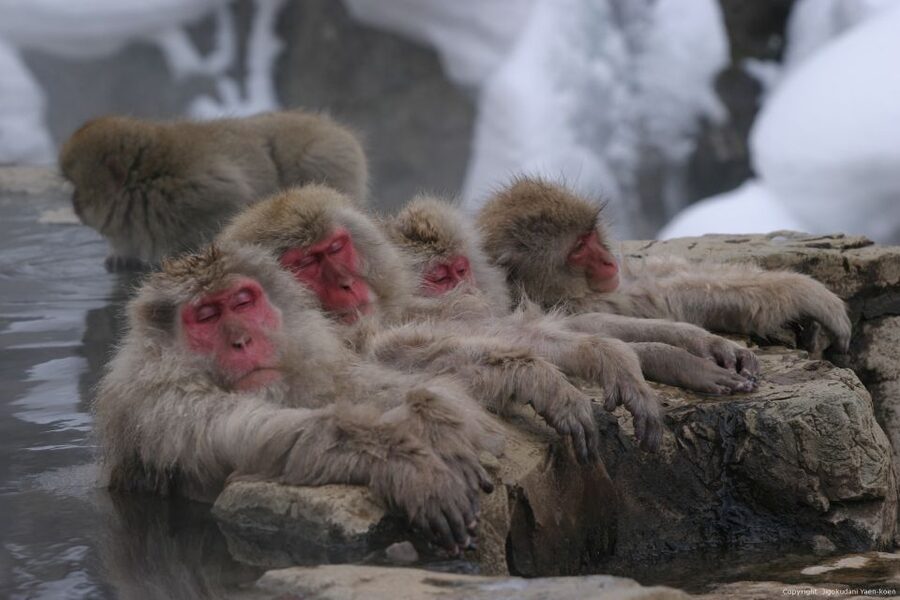
Jigokudani’s snow monkeys are the star here: you walk through a cold forest to see Japanese macaques soaking in steaming mountain pools, often with snow on their heads. I like the excellent winter setting and the warm sukiyaki lunch, plus the simple coach ride from Tokyo. The catch is the distance: up to three and a half hours each way, with a slippery walk at the far end.
In This Article
- Key points to know before booking
- Why the snow monkeys are worth the long ride
- Meeting in Shinjuku and settling into the coach
- Sukiyaki lunch at Shinshu Fruitsland
- The walk to Jigokudani Monkey Park
- Two hours with the macaques
- The Kamakura snow huts from January 23 to March 1, 2026
- Is $151 a fair price from Tokyo?
- Who should book this full-day outing?
- Should you book the snow monkey tour?
- FAQ
- How long does the tour take?
- Where does the tour start?
- Where does the tour finish?
- Is hotel pickup included?
- What food is served at lunch?
- Are drinks included?
- How long do you spend at Jigokudani Monkey Park?
- Is seeing monkeys in the hot springs guaranteed?
- What should I wear?
- Is the Kamakura snow-hut visit always included?
- Is the tour suitable for wheelchair users?
- What happens if I arrive late?
I also like how much the day packs in. The park entry, lunch, transport, guide, and seasonal Kamakura snow huts are included, and guides such as Ichiro, Mai, Maki, Ken, and Kubo have helped make the long ride lively and well organized. Just remember that the monkeys are wild, sightings in the springs are not guaranteed, and they may not spend most of their time bathing.
Key points to know before booking
- Snowy forest approach: Allow more than 30 minutes to walk from the coach parking area to Jigokudani Monkey Park.
- Two hours at the park: This gives you time to watch the monkeys, take photos, and enjoy the valley, but some people wish for longer.
- Three and a half hours by coach each way: Service-area stops break up the ride, yet this remains a very long day.
- Sukiyaki lunch included: Beef is standard, with pork, vegetarian, and vegan alternatives available if requested in advance.
- Kamakura snow huts are seasonal: They are included only for departures from January 23 through March 1, 2026.
- Proper footwear matters: Snow boots or another anti-slip option can make the icy route far easier.
Why the snow monkeys are worth the long ride
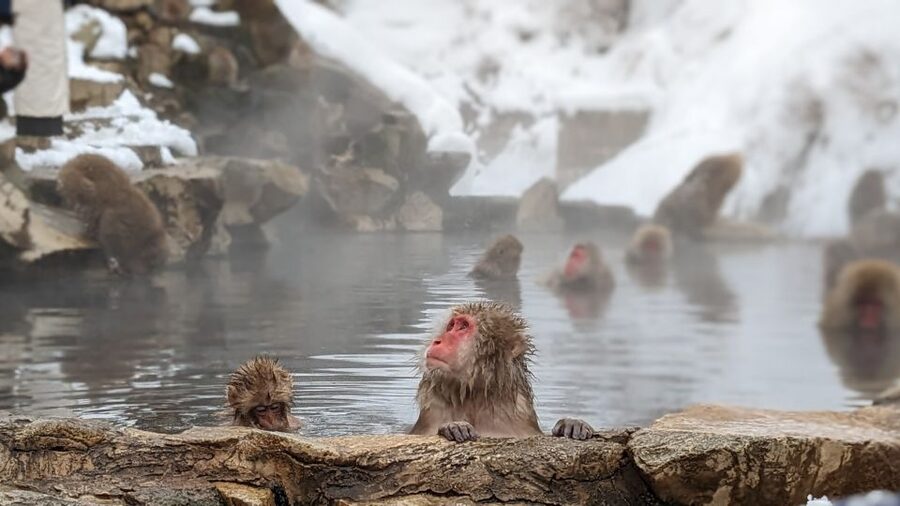
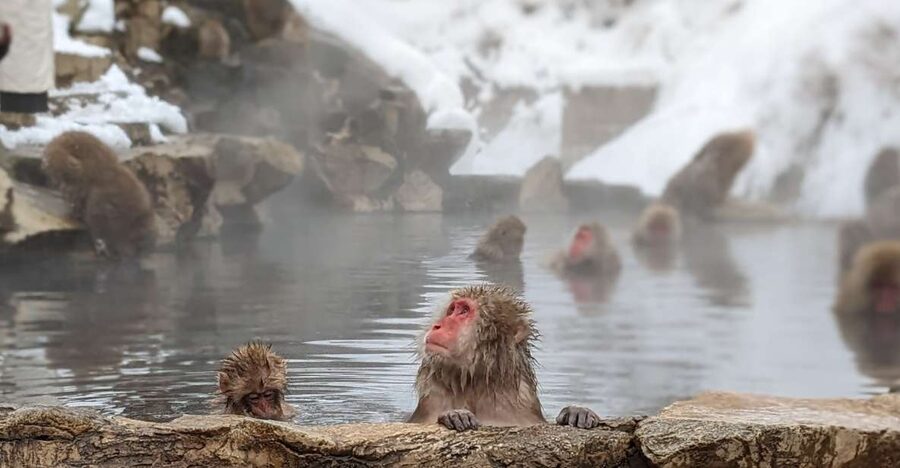
Japan’s snow monkeys, formally Japanese macaques, are famous for using hot springs in the cold mountain months. At Jigokudani Yaen-koen, you can watch them at close range because they are accustomed to people. That does not make them tame. You must not touch, feed, or stare directly at them, and you should give a territorial monkey plenty of room.
The appeal is not only the hot pool. You may see adults grooming one another, young monkeys playing, or animals walking along the paths near you. The setting adds much of the magic: the park sits in the Jigokudani Valley, where steep wooded slopes and snow-capped mountains frame the springs.
There is one important reality check. Hot-spring bathing is not guaranteed. The monkeys are wild, and they do not spend most of their time in the water. From mid-March, warmer weather can make them less likely to enter the springs. Snowy days, even later in March, may improve your chances.
This is a wildlife visit, not a staged animal show. If you need a photograph of a monkey sitting perfectly in the pool, you may be disappointed. If you are happy to observe natural behavior in a striking winter setting, the park can be a memorable highlight of your Japan trip.
If you're still narrowing it down, here are other tours in Yamanochi we've reviewed.

Meeting in Shinjuku and settling into the coach
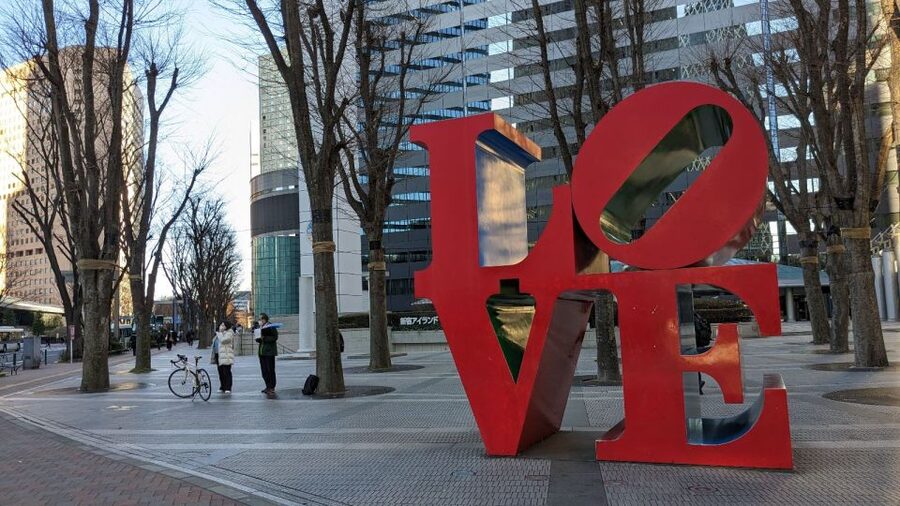
The tour begins near the Nishi Shinjuku LOVE sculpture outside the Shinjuku i-Land building at Nishishinjuku 6-chome 5-1. This is a busy part of Tokyo, so give yourself extra time to find the exact meeting point. One person nearly missed the coach after taking the wrong road toward the pickup area, and other people had the same problem.
There is no hotel pickup. You meet the guide in central Shinjuku, then return to Tokyo Mode Gakuen at the end of the day. The tour does not offer custom hotel pickup in central Tokyo or drop-off in Nagano Prefecture.
The coach journey can take up to three and a half hours in each direction. Road conditions and traffic can change the schedule, especially on the return to Tokyo. The operator normally uses two or three service-area stops along the route, giving you time for toilets, drinks, and a quick stretch.
I would bring a book, tablet, or downloaded entertainment. Some guides provide commentary during the ride, and Thomas was praised for explaining things along the way, but the amount of commentary can vary. Bus size also depends on the number of bookings. It may be a small or medium coach, and some vehicles have limited legroom or seats that do not recline.
This is not a quick side trip. A typical day can run roughly 12 hours, with an early departure and an evening return. Traffic can extend the journey. You need to wear your seatbelt, as required by Japanese law, and you must be ready to leave at the stated times. Latecomers are not entitled to a refund.
Sukiyaki lunch at Shinshu Fruitsland
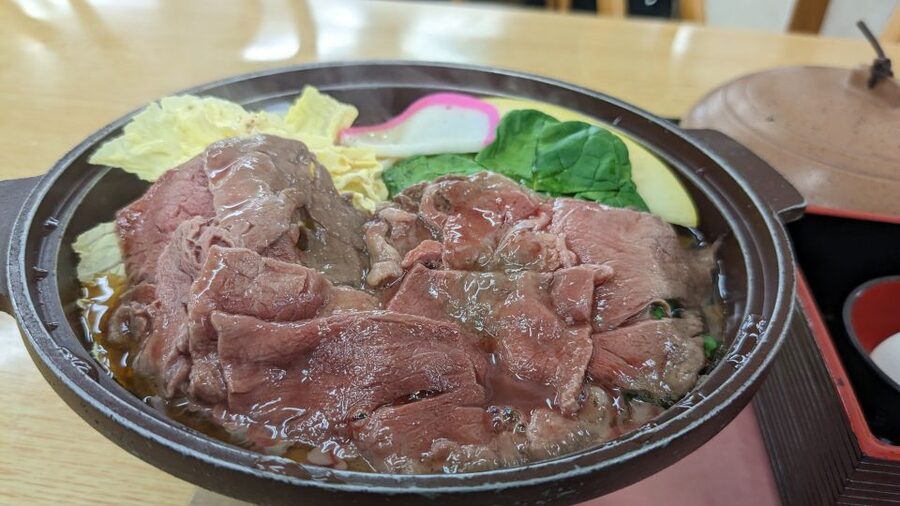
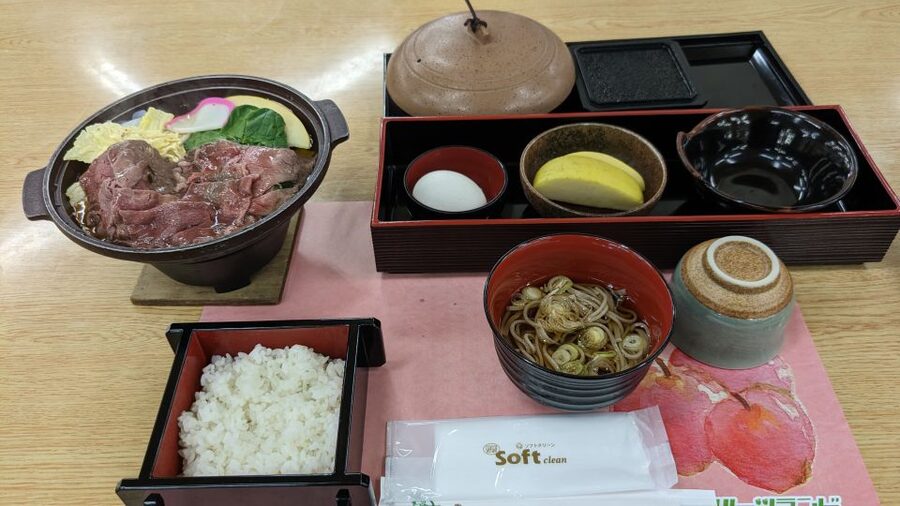
After the first long coach ride, lunch is served at Shinshu Fruitsland. The standard meal is beef sukiyaki, a Japanese dish in which thinly sliced beef and vegetables are cooked in a sweet-savory broth. It is a good match for a cold-weather outing, and the meal gives you a proper break before the park visit.
The food is generally considered good and satisfying, though you should not expect a lavish feast. One of the more practical strengths of this tour is the ability to request a different meal. Pork is available instead of beef, as are vegetarian and vegan meals. You need to send the request when booking. Fish and chicken are not available as alternatives.
Drinks are not included, so carry money for anything you want with lunch or at the service areas. You get about one hour at the restaurant. That is long enough to eat without rushing, but not a chance to linger over a long Japanese meal.
For me, the lunch matters because it divides the day into manageable sections. Without it, the long ride to Nagano would feel even more demanding. It is also a chance to try a familiar Japanese comfort dish without having to search for a restaurant after arriving in the mountains.
The walk to Jigokudani Monkey Park
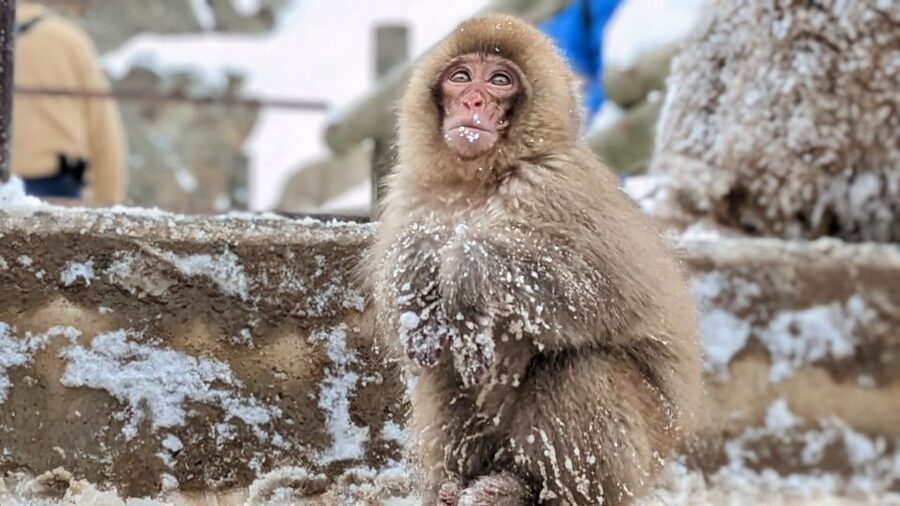
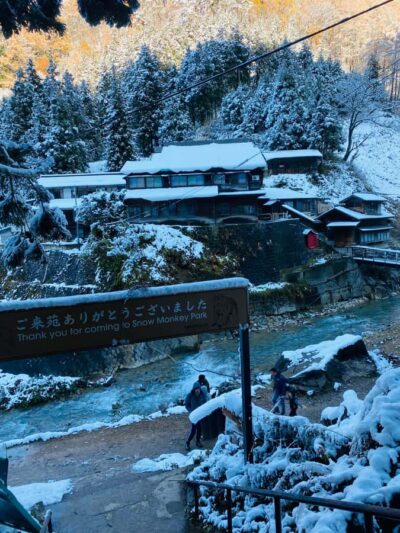
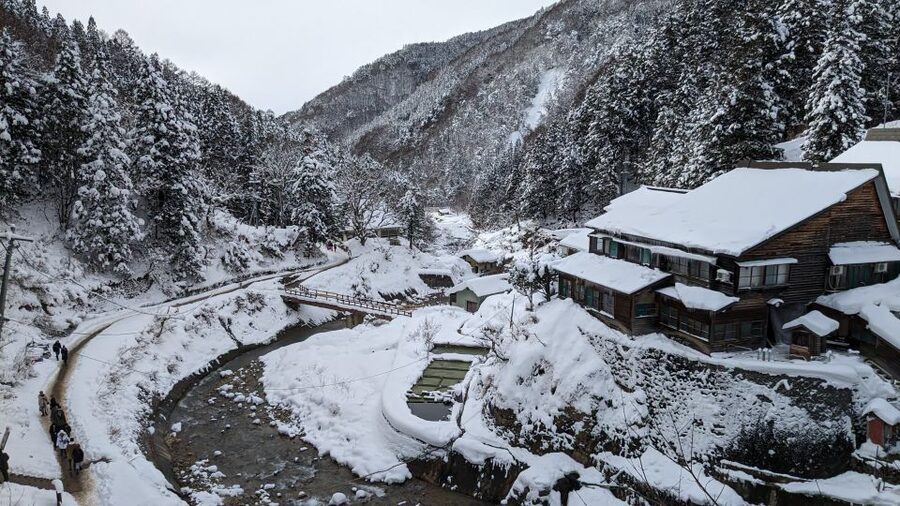
From the coach parking area, you walk for more than 30 minutes to reach the park. The route follows a forest path and includes an uphill section. In winter, packed snow, ice, mud, and wet ground can make it much harder than the phrase moderate walking suggests.
The return walk takes a similar amount of time. Several people found the route manageable in proper boots, while others described it as very icy or difficult. A cane user was able to complete the walk with help from a guide, but this should not be taken as a guarantee that the route will suit every person with limited mobility.
Wear warm, waterproof clothing and shoes with a firm grip. Snow boots are the safest choice. Anti-slip crampons are optional and may be sold on the bus, but you should not rely on buying them at the last moment. Crampons can be useful when the path is hardened and slick.
The cold does not end at the park entrance. You will spend time outside, often around snow and flowing water, so gloves, a hat, and several warm layers make sense. Comfortable shoes are listed as essential, but ordinary city sneakers are a poor choice if the path is icy.
This walk is part of the experience. The snowy woods and valley views help turn the visit into a mountain outing rather than a simple drive to an animal enclosure. Still, you need to be honest about your fitness and balance before booking. The activity is not suitable for wheelchair users, and it is not recommended for pregnant women.
Two hours with the macaques
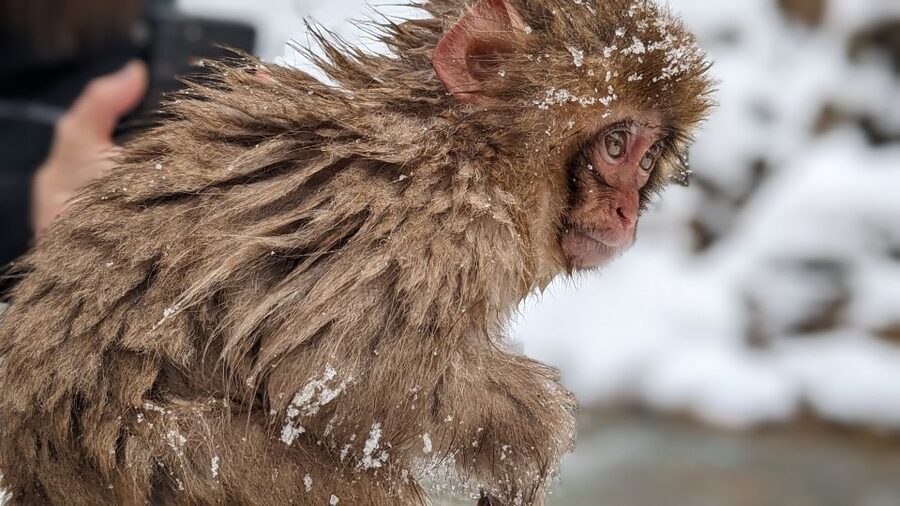
You have about two hours at Jigokudani Monkey Park. That is enough time to reach the hot springs, watch the animals, take photographs, and look around the wooded valley. It is not a private visit, and the area can feel crowded at popular times, but the winter setting is the main prize.
The macaques may walk quite close to you. Keep your hands to yourself, do not feed them, and avoid direct eye contact. These rules protect both you and the animals. Follow the guide’s instructions, especially if a monkey is moving through the group.
The best viewing conditions are unpredictable. You might arrive to find several animals gathered around the pool, including mothers and young monkeys. You might instead see them resting on the rocks or moving through the park. No refund is offered if you do not see the monkeys, so you should book this for the chance to observe them, not for a guaranteed pose in the spring.
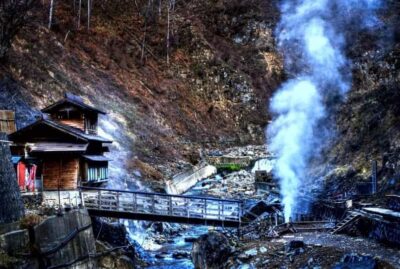
Winter is the strongest season for the classic image. Snow-covered branches, steam, and macaques with frosted fur create the scene most people have in mind. January and February offer the best odds of a snowy setting, though weather can also make the approach more slippery.
The park entry fee is included, as is the English-speaking guide. Guides named Ichiro, Mai, Maki, Ken, Kubo, and Thomas have received particular praise for being friendly, funny, organized, and helpful. Guide quality can vary by departure, but a good guide is valuable here because clear instructions matter around wild animals and on an icy route.
A few more Yamanochi tours and experiences worth a look
The Kamakura snow huts from January 23 to March 1, 2026
Departures between January 23 and March 1, 2026, include Kamakura no Sato, a seasonal display of illuminated snow huts. These small snow domes create a very different mood from the monkey park. Instead of watching wildlife, you walk among glowing winter structures that look especially striking after dark or in low winter light.
The entry fee is included during this date range. Outside those dates, this stop is not part of the advertised tour, so check your exact travel date before assuming you will see the huts.
The snow-hut visit is a useful bonus because the return journey is otherwise a long ride back to Tokyo. It adds another winter sight without requiring a separate booking. Still, it does not transform the day into a short excursion. You will remain on the road for many hours.
Is $151 a fair price from Tokyo?
At $151 per person, this is not the cheapest way to visit Nagano. The price makes more sense when you add up the coach transport, park admission, lunch, English guide, and, for the specified winter dates, the Kamakura snow-hut entry. You also avoid arranging several trains or buses and working out the final walk to the park yourself.
The main value is convenience. Jigokudani is far from Tokyo, and the route involves a long transfer followed by a winter walk. A guided coach trip gives you one meeting point, one return point, and someone responsible for keeping the group on schedule.
The tradeoff is time. You may spend around seven hours on the road, sometimes more with traffic, for roughly two hours at the park plus lunch and the seasonal snow-hut visit. Bus seats may be compact, and some coaches do not recline. If you dislike long road journeys, the price will not solve that problem.
For someone determined to see the snow monkeys and short on time, I consider the cost reasonable. For someone with several free days and a strong preference for independent travel, comparing train and local bus options may be worthwhile. The tour is best judged as a convenience purchase, not as the most efficient possible transport to Nagano.
Who should book this full-day outing?
You are a good match for this tour if you want to see Jigokudani from Tokyo without managing the connections yourself. It suits visitors who enjoy winter scenery, can handle a long coach day, and are comfortable walking over snow and ice.
It also works well for solo bookers, since the minimum group size is one person. Families and couples who want a simple all-in-one day may appreciate the included meal and entry fee. The guide can add useful context and help keep the group together.
Think twice if you have limited mobility, dislike uneven surfaces, or want a slow visit with lots of time at the park. The walk is more demanding than a normal city stroll, and the schedule is fixed. It is also not suitable for wheelchair users or pregnant women.
Bring:
- Warm layers, gloves, and a hat
- Waterproof trousers if snow or mud is expected
- Snow boots or sturdy anti-slip shoes
- Water and money for drinks
- A phone or camera with enough battery for the long day
The tour is for international tourists only. Keep the bus clean, take all rubbish with you, and follow the guide’s departure instructions closely.
Should you book the snow monkey tour?
Book it if seeing the snow monkeys is high on your Japan wish list and you want the easiest organized option from Tokyo. The combination of a mountain setting, sukiyaki lunch, park entry, and seasonal snow huts gives you a lot for one day, even though the day is tiring.
I would choose a January or February departure for the strongest winter atmosphere, while accepting that icy paths are part of the deal. March can still be beautiful, but warmer weather may mean fewer monkeys in the hot springs.
Do not book it expecting a guaranteed bathing scene or a relaxed schedule. Book it for a well-supported chance to see wild macaques in a remarkable valley, then treat the hot spring as a gift from nature rather than a promise.
FAQ
How long does the tour take?
The activity lasts one full day. The coach ride can take up to three and a half hours each way, and some departures last about 12 hours in total.
Where does the tour start?
Meet the guide by the Nishi Shinjuku LOVE sculpture outside the Shinjuku i-Land building at Nishishinjuku 6-chome 5-1.
Where does the tour finish?
The tour finishes at Tokyo Mode Gakuen in central Tokyo.
Is hotel pickup included?
No. Hotel pickup and drop-off are not included. You must reach the Shinjuku meeting point yourself.
What food is served at lunch?
The standard meal is beef sukiyaki. You can request pork, vegetarian, or vegan food when making your reservation. Fish and chicken alternatives are not available.
Are drinks included?
No. Drinks are not included in the tour price.
How long do you spend at Jigokudani Monkey Park?
The scheduled visit lasts about two hours, not including the walk between the parking area and the park.
Is seeing monkeys in the hot springs guaranteed?
No. The monkeys are wild, and sightings in the springs are not guaranteed. They may spend time elsewhere in the park.
What should I wear?
Wear warm clothing and non-slip footwear, preferably snow boots. The path can be snowy, icy, wet, or muddy.
Is the Kamakura snow-hut visit always included?
No. The snow-hut visit is included for tours running from January 23 through March 1, 2026.
Is the tour suitable for wheelchair users?
No. The tour is not suitable for wheelchair users and involves a moderate to demanding amount of walking on a winter path.
What happens if I arrive late?
The coach departs at the scheduled time at the guide’s discretion, and no refund is provided for latecomers. Arrive early at the meeting point.