Reviewed · SUMO EXPERIENCES
Exclusive Sumo Morning Practice in Tokyo with Photo Opportunity
Sumo practice is not a staged show. At this Tokyo morning visit, you sit near a working stable and watch young wrestlers warm up, grapple, and repeat demanding drills with real focus. The close view gives you a better sense of the sport’s force and discipline than a quick tournament seat might.
In This Article
- Key points to know before booking
- Seeing Sumo Before Tokyo Wakes Up
- Meeting at Oshiage Station Near Tokyo Skytree
- Inside the Sumo Stable
- Why the Guide Makes a Difference
- Photos With Wrestlers and the Sensei
- Seating, Timing, and Stable Etiquette
- Summer Heat and What to Bring
- Is the $99.10 Price Fair?
- Who Will Enjoy This Morning Most?
- Cancellation and Booking Details
- Should You Book This Sumo Morning Practice?
- FAQ
- Where does the sumo morning practice tour meet?
- What time does the activity start?
- How long does the experience last?
- Where does the sumo practice take place?
- Where does the tour end?
- How many people can join the tour?
- Can I take photographs during the visit?
- Can I take a photograph with the whole stable and sensei?
- Is seating guaranteed near the front?
- Can I enter all areas of the sumo stable?
- Is the tour suitable for most people?
- What should I bring in summer?
- Is the ticket available on a phone?
- Can I cancel for a full refund?
I like the small maximum of 10 people, which keeps the guide’s explanations personal, and I like the chance to take photographs with the wrestlers and, when permitted, the whole stable and sensei. The main caution is seating: places are first come, first served, so arriving late can put you two or three rows back.
Key points to know before booking
- Practice near Tokyo Skytree: Meet at Oshiage Station and walk or travel with the guide to one of the local sumo stables.
- A working training session: Watch warmups and sparring rather than a performance arranged for tourists.
- Photo opportunity included: You may photograph the wrestlers and pose with them after practice.
- Small-group format: The group is capped at 10, useful for questions and translation.
- Early two-hour outing: The 8:00 am start leaves much of your day free.
- Tatami-only access: The stable is a working space, and all areas except the tatami flooring are off-limits.
Seeing Sumo Before Tokyo Wakes Up

Sumo is one of Japan’s most recognizable sports, yet a tournament is held only during certain periods of the year and in a limited number of cities. This morning visit gives you another way to see it, by watching wrestlers prepare inside a stable near Tokyo Skytree.
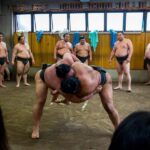
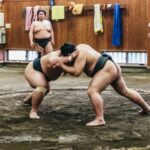
The difference matters. You are not watching a polished match with a large crowd, music, or a tournament schedule. You are watching practice, where repetition, concentration, and physical effort matter more than spectacle. The wrestlers warm up and spar with each other, and the hard contact can be surprising when you are close enough to see the strain on their faces.
The activity lasts about two hours, although the actual time spent watching practice can feel shorter or longer depending on the stable’s schedule. One hour of repeated bouts may be enough for some people, especially if you are mainly curious about the sport. If you enjoy watching technique and ritual develop through repetition, the longer visit gives you time to settle into the rhythm.
The morning timing is practical. You meet at 8:00 am, finish back at the same meeting point, and still have most of the day for Asakusa, Tokyo Skytree, or another part of the city. The early start also fits well with the nature of sumo practice, which takes place before the city’s sightseeing crowds build.
A few more Tokyo tours and experiences worth a look
Meeting at Oshiage Station Near Tokyo Skytree

The meeting point is at the taxi stand inside the station rotary at Oshiage Station, in Sumida City. The listed address is 1-chōme 1, Oshiage, and the area is close to Tokyo Skytree.
This is a central and useful place to meet, but allow a little extra time to get your bearings. One person found the meeting location confusing at first, even though everything became clear once the group connected with the guide. Oshiage is a large station area, so do not rush out of the train and assume you are already at the taxi stand.
Your guide then takes you to one of the sumo stables around Tokyo Skytree. The exact stable is not specified in advance, and the visit is tied to where practice is being held. That keeps the experience connected to real training rather than a fixed tourist venue, but it also means you should follow the guide’s directions closely.
The tour ends back at the original meeting point. That simple return plan is helpful if you want to continue sightseeing nearby, and it avoids leaving you to find your way from an unfamiliar residential area.
Inside the Sumo Stable
A sumo stable is where wrestlers train and live within the sport’s traditional structure. This experience gives you access to watch the morning session, but it does not turn the stable into an open museum.
You must remain on the tatami flooring areas. Other parts of the stable are off-limits, so expect to observe carefully and follow instructions about where you can sit, move, and take photographs. This is an important part of the visit’s value. You are seeing a working place, not a set arranged for visitors.
The wrestlers warm up before sparring. The sessions can be intense, and the physical strength is easy to underestimate from television or tournament photographs. One review describes the practice as highly focused and serious, rather than something performed for the group. That is the right attitude to expect: quiet attention, repeated efforts, and respect for the stable’s routines.
You may also notice that many wrestlers are younger than you expect. The sport’s public image often focuses on famous champions, but a stable contains athletes at different stages of their careers. Seeing them train at close range gives the activity a more human scale.
Why the Guide Makes a Difference
The guide is not only there to lead you from the station. The best part of the role is explaining what you are seeing while the wrestlers practice.
Hana is described as enthusiastic and well informed about sumo customs. Kentake received praise for clear English and for explaining the sport’s background and the wrestlers’ lives. Yuki is also described as giving thorough explanations of the context and philosophy behind the practice.
Guide assignments can vary, so you should not book expecting one particular person unless the operator confirms it. Still, these comments point to the kind of help that makes the price worthwhile: someone who can explain why a movement matters, identify what is happening, and help you understand the difference between a warmup and a serious bout.
Without that context, you might simply see large athletes pushing, throwing, or striking each other. With a good explanation, the practice becomes easier to read. You start to notice the preparation, the concentration, and the effort behind each exchange.
The group limit of 10 supports this. It is small enough for questions without turning the morning into a private tour. It also means your guide can give practical reminders about seating, photography, and stable etiquette.
Photos With Wrestlers and the Sensei
The photo opportunity is one of the clearest reasons to choose this experience instead of simply watching sumo from outside a stable. You can photograph the wrestlers during the visit and may pose with them afterward.
The most generous version of the photo opportunity includes a picture with the whole stable and the sensei. This is not guaranteed in every detail, since the wrestlers’ schedule and stable rules come first, but it is part of what makes the visit memorable.
Keep your expectations sensible. You are entering a place where people are working, so photography must not interrupt practice. Follow the guide’s instructions, stay within the allowed tatami areas, and wait until the proper moment for posed pictures.
The chance to stand beside the wrestlers also corrects a common mistake in how people imagine sumo athletes. One review noted how impressive their strength was and how the wrestlers are not simply a bunch of fat guys. That is a useful observation. Sumo requires speed, balance, power, and conditioning, not only body weight.
A few more Tokyo tours and experiences worth a look




Seating, Timing, and Stable Etiquette

The stable is often visited by several tour companies, and seating is first come, first served. If you arrive early, you have a better chance of sitting near the front. Late arrivals may be placed two or three rows back.
That difference matters because the room is not described as a large performance hall. A front position gives you a clearer view of warmups and sparring, while a rear position may make small movements harder to follow. The tour is still worth considering if you cannot arrive very early, but punctuality improves the experience.
The visit begins at 8:00 am, and confirmation is provided when you book. Since the activity takes about two hours, plan your morning around the meeting time rather than trying to fit it in after a long breakfast or a late night.
Etiquette is simple but important. Stay in the permitted areas, keep quiet during practice, and avoid treating the stable like a photo studio. Sumo’s appeal here comes from seeing ordinary training, so respect helps preserve the atmosphere for everyone.
Summer Heat and What to Bring

Tokyo summers can be hot and humid, especially in the morning as temperatures rise. Bring water and wear a hat for the walk and time outside. The advice is specifically aimed at preventing heat-related illness, so take it seriously.
The tour information does not give a full clothing list, but light, comfortable clothing is sensible in summer. You may sit on tatami flooring, so follow any instructions about footwear and placement when you arrive. The key point is to dress for the weather while remaining respectful in a traditional setting.
The morning schedule helps somewhat, since you are out early rather than visiting in the afternoon heat. Still, Tokyo’s summer humidity can be tiring, and you should not rely on the short duration alone to keep you comfortable.
Is the $99.10 Price Fair?
At $99.10 per person, this is not a cheap way to fill two hours. You are paying for access to a place that most people in Japan, as well as most international visitors, never see, plus a guide who explains the setting and helps manage the visit.
The price makes the most sense if you value close access and cultural context. A standard sightseeing stop near Tokyo Skytree may show you the city’s modern scale, but it will not put you close to working sumo wrestlers during practice. A tournament ticket, when available, offers a larger spectacle, yet it follows a calendar and may require more planning.
This activity is also useful when no tournament is scheduled. You get to see real wrestlers training rather than waiting for a competition that may not fit your dates.
The value drops if you want a long, varied tour with several Tokyo sights. The visit centers on one stable, and practice can become repetitive after an hour. You should book it because you want this specific look at sumo, not because you expect a full-day cultural program.
For sports fans, photographers, and people who enjoy seeing working traditions up close, the cost is easier to justify. For someone only mildly interested in sumo, the short length and repeated practice may not feel like the best use of $99.10.
Who Will Enjoy This Morning Most?
I would recommend this experience to you if you want a direct look at Japanese culture and prefer a small setting to a large attraction. It suits sports fans, people curious about traditional customs, and anyone who has already planned time around Tokyo Skytree.
It is also a strong choice for a busy itinerary. Two hours is short enough to fit before lunch, and the end point is the same place where you began. The activity is near public transportation, and most people can take part.
You may want to skip it if you dislike early starts, have little interest in watching repeated physical drills, or need guaranteed front-row seating. The first-come seating rule is the biggest practical weakness, especially when several tour companies are present.
Families and mixed-interest groups can make the call based on attention span. The photo opportunity adds variety, but much of the visit involves sitting quietly and watching practice. Anyone expecting constant action should know that training has pauses and repetition.
Cancellation and Booking Details
You receive confirmation at the time of booking, and the tour uses a mobile ticket. Free cancellation is available if you cancel at least 24 hours before the 8:00 am start time.
Cancellations made less than 24 hours before the start are not refunded, and changes within that window are not accepted. The cut-off follows Tokyo local time, so check the deadline carefully if your plans are changing.
The group maximum is 10 people. That cap is worth noting because the stable itself may be shared with other tour groups, and seating is not reserved by this booking alone.
Should You Book This Sumo Morning Practice?
Book it if you want authentic training rather than a staged display, can meet at Oshiage Station by 8:00 am, and are comfortable with first-come seating. The guide support, close view, and chance for photographs give the short visit real substance.
I would be less quick to recommend it to someone seeking a full explanation of every part of sumo or a guaranteed front-row seat. Practice can feel repetitive, and the stable has strict limits on where you can go.
For the right person, though, this is a rare way to see the sport in its working environment. Arrive early, bring water in summer, listen closely to the guide, and treat the stable with respect. If those conditions suit you, the $99.10 fee buys a memorable morning that a regular Tokyo sightseeing route cannot provide.
FAQ
Where does the sumo morning practice tour meet?
The meeting point is the taxi stand inside the station rotary at Oshiage Station, 1-chōme 1, Oshiage, Sumida City, Tokyo.
What time does the activity start?
The tour starts at 8:00 am.
How long does the experience last?
The activity lasts approximately two hours.
Where does the sumo practice take place?
The group visits one of the sumo stables around Tokyo Skytree.
Where does the tour end?
The activity ends back at the Oshiage Station meeting point.
How many people can join the tour?
The maximum group size is 10 people.
Can I take photographs during the visit?
Yes. The experience includes the chance to photograph the wrestlers and pose for pictures with them.
Can I take a photograph with the whole stable and sensei?
A group photograph with the whole stable and sensei may be possible at the end, depending on the stable’s arrangements and instructions.
Is seating guaranteed near the front?
No. Seating is first come, first served. Late arrivals may be seated two or three rows from the front.
Can I enter all areas of the sumo stable?
No. All areas are off-limits except for the tatami flooring areas.
Is the tour suitable for most people?
Yes. Most people can participate, and the meeting point is near public transportation.
What should I bring in summer?
Bring water and wear a hat because Japanese summers can be very hot and humid.
Is the ticket available on a phone?
Yes. The activity includes a mobile ticket.
Can I cancel for a full refund?
Yes, if you cancel at least 24 hours before the experience’s start time. Cancellations made less than 24 hours before the start are not refunded.
More Morning in Tokyo
More Sumo Experiences in Tokyo

More tours in Tokyo we've reviewed












Sumo Experiences, compared.
 ★ 4.8Tokyo: Sumo Show Experience with Chicken Hot Pot and a PhotoFrom $1032 hours
 ★ 4.8Tokyo: Sumo Show and Dining ExperienceFrom $7990 minutes - 2 hours
 ★ 5.0the SUMO showFrom $89
 ★ 5.0Tokyo Sumo Entertainment Show with Chicken Hot Pot and PhotoFrom $106
 ★ 4.6Tokyo: Sumo Tournament Tour with Chair Seat TicketsFrom $141
 ★ 5.0Tokyo Grand Sumo Tournament Viewing Tour with TicketsFrom $124