Reviewed · ASAKUSA TOURS
Tokyo Asakusa sightseeing and history walking tour
Asakusa’s best stories are not all found in the big red gate or the souvenir stalls. This 90-minute private walk links the famous sights with local details about food, crafts, festivals, and the neighborhood’s changing streets. Hirose-san, also referred to as Hiroshi in one booking, grew up near Senso-ji and can add a personal sense of place.
In This Article
- Key points to know before you book
- Why this Asakusa walk is more than a temple visit
- Meeting beneath Kaminarimon’s giant lantern
- Nakamise Street, where sightseeing meets shopping
- Senso-ji in a focused 20-minute visit
- Asakusa Shrine and the story behind Sanja Festival
- Asakusa Kingyo and the neighborhood’s playful side
- The Whaling Ship and the final 10 minutes
- Food advice that can shape the rest of your day
- How personal is the private format?
- The language question deserves attention
- What the price includes, and what it does not
- Who should book this Asakusa experience?
- Should you book this walking tour?
- FAQ
- How long is the Asakusa walking tour?
- How much does the tour cost?
- Where does the tour meet?
- What languages are available?
- Is this a private tour?
- Which main sights are included?
- Is transportation included?
- Are shopping and food included?
- Can children join the tour?
- What should I bring?
I like the clear contrast between Senso-ji and Asakusa Shrine, which helps you understand the difference between Buddhism and Shinto. I also like the practical side: restaurant suggestions, snack stops, shopping advice, and free photos. The main caution is language consistency. English, German, and Japanese are offered, but one German-speaking family found the German communication too limited.
Key points to know before you book
- Local perspective: Hirose-san grew up behind Senso-ji and shares neighborhood knowledge beyond the main signs.
- Two religious landmarks: You learn how Senso-ji and Asakusa Shrine differ, including their links to the Sanja Festival.
- A private format: Your group receives a personal walk rather than joining a large crowd.
- More than temples: The route includes Nakamise Street, Asakusa Kingyo, a whaling ship, food advice, and shopping tips.
- Good value at $19: The price includes a guide, walking tour, free photos, and restaurant information, but not purchases or transport.
- Language matters: English, German, and Japanese are listed, but German-speaking families should confirm the guide’s fluency before booking.
Why this Asakusa walk is more than a temple visit
Asakusa is easy to visit badly. You can follow Nakamise Street, take a few pictures at Senso-ji, and leave without understanding why the district matters. This tour gives you a short but useful framework for reading the area.
You begin at Kaminarimon, the famous Thunder Gate, then follow the approach toward Senso-ji. Along the way, the guide explains the district’s development, its traditional foods, its crafts, and the customs connected with the local religious sites.
The route also reaches places that many first-time visitors skip. That may mean side streets, local shops, unusual displays, and advice about where to eat or buy souvenirs. The experience is still centered on the classic sights, but it tries to show you the real Asakusa behind the main photo stops.
At $19 per person, the tour is priced well for a private experience. You are not paying for admission to a major attraction, since the listed stops are viewed from public areas, but you are paying for interpretation and personal guidance. That can be useful on a first morning in Tokyo, especially if you want help making sense of Japanese religious customs.
A few more Taito City tours and experiences worth a look


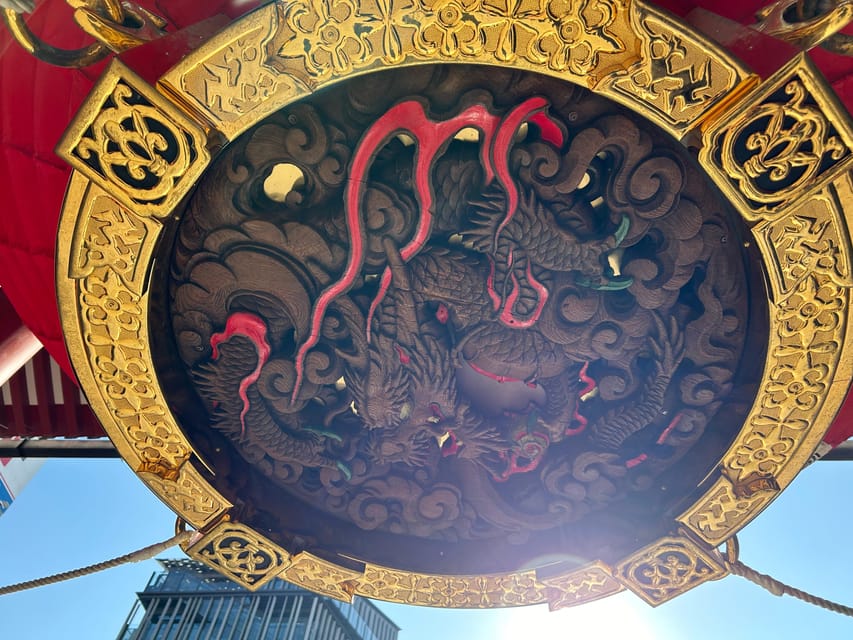
Meeting beneath Kaminarimon’s giant lantern
The meeting point is on the left side of Kaminarimon, where the guide waits with a GetYourGuide sign. The supplied coordinates are 35.7111163, 139.7963656.
This is a sensible place to start because Kaminarimon is one of Asakusa’s easiest landmarks to identify. Give yourself enough time to reach the gate and find the correct side before the start time. Transportation to the meeting point is not included, so you pay for your own train, subway, or other transport.
The first stop includes about 10 minutes for photographs and an introduction. The gate is more than a backdrop. It sets up the story of Asakusa as a district shaped by religion, commerce, festivals, and local traditions.
If you have never visited Japan, this opening is also a chance to ask basic questions before the tour gets busy. Ask about customs, temple behavior, or foods you want to try later. A private group makes that sort of exchange easier than it would be on a large group walk.
Nakamise Street, where sightseeing meets shopping
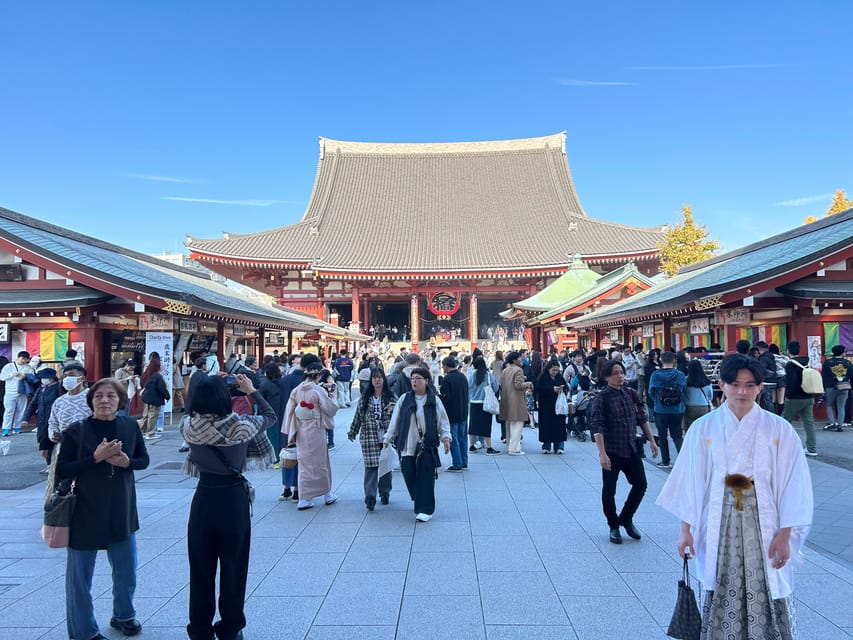
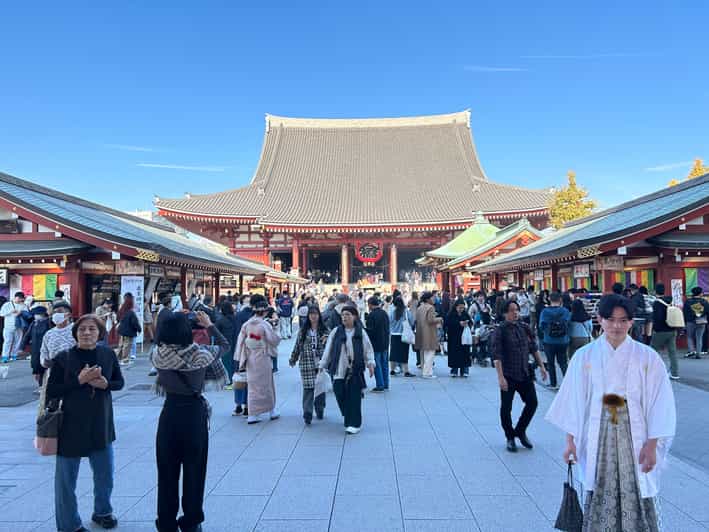
The next 15 minutes take you along Nakamise Shopping Street. This is the direct approach to Senso-ji, lined with stores selling souvenirs, snacks, and traditional goods.
The guide can point out shops and explain what is worth your attention. The tour includes souvenir shop information, but purchases are not included, so you can browse without feeling that shopping is part of the admission price.
This is also a practical place to get your bearings. You can ask about traditional meals, local sweets, crafts, and gifts that travel well. One particularly useful detail from the tour experience is the mention of an old cosmetics shop selling sake-based beauty products. That gives you an idea of the local details the guide may point out beyond standard souvenir racks.
Allow yourself some restraint. Nakamise can tempt you into buying early, but you still have several stops ahead. If something catches your eye, note the shop and return later if time allows.
Senso-ji in a focused 20-minute visit
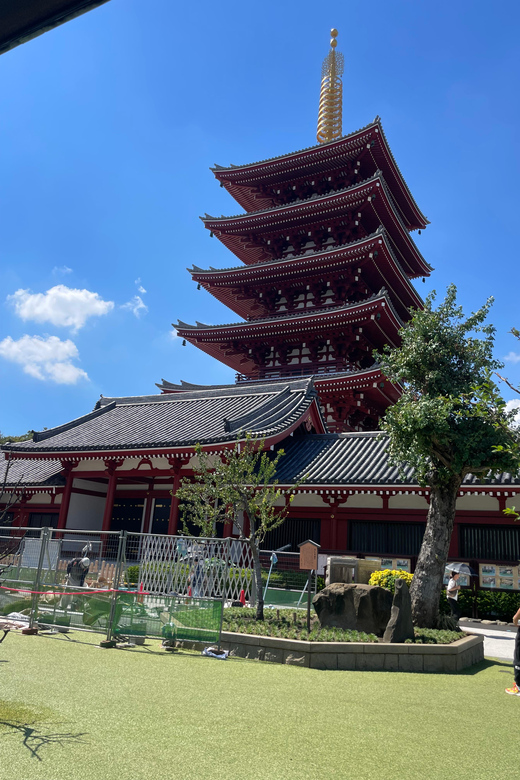
Senso-ji receives about 20 minutes, including a break, photographs, guided explanation, and free time. This is the main temple stop and likely the point where you will spend the most time taking pictures.
The important lesson here is the distinction between Senso-ji and Asakusa Shrine. Senso-ji is Buddhist, while Asakusa Shrine is Shinto. The two sites sit close together, yet they belong to different religious traditions. That contrast is one of the tour’s strongest teaching points because it turns two attractive buildings into places with different purposes and customs.
The guide also explains how to bow and clap at the temple area, according to one family’s account of the experience. That kind of instruction is useful because many visitors want to behave respectfully but are unsure of the correct sequence.
You receive free photos during the tour. This is a nice extra if you are traveling with family or as a couple and usually have to choose between taking the picture and appearing in it. Still, the guide’s approach may not suit everyone. One German-speaking participant felt that too many group photos were used to fill time. If you prefer a quiet, information-heavy walk, say so at the start.
Asakusa Shrine and the story behind Sanja Festival
The tour spends about 20 minutes at Asakusa Shrine. That is a generous portion of a 90-minute route and reflects the importance of the site to the neighborhood’s story.
The guide explains the origin of the shrine and its connection to the Sanja Festival, described here as one of Japan’s three major festivals. The story involves two brother fishermen who used nets to pull up the Kannon statue that became the principal image of Senso-ji. The shrine is dedicated to the people connected with that event.
This is where the route’s religious and local history come together. Senso-ji protects the Buddhist image, while Asakusa Shrine honors the people tied to its discovery. You do not need to memorize every name to understand the basic relationship. The key point is that the temple and shrine are neighbors with separate identities and a shared local story.
If your visit happens during Sanja Matsuri, the guide may help you understand what you are seeing. One participant visiting during the festival valued having local direction at a time when the district had extra activity and ceremony. The tour does not promise festival access or special entry, so treat that as a possible benefit of timing, not a guaranteed feature.


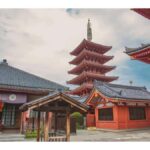
Asakusa Kingyo and the neighborhood’s playful side
About 15 minutes are assigned to Asakusa Kingyo. The itinerary identifies this as a photo and guided stop, but does not provide a detailed description of what you will do there.
That makes this a good example of why a local guide can be useful. Instead of passing a name on a map, you can ask what the place represents and why it belongs on an Asakusa walk. The stop also breaks up the temple sequence and adds a different type of local interest.
Keep your expectations measured. This is not described as a long activity or workshop. It is a short visit with time for photographs and explanation, so the value comes from the guide’s context rather than from a major attraction ticket.
The Whaling Ship and the final 10 minutes
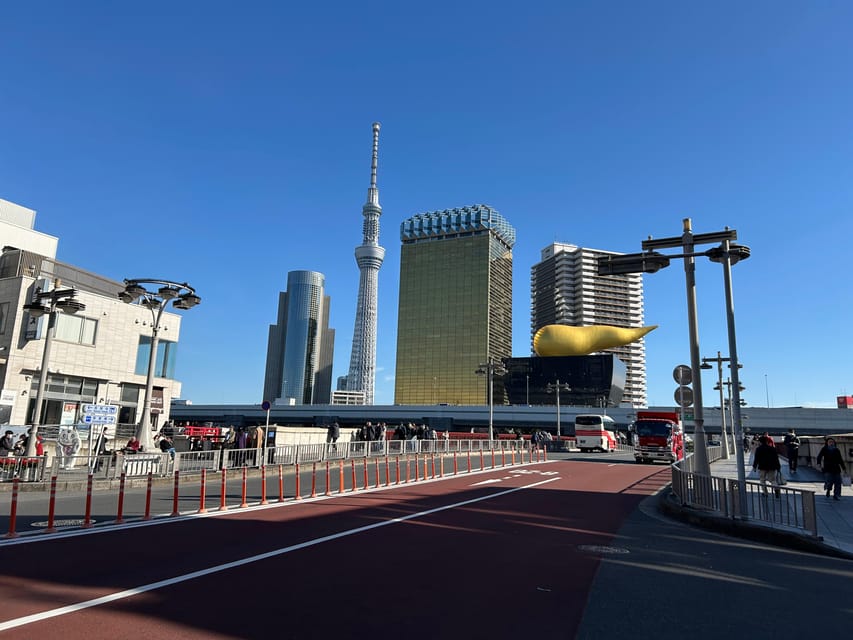
The last listed stop is Hogei-sen, or the Whaling Ship. The route gives it about 10 minutes for photographs, guidance, and free time.
The supplied details do not explain the ship’s full story, so I would ask the guide directly about its connection to Asakusa. The stop appears to be a visual and unusual closing point rather than a formal museum visit. You should not expect an included boat ride, admission, or extended tour of the vessel.
Ending here can work well because you finish with something different from the temple and shrine architecture. You also have a final chance to ask where to eat, what to buy, and which parts of Asakusa deserve a second look.
Food advice that can shape the rest of your day
The guide’s food knowledge is one of the most useful parts of the experience. The tour covers traditional meals such as soba, sukiyaki, yakiniku, sushi, tempura, and eel.
You do not receive a meal or tasting as part of the $19 fee. Instead, you receive suggestions about restaurants and local foods. That distinction matters. If you already have every meal booked, this feature may not add much. If you arrive in Asakusa hungry and undecided, it can save you from choosing at random near the busiest streets.
A family received a recommendation for a miso don katsu restaurant and enjoyed it. Another participant praised the guide’s advice on snacks and souvenirs, including crunchy and crispy treats favored locally. These details suggest that the food guidance is not limited to famous restaurant categories. You can ask for a specific budget, dish, or type of meal.
Use the tour as an introduction, then make your own choice. Restaurant preferences vary, and the tour does not include reservations or food costs.
How personal is the private format?
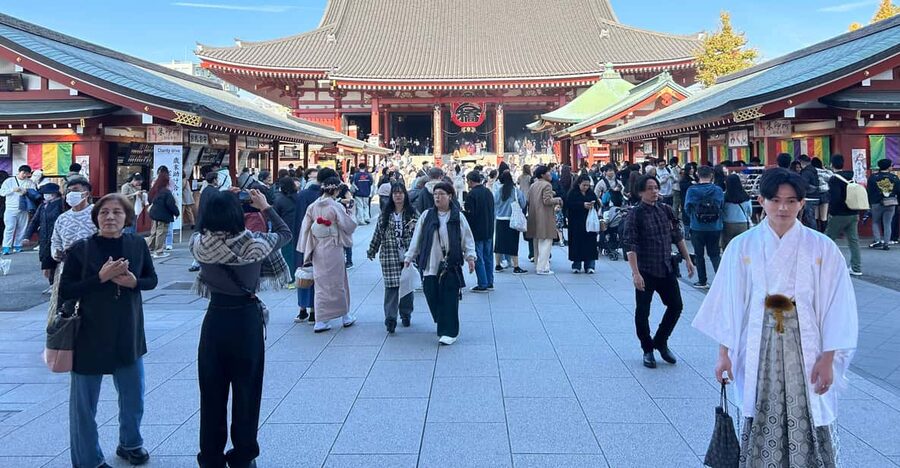
The tour is offered as a private group. That is a major reason the $19 price can be attractive, especially for two or more people who want to ask questions without holding up strangers.
A private walk also helps families. One guide adjusted patiently when an 11-year-old became tired, according to the information provided. The route is only 90 minutes, but there are several stops, breaks, and photo pauses. Children under three can join free, and children aged three to twelve receive a 50 percent discount.
The private format does not guarantee a particular pace or style. One person may want long historical explanations, while another may prefer more time for photos and shops. Tell the guide what matters to you at the beginning. You can request more food advice, more religious explanation, fewer posed pictures, or extra time at a particular public area.
Wear comfortable shoes and bring water. Weather-appropriate clothing is sensible because this is an outdoor walking route with no promise of indoor shelter.
The language question deserves attention
English, German, and Japanese are listed as available languages. English-speaking participants received strong reports about the guide’s explanations, patience, local advice, and photography.
The German option needs more care. One family specifically booked a German-language tour but found that communication in German was very limited, with frequent use of imperfect English. Their children struggled to follow the content. This is the clearest weakness in the available information.
If German is essential for your group, contact the provider before paying and confirm who will guide you and how much of the tour can be conducted in German. If you are comfortable in English, the concern is less serious. The guide has also received positive comments from German-speaking visitors, so the experience may vary by guide or by the communication needs of the group.
What the price includes, and what it does not
At $19 per person, you receive a guide, a walking route, free photos, access to the listed sightseeing stops, souvenir shop information, and restaurant guidance.
You do not receive transport, shopping purchases, or food. The tour also does not list admission tickets, meals, or special access. That keeps the base price low, but you should budget separately for snacks, gifts, and any transport to or from Asakusa.
I see the strongest value in the private guidance. If you only want to see Kaminarimon and Senso-ji, you can visit those public places without booking a tour. If you want the religious differences explained, local stories connected, and food and shopping choices made easier, the fee is modest.
Free cancellation is available up to 24 hours before the start for a full refund. You can also reserve and pay later, which helps if your Tokyo schedule is still changing.
Who should book this Asakusa experience?
I would choose this tour for a first visit to Asakusa, especially if you want a short introduction before exploring on your own. It suits couples, families, and small private groups that value direct questions and a flexible conversation.
It is also a good fit if you care about food and shopping as much as monuments. The guide can help you connect the formal sights with snacks, crafts, souvenir shops, and restaurants.
I would be more cautious if you want a long academic lecture, a full food tour, or guaranteed fluent German interpretation. The route moves quickly, and several stops are short photo and explanation visits. Anyone who dislikes posed photos should set that preference early.
Should you book this walking tour?
Book it if you want a personal introduction to Asakusa for a reasonable price, with religious customs, festival history, food advice, and lesser-seen local details folded into the famous route. The strongest praise centers on the guide’s personal connection to the area, patience, photos, and useful recommendations.
Skip it if you already know Asakusa well or want extensive time inside each site. Before booking in German, confirm the language arrangement carefully. For English-speaking families and first-time visitors, the private format and compact 90-minute route make this a practical way to begin exploring the district.
FAQ
How long is the Asakusa walking tour?
The tour lasts 90 minutes.
How much does the tour cost?
The listed price is $19 per person.
Where does the tour meet?
You meet on the left side of Kaminarimon Gate. The guide waits with a GetYourGuide sign.
What languages are available?
The listed tour languages are English, German, and Japanese.
Is this a private tour?
Yes. The activity is offered as a private group.
Which main sights are included?
The route includes Kaminarimon, Nakamise Shopping Street, Senso-ji Temple, Asakusa Shrine, Asakusa Kingyo, and the Whaling Ship.
Is transportation included?
No. You pay your own transportation expenses.
Are shopping and food included?
No. Shopping costs and food purchases are not included. The guide provides souvenir shop and restaurant information.
Can children join the tour?
Children under three years old can join free of charge. Children aged three to twelve receive a 50 percent discount.
What should I bring?
Bring comfortable shoes, water, and clothing suitable for the weather.
More Asakusa Tours in Taito City
More tours in Taito City we've reviewed
Asakusa Tours, compared.
 ★ 4.8Tokyo: Japanese Dance Cabaret Theater Asakusa-Kaguwa TicketFrom $492 hours
 ★ 4.7Tokyo: Meiji Shrine, Asakusa, Skytree Bus Tour and CruiseFrom $12210 hours
 ★ 4.9Tokyo: Roll and Authentic Sushi Making Class in AsakusaFrom $581h 40m
 ★ 4.8Tokyo: Asakusa Walking Tour with Sensoji Temple VisitFrom $222 hours
 ★ 5.0Tokyo Asakusa Rickshaw TourFrom $42
 ★ 4.5Tokyo Panoramic 1 Day: Meiji Shrine, Asakusa, Odaiba and SKYTREE®From $85