Reviewed · CYCLING TOURS
2.5 Hour-Guided Cycle Tour in the Central Tokyo
Tokyo is much more than neon signs and packed train platforms. This 2.5-hour cycle tour takes you through eastern Tokyo’s residential lanes, temple grounds, river paths, and everyday shopping streets, with the Tokyo Skytree appearing from several useful angles along the way.
In This Article
- Key points at a glance
- A gentle ride through Tokyo’s eastern neighborhoods
- Along the Sumida River and beneath the Skytree
- Honryuin Matsuchiyama Shoden and its unusual symbols
- Imado Shrine, matchmaking, and local belief
- Senso-ji without making it the whole day
- Artistic candy at Asakusa Amezaiku Ameshin
- Kyojima Minami Park and everyday neighborhood Tokyo
- What the price includes in practical terms
- Bikes, height limits, and weather planning
- Who will enjoy this Tokyo bike tour?
- Should you book the Central Tokyo cycle tour?
- FAQ
- Where does the Tokyo cycle tour begin?
- Where does the tour finish?
- How long does the tour last?
- How many people can join the tour?
- Are bikes and helmets provided?
- What rider heights suit the provided bikes?
- Can I request a tandem bike?
- What happens if the weather is poor?
I like the gentle pace and the mix of famous sights with ordinary local life. I also like that guide Takeshi adjusts the ride for families and cautious cyclists, provides helmets, and has even supplied raincoats when the weather turns. The main consideration is that the folding bikes fit people from about 140 to 180 centimeters tall, so taller riders should check ahead.
Key points at a glance

- Ride beneath the Tokyo Skytree: See the tower from streets, bridges, and riverside paths rather than only from a viewing deck.
- Visit quieter religious sites: Honryuin Matsuchiyama Shoden and Imado Shrine offer a calmer counterpoint to Senso-ji.
- Follow the Sumida River: The route includes riverbank cycling, a bridge crossing, and famous springtime cherry trees.
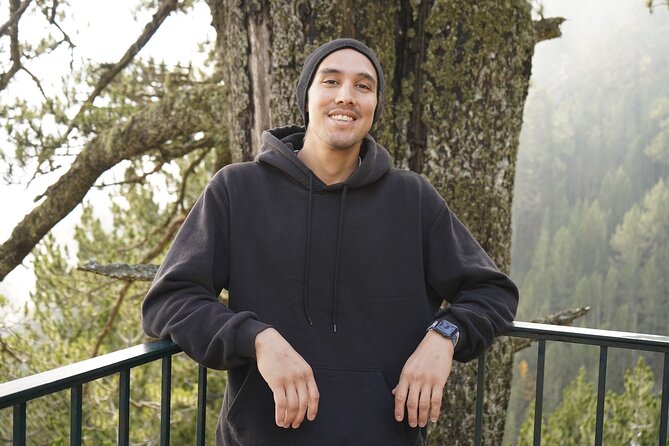
- Meet local guide Takeshi: His role includes route safety, local explanations, photographs, and weather planning.
- Browse everyday Tokyo: Kyojima Minami Park gives you a look at an old-fashioned shopping area and daily neighborhood life.
- Keep the day flexible: The ride lasts about two and a half hours and returns to the starting point.
A gentle ride through Tokyo’s eastern neighborhoods
The tour begins near Hikifune Station in Sumida City, east of the main tourist core. That location matters. You are not starting in the thickest crowds around Shibuya or Shinjuku. Instead, you begin in a part of Tokyo where narrow streets, small homes, local shops, temples, and elevated railway lines shape the day.
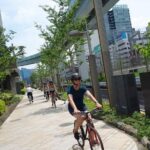
You ride a folding bicycle with 14 to 20-inch wheels. These are practical city bikes, not performance machines. The compact design suits a relaxed outing and makes the tour less intimidating for people who have not cycled in Tokyo before.
A helmet is provided, and the group is limited to six people. That small size should make it easier for Takeshi to watch the pace and help with road crossings. The experience is described as private for your group, so you can expect a more personal outing than a large coach tour.
The ride is not built around speed. It is made for recreational cyclists, families, and people who want to cover more ground than they could on foot without turning the morning or afternoon into a workout. Parents traveling with older children may find the pace especially useful. It has worked well for families with children aged 13 and 16, and a solo rider can benefit from the guide’s help with photographs.
Other cycling tours in Tokyo
Along the Sumida River and beneath the Skytree

One of the pleasant features of the route is its use of the Sumida River. Cycling on the riverbank gives you breathing room after Tokyo’s tighter streets. In spring, the river is known for cherry blossoms, so the ride can be especially attractive during the sakura season.
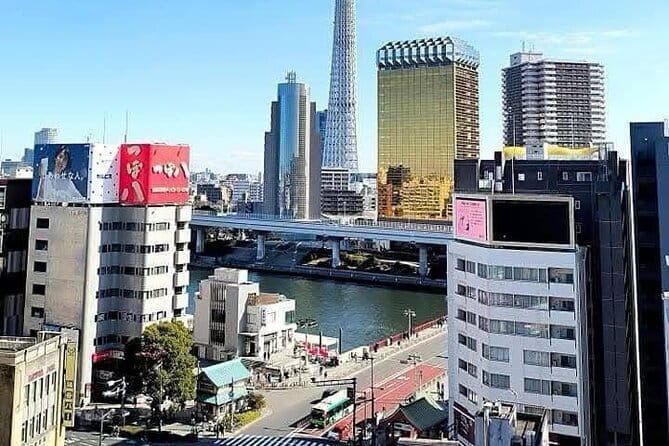
The tour also crosses the Sumida River by bridge. This is one of the better ways to understand Tokyo’s geography. You get open views across the water and can see the city’s mix of towers, bridges, older neighborhoods, and modern construction.
The Tokyo Skytree appears again when you cycle beneath it. The tower is so large that it changes character depending on where you view it. From a distant street, it helps you get your bearings. From below, it feels more imposing. A bicycle tour gives you several such viewpoints without making you repeat the same walk.
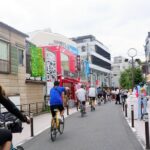
Do not expect a dedicated sightseeing route from start to finish. You will be riding through working neighborhoods, and traffic is part of the setting. The guide’s careful pace is important here. One cautious cyclist found the roads less worrying than expected because Takeshi kept the group safe and managed the route clearly.
Honryuin Matsuchiyama Shoden and its unusual symbols
The first temple stop is Honryuin Matsuchiyama Shoden, which forms part of the Senso-ji temple complex and was founded in 595. It is a useful early stop because it offers religious context before you reach the much more famous main temple.
The temple is associated with repeated images of a daikon, or Japanese radish, and a pouch. The radish represents the human mind caught in ignorance, while the pouch points toward practical blessings and prosperity. These symbols give you something specific to notice instead of treating the temple as just another old building.
You have about 20 minutes here, and admission is free. That is enough time to look around and listen to Takeshi’s explanation without turning the stop into a long formal temple visit.
This is also where the tour’s quieter side becomes clear. If your Tokyo plans focus only on major attractions, a smaller temple such as this can help you see how religious spaces fit into ordinary neighborhood life. The tradeoff is that the stop may feel modest if you are expecting a grand complex with many buildings and large crowds.
Imado Shrine, matchmaking, and local belief

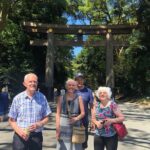
The next stop is Imado Shrine, founded in 1063. Today it is known as a power spot, a sacred place associated with wishes for love and marriage partners.
You spend roughly 15 minutes here. That short visit suits the shrine well. You can take in its atmosphere, hear the story behind its popularity, and notice how modern hopes are tied to an old religious setting.
For many visitors, Imado Shrine is interesting because it shows a living part of Japanese culture. The focus is not only on architecture or dates. People come with personal wishes, and the shrine remains part of that process.
As with Honryuin Matsuchiyama Shoden, entry is free. You should also expect a more intimate experience than at Senso-ji. If you prefer major monuments and long sightseeing stops, this shrine may seem brief. If you want a look at contemporary spiritual customs, it earns its place on the route.
Senso-ji without making it the whole day

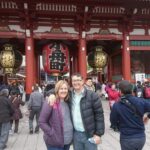
The tour then reaches Senso-ji, Tokyo’s best-known Buddhist temple. You park the bikes nearby and continue on foot for around 30 minutes.
That time limit is sensible. Senso-ji can easily fill half a day if you explore every lane, shop, gate, and hall. Here, the temple works as one part of a larger ride rather than the entire focus.
You get to see the contrast between the quieter temple stops and Senso-ji’s larger scale. The complex is connected with a history reaching back to 595, and its fame brings a much busier setting. The guide can help you make sense of the visit while keeping the schedule moving.
The bicycle is not used inside the temple area, so you should be prepared for a short walking section. Wear shoes that are comfortable for standing and strolling. The free admission is another benefit, especially if you are watching the cost of several Tokyo activities.
If you have already spent considerable time at Senso-ji, this portion may feel familiar. Even then, arriving by bicycle from residential streets gives the temple a different setting than arriving directly by train with the main crowd.
Other guided tours in Tokyo

Artistic candy at Asakusa Amezaiku Ameshin

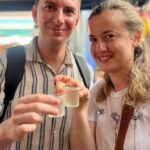
Asakusa Amezaiku Ameshin is a traditional Japanese craft candy shop. The stop lasts about 15 minutes, and the attraction is watching the candy being shaped into artistic forms.
This is a small but smart addition to the route. A temple visit tells you about belief and tradition. The candy shop shows another kind of handwork, one connected with food, craft, and performance.
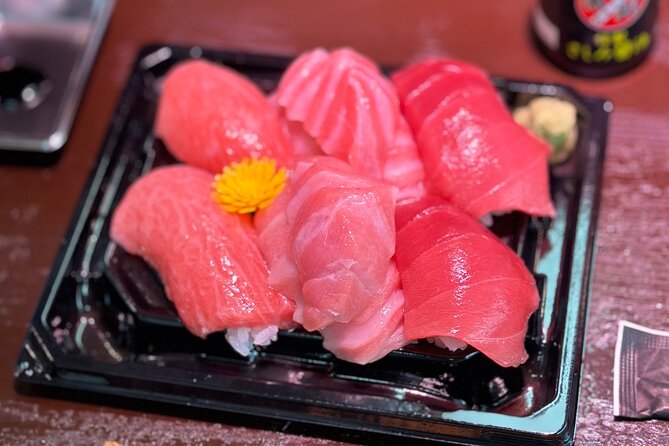
You may also buy authentic Japanese street food during the outing to keep you fueled. The supplied details do not specify which stalls or snacks are visited, so you should treat this as an opportunity to purchase food rather than a fixed tasting menu.
That distinction matters if you are comparing this ride with a dedicated food tour. This is primarily a cycling and sightseeing experience. Food adds flavor to the day, but it is not presented as a full meal or a set of included tastings.
Kyojima Minami Park and everyday neighborhood Tokyo

After crossing the river and cycling beneath the Skytree, the route reaches Kyojima Minami Park. The stop lasts about 20 minutes and focuses on an old-fashioned shopping mall where you can see daily Japanese life.
This is one of the most valuable parts of the tour for anyone who wants more than Tokyo’s headline sights. A shopping area used by local residents gives you a sense of scale and routine. You see the city not as a collection of attractions, but as a place where people shop, commute, eat, and go about their day.
The wording old-fashioned does not mean you should expect a preserved historic district or a large market. It means the area offers a less polished, more ordinary view of Tokyo. That can be exactly what you want after the grand temple and Skytree stops.
The tour’s route also lets you connect the major sights to their surrounding neighborhoods. Senso-ji is not an isolated monument. The Skytree is not just a tower in a photograph. Both belong to a wider part of Tokyo that you pass through at street level.
What the price includes in practical terms

At about $50.08 per person, the tour sits in the reasonable middle range for a guided Tokyo activity. You are paying for the bike, helmet, local guide, a small group, route planning, and roughly two and a half hours of access to several areas that would take more effort to connect independently.
The value is strongest if you are unsure about cycling in Tokyo. Planning this route yourself would mean finding a suitable bike, working out the roads between Hikifune, the Sumida River, Senso-ji, the Skytree, and Kyojima, and deciding where to stop. You would also miss the explanations that connect the temples and neighborhood scenes.
The value is weaker if you already have a bicycle, know eastern Tokyo well, and are comfortable navigating city traffic. In that case, you could explore at your own pace and spend longer at each attraction.
Group discounts are available, which may improve the price for families or friends booking together. The maximum is six people, so even a group booking should remain fairly compact. The experience ends where it starts, leaving the rest of your day free for Asakusa, the Skytree area, or another part of Tokyo.
Bikes, height limits, and weather planning
The folding bikes suit riders from approximately 140 to 180 centimeters tall. If you are taller than 180 centimeters, tell the operator before the tour. That is not a minor detail. A poorly sized bike can make a gentle ride uncomfortable.
A tandem bike may be available if requested at least three days before your booked date. You should arrange this in advance rather than asking on the morning of the ride.
The tour requires good weather. If poor weather cancels the outing, you can choose another date or receive a full refund. Takeshi has also contacted participants when rain was forecast, offering a chance to adjust plans, and has prepared raincoats for wet conditions.
That does not mean you should assume every rainy tour will run. Check the forecast and arrive ready for conditions to change. The cancellation terms allow a full refund when you cancel at least 24 hours before the start time. Cancellations or changes inside that window are not refunded or accepted.
Who will enjoy this Tokyo bike tour?
I would choose this experience if you want to see Tokyo at street level but do not want a demanding ride. The pace suits casual cyclists, families with older children, solo visitors, and anyone who wants a guide to handle the route.
It is also a good first activity in eastern Tokyo. You see Senso-ji and the Skytree, but you also get quieter temples, a shrine linked with matchmaking, a craft candy shop, a river crossing, and a local shopping area.
You should think twice if you want a long-distance ride, a serious cycling challenge, or a deep food-focused tour. The route is gentle and sightseeing-led. The folding bikes are practical, but they are not designed for speed.
The tour has a 5 out of 5 rating from 25 ratings, with every rating recommending it. The most consistent strengths are Takeshi’s friendly manner, careful handling of safety, useful local explanations, and willingness to take photographs. Those points matter because the quality of a small cycling tour depends heavily on the guide.
Should you book the Central Tokyo cycle tour?
Book it if you want a calm, personal way to connect Tokyo’s famous sights with its less visited streets. The strongest reason to choose it is not simply that you ride a bike. It is that you move between temples, river views, the Skytree, craft traditions, and everyday neighborhoods in one compact outing.
I would especially recommend it for families, cautious cyclists, and first-time visitors who want help with navigation. Tell the operator your height, request a tandem bike early if needed, and keep an eye on the weather.
Skip it if your priority is a strenuous ride or a full meal of Japanese street food. For most other visitors, the modest price, small group, free cancellation up to 24 hours ahead, and well-balanced route make this a practical way to spend part of a Tokyo day.
FAQ
Where does the Tokyo cycle tour begin?
The tour begins at Tokyo Backstreets Bike Tour, inside the Synapse share office at 2-chome 24-14 Higashimukojima, Sumida City, Tokyo 131-0032. The meeting point is near Hikifune Station.
Where does the tour finish?
The activity ends back at the original meeting point.
How long does the tour last?
The cycle tour lasts approximately 2 hours and 30 minutes.
How many people can join the tour?
The maximum group size is six travelers.
Are bikes and helmets provided?
Yes. The tour provides folding bicycles and helmets. The bikes have 14 to 20-inch wheels.
What rider heights suit the provided bikes?
The bikes are suitable for people approximately 140 to 180 centimeters tall. You should notify the operator in advance if you are taller than 180 centimeters.
Can I request a tandem bike?
Yes. You must inform the operator at least three days before the booked tour date.
What happens if the weather is poor?
The experience requires good weather. If the operator cancels because of poor weather, you can choose another date or receive a full refund.
More Guided Tours in Tokyo
More Cycling Tours in Tokyo

More tours in Tokyo we've reviewed
Cycling Tours, compared.
 ★ 5.0Tokyo Guided Small-Group Biking TourFrom $106
 ★ 5.0Tokyo Great Cycling TourFrom $99
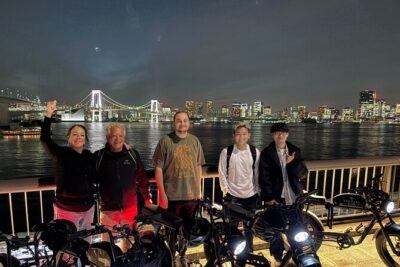 ★ 5.0Tokyo Top Highlights 3h Guided E-bike TourFrom $63
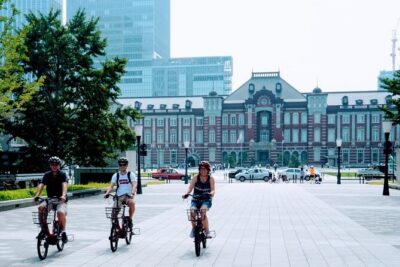 ★ 5.03h Tokyo E-Bike Tour: Hidden Gems, and Local Life with guideFrom $63
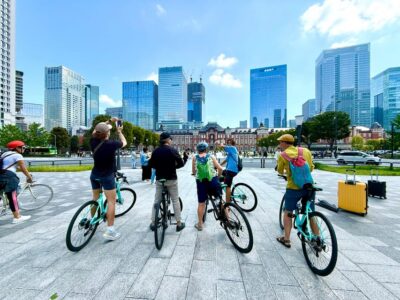 ★ 4.8Tokyo: 3-Hour Bike or E-Bike City Highlights TourFrom $453 hours
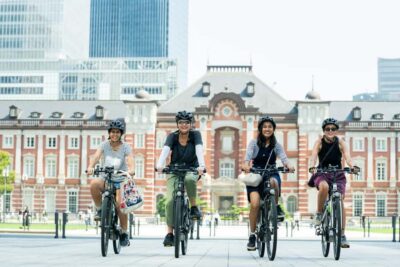 ★ 4.8Tokyo: 3-hour Guided E-Bike Tour of the City’s Hidden GemsFrom $65