Reviewed · CRUISES & BOAT TOURS
Tokyo Cherry Blossom Express Tour with Boat Ride
Tokyo’s cherry blossom season can be brief and scattered, so this six-hour route gives you a useful way to see several of Tokyo’s main viewing areas in one day. I like the mix of a formal Edo-period garden, an open city park, a moat-side walk, and a boat ride. I also like that entrance fees and the boat are included.
In This Article
- Key points at a glance
- Four Tokyo blossom stops in six hours
- Starting at Koishikawa Korakuen Garden
- Ueno Park and the city-side blossom scene
- Walking the 700 meters at Chidorigafuchi
- The 30-minute boat ride
- What the $141 price really covers
- The walking level and daily rhythm
- The guide can make or break the day
- Cherry blossom timing requires a flexible plan
- Who should book this tour?
- Should you book the Tokyo Cherry Blossom Express Tour?
- FAQ
- How long does the Tokyo Cherry Blossom Express Tour last?
- Where does the tour meet?
- Is transportation included in the tour price?
- Is the boat ride guaranteed?
- What language is the tour conducted in?
- What should I bring?
- Who cannot join this tour?
The main catch is that this is a walking and public-transport tour, not a private vehicle outing. You pay your own train or bus fares and need an IC card such as Suica or Pasmo. The boat can also close in rain or strong wind, even though the tour itself operates in all weather.
Key points at a glance
- Four different cherry blossom settings: See a traditional garden, a large city park, a moat, and the water from a boat.
- Koishikawa Korakuen starts the day: Meet at the West Entrance, only a short walk from Iidabashi Station.
- The 700-meter Chidorigafuchi walk: This is one of the tour’s most memorable stretches, with blossom branches lining the moat.
- The boat ride is weather dependent: It is included, but the boat operator decides if conditions are safe.
- Expect plenty of walking: Comfortable shoes matter, and the tour is not suitable for wheelchair users or children under five.
- Guides can shape the day: Denise has adjusted the route to suit the group, while Jim Smashy has been praised for being helpful, calm, and informative.
Four Tokyo blossom stops in six hours
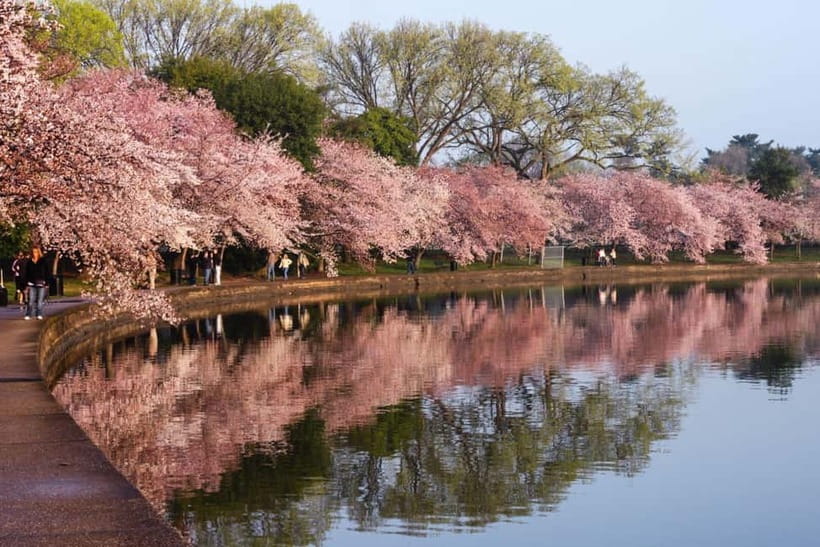
The appeal here is simple: you are not relying on one park to deliver perfect blossoms. The tour moves through several parts of Tokyo, each with a different feel. If one site is past its peak, another may still have trees in good shape.
That matters because Tokyo’s cherry blossom season is hard to predict. The suggested window is roughly March 15 through the end of April, but the exact dates change with the weather. In 2025, the season began early in some parts of the city, which shows why fixed blossom forecasts should be treated as estimates rather than promises.
You spend six hours with a live English-speaking guide. The pace combines guided walks, public transport, sightseeing, and time at the main sites. It is a full half-day, not a quick photo stop at one famous tree.
Other boat tours in Tokyo

Starting at Koishikawa Korakuen Garden
The meeting point is the West Entrance of Koishikawa Korakuen Garden. From Iidabashi Station on the Toei Oedo Line, use Exit C3, then walk about three minutes. From the JR Sobu Line, use the East Exit and allow about eight minutes.
This is a sensible place to begin. Koishikawa Korakuen is an Edo-period garden designed around traditional Japanese scenery, with carefully arranged paths and views. During blossom season, the garden gives you a calmer opening than the city streets outside.
I like starting here because the setting helps you notice the difference between Tokyo’s formal gardens and its open public parks. Cherry blossoms here are part of a composed scene rather than simply a row of trees beside a road. You get time to walk, look across the garden, and take photographs without beginning the day in the middle of a huge public gathering.
The garden is also a practical meeting point. It is close to rail stations, but you should still check which line and exit you plan to use before setting out. There is no parking at the garden, so public transport is the clear choice.
Ueno Park and the city-side blossom scene
The tour then takes you to Ueno Park, one of Tokyo’s best-known cherry blossom areas. Ueno offers a very different mood from Koishikawa Korakuen. It is larger, more open, and tied closely to the everyday life of the city.
During the season, many trees create a broad canopy of blossoms, and the park can feel festive and crowded. That energy is part of the point. You are not only looking at flowers. You are seeing how deeply hanami, or blossom viewing, fits into Japanese public life.
The tradeoff is space and pace. Ueno can be busy, especially when the trees are at their best. You may need to stay close to the guide and accept that some photographs will include other people. Still, the contrast with the quiet garden gives the day more range.
One particularly useful feature of a guided visit is that the guide can help you make sense of the stops instead of leaving you to wander between large numbers of trees. Denise, one of the guides associated with the tour, has adjusted the day to suit the group and even added a shrine when the situation allowed. That kind of flexibility can make the route feel less mechanical.
Walking the 700 meters at Chidorigafuchi
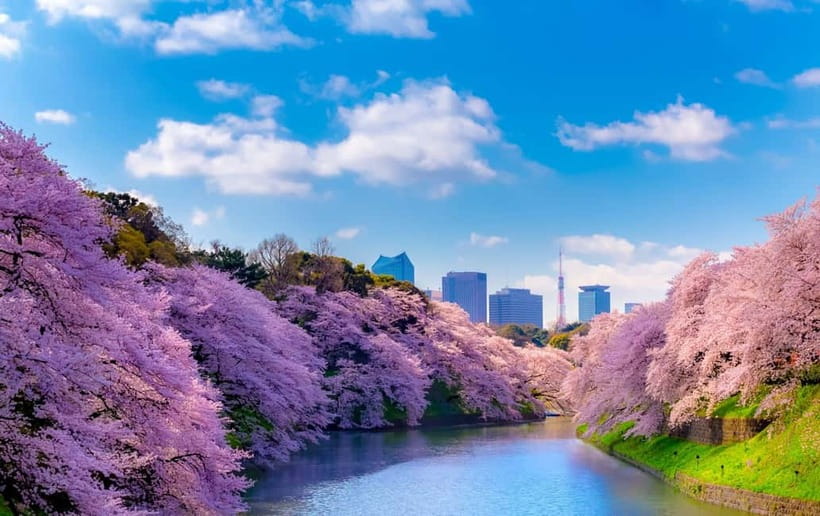
Chidorigafuchi is the tour’s long, scenic walk. The route beside the moat covers about 700 meters, with cherry trees framing the water and the historic moat area.
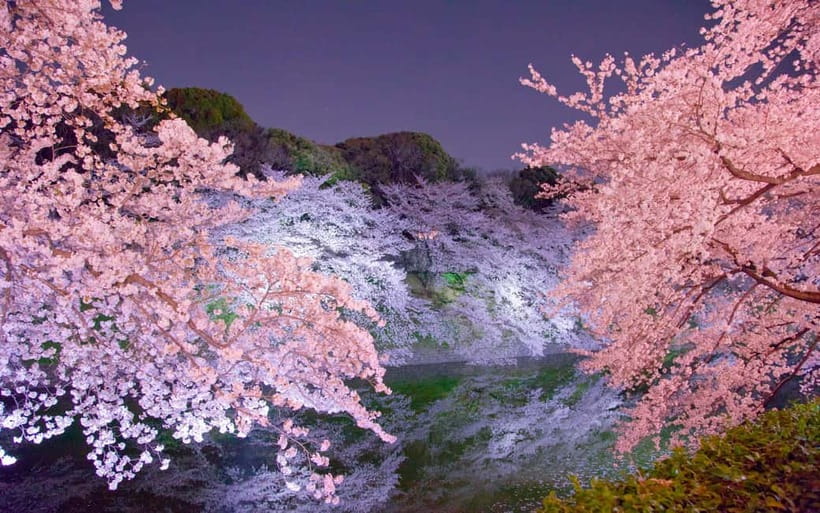
This is where you get the classic Tokyo blossom view: branches reaching toward the water, pale flowers reflected below, and the city close behind. The moat gives the trees a strong visual frame, so the walk feels different from both the garden and Ueno Park.
You should expect this portion to be taken on foot at a steady sightseeing pace. Comfortable shoes are important, especially because the tour includes several stops and transfers. If the weather is wet, the path can feel tiring sooner, so bring clothing that handles rain as well as wind.
The walk is also a good reminder that blossom viewing is not only about finding one perfect tree. The pleasure comes from seeing the trees change as you move along the water. Some sections may be fuller than others, and the guide can help point out the best views available that day.
The 30-minute boat ride
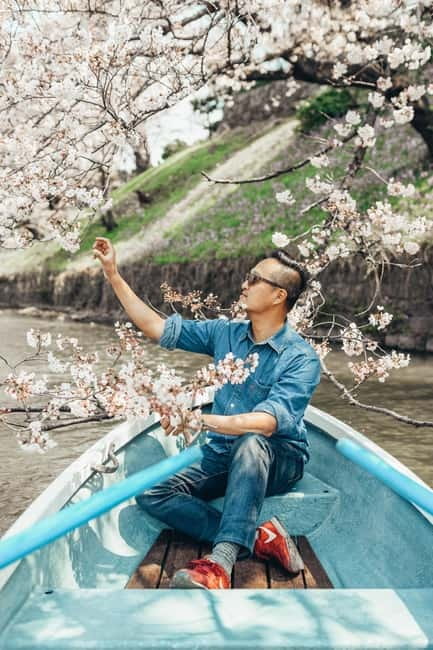
The included boat ride gives you a change of angle after the walking sections. From the water, the blossoms appear along the edge of the moat and in reflection, which can make even familiar views feel new.
Thirty minutes is long enough to settle into the ride without taking over the day. You can sit back, watch the trees pass, and give your feet a break. Since the ride is included in the $141 price, it adds real value compared with a walking-only itinerary.
There is an important condition, though. The boat operator makes the final safety decision based on current weather. Rain and strong wind can stop the boat even if the rest of the tour continues. One April outing lost the boat segment because of wet and windy conditions, and the guide offered an evening illumination option, though weather also prevented the lights from operating.
That is not a flaw in the guide’s control. It is simply part of booking a water activity during a changeable spring season. If the boat is essential to your plans, check the forecast and keep your expectations flexible. The ride is included, but it is not guaranteed in unsafe conditions.



What the $141 price really covers
At $141 per person, this is not a budget stroll. The price includes a six-hour live guide, entrance fees, and the 30-minute boat ride. It does not include train or bus fares, food, drinks, or hotel pickup and drop-off.
The value depends on what you want from your day. If you already know Tokyo well, can navigate the rail system comfortably, and only want to visit one park, you may prefer to plan your own route. You would save the guide fee and have more control over how long you stay.
I see stronger value for you if this is your first visit, if your time in Tokyo is limited, or if you want several major blossom sites linked together. The guide handles the route and gives you context while you focus on the scenery. You also avoid paying separate entrance fees at the garden and for the boat.
Remember to budget for local transport. The tour does not include train or bus fares, and you are expected to have your own IC card, such as Suica or Pasmo. This detail is easy to overlook when comparing prices. The tour is guided, but it is not all-inclusive.
The walking level and daily rhythm
Six hours sounds manageable, but the route includes repeated walks, station transfers, park paths, and the 700-meter Chidorigafuchi section. You should wear shoes that are comfortable for a full sightseeing day and dress for changing spring weather.
The tour runs in rain, so a wet forecast does not automatically cancel the walking itinerary. That can work in your favor if you are determined to see the blossoms, but it also means you need a rain jacket or another practical layer. An umbrella may help, though you should take care not to block the view for people around you.
The experience is not suitable for wheelchair users, children under five, or people over 95. Those restrictions, along with the amount of walking, make the tour best for adults and older children who can keep moving between stops.
Smoking is not allowed. Food and drinks are not included, so carry what you need or plan to buy refreshments during an appropriate break. The supplied details do not promise a scheduled meal stop, so do not book this expecting a food tour.
The guide can make or break the day
The guide is central to this experience. You are with the guide for six hours, and the route includes several transfers and public places where a little direction helps.
The strongest guide feedback centers on friendliness and care. Jim Smashy has been praised for being helpful, calm, informative, and attentive. Denise has been described as willing to tailor the outing and add an extra shrine visit when the group wanted more than the basic route.
You should also keep your expectations realistic about expertise. One outing was led by a young German guide who had lived in Japan for six months. He was friendly and helpful, but sometimes had to check information, and the quality of explanations felt uneven. That means the guiding standard may vary by the person leading your date.
The rating of 4.3 from seven reviews suggests a good but not flawless experience. The most consistent strengths are the friendly guides and the range of blossom locations. The main concerns are weather disruption, the hidden cost of local transport, and occasional limits in guide knowledge.
Cherry blossom timing requires a flexible plan
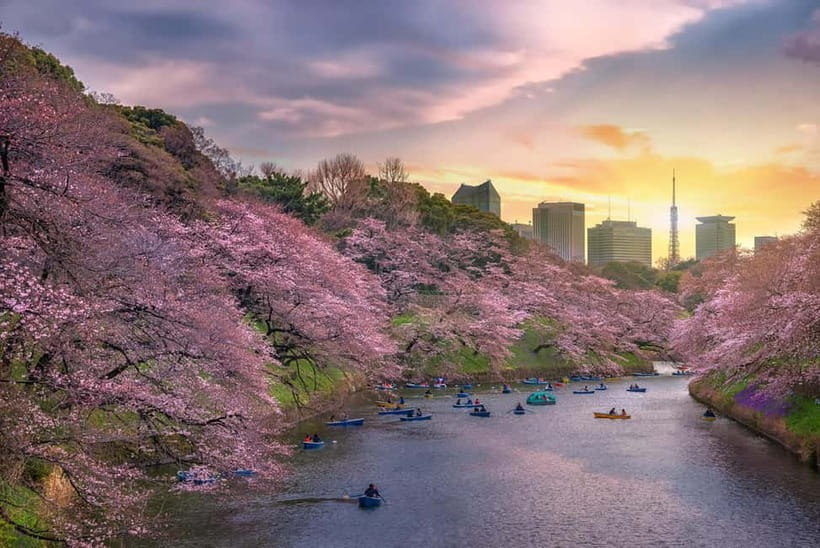
No cherry blossom tour can promise full bloom. Trees in different parks can peak at different times, and wind or rain can strip flowers quickly. A tour that runs from mid-March to late April gives you a reasonable seasonal range, but it cannot guarantee the exact scene shown in promotional photographs.
This route helps reduce the risk because it includes four kinds of viewing areas. If most trees at one park have finished, another stop may still offer something worthwhile. In one April outing, many trees were past their peak, but beautiful blossoms remained.
I would book this when your schedule gives you only one good blossom-viewing day and you want several chances in that day. If you can stay in Tokyo for a week and watch the forecast, you may prefer to choose your own timing. Either way, avoid treating the flowering dates as fixed.
Who should book this tour?
I would recommend it to you if you want a guided introduction to Tokyo’s main cherry blossom areas and do not mind walking. It is especially useful if you prefer a planned route, want the garden entrance and boat ride handled together, or feel uncertain about moving between several parts of the city.
It also suits photographers who want varied settings: formal garden views, open park scenes, a moat-side path, and reflections from the water. The changing scenery gives you more than one type of blossom photograph.
I would hesitate if you dislike group pacing, need guaranteed boat access, or want a private vehicle. I would also think twice if heavy rain is forecast, since the walking continues and the boat may close. Public transport costs and the lack of hotel pickup are small but important parts of the decision.
Cancellation is flexible up to 24 hours before the start for a full refund, and you can reserve now and pay later. That is useful when blossom timing is uncertain, though you should still check the forecast and availability before settling on a date.
Should you book the Tokyo Cherry Blossom Express Tour?
Book it if you want four distinct blossom settings in one organized half-day, with an English-speaking guide and a boat ride included. The combination of Koishikawa Korakuen, Ueno Park, Chidorigafuchi, and the water makes good use of six hours.
Skip it if you want a slow, self-directed day or if rain would ruin the experience for you. The best reason to book is not a guarantee of perfect full bloom. It is the chance to cover several strong Tokyo viewing areas while a guide manages the route and adds local context. Keep your shoes comfortable, load an IC card, and treat the boat as weather dependent. That is the practical way to get the most from the $141 price.
FAQ
How long does the Tokyo Cherry Blossom Express Tour last?
The tour lasts six hours, including the guided visits, walking sections, public transport transfers, and the planned 30-minute boat ride.
Where does the tour meet?
It meets at the West Entrance of Koishikawa Korakuen Garden. The entrance is about a three-minute walk from Exit C3 at Iidabashi Station on the Toei Oedo Line, or about an eight-minute walk from the JR Sobu Line East Exit.
Is transportation included in the tour price?
No. Train and bus fares are not included. You are expected to pay your own local transport costs and have an IC card such as Suica or Pasmo.
Is the boat ride guaranteed?
No. The 30-minute boat ride is included, but the boat operator decides if conditions are safe. Rain and strong wind can cause the ride to close.
What language is the tour conducted in?
The tour is conducted in English with a live tour guide.
What should I bring?
Bring comfortable shoes and clothing suited to the weather. The tour operates in all weather conditions, so rain protection may be useful during spring showers.
Who cannot join this tour?
The tour is not suitable for children under five, wheelchair users, or people over 95 years old.
More Boat Tours & Cruises in Tokyo
More tours in Tokyo we've reviewed












Cruises & Boat Tours, compared.
 ★ 4.0Mt Fuji & Hakone Cruise, Drum Show Bullet Train 1 Day from TokyoFrom $149
 ★ 4.4Tokyo Mt Fuji 5th St & Hakone Cruise Bus Tour w/Bullet TrainFrom $15410 hours
 ★ 4.2Tokyo: Mt. Fuji 5th Station & Hakone Cruise 1-Day Bus TourFrom $12911 hours
 ★ 4.7Tokyo: Meiji Shrine, Asakusa, Skytree Bus Tour and CruiseFrom $12210 hours
 ★ 4.0Mt Fuji & Hakone Cruise, Drum Show Bus 1 Day from TokyoFrom $122
 ★ 4.6Sumida River: Japanese Traditional Yakatabune Dinner CruiseFrom $1032h 30m