Reviewed · SUSHI MAKING CLASSES
AKEMI’s SUSHiKiTCHEN: A fun sushi cooking lesson in Tokyo
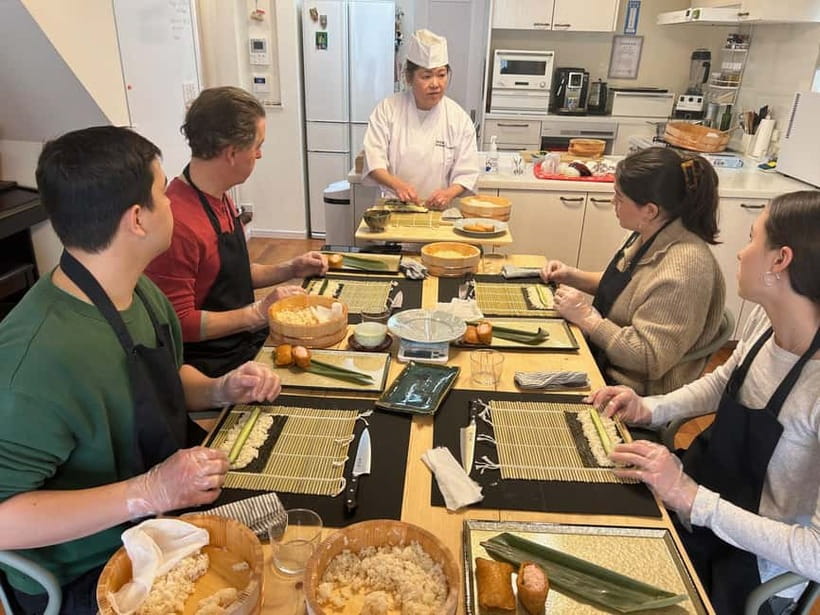
AKEMI’s SUSHiKiTCHEN brings sushi making into a real Tokyo home, where chef Akemi Castellano teaches four styles rather than giving you a quick roll-and-leave demonstration. I like the small group, limited to six, and the chance to learn why sushi is made the way it is, not just how to shape it. I also like the easy access from Shinjuku and Shibuya, with station pickup available if you prefer help finding the house.
In This Article
- Key points to know before booking
- A Tokyo sushi lesson with a personal welcome
- The first lesson is about rice, not raw fish
- Four sushi styles, four different techniques
- Nigiri, the test of a light touch
- Maki-sushi, the familiar rolled option
- Gunkan, the battleship shape
- Inari, the tofu-pocket surprise
- What makes the meal more than a cooking class
- Why the small group matters
- Getting there from Tokyo’s main hubs
- Is $103 a fair price?
- Who should book this experience?
- Practical details for a smooth visit
- Should you book AKEMI’s SUSHiKiTCHEN?
- FAQ
- How long does AKEMI’s SUSHiKiTCHEN experience last?
- Which kinds of sushi will I make?
- Is food included?
- Is there a vegetarian option?
- Can the activity accommodate allergies?
- Where is the meeting point?
The main consideration is the fixed menu. You learn Inari, gunkan, maki, and nigiri, but you cannot choose which sushi types you make. The class also cannot accommodate food or animal allergies, and children under 10 are not suitable for this activity.
Key points to know before booking
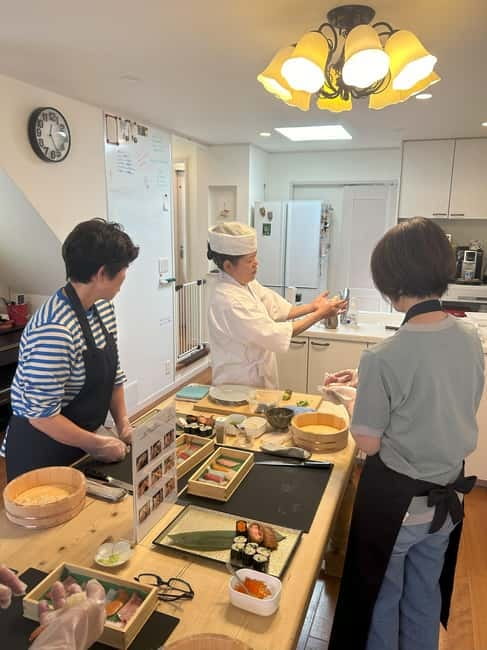
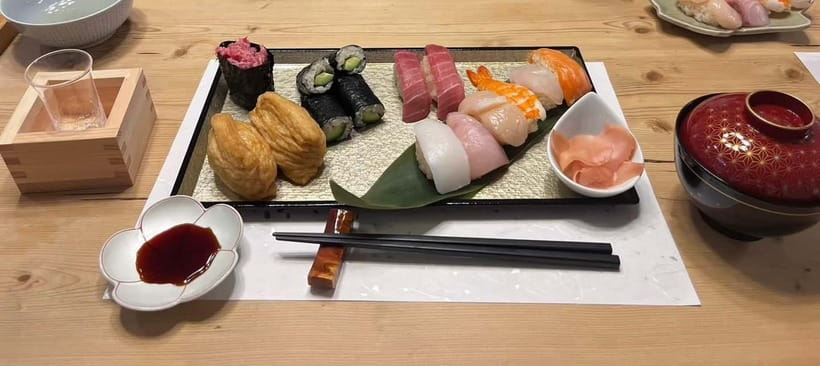
Four classic sushi styles: Make inari, gunkan, maki-sushi, and hand-pressed nigiri.
A genuine home setting: The lesson takes place in Akemi’s house, with a warm, family-style welcome.
Small class size: No more than six participants means you should receive useful hands-on guidance.
Food culture included: Learn about Edo-style sushi, vinegar rice, fish preparation, and the place of sushi in Japanese cooking.
A complete meal: Eat the sushi you prepare, with Japanese sake and dessert included.
Flexible timing: Choose a morning class with lunch or an afternoon class with dinner.
A Tokyo sushi lesson with a personal welcome
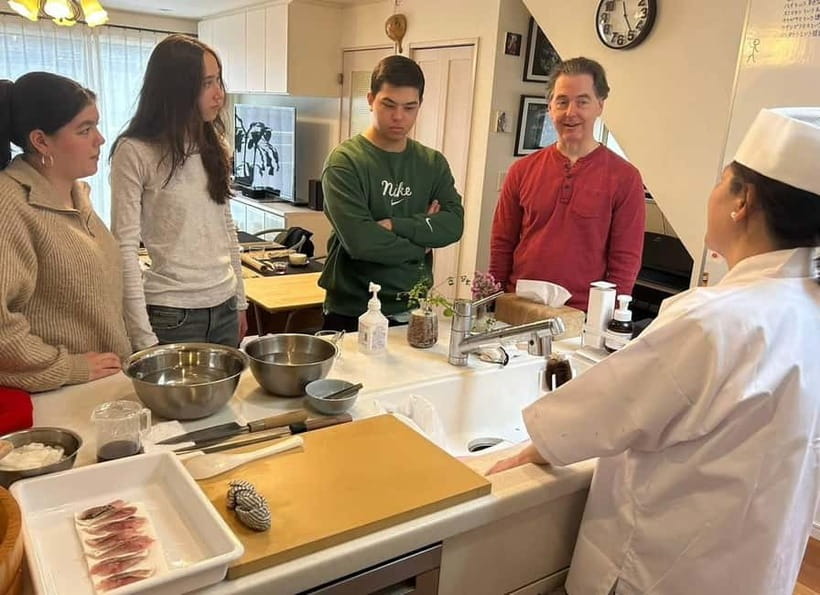
The appeal here is simple: you are not sitting in a restaurant watching a chef work behind glass. You enter a home and take part in the process from the first bowl of rice to the final piece of sushi.
Akemi is a trained sushi chef, and her husband Dan helps create the friendly atmosphere. The class is taught in English and Japanese, so you can follow the instructions without needing Japanese cooking vocabulary. The setting is relaxed, but the lesson still has a professional structure.
You can find the house yourself with Google Maps or a similar navigation app. From the nearest station, the walk takes about 10 minutes through a pleasant residential neighborhood. If you would rather not search for a private home in an unfamiliar part of Tokyo, ask to be met at the station. That small choice can make the start of the experience much less stressful.
A welcome drink may be offered before the cooking begins. One special option mentioned for the welcome is Sakura, a Japanese cherry-blossom drink. It is a fitting start to a meal that connects everyday food with Japanese custom.
A few more Tokyo tours and experiences worth a look
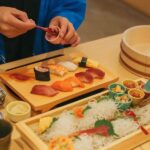
The first lesson is about rice, not raw fish
Good sushi begins with rice, and this class makes that clear. Akemi leads you through the preparation of vinegar rice before you start shaping anything.
That matters because sushi rice is not simply ordinary cooked rice with a piece of fish placed on top. The seasoning, texture, and temperature all affect the finished piece. You learn how vinegar becomes part of the flavor and why careful preparation gives sushi its balance.
The lesson also includes a demonstration of how fish are prepared for sushi. You should not expect a full fish-market or professional kitchen apprenticeship, but you will see the care that goes into preparing the seafood, known in sushi terms as neta.
I like this order of instruction. It gives you a useful foundation before the more visual parts of the class begin. If you have made sushi at home and struggled with rice that was too wet, too dry, or poorly seasoned, this part may be more valuable than the rolling itself.
Four sushi styles, four different techniques
The set menu takes you through four familiar types of sushi. Each one asks for a different movement and gives you a better sense of the range of Japanese sushi.
Nigiri, the test of a light touch
Nigiri-zushi is the hand-pressed style most people picture when they think of traditional sushi. You form a small piece of vinegar rice and place seafood on top.
The trick is not to crush the rice into a hard block. The shape needs to hold together while remaining light and pleasant to eat. Akemi guides you through the hand position and the amount of pressure needed.
This is likely the most demanding part of the class for beginners. A professional-looking piece of nigiri takes practice, and your first attempts may look less tidy than Akemi’s. That is part of the fun, and you still get to eat the results.
Maki-sushi, the familiar rolled option
Maki-sushi is rolled sushi, made with rice and fillings wrapped in seaweed. You learn how to spread the rice, arrange the filling, and roll the sushi into a firm shape.
The finished roll needs enough pressure to hold together without squeezing out the filling. Cutting it cleanly is another small challenge. A sharp knife and an even roll make a noticeable difference.
This is the style that many people have tried to make at home, often with mixed results. The benefit of learning it from Akemi is that you can watch the process at close range and correct your technique before the roll falls apart.
A few more Tokyo tours and experiences worth a look
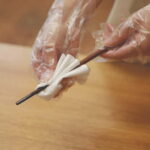
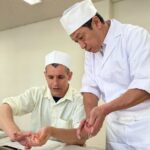


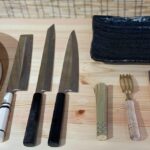
Gunkan, the battleship shape
Gunkan, also called battleship sushi, uses a strip of seaweed around a small mound of rice. The seaweed creates a raised edge that holds a soft topping.
It is a clever form, and the name makes sense once you see the shape. Compared with nigiri, gunkan gives you a different lesson in structure. You are building a container rather than placing a topping directly on the rice.
This style also makes the set menu feel more varied. You are not repeating the same rice-and-seafood combination four times. Each form has its own purpose and appearance.
Inari, the tofu-pocket surprise
Inari sushi uses fried tofu pockets filled with sushi rice. It is usually the most unexpected style for people who think sushi must involve raw fish.
The tofu gives the piece a sweet, savory flavor and a soft texture. It is also easier to handle than nigiri, which makes it a welcome change during the lesson.
One particularly useful detail for vegetarians is that a vegetarian option is available if you request it when booking. Ask in advance rather than waiting until you arrive, since the menu is arranged ahead of time.
What makes the meal more than a cooking class
At the end, you eat the sushi you made for lunch or dinner. This gives the three-hour session a satisfying finish: the cooking is not a demonstration followed by a small sample, but a meal built from your own work.
Japanese sake is included for adults, along with dessert. Matcha tea and extra drinks have also been part of the welcome and meal experience, although you should treat the listed sake and dessert as the main confirmed additions.
Eating your own sushi changes how you pay attention to it. You notice the rice texture, the shape of the pieces, and the difference between a roll and a hand-pressed piece. Even a slightly uneven nigiri becomes a useful lesson when you can taste the effect of your technique.
The meal also leaves room for conversation about Japanese food culture and the history of sushi. The focus includes Edo-style sushi, which connects the food you are making with Tokyo’s older identity as Edo. That cultural context gives the lesson more weight than a standard recipe class.
Why the small group matters
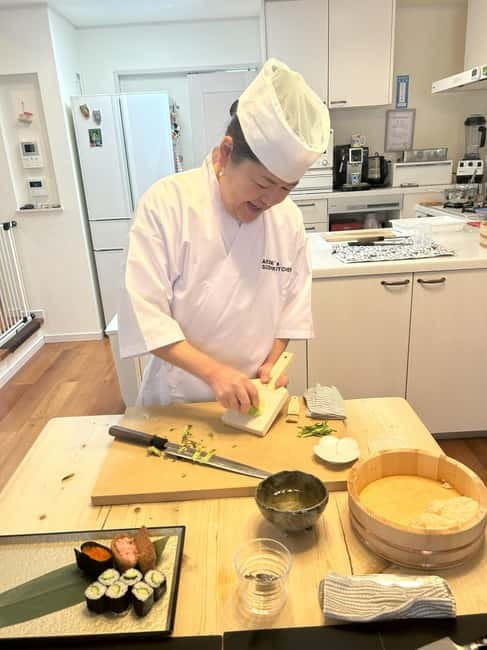
With a maximum of six participants, the class is small enough for hands-on help. Sushi requires close attention to small details, such as how much rice to use, where to place the filling, and how firmly to press or roll. In a large class, those corrections can be easy to miss.
A small group also suits the home setting. You are not part of a crowd moving through stations. The experience feels more like being welcomed into a Japanese family kitchen, while still benefiting from Akemi’s professional training.
The group can be even smaller. One family of four had a private-feeling session, which shows why this could work well for a family group or a few friends booking together. Still, remember the age rule: children under 10 are not suitable for the activity.
The home atmosphere is a major part of the value, but it is also why you should set your expectations correctly. This is not a polished restaurant dining room or a stage-style culinary show. You are visiting someone’s home, so the appeal lies in personal contact and participation rather than ceremony.
Getting there from Tokyo’s main hubs
The house is conveniently placed for access from Shinjuku and Shibuya, two of Tokyo’s main transport hubs. That makes it easier to fit the class into a sightseeing day without crossing the entire city.
Allow time for the final walk. The station-to-house journey takes about 10 minutes, and the route passes through a residential neighborhood rather than a major tourist street. Use Google Maps, and check the meeting instructions before leaving your hotel.
Station pickup is a useful option if you are concerned about finding the correct entrance. Private homes can be harder to identify than restaurants, especially in Tokyo’s dense neighborhoods. Asking to meet at the nearest station costs nothing and may help you arrive calm and on time.
You can choose a morning lesson with lunch or an afternoon lesson with dinner. I would select the morning session if you want to keep the evening open for Tokyo sightseeing. The afternoon session may suit you better if you prefer a slower start and want the class to become your evening meal.
Is $103 a fair price?
At $103 per person, this is not a budget meal or a cheap cooking demonstration. It is a three-hour, small-group class with a trained sushi chef, ingredients, instruction, a prepared meal, sake, and dessert.
The value depends on what you want from sushi in Tokyo. If you only want to eat excellent nigiri, a sushi restaurant may be the better use of your money. You can spend less or more depending on the restaurant, but you will not get the hands-on lesson or the home setting.
If you want to understand sushi and take part in making it, the price is easier to justify. You are paying for the instruction, the carefully selected rice, vinegar, seafood, and other ingredients, plus the time Akemi spends correcting and guiding each participant.
The fixed menu is the clearest limitation. You cannot select the kinds of sushi you will make, so this is not the right choice if you have your heart set on a particular fish or specialty. The tradeoff is that you receive a balanced introduction to four important styles instead of focusing on only one.
Who should book this experience?
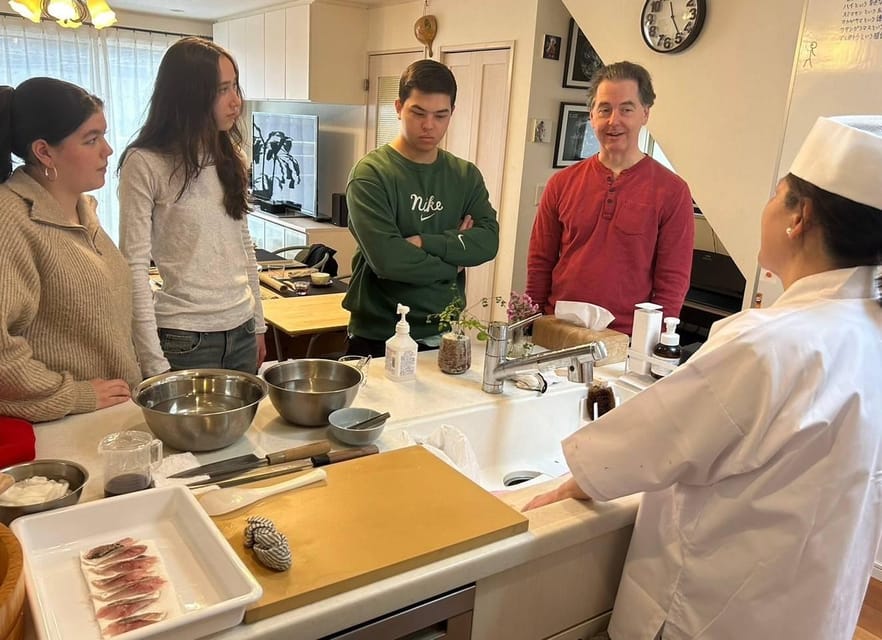
I would recommend it to adults, couples, families with older children, and small groups of friends who care about food culture as much as the final meal.
It is especially well suited to you if you:
Want a personal experience in a Japanese home
Enjoy learning practical food skills
Like sushi but want to understand the work behind it
Prefer a small group to a large cooking studio
Want an activity that includes both lunch or dinner and cultural explanation
Are happy to follow a fixed menu
It is less suitable if you have food or animal allergies, since the activity cannot accommodate them. It is also not ideal if you want a fully customizable menu, a luxury restaurant setting, or a class aimed at very young children.
Vegetarians can request a vegetarian option when booking. Be specific about your needs in advance, since the class cannot make last-minute allergy accommodations.
Practical details for a smooth visit
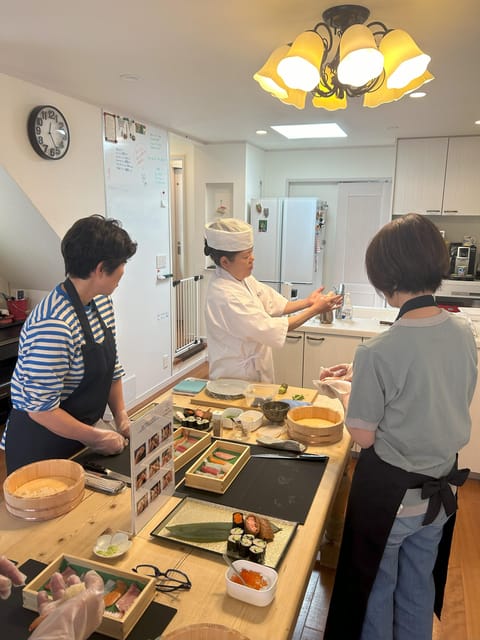
The lesson lasts three hours, which is long enough to teach several techniques without turning the activity into a full-day commitment. Check the available start times when booking, since the exact schedule can vary.
The instructors speak English and Japanese. That makes the class accessible to international visitors, while still keeping a natural connection to Japanese language and food customs.
The overall tone is welcoming and organized. Akemi and Dan work as a team, and the personal attention is one of the strongest reasons to choose this class over a larger commercial cooking session.
Free cancellation is available up to 24 hours before the activity for a full refund. You can also reserve and pay later, which is helpful when your Tokyo schedule is still changing.
Should you book AKEMI’s SUSHiKiTCHEN?
Book this class if you want more than a sushi lunch. You will learn the role of vinegar rice, see how fish is prepared, practice four distinct forms, and sit down to eat what you made in a real Tokyo home.
I especially like the combination of professional instruction and family warmth. The station pickup, small group, English guidance, sake, dessert, and flexible lunch or dinner timing add practical value.
Skip it if you need an allergy-safe kitchen, want to choose every dish yourself, or are mainly looking for the cheapest way to eat sushi in Tokyo. For everyone else, the $103 price is reasonable for a three-hour cultural activity that gives you a meal, a skill, and a better understanding of one of Japan’s best-known foods.
FAQ
How long does AKEMI’s SUSHiKiTCHEN experience last?
The sushi lesson lasts three hours.
Which kinds of sushi will I make?
You will make four kinds: Inari, Gunkan or battleship sushi, Maki-sushi, and traditional Nigiri sushi.
Is food included?
Yes. You eat the sushi you prepare for lunch or dinner. Japanese sake and dessert are included.
Is there a vegetarian option?
Yes. A vegetarian option is available, but you need to state your preference when booking.
Can the activity accommodate allergies?
No. The experience cannot accommodate customers with food or animal allergies. If you have an allergy, you should inform the provider beforehand, but you should not assume the class can safely meet that need.
Where is the meeting point?
The experience takes place at Akemi’s home, with access from Shinjuku and Shibuya. You can find the house using Google Maps, or request to meet at the nearest train station.
More Workshops & Classes in Tokyo
More Sushi Making Classes in Tokyo
More tours in Tokyo we've reviewed












Sushi Making Classes, compared.
 ★ 5.0Sushi Making Tokyo Roll and Authentic Japanese Sushi ClassFrom $59
 ★ 4.9Tokyo: Roll and Authentic Sushi Making Class in AsakusaFrom $581h 40m
 ★ 4.9Tokyo: Sushi Making Class in a Happi Coat near a Famous SpotFrom $421h 30m
 ★ 5.0Sushi Making Tokyo! Popular Maki Sushi & Japanese Sushi(+Recipe!)From $63
 ★ 5.0Tokyo Sushi Making Class in Tsukiji with Professional ChefFrom $49
 ★ 5.0Tokyo Night Foodie Tour in Shinjuku – Seasonal Sushi, Wagyu BeefFrom $111