Reviewed · TEA CEREMONY & MATCHA
Matcha table tea ceremony experience in Tokyo
The best part of this Tokyo experience is its friendly take on a formal Japanese tradition. You sit at a table instead of on the floor, watch master instructor Masumi Matsumoto prepare matcha, then make a bowl yourself. It is a useful cultural lesson, not just a photo stop.
In This Article
- Key points at a glance
- A calmer way to meet Japanese tea culture
- Meeting Masumi Matsumoto in Meguro
- The first half: watch, taste, and learn the manners
- The second half: whisk your own matcha
- Why the chair-and-table format works
- A small group makes the lesson personal
- Is $65.04 a fair price?
- Planning the outing around Toritsudaigaku Station
- Who will enjoy this most?
- Should you book the matcha table tea ceremony?
- FAQ
- Where does the matcha table tea ceremony take place?
- How long does the activity last?
- How many people can join the session?
- Do I have to sit on the floor?
- Who teaches the tea ceremony?
- Is the experience taught in English?
- Is Japanese wagashi included?
- Do I get to make my own matcha?
- What is the cancellation policy?
I like the small maximum group of five, which gives the session a personal feel. I also like that the lesson is practical: you learn a whisking method you can repeat at home, and the seasonal Japanese sweet gives the tea a proper partner.
The main consideration is the price, $65.04 per person, for about two hours. That is fair if you want instruction and hands-on participation, but less appealing if you only want to sip matcha briefly or see a highly formal ceremony from a distance.
Key points at a glance
- Chair-and-table format: Enjoy the ceremony without sitting on the floor, a helpful choice for anyone with stiff knees or limited comfort.
- Masumi Matsumoto leads the session: She is a master instructor with the Japan Table Tea Ceremony Association and explains the tea, manners, and spirit in English.
- You make your own matcha: The second half gives you direct practice with a traditional tea whisk.
- Seasonal wagashi is included: The Japanese sweet changes with the time of year and is served with the matcha.
- Tiny group, easy setting: The maximum is five people, and the meeting point is a two-minute walk from Toritsudaigaku Station.
- Family-friendly teaching: The relaxed approach has worked well for children and adults who feel nervous about Japanese etiquette.
A calmer way to meet Japanese tea culture
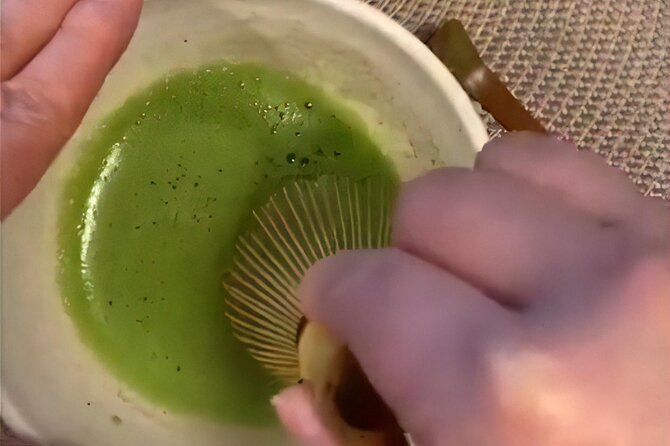
Tokyo offers plenty of polished cultural activities, but many give you little to do beyond watching. This one gives you a role. You see how the tea is prepared, learn why certain actions matter, and then pick up the whisk yourself.
That hands-on turn is important. Matcha preparation can look simple when an expert does it. Once you try it, you notice the pace, the angle of the whisk, and the care needed to create a smooth drink. You are not expected to arrive with any skill. The teaching is designed for beginners.
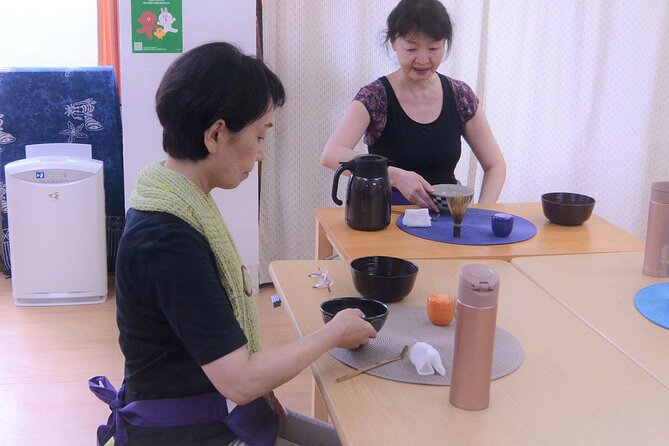
The setting also removes one common barrier. This is a table tea ceremony, meaning you sit in a chair at a table rather than kneeling or sitting on the floor. You still learn the manners and spirit of tea ceremony, but without making physical discomfort part of the lesson.
I see this as a good middle ground. It is more involved than ordering matcha at a café, but less intimidating than a strict ceremony where every movement feels like a test.
A few more Tokyo tours and experiences worth a look

Meeting Masumi Matsumoto in Meguro
Masumi Matsumoto is a Master Instructor of the Japan Table Tea Ceremony Association. That title matters here because the session is not simply a demonstration of how to stir green tea. You receive an explanation of the tradition, its manners, and the thinking behind the preparation.
English is available for the teaching. That is especially useful because tea ceremony has small details that can be hard to understand through gestures alone. The experience has also been comfortable for families, with children able to follow the explanations and take part.
Masumi’s manner is described as warm, friendly, and careful rather than stiff. That tone fits the table format. You can ask questions, concentrate on the steps, and enjoy the quiet parts of the ceremony without feeling that you are about to make a serious mistake.
The meeting point is at 1-chōme-9-1 Nakane in Meguro City. It is about a two-minute walk from Toritsudaigaku Station, so you do not need to build a long transfer or taxi ride into your plans. The activity ends back at the same meeting point.
Meguro is also a useful part of Tokyo for a slower afternoon. The wider area includes the Meguro River, Nakameguro Park, and Jiyugaoka, known for its sweets shops and dessert-focused attractions. You can pair the tea session with a walk or another food stop, though the activity itself takes place at the stated meeting point.
The first half: watch, taste, and learn the manners
The session begins with an explanation of how to enjoy the tea ceremony. This gives you a frame for what follows. Instead of treating each movement as a rule to memorize, you learn how the gestures express care, respect, and attention.
Masumi then prepares matcha for you. Watching an instructor handle the tea is one of the most satisfying parts of the session because you can focus on the rhythm without worrying about your own technique.
The prepared tea is served with a seasonal Japanese sweet, known as wagashi. The wagashi changes with the season, so the small plate is not fixed year-round. Its sweetness also helps balance matcha’s grassy, slightly bitter flavor.
This is a good moment to slow down. The ceremony is not built around rushing from one photo to the next. You have time to notice the aroma of the tea, the quiet of the room, and the relationship between sweet and bitter flavors.
The experience also introduces the broader spirit of Japanese tea ceremony. You will not learn every school, historical period, or formal rule in two hours, but you will gain a clear sense of why preparation and hospitality matter.
The second half: whisk your own matcha
After watching and tasting, you prepare and serve tea yourself. This is the part that turns the activity into a lesson you can take home.
You use a special matcha whisk and follow the method explained by Masumi. The focus is not on producing a perfect bowl on the first attempt. It is on understanding the process and becoming comfortable with the tools.
I like this structure because the demonstration comes first. You see the technique before trying it, and you already know what the finished tea should look and taste like. The instructor can then guide you through your own preparation.
You also get a chance to serve the tea, which adds another layer to the lesson. Tea ceremony is not only about making a drink for yourself. It includes consideration for the person receiving it, the presentation, and the pace of the exchange.
The skill is simple enough to repeat at home, provided you have matcha, hot water, and a whisk. The activity does not promise to turn you into a tea master, and it should not. Its value is that you leave with a basic method and a better understanding of what you are doing.
Why the chair-and-table format works
Traditional tea ceremony is often pictured with guests seated on the floor. For some people, that position is part of the experience. For others, it can distract from everything else.
Here, the chair-and-table format lets you give your attention to the tea, the explanation, and your own movements. You do not need to worry about whether you can sit comfortably for the full session.
This design also makes the activity suitable for a wider range of ages. Families can participate together, and children do not have to manage a difficult sitting position while trying to follow unfamiliar manners.
The trade-off is that this is not the same physical setting as a fully formal floor-based tea ceremony. If you are specifically seeking the strictest traditional presentation, this format may feel more casual. If you want a welcoming introduction that preserves the main ideas of tea ceremony, it makes good sense.
The relaxed atmosphere is part of the appeal. You can take the customs seriously without treating them as a performance exam.





A small group makes the lesson personal
The maximum group size is five people. That is small enough for the instructor to notice how each person is handling the whisk and to explain a step again when needed.
A large group would change the character of this activity. You might spend more time watching other people and less time practicing. With five or fewer, the session has a better chance of feeling like a lesson rather than a staged presentation.
The size also suits families. The available comments describe children becoming interested after the initial nerves faded, helped by clear English explanations and a friendly teacher. That makes this a stronger choice for parents than a ceremony that depends on long periods of silent observation.
Still, you should book with the group limit in mind. A small class means limited spaces, and the average booking lead time is about 98 days. If this is important to your Tokyo schedule, reserve early rather than hoping to find a last-minute opening.
Is $65.04 a fair price?
At $65.04 per person, this is not the cheapest way to drink matcha in Tokyo. A café bowl costs much less, and you can enjoy one without committing two hours.
The comparison is not really café versus ceremony, though. You are paying for instruction from a master teacher, seasonal wagashi, the small group setting, English guidance, and the chance to prepare and serve the tea yourself. Those extras make the price easier to justify.
I would call it good value for someone who wants a real introduction to Japanese tea customs. You receive context, a demonstration, tasting, and practice in one sitting. The take-home skill adds value because the lesson continues after your trip.
The price is harder to justify if your main goal is a luxurious room, an elaborate meal, or a lengthy formal ritual. The available details point to a compact, educational activity with a casual tone. Know what you are buying, and the cost makes more sense.
Group discounts are available, so families or parties should check whether the reduced rate applies to their booking. The exact discount amount is not provided.
Planning the outing around Toritsudaigaku Station
The short walk from Toritsudaigaku Station is one of the practical strengths of this activity. You can reach the meeting point without a complicated final transfer or a long walk through unfamiliar streets.
Allow enough time to find 1-chōme-9-1 Nakane and arrive ready for the start. Confirmation is provided within 48 hours of booking, subject to availability, so check that your reservation is confirmed before treating the session as fixed.
The activity lasts about two hours and returns you to the meeting point. That makes it easy to plan before or after other stops in Meguro. A walk near the Meguro River or Nakameguro Park would suit the reflective mood of the tea session, while Jiyugaoka offers a natural follow-up for anyone who likes Japanese sweets.
Mobile tickets are supported. Free cancellation is available up to 24 hours before the start time for a full refund. Cancellations or changes inside that 24-hour window are not accepted, and the cut-off follows Tokyo local time.
Who will enjoy this most?
I would recommend this to first-time visitors who want cultural context without a highly formal atmosphere. It is also a good pick for families, couples, and solo visitors who prefer to learn by doing.
You will get the most from it if you are curious about small details: how matcha is whisked, how a sweet fits into the tasting, and why gestures and manners matter. You do not need previous tea ceremony experience.
The chair seating is a real advantage if floor sitting is uncomfortable. English instruction helps if you want more than a visual demonstration. The group size suits anyone who values questions and direct help.
I would be less likely to choose it for a visitor who wants a grand, old-style tea house setting or a full formal ceremony with no casual elements. The table format is comfortable and accessible, but it is intentionally different from the image many people have in mind.
Should you book the matcha table tea ceremony?
Book it if you want to understand matcha rather than simply consume it. Masumi Matsumoto’s English teaching, the maximum group of five, the seasonal wagashi, and the chance to whisk your own tea create a well-shaped two-hour introduction.
Families should give it serious thought, since children can take part and the chair seating keeps the experience comfortable. It also fits neatly into a Meguro afternoon, thanks to the two-minute walk from Toritsudaigaku Station.
Skip it if you want a quick tasting or a lavish, highly formal production. At $65.04, the value comes from learning and participation. For a small, approachable look at Japanese tea culture that you can partly recreate at home, that is a worthwhile trade.
FAQ
Where does the matcha table tea ceremony take place?
It takes place at 1-chōme-9-1 Nakane, Meguro City, Tokyo 152-0031, Japan. The location is about a two-minute walk from Toritsudaigaku Station.
How long does the activity last?
The experience lasts approximately two hours.
How many people can join the session?
The activity has a maximum of five participants.
Do I have to sit on the floor?
No. This is a table tea ceremony, so you sit on a chair at a table instead of sitting on the floor.
Who teaches the tea ceremony?
Masumi Matsumoto leads the session. She is a Master Instructor of the Japan Table Tea Ceremony Association.
Is the experience taught in English?
The available information and family experiences indicate that Masumi explains the ceremony in English.
Is Japanese wagashi included?
Yes. You enjoy matcha prepared by the instructor with a seasonal Japanese sweet. The wagashi changes with the seasons.
Do I get to make my own matcha?
Yes. In the second half, you use a tea whisk to prepare and serve your own tea.
What is the cancellation policy?
You can cancel at least 24 hours before the experience start time for a full refund. Cancellations or changes made less than 24 hours before the start time are not accepted, and the local Tokyo time cut-off applies.
More Tea Ceremony & Matcha in Tokyo
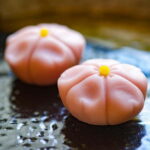


More tours in Tokyo we've reviewed












Tea Ceremony & Matcha, compared.
 ★ 5.0Matcha Making Class in Tokyo with Authentic Japanese Sweets SetFrom $21
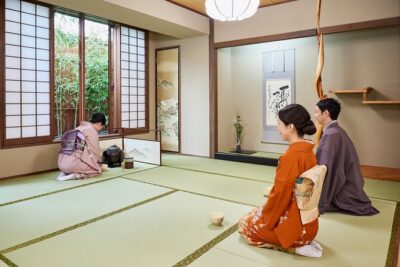 ★ 5.0Kimono Tea Ceremony at Tokyo, Asakusa MaikoyaFrom $55
 ★ 5.0Tokyo: Traditional Tea Ceremony with a Tea MasterFrom $381 hour
 ★ 4.5Dynamic Tokyo: Tokyo Tower, Tea Experience, Bay Cruise Day TourFrom $99
 ★ 4.9Tokyo: Matcha Making Experience with Mochi Sweets in AsakusaFrom $221 hour
 ★ 4.7Tokyo: Matcha and Kimono ExperienceFrom $57