Reviewed · UENO & YANAKA WALKS
Japanese Food Experience Night Tour in Ueno
Ueno is a fine place to eat if you want Tokyo beyond the polished shopping districts. This 210-minute evening tour leads you to restaurants used by local people, with food such as yakitori, yakiton, sashimi, and ramen. I like the mix of eating and town stories, and I like having an English-speaking guide to explain the customs behind each stop.
In This Article
- Key points to know before booking
- Why Ueno makes a good food-tour base
- Starting at Hotel Monday Premium Ueno Okachimachi
- Three or four restaurants, not one oversized meal
- Yakitori and yakiton
- Sashimi and other small dishes
- Ramen to finish the food trail
- Six drinks and a look at Japanese drinking culture
- What the English-speaking guide adds
- How the small-group format changes the evening
- Is $103 a fair price for the Ueno food tour?
- Who should book this evening in Ueno?
- Booking, cancellation, and practical details
- My booking verdict for this Ueno food experience
- FAQ
- Where does the Japanese Food Experience Night Tour in Ueno meet?
- How long does the tour last?
- How many restaurants does the tour visit?
- What food is included?
- How many drinks are included?
- Is a guide included?
- What is the maximum group size?
- Is transportation to the meeting point included?
- Can people with food allergies join?
- Can I cancel for a refund?
The small group is limited to 10 people, which should make conversation easier. I also like that the food is not limited to one dish or one restaurant: you get about nine dishes at three or four places, plus around six drinks. The main consideration is that this is an alcohol-focused night out, and people under 20, wheelchair users, and those with food allergies cannot join.
Key points to know before booking
- Ueno rather than the usual tourist districts: Visit local-style restaurants in a part of Tokyo known for everyday eating and drinking.
- Around nine dishes plus ramen: Expect a broad tasting menu that can include yakitori, yakiton, sashimi, and other Japanese foods.
- About six drinks included: Sake, highballs, hoppy, and other Japanese drinks are part of the evening.
- Three or four restaurants: Moving between venues gives you more variety than a meal in one dining room.
- Small group of no more than 10: The format suits people who want to ask questions and meet fellow diners.
- English-speaking local guide: Guides explain food, drinks, Ueno, and aspects of modern Japanese life during the walk.
Why Ueno makes a good food-tour base

Tokyo’s best-known names often send first-time visitors toward Ginza, Shibuya, or Shinjuku. Ueno offers a different feel. It is a place where Japanese people gather to eat and drink, and the tour uses that everyday side of the city as its setting.
That matters because food tells you plenty about Tokyo. A dish on a plate is only part of the story. You also want to know how people order it, what they drink with it, how a small restaurant works, and why a particular neighborhood has its own eating habits. Your guide fills in those gaps while taking you from one stop to the next.
I would not book this expecting a formal cooking class or a carefully staged fine-dining menu. The point is to visit casual restaurants and bars selected by the operator, then try a broad range of Japanese food in one evening.
A few more Tokyo tours and experiences worth a look
Starting at Hotel Monday Premium Ueno Okachimachi

The meeting point is the restaurant on the 14th floor of Hotel Monday Premium Ueno Okachimachi. You are responsible for getting there, since transportation to the meeting point is not included.
The hotel meeting point gives the evening a clear starting place, which helps in a city where a station can have several exits and a neighborhood can change quickly from one block to the next. Check the available starting time when you book, and arrive ready to walk between venues.
Wear comfortable shoes. You should also leave large bags and luggage behind, since these are not allowed on the tour. That is a practical point, especially if you are coming straight from a train station or hotel with a suitcase.
At the beginning, you receive a welcome drink and a small souvenir. You will also be given a document explaining the participation conditions. You must read and sign the consent form before taking part, so allow enough time for that process rather than arriving at the last second.
Three or four restaurants, not one oversized meal
The evening includes food at about three or four restaurants, with around nine dishes in total and ramen. The exact order and menu can change without notice, so you should treat the published food list as a guide to the style and range rather than a fixed promise of every dish.
That flexibility is useful in Japanese dining. Restaurant menus depend on supply, opening arrangements, and the operator’s choices for that evening. It also means you should ask your guide what is being served as each dish arrives, especially if you are unfamiliar with the ingredients.
Yakitori and yakiton
Yakitori means grilled chicken, while yakiton generally refers to grilled pork. Both are closely linked with casual Japanese drinking spots, where small skewers pair well with beer, sake, or a mixed drink.
These dishes give you a quick sense of the tour’s character. They are not meant to be a long, formal course. You try a few portions, talk with the guide, and then continue through the neighborhood. If you like smoky grilled food and small shared plates, this part should be a strong fit.
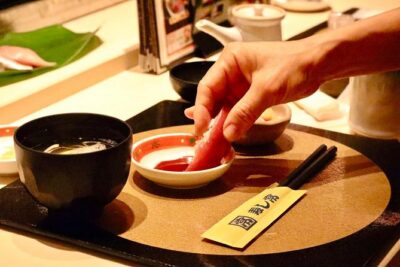
Sashimi and other small dishes
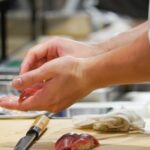
Sashimi brings a different texture and taste from the grilled skewers. It also shows why variety is useful on this tour. Rather than spending the whole night on noodles or meat, you move across several familiar Japanese food categories.
The package promises around nine dishes, but it does not provide a fixed dish-by-dish menu. If you have strong food preferences, this uncertainty is worth considering before you reserve. People with food allergies should not join, as the tour places responsibility for handling allergies with the customer.
A few more Tokyo tours and experiences worth a look


Ramen to finish the food trail
Ramen is included, giving the evening a substantial bowl of noodles after the smaller dishes. The details of the ramen stop are not fixed, so you should not book this expecting one named shop or a particular regional style.
Still, ramen makes sense as part of a three-and-a-half-hour food route. It gives you a familiar Japanese favorite after sampling several items, and it helps ensure the night feels like a full meal rather than a series of tiny tastes.
Six drinks and a look at Japanese drinking culture

Around six drink items are included in total. Options may include sake, highballs, hoppy, and other Japanese alcoholic drinks. The welcome drink is also included, though the information does not specify whether it forms part of the approximate six-item count.
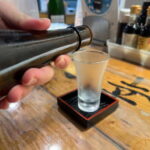
Sake is the obvious introduction for many people, but a highball and hoppy show a more casual side of Japanese drinking. Hoppy is a beer-like, low-alcohol drink traditionally mixed with shochu in many casual drinking settings. The guide can help you understand what you are ordering and how the drinks fit the food.
This is one reason the tour is limited to people aged 20 and older. You should be comfortable with an evening that includes several alcoholic drinks. The wording does not promise unlimited drinks, and the number is approximate, so pace yourself and tell the guide if you need a slower rhythm.
If you do not drink alcohol, check the arrangements before booking. The information specifically highlights Japanese alcoholic drinks, but it does not spell out a nonalcoholic substitution policy.
What the English-speaking guide adds

The guide is not just there to lead you from one restaurant to another. The tour includes explanations about Ueno, the history of the town, and modern Japan. That gives the evening a wider purpose than simply eating a set menu.
Guide Nguyen received particular praise for being enthusiastic, friendly, and capable, and assistant guides sometimes joined the group as well. Another reported evening had two guides who helped create a comfortable atmosphere. The number of guides can vary, but you can expect live guiding in Japanese and English.
I value this part of the plan because casual Japanese restaurants can feel hard to read at first. A guide can explain what a dish is, how to approach the menu, and why the restaurant matters in the local scene. You also get a chance to ask about daily life in Tokyo while walking between stops.
The guide cannot remove every uncertainty. Restaurant quality and food preparation are the responsibility of each restaurant, and the operator says menus and schedules may change. That is normal for a food route using several independent venues, but it is important if you prefer a fixed, highly controlled itinerary.
How the small-group format changes the evening

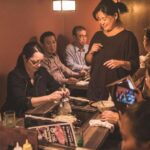
The group is limited to 10 people. That is large enough to create a social evening, but still small enough for the guide to speak with everyone and keep the group together in restaurant settings.
A small group is especially helpful at compact Japanese eateries, where space may be limited. It also makes it easier to ask about unfamiliar foods or drinks without holding up a large tour party. The exact number of assistant guides is not guaranteed, but additional guides have accompanied some departures.
This tour suits solo visitors and couples who want company at dinner. It also works for people arriving in Tokyo who want an organized first look at Japanese food customs. If you want a quiet private meal, or if you prefer to choose every dish yourself, the group format may feel less suitable.
Is $103 a fair price for the Ueno food tour?

At $103 per person, the value depends on how much you would otherwise spend on dinner, drinks, and guidance. The price includes around nine dishes at three or four restaurants, ramen, about six drink items, a local English-speaking guide, a welcome drink, and a small souvenir.
That is a substantial package for a 210-minute evening. You are paying for several meals rather than one restaurant booking, along with the work of arranging the route and interpreting the food. If you planned to visit multiple izakayas independently, the tour could save you the trouble of choosing venues and figuring out ordering customs.
The price is less appealing if you do not drink alcohol or eat only small portions. You also need to pay for your own transportation to the meeting point. Since menus and restaurants can change, the value is based on the overall format and quantity, not on a guaranteed list of named restaurants.
The operator is connected with a company that runs 24 well-reviewed hotels in Japan. That may give the tour a hospitality background, but it does not guarantee that every restaurant will match your personal taste. I would book for the structure, access, and guide rather than for a promise of fine dining.
Who should book this evening in Ueno?

I would recommend this tour to you if you want an easy introduction to Japanese casual food and drink. It is particularly useful on a first Tokyo visit, when you may want help finding local-style restaurants without spending your first evening studying menus and maps.
It also fits people who enjoy variety. Yakitori, yakiton, sashimi, ramen, sake, highballs, and hoppy offer a wider sample than a single dinner reservation. The town stories add context, so the night has both a food and sightseeing element.
You should think twice if you have allergies. The tour says customers are responsible for dealing with allergies, and people with food allergies are listed as unsuitable. You should also skip it if you are under 20, use a wheelchair, need to bring luggage, or want a strictly nonalcoholic night.
Comfortable shoes are essential because you move around Ueno between venues. The route is not described as wheelchair suitable, and the activity specifically excludes wheelchair users, so do not assume that access arrangements can be made on request.
Booking, cancellation, and practical details

The tour lasts 210 minutes, or three and a half hours. Starting times depend on availability, so check the date and time before paying. You can reserve now and pay later, which is useful when your Tokyo plans are still moving around.
Free cancellation is available up to 24 hours in advance for a full refund. That gives you some protection if your schedule changes, but the policy does not remove the need to read the participation document at the meeting point.
The tour is offered in Japanese and English, with a live guide. It is produced by JHAT Co., Ltd., and the meeting point is the 14th floor restaurant at Hotel Monday Premium Ueno Okachimachi.
My booking verdict for this Ueno food experience
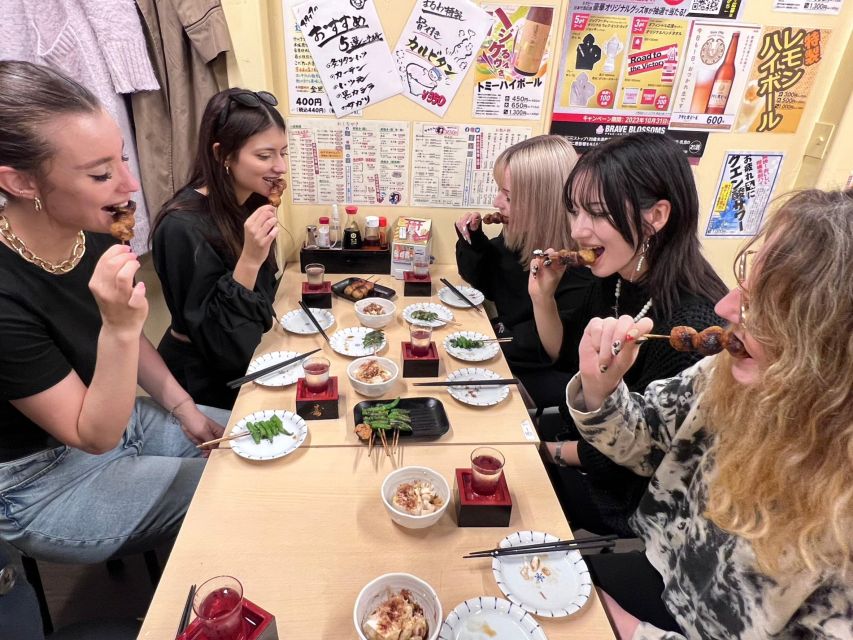
Book it if your ideal Tokyo evening includes small local restaurants, several types of Japanese food, alcoholic drinks, and a guide who can explain what you are seeing. The strongest reasons to go are the wide food range and the chance to move through Ueno rather than eat in one tourist-oriented venue.
I would be cautious if you need allergy accommodation, have mobility concerns, dislike group dining, or want a fixed menu. For everyone else, $103 is a reasonable price for a full evening of food, drinks, neighborhood context, and help navigating casual Japanese dining.
FAQ
Where does the Japanese Food Experience Night Tour in Ueno meet?
The meeting point is the restaurant on the 14th floor of Hotel Monday Premium Ueno Okachimachi.
How long does the tour last?
The tour lasts 210 minutes, or three and a half hours.
How many restaurants does the tour visit?
The tour includes food at around three to four restaurants in the Ueno area.
What food is included?
The package includes around nine dishes and ramen. Examples include yakitori, yakiton, and sashimi. Menus may change without notice.
How many drinks are included?
Around six drink items are included in total. Examples include sake, highballs, and hoppy.
Is a guide included?
Yes. A live local guide is included, with guiding available in English and Japanese.
What is the maximum group size?
The tour is a small-group activity limited to 10 participants.
Is transportation to the meeting point included?
No. You are responsible for transportation to the meeting point.
Can people with food allergies join?
No. People with food allergies are listed as unsuitable, and customers are responsible for dealing with allergies.
Can I cancel for a refund?
Yes. You can cancel up to 24 hours in advance for a full refund.
More Food Experiences in Tokyo
More Night Tours in Tokyo
More Ueno & Yanaka Walks in Tokyo
More tours in Tokyo we've reviewed












Ueno & Yanaka Walks, compared.
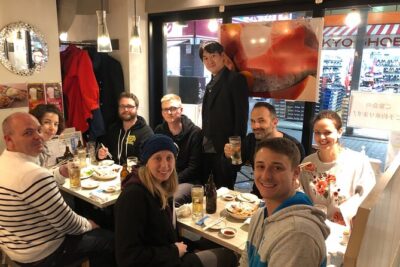 ★ 5.0Eat and Drink Like a Local: Tokyo Ueno Food Tour-Taverns&RamenFrom $95
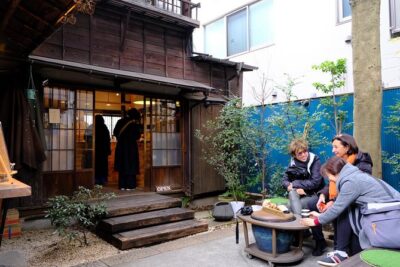 ★ 4.5The Old Quarter of Tokyo – Yanaka Walking TourFrom $40
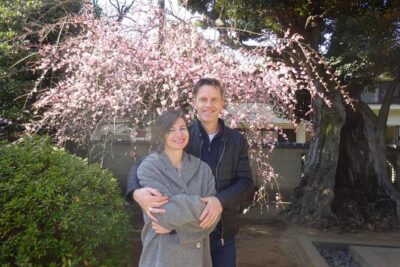 ★ 5.0Yanaka Walking Tour: Historic and Traditional District of TokyoFrom $72
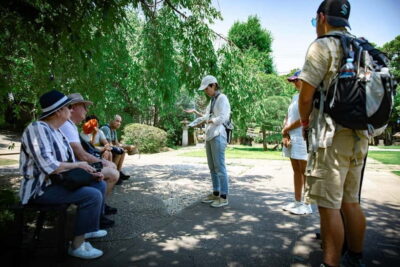 ★ 4.8Tokyo: Old Quarter Yanaka Walking TourFrom $323 hours
 ★ 5.0Tokyo: Food Tour in Ueno with 10+ Tastings of Japanese ClassicsFrom $142
 ★ 4.9Tokyo:Stroll in Old traditional culture towns~Yanaka & NezuFrom $293h 30m