Reviewed · MT FUJI DAY TRIPS
Tokyo: Mount Fuji Must-see Attractions One Day Sightseeing Tour
Mount Fuji is the star, but this 10-hour coach tour gives you much more than a quick mountain photo. You move through lakeside viewpoints, a reconstructed thatched-roof village, a centuries-old shrine, a famous pagoda, and eight clear springs near Oshino.
In This Article
- Key points to know before booking
- What the $60 Mount Fuji day trip really gives you
- Saiko Iyashi no Sato Nemba and its thatched roofs
- Lake Kawaguchi and Oishi Park in short visits
- The Kawaguchiko Natural Living Center’s torii view
- Arakurayama Sengen Park and Chureito Pagoda
- Arakura Fuji Sengen Shrine and a 1,300-year story
- Oshino Hakkai and the eight clear springs
- Guides, commentary, and the pace of the coach
- Weather is the biggest risk to your Fuji photographs
- Who will get the most from this tour
- Should you book the Mount Fuji day tour?
- FAQ
- How long is the Mount Fuji sightseeing tour?
- What places are included?
- Is Mount Fuji guaranteed to be visible?
- Is lunch included?
- Is transportation provided?
- How large can the tour group be?
- Can I cancel for a full refund?
I like the well-chosen variety of stops, which brings together scenery, religion, local history, and seasonal flowers. I also like having guides such as Kevin, Yulina, Andrew, and Maddy explain what you are seeing, rather than trying to piece the day together by train and bus.
The catch is simple: Fuji may not appear at all if clouds settle over the mountain. The schedule is also tight at several stops, and popular sites can feel crowded when multiple coaches arrive together.
Key points to know before booking
- Seven stops in one day: The route includes Saiko Iyashi no Sato Nemba, Lake Kawaguchi, Oishi Park, the Kawaguchiko Natural Living Center, Arakurayama Sengen Park, Arakura Fuji Sengen Shrine, and Oshino Hakkai.
- The famous pagoda comes late: Chureito Pagoda is reached during the Arakurayama Sengen Park visit, so poor afternoon weather can affect the day’s most photographed view.
- Fuji visibility is never guaranteed: Several people completed a scenic day without seeing the mountain because of low cloud or overcast weather.
- Guides are a major strength: Kevin, Yulina, Andrew, and Maddy are praised for clear explanations, timing instructions, local details, and Japanese words connected with the area.
- Expect a large group: The coach can carry up to 45 people, and some stops may be shared with other tour buses.
- Lunch is your responsibility: The $60 price includes the vehicle and entrance fees, but not food or personal purchases.
What the $60 Mount Fuji day trip really gives you
At $60 per person, this is a strong value if you want a broad introduction to the Mount Fuji region without arranging several separate train and bus connections. Your air-conditioned vehicle carries you from Tokyo and back, while admission fees for the included village are covered.
The value comes from the range of places packed into one day. You are not paying only for a viewpoint. You get a traditional village, two lakeside stops, a shrine, a mountain-view park, a famous pagoda, and a spring village.
There are limits. Ten hours is a long day, and this is an efficient sightseeing circuit rather than a slow rural outing. The tour does not include lunch, and some stops are short enough that you will need to choose between taking photos, browsing, and simply enjoying the setting.
The group limit is 45 people. That is not a small private tour, so you should expect a shared coach and fixed departure times. The benefit is a lower price and simple transport. The tradeoff is less freedom to linger.
A few more Tokyo tours and experiences worth a look
Saiko Iyashi no Sato Nemba and its thatched roofs
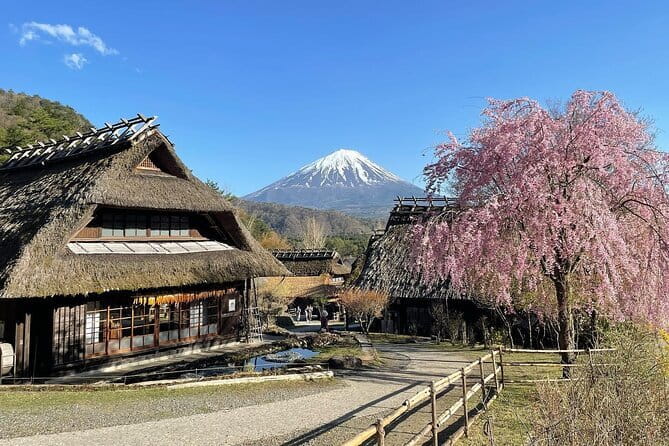
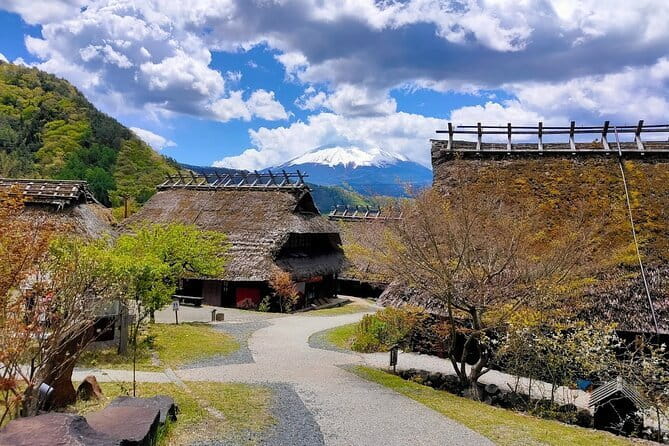
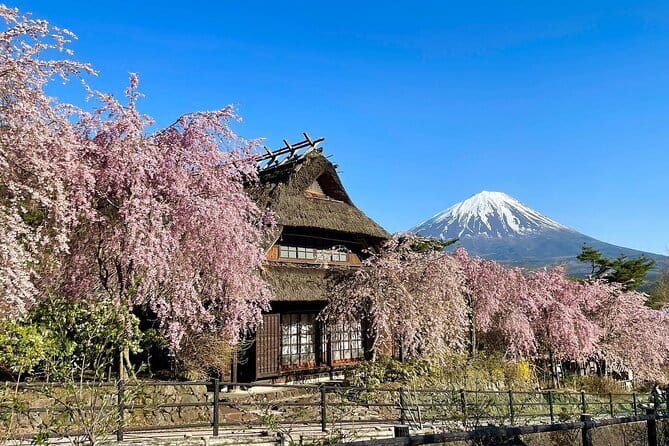
The first stop, Saiko Iyashi no Sato Nemba, lasts about an hour and includes admission. This traditional-style village sits near Lake Saiko in Fujikawaguchiko Town, with Mt. Fuji often forming the backdrop.
The village was destroyed by a landslide during a typhoon in 1966 and later recreated as a cultural attraction. Its thatched-roof houses give the stop a strong visual identity, especially when Fuji is visible behind them.
I would use this hour for photos and a quick look at the buildings rather than expecting a full-day cultural visit. The setting is appealing, but the time is limited. If you want to explore every corner, the schedule may feel brisk.
This is one of the more distinctive stops because it gives you a sense of old rural Japan instead of another standard observation platform. Still, the experience depends heavily on weather. Without Fuji in the background, the village remains scenic, but the classic view loses some of its force.
Lake Kawaguchi and Oishi Park in short visits
Lake Kawaguchi is one of the Five Lakes of Fuji and is known for its long, irregular shoreline and many viewpoints. The tour allows about 20 minutes here, with no separate admission fee.
That is enough for a quick lakeside pause and photographs, but not enough for an unhurried walk. You will want to listen closely for the meeting time and avoid wandering too far from the coach.
Oishi Park follows with about 25 minutes. The park is known for seasonal displays including cherry blossoms, lavender, red autumn leaves, kochia, snow, and reeds. The scenery changes sharply through the year, so the visual appeal depends on your travel date.
Autumn can be especially rewarding for color, while lavender season offers a different look. In winter, snow and reeds create a quieter setting. The park is a good example of why this route works even when Fuji hides: flowers, water, and seasonal plants still give you something to see.
The downside is the short timing. Several people found that the scenery deserved more time, particularly at the lake and village stops. Think of these as carefully chosen snapshots, not long park visits.
The Kawaguchiko Natural Living Center’s torii view

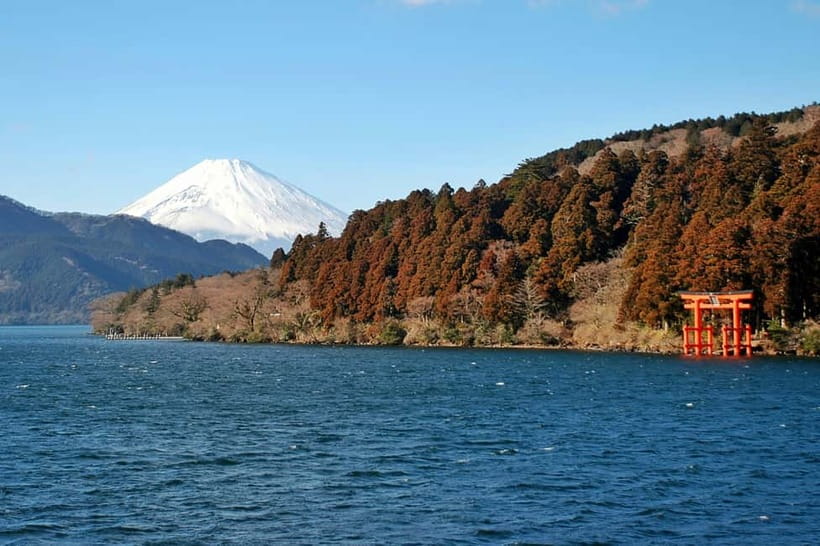
The Kawaguchiko Natural Living Center is a very brief stop, about 10 minutes, but it has a specific photographic purpose. From the second floor, you can frame a red torii gate with Mount Fuji in the distance.
This is a quick camera stop rather than a major attraction. If the sky is clear, it can produce one of the day’s most pleasing compositions. If clouds cover Fuji, you may find the visit underwhelming.
Ten minutes is enough for the view if the area is not crowded, but you will not have time for a leisurely visit. Have your camera ready and follow the guide’s instructions about where to meet.
Arakurayama Sengen Park and Chureito Pagoda

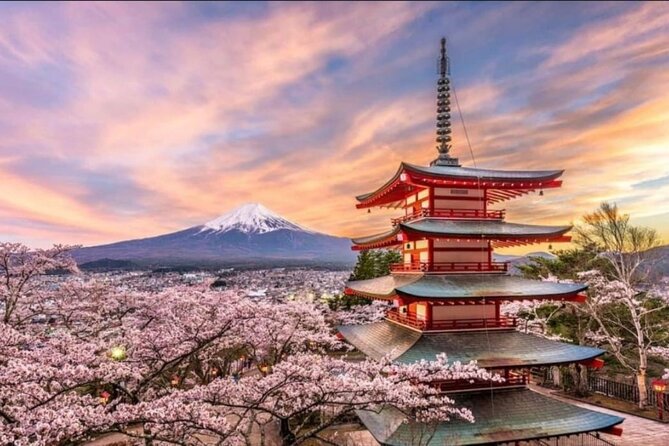
Arakurayama Sengen Park is the tour’s headline photo stop. The park is famous for the five-storied Chureito Pagoda, with Mount Fuji often rising behind it. This is the classic image many people picture when they think of a Fuji sightseeing day.
The visit lasts about an hour and has no separate admission fee. The important practical point is that reaching the pagoda involves a climb through the park. The information provided does not specify the exact number of steps, so you should simply expect uphill walking and allow enough time to reach the viewpoint, take photos, and return to the meeting point.
This stop can feel rushed. One poor experience came from placing the pagoda late in the day, when worsening weather blocked the mountain view. That is a fair concern. The tour cannot control clouds, but the order matters greatly when Fuji is the main reason you booked.
If you have a clear day, make this stop a priority. Go directly toward the pagoda first, then take extra photos and look around if time remains. Do not spend the first half of the hour browsing elsewhere and hope to fit in the viewpoint at the end.
The park is also a good place to separate the two parts of the image: the pagoda is a human-made symbol, while Fuji supplies the vast natural backdrop. Even when the mountain is hidden, the pagoda and elevated city view still offer a worthwhile stop, but the famous composition is weather dependent.
A few more Tokyo tours and experiences worth a look



Arakura Fuji Sengen Shrine and a 1,300-year story
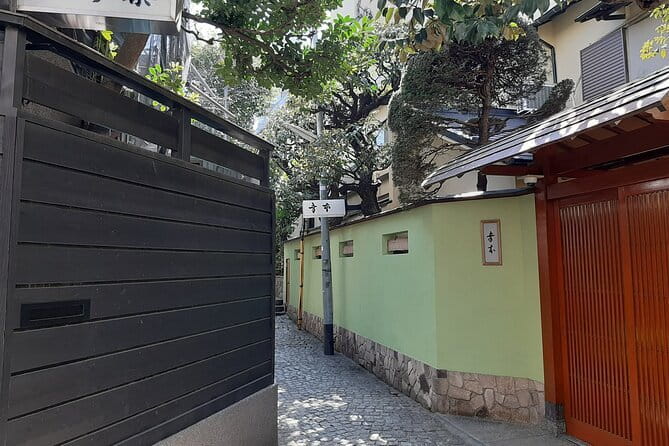
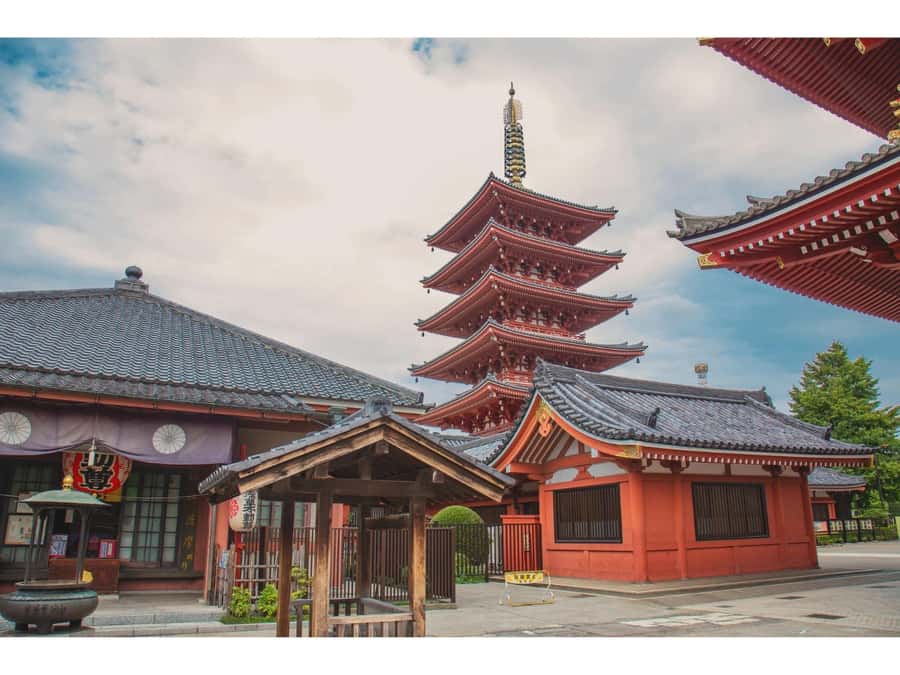
The Arakura Fuji Sengen Shrine receives about 15 minutes. It was built in 705 and has more than 1,300 years of history. The shrine is dedicated to prayers for well-being and family happiness.
The site also has a connection with Mount Fuji’s volcanic past. In 807, a major eruption caused widespread panic, and the shrine held a ceremony connected with the disaster.
Fifteen minutes is enough for a short visit and an explanation from the guide, but not for a long, reflective stop. This is where live commentary adds real value. Without context, it might look like a brief shrine visit between photo locations. With the story of the eruption and the shrine’s purpose, the stop connects local faith with the mountain’s power.
Pay attention to the guide’s meeting instructions. The day includes several short visits, and a delayed return can affect everyone on the coach.
Oshino Hakkai and the eight clear springs

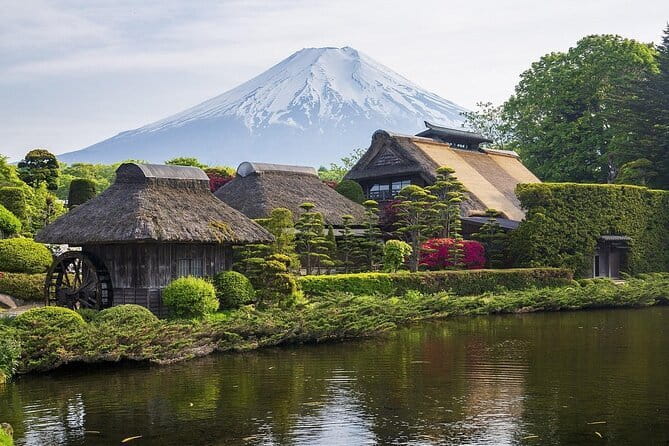
The final major stop is Oshino Hakkai, where you have about an hour. The area is known for eight clear springs formed by snowmelt from Mount Fuji. The springs are recognized among Japan’s famous waters, and you can taste the spring water for free.
This stop offers a different view of the Fuji region. Instead of looking at the mountain from a distance, you see how water from the mountain shapes local life and scenery. The water itself is the main attraction, so take time to notice its clarity and the small channels around the springs.
Oshino Hakkai is also one of the more commercial stops on the route. Shops and food stands make it a useful place to find something to eat since lunch is not included, but the setting may feel more tourist-focused than quiet or local.
The one-hour visit is generous compared with the short lake and center stops. Some people felt that the schedule gave too much time here and not enough at the pagoda or thatched-roof village. I see the balance differently depending on your priorities: food and a slower final stop will appeal to some, while photographers may prefer that time elsewhere.
Guides, commentary, and the pace of the coach
The strongest part of this experience is the guiding. Kevin is praised for detailed explanations, clear timing, and useful advice for the rest of a Japan trip. Yulina adds area-specific information and Japanese words connected with the places you visit. Andrew is noted for explaining each location clearly and giving precise pickup instructions. Maddy is described as informative and entertaining.
The guides do not necessarily walk with you at every stop. You may receive an explanation before being given free time to explore. I like that arrangement because it lets you choose your own photos and pace, but you must listen carefully before leaving the coach.
The day has a practical rhythm: explanation, free time, return to the vehicle, then another stop. This works well when you are organized. It works less well if you want to wander without watching the clock.
The bus is air-conditioned, which matters on a long day outside Tokyo. However, comfort can vary. One account described an older, uncomfortable bus without Wi-Fi. Treat Wi-Fi as unavailable, and bring what you need for the ride. The group may be large, and other coaches can arrive at the same places.
Weather is the biggest risk to your Fuji photographs
Mount Fuji is famously unpredictable from a visibility point of view. Low cloud can cover the summit or the entire mountain, even when the rest of the day is pleasant.
This is not a minor detail. Fuji is the visual thread connecting the village, lakes, park, torii gate, pagoda, and shrine area. On an overcast day, you may still enjoy flowers, water, architecture, and guide commentary, but the tour will not deliver its best-known photographs.
You should book this as a Fuji-region sightseeing day, not as a guaranteed Fuji-viewing appointment. Clear weather can make the day excellent. Cloudy weather can turn it into a pleasant tour of the surrounding attractions with the central mountain missing.
If the forecast looks poor, keep your expectations flexible. The itinerary still has variety, but you may decide that the pagoda and lakes are less important without the mountain behind them.
Who will get the most from this tour
I would recommend this tour to you if you have only one free day for the Fuji area, prefer a guided route, or do not want to manage several public transport connections. It also suits first-time visitors who want to see a range of well-known sites in one outing.
It is a particularly good fit for people who value context. The guides explain shrine customs, local history, Japanese words, and practical meeting times. That turns a string of photo stops into a more understandable day.
You may want another option if you dislike fixed schedules, large groups, or busy tourist sites. The route is popular, and some stops can feel crowded. It also may disappoint you if your main goal is a long, quiet stay at one viewpoint.
Families and people bringing a stroller or large luggage should indicate that when booking. Most people can participate, but the pagoda park includes uphill walking, and the schedule requires you to keep moving between stops.
Free cancellation is available when you cancel at least 24 hours before the start time. Changes or cancellations inside that window are not accepted for a refund.
Should you book the Mount Fuji day tour?
Book it if you want maximum variety for a reasonable $60 and accept that every stop will be fairly brief. The included coach, entrance fees, and live commentary remove much of the planning work, and the route covers the major Fuji-area photo and culture stops.
I would be cautious if you need a guaranteed mountain view or want a quiet, slow day. The weather can defeat the famous photographs, the pagoda arrives late, and a coach of up to 45 people can make popular sites feel busy.
My practical advice is to book for the overall region, not for one perfect Fuji picture. If the sky clears, you will have a memorable set of views. If it does not, the village, shrine, springs, flowers, and guide stories still give you a useful day beyond Tokyo.
FAQ
How long is the Mount Fuji sightseeing tour?
The tour lasts approximately 10 hours, including transport from Tokyo and the visits around the Mount Fuji region.
What places are included?
The route includes Saiko Iyashi no Sato Nemba, Lake Kawaguchi, Oishi Park, the Kawaguchiko Natural Living Center, Arakurayama Sengen Park, Arakura Fuji Sengen Shrine, and Oshino Hakkai.
Is Mount Fuji guaranteed to be visible?
No. Mount Fuji visibility depends on the weather, and low cloud or overcast conditions can hide the mountain.
Is lunch included?
No. Lunch and other personal expenses are not included in the tour price.
Is transportation provided?
Yes. Round-trip transfers from Tokyo are provided in an air-conditioned vehicle.
How large can the tour group be?
The activity has a maximum of 45 participants.
Can I cancel for a full refund?
Yes, if you cancel at least 24 hours before the experience start time. Cancellations or changes made less than 24 hours ahead are not accepted for a refund.
More 1-Day Tours in Tokyo
More Mt Fuji Day Trips in Tokyo


More tours in Tokyo we've reviewed






Mt Fuji Day Trips, compared.
 ★ 5.0Mt Fuji and Hakone 1-Day Bus Tour Return by Bullet TrainFrom $163
 ★ 4.0Mt Fuji & Hakone Cruise, Drum Show Bullet Train 1 Day from TokyoFrom $149
 ★ 4.4Tokyo Mt Fuji 5th St & Hakone Cruise Bus Tour w/Bullet TrainFrom $15410 hours
 ★ 4.5From Tokyo: Mount Fuji Full-Day Sightseeing TripFrom $6810 hours
 ★ 4.7Tokyo: Mt. Fuji Tour, Hakone Ropeway, Owakudani, Lake AshiFrom $5410 hours
 ★ 4.4Tokyo:Mt.Fuji,Kawaguchiko Oishi Park,Arakurayama Sengen ParkFrom $5410 hours