Reviewed · TEMPLES & MEDITATION
Tokyo: Buddhism and Shinto Temple Tour with a Real Local
The most memorable part of this two-hour walk is the Fukagawa Fudo-do fire ceremony, where drums thunder and flames rise as Buddhist monks carry out a serious religious practice. Your guide, Manami Watanabe, explains each stage without treating the ceremony like a tourist show.
In This Article
- Key points to know before booking
- Why the fire ceremony is the heart of the tour
- Starting in Monzennakacho’s Shitamachi
- Oyoko River and Tatsumi-shindo
- Naritasan Fukagawa Fudo-do: forty minutes of focused observation
- Tomioka Hachimangu Shrine and the Shinto side
- Buddhism and Shinto without the usual confusion
- What $62 buys you
- Timing, clothing, and group size
- Who will get the most from this walk
- Should you book it?
- FAQ
- Where does the tour meet?
- Which station exit should I use?
- How long does the experience last?
- Who leads the tour?
- What language is the tour in?
- How large is the group?
- Is admission to the fire ceremony included?
- Can I take photographs or record the ceremony?
- What should I wear and bring?
I like the small group of no more than six people, and I like that the tour teaches the fine points of temple and shrine etiquette, including seating, photography, and respectful behavior. The main consideration is its strict rules: no photos inside, no video, no audio recording, and modest clothing are required.
Key points to know before booking
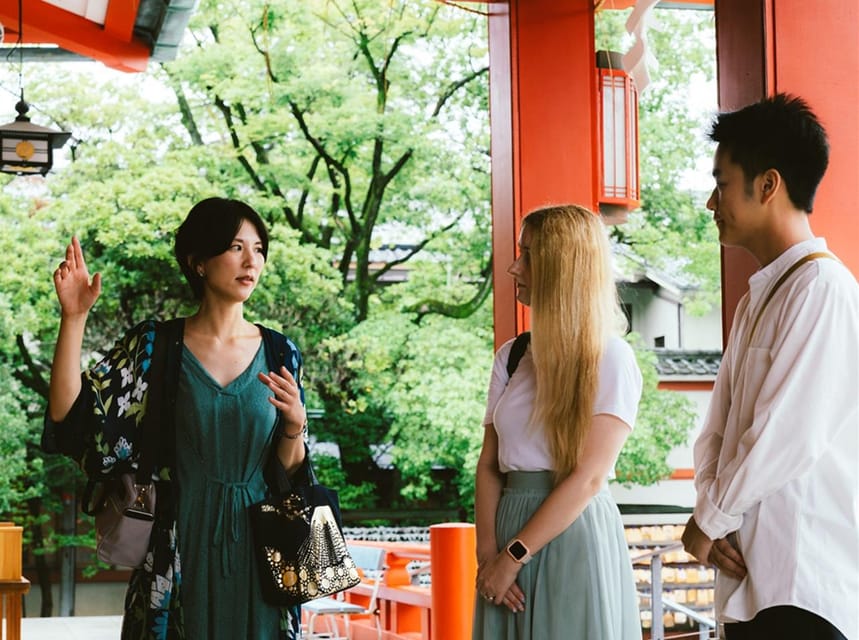
- A fire ceremony with context: Manami provides scene-by-scene explanation sheets while you observe the Buddhist ritual in silence.
- Two traditions in one walk: Learn how Buddhism and Shinto differ, and why both are part of everyday Japanese life.
- A real neighborhood: Monzennakacho offers a quieter look at East Tokyo’s Shitamachi district, away from the city’s headline sights.
- Small and personal: The group is limited to six, leaving room for questions and patient explanations.
- Useful etiquette lessons: Learn how to bow, make offerings, handle shrine items, and behave inside a sacred space.
- A clear meeting-point warning: Use Exit 4 at Monzen-nakacho Station and find the red-signed Kusuri no Fukutaro drugstore outside.
Why the fire ceremony is the heart of the tour
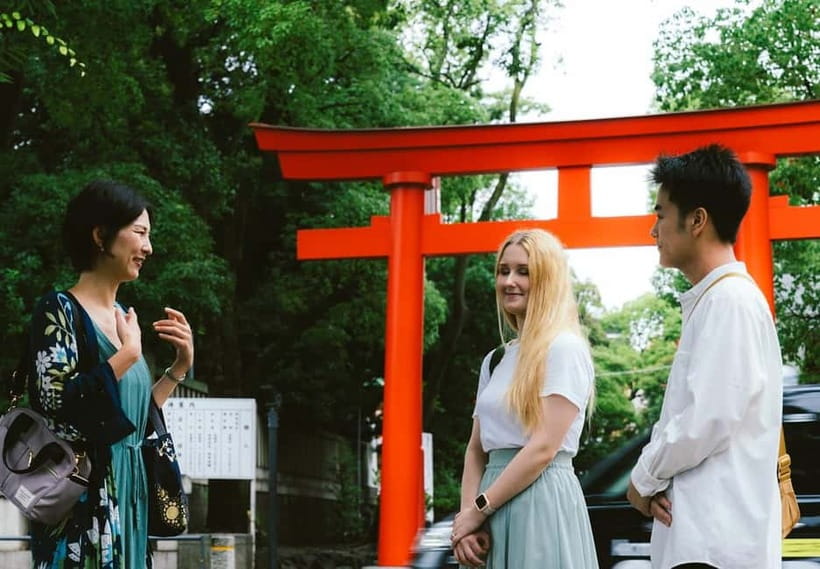
Many temple visits give you a quick look, a few photographs, and a short explanation. This one asks you to slow down. At Naritasan Fukagawa Fudo-do, you watch a Buddhist fire ritual accompanied by strong drumbeats, with Manami explaining what is happening scene by scene.
The ceremony is not staged for sightseeing. It is an everyday religious act for Buddhist worshippers, and that changes how you should approach it. The best central seats are reserved for the Buddhist community rather than claimed by the tour group. That may mean you do not have the most dramatic possible view, but it shows sound judgment and respect.
You also learn rules that are easy to miss. Crossing your legs while seated can be considered rude to Buddha and the monks. Photography and recording are not allowed inside, and the ceremony should be watched quietly. These details matter because good etiquette is part of the visit, not an optional extra after the main attraction.
Manami uses explanation sheets to help you follow the ritual without interrupting it. That is a smart touch. You can listen before or after the ceremony, then observe in silence when the activity begins.
The fire itself is likely to be the visual high point, but the explanation gives it meaning. Without context, you might simply see flames, drums, and movement. With Manami’s guidance, you can better understand the order and purpose of what is taking place.
A few more Tokyo tours and experiences worth a look


Starting in Monzennakacho’s Shitamachi
Meet outside Exit 4 of Monzen-nakacho Station, served by the Oedo and Tozai subway lines. Look for the Kusuri no Fukutaro drugstore with a red sign banner directly outside the exit.
This detail deserves attention. Monzen-nakacho has more than one Kusuri no Fukutaro location, and using another station exit can send you to the wrong one. Use the stairs at Exit 4 rather than an elevator so the drugstore is easier to spot. If you arrive by taxi and the driver is unsure which drugstore you mean, the tour instructions say to ask the driver to call Manami.
The neighborhood is in East Tokyo’s Shitamachi area, a term linked to the older, lower-city districts where local life developed outside the grand avenues and major sightseeing zones. You are not being rushed from one famous attraction to another. The appeal is seeing a working local area while learning how spiritual places fit into it.
The tour begins and ends at the same station, which keeps the logistics simple. You do not need to arrange a separate ride back after the walk.
Oyoko River and Tatsumi-shindo
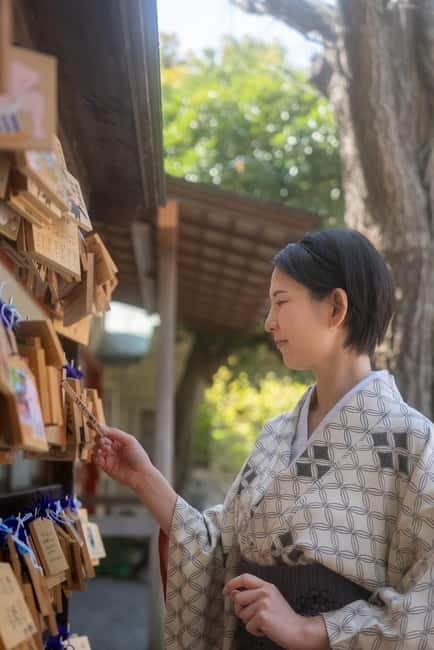
The first two stops are short, about 10 minutes each. Along the Oyoko River, Manami begins setting the scene for the neighborhood and its religious sites. This is a useful opening because it helps you understand the area before entering the temple and shrine.
At Tatsumi-shindo, you continue the guided introduction. The stop is brief, so do not expect a long architectural visit or a major landmark. Its value is the explanation and the gradual shift from ordinary streets into sacred spaces.
I like this pacing. The tour does not throw you straight into a ceremony without preparation. You get a little time to ask questions, learn the difference between Buddhist temples and Shinto shrines, and consider how both traditions appear in Japanese life.
Manami’s academic background is in cultural heritage protection, and the tour is built around explanation rather than a simple walk-and-point routine. The strongest feedback about her focuses on patience, warmth, and her ability to answer many questions. That makes this a good choice if you want to understand why a ritual is done, not just learn the name of a building.
Naritasan Fukagawa Fudo-do: forty minutes of focused observation
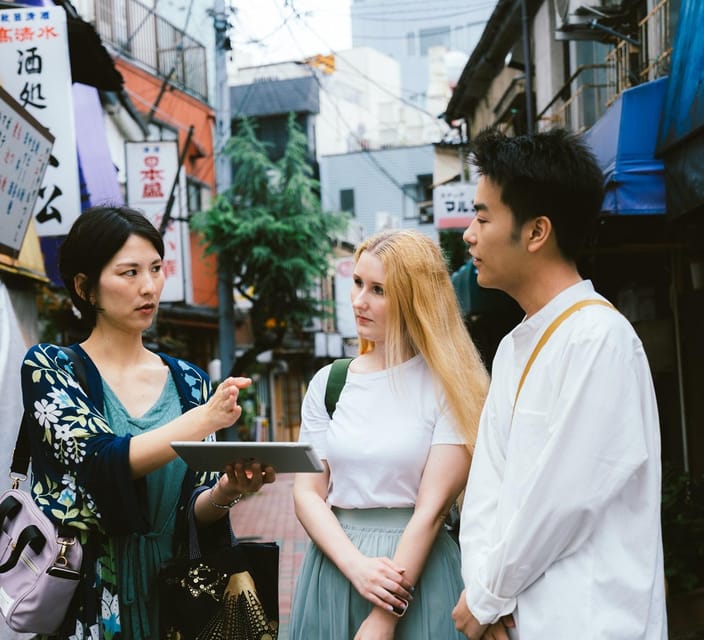
You spend about 40 minutes at Naritasan Fukagawa Fudo-do, the longest stop of the tour. Admission to the fire ceremony is included in the $62 price, which is important when judging the cost.
This visit has a clear rhythm. First, Manami explains the rules. Then she helps you follow the ceremony with written material. During the ritual, you observe quietly and avoid photography, filming, or audio recording.
That structure suits people who appreciate order and context. It may feel restrictive if you want to take pictures of every moment or move around for different views. The rules are not casual suggestions, so you should be comfortable putting your phone away for this part.
You should also wear clothing that respects the setting. Short skirts, sleeveless shirts, see-through clothing, hats, and shoes indoors are not allowed. Shawls are available for anyone who needs to cover their shoulders or knees, but modest dress from the start is the easier option.
Bring comfortable shoes, since this is a walking tour, and carry a drink. Cash is also useful for optional small offerings at the temple and shrine. The tour does not require you to make those offerings, but having coins lets you take part if you wish.
Tomioka Hachimangu Shrine and the Shinto side
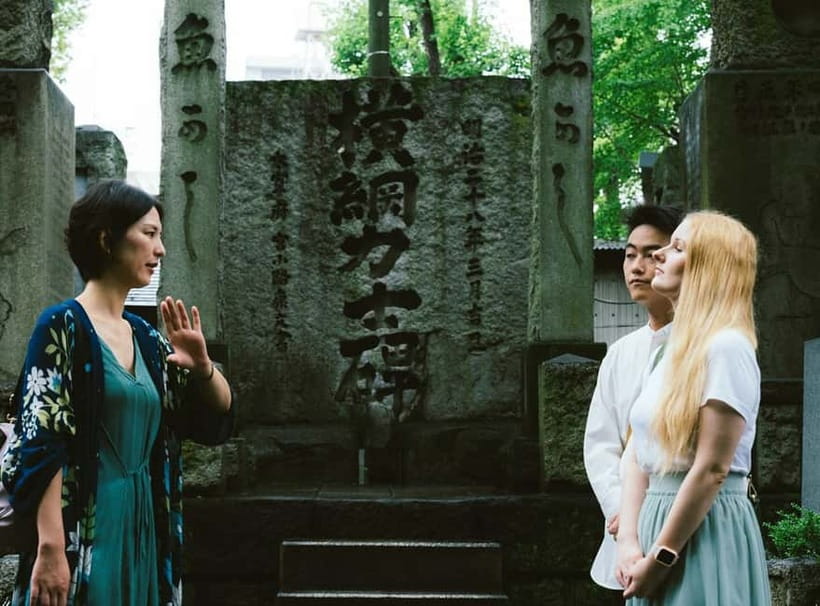
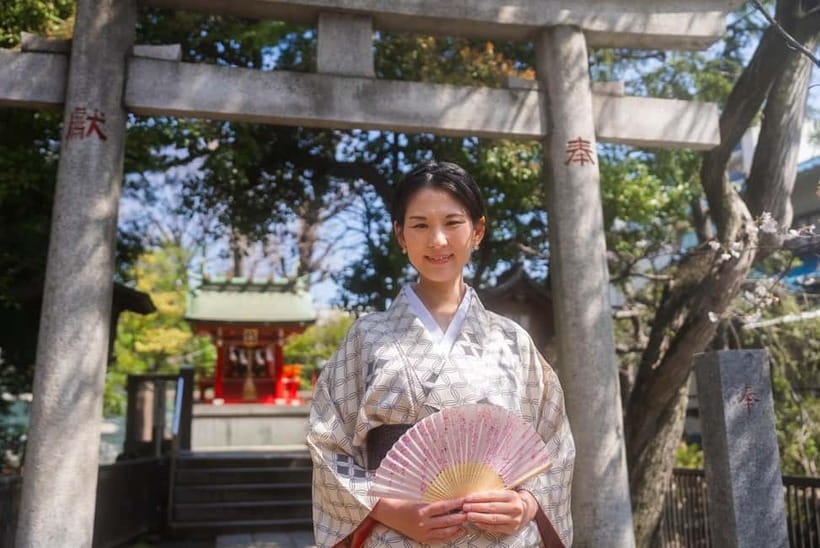
After the temple, the tour turns to Tomioka Hachimangu Shrine for about 25 minutes. This contrast is one of the best reasons to choose the experience. You do not learn about Buddhism in isolation. You see a Shinto shrine soon after the Buddhist temple and can compare the two settings while the details are fresh.
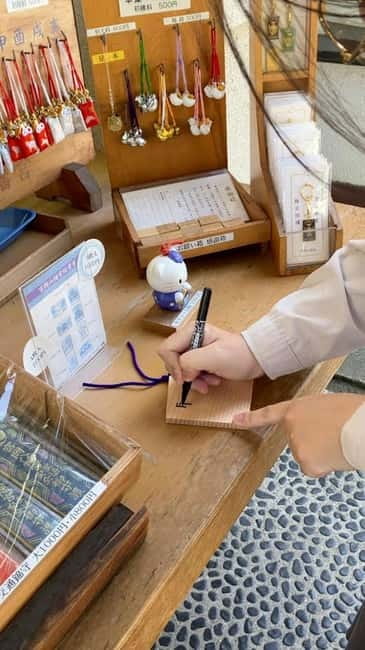
Manami explains white fortune-telling papers, wooden wish plaques, goshuin stamps, and Shinto symbols. These are the small features that can seem mysterious when you visit on your own.
You also learn why sake and sumo matter at this shrine and see the impressive Sumo rocks. Those details connect religious practice with Japanese customs and sporting tradition. They give the shrine a stronger sense of place than a quick stop for a photograph.
The tour ends with Manami’s family connection to Tomioka Hachimangu. Her personal stories add a human note to the visit. This is not just a lecture about an old building. You hear how a local family relates to the place and why it matters in the area.
The shrine stop is shorter than the temple visit, so expect an introduction rather than an exhaustive study of every symbol. Still, the sequence works well: Buddhism first, Shinto second, with enough time to ask questions at both.

Buddhism and Shinto without the usual confusion
Visitors often hear that Japan has two religions, then receive a very tidy explanation that does not match what they see. This tour takes a more useful approach by explaining how Japanese people can take part in both Buddhist and Shinto customs.
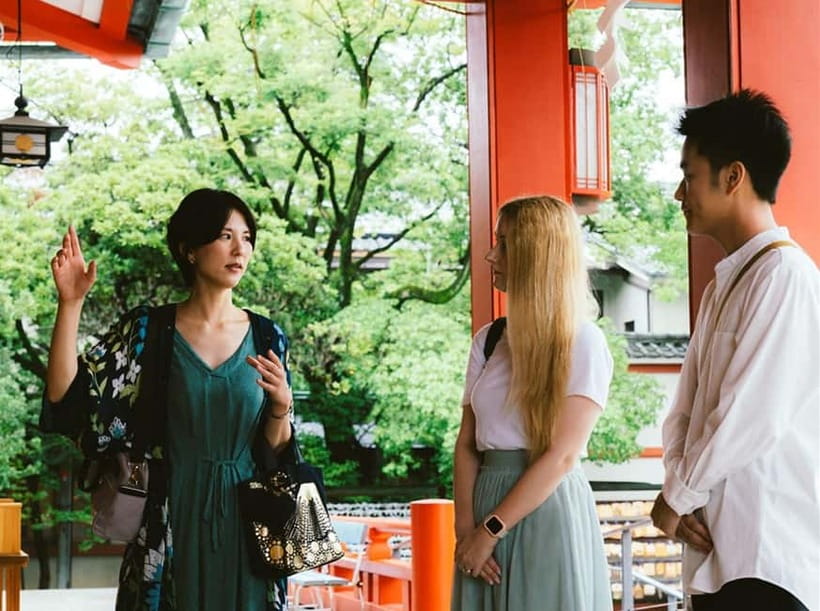
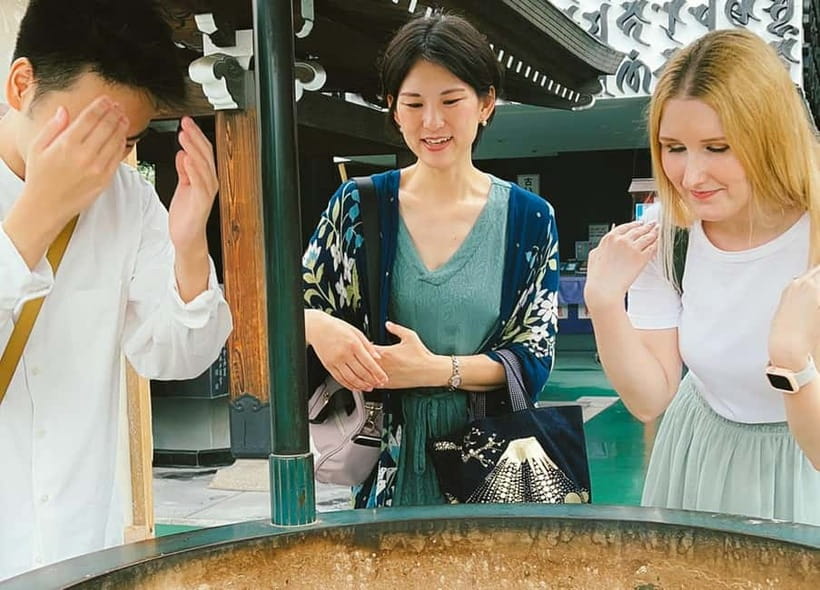
You learn the basic difference between a Buddhist temple and a Shinto shrine, along with the signs that help you identify each one. Just as important, you learn how to behave when you arrive. That can include how to approach the space, how to make an offering, and what not to do once inside.
The value is practical. After this walk, you should feel more confident at other temples and shrines across Japan. You will also know when to stop taking pictures and when your presence needs to be quieter.
Manami’s academic training helps give the discussion structure, but the strongest quality is her patient teaching style. Multiple comments about the tour praise her kindness, clear explanations, and willingness to answer questions. The small group makes that possible. With six people or fewer, you are less likely to lose your chance to ask about a confusing ritual or symbol.
What $62 buys you
At $62 per person, this is not the cheapest way to walk around Tokyo. It is also not simply a two-hour neighborhood stroll. The price includes an English-speaking local guide, a small group capped at six, and admission to the Fukagawa Fudo-do fire ceremony.
The value depends on what you want from a temple visit. If you only need directions and a few good photographs, you can see religious sites more cheaply on your own. If you want a clear explanation of Buddhist and Shinto practice, help with etiquette, and access to a ceremony that can be difficult to understand alone, the fee is easier to justify.
The tour also saves you from making several common mistakes. You do not have to guess where to sit, when to be silent, or which behavior may be considered disrespectful. You also get the benefit of a local host who has a personal connection to the shrine area.
I see the price as fair for an intimate, specialist-led experience, especially for first-time visitors who want cultural context. It offers less value to someone focused mainly on sightseeing speed or photography.
Timing, clothing, and group size
The tour lasts two hours and is limited to six participants. That is enough time for the temple ceremony, the shrine, and the short walking sections, but it is not a full-day study of Japanese religion.
The schedule may feel brisk at the river and Tatsumi-shindo, where each guided stop lasts about 10 minutes. The extra time is reserved for the fire ceremony and Tomioka Hachimangu, where explanation carries more weight.
Wear comfortable shoes and conservative clothing. The rules are firm: no smoking, video recording, photography inside, audio recording, indoor shoes, or hats. Children under five and people over 80 are not considered suitable for this activity.
You can cancel up to 24 hours before the start for a full refund, and you can reserve now and pay later. Those options help if your Tokyo plans are still shifting, but the practical concern remains the meeting point. Get Exit 4 right.
Who will get the most from this walk
I would choose this for you if you want to understand what you are seeing at Japanese religious sites rather than collect quick exterior photos. It suits first-time visitors, curious adults, and anyone who enjoys asking questions in a small group.
It is also a good match for people who want a quieter side of Tokyo. Monzennakacho is less headline-driven than areas such as Shibuya or Asakusa, and the tour focuses on local religious life rather than major shopping streets.
You should think twice if you dislike strict behavior rules, cannot wear modest clothing, or want to record the ceremony. The no-photo policy inside the temple is especially important. The ceremony is meant to be observed respectfully, not documented.
The two-hour length makes it easy to fit into a wider Tokyo day. Since you return to Monzen-nakacho Station, you can continue exploring East Tokyo or use the subway afterward without arranging another pickup.
Should you book it?
Book this tour if you want meaning, etiquette, and local perspective alongside the sights. Manami Watanabe’s patient style, Ph.D. background, family connection to Tomioka Hachimangu, and careful handling of the fire ceremony give the walk more substance than a standard temple visit.
Skip it if you mainly want unrestricted photography, a fast sightseeing loop, or a casual food-and-drink outing. The experience asks you to be quiet, dress respectfully, and accept that the best seats belong to worshippers.
For most visitors who have two hours and want to understand Buddhism and Shinto in a real East Tokyo setting, the combination of fire ritual, shrine customs, and small-group guidance makes the $62 worthwhile.
FAQ
Where does the tour meet?
Meet outside Exit 4 of Monzen-nakacho Station, served by the Oedo and Tozai subway lines. The meeting point is beside the Kusuri no Fukutaro drugstore with a red sign.
Which station exit should I use?
Use Exit 4. Do not use another exit, since there is another Kusuri no Fukutaro location nearby. The instructions recommend using the stairs at Exit 4 instead of the elevator.
How long does the experience last?
The tour lasts two hours and begins and ends at Monzen-nakacho Station.
Who leads the tour?
The tour is led by Manami Watanabe, a local Japanese guide who was born and raised in the area and has a Ph.D. in cultural heritage protection.
What language is the tour in?
The live guided tour is conducted in English.
How large is the group?
The group is limited to six participants.
Is admission to the fire ceremony included?
Yes. Admission to the fire ceremony at Naritasan Fukagawa Fudo-do is included.
Can I take photographs or record the ceremony?
No. Photography, video recording, and audio recording are not allowed inside. You are expected to observe the ceremony quietly.
What should I wear and bring?
Wear comfortable shoes and modest clothing. Short skirts, sleeveless shirts, see-through clothing, hats, and shoes indoors are not allowed. Bring cash and a drink. Shawls are available if you need to cover your shoulders or knees.
More Temples & Meditation in Tokyo
More tours in Tokyo we've reviewed












Temples & Meditation, compared.
 ★ 4.7Tokyo: Meiji Shrine, Asakusa, Skytree Bus Tour and CruiseFrom $12210 hours
 ★ 4.8Tokyo: Asakusa Walking Tour with Sensoji Temple VisitFrom $222 hours
 ★ 4.5Tokyo: Kamakura & Enoshima Day Trip including Temple TicketsFrom $589 hours - 570 minutes
 ★ 4.5Tokyo: Nikko Toshogu Shrine and Kegon Waterfall TourFrom $8410h 30m
 ★ 4.5Tokyo Panoramic 1 Day: Meiji Shrine, Asakusa, Odaiba and SKYTREE®From $85
 ★ 5.0Asakusa Senso-ji Temple and Old Tokyo Walking TourFrom $20