Reviewed · SAMURAI & NINJA EXPERIENCES
Tokyo: Elite Ninja Samurai Hands-on Mission Insights, 90 min
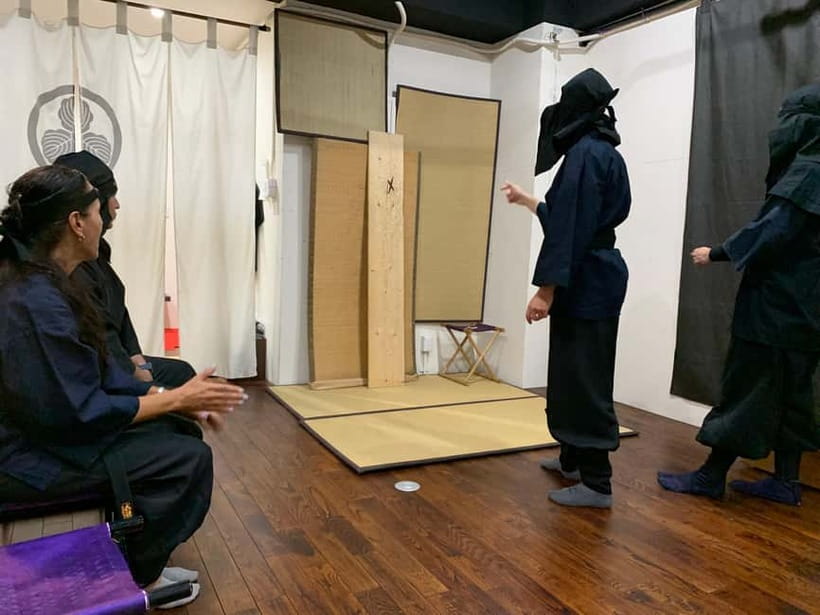
The most unusual part of this Tokyo experience is its focus on hands-on training inside a private dojo, not a stage show. You put on the clan’s ninja outfit, handle traditional-style tools, and work through five techniques with guidance from instructors ranked sixth Dan or higher.
In This Article
- Five things to know before entering the dojo
- Why this Asakusa ninja experience feels different
- Starting with meditation and a clan introduction
- Learning about handmade shinobi tools
- Stealth steps: the quietest part of the lesson
- Shuriken throwing and blowgun shooting
- Short sword movements and kujikiri
- Photo time and what you take home
- Is $116 a fair price for 90 minutes?
- Who should book this Tokyo ninja workshop?
- Getting to the Matsugaya dojo
- My booking advice
- FAQ
- How long does the ninja experience last?
- Where does the experience begin?
- Where does the activity end?
- Which languages are available?
- What techniques will I practice?
- Is a ninja outfit provided?
- Are weapons included?
- Can children participate?
- Is there a fee for spectators?
- Can I cancel the booking?
I like the clear mix of physical practice and history, especially the opening meditation, handmade weapons, and short meditation at the end. I also like the real-time interpretation, which helps you understand the purpose behind each movement instead of simply copying a pose.
The main drawback is the price: at $116 per person for 90 minutes, this is not a cheap photo stop. You should also plan around the extra 2,500-yen spectator fee if someone comes to watch without taking part.
Five things to know before entering the dojo
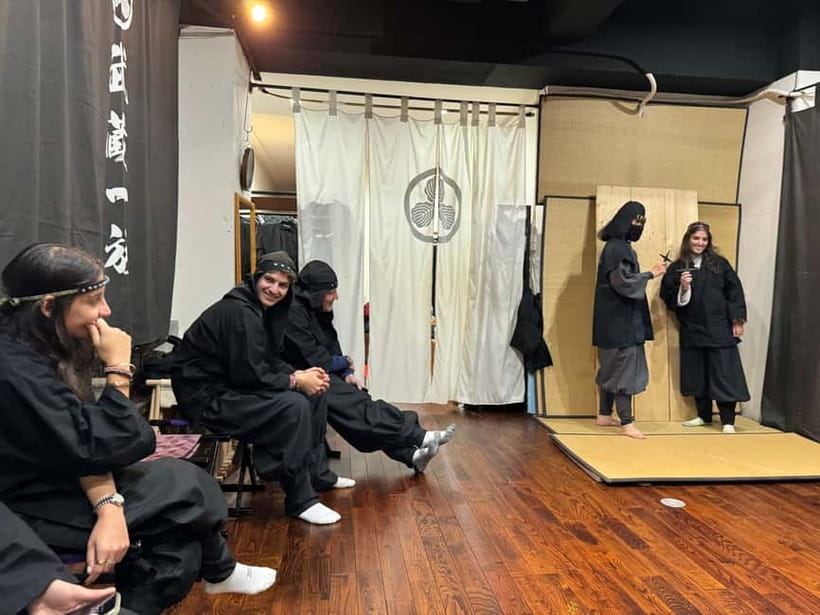
- The five techniques have variety: You practice stealth steps, shuriken throwing, blowgun shooting, short sword movements, and kujikiri.
- The clan traces its service to the Tokugawa shogunate: Its history begins with an escort mission involving Tokugawa Ieyasu in 1582.
- Your outfit and key training items are provided: Rental includes a ninja outfit, bokken wooden sword, and ninja star.
- Interpretation is part of the lesson: A nationally licensed interpreter or trainer provides live translation in English and Japanese.
- The location is easy to miss: The dojo occupies the third floor of a beige building in Matsugaya, near Kappabashi, not the separate Musashi Japan knife shop across the street.
Why this Asakusa ninja experience feels different
Many ninja-themed activities are built around costumes and quick photographs. This one gives you a lesson structure. You begin with meditation, watch an instructor demonstration, learn about the tools, and then practice several techniques in sequence.
That order matters. It frames the weapons as part of a discipline rather than as toys. You still get the fun of throwing a ninja star and firing a blowgun, but the session also presents stealth, focus, and controlled movement as the central ideas.
The experience takes place at Musashi Ninja Clan Shinobi Samurai Honjin Dojo of Asakusa. It is in the Matsugaya area, a part of Tokyo known for wholesale kitchenware shops. That setting adds a useful bit of local texture. You are not being taken to an isolated theme park. You are visiting a working-style neighborhood near Kappabashi Dogugai Street.
The dojo is on the third floor of a five-story beige building. The entrance is on the first floor beside the Japanese Cafe Bar Kiraku. The building is between Takanojin, a Japanese knife store, and Sensing Touch of Earth coffee shop.
Use the directions carefully. Across the street is a building with a large beetle on its second floor and a shop called Musashi Japan. That is not the dojo. Look for the Kappabashi traffic-light sign, the Tokyo Skytree to the east, and the beige building described above.
A few more Tokyo tours and experiences worth a look

Starting with meditation and a clan introduction
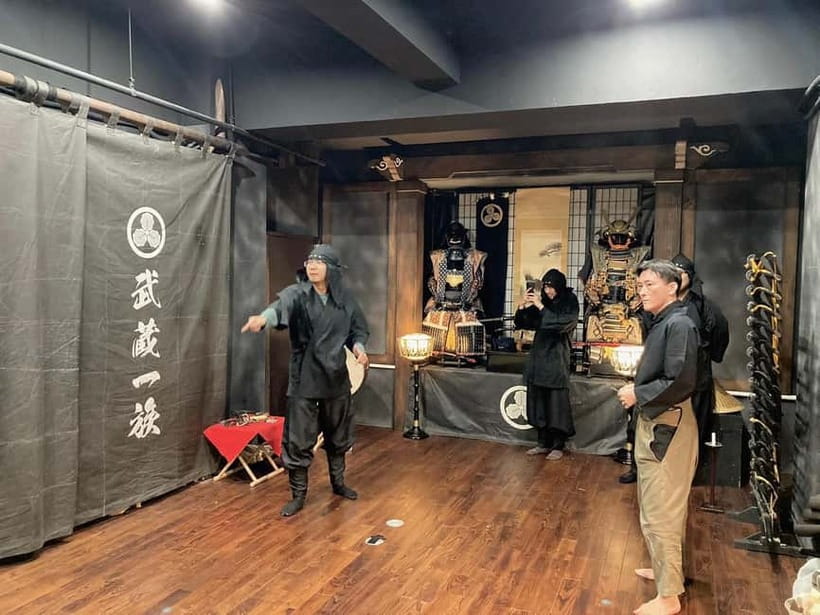
The session opens with meditation. This may not be what you expect from a short ninja activity, but it sets the tone before the physical work begins. The stated purpose is to introduce the five Ninpo principles in a mindful and practical way.
You then watch an instructor demonstration. Since instructors hold a sixth Dan black belt or higher, the demonstration should give you a clear model of posture and movement before you try the techniques yourself. The experience is designed for beginners who want to understand more than just the surface gestures.
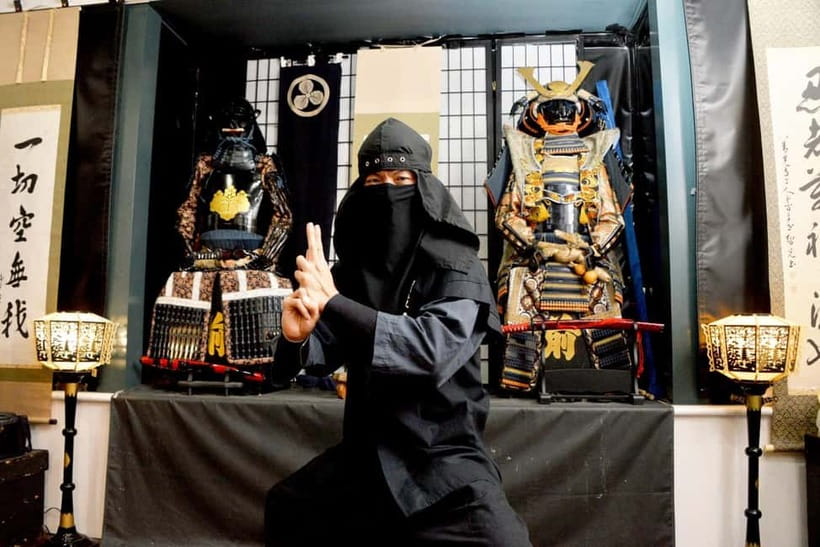
The clan presents itself as the only lasting shinobi samurai clan to have served the Tokugawa family from 1582 to 1868. According to its history, its ancestors escorted Tokugawa Ieyasu in 1582, then served the Tokugawa shogunate for 265 years.
The lesson also explains a distinction between shinobi samurai and shinobinomono. Shinobi samurai came from samurai lineages, while shinobi samurai trained local people to work as shinobinomono. That distinction gives the history section more substance than a simple story about secret warriors.
You should treat this part as a compact introduction, not a full historical seminar. The value comes from hearing the clan’s own traditions while learning how the techniques fit into its view of discipline and strategy.
Learning about handmade shinobi tools
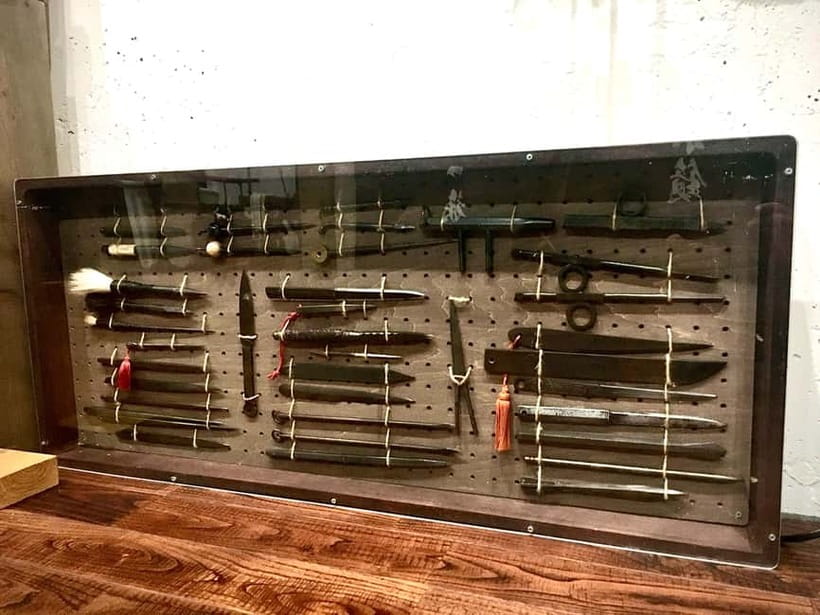
Before you begin the practice stations, the instructor introduces the weapons and tools. The clan says all of its ninja weapons are handmade within the clan. That detail adds a personal connection to the equipment, even though the session remains a controlled tourist activity.
The included rentals are a ninja outfit, a bokken wooden sword, and a ninja star. The itinerary also includes practice with a kunai or short sword and a blowgun. Ask for any equipment instructions before handling it, and follow the instructor’s directions closely.
The gear is part of the appeal, especially if you want photographs. It also helps the session feel like a complete activity rather than a lecture with one token demonstration. You are dressed for the part, then given a chance to use several different tools.
The practical limitation is time. Ninety minutes sounds generous at first, but it must cover meditation, demonstrations, background, five techniques, a second meditation, and photos. Expect an introduction to each tool rather than long, repeated practice with one weapon.
Stealth steps: the quietest part of the lesson
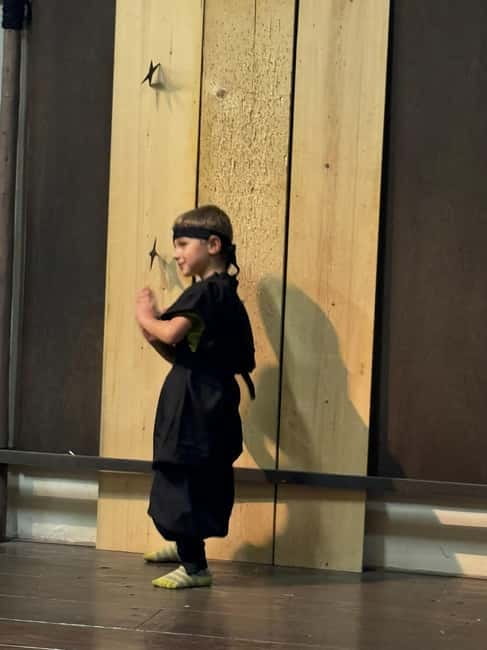
Stealth steps are likely to be the least familiar exercise for most people. Shuriken and swords have an obvious visual appeal, but quiet movement asks you to pay attention to balance, foot placement, and control.
The experience presents you as a silent shadow working for peace. That language points to a broader idea in the lesson: ninja training is not only about attacking. It is also about moving with awareness and acting with purpose.
This section may appeal most to visitors who enjoy martial arts, Japanese history, or technique-based activities. It is also a useful change of pace after the opening explanation. Instead of focusing on an object in your hand, you work with your own body.
The interpreter matters here. Small instructions about how to place a foot or shift weight can be easy to miss when a lesson is conducted in a language you do not speak. Live interpretation helps you understand what the movement is meant to accomplish.
Shuriken throwing and blowgun shooting
Shuriken throwing is the most instantly recognizable part of the experience. You get to try a ninja star after the instructor demonstrates the movement. The included ninja star rental means you do not need to bring equipment.
Blowgun shooting offers a different kind of challenge. It rewards breath control and concentration rather than strength. Having both activities in one session gives you a better sense of how varied ninja training can be.
Do not book this expecting a long weapons workshop. The session includes five techniques in total, so each station has to fit into the 90-minute schedule. Think of it as a guided sampler with enough explanation to give each skill context.
This is also where the activity’s welcoming tone helps. The available feedback describes the lesson as informative and fun, with an organizer who was friendly and kind. That combination is useful for first-time participants who may feel awkward handling unfamiliar equipment.
A few more Tokyo tours and experiences worth a look





Short sword movements and kujikiri
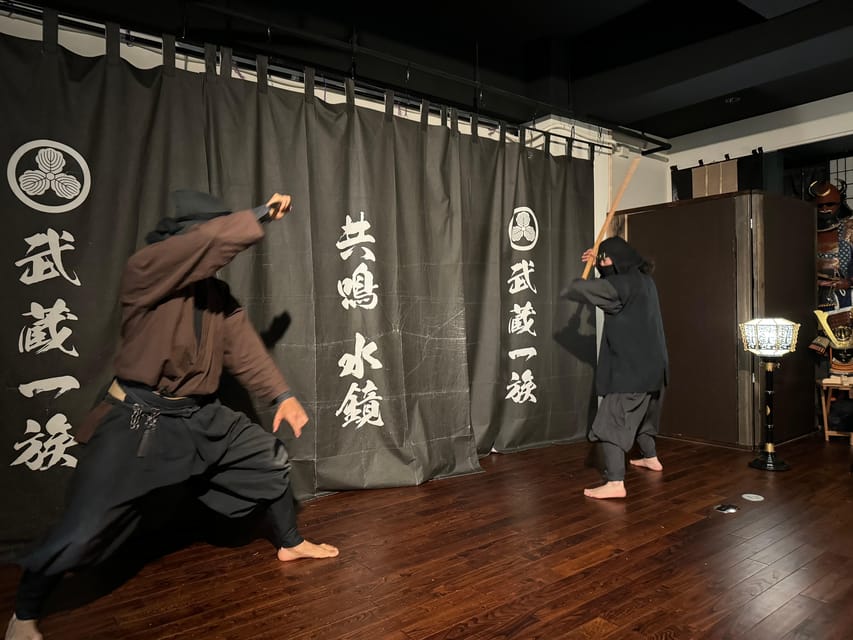
The short sword practice uses a bokken, or wooden sword, rather than a live blade. The wooden equipment keeps the focus on movement and form. The itinerary also refers to kunai or short sword practice, so the exact tool may depend on the session.
You learn basic movements rather than sword fighting. That distinction is important. This is not a combat class, and the experience does not promise sparring or advanced martial arts instruction.
Kujikiri follows a short meditation near the end of the lesson. It is a series of symbolic hand gestures associated with Japanese esoteric practice and ninja traditions. Here, it functions as a quiet closing exercise after the more active techniques.
The final meditation gives the session a useful rhythm. You start with stillness, move through physical practice, then return to stillness. That structure helps connect the tools and movements to the lesson’s stated themes of mindset, strategy, and discipline.
Photo time and what you take home
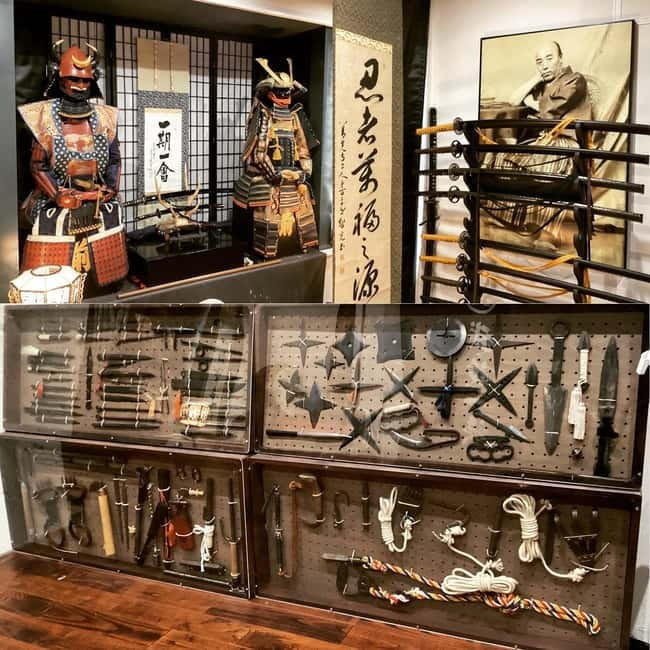
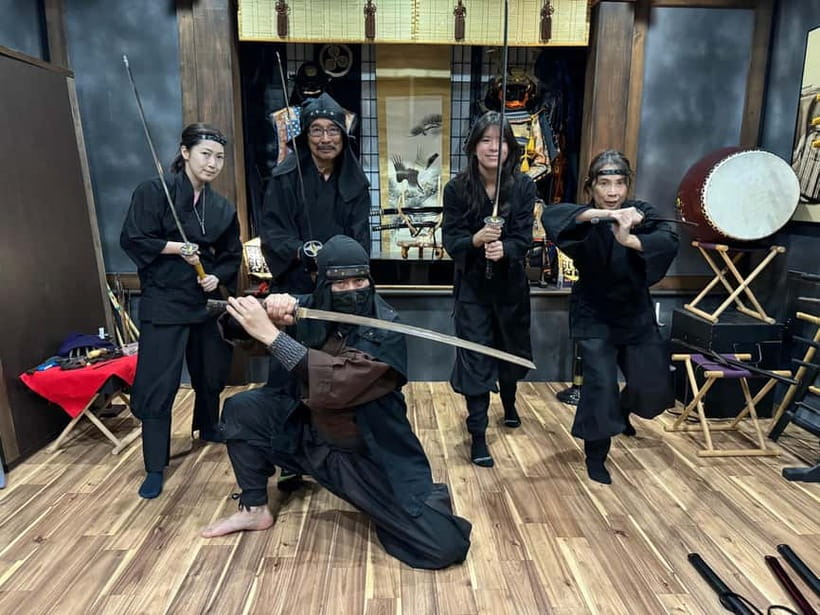
Photo time comes after the training. Since you wear the clan’s ninja outfit, this is a natural moment to take pictures in the dojo. The photos are included as part of the experience, though the supplied details do not specify the number of photos or whether an instructor takes them.
You also leave with something more useful than a costume memory. You have tried five distinct techniques and heard the clan’s explanation of its history and principles. For many people, that combination will be more satisfying than a short photo session alone.
The activity ends back at the dojo. There is no separate return transfer to arrange, which makes it easy to pair with other Asakusa or Kappabashi plans.
Is $116 a fair price for 90 minutes?
At $116 per person, this experience sits in the premium range for a short Tokyo activity. The value depends on what you want from a ninja visit.
If your goal is simply to wear black clothing and take a few pictures, the price is hard to justify. You are paying for a structured lesson, equipment rentals, instructor demonstrations, live interpretation, historical background, and access to a traditional private dojo.
The sixth Dan or higher rank of the instructors adds weight for visitors who care about martial arts credentials. The nationally licensed interpreters are also important. You are not left to guess what a movement means or rely on a few memorized English phrases.
The handmade weapons and clan history make the experience feel more specific than a generic ninja attraction. Still, you should keep expectations realistic. Ninety minutes is enough for an introduction, not mastery. I see the price as reasonable for a focused cultural workshop, particularly if you value instruction and interpretation, but high if you mainly want entertainment.
The reserve-now-and-pay-later option can help if your Tokyo schedule is still changing. Free cancellation is available up to 24 hours before the activity for a full refund.
Who should book this Tokyo ninja workshop?
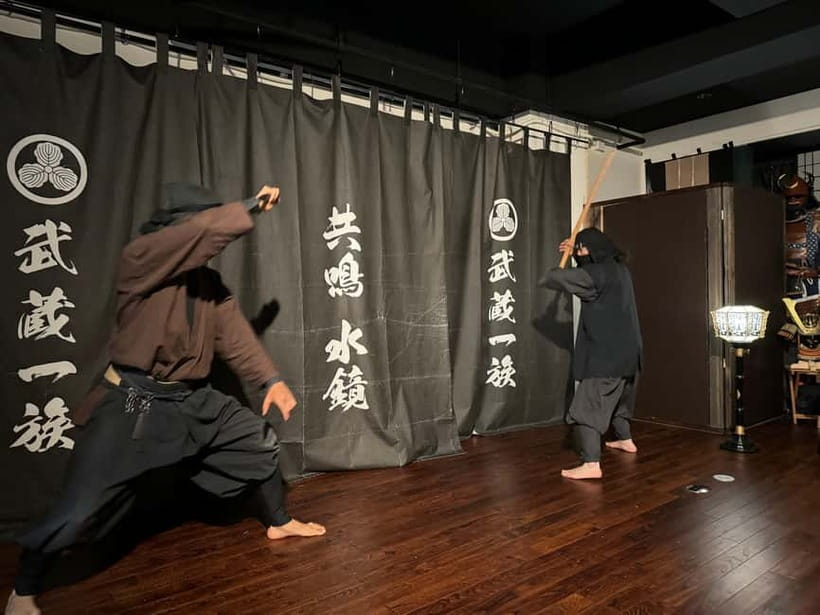
I would recommend it to adults, families with older children, and visitors who want an activity with both movement and cultural explanation. Children under 12 can participate when accompanied by a participating guardian.
It is a good fit for you if:
- You are curious about ninja and samurai traditions beyond popular movies.
- You want to try several techniques rather than spend the whole session on one activity.
- You value English interpretation during a Japanese cultural lesson.
- You would enjoy wearing a clan outfit and taking photos.
- You prefer a dojo setting to a large theatrical attraction.
- You can accept a short introduction rather than advanced training.
It is not suitable for pregnant women, and intoxication, alcohol, drugs, and chewing gum are not allowed. The operator asks you to provide each participant’s height in advance so the outfits can be prepared.
Spectators cost 2,500 yen per person and pay upon entering the dojo. If your family or friends want to watch without joining, include that fee in your budget. A participating guardian is required for children under 12, so a child cannot attend alone.
Getting to the Matsugaya dojo
The closest listed rail stops are Asakusa Station on the Tsukuba Express, about six minutes away on foot, and Tawaramachi Station on the Ginza Line, about eight minutes away.
The neighborhood clues are more useful than a street address alone. The dojo address is 3fl, 3-Chome-1-13 Matsugaya, Taito-ku, Tokyo. The area is near Kappabashi, the kitchenware district, and the Skytree should be visible to the east.
From the Kappabashi traffic light at the intersection of Kappabashi Dogugai Street and Kappabashi Hondori Street, walk north on the left sidewalk. The dojo is described as the tenth building along that route.
Keep the phone number, +81 9036918165, available if you get turned around. WhatsApp is also listed as a contact option. Most importantly, do not enter the shop called Musashi Japan across the street. Its name sounds similar, but it is not the activity location.
My booking advice
Book this if you want a short, guided cultural activity that lets you move, handle traditional-style tools, ask questions through an interpreter, and hear a clan’s account of its Tokugawa connection. The strongest features are the five-part lesson, the skilled instructors, and the clear attention to mindset rather than costume alone.
Skip it if you want a low-cost attraction, a long martial arts class, or a full afternoon of training. At $116, the experience needs to deliver more than photographs, and it does: you get a focused introduction to ninja techniques, history, and etiquette in a dojo setting.
For many visitors, the best plan is to combine it with time around Kappabashi and Asakusa. Allow extra time to find the third-floor entrance, arrive with participant heights already provided, and budget for any spectator fee before booking.
FAQ
How long does the ninja experience last?
The activity lasts 1.5 hours, or 90 minutes.
Where does the experience begin?
It begins at Musashi Ninja Clan Shinobi Samurai Honjin Dojo of Asakusa, on the third floor of a building at 3-Chome-1-13 Matsugaya, Taito-ku, Tokyo.
Where does the activity end?
The session ends back at the meeting point, the Asakusa dojo.
Which languages are available?
The instructors and interpreters provide the experience in English and Japanese. Real-time interpretation is offered during the sessions.
What techniques will I practice?
The five techniques are stealth steps, shuriken throwing, blowgun shooting, short sword movements, and kujikiri.
Is a ninja outfit provided?
Yes. Ninja outfit rental is included, and you should provide the height of each participant so the outfit can be prepared.
Are weapons included?
A bokken wooden sword and ninja star rental are included. The session also includes introductions to handmade shinobi tools and practice with a kunai or short sword and blowgun.
Can children participate?
Children under 12 can take part when they have a participating guardian.
Is there a fee for spectators?
Yes. A spectator fee of 2,500 yen per person must be paid when entering the dojo if someone watches without participating.
Can I cancel the booking?
You can cancel up to 24 hours in advance for a full refund. Reserve-now-and-pay-later booking is also available.
More Workshops & Classes in Tokyo
More Samurai & Ninja Experiences in Tokyo


More tours in Tokyo we've reviewed





Samurai & Ninja Experiences, compared.
 ★ 4.5Tokyo: Samurai Restaurant Show Ticket with 2 DrinksFrom $551h 30m
 ★ 4.6Tokyo: Samurai Ninja Museum Guided tour and ExperienceFrom $27
 ★ 5.0Skip the lines Basic Ticket at SAMURAI NINJA MUSEUM TOKYOFrom $28
 ★ 5.0Tokyo: Authentic Samurai Training at a DojoFrom $211
 ★ 5.0Best Samurai Experience in TokyoFrom $65
 ★ 4.6Tokyo: Legend Samurai Entertainment Night in Kanda ShrineFrom $44